CZ on Binance's Journey from Zero to One: The Best Teambuilding is Fighting Together in the Trenches
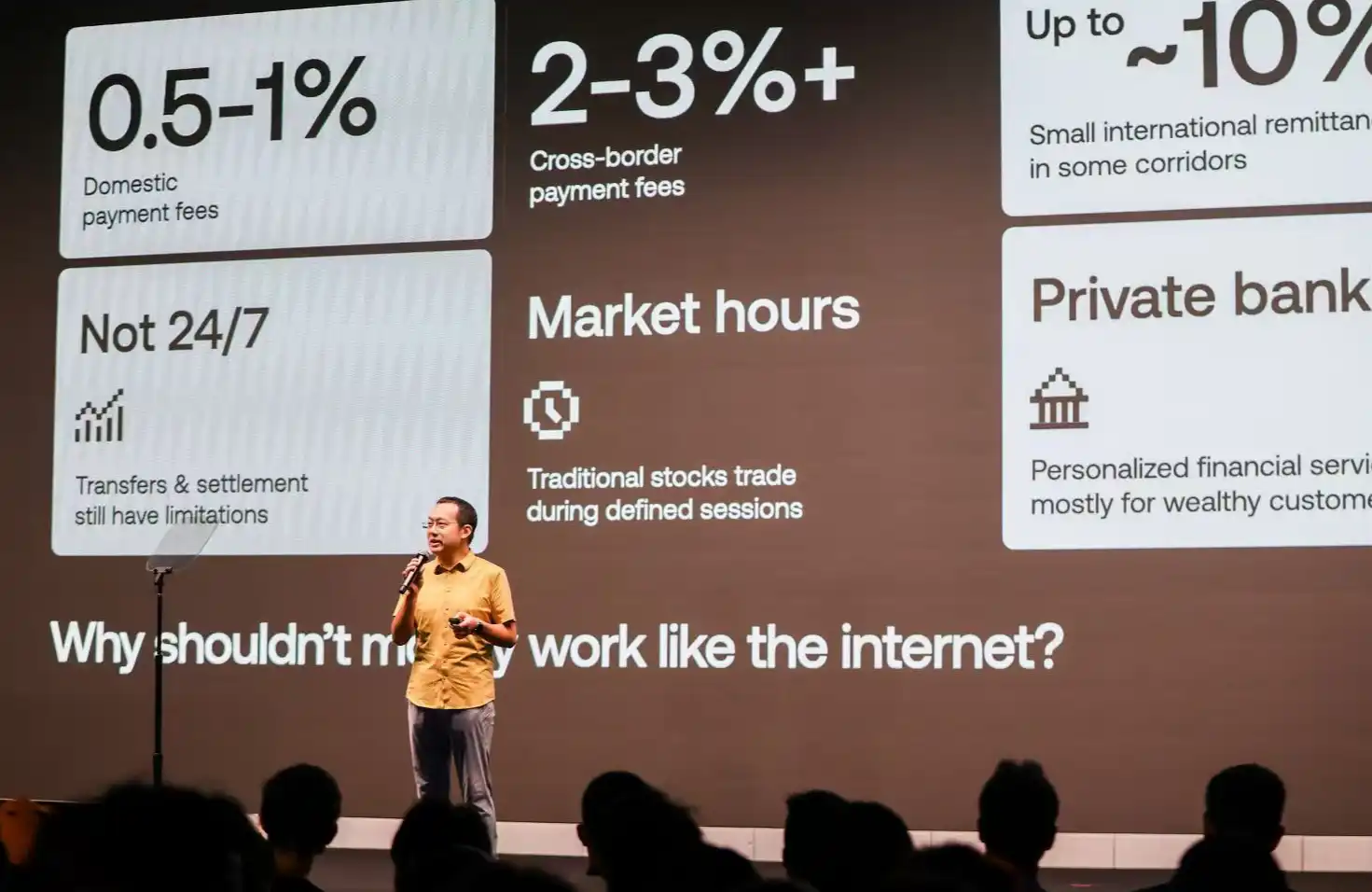
Last week, Binance founder CZ attended the EASY Residency Season 3 closed-door workshop online, where he shared his experience and insights with attending startup founders. He discussed various topics, from building Binance's first team in 2017 and fostering cohesion under pressure, to reflecting deeply on privacy, AI, talent turnover, and global differences. He shared openly about Binance's journey from zero to one, including his mistakes in hiring, decision-making, and transformation. Below is the text version of the conversation, translated and organized by BlockBeats, with the dialogue transcript provided by YZi Labs.
Interviewer: In 2017, you founded Binance and recently published a new book, "Freedom of Money." You mentioned many early members in the book. What qualities did you value in those people when building the first team?
CZ: In fact, it requires many different qualities. I think the first point is: you can get along with this person, you trust them. For everyone, this sense of "fit" is different. The second point is, you need to look for people with complementary skills. For example, He Yi was in charge of all back-office affairs: company registration, finance, HR—she is very good at these. Roger has strong technical skills and is also a very strong marketer with strong execution capabilities. A complementary team is crucial.
Then, you need people willing to work with you, and you need to earn their trust. As a founder, you need to nurture and build a team that is basically willing to follow you to the ends of the earth. This takes time to accumulate.
I think these are key qualities. Also, I work very hard myself, and everyone in the team works hard too. This cooperation is very good.
Interviewer: How did you meet He Yi? What about other team members like Alan and Roger? How did you recruit them?
CZ: Everyone's path is different. Most of this is written in the book.
I met He Yi in a WeChat group. At that time, there were many cryptocurrency groups, right? Later, we met at a conference, said hello, and had some business discussions at another conference. I've known He Yi for a longer time. She initially worked at my friend's winery, then I found out she had a job at a bank. After that, I recruited her for a previous entrepreneurial project of mine, which failed, so I recommended her to work on someone else's entrepreneurial project. Later on, I recruited her back.
Roger was introduced through a mutual friend, while Alan actually "inherited" from someone else's team.
So everyone's background is different. But when you meet someone you can work with and genuinely like, you establish a connection that progresses step by step.
Questioner: In your book, you also described your early state at Binance, such as sleeping in the office, losing 10 kilograms in three weeks. There is also a scene: an investor came to your office at 10 p.m. on a Friday night, and it was still bustling like a vegetable market inside. How did you create this energy that made the early team willing to work hard with you?
CZ: I think the most fundamental point is: you have to lead by example. I don't know if there is any other way.
If the founder is not putting in 24/7 dedication themselves—of course, you don't necessarily have to work 24 hours, it could be 10, 14, 16 hours a day, sometimes longer, sometimes shorter—but if the founder themselves is not working extremely hard, and you want to hire a bunch of hardworking people, that's not possible. You can't create that atmosphere.
I have done some entrepreneurial projects before, and at that time, I was part-time. That's why I don't invest in part-time founders now. I tried it before, and an investor told me, "CZ, this won't work, you are part-time, and the people you hire leave at five."
I think the key is: you have to lead by example. Then you will know if the rest of the team can keep up. In a small startup team, if everyone works hard, things will move quickly. Bureaucracy should be very minimal—in large companies with thousands of people, coordination between different departments, legal reviews, compliance reviews, like what Binance is now. But in a small startup, you can't have those things.
To be honest, I don't know of any other way to describe it. But most truly successful startups have a culture of hard work. There is no such thing as "work hours." Of course, you still have to sleep, you can't always sleep in the office, but overall, you have to work very hard. Especially in today's environment, you are competing with people globally. For example, if you are doing a prediction market project, there are other teams doing the same thing. Unless you are much smarter than them, you have to work harder than them.
Questioner: What is the state of a founding team under pressure? How did Binance come together and become stronger than before? There are some interesting psychological mechanisms at play here.
CZ: Teams usually don't break under pressure. Most of the time, teams break when there's nothing to do. If you work well with your team, the greater the pressure, the stronger the team's cohesion. The best team building is actually fighting together in the trenches. I don't know if this is easy to understand.
There is an old movie called "Black Hawk Down," I don't know how many of you have seen it. There's a person going to war, and someone asks him, "Are you addicted to war? Why do you always risk your life? Is it for honor? Trophies? Or something else?" His answer is very classic: "When the first bullet flies past your ear, none of that matters anymore. What matters is the person next to you."
Humans have a natural psychological dependence on those who fight alongside them in the trenches. So, if you and your team are fighting together in the trenches, that is actually the best team building.
In the early days of Binance, external pressure, especially political attacks that were not caused by us, were actually the best team building activity. Going out to eat together or doing team building activities couldn't compare to this. Everyone working together to solve problems, and these troubles did not cause us much trouble. We are a team that withstands pressure together.
The workload is indeed very heavy, so the body can be very tired. Our CTO had inflamed eyes, this is a real physical reaction. But in my experience, I have never seen any team being crushed by pressure, especially external pressure.
But if you have no income, no business, that's a different story. If you have users coming in, business coming in, and the system is under pressure, those are actually "good problems." If you don't even have these issues, that means your startup is not doing well.
Questioner: When you are not in a meeting or not present, how do you keep the team's sense of urgency and product vision?
CZ: You have to set the tone, and then it becomes a culture and expectation. This is actually saying: your work intensity depends on how much time you are willing to invest. As a founder, you need to have a very efficient way to judge how long something will take, and you have to set that expectation. For example, in the early days, I would say, "A user has complained about this bug, can we fix it today?" The expectation is that we need to fix it quickly, we can't do a complex analysis.
For example, "Tomorrow we need to switch to a different ICO method, we need to allocate based on user deposits. This is different from what we did before, and it has to go live tomorrow." Everyone understands that this must be completed.
You set the expectation in terms of time, and that determines how complicated the work should be. I have always pursued very fast turnaround times. I strongly recommend adopting this mindset. If you do this for a week, a month, everyone will get into the groove, and then you can sustain this culture. The problem is, as the team grows larger, the speed will slow down. That's the advantage of a startup team.
Questioner: I have another question about AI. With AI in place, how will you operate your business differently to make things faster?
CZ: I see AI as a tool to enhance efficiency. I would set higher efficiency expectations—such as turnaround time and the amount of work a person can complete. However, AI does some things well and some things poorly. You need to understand that. Some things AI can assist with, while others it cannot. So for me, it hasn't fundamentally changed anything. AI is just an efficiency tool that makes people more productive. You just need to consider it and incorporate it into your expectations.
Questioner: How did you seize the market opportunity initially? How did you strategically find a key differentiator, then focus in that direction to capture the market and grow? There were other competitors at the time; how did you win?
CZ: To win, you need to do a hundred things relatively well. And to be able to do a hundred things well, you might need to try ten thousand things. Many things you do, you try, but the effect is not good, so you have to adjust quickly, iterate. I can even say "pivot." Overall, you need to serve your users well. That is very important. On most platforms, you need to have a solid product, good security—especially in the crypto industry. Then you need to try many different things. Those things that work, you scale up, amplify.
For example: When we reduced the fees, what actually happened was—we reduced the fees by 50%, and the transaction volume increased by X times. So we were in a good position to do this. Then we continued to amplify, lowering fees again. When we release a new feature, if it doesn't perform well, no one uses it, we shut it down, and then move on to the next one. Those features that users like, we double down on.
So there is a lot of trial and error here. At least for me, my style is—this may sound a bit crazy—I don't really do detailed planning. Most things happen organically. I don't have a grand master plan.
In this age, it's hard to predict what will succeed. Some features work, some don't. My style is to interact extensively with the community. I chat with everyone in the "trenches," so I can feel the feedback. I don't talk to everyone, but Twitter (now X) is a good channel to sense the feedback. Then you iterate based on the feedback.
But if you don't plan, you have to have good enough judgment to identify what's working and what's not. So you must have that feedback loop. Just like a beginner martial artist would plan out five steps, no matter what the opponent does, they follow those five steps. But a true master knows how to react, knows how to respond. You just need to have the right response.
Interviewer: And then, how did you become a leader in the entire industry? Was it just constant iteration, constantly improving the speed of the product to the user, and then eventually reaching that position?
CZ: Yes, I think it's all about constant iteration. We started with a spot trading platform, then we got into futures. Then we saw others doing staking, and we did that too. When the Meme coin craze really hit, Binance itself was dealing with the regulatory issues in the U.S. during the Biden administration, so we were actually behind for a while. We were distracted, not paying attention to the market. But then we pivoted quickly. By that time, we had one advantage: a large user base, so we could catch up.
But in the early days of building the user base, you just need one good feature that people are willing to use. You don't necessarily have to be the biggest in the industry, but you should strive to be the first or second in your niche.
To be honest, today more people are starting to use decentralized exchanges, so that space will grow. We will still be a significant player in the centralized exchange space, but maybe not the largest in the industry anymore. And that's okay. You can only do so much.
So I think the goal is: first, to have a sustainable, profitable business. Second, grow it to a scale you can handle, without focusing too much on competitors. Being the first is not the goal. Doing what you are best at, creating value, that is the goal.
Interviewer: Binance has come a long way since 2017, going through different stages, evolving from a small exchange platform to the current incumbent. With so many things to balance, how do you decide what the company should focus on at each stage? How do you make decisions?
CZ: For me, the core now is "people." I can no longer focus on every aspect of the Binance ecosystem or Binance team. I am just a shareholder; in fact, I am no longer managing Binance. EZ Labs has its own team, BNB Chain has a group of core developers, and there are ecosystem projects and so on.
So at this stage, what I mainly do is: find the best people and empower them. I am no longer the founder myself, no longer personally leading specific tasks. But the advantage I have now is that we have a lot of resources, reputation, user base, platform and ecosystem, as well as funds for investment, and so on. I am not being arrogant, but my current position is indeed different from that of a first-time entrepreneurial founder or a hands-on founder.
For most people, you still need to find the best team. For most people, you need to have a deep understanding of your business to know what the priorities are and what should or should not be done.
Overall, however, it's not difficult to judge what is currently trending or not today. You can see it. But there is a lot of noise in the industry. Predicting the market has been hot recently, and before that, there was the meme coin craze; even before that, the industry was very cold. As a founder, you need to have a good sense of where things stand.
I don't know how others develop this kind of judgment. For me, it's quite simple—I spend some time on Twitter and I know. Others may look at data and so on. But if you only look at data, it might mean you are sometimes out of touch with the community. You need to look at data, but as a founder, my approach is: you need to have "intuition" about the industry. You cannot always rely on data. You can look at data, but you need to develop a sense of the market.
Questioner: This is very helpful. I'm sure Binance has gone through many decisions, right? Some of them must have been great decisions. So, from all the mistakes you've made over the past few years, what is the most valuable lesson you've learned from a technical standpoint?
CZ: Ideally, you want to minimize the negative impact of erroneous decisions. When making a decision, you have to consider its impact. First, whether the impact of this business decision is significant or not, and secondly, looking back, if this decision is reversible, then even if the impact is significant, once you realize the mistake, you can correct it midway. If it is a major irreversible decision, then you need to think more carefully.
For example, like flying to the United States, that is a major decision that may be irreversible. But in product development, most decisions are reversible, right? You can launch a feature, and if it doesn't work, you can remove it and replace it with another feature. Although some hiring decisions are more difficult to reverse, they can still be done. Of course, you don't want someone to quit their current job to join your company, only to find out it's not a good fit two months later, and so on. So it is still reversible but will make people very uncomfortable. If you are making a large investment in an area and it is a one-time thing, then you need to be more cautious.
We have made many wrong decisions, but fortunately, most of the wrong decisions are relatively manageable, so you need to pay attention to this in major decisions. So far, I think we're doing okay. Hmm, this is a more generic answer.
Questioner: Thank you. What are some common failure patterns you've seen after a project gains early traction?
CZ: The first one is losing sight of the long-term vision. Some companies, once they start making money, have founders who exhibit a different human side. When a project starts making money, some individuals are quick to maximize their gains, seizing more benefits for themselves, often at the expense of the project's long-term prospects. Long-term gains are usually much larger, so this is the first point.
The second point is the expansion of the team. Managing a team of 20 people is different from managing a team of 200, and managing a team of 2000 is a whole different ball game. When facing a 20-person team, you might only have a few new members, perhaps no external investors yet, which is relatively straightforward. But as you grow to 500 people, with 10 different external investors, the CEO's job changes. This transition in roles can sometimes catch people off guard. So there are many potential reasons in this regard. A promising startup can fail, and I can't list all the reasons, but this transitional period is crucial.
Going from 0 to 1 requires a specific set of skills, going from 1 to 10 requires slightly different skills, and going from 10 to 100 is different again. In Western countries like the USA, investors often force founders to change the management team, relinquish control, and so on. In Asia, for example, it is often the founder-CEO who needs to lead the company all the way. Dynamics in different cultures have some differences, and there is no absolute right or wrong, but you must be very aware of this transformation.
Questioner: I am a big fan of cryptocurrency and have been heavily involved in using it in the financial sector for a long time. My question is about the so-called "Global South" vs. "Global North" binary opposition. You see, if you look at Crypto Twitter or when we as investors observe the market, people tend to focus more on meme coins or more speculative things. But then they don't pay attention to projects like Tron or Ripple, nor do they pay attention to how the Global South uses cryptocurrency. For example, I have talked to people in Venezuela, and their use of cryptocurrency is completely different. I want to know what your thoughts are on how to view this difference?
CZ: Alright, there are several different ways to think about it. First, you may or may not need to differentiate them. I think you should first look at what functionalities your product aims to address, right? You can look at the geographical demographics, as well as the functional needs of the population. That is: Who would use my product for what functionality?
To be honest, when I was running Binance, I didn't think too much. I just thought—well, we have a trading platform, whoever wants to use it can use it, and then we developed futures, we developed savings, our fees are very low. Many of our products don't even have fees, for example, if you just hold cryptocurrency on Binance, there are no fees, right? We have a free wallet. When we do payments, these transactions also have almost no fees, which is not a problem. Although there are indeed differences between different regions, I didn't think from that perspective at the time. I just saw low-income users, high-net-worth users, active traders, long-term holders, savers, and so on. I thought more from this perspective.
But if you are developing a new product, you may need to be more specific. When we did the first product, it was just for traders—if you are an active trader, Binance is an exchange for you. But later on, we kept adding more features. And today, I think most founders, especially in the crypto space, should take a global view because cryptocurrency has no borders, right? It allows you to reach a global market and a global user base, which is a huge advantage compared to traditional businesses. Traditional businesses usually start from one country and then have to expand country by country. But in the cryptocurrency space, this is why Binance could grow so fast. We are a cryptocurrency exchange, initially without fiat channels, so anyone could deposit, and anyone could withdraw on the blockchain, which is a huge advantage.
Depending on what your product is, you can look at geographical location, income levels, advanced users or beginners, or different types of features. But I would see the whole world as one unit. If you are working on a crypto project now, almost every country will have your users. Even if you are working on something related to AI, AI is also global, right? That's how it is.
Interviewer: When you are developing a product, especially those that are most disruptive, you spend a lot of time persuading others who don't initially understand. How do you judge whether you really have foresight, or if you are just being stubborn?
CZ: You need to have a core user base, no matter how small, but there must be a few users who tell you that your product is really great. If no one says this to you, then what you have done may not be useful, or you can't find your users. Ideally, you should have—at least, I don't know the specific number—but I have always maintained contact with about a dozen very hardcore users, and they will give you feedback. You must get very positive feedback from these people. If you can't find 10 or 12 people who really like your product, then you may not be developing the product in the right direction. You don't need everyone to like your product, right?
So, it can have a lot of people hate it — 'I would never use this' — but you need a few people to say, 'Oh, this is awesome, I've been using it.' And you need to see them actually using it. If you have those users, then you can probably find more similar people. In fact, you don't need a large number of users to use your product to be successful, of course, more users are better, but some niche products also do well. So, there is a balance here. But you do need some users to tell you that you are on the right track.
Questioner: You often talk about privacy, so I have a related question. I'd like to hear your thoughts: Looking ahead to the future of cryptocurrency and privacy, at the infrastructure level, what is truly important to you? Is it more focused on user protection, regulatory compliance, or seamless integration with existing wallets and exchanges? Following up on this question, do you think in the near future privacy will become a default feature of mainstream wallets and exchanges?
CZ: Interesting question. I think privacy is a very, very important feature. I feel like currently, blockchain has sacrificed too much in terms of privacy. The tricky part is that getting privacy right and making it easy to use is very difficult. There are many attempts now, like Monero, ZCash, and a bunch of other things, but so far, there is no one solution that can achieve both very strong privacy and ease of use. So, I think if you can solve these issues, if you can find the right balance in these areas, and push the privacy level higher, then there is a great market demand. Bitcoin is too easily traceable, too public. That's my view.
Questioner: How important do you think privacy coins should be in terms of regulatory compliance?
CZ: I'm not a compliance expert. I try not to answer compliance questions because I think it varies from region to region. I am indeed surprised that Monero hasn't made a bigger impact, but Monero is hard to use, slow, you have to download a fairly large blockchain, and apart from holding the coin, there is nothing on the chain. No smart contracts, no exchanges, no other functionality. So, if you can build an exchange mechanism default with a privacy function, I think there will be many different types of privacy solutions in the market. I don't know which one will prevail because I can't predict, I also can't predict user psychology well, so you have to try, figure out which one will succeed, try different things with multiple projects, hoping some of them will succeed.
Questioner: We just talked a bit about the different stages of talent needs in the field of decision science. My question revolves around building your team: at different stages, what are some of the right things you have done to find the right talent? And how do you maintain that relentless culture within the organization?
CZ: Well, to be honest with you, I have made many mistakes, hiring the wrong people—not that they are bad people, but I put the wrong people in the wrong positions or had them do jobs that didn't suit them, right? So sometimes I hired very good people, but sometimes I hired people with too much experience, sometimes I hired people who didn't fit their roles, and the result was not great, right? Then we have to (adjust). I do believe that as a founder, you need to constantly experiment, you need to do a lot of hiring and firing—especially the firing part, which is not pleasant but has to be done. I do recommend that you keep a relatively high turnover rate. I think the standard in the tech industry is 20% per year; you should at least aim for that level.
However, in my team, we usually look at the data. Those who joined early, once they settle down, become very loyal. In fact, I have been too loyal to old employees, which in turn leaves less room for new people to grow. Additionally, most of Binance's founding team members are still here, which has its pros and cons. The advantage is they have a long history, team stability, and so on; the downside is not every founding member can grow at the same speed as the company, especially for a fast-growing company like Binance or unicorn startups in today's era. So, sometimes you have to rearrange the positions of some founding members, even sometimes including yourself. I have involuntarily changed positions myself, but I consider it a good rotation.
So, I think founders need to be very proactive in terms of team attrition, both voluntary and involuntary. Frankly, from a numerical perspective, I think this ratio should be between 20% and 30%, depending on the company and the situation. Yes, you will make mistakes, but I would say it's more about being "not the right fit" than "malicious." I just put the wrong people in the wrong place or the right people in the wrong place. Especially in areas I am not good at, such as legal and compliance, backend and legal compliance, I did not have the right people at the right time, which later caused me a lot of pain and led to many problems. So I really believe that you need to rotate personnel regularly to find the best match. Yes, there is never perfection."
Interviewer: You mentioned leading by example and working hard, how have you maintained long-term discipline and resilience?
CZ: This question is straightforward. You must be passionate about what you do. In other words, you must enjoy what you do, and what you build must make you happy, right? If that is not true, then you cannot work that hard. If you think, "I am just working hard to make money," that won't work, and the people around you can feel it, right? Usually, that doesn't succeed. The goal of a startup should be a bit more than "making a lot of money" and a bit less than "saving the world," probably somewhere in between. For us, we are working to increase financial freedom for people all over the world. This is not entirely about saving the world, but what we are doing is quite meaningful to you. You must be passionate about what you are building; it must become your mission.
Questioner: My question is, when did you first realize that you had the ability to build such a massive company like Binance? Did you believe this before we started, or was it only after Binance was up and running that you realized it? Was there a specific turning point that made you think, "Well, I can really make this happen on a global scale"?
CZ: Yes, but I had a very international user base from the start because that's how cryptocurrency and cryptocurrency exchanges work. People from all over the world come to us. Honestly, at different stages, I was not sure if Binance could always stay ahead, even today, right? Competition is always there, and you never know. For me, I just do my best and see what happens. Again, my goal is not to be the world's largest company or the world's largest cryptocurrency company; that's not the goal. The goal is simply to do what we are doing really well.
Welcome to join the official BlockBeats community:
Telegram Subscription Group: https://t.me/theblockbeats
Telegram Discussion Group: https://t.me/BlockBeats_App
Official Twitter Account: https://twitter.com/BlockBeatsAsia