$1.5 billion Bet on AI Implementation, OpenAI No Longer Just Selling Models
Original Title: OpenAI in talks to commit up to $1.5bn to private-equity joint venture
Original Author: George Hammond, Financial Times
Translation: Peggy, BlockBeats
Editor's Note: On April 22, according to sources familiar with the matter cited by the Financial Times, OpenAI is in talks to invest in a joint venture with a private equity firm, with a maximum scale of $1.5 billion. The project, internally codenamed "DeployCo," is expected to have a valuation of around $10 billion and is set to complete its financing as early as the beginning of May.
As AI models' capabilities continue to advance and performance consistently pushes the limits, the real bottleneck is no longer "can it be done," but "can it be used." In other words, the issue with AI is shifting from a technical problem to a deployment problem.
The design of DeployCo is a direct response to this issue. Instead of simply selling models, OpenAI chooses to bring in a private equity firm to directly embed AI into a large number of enterprises under its control through capital and client networks, providing both technical and deployment capabilities and transforming specific business processes through methods such as "forward deployed engineers." Additionally, the private equity firm is expected to invest around $4 billion, receive a five-year funding arrangement, and a minimum return guarantee of about 17.5%, making this model both scalable and reducing uncertainty on the capital side.
More importantly, this is not an isolated attempt. Whether it is similar collaboration being advanced by Anthropic or the "embedded engineer" path already validated by Palantir, they all point to the same trend: the core competitive advantage of AI is shifting from model capability to the ability to transform enterprise organizations.
In this sense, DeployCo is not just a joint venture project, but more like a directional bet—if the past two years were a competition of model capabilities, then what truly determines victory in the future will be "who can turn AI into productivity."
The original text is as follows:
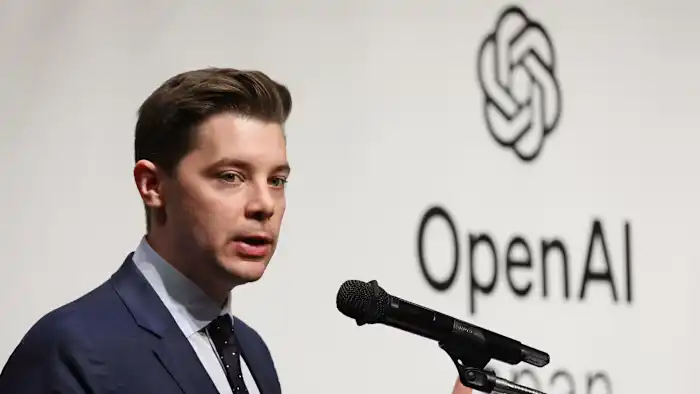
OpenAI's Brad Lightcap led the recruitment of dozens of "forward deployed engineers."
OpenAI is planning to invest up to $1.5 billion in conjunction with several private equity firms to establish a joint venture. This move is a key step in its battle against rival Anthropic and in accelerating its foothold in the enterprise AI market.
According to sources familiar with the matter, OpenAI will first contribute around $500 million in equity. The joint venture is expected to complete its funding in early May with an overall valuation of approximately $10 billion.
Additionally, OpenAI also retains the right to add up to $1 billion in additional investment later on. Meanwhile, institutions such as TPG, Bain Capital, Advent International, Brookfield, and Goanna Capital will collectively invest around $4 billion.
Note:
TPG: A U.S.-based global private equity firm with a focus on various sectors such as technology, healthcare, and consumer goods, known for its cross-cycle investments and large-scale acquisitions.
Bain Capital: A seasoned private equity firm founded by Bain & Company, excelling in enhancing enterprise value through operational improvements and capital operations, with a long-standing presence in the global M&A market.
Advent International: An international private equity fund specializing in growth investments across sectors like finance, technology, and healthcare, with a core strategy of driving enterprise-scale expansion.
Brookfield: A global leading alternative asset management company, primarily investing in infrastructure, real estate, energy, and private equity, managing a vast asset base.
Goanna Capital: A relatively low-profile investment firm, mainly involved in growth-stage project investments, active in the private equity and emerging technology sectors.
DeployCo: Driving True AI Implementation with Capital
This new company, internally codenamed "DeployCo," has begun independent recruitment and will also receive secondees from OpenAI. Its primary clients are the enterprise portfolios invested by these private equity firms, to whom the company will charge fees to help embed AI technology truly into business processes.
DeployCo's core focus is to facilitate the deployment of OpenAI products within enterprises, a key piece of its foray into the corporate market. OpenAI is also collaborating with consulting firms including McKinsey & Company and Accenture to expedite this process.
In terms of the investment structure, these private equity firms will invest funds over a five-year period, with OpenAI providing a minimum return guarantee of 17.5% annually. An insider stated, "This is a floor, and we expect the actual return to be higher." This level broadly aligns with private equity funds' minimum return expectations, and the "floor" arrangement significantly reduces investment risk. In exchange, OpenAI receives locked long-term financial support for five years.
The joint venture company holds OpenAI equity, which can also be used in the future for acquiring assets such as technology or intellectual property. Insiders say that the company is essentially doing one thing—truly deploying AI into enterprises and restructuring how they operate. If we are still in the early stages of the AI application cycle, then this capability itself is a very valuable asset.
Enterprise Battle: OpenAI vs Anthropic
This move is also part of OpenAI's initiative to seize the initiative in its competition with Anthropic. The latter, relying on enterprise products including Claude Code, has seen its annualized revenue grow by more than threefold this year.
Meanwhile, Anthropic is also in talks with private equity firms including Blackstone and Hellman & Friedman to establish a similar consulting joint venture company to help enterprises deploy next-generation AI technology.
OpenAI's management has previously put forward the concept of "capability overhang": the current capabilities of AI models far exceed the level actually used by enterprises. This month, Chief Revenue Officer Denise Dresser bluntly stated in an internal memo that the biggest bottleneck for enterprises adopting AI is not the technology itself, but "whether they can truly deploy it."
DeployCo is registered in Delaware and is a limited liability company (LLC) to be majority-owned by OpenAI. Insiders say former COO Brad Lightcap is overseeing the company's operations, while OpenAI will hold super-voting shares.
Lightcap had previously led the recruitment of dozens of "forward deployed engineers"—engineers who directly enter client companies to assist in implementing AI systems. OpenAI will also have personnel seconded to the new company.
This model has been proven viable by Palantir, the pioneer of the "forward deployed engineers" model.
Additionally, several venture capital firms are also trying to capitalize on the dividend of enterprise AI applications. General Catalyst, Thrive Capital, Lightspeed Venture Partners, and Jeff Bezos-backed AI project Project Prometheus are all either acquiring companies and implementing AI technology or planning similar strategies.
Welcome to join the official BlockBeats community:
Telegram Subscription Group: https://t.me/theblockbeats
Telegram Discussion Group: https://t.me/BlockBeats_App
Official Twitter Account: https://twitter.com/BlockBeatsAsia