50-Year-Old Apple's New Chief Executive

Article | Sleepy.md
Apple is about to witness its third power transition in company history.
In 1997, when the company was on the brink of bankruptcy, with only 90 days until insolvency, it welcomed back the once exiled missionary. With his paranoid artistic intuition and reality distortion field, Steve Jobs pulled Apple back from the cliff's edge, ushering in a golden age of genius and design.
At that time, Apple's fate hung by a thread, yearning for a miracle, in need of someone who could make people believe in the "impossible." They found him.
In 2011, as the missionary departed, amid smartphone production anxieties and the globalization wave, the one who took the helm was an extremely calm supply chain maestro. With inventory turnover rates precise to two decimal places and geopolitical finesse, Tim Cook propelled Apple from a $350 billion market cap to $4 trillion, ushering in a silvery era of business and capital.
By then, Apple had grown in size, calling for order, in need of someone to make this colossal machine mesh with precision, not missing a beat. They found him too.
Now it's April 2026.
Times have changed again. The frenzy of large-scale models is burning the map of the old world, the once proud closed ecosystem is showing some sluggishness and heaviness in the face of AI's impact; and with Washington's looming tariff club and the surging undercurrents of the global supply chain, this behemoth finds itself besieged.
At this juncture, where a new myth is eagerly sought, Cook has passed on the baton.
It's not another genius designer, nor is it another financial wizard. Taking over the world's most sophisticated and massive tech empire is a reckless young man who nearly destroyed the only CNC milling machine in the entire school during his college years.
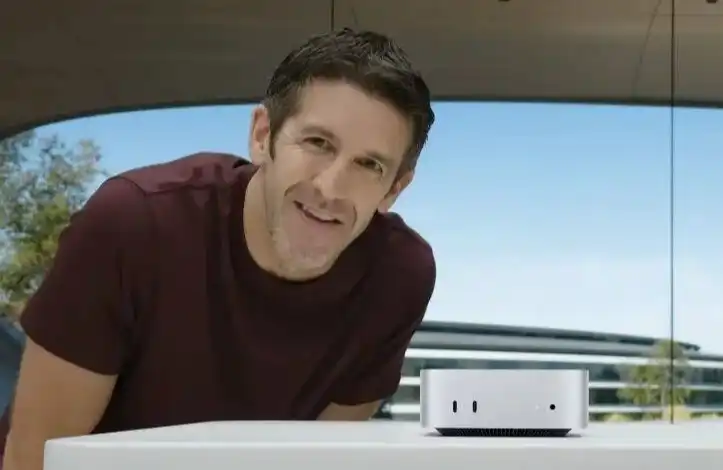
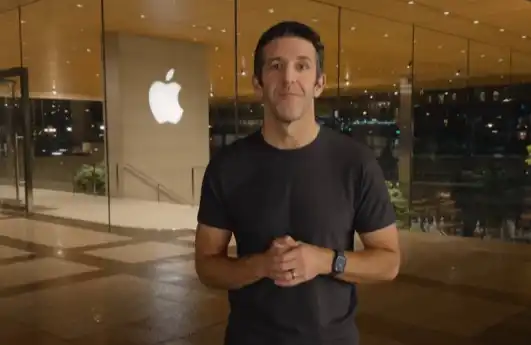
His name is John Tennuth.
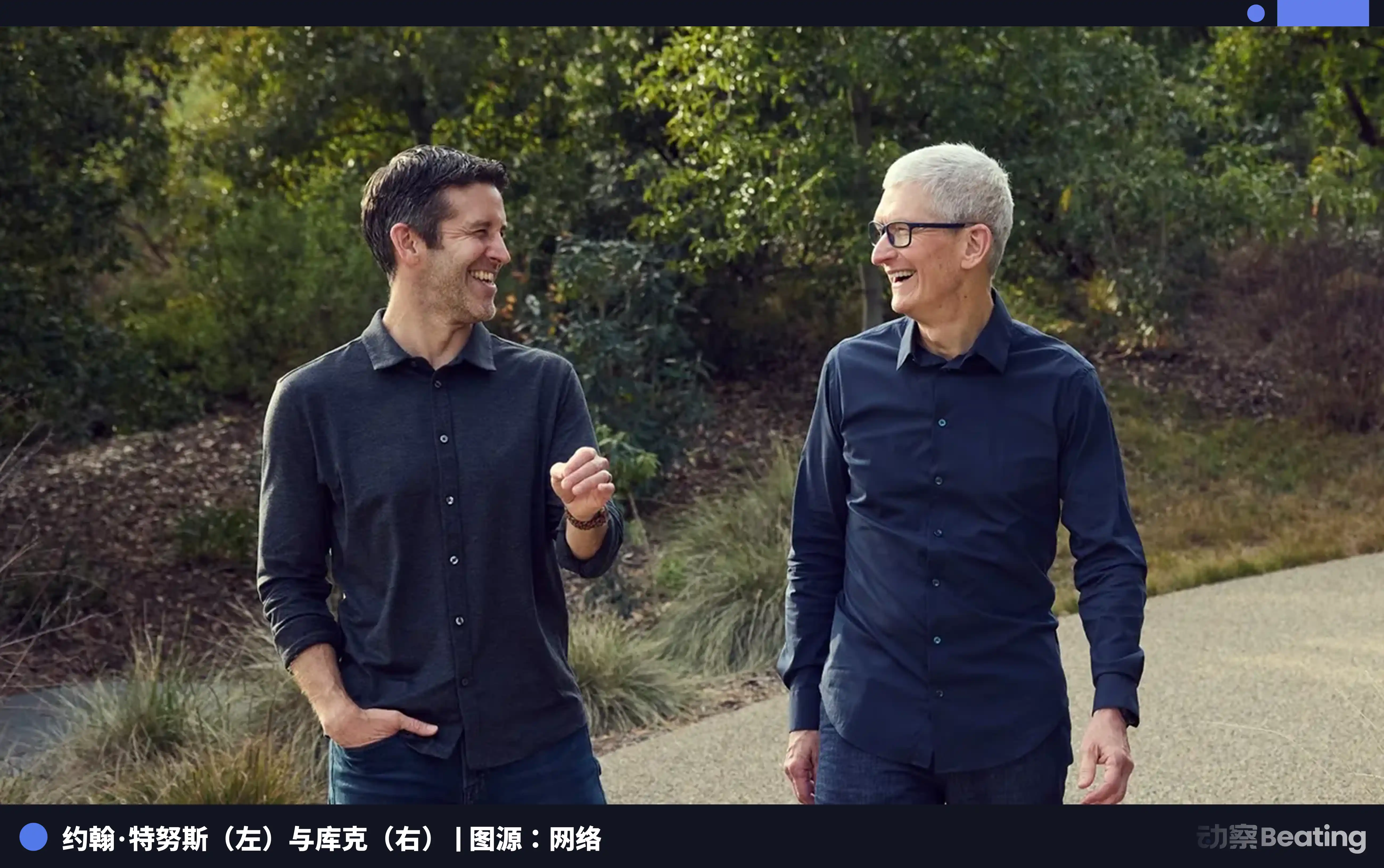
While everyone is frenziedly trying to algorithmically fabricate a new world out of thin air, Apple has entrusted its ace and future to someone who only believes in the laws of physics and reveres the hardware bottom line.
A mechanical engineer bearing the moniker "Destroyer King," he walked into Apple's midst in the aftermath of the early VR bubble burst. How does he fit in with this company plagued by severe design OCD? What does he rely on?
“Destroyer King”
In the early 1990s at the University of Pennsylvania School of Engineering, Tennuth was not the kind of genius who had been surrounded by a halo since childhood. His most prominent label was being the star of the school's swimming team.
In 1994, he won the dual championship in the 50m freestyle and 200m individual medley events at an intercollegiate competition. He also received the "All-Time Alphabet Award," symbolizing honor, thanks to his record number of appearances in the team's history.
Swimming is inherently a dull practice. It doesn't seek flashy tactics but merely requires individuals to repetitively stroke, kick, and breathe underwater day after day until the movements are deeply ingrained in muscle memory. In that pool, there are no shortcuts, no room for luck, only the relentless accumulation akin to water dripping on a stone. This almost ascetic endurance for monotony eventually became the profound foundation of his entire professional career after years of sedimentation.
For his senior project, he didn't chase the trendiest internet concepts of the time but instead created a mechanical feeding arm for high-level quadriplegics. This device was controlled by head movements to guide the arm's trajectory, delivering food to the individual's mouth. It wasn't a flashy project aimed at scoring points but rather a somewhat cumbersome knot aiming to solve a real-world issue.
However, his most well-known feat at Penn almost destroyed the university's first and only CNC milling machine. Due to a single operational mistake, the tool bit directly hit the machine bed. Committing such a basic error in front of an extremely expensive precision instrument earned him a resounding yet jarring nickname, the "Breaker King."
For the remainder of that year, this moniker followed him everywhere. He swallowed his classmates' teasing until many years later when he returned to his alma mater as an Apple executive. During the graduation ceremony's speech, he willingly unfolded this dark history to the audience, sparking uproarious laughter.
He wasn't a prodigy immune to mistakes; he was someone who could mess up, be ridiculed, yet always focused on his work. He didn't care about appearances, only about results.
After graduating in 1997, he joined an early VR company called Virtual Research Systems as a mechanical engineer, responsible for the structural design of VR headsets and accessories. This company had a brief existence during the VR wave of the 1980s and 1990s but later, like countless startups that couldn't survive the winter, vanished into the dust of history.
Looking back on this past now reveals a strange destiny and cyclical nature. More than two decades later, he led the birth of Apple's Vision Pro, a $3499 spatial computing headset, considered one of Apple's biggest hardware gambles to date. What he learned during the VR bubble was ultimately used in the next round of the VR game.
Carrying this somewhat unsuccessful experience, he knocked on Apple's door in 2001. That year, the iPod had just been released, and Apple was gearing up to make a splash in the consumer electronics wilderness. However, what awaited Tenus wasn't the dazzling spotlight of those claiming to "change the world" but the long and endless nights in Asian contract factories.
Under the artistic aura of Steve Jobs and Jony Ive, how did he gradually rise through Apple's power structure?
From Screw Threads to AirPods
Upon entering Apple, Tanous's first project was the Apple Cinema Display. This early high-end desktop monitor resembled a cold, sleek metal frame. On the back of this monitor were several stainless steel screws used for fastening. According to Apple's industrial design requirements, the heads of these screws had to undergo machining to create concentric circular grooves. This way, when light passed over them, the screws would shimmer with a CD-like texture.
The design drawing clearly stated: 35 grooves.
At the time, he found that the number of grooves on the back of the display's stainless steel screws was incorrect. While the drawing clearly specified 35 grooves, the supplier had only done 34.
This was actually an almost imperceptible detail. The display would be wall-mounted, and who would be so bored as to count the back screw's grooves? But for the sake of this one missing groove, he stayed up past midnight at the Asian contract factory, holding a magnifying glass, painstakingly counting those barely visible threads, even engaging in a heated argument with the supplier.
Looking back on this experience at his graduation ceremony at Penn, he said a sudden thought flashed through his mind: "What was I doing? Would a normal person do this?"
Indeed, this was not normal, but it was very Apple.
He used this stubbornness to prove that he was worthy of the company's DNA. There is a widely circulated quote from Jobs, who said that a great carpenter, even in a place where no one can see, will make the back of the cabinet as beautiful as the front. Tanous, in that late night at the Asian factory, was living out that quote.
After about three years, he was promoted to manager. His first manager, Steve Siefert, allocated him a separate enclosed office. In the highly hierarchical Silicon Valley, a private office symbolized power. But he refused it, moving his desk to the open area where he could be with engineers. In 2011, when Siefert retired, he left the office to him again, and once again, he refused.
He didn't need a door to prove his status; he needed to be close to the battleground, to hear the engineers discussing heat dissipation, motherboards, and tolerances at any time.
In 2005, he led the hardware engineering team for the G5 iMac series. It was also during that time that he dove into the intricate Asian supply chain, accumulating, bit by bit, the crudest yet most genuine understanding of the manufacturing industry through hands-on experience on the front lines of the assembly line.
The birth of AirPods was the first highlight of his career. In 2013, he was promoted to Vice President of Hardware Engineering. It was under his leadership that Apple launched AirPods in 2016. When these earbuds were first revealed, they were met with widespread ridicule, with people joking that they were simply "EarPods with the cords cut off."
But Ternus chose to stay silent. He knew better than anyone else that squeezing complex Bluetooth chips, batteries, and sensors into that minuscule space, reducing the latency between the two earbuds to imperceptible levels, and ensuring that a small battery could last an entire day of lengthy commutes was nothing short of an engineering miracle.
In the end, the market provided the answer. AirPods became Apple's most successful wearable device ever, not only redefining the wireless earbud category but also quietly reshaping how humans listen to the world in public.
He proved himself to be more than just a screw-counting repairman but a mastermind behind turning concepts into phenomenal products.
Learning the Art of Patience
During Apple's golden age, Jony Ive was second only to Steve Jobs. His design philosophy became an unquestionable bible, and even Tim Cook, a man of commerce, had to yield to that extreme aesthetic. At the peak of Ive's power, Apple's product decisions followed an unwritten logic: first, determine the appearance, then figure out how to cram the functions in.
At times, this logic indeed worked wonders, such as the glass screen of the original iPhone and the wedge-shaped body of the original MacBook Air. But it also led to disasters.
During that period, in pursuit of ultimate thinness, Apple made two wrong decisions: the Touch Bar and the butterfly keyboard.
To give the MacBook Pro a more futuristic look, the design team decided to replace the traditional physical function keys with an OLED touch screen. In order to further reduce the thickness of the body, they invented the "butterfly keyboard" with an extremely shallow key travel, making the typing experience feel like tapping on a wooden board, and a single speck of dust could cause the entire keyboard to malfunction.
These two designs tarnished Apple's reputation, leading to a $50 million collective lawsuit.
It was one of the darkest moments in Apple's hardware history. As the head of hardware, Ternus was thrust into the spotlight and faced a storm of criticism from the media, users, and even internal employees.
At this moment, he showed an extremely mature side of his character, restraint.
He didn't blame the design team, nor did he have a falling out with Jony Ive. He quietly swept the broken glass into the dustpan, and then, over the course of a few years, led the removal of the Touch Bar, bringing back the thicker body, scissor-switch keyboard, MagSafe port, and SD card slot.
He single-handedly wrested back the practicality that Apple had lost.
The 2021 release of the MacBook Pro was dubbed by the media as an "Apple apology to users." That generation of products brought back all the interfaces that had been removed in the past few years, the body became thicker, but the performance and battery life saw a significant leap. Tan Tan didn't mention "we corrected our mistakes" at the event; he just showcased a more user-friendly computer.
He didn't chant slogans; he merely proved through actions that a laptop should first and foremost be a useful tool, and secondly, an art piece.
However, this experience left a deep crack in Apple's power structure. According to Bloomberg, Tan's relationship with the industrial design team was once quite tense. Some core designers believed that he lacked the ultimate pursuit of aesthetics and even tried to internally push for another executive, Tang Tan, to take over as the Senior Vice President of Hardware at that time, instead of letting Tan take the position.
In the game of power, he is not a flawless hero; he also makes mistakes in judgment and gets sidelined by others. But his value lies in his ability to rebuild amidst the ruins and continue to do what he believes is "right."
Forced iPadOS into Existence, Changing the "Laws of Physics"
Within Apple, the boundary between hardware and software is like the line between Chu and Han, mutually exclusive is an unspoken rule. Hardware people are responsible for making things, software people are responsible for making them work, each minding their own business, not encroaching on each other. Crossing the line often means conflict.
But Tan is an exception.
He has been involved in the development of every generation of the iPad in Apple's history, from the first generation to the latest, not missing a single one.
Over a period of ten years, he watched as the iPad he and his team had personally built saw continuous hardware performance improvements. The screen became larger, the processor became stronger, and even the extremely expensive ProMotion refresh rate was added.
The iPad's hardware performance has far surpassed the demand, but it still runs the iOS operating system designed for iPhones.
Oversupply of hardware, anemic software. This is like putting a tractor gearbox in a Ferrari. No matter how much the hardware team squeezes the tolerances, what users end up getting is still just a large-sized video player.
With detailed data, user feedback, and his own thoughts on the product's limits, he went straight to software chief Craig Federighi. This was a boundary-crossing move, where the hardware chief meddled in software, a major taboo in any large company. But he managed to convince Craig, leading to the development of a separate operating system for the iPad, incorporating desktop-class multitasking, split-screen operation, and mouse support.
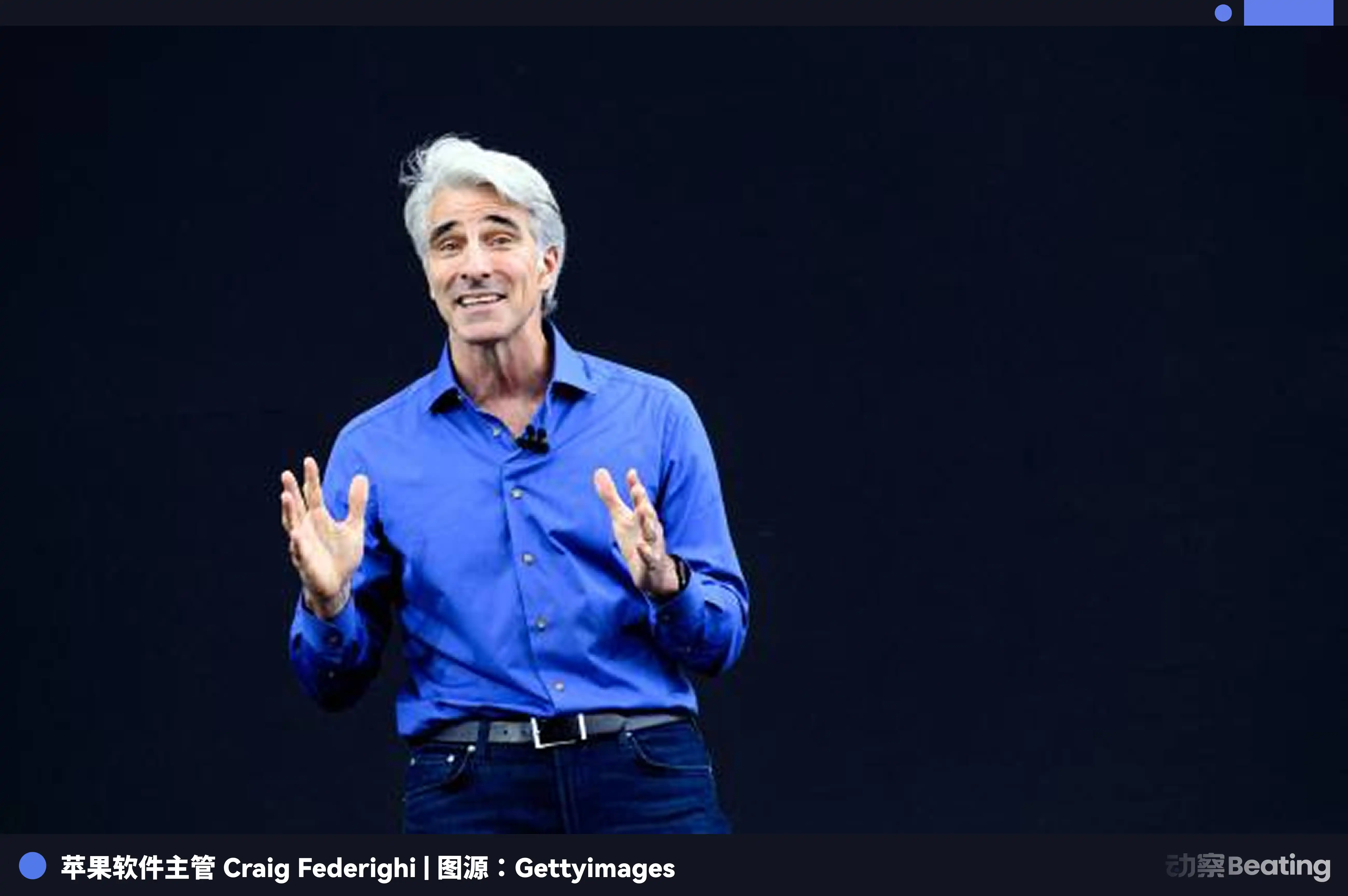
In 2019, iPadOS was officially released. This move transformed the iPad from a large toy into a productivity tool, completely shattering the stereotype of "he's just a repairman." He possesses strong product intuition, dares to cross boundaries, and challenges the internal bureaucracy of large companies.
He was also the driving force behind the LiDAR sensor. He proposed to confine this $40 sensor to the Pro series models, reasoning that users purchasing Pro models are often excited about the technology itself and willing to pay for this feature; ordinary users wouldn't care. This judgment was later proven correct, as LiDAR became one of the most valuable differentiating features of the iPhone Pro series.
What truly elevated his status to that of a deity was the 2020 M-Chip Transition War. This was Apple's most adventurous and successful hardware migration in history. The comprehensive transition from Intel chips to Apple Silicon meant Apple had to abandon a mature ecosystem and start building from scratch.
He led this transition. Reflecting on this transition, he nostalgically said, "It feels like the laws of physics have been changed."
He didn't use any fancy rhetoric; he just used the simplest language of an engineer to express his awe at the chip's efficiency. This chip allowed the MacBook Air to have 18 hours of battery life while maintaining extreme thinness, even without the need for a fan for cooling. For someone who had been turning screws in Asian factories for twenty years, this truly felt like the laws of physics had been changed.
In 2021, Dan Riccio stepped down, and he officially took over the entire hardware empire.
After taking over the hardware empire, what awaited him was not a smooth path but a storm sweeping through the entire industry. A young man once dubbed the "Destroyer" finally stood in that position, but what he faced was an era unlike anything even Jobs had encountered.
AI Earthquake
From 2023 to 2025, it was the most anxious three years in Apple's history.
A massive AI storm swept through Silicon Valley. OpenAI's ChatGPT accumulated one billion users in two months, a speed that brought an unprecedented level of panic to all tech companies. Google declared a "red alert," Microsoft invested $13 billion in OpenAI, and Meta bet almost all its resources on AI.
Apple Intelligence suffered a setback, with Siri's major upgrade repeatedly delayed. AI rockstar John Giannandrea, poached from Google at great expense, faced a crisis of trust. Cracks began to show within Apple, as the highly anticipated algorithm teams seemed unable to deliver satisfactory results to the leadership.
This was one of the most embarrassing moments in Apple's history. A $4 trillion company appeared clueless in the face of its most crucial technological transformation. In the midst of this chaos, Tim Cook displayed an extremely cold and decisive side.
In April 2025, Apple underwent a major internal restructuring. Giannandrea was stripped of his leadership role in Siri, and the robot development team originally under the AI department was directly reassigned to Cook's Hardware division.
This included a desktop smart device with a robotic arm and a mobile robot that can follow users at home. Bloomberg noted that this restructuring not only put hardware under Cook's control, but also gave him control over some AI operating systems and algorithm teams.
When algorithms couldn't immediately pay off, Apple chose to believe in hardware.
Subsequently, in January 2026, Apple's most core and sacred industrial design team also began reporting to Cook. He became the "Design Executioner," responsible for representing the design team at executive meetings. This was unthinkable during the Jobs era, where the design team was once a temple above all departments; now, they report to a mechanical engineer.
Amidst this shift in power structure, in September 2025, he launched the iPhone Air.
This phone's thickness was only 5.6mm (excluding the camera bump), thinner than any competitor on the market, even thinner than the diameter of a USB-C port. To achieve this thickness, engineers had to redesign the antenna, battery, and heat dissipation structure, almost disassembling and reconstructing the entire phone from scratch.
Trueness once said, "The best engineering work and inventions always come from constraints. When you try to solve what seems like an impossible problem, true creativity and invention emerge."
But he also had his shortcomings. After the launch of Vision Pro, users discovered a significant audio delay when connecting AirPods Pro to the headset. According to Bloomberg, in this incident, his initial reaction was to pinpoint the person at fault rather than immediately starting the fix, leading to internal discontent.
Furthermore, his opposition to adding a camera to HomePod, citing cost concerns, resulted in Apple lagging behind Amazon and Google in the smart speaker race. By the time Apple finally decided to release a screen-equipped home device, competitors had been ahead for several years.
His "hardware purism," in the AI era, was both his moat and his limitation. What he faced was an era where everyone was trying to algorithmically create the world out of thin air. The only trump card in his hand was hardware.
"We Never Want to Release Junk"
In a recent interview in April 2026 about the budget-friendly MacBook Neo, Trueness was asked if Apple would launch a more affordable product to expand market share.
It was a classic trap question, one that most Silicon Valley executives would evade with a watertight set of PR clichés: "We are always committed to providing the best experience for users," "We will make the right decisions at the right time." But Trueness did not.
His response was extremely firm: "We never want to release junk."
That's Trueness. This statement recalls the arrogance of the Jobs era, but not entirely the same. Jobs' arrogance was that of an artist; Trueness' arrogance is that of an engineer. The former believed in beauty, while the latter believed in standards.
Faced with the surging AI wave, he did not throw out grand timelines like other tech giants, nor did he promise to disrupt the world. Apple's marketing chief, Joz, said in the same interview that AI is "a marathon, not a sprint," while Trueness firmly believes in the "inevitability" of spatial computing and the fusion of the virtual and real. He is convinced that Apple's 2.5 billion devices are the best vessel for AI, and edge computing is Apple's true moat.
In this fervent era, such composure even seems somewhat out of place. But that's just who he is.
His personal hobby is cycling, and he enjoys taking colleagues to off-road rally racing in Washington state. Within Apple, he is known for being "approachable."
At the University of Pennsylvania's graduation ceremony, Thiel told the young audience:
“Always believe that you are as smart as anyone in the room, but never assume that you know as much as they do.”
Apple's three CEOs represent three different spirits of their times. Jobs was an artist who believed that beauty could change the world; Cook is a manager who believes that efficiency can conquer the world; Thiel is an engineer who believes that standards can preserve the world.
These three spirits are not ranked in superiority; they are only choices of the times. In the year 2026, amidst the AI wave, supply chain restructuring, and geopolitical maneuvering, perhaps what Apple needs is someone who can tighten every screw in place.
In "Moneyball," Billy Beane used statistics to overturn traditional baseball scouting logic, and his team achieved the longest winning streak in history with the lowest salary budget. In that movie, there is a line: “How can you not be romantic about baseball?”
For John Thiel, his romance lies not in the slogan of changing the world but in cutting every piece of aluminum alloy to perfection, squeezing the energy efficiency of every chip to the limit, and perfecting the keyboard user experience that every user has to touch every day to the point where it seems natural.
Seeming natural is the highest praise an engineer can give.
He is a man who builds a Great Wall in ruins. Now, this Great Wall is entrusted to him to guard.
Welcome to join the official BlockBeats community:
Telegram Subscription Group: https://t.me/theblockbeats
Telegram Discussion Group: https://t.me/BlockBeats_App
Official Twitter Account: https://twitter.com/BlockBeatsAsia