WSJ: NYSE Goes All In on Cryptocurrency - What's the Game Plan This Time?

Original Title: How a 233-Year-Old Wall Street Institution Went All In on Crypto
Original Authors: Vicky Ge Huang, Krystal Hur, WSJ
Original Translation: Chopper, Foresight News
The New York Stock Exchange is heavily investing in digital assets and planning to build a 24/7 trading platform for blockchain-based securities.
Centralization, access barriers, weekend closures—the NYSE is symbolically everything Bitcoin aimed to disrupt in its early days. However, this 233-year-old Wall Street giant has silently pivoted to become an unexpected leader in cryptocurrency.
From investing billions of dollars in the digital asset space to planning to launch a round-the-clock trading platform for blockchain securities, this legendary exchange is undergoing its most significant and potentially risky transformation yet: reshaping its centuries-old system using the distributed ledger technology behind Bitcoin.
“We have always been at the forefront of the market's evolution from analog to electronic. I believe that now, we are witnessing a new wave from electronic to digital,” said Michael Blaugrund, Chief Operating Officer of Intercontinental Exchange (NYSE's parent company).
He envisions a “highly probable future” where blockchain will become a crucial enabler of NYSE's core business, including trading, clearing, settlement, funding, and data distribution.
It is under the leadership of Intercontinental Exchange's founder and CEO, Jeffrey Sprecher, that this belief has been translated into action. According to sources familiar with the matter, the NYSE invested around $200 million in the cryptocurrency exchange OKX in March of this year. This investment valued OKX at $25 billion, while just a year ago, this China-based exchange paid over $500 million to settle a federal investigation.
This investment is just a part of Wall Street's broader strategy. From prediction markets to cryptocurrency, high-risk assets previously seen as no-go zones are now being reconsidered by institutions. The Trump administration's friendly regulatory stance on non-traditional financial assets, coupled with individual investors' demand for such high-risk trades, have together fueled this trend.
As the New York Stock Exchange (NYSE) makes a bet on cryptocurrency, the crypto market finds itself in a tough spot. Bitcoin has just experienced its worst start to a year since Q1 2018. Recently, the price of Bitcoin has been hovering around $75,000, far below the high of $126,273 reached in October last year. At that time, the market was hopeful that Trump's association with the crypto space and industry-friendly regulations would usher in a golden age for digital assets.
Such a sharp drop would have been a fatal blow in the past, but today it has hardly dampened Wall Street's interest in cryptocurrency. NYSE's competitor, Nasdaq, announced last month that it would partner with cryptocurrency exchange platforms like Kraken to launch tokenized stocks on its platform. Major banks such as JPMorgan Chase and Bank of America are also considering issuing their own stablecoins.
In December last year, Sprecher met with OKX founder Star Xu at a French restaurant in London. OKX's Global Managing Partner, Haider Rafique, also attended the dinner, stating that the two founders clicked instantly due to their shared product engineering background and similar low-key personalities.
Later this year, the Intercontinental Exchange (ICE) will utilize OKX's cryptocurrency spot price data and introduce regulated futures contracts on its platform. Once regulatory approval is obtained, OKX will open ICE's U.S.-regulated futures and NYSE's tokenized stock trading channels to its global user base of over 1.2 billion. This is a key step in NYSE's plan to issue blockchain-based digital securities.
NYSE recently announced a partnership with Securitize to develop a tokenized securities platform supporting 24/7 trading and instant settlement. Investors can also use stablecoins for transactions.
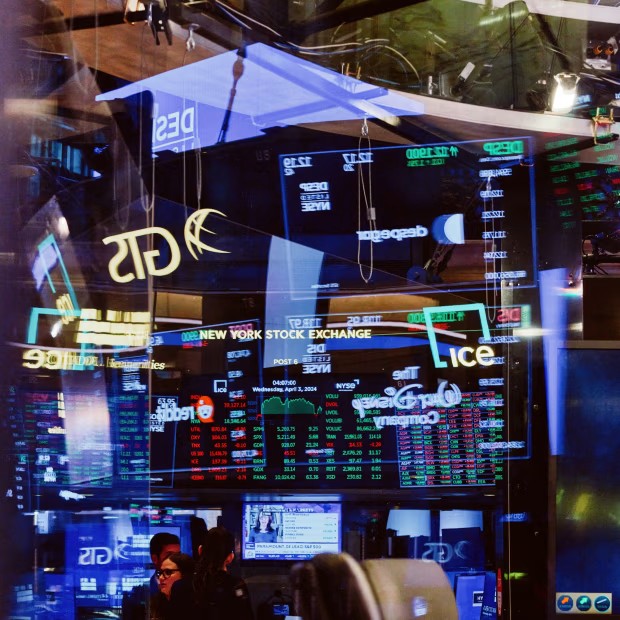
Reflection of market data and quotes inside the NYSE building
NYSE's crypto strategy also extends to the prediction market. This rapidly growing sector allows users to bet on various topics such as politics and sports. In October last year, ICE agreed to invest up to $2 billion in Polymarket, raising the valuation of this blockchain-based prediction market trading platform to $9 billion.
This seemingly unlikely deal stemmed from both parties' shared experience during an FBI raid. On November 13, 2024, FBI agents raided Polymarket founder Shayne Coplan's Manhattan residence in the early morning, waking him up and confiscating his phone to investigate whether the platform illegally allowed U.S. users to trade on its website.
After the Department of Justice dropped the investigation, Sprecher reached out to Coplan. In an interview with CNBC, Sprecher stated that Coplan had been "wrongly accused of misconduct and was subjected to an FBI raid," a situation Sprecher himself had faced a few years ago.
"I'm old and bald, he's young with messy hair; I wear a closet full of ties, I bet he doesn't even own one," Sprecher said on the floor of the NYSE, "The company we are in now was founded in 1792, while he has the hottest company in the financial services sector as of 2025."
Similar to cryptocurrency companies, the prediction market has also been controversial in its rise. The Trump administration and various states are currently debating whether event-class contracts constitute online gambling and should be regulated accordingly.
The NYSE has proactively steered clear of this controversy, with Sprecher explicitly stating that the NYSE's interest lies in non-sports betting such as weather and corporate events.
"If Polymarket can handle sports-related businesses, that's great. In terms of what we can do for them and what they can do for us, that is not our top priority," Sprecher said in last October's earnings call.
Betting on the prediction market is not the NYSE's first foray into preemptively positioning itself in emerging and controversial industries. In January 2015, the NYSE made a minority equity investment in Coinbase when Bitcoin was still a fringe asset, priced around $300; upon selling this stake in 2021, they made a profit of $900 million.
Not all crypto investments by the NYSE have paid off. The most prominent example is Bakkt. Launched by ICE in 2018, the platform aimed to offer physically settled Bitcoin futures. Since then, its business model has frequently shifted, transitioning from a retail loyalty points app to a focus on technology infrastructure. By 2023, ICE had written down over $1 billion of its Bakkt stake. In 2024, the stock even received a delisting warning from the NYSE.
Today, Bakkt is attempting to transform into an AI-driven infrastructure platform, but it is still struggling with the loss of a key client, Webull, which contributed 74% of its crypto business revenue in 2024.
Discussing Bakkt's latest transformation, Benchmark analyst Mark Palmer said, "This is still a story that needs to be told in facts, and this situation may persist until a large number of partnerships are realized and announced."
Original Article Link
Welcome to join the official BlockBeats community:
Telegram Subscription Group: https://t.me/theblockbeats
Telegram Discussion Group: https://t.me/BlockBeats_App
Official Twitter Account: https://twitter.com/BlockBeatsAsia