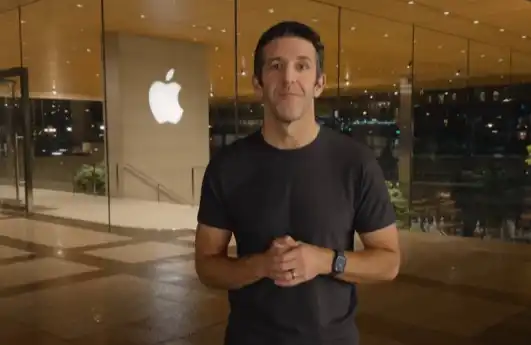
After the Collapse of the Believe Flywheel Myth, 26-Year-Old Prodigy Founder Stands at Federal Court Defendant's Dock

Original Title: "26-Year-Old Believe Founder Sued by Distrustful Investors"
Original Author: Nicky, Foresight News
On March 23, 2026, a complaint was filed in the Southern District of New York federal court, formally naming 26-year-old Australian entrepreneur Ben Pasternak and his entities B24, Inc. and Believe Foundation as defendants.
This class-action lawsuit, initiated by investors Joshua Lee and Pierre Montmeas, accuses Pasternak of engaging in deceptive business practices and false advertising through three consecutive token launches and a forced migration, resulting in consumers losing hundreds of millions of dollars. It has been nearly six months since his last original social media post.
At the heart of this lawsuit is a Solana ecosystem application called Believe. Believe (formerly known as Clout.me) is a Solana social token issuance platform launched in 2025 by Pasternak. Users could create tokens without code by tweeting "@launchcoin + token name" on the X platform, utilizing a bonding curve mechanism that automatically upgraded the token to the Meteora pool once reaching a $100,000 market cap. The platform was positioned as a "crowdfunding platform for ideas," and its native coin, LAUNCHCOIN, reached a peak market cap of $370 million in May 2025.
According to the complaint, in January 2025, Pasternak introduced a token named after himself, PASTERNAK, and publicly claimed on the same day to have "0 ownership" of the token. This statement successfully crafted a narrative of "no insider allocation," with the token's market cap hitting $80 million on the first day. However, within a week, the price plummeted by over 95%, with the market cap dwindling to around $190,000 by March 2025.
On April 28, 2025, the platform rebranded from Clout to Believe; on May 2, the on-chain metadata of PASTERNAK was altered to LAUNCHCOIN, although the token contract itself was not redeployed. The complaint notes that in mid-May, LAUNCHCOIN's market cap peaked at over $240 million, reaching a historic high of $0.3647. Subsequently, the price continued to decline, and during this time, Pasternak and the Believe official accounts made at least twelve public commitments to initiate a "flywheel" buyback mechanism, using platform fee revenue to purchase tokens on the open market to support the price.
On October 15, 2025, the Believe team announced the mandatory migration of LAUNCHCOIN to a new token, BELIEVE. Holders are required to complete a 1:1 exchange by October 29th, or their tokens will be permanently destroyed.
Simultaneously, the total supply of the new token has increased from 1 billion to approximately 1.33 billion, a 33.3% expansion. The whitepaper detailed the allocation of the additional tokens: around 17% allocated to current and future contributors, with a four-year vesting period and one-year cliff; about 5% allocated to early investors with a one-year cliff; approximately 3% allocated to the foundation, with no lock-up restrictions and immediately available.
Original LAUNCHCOIN holders did not receive any additional compensation and saw a direct dilution of their holdings.
The whitepaper further pointed out that on the day of the migration announcement, Pasternak publicly stated that "no individual or entity would receive tokens for at least one year," a statement at odds with the immediate unlocking of around 40 million tokens for the foundation. Additionally, the Believe team described the supply increase as "25%," while the actual mathematical calculation results in an increase of approximately 33%, sparking widespread questioning and ridicule within the crypto community.
In terms of the platform's economic model, Believe charges approximately a 2% fee per transaction, initially split between the token creators and the platform, then adjusted to 70% for creators and 30% for the platform after June 2025. The platform also introduced a "Scout" mechanism, where the first user to trigger token launch receives 0.1% of subsequent transaction fees. The whitepaper estimated that Believe has processed around $60 billion in transaction volume, with total platform fee revenue of about $54 million.
As the creator of PASTERNAK, LAUNCHCOIN, and BELIEVE, Pasternak continues to receive creator fee shares. The whitepaper also highlighted that in the week of the migration announcement, on-chain data showed significant selling activity from top wallet addresses.
Pasternak's final original tweet was posted on October 16, 2025. In this lengthy post, he admitted for the first time that he had never purchased any Solana tokens before launching the initial token, reaffirmed that the team did not receive token allocations in the initial distribution, clarified the oversight in describing the supply increase, pledged that the foundation holdings would not be sold, and committed to initiating a buyback flywheel after the migration is completed.
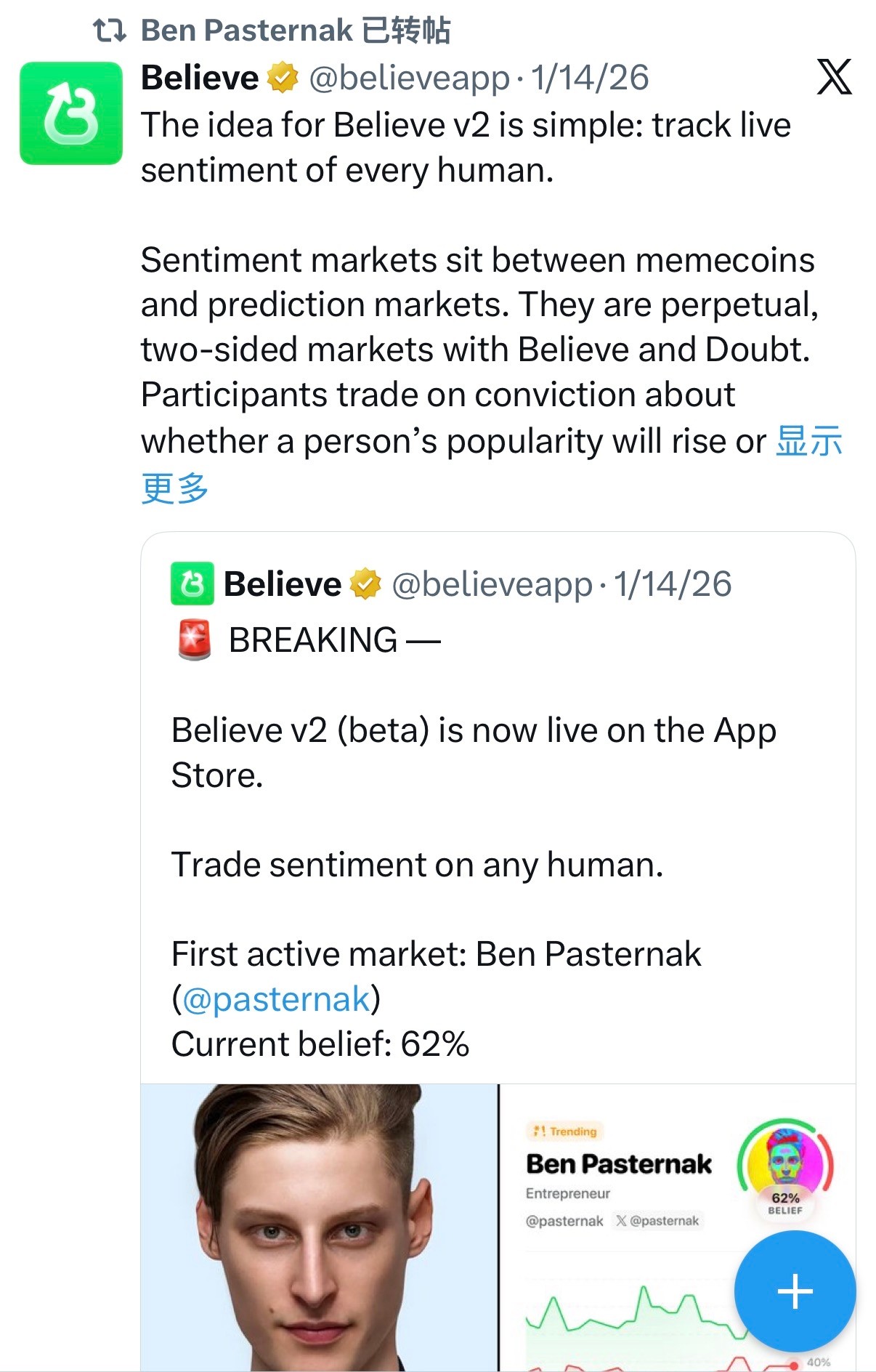
He retweeted a tweet from Believe's official account on January 14, 2026, which stated: "The concept behind Believe v2 is simple: to track real-time emotions of everyone."
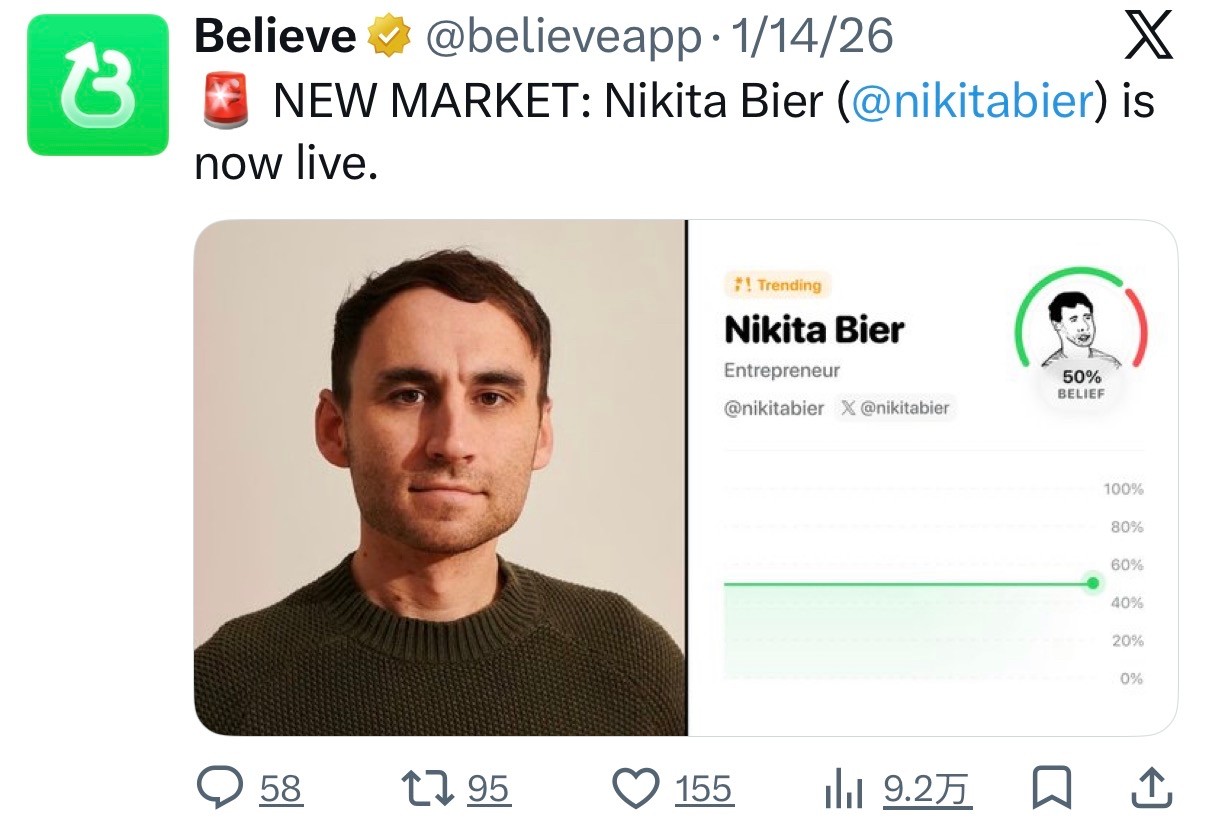
Believe's official account also saw its last update on the same day, with the final tweet announcing: "New listing: Nikita Bier (@nikitabier) is now available for trading." Subsequently, whether it was Pasternak personally or the project's official accounts, social media fell completely silent.
Believe v2, launched in January 2026, attempted to pivot towards an "emotion market," allowing users to bet on the real-time popularity of public figures through a perpetual binary market, but failed to regain market attention. As of the date of the lawsuit, the BELIEVE token's market cap was around $1.2 million, evaporating from its all-time high.
This lawsuit invokes New York's General Business Law Sections 349 and 350, California's Unfair Competition Law and False Advertising Law, while also asserting common law claims such as negligent misrepresentation and unjust enrichment. The plaintiff seeks the court to award actual damages, refund platform and creator fees, and, if necessary, implement constructive trusts and injunctive relief on traceable digital assets.
Documents reveal Pasternak resides in Manhattan, New York, and his controlled entity B24, Inc. is registered at an address in New York, with platform operations and development all pointing to that jurisdiction. As of the time of reporting, he has not made a public response to the lawsuit or disclosed the specific amount of personal gain from the Believe project.
The Legendary Teenage Years
Prior to this legal storm, Pasternak's life story was nothing short of legendary. Born on September 6, 1999, in Sydney, Australia, to a Jewish family, he grew up in the Wollstonecraft suburb. Teaching himself programming at age 13, at 14 in 2014, he collaborated with a Chicago engineer during a school science class to create the iOS game "Impossible Rush," which garnered millions of downloads within hours and briefly reached 16th place on the overall U.S. App Store chart. The media quickly picked up on the story, dubbing him as the "next Zuckerberg."
In January 2015, at age 15, Pasternak turned down internship offers from Facebook and Google, dropped out of high school, and flew alone to New York in search of venture capital. In the same year, in April, he founded the teenage social shopping app Flogg and secured around $2 million in funding from institutions like Binary Capital and Greylock Partners.
Flogg underperformed and shut down at the end of 2016. He then poured resources into a new project, Monkey, a teenage video chat app.
Monkey amassed over 20 million users and was acquired by the Chinese company Holla in 2018, becoming his first successful exit from a startup during his teenage years.

Starting in 2018, Pasternak shifted to the food tech sector, co-founding Simulate and launching plant-based chicken nuggets NUGGS. The project received support from notable investors like Alexis Ohanian, Jay-Z, and McCain Foods. In 2021, it raised over $50 million, with the company's valuation exceeding $2.5 billion at one point. That same year, he was featured in the Forbes "30 Under 30" list.
From mobile apps to food tech, and now to Web3, Pasternak has ridden the wave of each transformation, accompanied by significant controversies and risks. As he found himself deeply embroiled in legal battles, his personal life also took a dramatic turn.
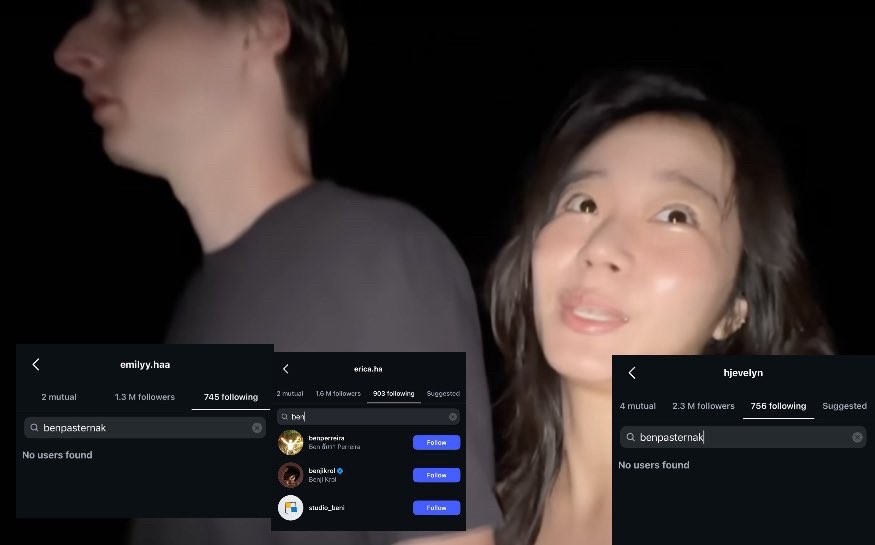
Since the second half of 2024, Pasternak has been publicly dating TikTok star Evelyn Ha. Evelyn, from the influential Korean American Ha sisters on social media, frequently shares their lavish interactions on social platforms with Pasternak.
However, in early April 2026, netizens noticed that all three Ha sisters unfollowed him on Instagram simultaneously, and Evelyn was subsequently exposed to have a close relationship with a Twitch streamer. The public widely interpreted these actions as a signal of the relationship's end. Some in the crypto community jokingly remarked, "Finally, we can reallocate the budget for buying Hermès back into the flywheel."
From a teenager writing apps in a high school classroom in Sydney to an entrepreneur sitting in a New York federal court defendant's chair, Ben Pasternak, at 26, faced a dual storm of legal and emotional challenges. He was once dubbed the "next Zuckerberg" by the media, but now his name is more closely associated with "fraud," "collapse," and "unfollow."
Original Article Link
Welcome to join the official BlockBeats community:
Telegram Subscription Group: https://t.me/theblockbeats
Telegram Discussion Group: https://t.me/BlockBeats_App
Official Twitter Account: https://twitter.com/BlockBeatsAsia