The higher the fed's debt, the better for bitcoin
Omkar Godbole, part of this article from Yahoo Finance
The daily planet
If the fed's balance sheet keeps expanding, who will be most affected?
While no one knows yet, some cryptocurrency industry experts believe it could bode well for bitcoin in the long run.
In fact, the fed has long since stopped influencing monetary policy in the traditional way of printing money. It now "manipulates" the money markets mainly by lowering its target for the federal funds rate, increasing bank deposit credit, and conducting large-scale purchases of securities and Treasury bonds in the open market. As America's central bank, the federal reserve's balance sheet contains many different assets and liabilities, and their control methods, such as when the market interest rates began to rise, the fed will by buying bonds to inject more liquidity into the money system, so that commercial Banks have more cash available for lending, at the same time stimulate the market interest rate gradually decline.
In October 2019, the fed's assets rose by $162bn in just one month, the biggest monthly gain since 2008. Leading cryptocurrency analyst @rhythmtrader suggested in a tweet that the fed's growing assets could be a sign of future market turmoil, in which bitcoin could play a "safe haven" role.
According to previous reports, the fed has added $270bn to its balance sheet since September 11, meaning it has added $5.8bn a day over that period. As of Nov. 15, the fed's total assets were a staggering $4.04 trillion, according to the st. Louis fed.
The fed intervenes in money markets
Indeed, the us money markets have been in trouble since September 2019, after which the fed bought treasuries and other securities from a select group of member Banks and, through this approach, engaged in overnight repo and open market operations, pushing short-term interest rates as high as 10 per cent. When the fed USES open market operations to buy large amounts of assets from Banks, it is in effect "printing money" because it creates money out of thin air, but through credit and electronically. Ordinary people see no new money being created, while predatory lenders welcome the fed's quantitative easing, which threatens to undermine the lending system.
It is important to note, however, that the fed does not actually have the power to enforce a specific fed funds rate. At best, it can influence the money supply to ensure that rates remain within the current target range of 1.5% to 1.75%.
Markets don't trust the fed anymore!
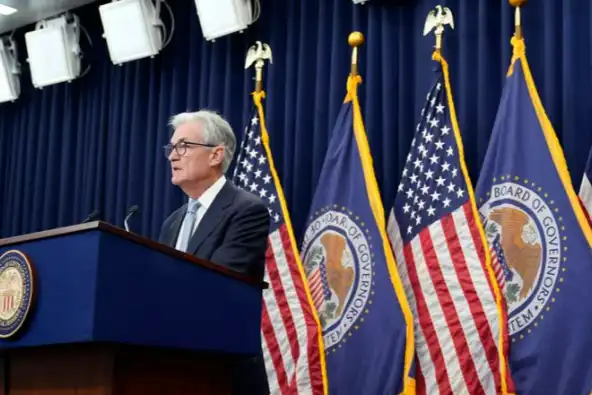
The fed has been snapping up government bonds in an effort to stimulate the money supply and support economic growth, but fed chairman Jerome Powell has repeatedly said the purchases are not a quantitative easing strategy.
But is it?
In fact, the fed's massive purchases of Treasury bonds, securities and other assets from its illiquid member Banks can give the market the illusion that the fed has confidence in failing financial institutions and many troubled Banks. If the U.S. government does not stop the fed, it will lead to new money in the market and inflation, leading to a distrust of the purchasing power of fiat money. In the past, it seemed impossible to stop the fed from doing so, but now it is possible to use digital currencies, precious metals and other forms of barter to avoid plunging yourself into a crisis of fiat currency inflation.
However, some experts believe that the fed, which conducted three rounds of quantitative easing between 2009 and 2015, will not stop. Daniel Lacalle, author of Escape from the Central Bank Trap, wrote in a recent market analysis for mises.org:
"The explosion of the government bond repo market tells us that the accumulation of risk and debt is far greater than initially thought, so the fed has resorted to a disguised quantitative easing program to contain it."
Meanwhile, Peter Boockvar, chief investment officer at Bleakley consulting group and editor of The Boock Report and CNBC contributor, said The market may view "fed balance sheet expansion" as another form of quantitative easing. As we all know, as Sven Henrich, market analyst at NorthmanTrader, points out, the recent rally in us stocks suggests that investors do not really believe what the fed says and are indeed looking at "fed balance sheet expansion" as another form of quantitative easing.
From the second week of October 2019 to the second week of November 2019, the s&p 500 rose for six straight weeks, hitting a new record high of 3,154 on Wednesday, even though it fell 0.33% last week.
Can bitcoin be the answer to the fed's unprincipled monetary policy?
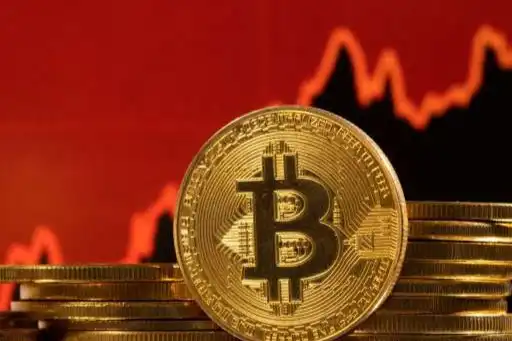
In the cryptocurrency market, bitcoin is often seen as "digital gold" and thus a hedge against currency and fiscal crises.
Morgan Creek Digital Assets founding partner of Anthony Pompliano believes that the currency is developing towards a unique situation: legal currency rate is becoming more and more low, more and more governments try to quantitative easing, and [miners compensation] will be halved in 2020, when the three things happen at the same time, is expected in the next 2-3 years provides sufficient fuel for the currency prices.
It's true that the supply of bitcoins is fixed, and the incentive to mine drops by 50 percent every four years. In essence, the rate of supply of bitcoin is halving every four years compared to the money supply expansion strategies adopted by some central Banks -- indeed, many have been expanding since 2009.
According to jpmorgan's analysis, money markets are unlikely to return to normal any time soon, and the fed is likely to continue expanding its balance sheet in the near future. Looking ahead, the monetary policy gap between bitcoin and the fed will widen further as the miners' rewards are further halved in May 2019.
In this context, it's no surprise that Cameron Winklevoss, founder of Winklevoss Capital Management, is bullish on bitcoin, saying on twitter:
"Since the 2008 financial crisis, the fed has created $2 trillion in new money and tripled the size of its balance sheet. So there are two trillion reasons to own bitcoin."
Bitcoin could benefit from the cantiron effect of quantitative easing
Lord planet explains the Cantillon Effect, the idea that changes in the quantity of money have different effects on the real economy depending on how money intervenes in the economy and who is the holder of the new money. According to candelone, changes in the supply of money and credit have a significant impact on the economy through changes in relative prices. The effect of incremental money on the economy depends on how and how money is injected. Creating more money would not necessarily benefit everyone. Instead, it could be accompanied by a process of redistribution. Those who get the money first will push up the price of commodities, generating inflation, while for another part of society, the inflation policy is a kind of plunder. So through the economic cycle process, the redistribution of income has been completed.
For example, the expected increase in the money supply is actually due to quantitative easing or interest rate cuts priced in the financial markets. In short, those who invest in the stock market and the real estate market are the first to benefit from the inflation policy. However, when new investors enter the market, the assets in the market are already overvalued, and people are reluctant to keep money in the bank because of falling interest rates and the declining purchasing power of money.
As the analyst Pierre Rochard pointed out in August, extending quantitative easing could force investors to diversify into bitcoin, which is inherently deflationary.
Gabor Gurbacs, strategic analyst/head of digital assets at VanEck/MVIS, strongly supports Pierre Rochard's theory that quantitative easing has led to dollar depreciation and asset inflation, from which both bitcoin and gold will eventually benefit. Gabor Gurbacs:
"The fed to expand the balance sheet is a disguised form of quantitative easing, in fact, the federal reserve to buy government bonds and expand the repo market plan, the purpose is to control currency markets. The currency and gold may provide a hedge, or at least an alternative means of hedge, once so strict control of the central bank system a catastrophic failure, can at least give some buffer."
Of course, one could argue that bitcoin isn't a safe-haven asset, so they prefer to buy stocks. Analysts at Delphi Digital say a gradual decline in stock market volatility could be an antecedent feature of the bitcoin bull market, such as an inverse -- albeit imperfect -- relationship between bitcoin prices and the VIX index over a longer time period, during the 2017 bitcoin price boom.
Between 2009 and 2015, the fed conducted three rounds of quantitative easing, during which time the s&p 500, the global benchmark for risky assets, rose more than 200%. Gold, another traditional safe-haven asset, rose from $800 to $1,921 in the three years to 2011, but fell back to $1,050 in December 2015.
Even if we think of bitcoin as a risky asset, the fed's quantitative easing policy still seems to be one of the biggest drivers of bitcoin's bull run.
Silver block rhythm BlockBeats reminded, according to the circ and other five departments issued in August 2018 on the guard against in the name of the "virtual currency" "block chain" illegal fund-raising risk warning "file, please the public rationality block chain, don't blindly believe in reduction commitment, set up correct concept of money and investment philosophy, effectively raise the risk consciousness; To the illegal crime clue that discovers, can report to concerned branch actively reflect.
Welcome to join the official BlockBeats community:
Telegram Subscription Group: https://t.me/theblockbeats
Telegram Discussion Group: https://t.me/BlockBeats_App
Official Twitter Account: https://twitter.com/BlockBeatsAsia
 Related Articles