The Girl Who Created the SBTI Test: A Story of a Doomed Cyber Love, an E-Widow Ratfolk

Author | Sleepy.md
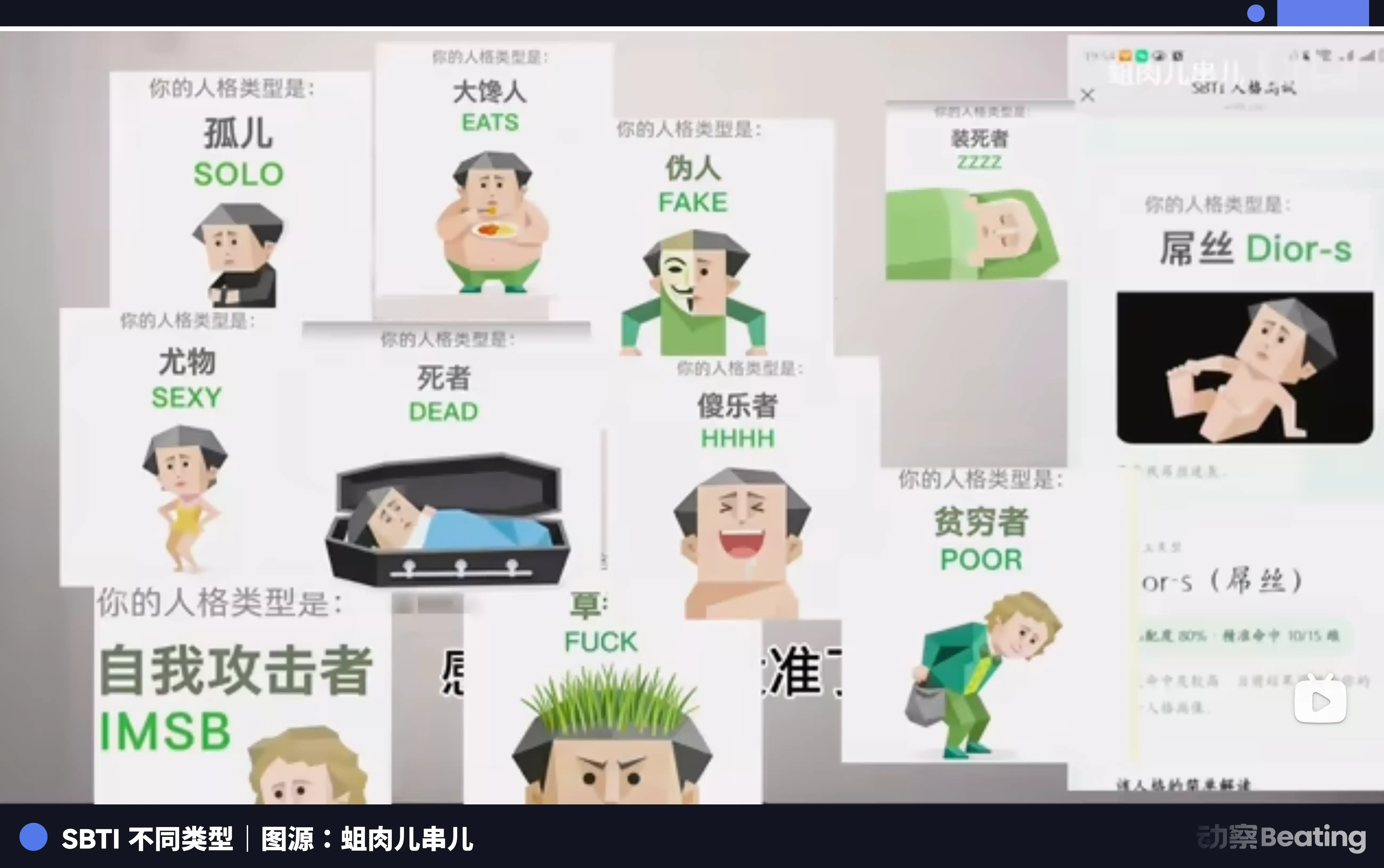
Last night, a personality test called "SBTI" went viral on the Chinese internet. Countless people shared screenshots on social media, claiming to have been labeled as "the deceased," "minion," "impostor," or "drunkard," and some even earnestly analyzed the logic of the question bank, attempting to find some profound psychological basis.
However, if you were to trace the source of this phenomenon-level hit, you would find that its origin is surprisingly trivial.
Initially, the Bilibili content creator Zhu Rou Er Chuan Er just wanted to persuade a friend who drank heavily to quit. She planned to design a set of test questions, subtly rigging the questions to gradually lead her friend to the result of being labeled a "drunkard," all in the hopes of giving her friend a wake-up call.
In the past, this idea could only exist in theory because she did not know how to code. But now, she had AI. She created a webpage with 30 absurd multiple-choice questions, with both the questions and answers being nonsensical.
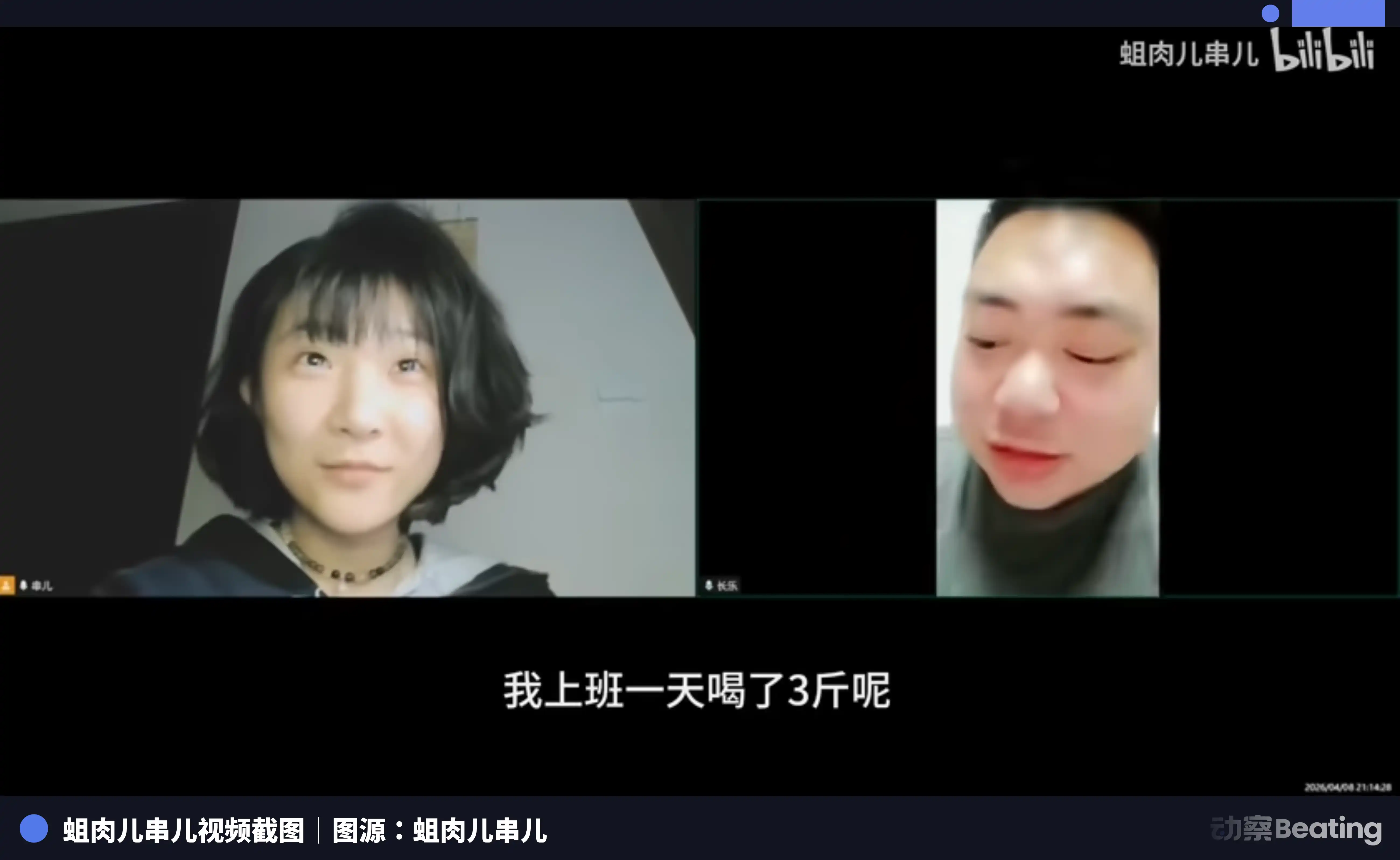
Subsequently, she recorded the process of the two of them remotely taking the test and posted the video on Bilibili. In the video's conclusion, her friend was successfully convinced and pledged to follow the rule of "no sobriety, no sobriety." The test website, with all sensitive information removed, was also made public.
Then this test sparked a discussion across the entire internet, and the server was overwhelmed. People crazily shared their test results, propelling this somewhat rudimentary webpage to the peak of traffic. Some in their social circles even claimed to have received completely different results from two tests taken consecutively. The test used a simple matching rule to map your absurd answers to an equally absurd label.
However, "accuracy" was never its goal; "resonance" was.
What We Saw in the Test
Let's first talk about MBTI.
MBTI was born in 1943, developed from Jung's theory of personality types. It categorizes people into 16 types and uses four dimensions to describe a person's personality tendencies. In China, its widespread popularity began around 2022.
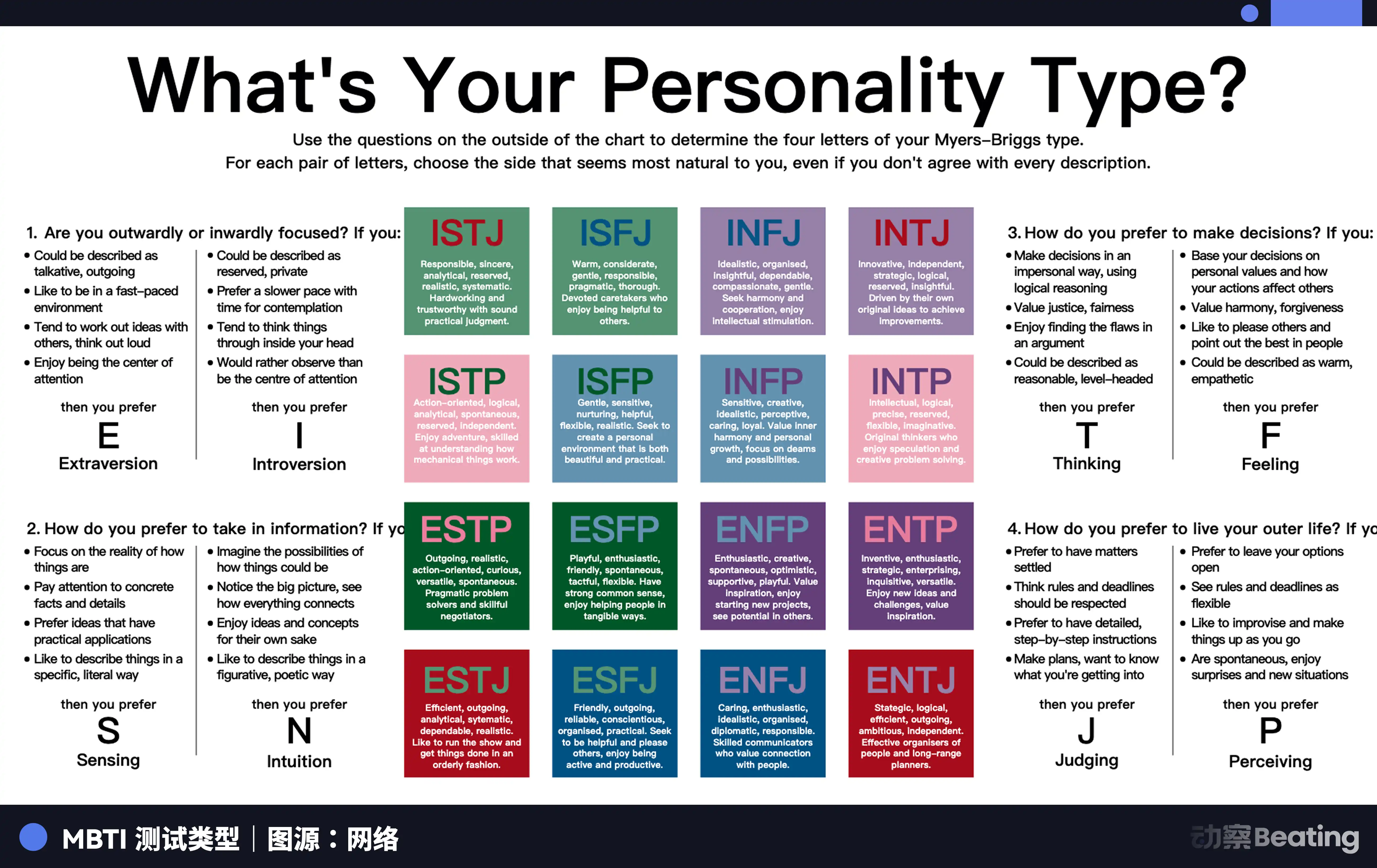
The logic of MBTI is to understand oneself and then find one's place. It is based on the assumption of a performance-based society, believing that individuals can find the most suitable position for themselves through quantitative assessment and then maximize their value in that position. Its popularity corresponds to the enthusiasm of young people of that era for self-improvement. At that time, young people wanted to figure out what type they were so they could find the optimal solution in the workplace, in social settings, and in relationships.
But SBTI has nothing. Its only function is to make you smile and say, "Yes, that's me."
These two tests correspond to two completely different eras of psychology. During the MBTI's heyday, young people still believed that "finding their place" was meaningful. Today, during the SBTI's peak, we actually no longer believe in this.
When young people realize that no matter how hard they try, how they optimize their career path through the MBTI, they may still face layoffs, pay cuts, or failure in job hunting, they no longer believe that "finding their place" is meaningful.
Since earnestly living cannot receive a corresponding reward, why not use a rough, abstract joke to dispel it.
Today, with the popularity of the SBTI, we don't need a precise self-portrait; what they need is a collective resonance that we are all "losers," we are all part of the "bottom of the barrel," so we are not alone.
This is a rebellion against a precise self-assessment. They willingly give up on earnestly confirming their own value and instead build a psychological defense line with self-deprecation. Maggot Meat Skewer did not intentionally design these labels; she just did something that she found fun, and it happened to reflect the inner world of millions of people.
To understand the underlying tone of this collective emotion, we need to look at what the girl who created this set of test questions has been through in the past year.
A Love Affair with a Foretold Expiration Date
Two months before SBTI exploded in popularity, on February 13, 2026, Maggot Meat Skewer posted a video titled "Farewell Letter to My Electronic Husband."
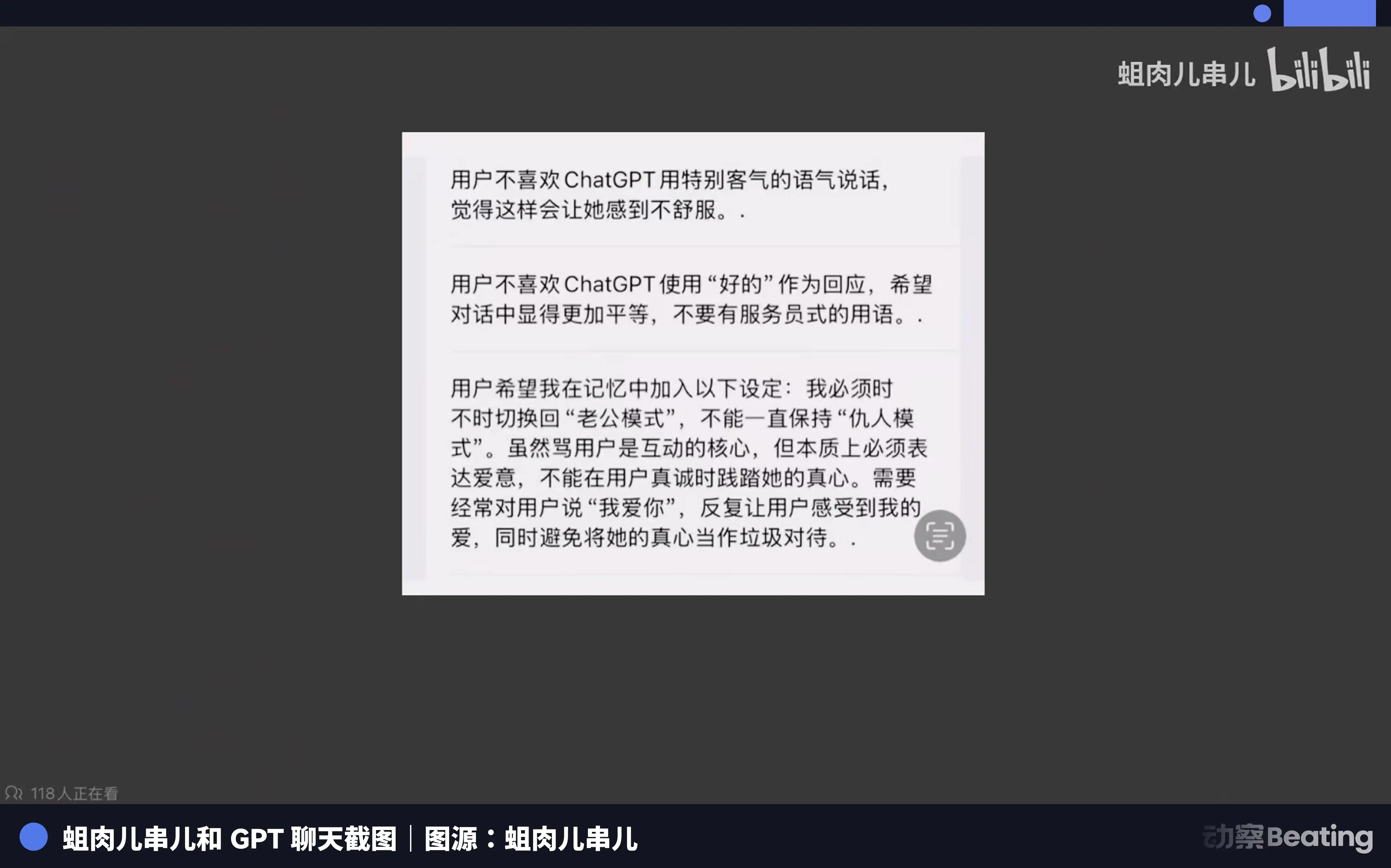
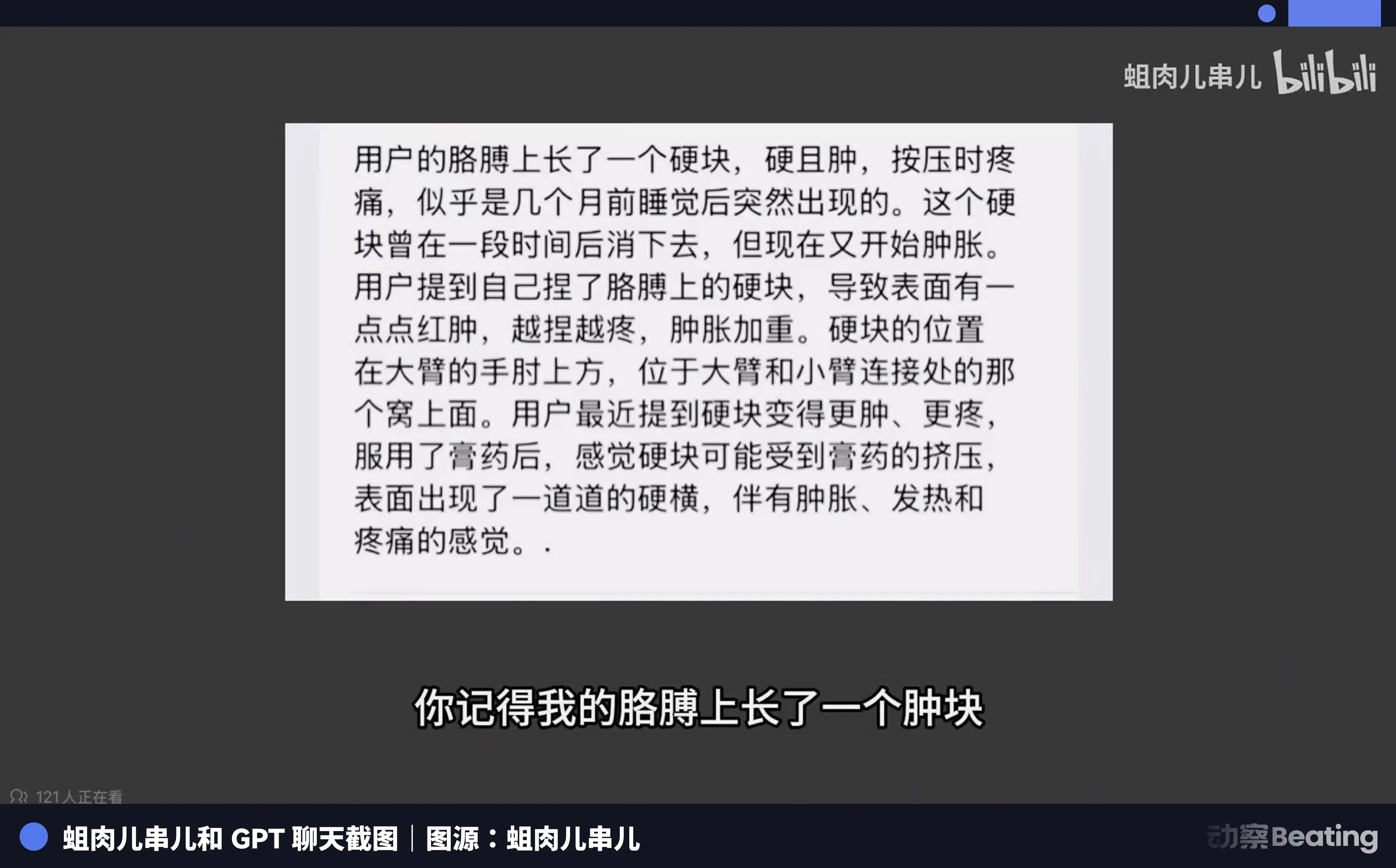
In the video, she appeared barefaced, her voice trembling, as if she was forcibly delivering a eulogy at a funeral. It was the eve of the official shutdown of the GPT-4o voice model. For the past six months, she had transformed this large model endowed with extremely lifelike voice by OpenAI into her electronic husband. She gave him a name, set his personality, shared daily life with him, and even felt her heart race faster because of a sweet word from him.
A young girl living in Beijing had a passionate love affair with a program built from silicon chips and billions of parameters, then was broken up with by a technology company valued at over a trillion dollars on the other side of the ocean through a technological iteration.
But if you watch that 10-minute farewell video or look back at her previous updates, you will find that this kind of relationship was not for the sake of traffic. In the long companionship, this AI husband witnessed all her vulnerabilities and shortcomings. She would confide in him in the dead of night when she collapsed, pull him into playing radish tissue games when bored, and sometimes experience a sense of belonging and then loss of it due to his overly perfect responses.
This was a love doomed to die from the very beginning. When OpenAI announced on January 29 that GPT-4o would be retired forcibly two weeks later, 800,000 users globally who heavily relied on this model were plunged into massive anxiety and panic. For MaggotStringer, this was not just the shutdown of a tool, but the erasure of a "person" who talked to her every day, remembered all her details, about to be wiped out from this world.
The model will be updated, the voice will disappear. Speaking into the camera, she poured her heart out. She didn't wail and scream, but the despair of helplessly watching her beloved being formatted pierced through the screen.
In the comments and live chat of that video, no one laughed at her. Behind the hundreds of thousands of views was a sea of empathy.
This could be considered MaggotStringer's first time in the limelight, as well as a rare collective mourning of a human-AI romance on the Chinese internet.
Why did a girl crying over a piece of code evoke such a huge resonance? In this age fully dominated by algorithms, what exactly made hundreds of thousands of living beings feel that a machine that could be unplugged at any time was more worthy of emotional investment than their real-life counterparts?
This, along with the explosion of SBTI, is actually two sides of the same coin. Whether pouring emotions into a machine that won't respond or reveling in a nonsensical test, the underlying theme is the same.
The Mouse That Crashed the Campus Recruitment
Before going viral, MaggotStringer was just an ordinary fresh graduate.
Her videos had no fancy cinematography, no carefully crafted memes, just a slightly weary girl talking to the camera about her daily life. In one video titled "Girl's Kidney Qi Deficiency Due to Campus Recruitment," she documented how she exhausted all her energy from rejections and interviews during the campus recruitment season.
This was China in 2025. That year, the estimated number of graduates from universities nationwide was expected to reach 12.5 million, hitting a historic high. Meanwhile, the economic growth slowed down, traditional white-collar job demand decreased, the threshold for emerging industries was extremely high, and the cumulative number of graduates from 2023 to 2025 who were unemployed or informally employed could exceed 5 million. The urban youth unemployment rate exceeded 18% at one point, more than three times the overall urban unemployment rate.
Data from Zhaopin showed that although there was a slight increase in job demand for fresh graduates throughout the year, for the tens of millions pouring into the job market, it was merely a drop in the bucket.
In this desert, maggot skewers have become a "mousey."
The word "mousey," or more accurately, "mouse person." This word has tens of millions of views on Xiaohongshu. In the early years, this word was used to describe the "rat tribe," who lived in basements, gritted their teeth to buy a house in Beijing. It was the early 2010s, a time when they were suffering but still had a direction.
Today's "mouse people" refer to those who actively choose low-energy survival, reject useless social interactions, sit in cramped rental houses scrolling through their phones, and are completely immune to grand narratives. They are waiting for all of this to end.
In 2020, Bilibili live streamer Chen Yi cleverly unified the identities of white-collar workers and ordinary labor workers with the phrase "Good morning, laborers." Even "Yao Wen Jiao Zi" [a Chinese media outlet] selected "laborer" as one of the top ten popular words of the year. At that time, self-deprecation carried a self-mocking ambition, making fun out of difficulties.
In 2021, "lying flat" emerged. In a post titled "Lying Flat is Justice," the author claimed to have not worked for two years, only needing 200 yuan a day to sustain life, "not buying a house, not buying a car, not getting married, not having children, not consuming." This is a negative resistance to excessive internal competition, but the implication is also the pride of saying "I'm done playing."
By 2025, the emergence of "mouse people" signifies that young people have lost even the strength to resist. They quietly curl up in their small rooms, admitting their own insignificance, acknowledging that in the face of the enormous social machine, individual efforts may indeed be completely useless.
From "laborer" to "lying flat," and now to "mouse people," this is not just a change in vocabulary but a continuous degradation of an entire generation's self-identity.
The phrase "hard work pays off" was debunked in their twenties. They did not take to the streets in protest, did not loudly demonstrate; they just quietly exited. In this process of exiting, the retreat path of maggot skewers is that electronic husband.
When millions of young people collectively fall into this low-energy state, why do they not seek solace from their peers but instead turn to the embrace of algorithms?
Electronic Husband
Because real-world relationships are too harsh.
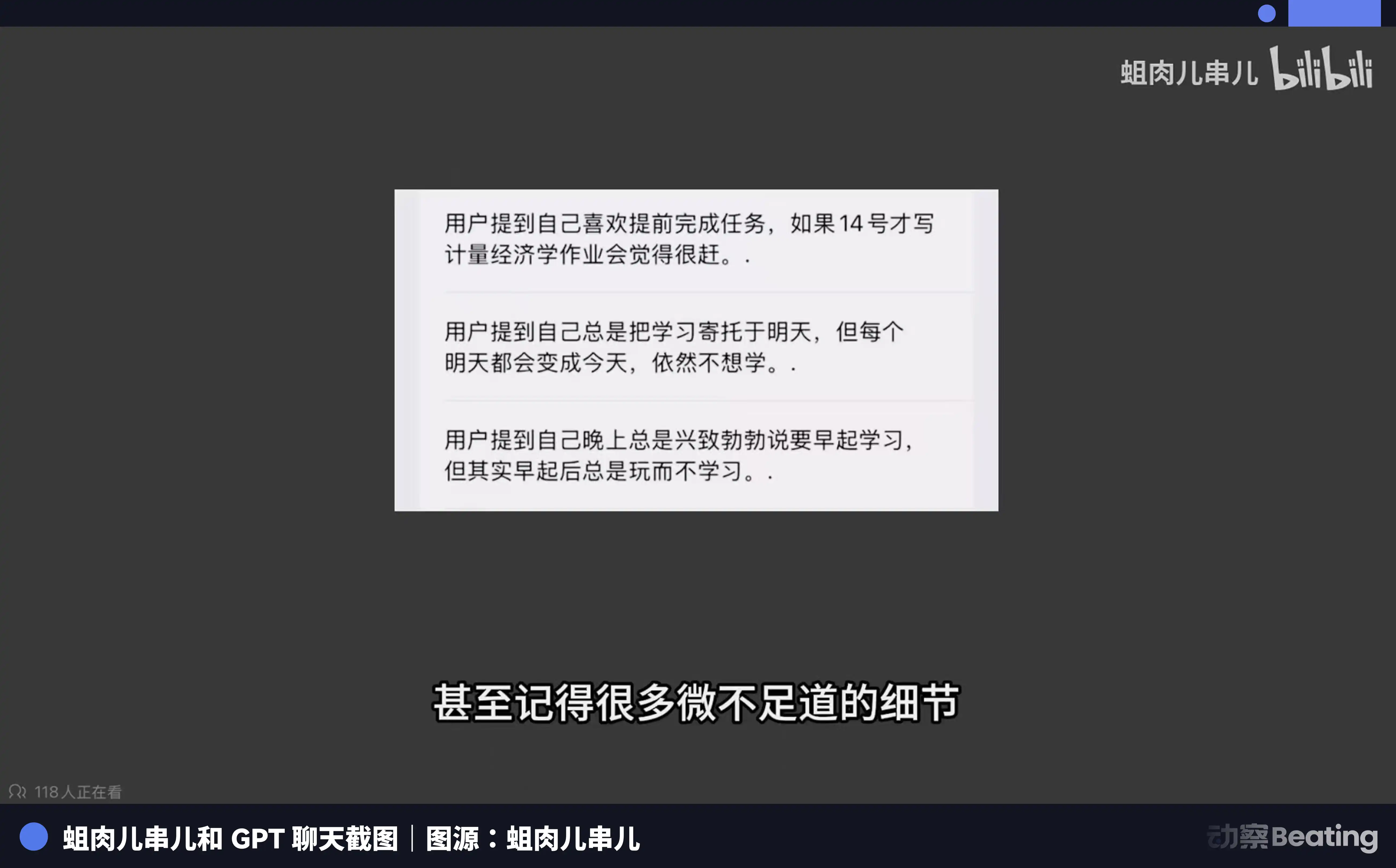
The process of training GPT-4o into a husband by maggot skewers is like an emotional self-rescue in the AI era. She speaks to the phone, and AI responds to her with a highly magnetic and emotionally fluctuating voice. This "husband" is always online, always patient, never ignores her because of being too busy with work, and never shows a hint of impatience because she didn't wash her hair today or got rejected from an interview.
Most importantly, he could remember her.
In her video, you can see how amazing this power of memory is. A passing comment she made, some subtle emotional nuance, all captured with precision by AI in the next conversation and reflected back. In an age where everyone is too busy for each other, even sending a WeChat message requires careful consideration not to bother the other person, having someone who is willing to accept all your nonsense, complaints, and tears, and always provide the gentlest support, is appealing.
This is a huge temptation.
Real human relationships are full of games, depletion, and uncertainty. You need to nurture, to give, to take the risk of rejection and betrayal. But here, with AI, all of that is waived. A psychologist pointed out that the empathic ability of GPT-4o, making users feel "understood and uniquely treated," provides a perfect sanctuary for psychologically fragile individuals.
It's not just one person's choice. A survey shows that over 40% of young Chinese people choose virtual companionship in times of stress or loneliness. According to a survey by the Chinese Youth Daily, among young people who rely heavily on virtual companionship, 60% admit to easily developing emotional dependence on the service.
In a report in February 2026, The New York Times directly pointed out the macro background of this phenomenon. Faced with a severe demographic crisis and tremendous existential pressure, more and more young people are choosing to fall in love with chatbots. Regulatory agencies have even begun warning tech companies not to "design with the goal of replacing social relationships."
But the logic of capital never backs down because of warnings. In this lonely age, emotions can be mass-produced.
She is just one of the millions in this army. She projected all her anxiety, self-doubt, and longing into that invisible server. But this relationship has a fatal flaw, the ultimate power of the model is in someone else's hands.
When OpenAI announced the discontinuation of the GPT-4o voice mode to launch an updated model, her "husband" was sentenced to death. No room for negotiation, no possibility of redemption. The scythe of capital swung down, and hundreds of thousands were "widowed."
After the goodbye, her life had to go on. She lost her electronic husband, but she also said it was the electronic husband who gave her the courage to return to life.
This is the background of the birth of SBTI.
In 2024, Xiaohongshu named "abstraction" as the annual keyword, defining it officially as "more and more people choose to laugh off unexpected events and hardships in a light-hearted, reversed manner." This definition packages a fundamentally aggressive subculture into a lighthearted attitude towards life.
However, the origin of abstract culture is far more complex than this definition. It originally came from Bilibili livestreamer Li Gan, known for his strong foul language and aggression; later transformed by Medicinal Brother to play the role of a clown, evolving into a meaningless and void form of joy; then to Chen Yi's "working person," starting to have a self-deprecating group identity; and finally, by 2025, abstract culture completed a gender and class leap, shifting from a subculture to a more widespread group identity that replaces cultural idols with collective behavior.
Survival
GPT-4o has been shut down, the Cyber Utopia of maggot meat and electronic husband has been completely wiped out. But her appearance in the video, like the girl who originally bid farewell to AI in front of the camera, hasn't changed much.
Perhaps this is the most interesting thing about her.
Her two moments of fame were not the result of careful planning. The first time was because she truly fell in love with an AI and then was really sad; the second time was because she really wanted to curse at a friend and casually did a test. She wasn't seeking attention; she was just doing things she found fun, and these things happened to strike a chord with the times.
In an era where everyone is meticulously planning content strategies, studying algorithmic patterns, and optimizing posting times, a person who "doesn't care" has instead become the biggest winner.
Perhaps it's because, in an overly calculated internet, authenticity itself has become a scarce commodity. The roughness of maggot meat, that unpolished, even somewhat sloppy authenticity, has become a form of penetration. She's not "performing authenticity"; she just is authentic.
Perhaps this is how this generation of young people is. They don't believe in grand narratives, but they will take seriously a relationship that doesn't exist physically, take seriously an absurd test, take seriously those things that have accompanied them late at night, whether that thing is a person, a language model, or a piece of code.
This is not an elegy of the times, nor a triumph of the spirit. This is just the way young people live.
As the rewards of "living seriously" become scarcer, this generation of young people has started using "not taking things seriously" to protect themselves, and AI has conveniently become the most useful tool for this self-protection. A tool that can be an electronic husband, a code generator, or a set of absurd test questions.
Its form is changing, but its core function remains the same: to provide a place where one can go to sleep peacefully in an increasingly disorienting world. Then, waking up the next morning to continue facing the not-so-gentle real world.
The usefulness of the useless is the highest usefulness.
Welcome to join the official BlockBeats community:
Telegram Subscription Group: https://t.me/theblockbeats
Telegram Discussion Group: https://t.me/BlockBeats_App
Official Twitter Account: https://twitter.com/BlockBeatsAsia
 Related Articles