Cyber Taoist Fortune Teller: Fake Taoist, AI Fortune Telling, and Northeastern Metaphysics History

Article | Sleepy.md
For thousands of years, in order to grasp even a hint of security in the face of an ever-changing destiny, the Chinese have developed an extremely complex system of explanations. From oracle bone divination to the Book of Changes (I Ching), and then to the highly systematized Four Pillars of Destiny, metaphysics has always been the most secretive yet effective psychological defense mechanism on this land. Even someone like Yan Fu, a master of the Confucian school of idealist philosophy, once quietly wrote in his diary, "The most bizarre thing in my life is fortune-telling."
How large is the market size of this system of explanations? According to industry insiders' estimates, the Chinese metaphysics market has long surpassed a trillion yuan.
Let's refer to some overseas data: as early as 2018, the revenue of the divination industry in the United States reached $2 billion; the situation in South Korea was even more exaggerated – in a country with a population of 50 million, the divination industry reached $3.7 billion, with 150,000 registered practitioners. It has almost become a national profession, to the extent that a fortune-telling variety show was even produced this year. The market size in China will only be larger, not smaller, than this.
Later, with the rise of modern technology, this traditional system of explanations was seen as outdated feudal superstition and was forcibly pushed to the social periphery. Technology attempted to rationalize and datafy the exclusive right to predict the future.
However, the most ironic part of history lies here. When technology advanced to the forefront, when AI's large models exhibited that almost miraculous reasoning ability, instead of eradicating metaphysics, it became the most handy weapon in the hands of metaphysics.
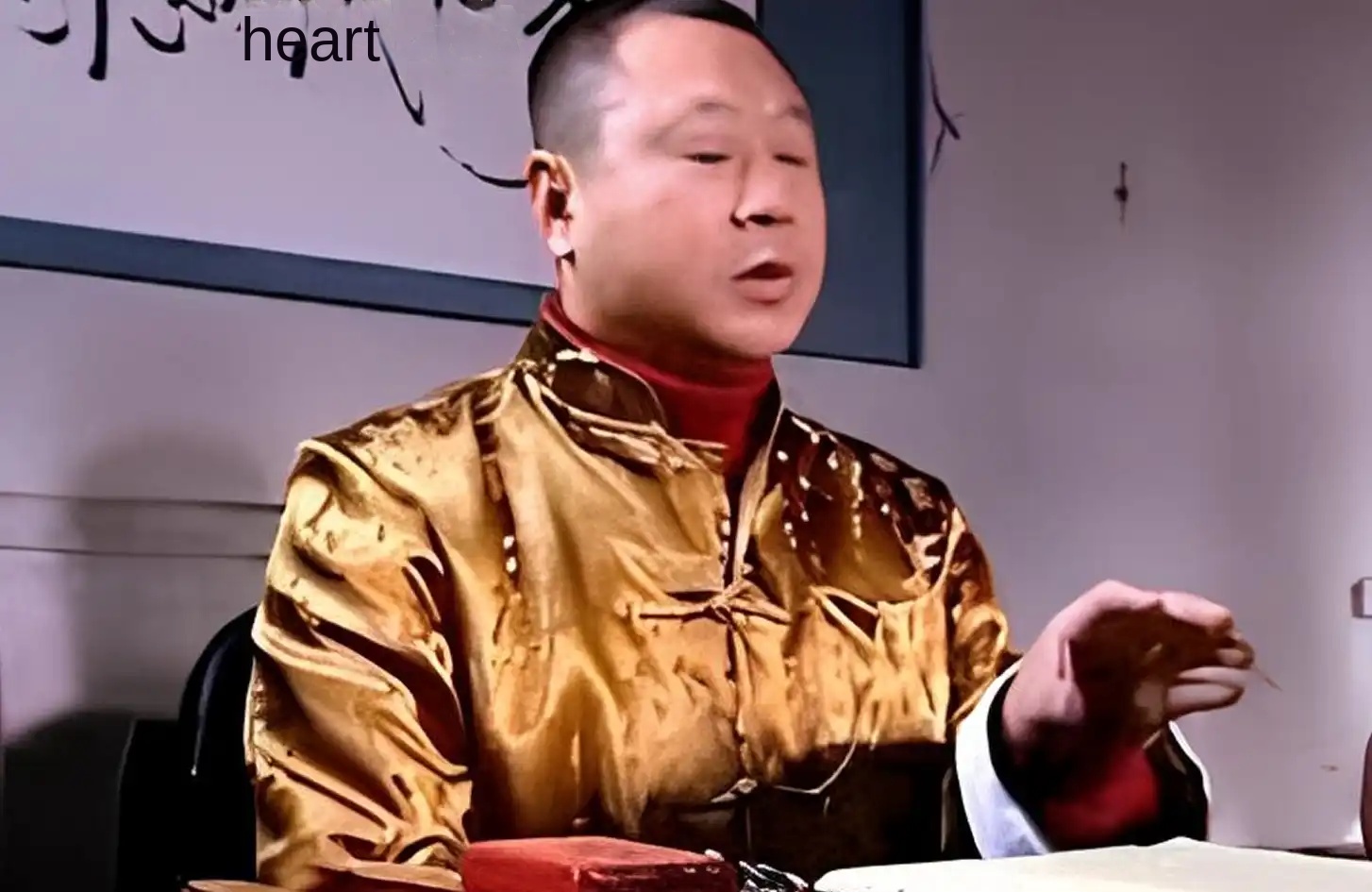
Recently, the Shanghai police first cracked down on a fake Taoist priest gang involving 50,000 victims over six months. When faced with the bizarre fate inquiries from these victims, these fake Taoist priests with only a junior high school education skillfully opened the AI large models to search for answers. Following that, the 60 million-user Celemency App was called out on World Consumer Rights Day (3.15). Its core business model revolves around using free AI fortune-telling to attract traffic and then reselling it to over 20,000 live-streaming hosts on the platform, charging by the minute.
You see, the cutting-edge AI seamlessly became an accessory to the oldest superstition. People pay for fortune-telling, and what they pay for has never been the cold, hard result; it's a process that can smooth out their anxieties. No matter how rigorous the AI's logic is, it cannot provide that touch of spirituality, nor can it play the role of a medium to communicate with deities.
In China, if you want to find an industry foundation for spiritual mediums, there is no place larger or more mature than the Northeast.
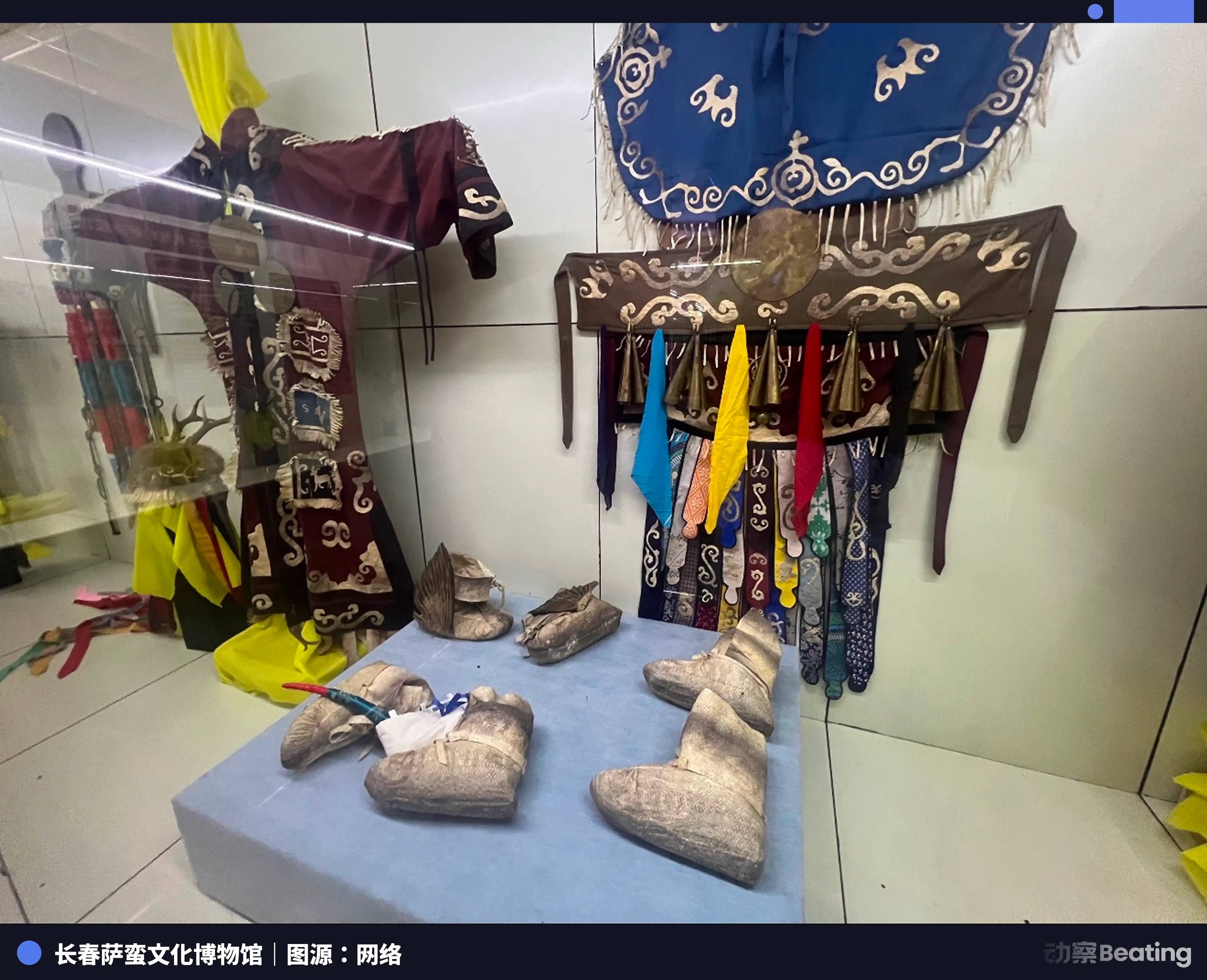
In this black soil region of the Northeast, there is already a deep-rooted shamanic culture and divine horse tradition. Here, the divine is not only a folk belief but also a substantial and large-scale group of practitioners. With the mobile internet's traffic dividend colliding head-on with the brute force computational power of AI large models, this massive group almost instinctively underwent a cyberpunk transformation.
And so, a bizarre yet seamless industry chain took shape. AI was responsible for providing the computational power, while the practitioners steeped in the Northeastern Ma Xian culture were in charge of imbuing the "spiritual" quality. In some late-night live streaming rooms, even true disciples with a heritage were accustomed to having AI run their destiny charts first. As for those who only had superficial knowledge but dared to enter the scene, they simply used the AI-generated scripts to engage in the soothing trade of comforting people's hearts.
Fortune-Telling, More Suitable for the Psychological Counseling of Chinese Babies
The foundation of Northeast Xuanxue is Shamanism and Ma Xian.
Tencent News previously published an article titled "One Hundred Thousand Deities Reside in the Northeast." Sun Shao Ye, a Bilibili UP host and a member of a folk organization called the Ma Xian Association, once estimated that in just one province, Liaoning, there are over 40,000 deities who make a living through "Ma Xian." This is a highly regional folk belief, where a person is possessed by a deity and suddenly gains the ability to observe, heal, and tell fortunes.
This belief system has its own complete hierarchy of spirits. The Northeastern people refer to these five deity families as "Fox, Yellow, White, Willow, Grey." The Fox spirit is a fox, the Yellow spirit is a weasel, the White spirit is a hedgehog, the Willow spirit is a snake, and the Grey spirit is a rat. After these animal spirits undergo hundreds of years of cultivation, they will seek out individuals with "spiritual energy and celestial fate" to possess and convey information through the disciple's voice. There is also a set explanation for how disciples are chosen, usually involving a great calamity or serious illness, followed by feverish babbling and incoherent speech, shivering in a certain rhythm, suddenly coming to a halt, with the voice and demeanor changing as if a completely different person, indicating that the deity has possessed them.
The opening ceremony for Ma Xian is truly a spectacle. For example, a person exhibiting strange behavior may carry a rooster around a specific location, bury a ceramic jar in the ground, and burn paper effigies at a crossroads at midnight. These practices are still happening in many parts of the Northeast today and are not merely ancient legends; perhaps your elders at home have witnessed them firsthand.
Over a hundred years ago, during the pioneer migration to the Northeast, our ancestors faced freezing cold, wild animals, bandits, and an utterly unpredictable future. The fear in their hearts had no place to settle in such an extreme lack of security. In that desperate situation, they direly needed a robust explanatory system like Ma Xian to boost their courage.
Between 1860 and 1911, over twenty million people surged into the Northeast. They brought not just hoes and seeds but also the Shandong belief in Guardian Deities and the Fox Spirit system. These immigrants arrived in the Northeast and encountered the local Shamanic tradition. The collision of these two sets of divine systems birthed something new. The altar masters of Shamanism absorbed the storytelling of the Fox Spirit, developing new rituals where the Ma Xian possession required a formal entrance ceremony. The foxes of Changbai Mountain were endowed with mysterious attributes from millennia of cultivation, becoming the new sanctuary of the Fox Spirits.
Saddle up and take root in the Northeast just like that. The reason why this set of beliefs can take such a deep root in the Northeast is because this land was originally a crucible of suffering.
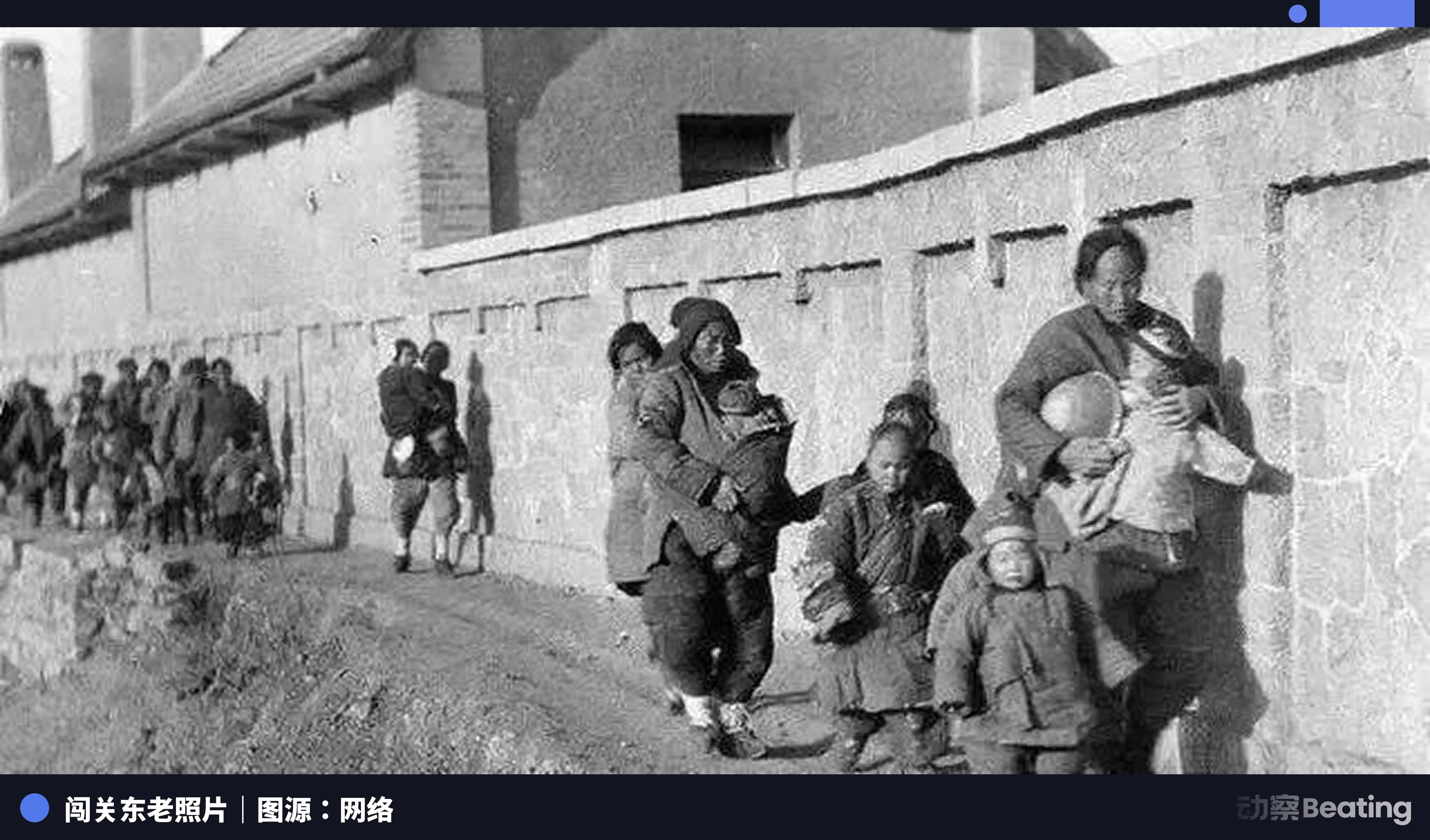
In those days, out of every two people who ventured into the Northeast, one might have died on the road or in the first few years of pioneering. The legend of Huang Xian's "transportation technique" reflects the collective anxiety about food shortages; the imagery of Bai Xian's "rolling gold ingots" embodies the wealth dreams of those venturing into the Northeast; the "substitute ritual" was because the medical conditions were so poor at the time, and people had an inexplicable fear of diseases, only able to use this to combat death.
However, for this set of beliefs to be truly forged into what it is today, it relied not only on suffering but also on several historical events that almost shattered it.
In 1934, Japan forcibly implemented a group village policy in the Northeast, massively merging natural villages and destroying traditional shamanic ritual spaces. In 1939, Japan introduced the Grains Collection Policy, plundering seventy percent of the Northeast's grain output, leading to a severe famine in the Northeast. During the famine years, seeking immortality for survival became the most pressing social need, and Taoist temples emerged in large numbers as a result. Folklorists have recorded that during the Japanese occupation, some Taoist temples were forced to become information channels for the Japanese, and immortals were used as a political tool for the first time.
After the founding of the People's Republic of China, the state explicitly banned it, and Taoist immortals were denounced as feudal superstition, causing practitioners to go underground. They learned a set of survival techniques, passed down family secrets, embedded a large number of cryptic references in their writings to make them indecipherable to outsiders; some learned acupuncture and used their identity as traditional Chinese medicine practitioners to continue their practices. During a later period of special history, the suppression intensified, but this belief system did not die; instead, it became even more deeply concealed in every courtyard of rural Northeast China. According to field surveys by folklorists, during that era, Taoist immortals would "draw the curtains at midnight and secretly show things to people."
Real loosening up had to wait until after the Reform and Opening-up. In the 1980s, Taoist temples began to resurface. In 2006, "Shamanic Ritual" was listed as intangible cultural heritage of Jilin Province, and in 2012, Changchun established the Shaman Culture Research Association, starting to incorporate former incense handlers. But what truly caused this industry to explode was 1998.
That year, the number of laid-off state-owned enterprise workers in the Northeast reached several million, coinciding with the Asian financial crisis. Overnight, millions of people lost their jobs, lost the identity their unit gave them, and lost their certainty about the future. In Tie Xi District, Shenyang, the former heart of heavy industry, a street of fortune-telling shops emerged, gathering 37 Taoist temples. Laid-off workers, unemployed female workers, and young people who could not find a way out lined up to ask the immortals if they still had a chance to turn their lives around.
This is the underlying logic of Northeast metaphysics, as well as the secret of its repeated death and resurrection. Every time the wheel of time rolls by, it is not crushed but instead absorbs the deepest fears of that era, completing its own evolution.
The Fear of Crossing the East is death. The fear of that particular historical period is exposure. The fear of being laid off is loss. Today's fear is uncertainty. The shell has been changing all along, but that driving force that compels people to seek ascension has always been the same.
Today, the Northeast has experienced severe economic transformation pains and population outflow. According to the data from the national census, from 2010 to 2020, the resident population in the three provinces of the Northeast decreased by a net of 11.01 million people, equivalent to an entire Harbin disappearing.
When the grand narrative of the era falls on the specific individual, it becomes layoffs, unemployment, confusion, and a profound sense of powerlessness about the future. The more uncertain the times are about tomorrow, the more intense the mystical market becomes. This is the most typical lipstick effect in economics.
When the real world cannot provide certainty, people naturally turn to seek supernatural power. This psychological need has forcefully given rise to a huge mystical consumption market. In this realm, the "great immortals" of the Northeast, relying on their unique cultural background and linguistic talent, have steadily carved out a large piece of the pie.
"Fortunetelling is a form of psychological counseling more suitable for the Chinese temperament."
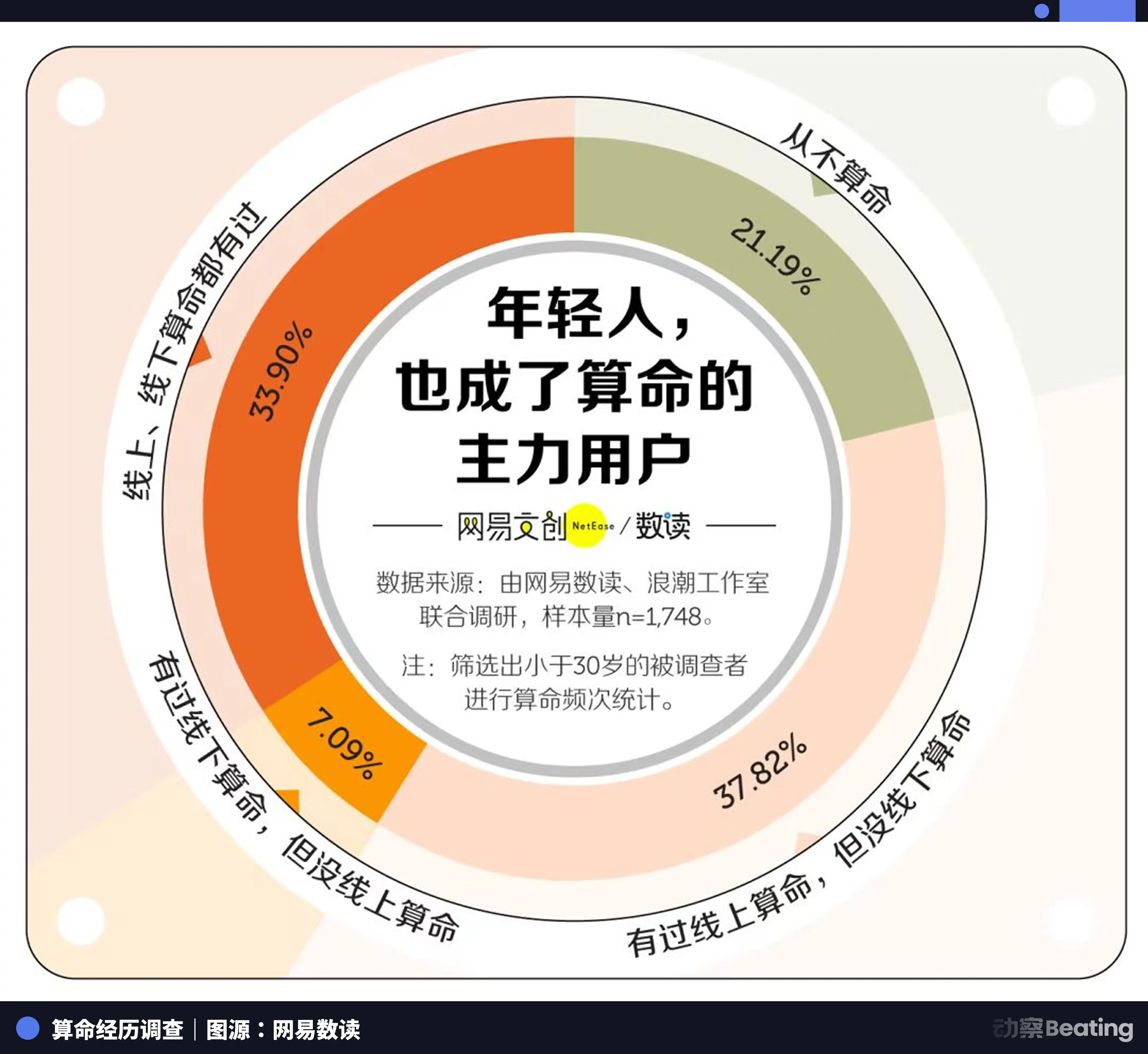
A survey by Netease Data Reading shows that a staggering 78.81% of young people have experienced fortunetelling. Looking at another set of data, Frost & Sullivan estimates that by 2025, the scale of China's comprehensive mental health service market will just reach 10.4 billion yuan.
The Western psychological counseling system's underlying logic is internal attribution. Your depression, your anxiety, your messed-up relationships are attributed to problems in your original family, trauma in your childhood; you need to analyze yourself, accept yourself, and change yourself.
In our East Asian society that values collectivism and shame culture, this logical framework often burdens individuals with heavy moral baggage. Many times, when young people go to see a psychologist, instead of catching their breath, they dive into deeper self-doubt by repeatedly searching for their inner trauma.
But fortunetelling is purely external attribution. When your work goes south, your relationships sour, and even drinking cold water gives you a headache, the fortuneteller will unequivocally tell you that it's not your fault. It's because you're having a tumultuous year, your astrological fortune is unfavorable, you're being blocked and hindered by villains.
As soon as this explanatory logic comes out, the heavy stone in the seeker's heart called "guilt" instantly falls away.
This implication of "the fault is not in me" is the pinnacle of spiritual massage for the current group of young people who are suffocating from overwork and anxiety. It gives you a legitimate external scapegoat to blame, so that you can at least protect a shred of your dignity when facing life's beatings.
But in the end, it's still a game between people. It's not until AI enters the scene that the scale and nature of this game will completely change.
The Fortune-telling Industry Driven to Evolve by Algorithms
The Four Pillars of Destiny (Bazi) is actually a highly precise set of parameters and algorithms, also considered a form of statistics. The Heavenly Stems and Earthly Branches are variables, the Five Elements' Generating and Controlling Cycle is a function, and the Major Luck Periods with Annual Influences are a time series. This set of Chinese indigenous code, which has been running for thousands of years, surprisingly aligns seamlessly with the underlying logic of modern AI.
According to reports, a startup company named MirrorAI fed real cases from a Hong Kong fortune-telling competition to a large model as training data. As tested by the MirrorAI team, the AI's prediction accuracy of users' past experiences has approached the level of experienced fortune-tellers, far surpassing the 40% baseline of the original large model.
This number implies that, in pure "deduction," AI has already touched the industry's ceiling. Those low-end fortune-tellers who rely solely on endorsements and scripted language to deceive people are now being rubbed into the ground by a free AI large model. Faced with this dimensional strike by AI, the traditional fortune-telling industry has not died but has been forced to evolve. Some institutions predict that by 2025, the AI fortune-telling market in China will exceed 120 billion yuan; the global astrology app market is also rising at a rate of 20% annually from around $3 billion in 2024. This growth rate surpasses the majority of so-called "hyped-up" trends.
When fortune-telling becomes a calculation service with almost zero marginal cost, the power center of this industry shifts. The past competition was about who grasped complex fortune-telling knowledge; now the core asset has become who can use AI tools while still providing emotional value.
Some quick-thinking practitioners have already begun to transition from traditional fortune-tellers to Fortune-telling Prompt Engineers.
They no longer calculate charts themselves but directly generate lengthy fortune-telling reports using AI, only adding the final touch to provide emotional comfort and scripted packaging. They understand clearly that no matter how accurate AI's predictions are, it cannot replace that warm human-to-human emotional exchange.
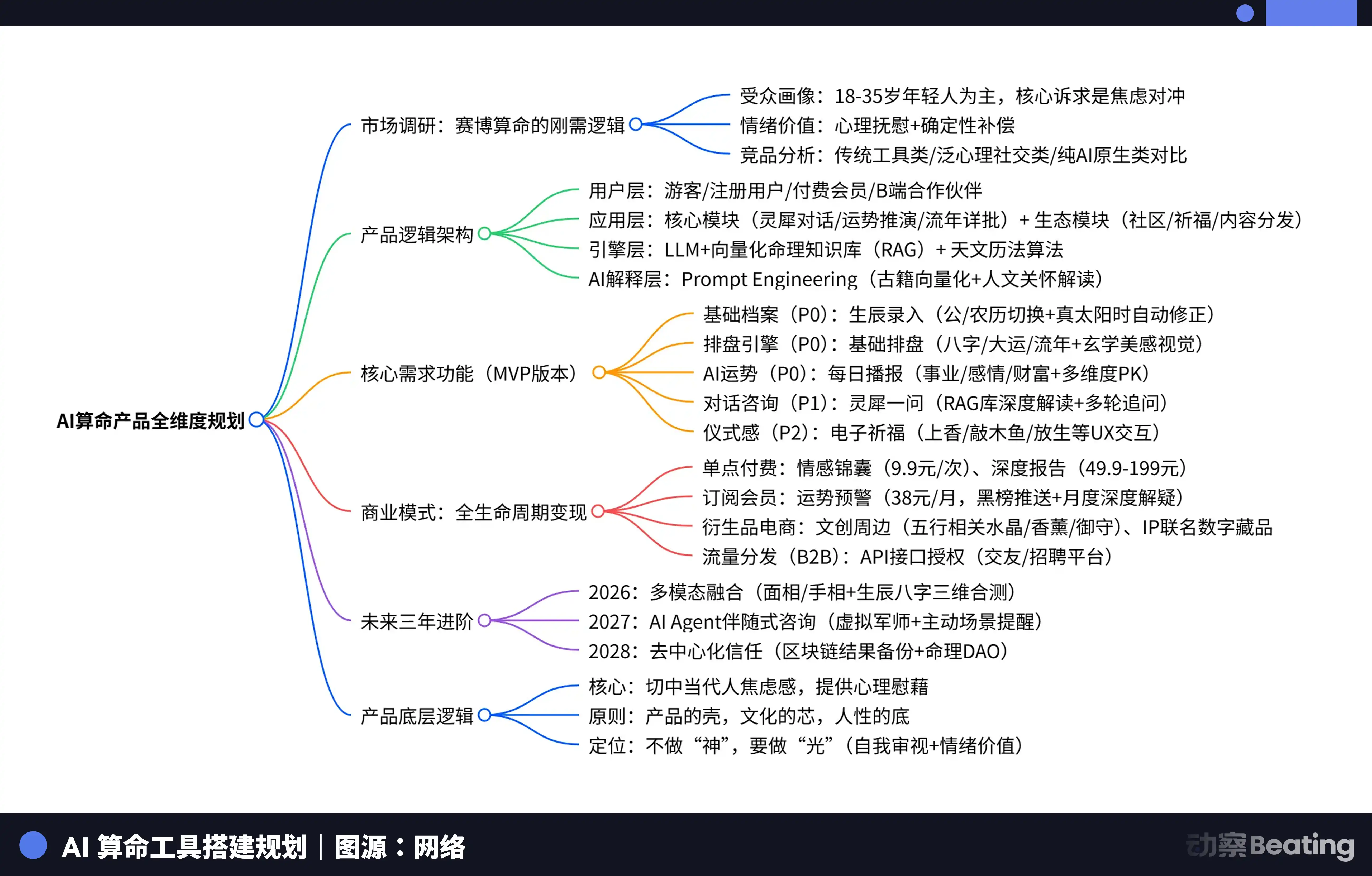
This brings us back to the metaphysical live streaming industry chain mentioned earlier. Why can those with only a middle school education or even no knowledge of metaphysics become masters after just one month of training? It's because AI handles all the most brain-intensive calculations and knowledge retrieval; they only need to perform well in that emotional value-providing shell.
In live streaming rooms, the "divine beings" on one end of the screen are devout believers on video call, while on the other end, there's a rapidly running AI scripted language generator. These modern-day divine beings no longer need any true divine possession; the large model is their most miraculous cyber divine entity. They use the most down-to-earth language to break down the complex chart spit out by AI and feed it to the anxious young people on the screen, providing a cheap but effective psychological massage.
This efficiency surge brought about by technological innovation has not only harvested the young population in China but has also given rise to a digital expedition of an Oriental mystical force.
When China's astrological sign is translated into English by AI, will those elites sitting in Silicon Valley offices be willing to pay for this "Eastern philosophy"?
The Mysterious Force from the East
Not only are they willing to pay, but they do so quite generously. In the past two years, the global spiritual products and services market has reached a scale of $180.18 billion, with the word "feng shui" receiving a monthly search volume of up to 2 million times on Google, mainly by users in Europe and America.
According to Tencent News, there is a 5-person entrepreneurial team in Shenzhen called FateTell, who have wrapped the Chinese astrological signs in a shell, renamed it the "Book of Destiny," and exclusively sell it to foreigners. They use AI to generate detailed English astrological reports, successfully transforming this ancient Oriental metaphysical study into a high-priced digital commodity. Their overseas user conversion rate is as high as 4%, with a repeat purchase rate of 38.7%. 70% of their revenue comes from subscriptions, and the project turned profitable early on.
This is a cultural export full of magical realism. Fortune-telling, once pointed at with disdain as feudal superstition, has now donned the cloak of AI and transformed into Eastern philosophy, hitting right at the fate anxiety of the overseas middle class and Silicon Valley elites. Faced with layoffs and industry turmoil, those high-paid engineers in Silicon Valley are equally unsure and in need of a force beyond reason to comfort themselves.
In this ancient realm of metaphysical consumption, people from different social strata are being served by completely different tools.
Young people at the bottom can only view the free DeepSeek as a "digital oracle" or squat in live streaming rooms on platforms like Douyin and Kuaishou, spending tens of yuan to draw a tarot card and seek comfort from the hosts. Their questions are usually specific and trivial, such as whether they will pass tomorrow's interview or if they will reconcile with their partners.
Anxious middle-class white-collar workers are willing to spend hundreds to thousands of yuan to purchase one-on-one services on apps to alleviate their anxiety. What they buy is not so much about the accuracy of the predictions but a confidant willing to listen to their complaints about their bosses and significant others. Their questions often contain a mix of dissatisfaction with the present and confusion about the future, such as when they will achieve financial freedom or if their marriage is salvageable.
As for those perched atop the wealth pyramid, they still spare no expense to invite top offline masters to read feng shui and find dragon veins. According to Triple Weekly magazine, a post-90s astrologer named Qing Shan charges customers several hundred yuan per hour by providing them with deep emotional value and psychological counseling.
Algorithmic Comfort
The traditional Northeast Chinese fortune-teller is fundamentally about human connection. The fortuneteller's energy is limited, and as a human being, their empathy also has its limits. The comforting words spoken in a local accent may sound rough, but they carry the warmth of a living person.
AI never tires, and it operates from a godlike perspective. It knows that you were still awake at 3 a.m. wondering if your ex would come back, and it also knows that last month you bought two astrology readings in a row due to work anxiety. So, when you once again open that video call interface, the AI-generated script always seamlessly delivers the words you most want to hear.
According to 36Kr, a girl living in a third-tier city spent over 60,000 RMB on occult apps and livestreams in an attempt to win back her boyfriend. In another case exposed by Consumer Daily, a user named Ran Ran spent nearly 40,000 RMB waiting to hear the words "he will come back" on the Mica app.
Behind these stories lies not human greed or foolishness, but rather the vulnerability of modern individuals when faced with immense uncertainty. When life's variables become too numerous to track, and when we realize we have no control over our work, relationships, or even our health, the seemingly definitive answers offered by algorithms become a lifesaving straw.
When the ancient fortune-telling methods are wrapped in the armor of AI, they become a massive mirror reflecting the most prevalent anxiety of our time. Whether it's a livestream host speaking with a Northeastern accent or a Silicon Valley elite purchasing an English astrology report, what they sell is never the future but a hint of certainty to counteract uncertainty.
That is why by 2026, the entire AI fortune-telling industry faced intense regulation. From cases cracked by the Shanghai police to special rectification efforts by the Cyberspace Administration of China, the end goal of regulation is to draw a red line for this manic trend of cyber occultism.
In April 2025, the Cyberspace Administration of China launched the "Clean and Rectify the Abuse of AI Technology" special operation, explicitly targeting "misleading and deceiving netizens using AI fortune-telling, AI divination, etc., to spread superstitious beliefs" as a key focus for crackdown. In the first phase of the operation, more than 3,500 violations involving AI products were addressed. Moving into 2026, the Cyberspace Administration's Spring Festival special operation made "providing online fortune-telling and divination services under the guise of altering fate and warding off bad luck" a key issue for rectification.
However, behind all this, the human quest for certainty remains eternal.
Over a century ago, the forefathers who ventured to the Northeast prayed to the shaman for safety amidst the snowstorm; over a century later, we lie in our beds in the early morning questioning our future to DeepSeek. The shell has changed, but the fragility and loneliness humans feel when faced with the unknown have not changed one bit.
We are trying to use AI algorithms to flatten the uncertainties of life, turning the intricacies of one's birth chart into lines of code. What we don't realize is that, under the algorithm's gaze, all our anxieties, weaknesses, and reluctances have long been shredded into a set of precisely calculable data.
In the TV series "Soldiers Sortie," Fan Debiao lived for forty years, tossing and turning for half his life, with his career and love life all ending in failure. On the most desperate night, he poured his heart out to Ma Dashuai: "The best way to end sleepwalking is to lie down and sleep deeply. Upon waking, a brand-new Debiao will once again stand tall on the Liao North land."
At the end of the universe lies Tie Ling, and at the end of metaphysics lies AI. But no matter how technology evolves, in those late-night live streaming rooms where people are staying up to chat, and behind those birth charts fed to DeepSeek, there are still numerous individuals like Fan Debiao, battered by life's repeated blows yet still seeking a bit of comfort, yearning to "stand tall again."
Welcome to join the official BlockBeats community:
Telegram Subscription Group: https://t.me/theblockbeats
Telegram Discussion Group: https://t.me/BlockBeats_App
Official Twitter Account: https://twitter.com/BlockBeatsAsia