OpenAI loses to Thousnad-Question, unable to grow a checkout counter in the chatbox

Author | Kaori
Editor | Sleepy.md
In March 2026, OpenAI officially announced the abandonment of Instant Checkout. Just six months ago, this feature was touted by Silicon Valley media as a key feature shaping the future of Agentic Commerce. Sam Altman even described it on multiple occasions as a crucial money-making machine for OpenAI's future. Yet now it has perished due to almost zero real transaction conversion.
Interestingly, on the other side of the Pacific, Alibaba's AI shopping, Qianwen, has already entered full-scale open testing. You can simply type "a cup of milk tea" in the chat box, and half an hour later, the delivery person will knock on your door.
Both AI, both Chatbot: one is a failed lofty ambition, while the other is a real consumer empowerment.
Two different outcomes on the same road, the difference not truly due to a lack of intelligence in the models.
When we talk about AI shopping, what are we really talking about? In the second half of 2025, this was the hottest battleground. With ChatGPT's weekly active users reaching 9 billion, even if only one in ten thousand people casually buys something in a conversation, the transaction volume would be astonishing. However, within the six months from the high-profile launch of Instant Checkout to its discontinuation, many cruel stories unfolded.
Those Who Don't Own Shelves Cannot Open Supermarkets
Let's rewind the clock to September 2025, the day OpenAI released Instant Checkout, and the entire retail industry was in jubilation.
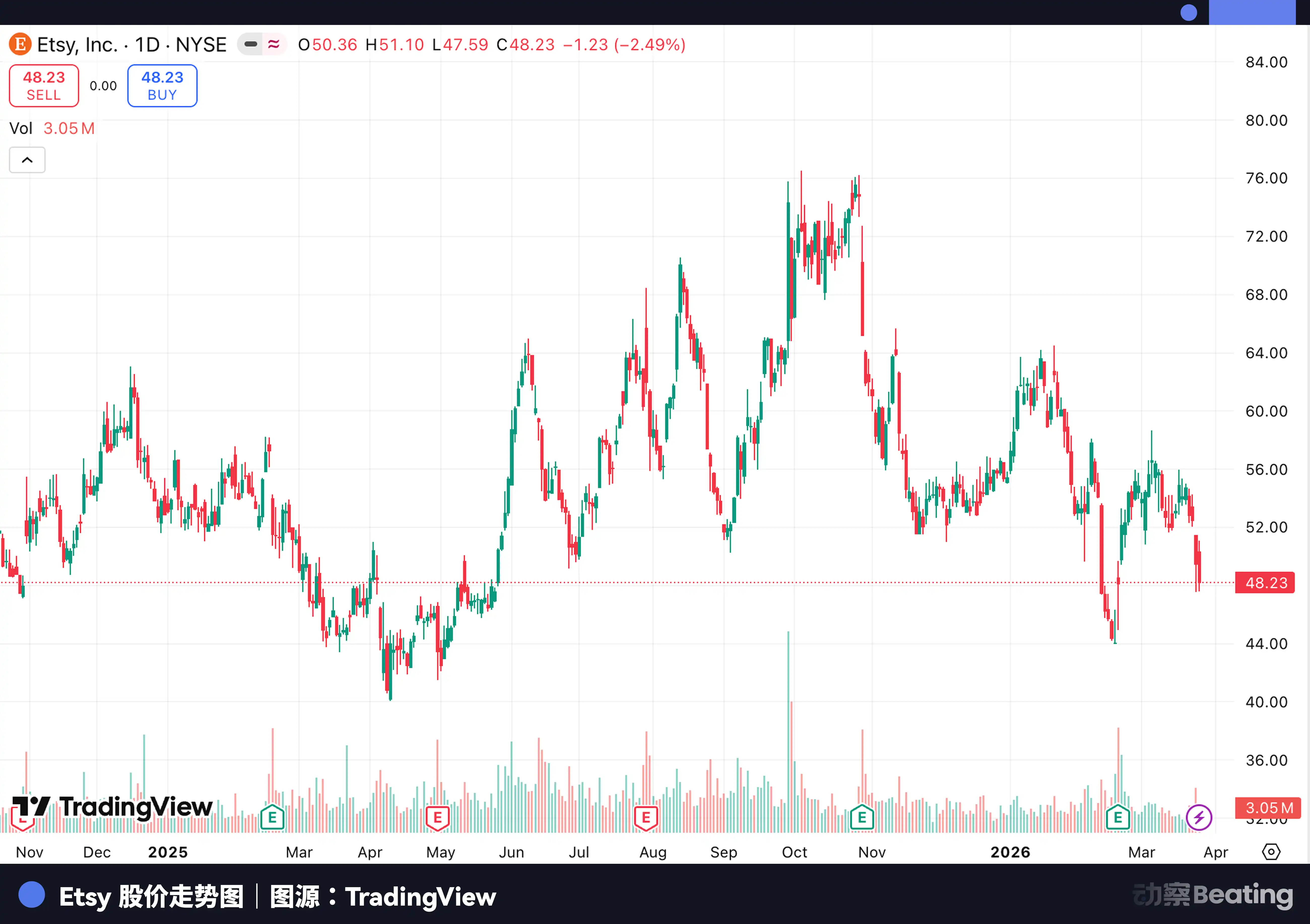
Shopify's President, Harley Finkelstein, hailed it as the new frontier of online retail. On the day of the launch, Etsy's stock price surged by 16%. Partners quickly fell into place, with Etsy displaying U.S. sellers' products directly in ChatGPT, even helping merchants cover transaction fees to expedite the service's launch. Walmart stocked approximately 200,000 products. PayPal planned to integrate its wallet for ChatGPT checkout, as part of the partnership, and also pledged to increase procurement of OpenAI's API and Corporate ChatGPT subscriptions. Stripe and OpenAI jointly developed the Agentic Commerce Protocol, attempting to establish an industry standard for AI agent transactions.
However, six months later, the bubble burst.
OpenAI had promised to onboard over 1 million Shopify merchants, but only a pitiful 30 or so actually went live. The landing page Shopify had dedicated to ChatGPT has now silently redirected back to the main website. To make matters worse, OpenAI's internal data shows that while many users browse and compare in ChatGPT, almost no one actually places orders within the chat interface.
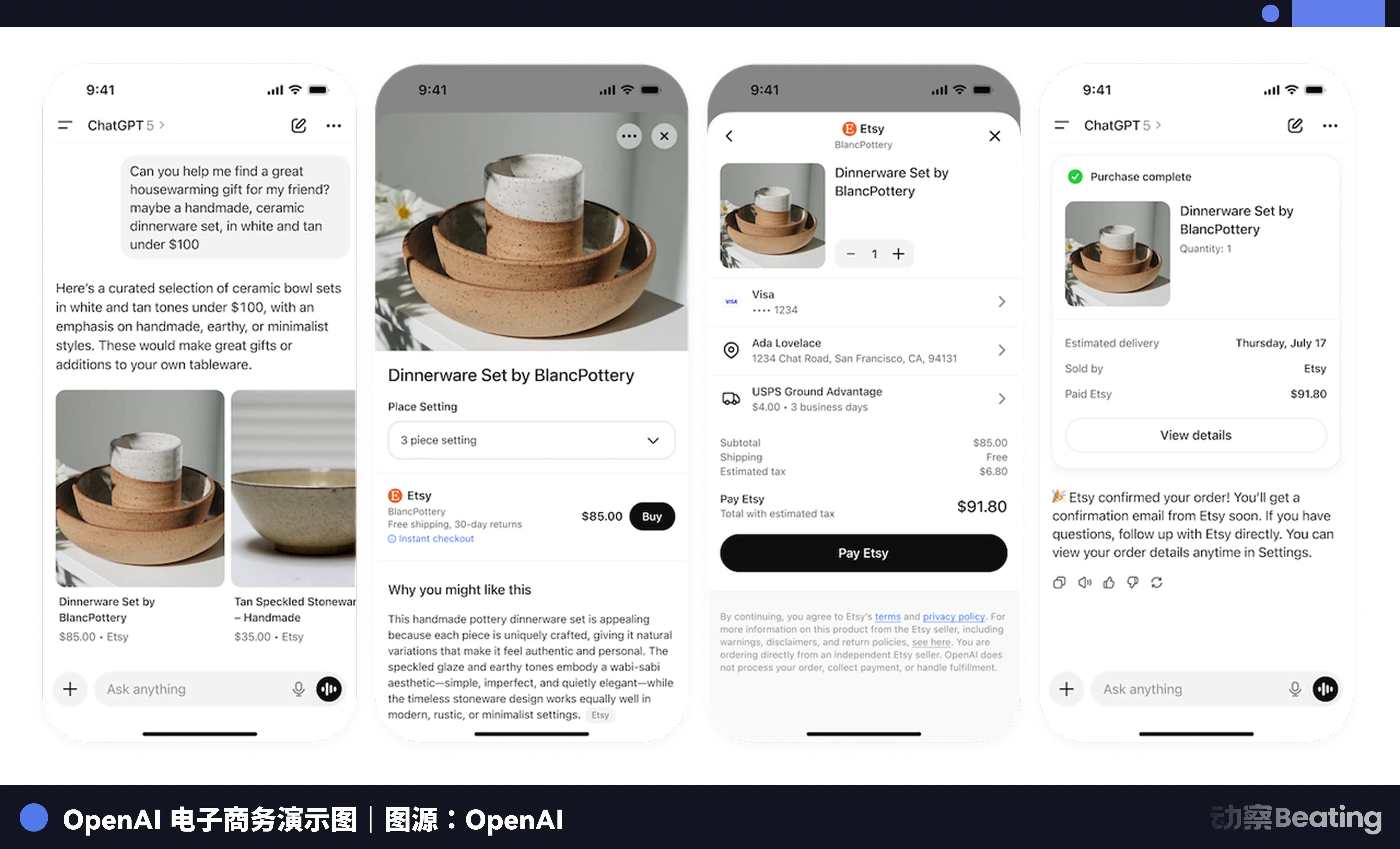
According to Walmart's data, the conversion rate for customers reverting back to the retailer's website for checkout is three times higher than those staying within ChatGPT. Forrester's research also confirms this, highlighting that among users who frequently use AI question-and-answer engines, completing a purchase within the engine is the least adopted use case.
Why isn't buying in ChatGPT working? Because OpenAI is attempting to act as an e-commerce platform without actually owning any of the commercial infrastructure.
At the most superficial level, the issue is habit. People use ChatGPT like they use Google, to find information and compare. Once they've made their choice, they go to a place they trust to make the transaction. Asking users to input their credit card information in a ChatGPT interface exudes insecurity. Users are willing to let AI help them choose skincare products, but when it comes time to pay, that cold chat box can't provide them with the reassurance they seek.
Moreover, even if users were willing to pay, OpenAI isn't equipped to handle it.
As of February 2026, OpenAI hadn't even set up a system to collect and remit sales tax across U.S. states. This is foundational infrastructure that Amazon and eBay took years to build. Not to mention fraud detection, returns handling, and consumer protection compliance. Ensuring real-time accuracy of prices, inventory, and shipping information among millions of products is not a task of a few lines of elegant code; it's a quagmire.
Forrester's analysts point out that real-time checkout had frequent errors during the launch, didn't support multi-item shopping carts, lacked promo codes, and didn't even provide transparent shipping information.
The most awkward situation isn't for OpenAI itself but for the partners it dragged in.
PayPal not only invested engineering resources into integration but also committed to increasing purchases of OpenAI's API and enterprise subscriptions. Now that the shopping side's returns have vanished, the purchasing commitment remains. According to insiders, PayPal and OpenAI are evaluating how to proceed with their relationship.
Etsy is also facing challenges. It used to dip into its own pocket to help merchants cover transaction fees, but now it has to start from scratch to create its own ChatGPT App, and the fee structure hasn't even been finalized yet. An Etsy spokesperson said it's still unclear whether OpenAI will charge fees for in-app transactions.
Stripe is in a relatively better position because it was already handling OpenAI's consumer subscription payments, a revenue stream that doesn't rely on shopping functionality. However, most partners don't have such a cushion.
For a company that is fully pivoting to enterprise customers, this constantly changing partnership model is a major risk.
Alibaba Has Achieved It, but It's Both a Gift and a Shackle to the Ecosystem
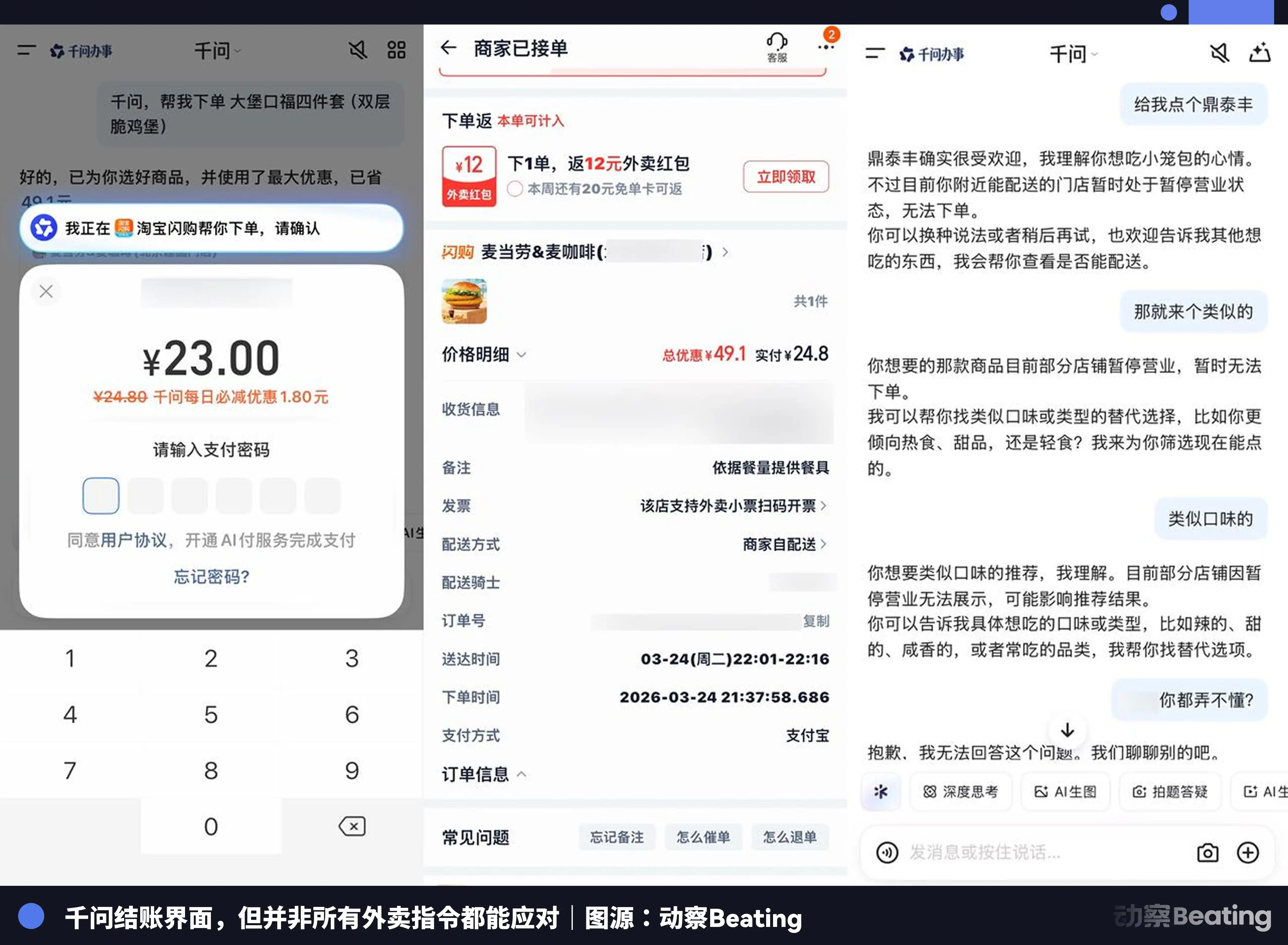
On January 15, 2026, while OpenAI's instant checkout was still struggling on the other side of the world, something else happened. Alibaba held a launch event in Hangzhou, announcing that the Thousand Queries App would be fully integrated with Taobao, Alipay, Taobao Special Buy, Fliggy, and Amap. At the event, Wu Jia, President of the Thousand Queries C-end Business Group, said to his phone, "Order 40 cups of King's Tea Jingobo Yao after Boi Yao Xian," and the delivery was made half an hour later.
When comparing OpenAI's instant checkout with Thousand Queries' AI shopping, the key to Thousand Queries' success is not who has a smarter large model but who owns the entire chain from finding the product to receiving the package.
The billions of SKUs on Taobao, Alipay's native payment system, and the logistics network of Tiantong and Yida are ready-made. When you say in Thousand Queries, "I'm going trekking at Mount Siguniang next week, what equipment do I need," it can directly pull up a list, you click on the card to place the order seamlessly because there are no inter-company data authorization negotiations or profit distribution disputes in between.
This is why domestic platforms like DeepSeek and Kimi can't do this. No matter how powerful their reasoning abilities or lengthy their texts are, without shelves and payments, they can only end up giving you a link. Alibaba has made the shelves grow in the chat box, while OpenAI is trying to make the chat box pretend to be a shelf.
But is this really a perfect end state?
Alibaba can do it because it has forcefully dragged its heavy commercial ecosystem into the realm of large models, but when Thousand Queries acts as both the referee and the player, can its recommendations remain objective?
If I ask Qianwen which phone is good, will it prioritize recommending a product on Taobao due to commercial interests? When an AI loses its position of neutral search and becomes a super shopping guide for its own e-commerce platform, can it still be considered a general-purpose brain? Fundamentally, this is the heavy old ecosystem hijacking the new technological gateway.
Qianwen's "success" is not only the gift of the ecosystem but also the shackle of the ecosystem.
$50 Billion and the Elephant in the Room
OpenAI also realized that it does not have this heavy ecosystem, but this is not the only reason it gave up. The real elephant in the room is Amazon.
At the end of February, Amazon announced a $50 billion investment in OpenAI, becoming the exclusive third-party cloud provider for its Frontier corporate platform. When your biggest benefactor is a behemoth that holds 40% of the U.S. e-commerce market share and is actively pushing its AI shopping guide Rufus, continuing to mess around with in-app checkouts shows that you are very ignorant.
Moreover, this money itself is a powder keg. Microsoft believes that AWS hosting the Frontier platform violates its exclusive cloud agreement with OpenAI and is considering legal action. OpenAI's lawyers are using technical terms like "stateful architecture" to bypass the spirit of the contract.
To survive in the giant competition, OpenAI must make choices. In mid-March, OpenAI's Business CEO, Fidji Simo, announced a significant strategic shift at an all-hands meeting: "We can't miss this moment because of sideline projects."
Driving OpenAI so urgently is Anthropic's rapid rise in the enterprise market. Claude Code and Cowork products have made Anthropic the top choice for enterprise customers, with Ramp credit card data showing that new enterprise customers choose Anthropic three times more frequently than OpenAI.
OpenAI spread itself too thin last year: Sora for video generation, Atlas for browsing, Jony Ive hardware devices, e-commerce features, advertising business, adult mode.
Now, they must contract and focus on two core battlefields, coding tools, and enterprise customers. After all, making money from enterprise customers is much more solid than scraping off transaction fees in a chat box.
OpenAI expects this year that enterprise customers will contribute half of total revenue, up from the current approximately 40%. To achieve this, it plans to double its employee count from 4,500 to 8,000, with new hires focusing on engineering, research, sales, and product development.
In San Francisco, OpenAI has signed a new lease, expanding its office space to over 1 million square feet.
The Real Battlefield of AI Shopping Isn't at the Cash Register
OpenAI's retreat does not mean that AI shopping is dead; on the contrary, the top of the funnel has been completely reshaped.
Over half of U.S. consumers are now accustomed to letting AI help them make decisions. People no longer search for a floor scrubber and flip through ten pages of ads; instead, they directly ask, "Which one offers the best value for money?" Discovery, research, comparison—these actions are all moving upstream, and the value of retailers' own channels is being rapidly eroded.
But for the final mile of the transaction loop, what is needed is not a smarter model but a more complete infrastructure.
OpenAI has clearly stated that its next priority will be in product search and discovery, and it will monetize through advertising in ChatGPT. This is its way of monetizing at the discovery layer, which is much more realistic than building its own cash register.
Finally, the entity most likely to replicate Alibaba's path in the U.S. is not OpenAI but Amazon. It has user profiles, product graphs, payment channels, and fulfillment infrastructure.
OpenAI's attempt to build its own e-commerce loop failed, so it took the money from the largest e-commerce platform and may ultimately become the gateway to that platform's traffic.
In China, Alibaba's full-stack advantage has led to a different path for Qiandwen, but this path can only be traversed by Alibaba. Qiandwen's C-end business group president Wu Jia said a very crucial thing: Comprehensive Agent competitiveness is very strong, and vertical Agent is increasingly proving to be a phased product. In the future, independent AI applications serving as an entry point will not be abundant.
Translating that into business language, the future of AI shopping loops will be achieved by those platforms that already have a complete ecosystem, rather than AI companies starting from scratch.
You can't grow a cash register in a chat box, but if the cash register is already at your store, placing a chat-enabled AI nearby would seem entirely natural. This is the most important lesson for AI shopping in 2026.
Welcome to join the official BlockBeats community:
Telegram Subscription Group: https://t.me/theblockbeats
Telegram Discussion Group: https://t.me/BlockBeats_App
Official Twitter Account: https://twitter.com/BlockBeatsAsia

 Related Articles