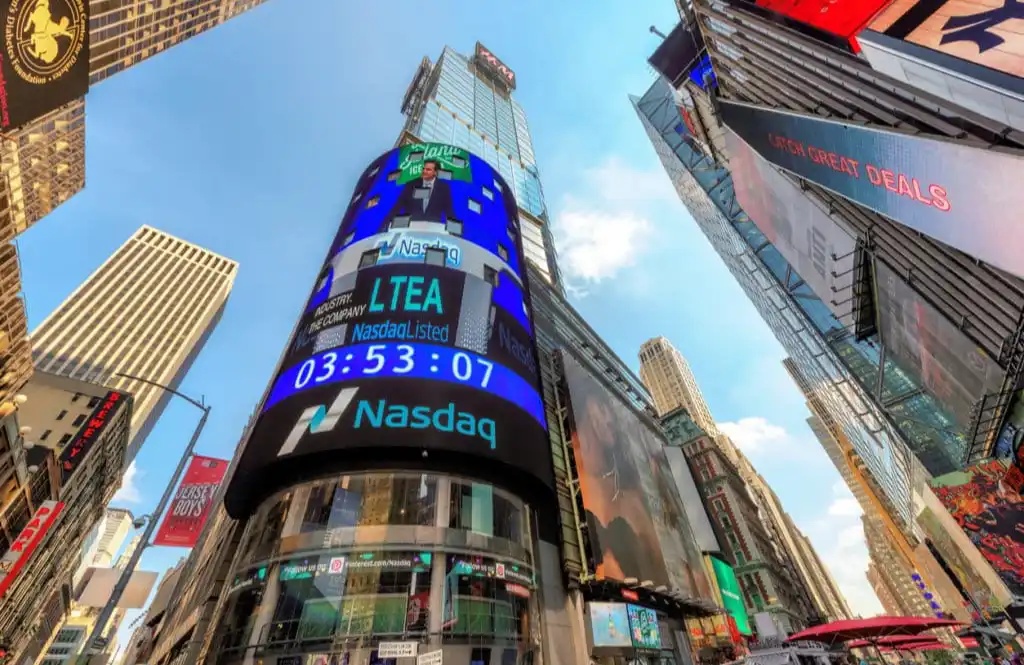
NYSE and Nasdaq Simultaneously Down, Tokenization of US Stocks Gains Traction

On March 24, the New York Stock Exchange announced a memorandum of understanding with the tokenization platform Securitize to jointly develop a digital securities tokenization trading platform. Just 6 days ago, the SEC approved Nasdaq's rule amendment to allow the tokenized trading of Russell 1000 component stocks and major index ETFs. The two largest U.S. stock exchanges each unveiled their tokenization plans in the same month.
This is not the isolated action of one or two institutions. Looking at the calendar for March, the density is remarkably rare.
On March 9, Nasdaq partnered with the parent company of the crypto exchange Kraken, Payward, to provide a distribution channel for tokenized stocks to non-U.S. users. On March 18, the SEC approved Nasdaq's rule amendment, and on the same day, S&P Dow Jones Indices licensed its flagship index, the S&P 500, to the on-chain protocol Trade.xyz to issue perpetual contracts on the decentralized derivatives platform Hyperliquid.
On March 24, the NYSE signed with Securitize. On the same day, Invesco, managing $2.2 trillion in assets, announced the acquisition of USTB Fund under Superstate, a blockchain-based bond fund management company, with the fund size reaching $967 million. On March 25, the U.S. House Financial Services Committee held a special hearing titled "The Future of Tokenization and Securities: Modernizing Our Capital Markets." According to FinTech Weekly, attendees included SIFMA CEO Kenneth Bentsen Jr. and Blockchain Association CEO Summer Mersinger.
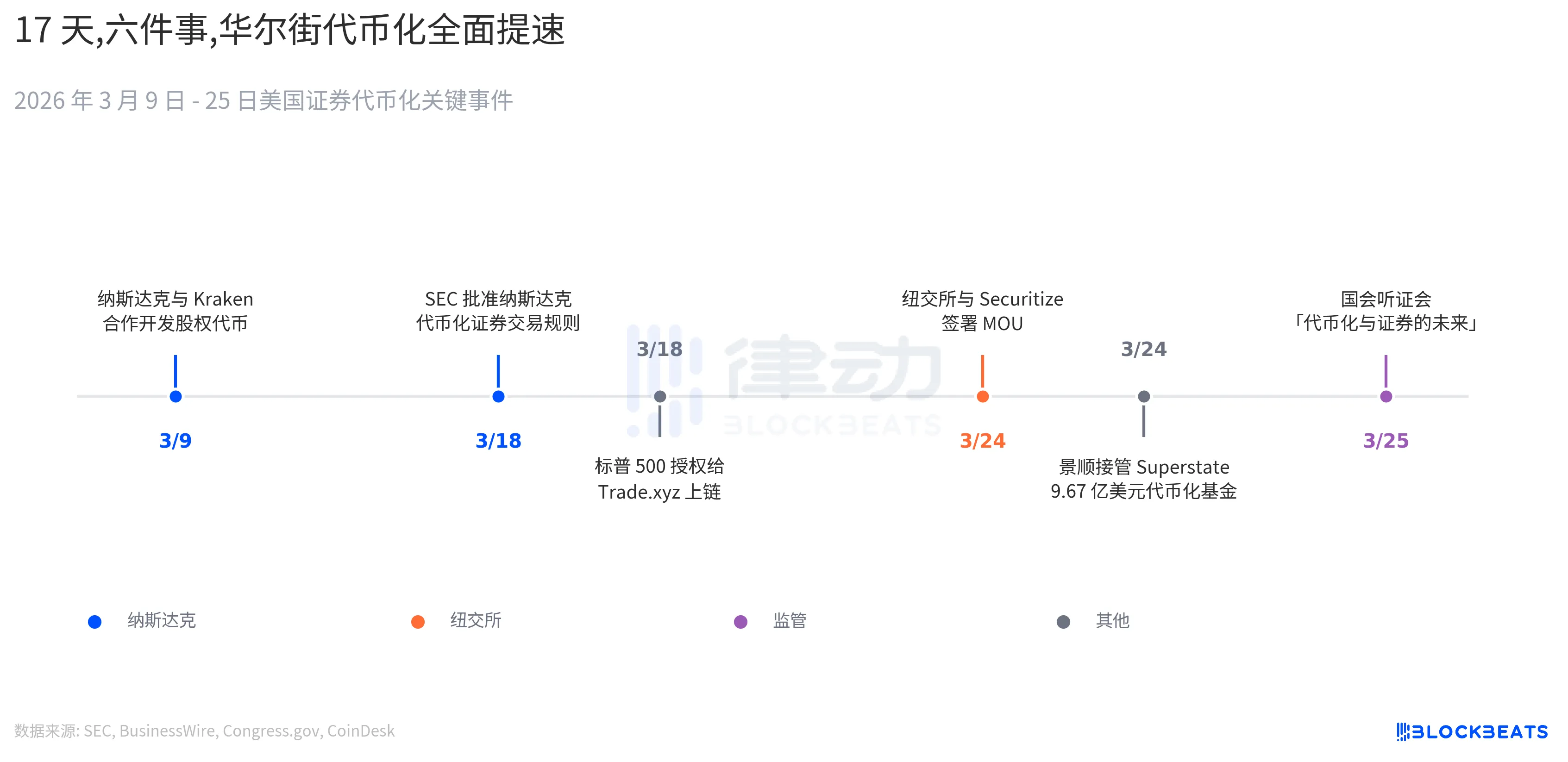
17 days, six events. Two major exchanges, three traditional asset management institutions, one SEC approval, one congressional hearing. In these events, the plans of Nasdaq and NYSE are most worthy of closer examination. The two exchanges are taking two different technological paths, with a greater divide than most people realize.
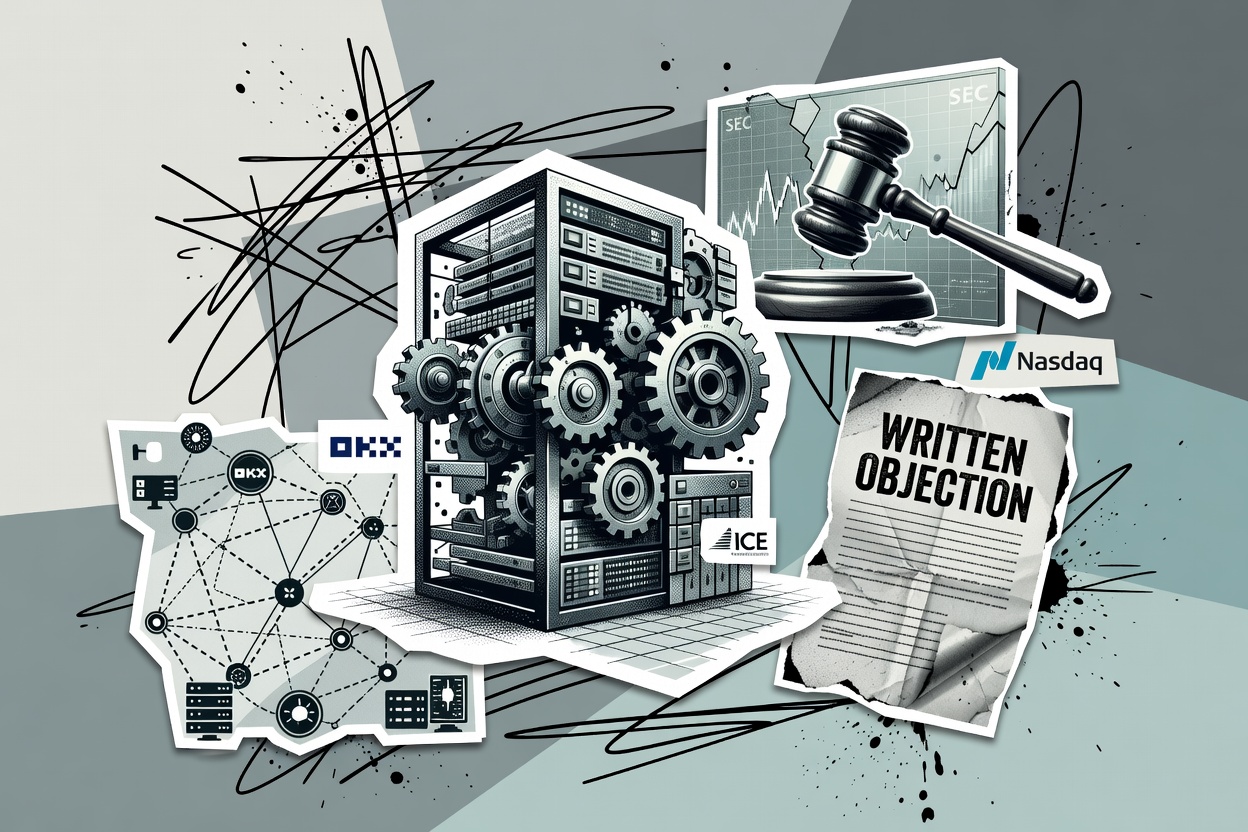
Nasdaq is taking a compatible path. According to the SEC's approval document dated March 18 (34-105047), Nasdaq's tokenized securities trading still settles through the existing clearing system of the Depository Trust Company (DTC). Traders select a tokenized asset when placing an order, specify a blockchain and wallet address, and DTC completes validation and settlement on the backend. Tokenized shares share the same CUSIP number as traditional shares, are matched on the same order book, and have identical execution priority. If the DTC determines that a participant does not meet the criteria or the specified blockchain is incompatible, the transaction automatically falls back to traditional settlement. In this scheme, blockchain is an optional layer of packaging, and the underlying clearing pipeline remains unchanged. According to legal analysis website Free Writings & Perspectives, eligible assets include Russell 1000 index component stocks and ETFs tracking the S&P 500 and Nasdaq 100, with the first batch of tokenized trading expected to launch in the third quarter of 2026.
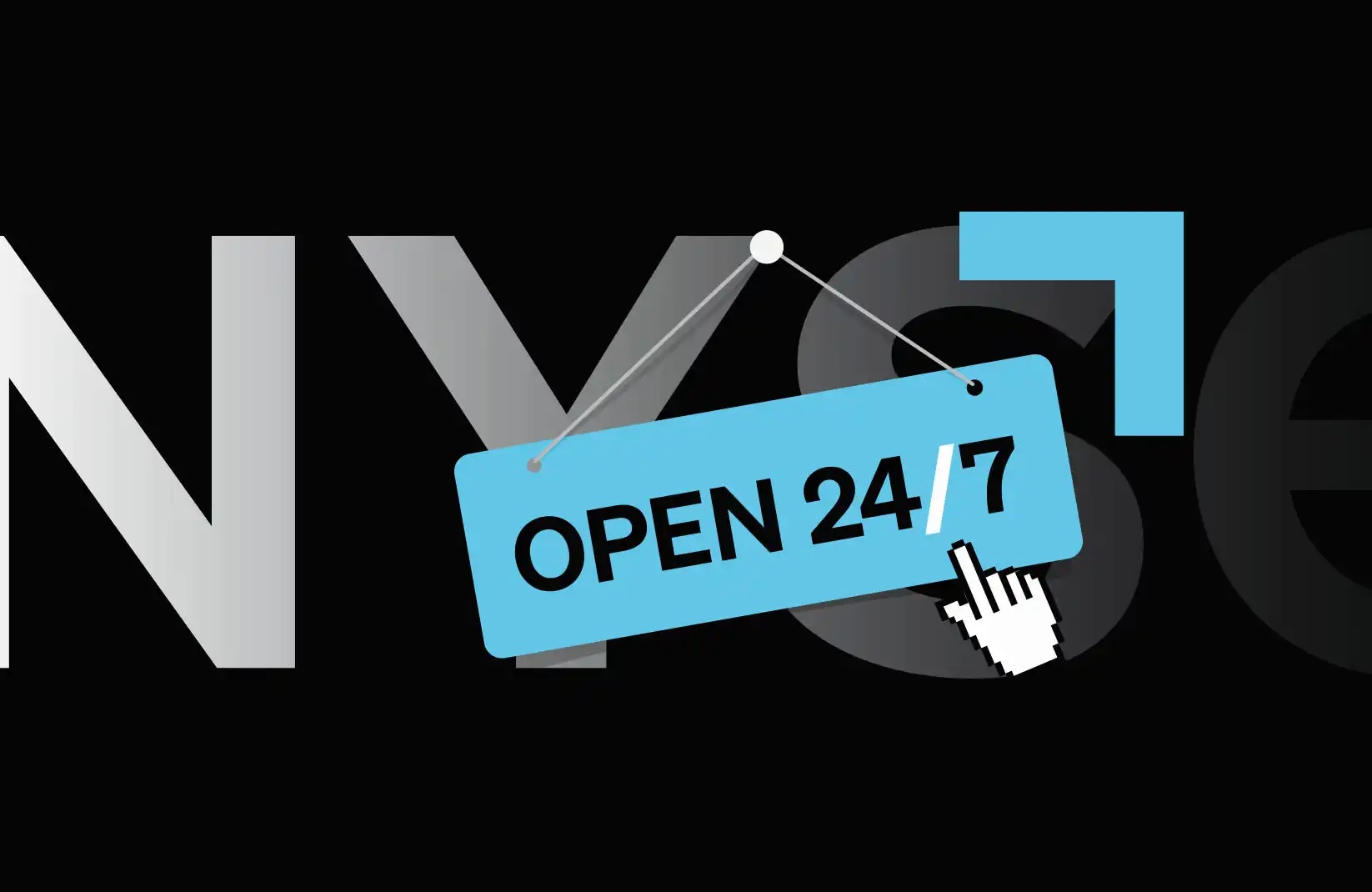
The NYSE is taking a different path. According to a BusinessWire press release, the NYSE has designated Securitize as the first "digital transfer agent," with the latter responsible for on-chain minting of blockchain-native securities, maintaining ownership records, handling corporate actions such as dividends, and more. As reported by CoinDesk, the NYSE is collaborating with BNY Mellon and Citi to integrate tokenized deposits and stablecoin payments, aiming to achieve 24/7 trading and near-instant settlement. This path does not involve adding an overlay to the existing clearing pipeline but rather building an independent on-chain settlement infrastructure. NYSE Group President Lynn Martin's language in the press release skipped "exploration" and "piloting" and directly stated that the development of the new infrastructure must "uphold the trust, transparency, and protection expected by investors."
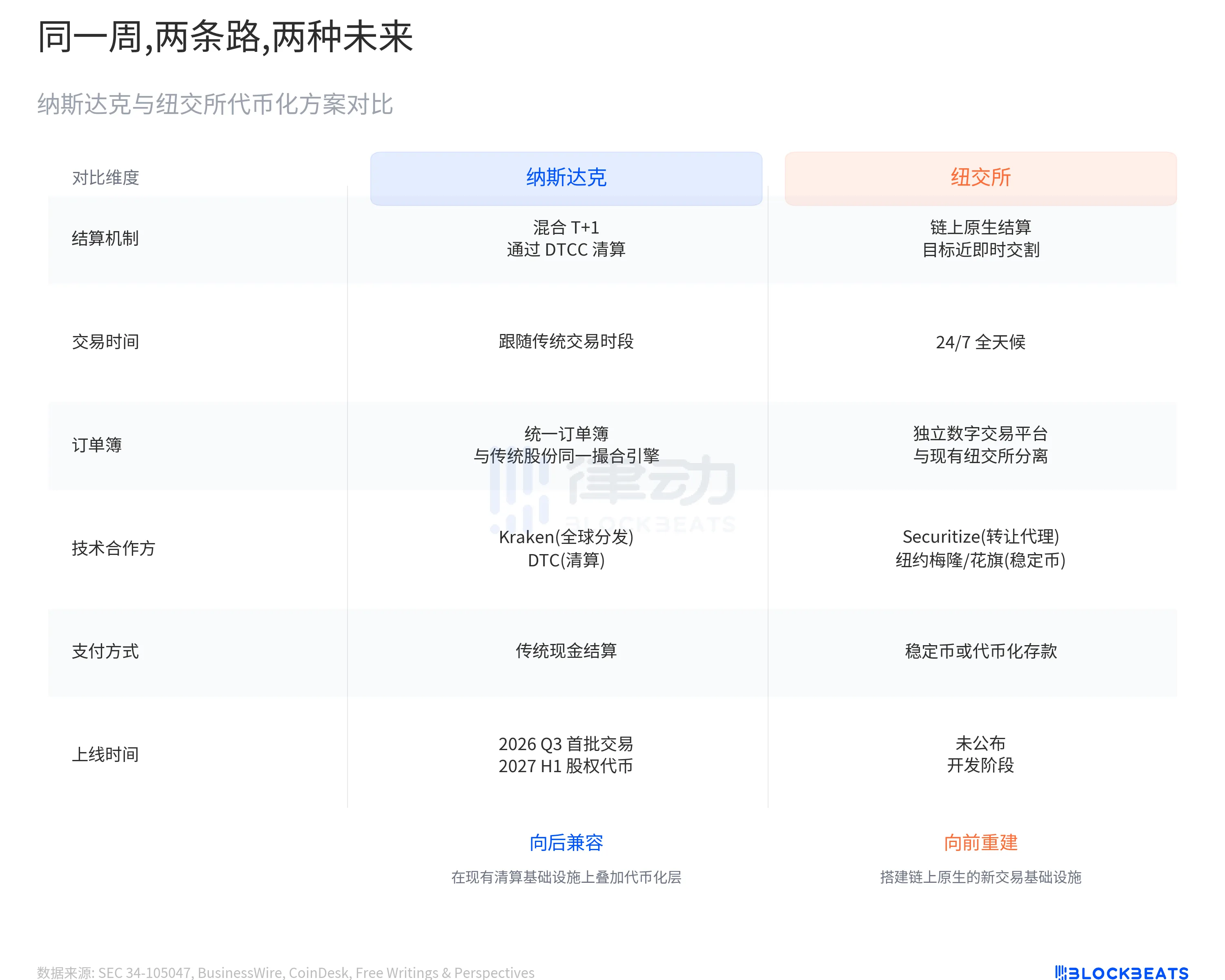
The core difference is this: Nasdaq adds to the existing order book, maintaining uniform liquidity, and can launch once the DTC's system is updated. The NYSE has built an independent digital trading platform that runs parallel to existing exchanges, prioritizing 24/7 trading and instant settlement, but, as reported by CoinDesk, has not yet disclosed a specific launch date. Securitize is the core technological support for the NYSE's solution, managing approximately $4.6 billion in assets under management, representing roughly a 25% share of the tokenized RWA market, according to PRNewswire data.
It also serves as the technology provider for BlackRock's BUIDL Fund, which, according to public data, has reached a scale of $2.38 billion after 15 months since launch, making it the world's largest tokenized sovereign debt fund. As reported by CoinDesk, Securitize saw its revenue in the first three quarters of 2025 grow by 841% year-over-year to $55.6 million and disclosed, via PRNewswire, its plans to go public through a SPAC at a valuation of $1.25 billion. By selecting Securitize as the first digital transfer agent, the NYSE has entrusted the minting rights of tokenized securities to a soon-to-be-public infrastructure company.
Regulation is also progressing simultaneously. According to CoinDesk, the CLARITY Act, which had been stalled for months due to stablecoin yield provisions, recently reached a "high-level agreement," with the Senate Banking Committee markup targeting late April. In December 2025, the SEC issued a No-Action Letter to the DTC, as announced by DTCC, authorizing the DTC to provide tokenization services within a regulated framework, a prerequisite for the Nasdaq's initiative to commence.
All of this happened within one month. On a global scale, what does this speed mean?
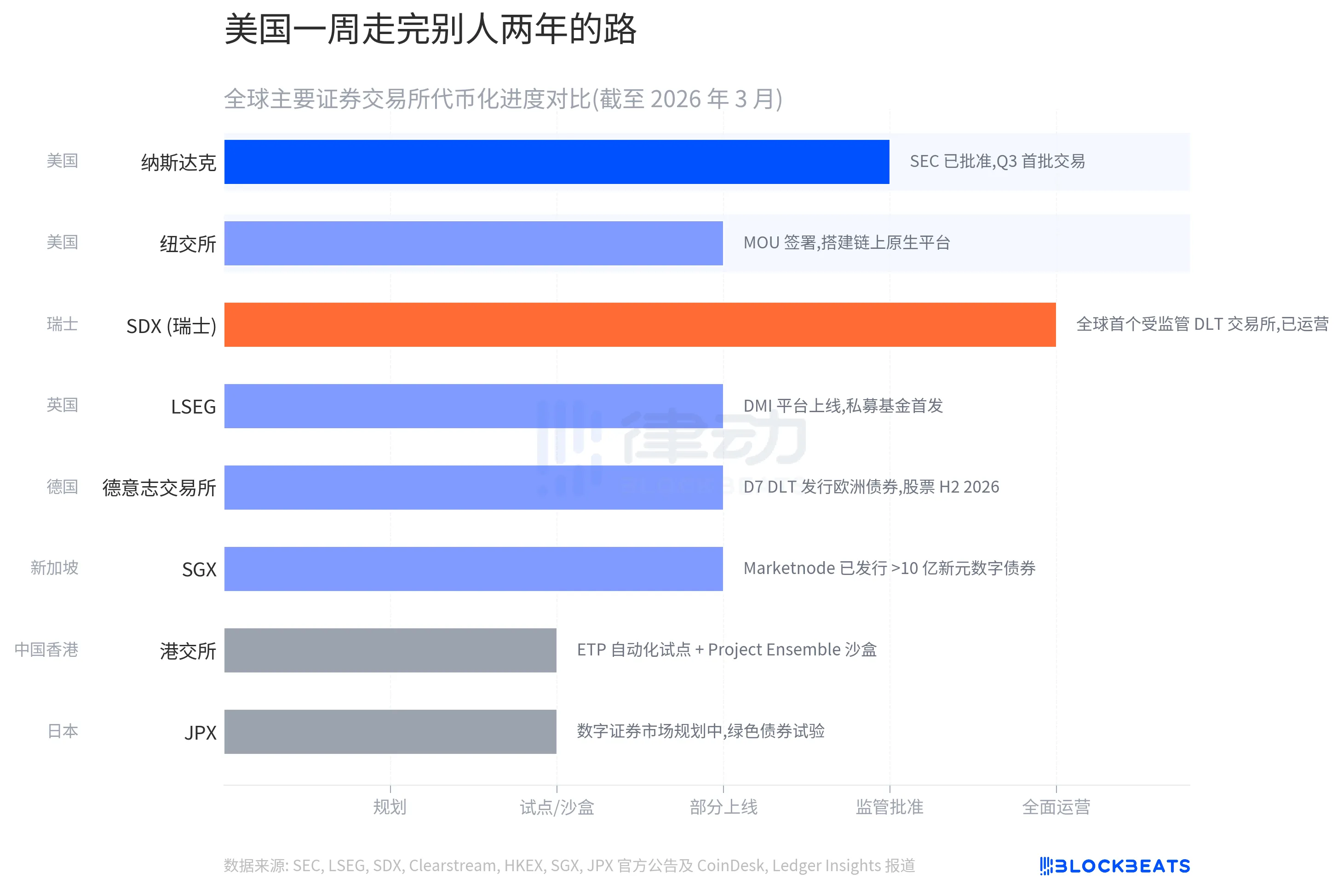
Switzerland's SDX is the world's first DLT exchange to receive a full license, launched in 2021, reportedly issuing over 400 million Swiss Francs in tokenized bonds, but with a daily trading volume of only 2 to 5 million Swiss Francs, its impact is limited to Switzerland. The London Stock Exchange Group (LSEG) launched the DMI platform in September 2025, with the first transaction involving private equity tokenization, currently applying for a Digital Securities Depository (DSD) license, as per LSEG's official announcement.
Deutsche Boerse's Clearstream's D7 platform will start issuing tokenized European bonds in the fourth quarter of 2025, with electronic shares expected to go live in the second half of 2026, according to Clearstream's official website. The Singapore Exchange (SGX), through a joint venture company with Temasek called Marketnode, has issued over 1 billion Singapore Dollars in digital bonds. The Hong Kong Stock Exchange and JPX are still in pilot and planning phases.
Most of these exchanges took two to three years to progress from pilot to partial launch. Nasdaq, from SEC approval to the expected first trades, only took a quarter, while NYSE targeted on-chain native settlement directly from signing an MOU. SDX achieved what it did in five years; the two U.S. exchanges reached their respective starting lines in just one month. Nasdaq added a layer on its existing foundation, while NYSE laid down a new foundation next to it.
Welcome to join the official BlockBeats community:
Telegram Subscription Group: https://t.me/theblockbeats
Telegram Discussion Group: https://t.me/BlockBeats_App
Official Twitter Account: https://twitter.com/BlockBeatsAsia
 Related Articles