Old Indicator Fails, Three Major New Signals Emerge: BTC True Bottom May Still Be Below $60K

Original Title: "4 Classic Bottom Indicator Fail, 3 New Indicators Signal Bottoming Opportunity?"
Original Author: Wenser, Odaily Planet Daily
After experiencing eight consecutive daily gains, BTC turned around again, dropping from $76,000 and continuing to decline, currently trading at $69,200. The mainstream bottom indicators previously used in the industry, including Ahr999 (also known as the "9 God Index"), weekly RSI, STH-SOPR (Short-Term Holder SOPR), LTH (Long-Term Holder SOPR), MVRV Z-Score (Realized Cap HODL Ratio), are all in a "hit-or-miss" state: many indicators are at low levels, but the market continues to fall; some indicators are at high levels, but the market occasionally experiences sharp rises.
In light of this, we will present the industry's four major representative bottom indicators in this article, and combine data and "implicit indicators" from real life to construct new "bottom indicators," attempting to explore BTC's downside potential.
The following content is for learning and communication purposes only, does not constitute investment advice, all investment risks are self-assumed, please DYOR.
4 Classic Indicators Look at BTC Bottoming Time: The Best Time Has Not Yet Arrived, BTC May Fall Below 60,000
From last year's October peak of $126,000 to the current fluctuation around $70,000, BTC's price has been on a rollercoaster ride in just a few months. In such a volatile crypto market environment, many industry indicators have lost their reference value, including but not limited to the dynamically flexible miner shutdown price, industry fear and greed index, Google search popularity index, and the rainbow chart based on BTC's early adoption stage.
The reason is simple: due to the influx of BTC spot ETF funds, the increasing number of US stock DAT Treasury companies, the wide-open door of US regulatory agencies, a structural change has occurred in BTC's valuation system, where institutional holdings, derivative arbitrage, internal exchange settlements, US macro monetary policy, and even global geopolitics have become more significant factors influencing BTC's price. In other words, past on-chain indicators and P/L can only serve as references, but cannot lead to intuitive conclusions anymore.
Here we will present data and results analysis based on industry indicators that still have a certain representativeness in the industry, which may more intuitively illustrate the current failure of old indicators.
Indicator One: MVRV Z-Score, Collective Shift in Value Anchor System
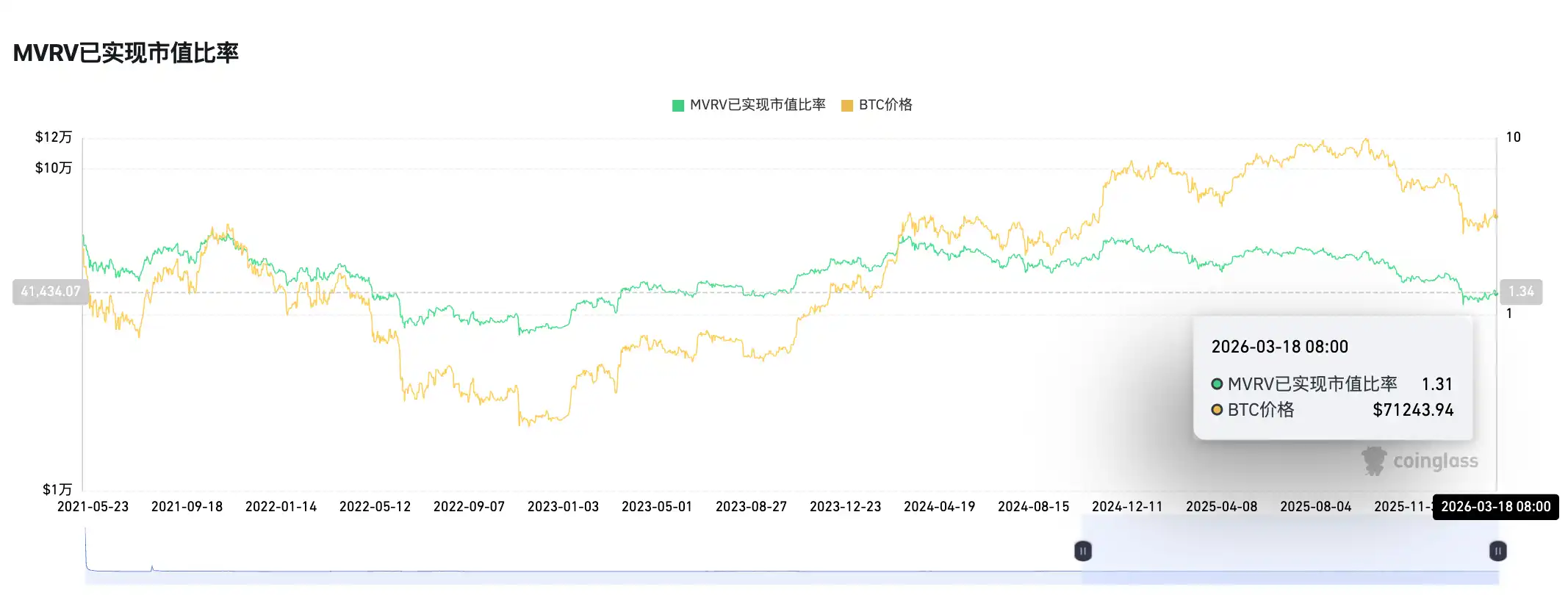
Figure 1
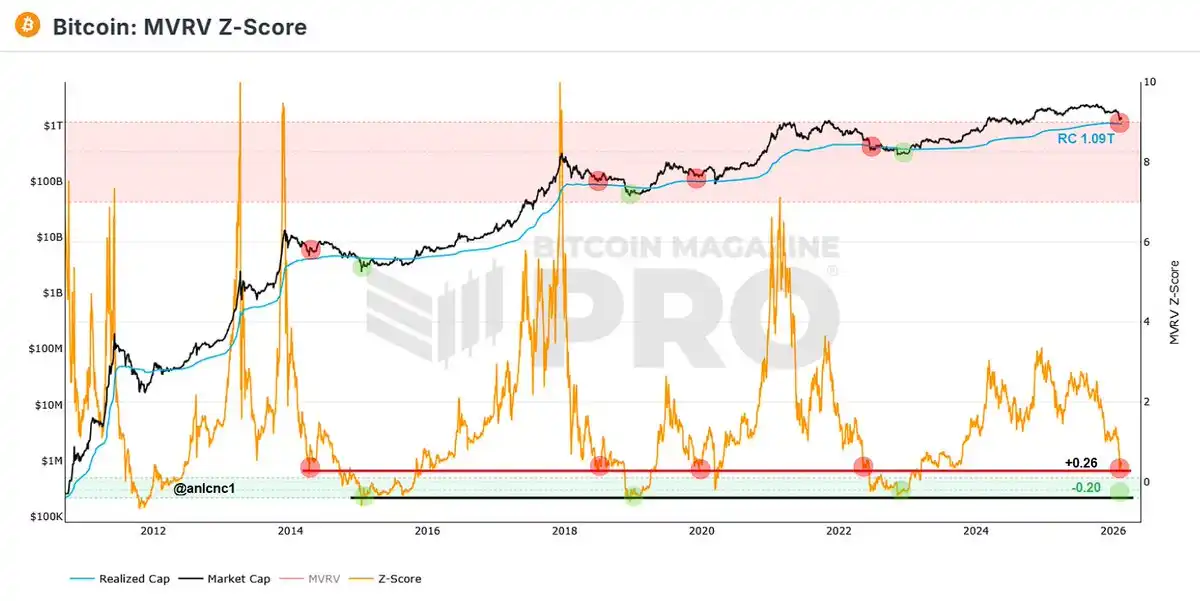
Figure 2
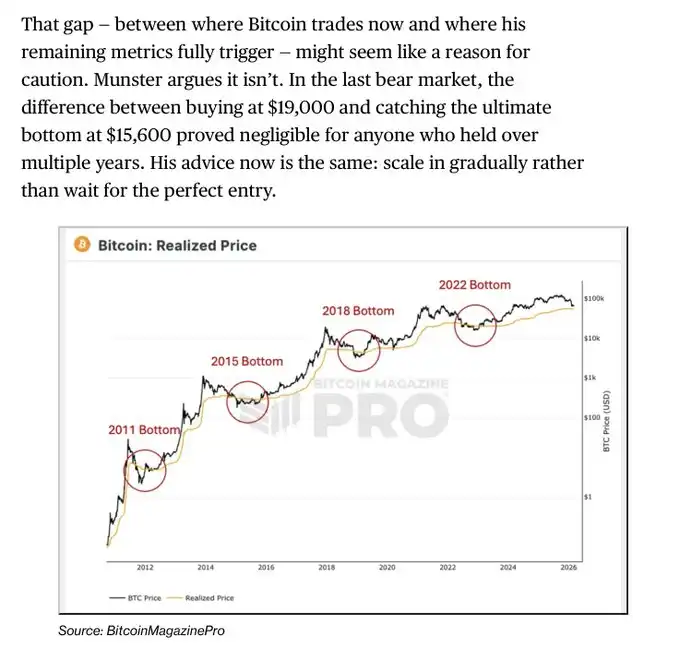
Figure 3
As of March 18, the MRVR ratio is currently at 1.31; previously, in February, crypto researcher anıl pointed out that "when the MVRV Z-Score drops to 0 and especially below -0.20, Bitcoin is at its price floor."
In this cycle, the lowest value Bitcoin touched was +0.26, indicating that the classic "green zone" has not yet been tested." (See Figure 2 above) On March 14, Bitcoin News noted that the MVRV Z Score had dropped to around 0.38, a level that had previously signaled undervaluation.
Other key support levels include the realized price around $54,000 and the 200-week moving average near $58,000. Bloomberg highlighted a potential bottoming range between $45,000 and $55,000, but a sustained recovery would require new demand support. (See Figure 3 above)
Reason for Failure: The large holdings of ETF custodians and DAT companies systematically inflated the realized value (RV), causing a significant increase in the denominator (standard deviation) of the Z-Score. The historically "extreme negative values" are now extremely difficult to achieve under the current structure.
Indicator Two: Ahr999 Index (9 Divine Index), Bottoming Range Below 0.45 Has Persisted for Nearly 50 Days
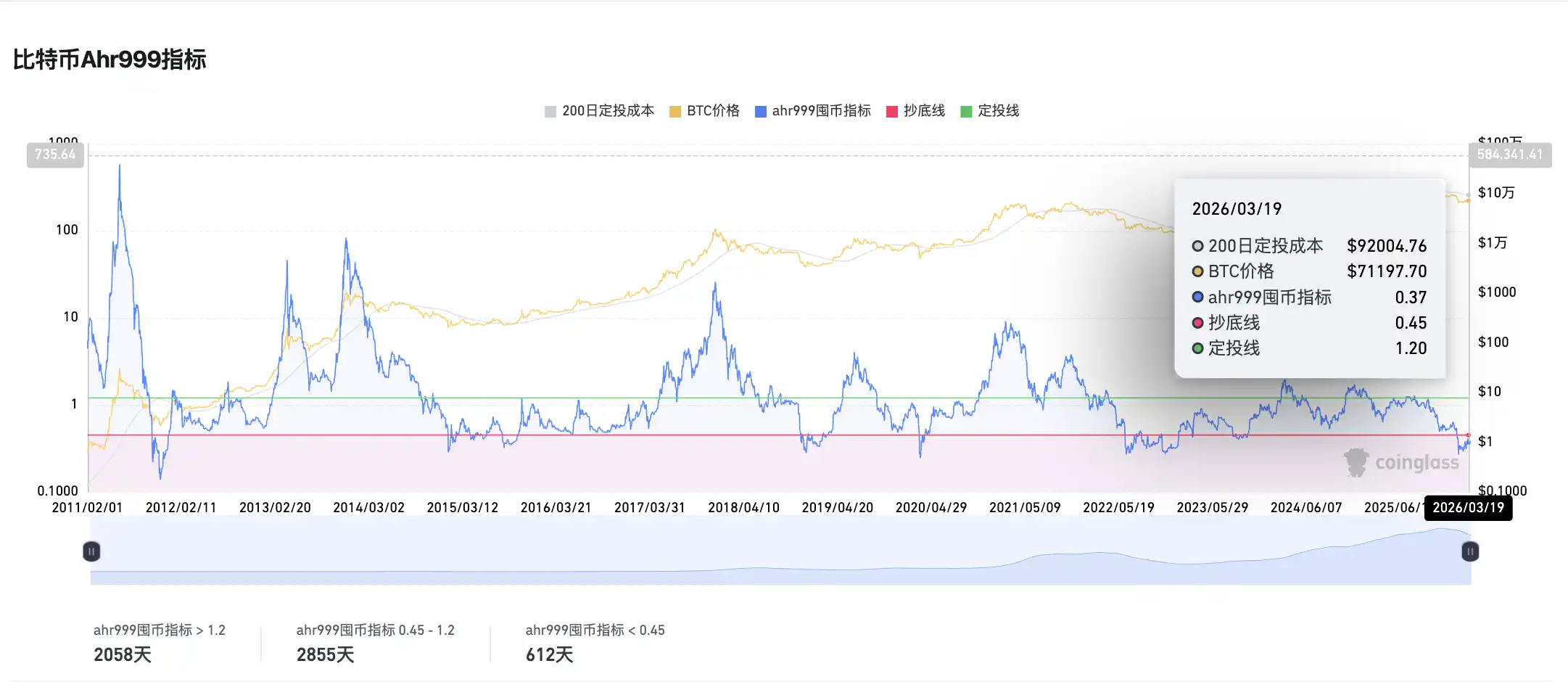
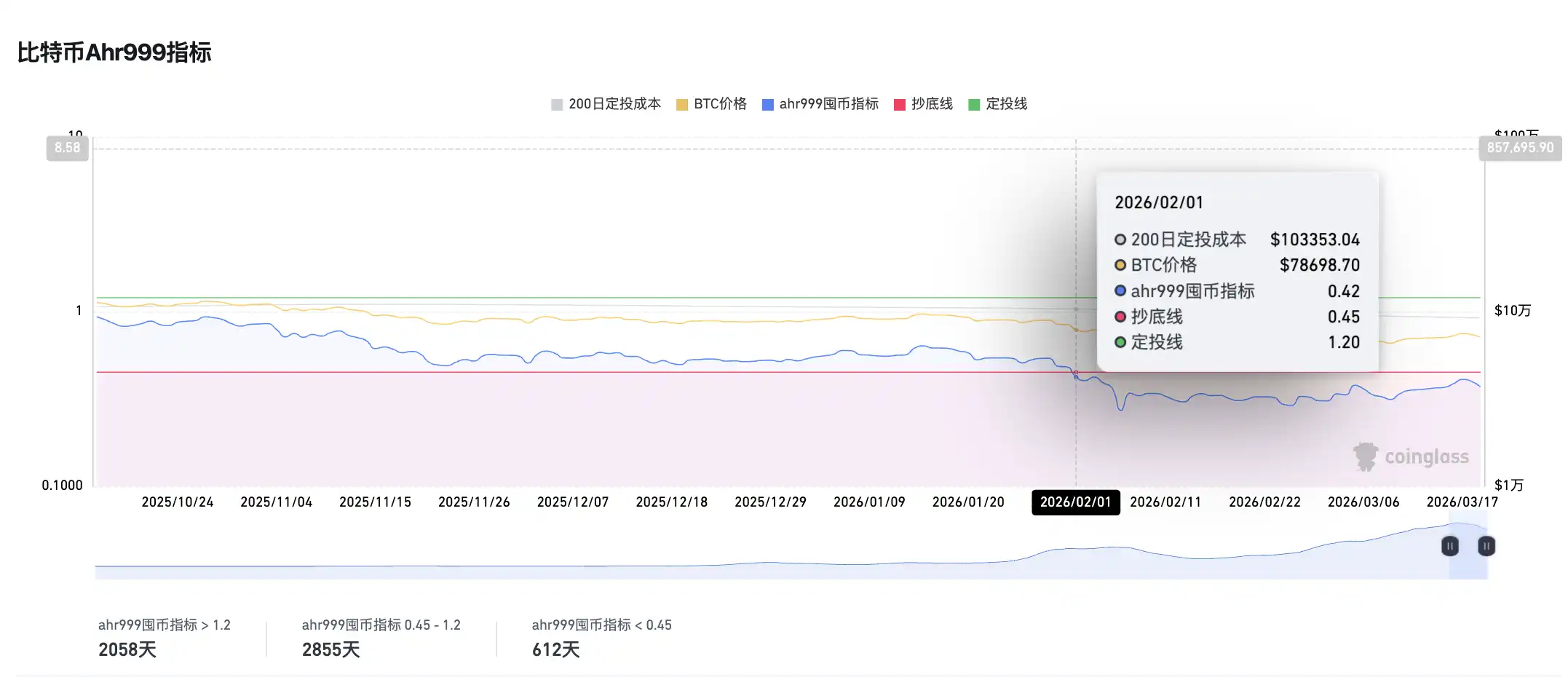
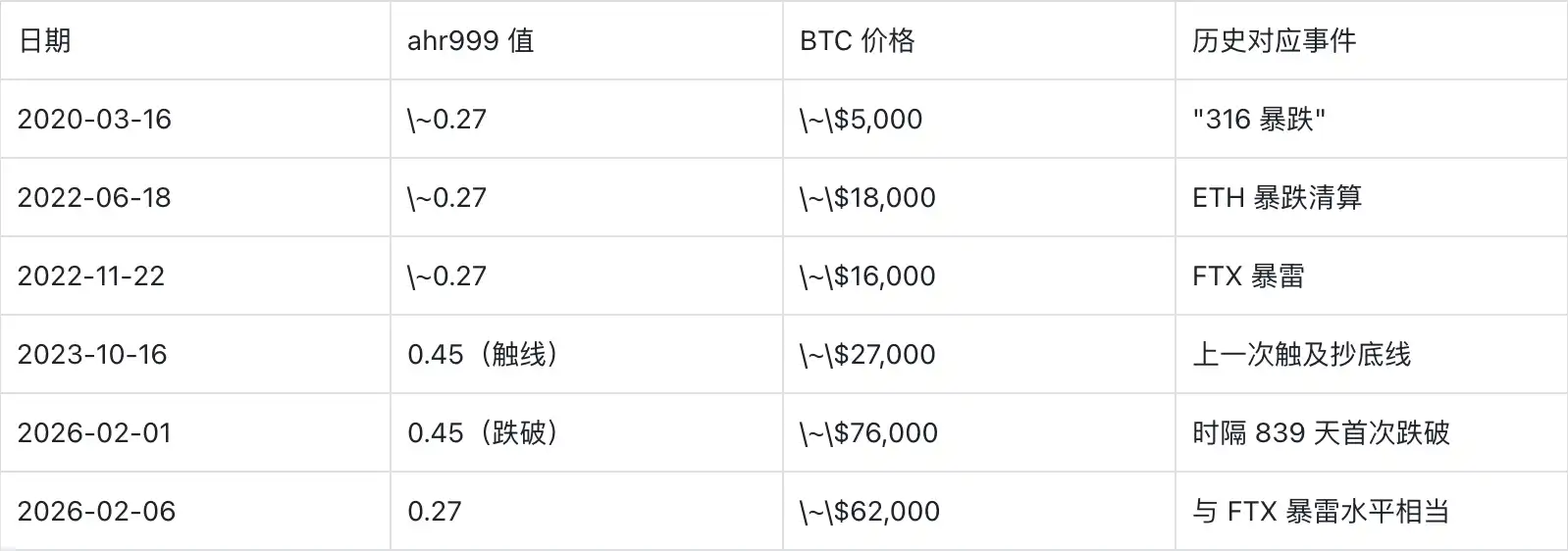
Since February 1 to date, the Ahr999 index has remained below 0.45 for nearly 50 days. Historically, the number of days this index has been <0.45 is only 612 days, accounting for approximately 11% overall. On March 19, the Ahr999 HODLer index data was 0.37, indicating it is still in the bottoming range, but it is difficult to provide more long-term guidance.
Reason for Failure: Since the major market crash on October 11 last year, the market has been in an oversold state, compounded by Trump's unpredictable policies, the Fed's rate cut below expectations, and international geopolitical turmoil. BTC's safe-haven status has diminished significantly, causing it to fall below the previous 76k cost line of the largest BTC DAT-listed company's Strategy. It is still awaiting more liquidity repair, and this indicator has gradually become a comfort index for "long-term value investors."
Indicator Three: SOPR, STH-SOPR continues to be below 1, LTH-SOPR remains in the 0.75-1 range
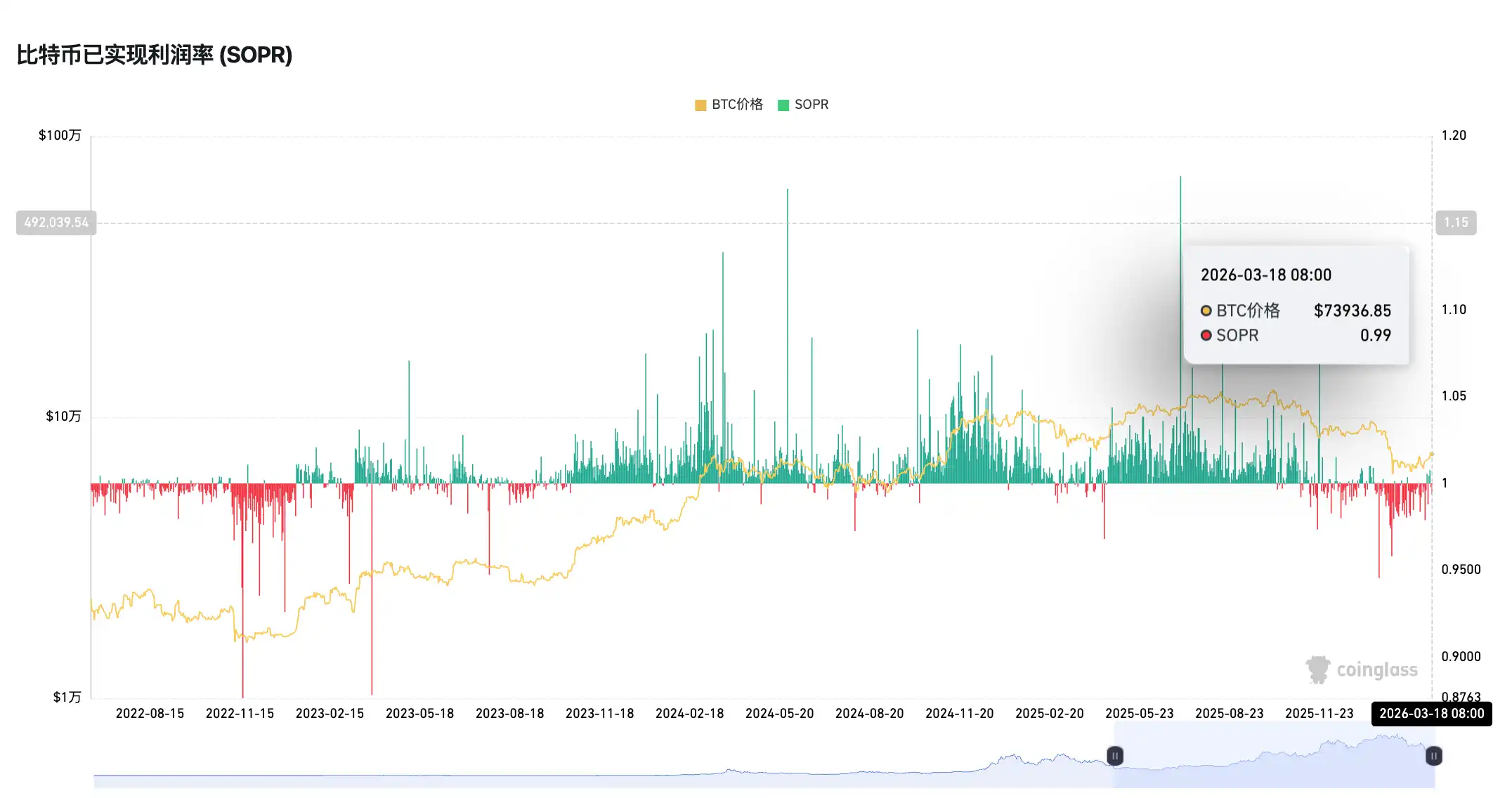
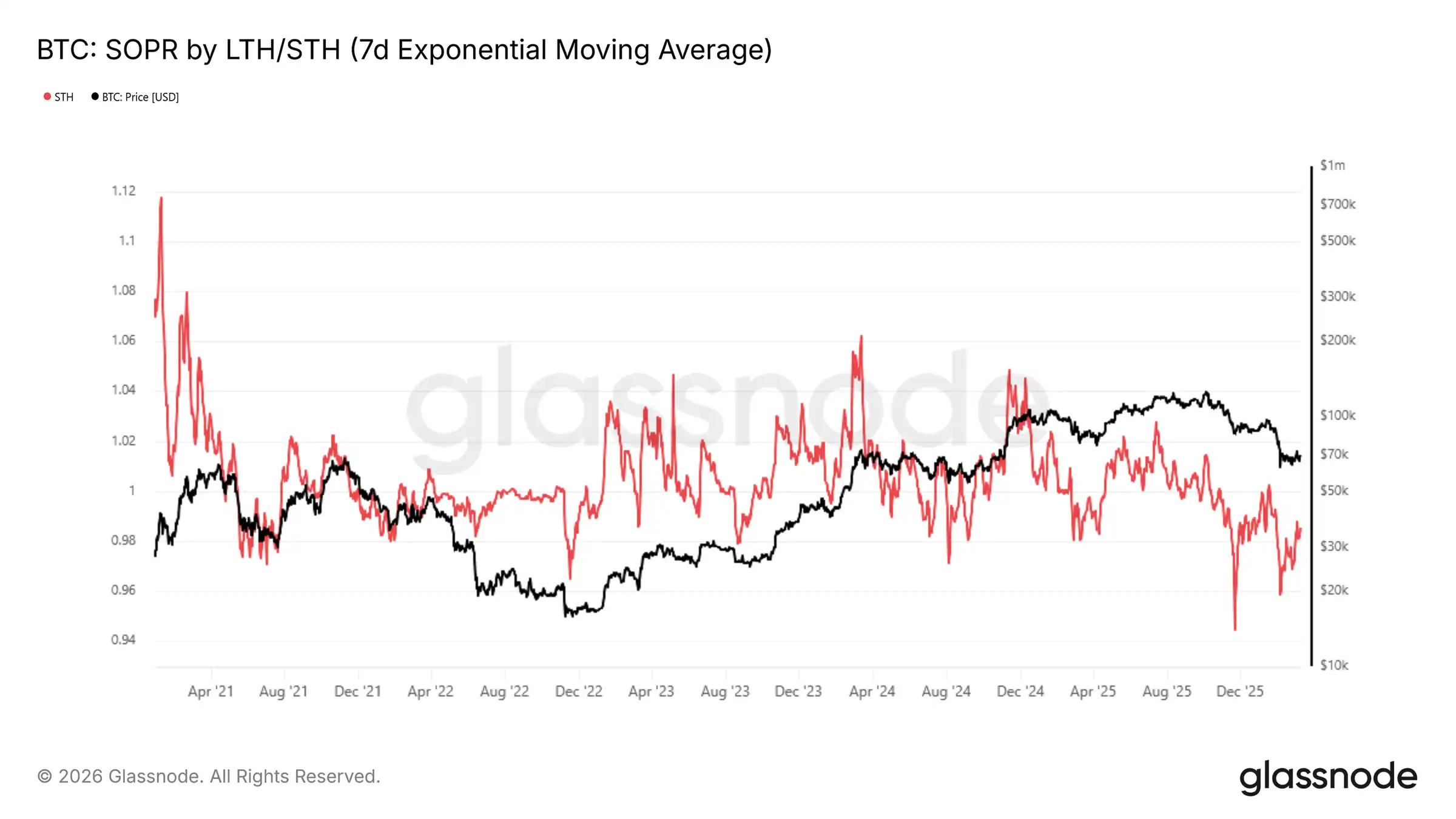
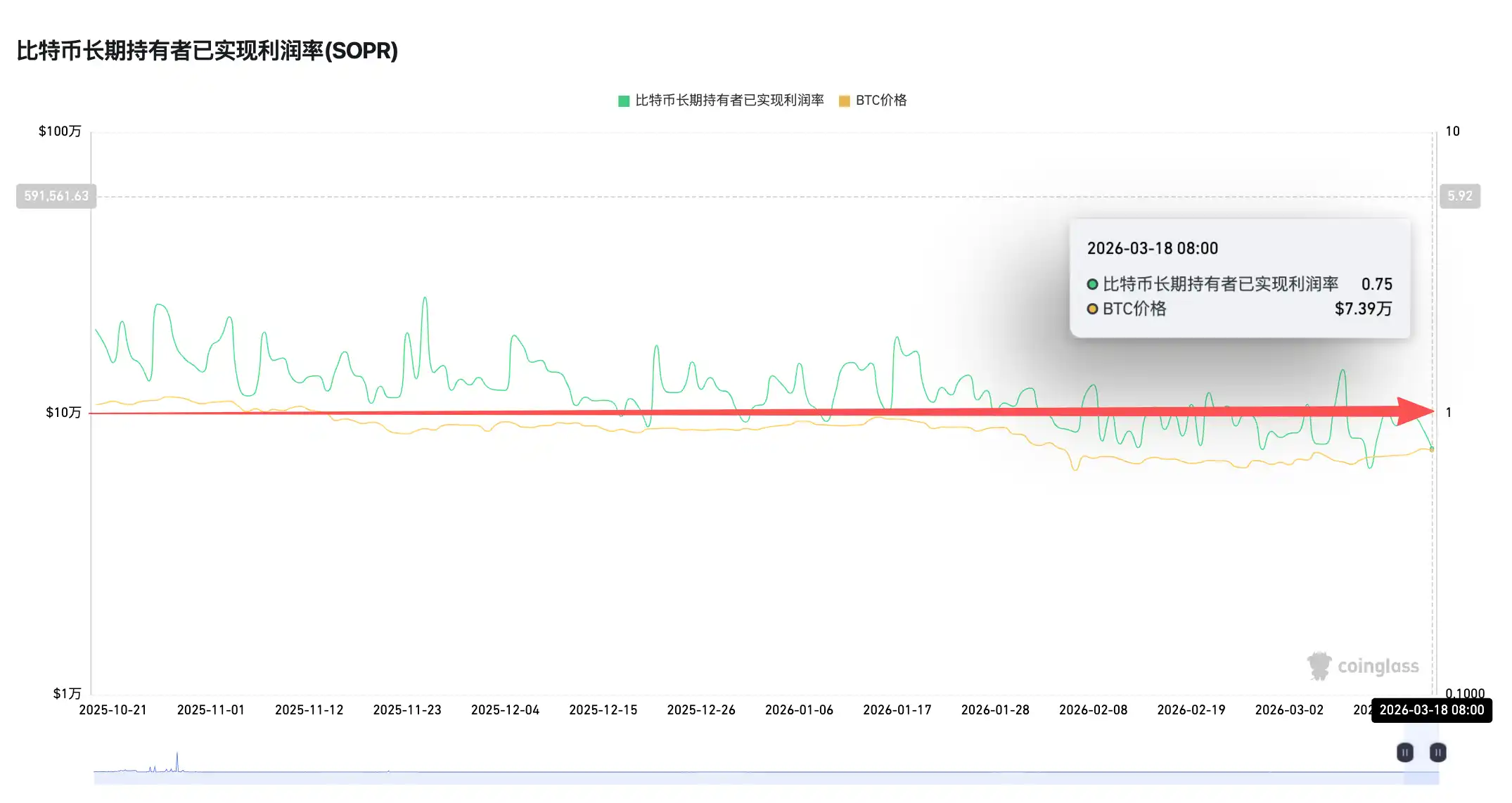
SOPR (Spent Output Profit Ratio) is usually used to measure the average profit/loss ratio of on-chain moved chips, where LTH-SOPR focuses on long-term holders holding for over 155 days. When LTH-SOPR falls below 1, it usually indicates that old chips are starting to sell at a loss, historically corresponding to the bottom of a deep bear market.
In February, Bitfinex released an analysis report stating that the adjusted SOPR (Spent Output Profit Ratio) had dropped to the 0.92–0.94 range, reflecting most coins transferred in a loss state, with structural pressure still present.
On March 14, Glassnode's quarterly report also pointed out that the 7-day moving average of STH-SOPR is at 0.985, staying below 1 for more than 50 days since October 2025—this is a typical bear market sign. This is a significant feature of the bear market cycle. Meanwhile, net position changes for LTH show that old chips are still decreasing, but the pace has significantly slowed down, switching from aggressive distribution in Q3/Q4 2025 to a more moderate profit-taking pattern.
Failure Performance: The decline without capitulation of old chips does not constitute a traditional cyclical bottom. STH-SOPR remaining below 1 confirms a bear market, but the turning point of LTH-SOPR's arrival is the real leading indicator of the bottom.
Indicator Four: BTC Mayer Multiple, below 0.8 for almost 50 days
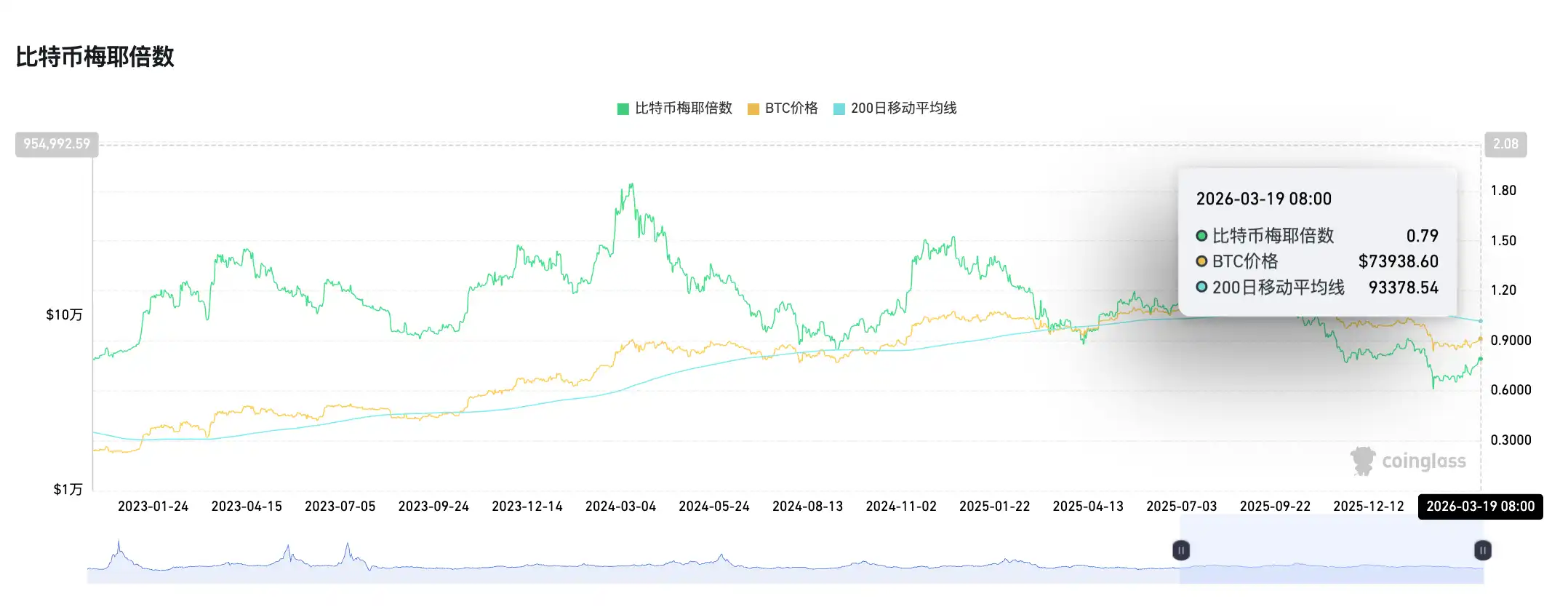
As an industry indicator derived solely from comparing BTC's current price to the 200-day moving average, the BTC Mayer Multiple, similar to the NVT Ratio, has been below 0.8 for almost 50 days. Historically, <0.8 has been a zone of historical undervaluation. Therefore, although this index is based solely on a simple price average, does not rely on on-chain transaction data, and is relatively less influenced by institutions, it is still difficult to constitute a sustainable bottom-fishing indicator.
3 Key Indicators Revealing Bear Market Bottoming Range: CVDD Iron Floor, NUPL Negative Value, Stablecoin Exchange Netflow
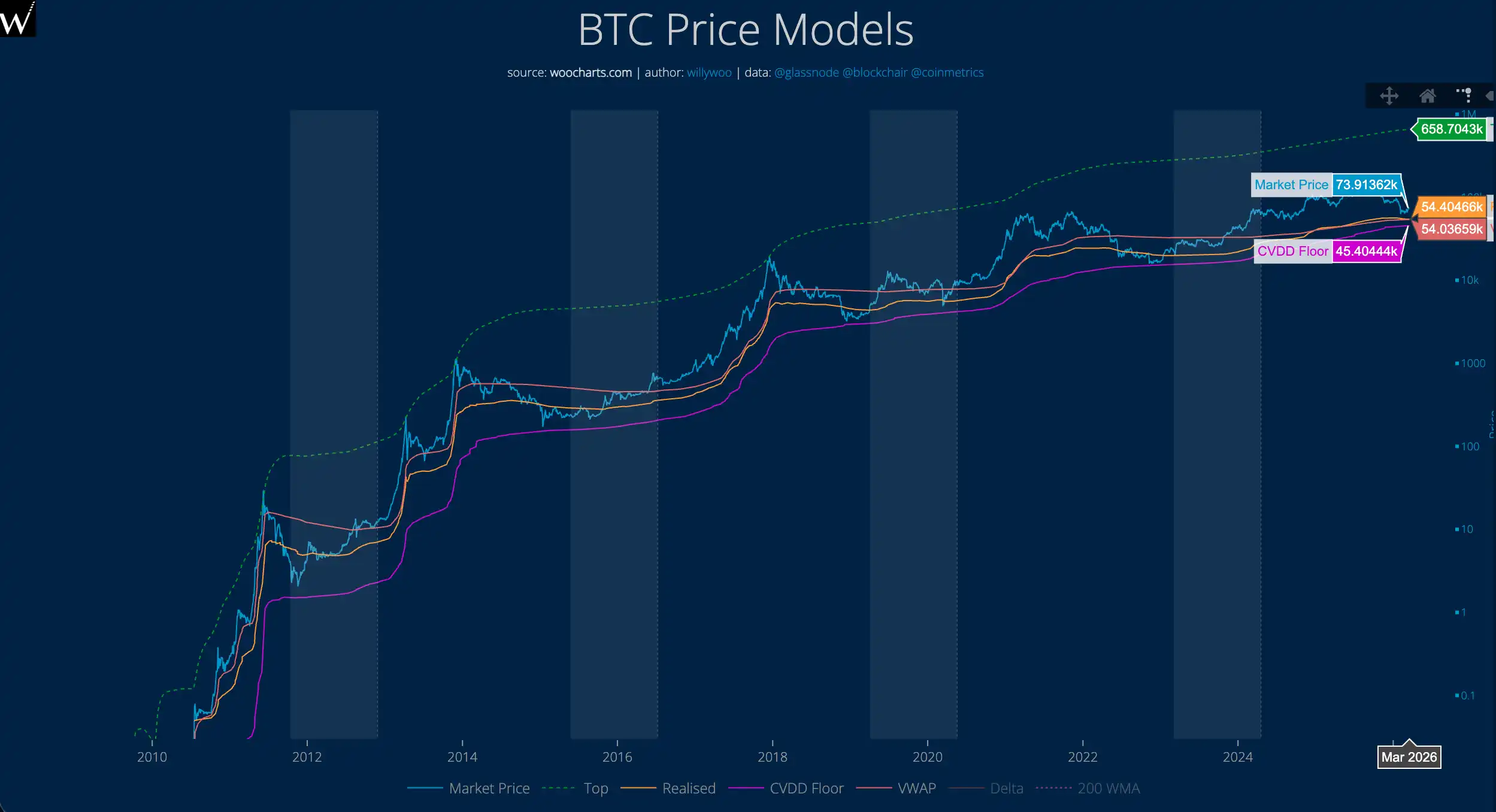
CVDD (Cumulative Value Days Destroyed): Analyst's Personal Iron Floor Model
This indicator was developed by crypto analyst Willy Woo to track BTC's cumulative holding weight in different price ranges, creating a "historical iron floor" curve.
It is worth noting that this curve has twice approached the BTC market price in December 2018 and November 2022 but has never fallen below it to date.
Currently, the CVDD model shows the current BTC iron floor to be around $45,000.
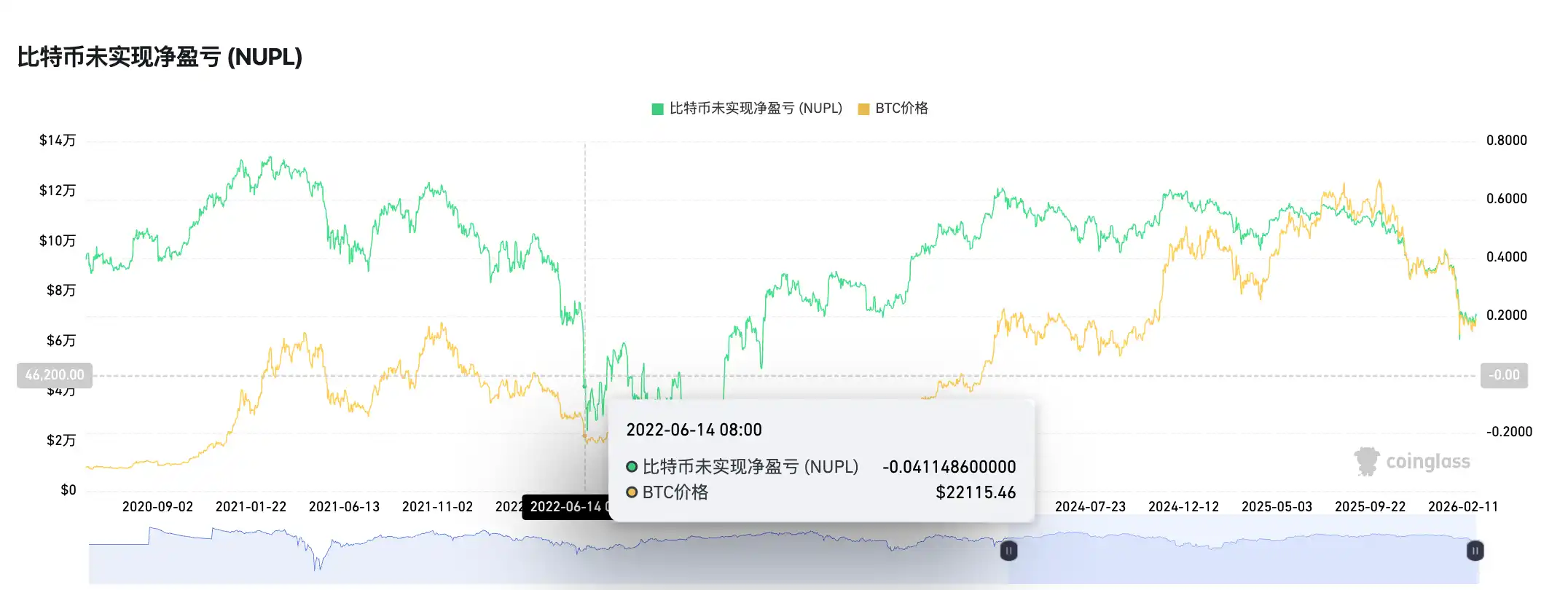
NUPL (Net Unrealized Profit/Loss): BTC Network-wide Profit/Loss Net Value
This indicator is mainly used to measure the network-wide unrealized profit/loss net value, with rough judgment criteria as follows:
High NUPL (>50%): Peak driven by greed; ideal for profit-taking.
Low NUPL (<0%): Fear or surrender; potential bottom.
It is worth noting that the NUPL indicator last fell to a negative value between June 2022 and January 2023.
Currently, the NUPL indicator is still around 0.2.
Stablecoin Exchange Netflow: Stablecoin Exchange Net Inflow
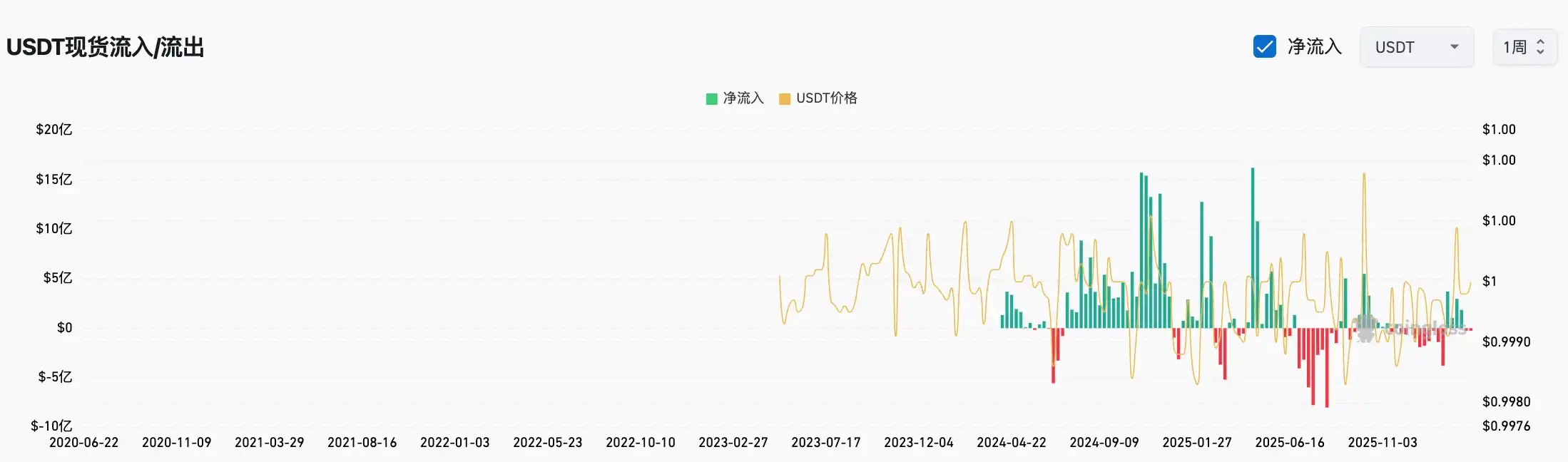
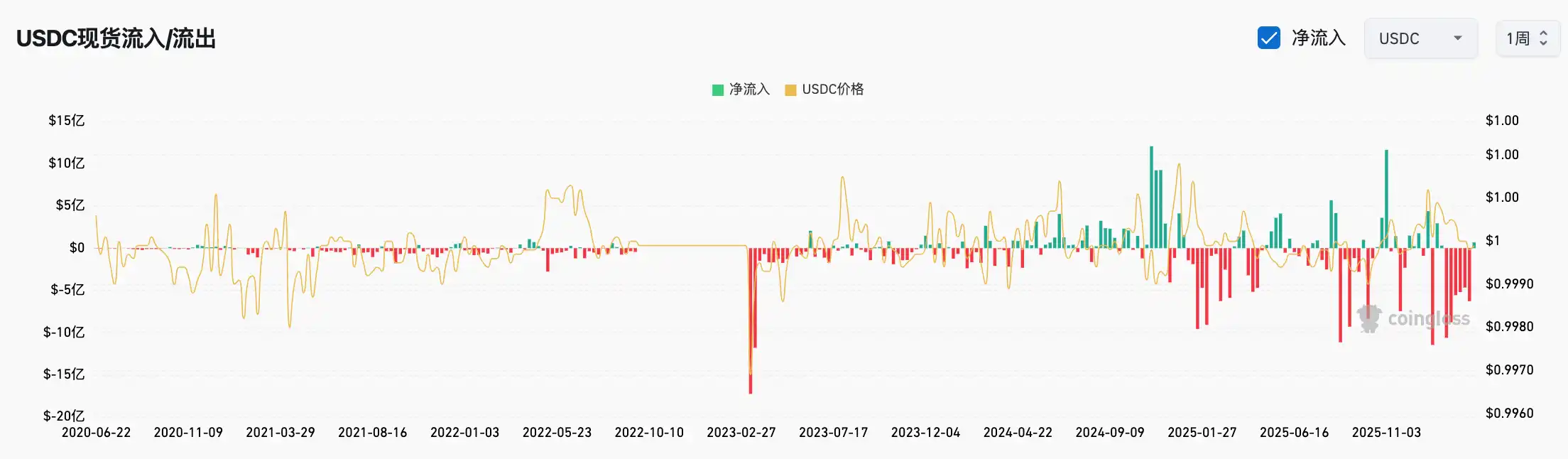
This indicator is mainly used to determine whether stablecoins are flowing back to exchanges, a leading signal of imminent market buying pressure. Historically, a sustained rise in stablecoin net inflows often precedes a substantial BTC price rebound by 2–4 weeks.
The rationale behind this indicator is that a price rebound without stablecoin inflows is just a leverage-driven technical bounce with very low sustainability.
Currently, USDT and USDC, which hold around 80% of the stablecoin market share, are still experiencing continuous outflows, indicating a considerable distance to the BTC bottom.
Epilogue: Buy When No One Is Looking, Sell When Everyone Is Shouting
At the end of the article, we still need to emphasize that the various indicators above are for reference only. Specific trading and investment strategies vary due to different risk preferences, capital levels, and holding periods for each individual and institution.
However, compared to bottom-fishing indicators, perhaps the cryptocurrency industry's top-finding indicators are more flexible. Similar to gold and silver, which skyrocketed and caught everyone's attention some time ago, once the discussion frenzy about BTC spreads to those around you, whether it's a middle-aged lady buying vegetables on the subway or your barber Tony, when they all start asking you about BTC, Crypto, and cryptocurrency investments, perhaps timely selling may be the only best option.
We hope that each of us can wait for that day and embark on a "Great Retreat of our own."
Welcome to join the official BlockBeats community:
Telegram Subscription Group: https://t.me/theblockbeats
Telegram Discussion Group: https://t.me/BlockBeats_App
Official Twitter Account: https://twitter.com/BlockBeatsAsia