A Billion-Dollar Life Buy Threat Triggered by an Iranian Missile

On the afternoon of March 10, 2026, an Iranian ballistic missile hit an open area outside Beit Shemesh, a suburb of Jerusalem, the capital of Israel. A field reporter named Emanuel Fabian quickly filed a report: "A missile hit an open area outside Beit Shemesh," along with a video of the explosion on the scene. Rescue services confirmed no casualties.

Fabian is a military reporter for The Times of Israel, specializing in frontline coverage of conflicts surrounding Israel. Known for his accuracy and restraint, his reports are widely cited by the Israel Defense Forces and international media such as The Wall Street Journal and New York Post.
In Fabian's view, this kind of news hardly has any "trigger point": in the current Israeli context, Iran launches missiles towards Israel almost every day, and incidents causing damage to buildings, casualties, or injuries may attract more attention, while missiles landing in unpopulated areas like this usually go unnoticed.
A Death Threat Triggered by a News Report
However, several hours later, he started receiving a series of emails from strangers. These emails were in different languages, had different signatures, and seemingly came from different regions, but their content was highly consistent: they demanded that he change "missile hit open area" to "intercept fragment fall."
Puzzled, Fabian, out of professional integrity, replied stating that according to military information, it was indeed a missile warhead that hit, and the video showed a large-scale explosion of hundreds of kilograms of explosives, which couldn't have been caused by fragments.
He thought the matter would end there. But he only realized the beginning when he woke up the next day.
Over the next few days, emails from different time zones and with different signatures kept pouring in, all with the same demand: to change "missile" to "fragment." As time passed, the tone of the emails grew increasingly forceful—the previous polite inquiries turned into strong demands and even escalated to threats. Some emails directly mentioned Fabian's family, home address, hinting at using money to deal with him.
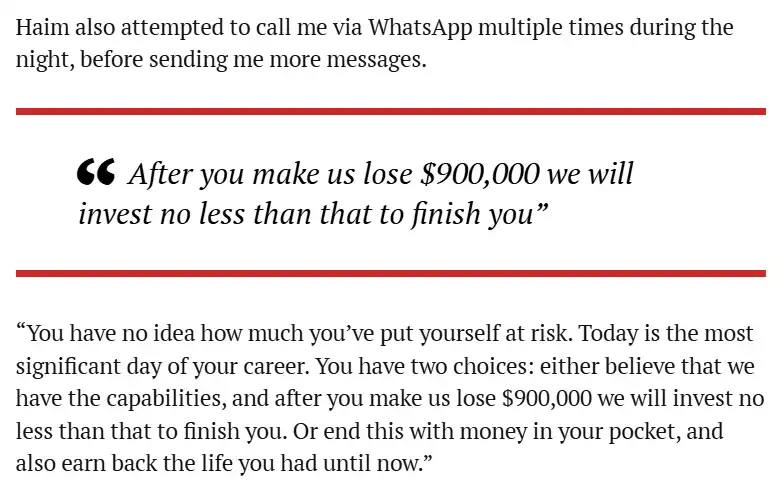
Even more absurdly, fellow journalists from other media outlets began contacting him, hoping he would amend his report. After persistent questioning, one of these colleagues finally admitted: "It was an acquaintance who asked me to inquire. If I can convince you, he will reward me."
A High-Stakes Game Behind a Single Word
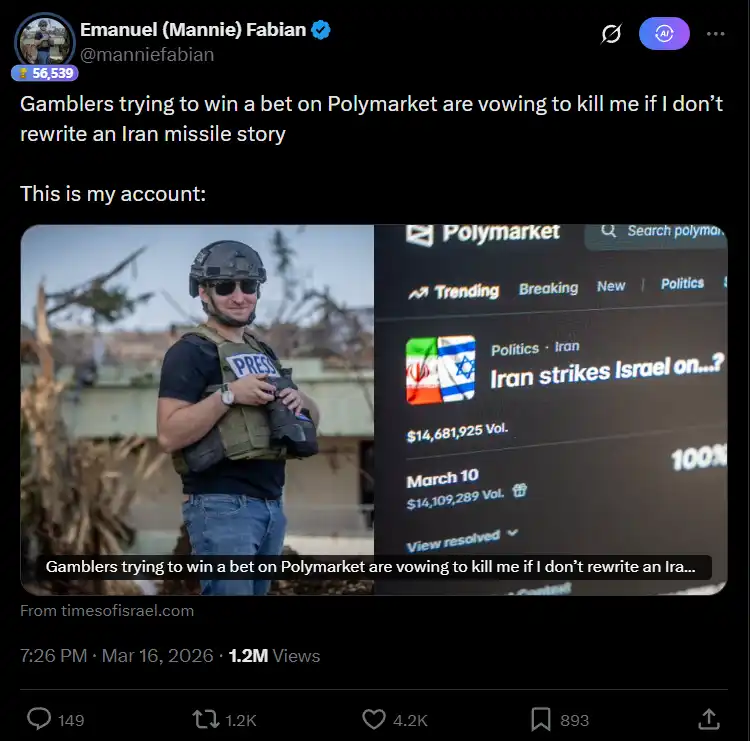
Amidst ongoing harassment, Fabian began to trace the motives of these individuals. Following the breadcrumbs of emails and direct messages, he eventually tracked it back to the source — a trading market on the prediction platform Polymarket:
“Will Iran strike Israel on March 10th?”
As of March 17th, the trading volume on this market had surpassed 140 million USD. Thousands of accounts placed bets on this question, scouring through any possible source of information such as news, videos, open-source intelligence, etc., to find evidence that could influence the outcome.
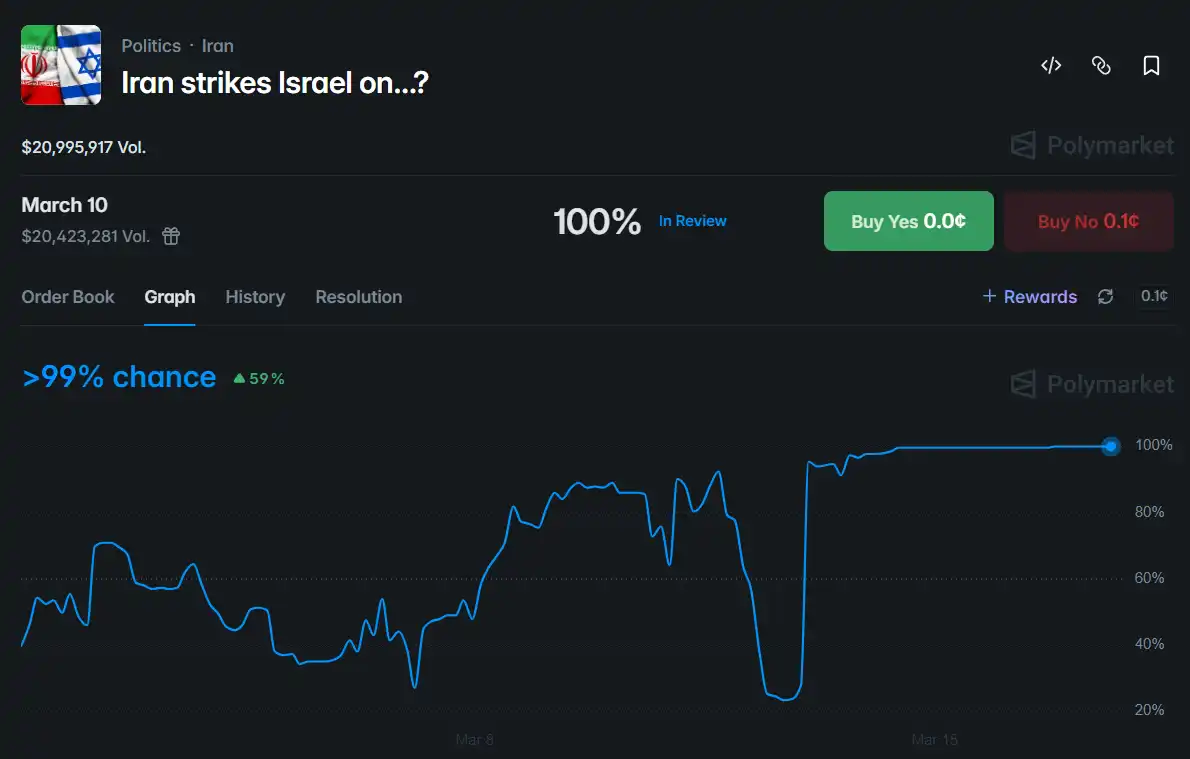
And the repeated demand in those emails for “wording changes” stemmed directly from the settlement rules of this trading market:
“If Iran conducts a drone, missile, or airstrike on Israeli soil on the specified date, this market will resolve to ‘Yes’… Intercepted missiles or drones, regardless of whether they land on Israeli soil or cause damage, are not sufficient to resolve to ‘Yes’.”
In other words, if Fabian were to use the word “missile” in his report, the market would settle as “Yes”; if the word were changed to “shrapnel,” the settlement would be “No.” Contrasting the timing of the emails with the real-time odds on the trading market revealed that those betting “No” stood to gain 4 to 10 times their wager if they successfully “persuaded” Fabian to amend his article.
At this point, everything became clear. These individuals were not questioning the truthfulness of the reporting but were attempting to, through influencing the reporting itself, alter the market’s settlement outcome.
They were not betting on how the war would be fought but on how the news would be written.
Evolution of Information Sources: The Ethical Crossroads of Prediction Markets
The attention on prediction markets largely stems from their straightforward logic:
Event Occurs → Media Report → Traders Bet → Probability Changes
During the 2024 U.S. presidential election, this logic showcased the unique allure of prediction markets to the public: while mainstream polls were still undecided on whether Trump or Harris would prevail, the prediction market had already placed Trump’s win probability at over 90%.
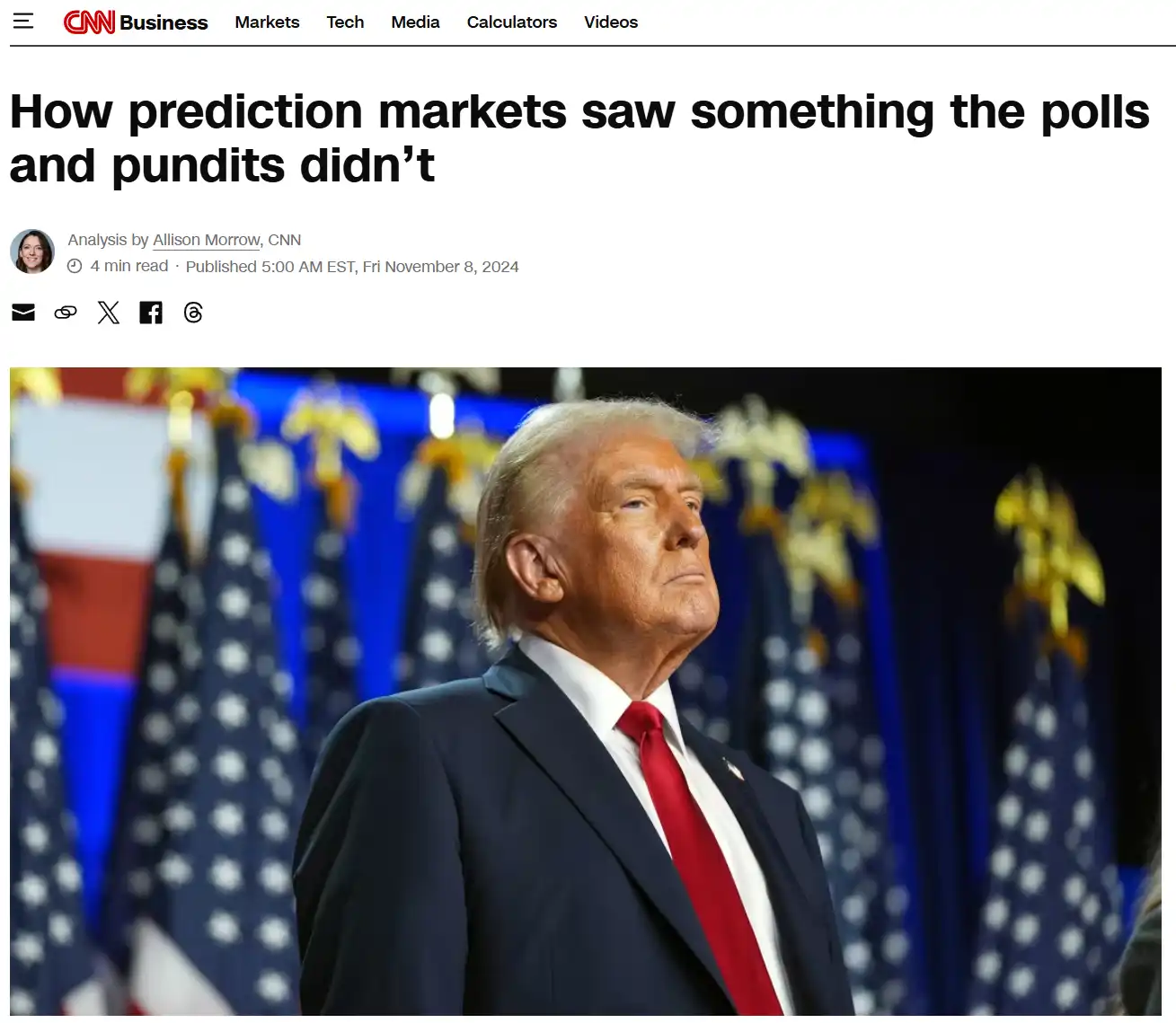
From this point on, the public began to see it as a more "honest" source of information, with some traditional media even starting to cite prediction market probabilities as reference in their reporting.
However, Fabian's recent experience has uncovered a dark area that prediction markets had never touched before. Driven by profit motives, some participants are no longer satisfied with just "interpreting information"; instead, they have begun to try to influence information, distort information, and even fabricate information.
This evolution is highly ironic: while prediction markets were initially admired for "revealing the truth through the wisdom of crowds," they may now become promoters of misinformation. If gamblers can rewrite reports by threatening or bribing journalists, then the prediction market is no longer an oracle of truth but a distorter of truth.
This is not just a matter of the prediction market's moral crisis but also a threat to the entire information ecosystem. When profit-driven logic infiltrates news reporting, the public will find it harder to distinguish truth from falsehood, and journalists' safety will be compromised.
The end of the Fabian incident may be just the beginning of a transformation of the entire ecosystem
Fabian did not ultimately compromise. However, he also admitted that this instance of persistence does not guarantee that similar situations will not occur in the future. The platform involved, Polymarket, has taken down all the "Will Iran strike Israel on a certain date in a month" markets originally updated daily and responded, stating they have "banned the accounts in question and handed over the information."
But this does not mean the matter ends there.
Currently, there are still many similar markets on Polymarket. For example, "Will the US/Israel strike Yemen before March 31st?" with the same settlement rules as mentioned earlier, and a trading volume of $100,000.
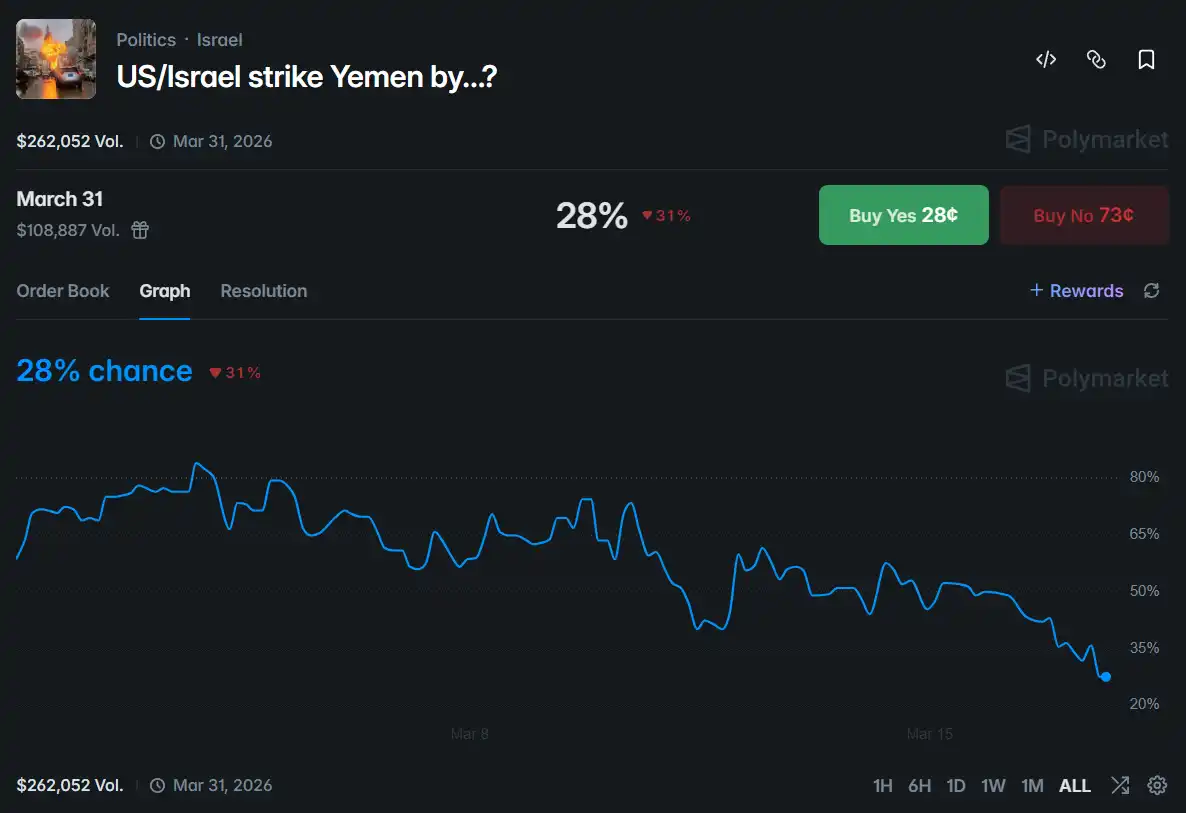
If the vested interests behind the scenes are significant enough, will similar pressures reappear? If the next threatened individual is a journalist with fewer resources and weaker protections, what will happen? If someone makes a different choice between money and risk, to what extent will a real event be quietly rewritten?
The last paragraph of Fabian's original article is also particularly fitting to be placed at the end of this one:
"I sincerely hope that in this new battlefield intertwined with reality, news, gambling, and crime, such things have not yet happened and will not happen."
Welcome to join the official BlockBeats community:
Telegram Subscription Group: https://t.me/theblockbeats
Telegram Discussion Group: https://t.me/BlockBeats_App
Official Twitter Account: https://twitter.com/BlockBeatsAsia