The US-Iran Conflict Spreads to the Crypto Space: What to Expect in the Market on Monday

The attempt to assassinate the Supreme Leader and President of Iran by the United States has failed.
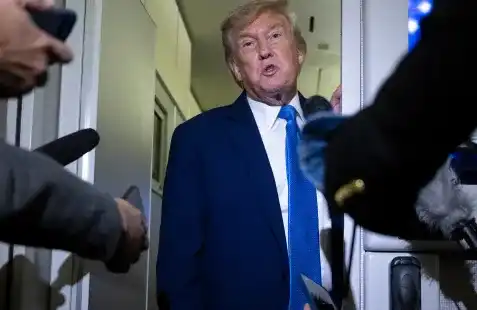
As the Tehran air raid siren suddenly blared, Israel, in conjunction with the United States, launched a large-scale military strike under the codename "Roaring Lion," targeting Iranian nuclear facilities, air defense systems, and missile production lines. Trump immediately publicly acknowledged U.S. involvement, calling it a "major military operation."
The Iranian Revolutionary Guard quickly retaliated, unleashing hundreds of missiles and drones towards Israeli and Persian Gulf U.S. military bases. Israel declared a nationwide state of emergency, closing its airspace. Explosions were heard near the Abu Dhabi airport, where an Asian civilian was killed by falling debris.
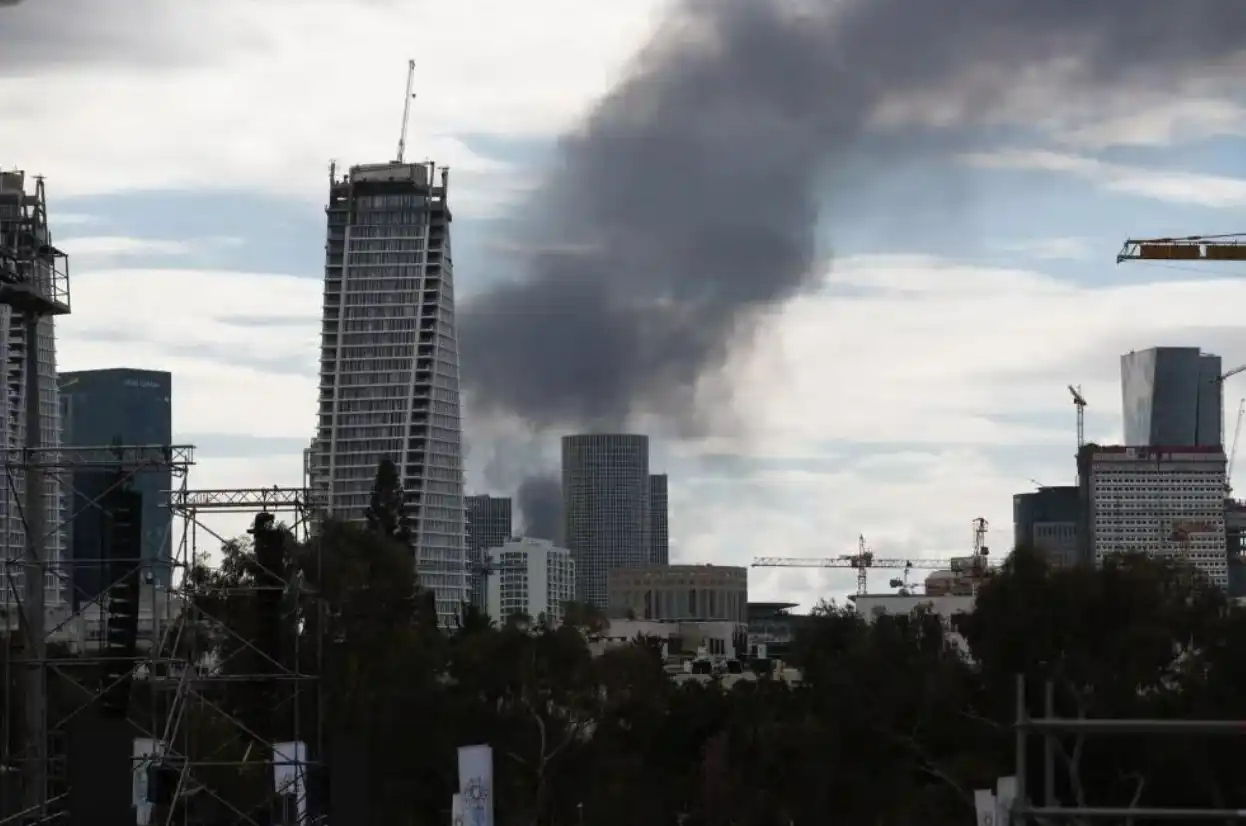
Faced with the strike, the Iranian Islamic Revolutionary Guard swiftly counterattacked, raining down hundreds of missiles and drones on Israeli and U.S. military bases around the Persian Gulf.
The financial market's response was brutal and honest. Within just 1 hour, BTC's sell-off volume surged by around $1.8 billion.
Following the U.S. and Israel's attack on Iran, BTC briefly dropped to $63,000, with the perpetual contract funding rate plummeting to -6%, the second-lowest level in nearly three months, last seen on February 6 when BTC bottomed near $60,000. Meanwhile, as gold was not trading, gold futures surged against the trend by nearly 6%.
Currently, Israel has entered a nationwide state of emergency, closing its airspace. While the international community is still cautiously defining whether this constitutes "total war," this high-intensity localized conflict has substantially altered the region's landscape.
The Heart of the Crypto Industry, on the Edge of Conflict
As the smoke spreads, Lebanon, Saudi Arabia, and the UAE, the three countries at a geopolitical crossroads, are experiencing both physical and psychological pressures.
Southern Lebanon has become the second battlefield of clashes between Hezbollah and the IDF. Beirut International Airport has been urgently closed, with the sound barrier frequently broken by sonic booms from IDF jets flying supersonically over the city.
While Saudi Arabia strives to maintain neutrality, its airspace has become a corridor for missile flights. The U.S.-manned Prince Sultan Air Base is on high alert, and the Saudi government is on high guard against any stray missiles hitting its facilities.
Dubai International Airport is currently in a widespread no-fly state, with frequent alerts at the Al Dhafra Air Base in Abu Dhabi. If the Strait of Hormuz is blocked, Dubai's shipping and financial status will suffer a devastating blow.
Several explosions were heard near the main airport in Abu Dhabi, UAE, and at present, according to multiple media reports, an Iranian airstrike caused debris to fall on a residential area in Abu Dhabi, resulting in the death of one Asian citizen.
These war-torn regions have become the focus of the crypto industry in recent years, with the UAE evolving into a global cryptocurrency hub. This also means that this war is threatening the crypto industry in unprecedented ways.
Binance has officially ended its "headquarters-less" era, establishing its global headquarters in Abu Dhabi, UAE (ADGM). At the same time, it has a significant office space in Dubai (located in One Central). OK has a large regional hub in Dubai (near the World Trade Center), recently expanding its Dubai office by the end of 2025 with a staff of over 100 people, serving the entire Middle East and North Africa (MENA) region. Bybit relocated its global headquarters from Singapore to Dubai (One Central) in 2023, with almost all staff working in Dubai.
Almost every major institution you can think of has set roots in Dubai or Abu Dhabi. Dubai, just 300 kilometers from the southern coast of Iran, is separated only by the Persian Gulf.
In addition, other well-known international projects and exchanges are also based in the Middle East. For example, Crypto.com has a full operating license in Dubai and has recently signed multiple payment cooperation agreements with the Dubai government. Kraken has its Middle East headquarters in Abu Dhabi and was one of the first international platforms to receive a local license. Chainalysis, a leading blockchain analysis company, has an office in Dubai responsible for monitoring money laundering and illicit financing activities in the region. Currently, they are closely monitoring the flow of crypto funds inside Iran.
The situation is even more precarious for local native exchanges, with their roots in the Middle East. Once a war breaks out, they may face a survival crisis. For example, Rain Financial is headquartered in Bahrain and has a large office in Riyadh, Saudi Arabia. Due to Bahrain's proximity to Iran and hosting of the US Fifth Fleet, there may be a very high geopolitical security risk.
BitOasis is the earliest and largest local exchange platform in Dubai, with most users concentrated in Gulf countries; CoinMENA is headquartered in Bahrain and primarily serves users in Saudi Arabia and the UAE.
Dubai and Abu Dhabi are hubs of global Web3 talent. Should a war break out, a large outflow of talent or cyber infrastructure attacks may cause multiple project development delays.
If the Middle Eastern banking system is under wartime sanctions or temporarily shut down for security reasons, the onshore AED (Dirham) or SAR (Riyal) channels for deposits and withdrawals may be paralyzed on these trading platforms.
Next Week Market Outlook
In the extreme backdrop of the "Roaring Lion" operation that took place on February 28, 2026, the opening on Monday, March 2, might be a key window for the financial markets to experience a "war shockwave."
As the ultimate safe haven, gold is the only "ultimate insurance" in a geopolitical crisis. With the US military announcing the start of a "major combat operation," global safe-haven funds will flood into the gold market at the Monday opening.
Some analysts believe that the threat of Iran blocking the Strait of Hormuz will cause a surge in oil prices. The secondary inflation expectations from high oil prices will further drive up the price of gold. It is expected that gold will experience a significant upward price gap at the Monday opening. If Iran's retaliation over the weekend escalates to the civilian maritime routes in the Persian Gulf, the price of gold may challenge the psychological barrier of $5300-5800 per ounce in the short term, further reaching a new all-time high.
As for BTC, despite Bitcoin being known as "digital gold," in the initial hours to days after a war outbreak, it is often seen as a risk asset. Institutional investors tend to sell off the most liquid crypto assets first to recoup liquidity or to meet additional margin calls in the stock market.
As mentioned earlier, Dubai and Abu Dhabi are global Web3 hubs. Any threat to the physical security of the region would lead to investor concerns about the operational stability of related exchanges (such as Binance, Bybit), resulting in panic selling.
If a global stock market plunge (S&P 500, Nasdaq) occurs on Monday and there is volatility in Middle Eastern fiat currencies (such as the Riyal, Dirham) exchange rates, Bitcoin's properties as a decentralized safe-haven asset may start to come into play.
Bullish long-term views suggest that Monday may initially see a retracement (with support possibly near key round-number levels), followed by a decoupling trend in Bitcoin if the conflict escalates into a prolonged standoff and traditional financial payments are disrupted, resulting in a contrarian rebound. The battlefield news is constantly evolving, with the most crucial indicator being Bitcoin's trading volume.
In the end, war hurts every ordinary person.
The southern part of Lebanon has become the second battlefield with the closure of Beirut Airport. Saudi airspace has turned into a missile corridor. Major disruptions in flights at Dubai Airport. Bahrain, the headquarters of Rain Financial and CoinMENA, hosting the US Fifth Fleet, is located dangerously close to Iran.
Web3 talent will leave, project development will stagnate, and network infrastructure may suffer cyberattacks. But these are all industry-level costs. The more real cost is: someone has already died. Families are fleeing. Children are spending tonight in bomb shelters.
History has repeatedly told us that there are no true winners in war. It destroys not only buildings and markets, but the trust, order, and future built by a generation. One of the original purposes of cryptocurrency was to allow ordinary people to retain some autonomy in a chaotic world. But without peace, even a decentralized system will tremble in the face of reality's gunfire.
Perhaps there is not much we can do. But at the very least, do not be indifferent to what is happening. And let us hope that this conflict can be resolved as soon as possible.
Welcome to join the official BlockBeats community:
Telegram Subscription Group: https://t.me/theblockbeats
Telegram Discussion Group: https://t.me/BlockBeats_App
Official Twitter Account: https://twitter.com/BlockBeatsAsia

 Related Articles