2026 Spring Festival: Why Did Tech Giants Splurge 4.5 Billion on Insane AI Payment Subsidies?

Article | Sleepy.txt
During the 2026 Chinese New Year, a sense of déjà vu permeated the air.
Once again, tech giants were handing out money during the Chinese New Year, with a total amount exceeding 4.5 billion. This number was more than twice the total subsidies DiDi and Kuaidi offered during the taxi war in 2014, nine times the 500 million invested during the WeChat red envelope surprise attack on Pearl Harbor in 2015, and even surpassed Baidu's peak of extravagance with a 1 billion splash during the 2019 Spring Festival Gala.
This time, all players were doing the same thing: enabling payments with just a few words.
It was very unusual. Payment, a matter that had already been effectively addressed by QR codes. Take out your phone, unlock it, open an app, scan the code, beep. If you wanted to pay even faster, you could use a card swipe or NFC. Why did AI companies have to use a more complex technology to replace an already simple action?
What exactly were they fighting for?
To answer that question, we need to go back to an incident that occurred during the winter of 2025.
The Strangled Bean Phone
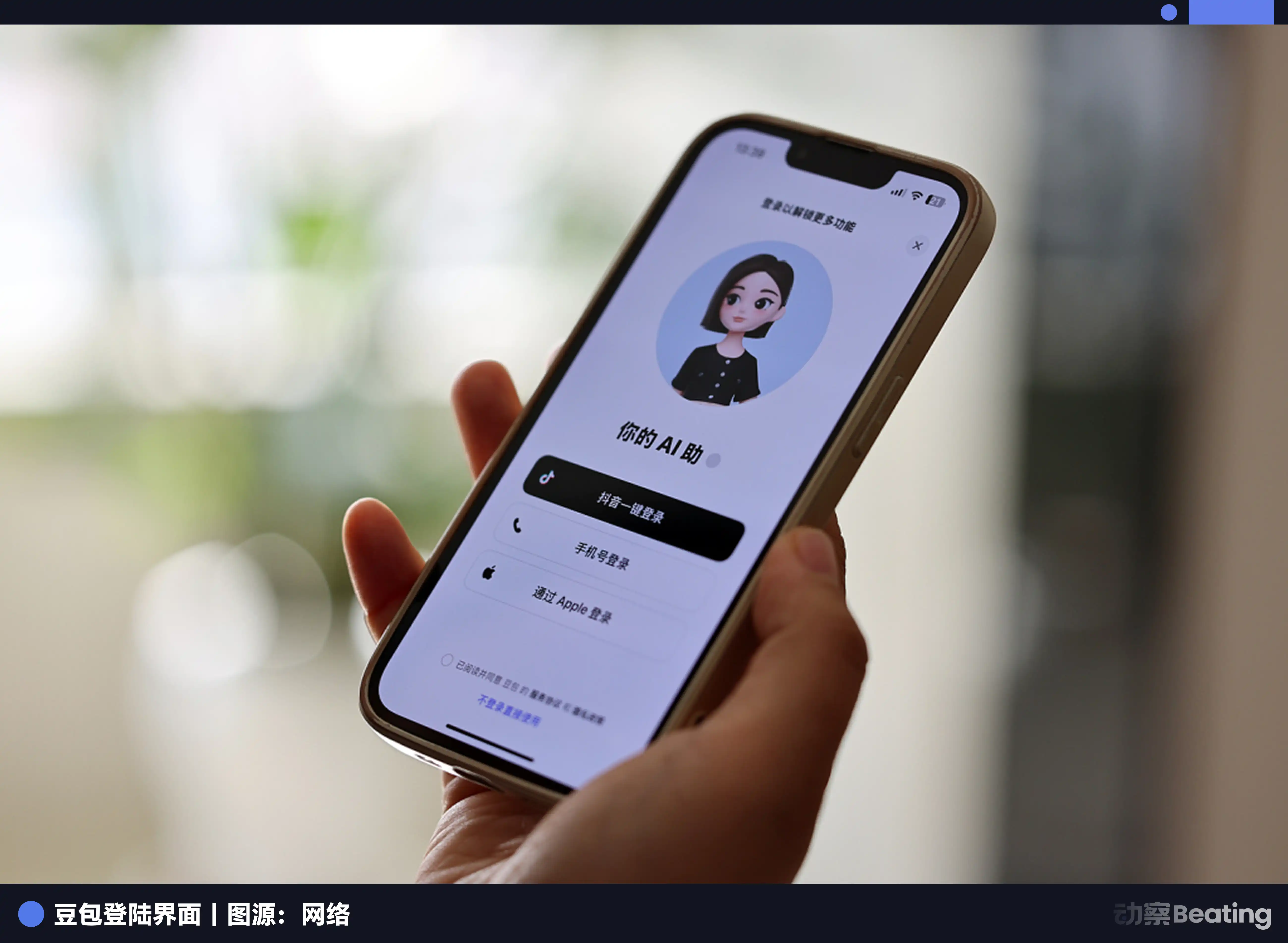
On December 1, 2025, the Bean Phone was launched. Co-developed by ByteDance and ZTE, it was ambitious, aiming to become a super AI butler.
In its concept, users would no longer need to open any apps; they only needed to speak to the phone, and the AI would take care of everything for them, such as ordering food, hailing a ride, transferring money, or booking flights. It was envisioned as the central nervous system that unified all services.
However, a storm quickly followed.
Shortly after its launch, many users reported that when trying to log into WeChat with the Bean Phone, they would receive a login restriction popup, and some accounts were even temporarily banned.
Subsequently, Alibaba-affiliated apps began a collective "denial of service." Taobao, Xianyu, Damai all closed their doors to the Bean Phone.
The conflict spread to the financial sector. Apps from multiple banks like Construction Bank and Agriculture Bank, when detecting the Bean Phone's AI assistant running, would display a security warning and forcefully close.
In just a few days, a highly anticipated AI phone was expelled from the entire internet.
What did the Bean Phone do wrong? It just wanted to make users' lives more convenient. Why did it face such severe backlash?
Because it violated a decade-old iron rule: Traffic must remain within my ecosystem.
From the launch of WeChat Pay in 2013 to 2023, China's Internet has experienced a golden decade of Super Apps. During this decade, WeChat, Alipay, Taobao, Meituan, through brutal enclosure movements, have built seemingly airtight digital empires.
They are lifestyle plazas but also information prisons. You can enjoy all conveniences within their castles, but if you want to move something from one to the other, sorry, you can't.
Till this day, you cannot directly open Taobao product links in WeChat, and TikTok videos cannot be shared to Moments. These are the most direct manifestations of this digital wall.
In stark contrast to the fate of Douyin Mobile, Alibaba's Qiandian calmly handled 120 million orders during the Spring Festival in 6 days because it itself grew within a closed massive ecosystem.
Qiandian's Privilege and Alibaba's Internal Revolution
During the Spring Festival, every order you place through Qiandian is backed by Alibaba's own troops: food delivery is through Ele.me or Taobao Flash Purchase, payment is through Alipay, hotel booking is through Fliggy, and ride-hailing is through Gaode.
All processes smoothly circulate within Alibaba's vast commercial system, forming a perfect closed loop.
Alibaba used AI as a needle to string together all its business lines accumulated over the past twenty years, such as e-commerce, payment, logistics, local services, mapping, entertainment, and more, like stringing pearls, forming a unified, seamless super Agent. Users no longer need to switch back and forth between Taobao, Fliggy, and Gaode; they just need to interact with Qiandian as the sole entry point.
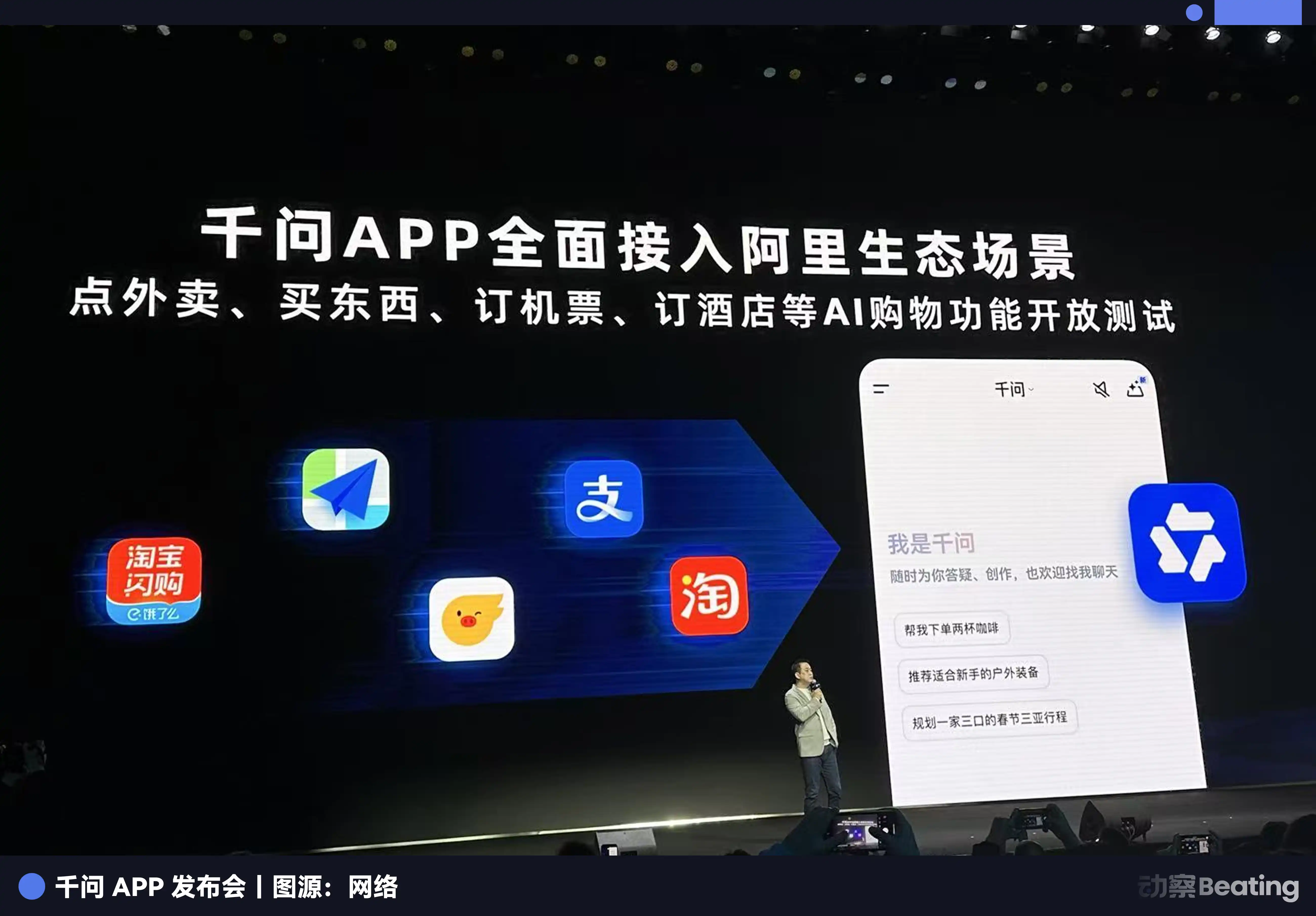
During an interview, Wu Jia, President of Qiandian's Consumer Business Group, frankly stated that Qiandian's unique advantage lies in the combination of the "Qwen Strongest Model" and the "richest Alibaba ecosystem."
He also revealed that Qiandian plans to fully integrate into the entire Alibaba ecosystem within six months and will continue to plan to introduce third-party partners in the future.
Please note this wording, "continue to plan."
This means that in the foreseeable future, Qiandian will still prioritize cultivating its own land. The so-called openness is more like a polite phrase written for the distant future.
Comparing Douyin Mobile with Qiandian, Douyin Mobile aims to horizontally integrate to allow an AI to access services from all giants. Qiandian, on the other hand, vertically integrates to enable an AI to access all services within its own ecosystem.
The former is a challenger, attempting to establish a new order; the latter is a stayer, optimizing efficiency within the old order.
This brings to mind the PC Internet era of the 1990s. When Netscape Browser tried to challenge Microsoft's Windows operating system dominance, Microsoft, by bundling IE browser with Windows, ultimately stifled this once king.
In the face of absolute ecological superiority, any effort to dominate the scene may be seen as an ambition that must be killed in the cradle.
So the question is, if every giant is developing their AI Agent within their own walled garden, what is the difference between the super app era of ten years ago and now? Is it just replacing a bunch of apps with a single AI entry point?
From Enclosure to Fish Farming
The difference lies in the granularity of competition.
In the super app era, from 2013 to 2023, the core of competition was enclosure, occupying the user's mobile desktop, making the user live within my app.
WeChat occupied social networking, Taobao occupied e-commerce, Meituan occupied food delivery. Each app was a digital territory, and users migrated between different territories. The giants competed for your time, striving to keep you as long as possible within their territory.
In the AI era, the core of competition is fish farming, that is, taking over the user's "intent," making the user think within my AI.
Users no longer need to open apps; they just need to express intent, and AI will execute on their behalf. Competition has shifted from competing for usage time to a more bloody battle for decision-making power.
Let's go back to that most common scenario: ordering a cup of coffee.
In the past, when you wanted a cup of coffee, you had to go through a skilled but still cumbersome process: unlock your phone, find the food delivery app, open it, enter "coffee" in the search box, browse through a list of shops, click into one, choose your flavor, cup size, add to cart, then go to the cart page, confirm the order, fill in your address, choose a payment method, and finally click to place the order, requiring a dozen clicks in total.
But now, you just need to say to your AI assistant: "Order my usual Americano."
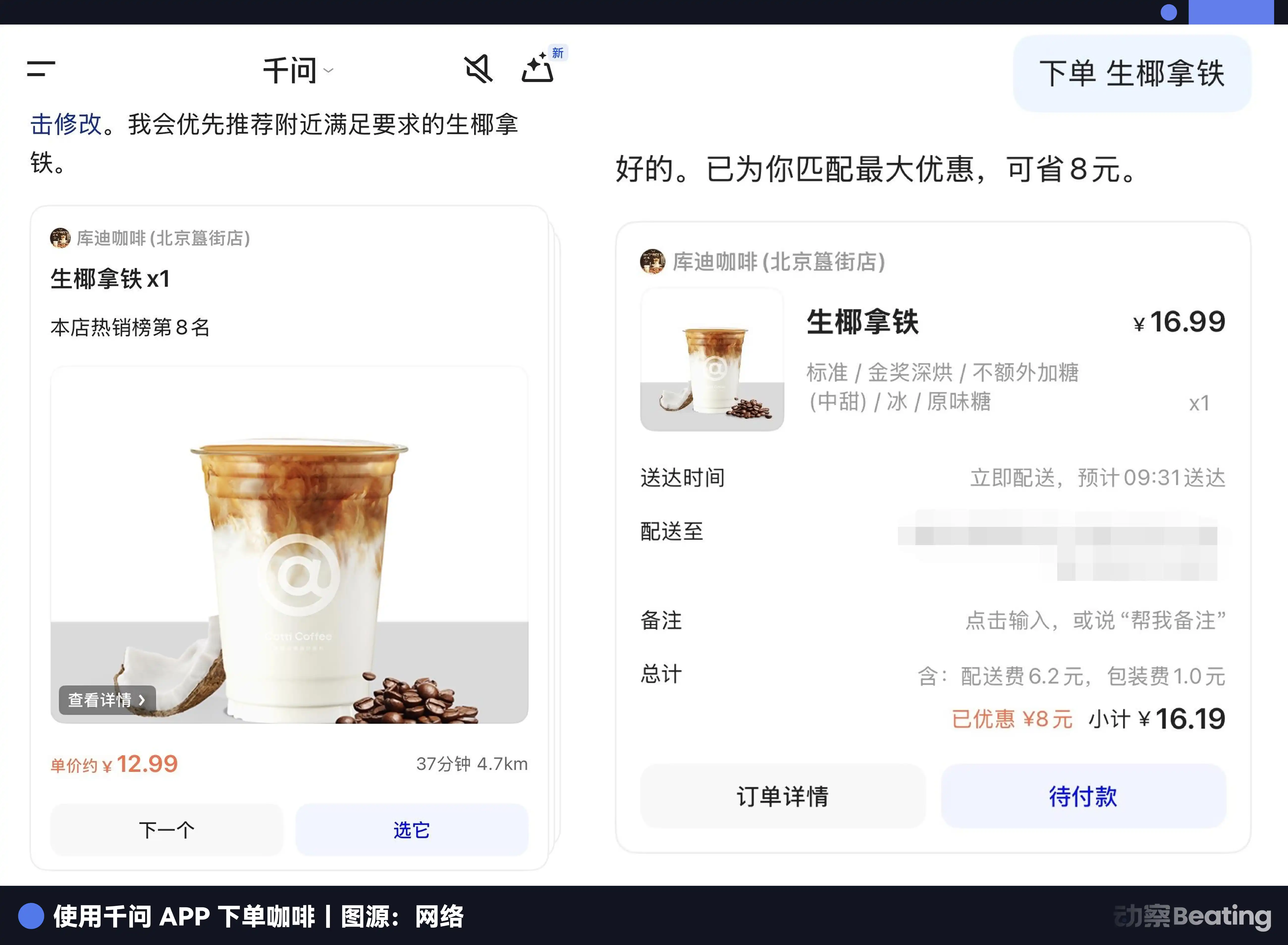
In the next few seconds, the AI will automatically locate your position, recommend your usual brand based on your order history, match the most powerful coupon, generate the order, and complete the payment.
You don't need to do anything, just wait for the coffee to be delivered to your door. The difference may seem like steps and time on the surface, but in essence, it is a transfer of decision-making power.
Corporate giants have shifted from enticing you to make decisions to making decisions for you.
In 1937, Nobel Prize winner Ronald Coase posed a fundamental question in his paper "The Nature of the Firm": If the market is the most efficient, why do we still need this seemingly cumbersome form of organization called the "firm"?
His answer was: because market transactions have costs, including the cost of finding transaction partners, the cost of negotiation and contract formation, and the cost of enforcement and monitoring.
The history of business is a history of constantly battling transaction costs. From department stores to supermarkets, from e-commerce platforms to mobile payments, every major leap in business models has been because it significantly reduced the transaction costs in a certain aspect.
The emergence of AI Agents is the first time in history attempting to compress the transaction costs of all aspects to nearly zero, especially the most stubborn "decision-making cost" that lies in our minds.
Pricing of Intent
When decision-making power itself can be assumed by AI agents, the ultimate goal of business becomes pricing the user's "intent."
In the past, we paid for goods—a cup of coffee for $5.
Later, we paid for services—delivery fee for $1.
In the future, we will pay for "an intent that is perfectly fulfilled"—at three in the afternoon, when I feel sleepy, to drink a cup of my favorite, most cost-effective coffee.
What AI sells to you is no longer just a cup of coffee, but a perfectly fulfilled afternoon.
This seemingly distant future began to take shape during the Spring Festival in 2026. In just 6 days, users asked Qianwen for help 4.1 billion times, eventually completing 120 million orders.
On average, every 34 intent expressions resulted in 1 transaction. Where did the other 33 failed conversations go? They did not disappear but were absorbed by AI as nutrients.
AI learns, understands, and remembers these unmet intents to more accurately capture your desires next time.
More noteworthy is the 1.56 million elderly people who experienced food delivery for the first time through Qianwen. Behind this number is a massive group forgotten by the mobile internet era. They can't use complex apps, don't understand cumbersome coupons, but in the face of "conversation," the oldest human interaction method, the technological barrier was instantly eliminated.
For the first time, technology took the initiative to bend down and retrieve those forgotten by the times.
Looking back at the history of business development, we can discover that it is also a history of "intent capturing." From the 1990s search engine (Google) to the 2000s e-commerce platform (Taobao) to the 2010s super app (WeChat) and now to today's AI Agent, every revolution is another deepening of human intent understanding.
So, in this destined intent battle that will reshape the future business landscape, where will the global players go?
The Strategic Divergence of Two Paths
The global development of AI Agents is evolving along two radically different paths. There is no distinction between good and bad; rather, it is a strategic choice determined by each one's market structure and historical path.
The first path is the vertical integration of an ecological walled garden.
Represented by giants like Alibaba and Tencent, who have a complete "model + scenario + transaction" closed-loop ecosystem, its core logic is to use AI to deeply integrate their vast commercial ecosystems (e-commerce, payment, social, travel, entertainment) to create a seamless, data-closed super Agent experience.
Users can mobilize the entire group's strength within a single AI entry point. The strategic advantage of this model lies in the extremely smooth user experience, the strongest data flywheel effect, and a complete business loop. In a mature, fiercely competitive existing market, this is a necessary choice to strengthen moats using their own advantages.
The second path is the horizontal standardization of an open federation.
Represented by OpenAI, Google, and others with powerful model capabilities but lacking a complete business loop, its core logic is to attempt to establish a set of universal technical standards or protocols (such as the Agent Payments Protocol) to allow AI to call third-party services across platforms and ecosystems, forming a loose federation.
The strategic advantage of this model lies in the theoretical ability to break through ecosystem barriers, providing users with a broader choice and immense potential. However, it faces strong real-world resistance. Ecological giants inherently resist this external calling for the sake of protecting their business interests and data security, as seen most directly in the Douyin app's experience.
Vertical integration pursues ultimate efficiency and control, like Apple's iOS ecosystem, offering a smooth experience but in a closed system. Horizontal standardization pursues broad compatibility and choice, like the early Android ecosystem, which provides a varied experience but full of possibilities.
From the browser wars of the 1990s to the instant messaging wars of the 2000s, and then to the mobile payment wars of the 2010s, in each case, the party with a more complete business closed loop and stronger control often has the upper hand in the competition.
The Internet is not becoming more open, but rather more closed. It's just that the closed entity has upgraded from APP to AI.
Epilogue
Now, we can return to the question posed at the beginning: When the payment action itself becomes redundant, what are the giants really fighting for?
The answer is that they are fighting for the priority right to intent.
During the 2026 Chinese New Year, that 4.5 billion subsidy is not buying "payments," but buying "intent." Every time you speak to AI, every time you express a need, it is a disclosure of intent. Whoever can capture more intent, whoever can more efficiently fulfill these intents, will have an absolute initiative in the future business war.
This is a war about the future decade's business entry point.
Just like the 2014 Chinese New Year red envelope war, where WeChat leveraged a mere 500 million red envelopes to pry open the vast entry point of mobile payments; the 2026 Chinese New Year AI war that the giants are waging is prying open the even deeper, more fundamental intent entry point with a 4.5 billion subsidy.
The 2026 Chinese New Year is just the beginning of this war. In the next five years, we will see more AI islands emerge and more bean phones hovering outside the city walls. The Internet's walls will not collapse; they have been raised another ten meters.
Welcome to join the official BlockBeats community:
Telegram Subscription Group: https://t.me/theblockbeats
Telegram Discussion Group: https://t.me/BlockBeats_App
Official Twitter Account: https://twitter.com/BlockBeatsAsia