Founder's Journey: From sUSD1+OTF to Institutional-Grade On-Chain Asset Management
In 2026, as Coin Stocks, RWAs, and stablecoins continue to be a market trend, the crypto market is converging with traditional finance at a visible speed. However, a more structural issue has surfaced: if stablecoins are the vessel of funds, what is the fund's flow path?
The answer provided by Lorenzo's founder Matt is a new financial species that combines institutional compliance with on-chain flexibility—an OTF (On-chain Traded Fund). This asset issuance architecture, referred to as the "on-chain ETF," is not just a product aggregation tool but also the starting point of Lorenzo's vision of "on-chain investment banking."
In this exclusive interview, BlockBeats dives deep with Lorenzo's founder Matt, retracing his journey from a Wall Street quant firm to the crypto industry. They also intricately break down the design principles, risk models, and platform concepts behind sUSD1+OTF: how to build an "stable yield + composite strategy" on-chain wealth management product? Furthermore, how can, based on this, through different product forms like OTF and Lorenzo Earn, retail users and institutions stand at the same asset entrance, participating in the same income logic?
From the early experiments of BTCFi to now constructing on-chain investment banking and becoming the USD1 investment wealth management partner officially recognized by WLFI, to gradually establishing an on-chain asset management system with OTF at its core and extending to Lorenzo Earn, to the recent introduction of a brand-new community incentive mechanism, Lorenzo is attempting to integrate "product structure, income path, and user participation" into the same long-term framework. Matt is trying to answer a question that only a long-term thinker would ask—if the crypto world also has an "asset management industry," where should its standards and order be established? This is not only a strategic turning point for Lorenzo but also one of the outlines of the next stage of the entire on-chain finance.
The following is the content of the interview:
BlockBeats: Please start with a brief self-introduction to help readers better understand you and your background.
Matt: I majored in Computer Science for my undergraduate studies and graduated from Fudan University. Later, I went to UIUC for graduate school. When I graduated, I actually had several directions to choose from—most classmates would go to big companies in the Bay Area, like Google, Facebook. There were also many who would go into quant, such as joining some hedge funds or companies like Jump Trading.
I seriously considered it at the time and felt that compared to the traditional Internet, I was more interested in FinTech. Especially the way that uses technology to reshape the transaction, payment, or investment and wealth management processes—I found that to be particularly interesting. So after graduation, I joined some quant companies, where I deepened my understanding of how Wall Street operates, including how they manage assets and how they build a tech architecture to support large funds and transaction volumes.
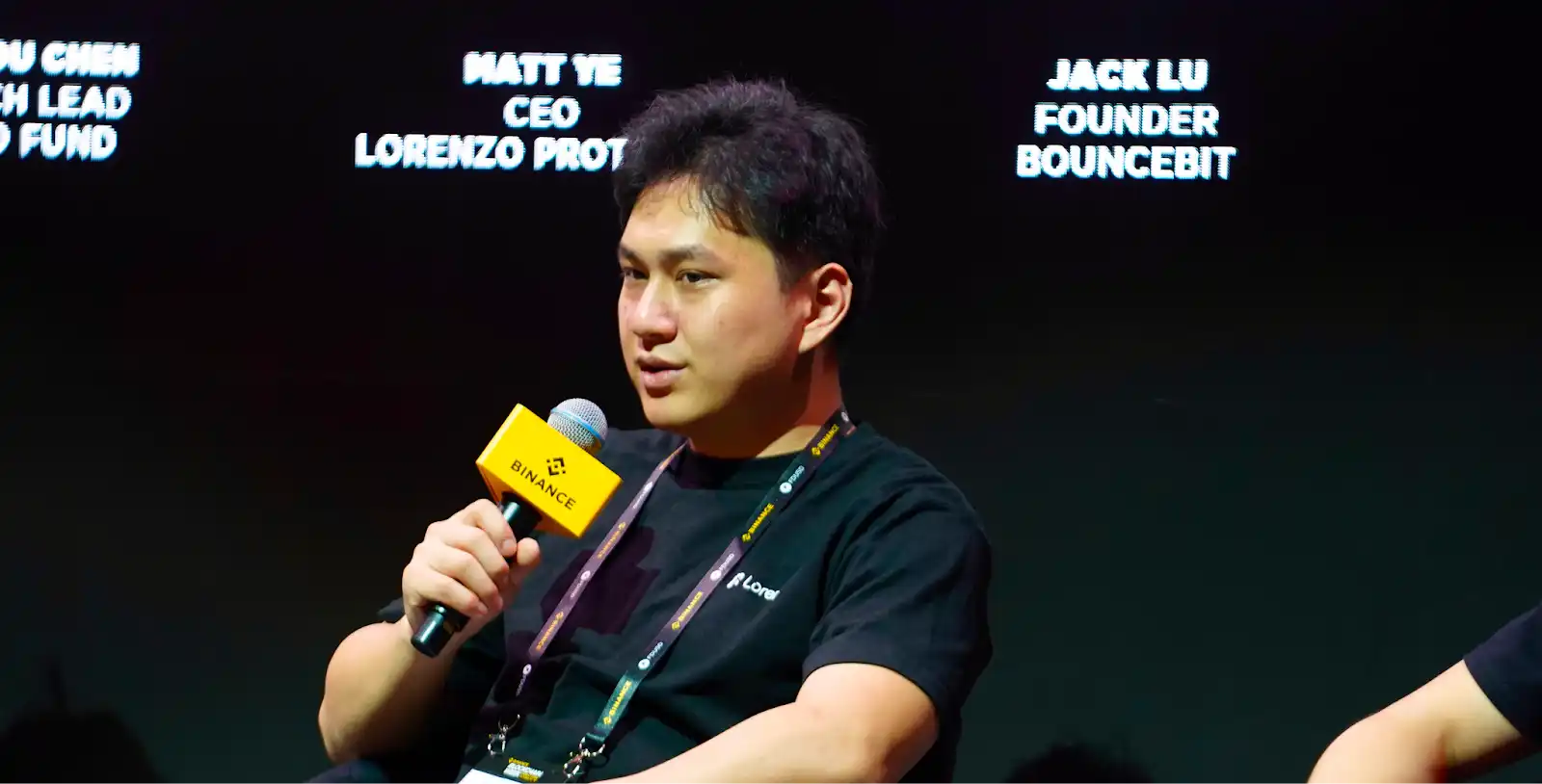
Working at these companies made me realize an issue. Although their systems are very mature, the internal processes are actually very complex. The fund flow goes through many steps, the efficiency is low, costs are high, and the entire system's response speed is not fast enough.
And this is precisely the problem that Crypto can solve. In the crypto world, there are clear advantages in both fund efficiency and accessibility. This is also one of the reasons why I initially became interested in crypto technology. Later, I immersed myself in this industry and founded my first project—Lorenzo.
BlockBeats: After the establishment of Lorenzo, what is the specific core problem you want to solve from the originally set goal to the present?
Matt: From the very beginning, the two core issues we wanted to solve were actually straightforward. The first issue is how to allow ordinary users to participate in investment and wealth management in the simplest way possible.
Many people are not familiar with the crypto world or even traditional finance, and they may not have time to do extensive research. So we hope to design a mechanism that allows everyone to easily participate and obtain relatively stable returns, just like using Alipay's Yu'ebao.
The second issue is what kind of architecture we should use to issue "income-generating products"?
This actually involves a deeper financial design problem—what kind of product form should we build that can make funds operate efficiently, adapt to the mechanisms on the blockchain, and also have scalability.
Our final answer is—a "Yield-Bearing Asset Token," which we believe is the ideal form.
Why emphasize "yield-bearing"? Because fundamentally, the most important thing in finance is to improve the efficiency of fund utilization. In simple terms, the number of times you can "rotate the same funds" determines your maximum return. Just like why McDonald's can expand rapidly—after opening a store and buying land, it can mortgage the land and store to borrow a new round of funds, then continue to open new stores. This is a very typical high-leverage model and a model of extremely efficient fund usage.
And in the on-chain world, to achieve similar fund leverage and reuse, there must first be a "tokenized income product." This product can be collateralized, lent out, and combined into other financial structures. Otherwise, all your funds can only stay there statically and cannot be leveraged further.
This is the first core point we need to address—designing a composable, scalable, yield-bearing asset token.
Another aspect is how underlying funds are managed. In this regard, we have drawn inspiration from many traditional fund practices, such as asset management companies like Fidelity. They have a very mature investment research and risk control system, but we do not entirely replicate that. We are closer to a "Fund of Funds (FoF)" model—where the underlying assets consist of multiple strategy combinations, we select strategy providers, diversify investments, and optimize the overall pool's revenue structure through dynamic rebalancing.
When designing our financial products, we borrowed a practice from traditional finance—where the execution of a strategy may be carried out by multiple trading desks. In other words, a fund may be divided among different trading teams, but they all follow the same overall strategic framework. This structure helps improve the efficiency of the entire asset execution, as well as enhance risk control and revenue optimization.
We have also adopted this concept. Although on the surface, our product is a unified strategy, behind the scenes, it is actually a set of finer execution structures—managed collaboratively by multiple teams. This approach not only enhances operational efficiency but also helps further increase overall fund utilization and performance.
In fact, in the traditional financial market, this structure is adopted by many ETFs. ETFs fundamentally combine different strategies into a revenue product carrier. However, in the crypto space, such an architecture is almost non-existent. Although there are some "financial products" in the market, there are no tokenized tools that can truly accommodate complex strategies and have high reusability.
So we hope Lorenzo can take on a role and become an on-chain "ETF issuance platform." We will tokenize various income-generating asset strategies, turning them into financial products that users can directly purchase and combine. We collectively refer to these products as OTFs (On-chain Traded Funds), which was the core starting point of our initial OTF design.
What is an OTF? Design Concepts and Mechanism Breakdown
BlockBeats: The sUSD1+OTF is Lorenzo's recent debut OTF, aiming to build a unified on-chain revenue experience. What was the original intention and positioning of this product? In comparison to traditional financial products, what is the main difference?
Matt: Our original intention was actually very clear — we hoped to consolidate the most valuable sources of income into a single asset through a one-time integration. The driving force behind this was that we observed many ordinary users still face significant barriers when it comes to accessing high-quality income channels.
For example, for most non-professional users, RWAs such as US Treasury bonds are a relatively stable and easy-to-understand income method; and quantitative strategies, while slightly more complex, are also a very mature and common investment path in traditional financial markets. The issue is that it is not easy for the average user to simultaneously access these two types of assets.
Especially the quantitative part — you either go to an exchange to participate in some structured financial products, or choose one of the few "quantitative + income" products available in the market. However, the accessibility of these products is poor, and the return rates often do not meet users' expectations.
Therefore, one of the core goals of designing the OTF product is to allow users to access multiple high-quality income sources through a single asset, such as US Treasury bonds and quantitative strategies.
The specific approach is that we will first purchase some high-quality RWAs (such as tokenized US Treasury bonds), use them as collateral, borrow more funds through these collateral, and run a set of quantitative strategies. This "two-tier income structure" theoretically can bring higher returns, but for the average user, the operation is extremely complex, involving collateralization, borrowing, strategy combination, fund management, risk control, and other aspects.
And what we want to do is to package all these complex processes into a single product, creating an on-chain financial asset that users only need to "buy and hold." We hope this can become a standard entry point for "stablecoin financial management." In other words, regardless of the type of USD stablecoin users hold, they can invest in this asset and receive long-term stable returns like a savings account.
Ultimately, what we want to achieve is to create an on-chain "savings standard" — a truly stablecoin-denominated, structurally transparent, clear income path, and representing the most efficient composite asset in the current on-chain income landscape.
Users do not actually need to manage the strategy themselves while using our product. We have built a set of dynamic adjustment mechanisms in the background to ensure that the income strategy always remains adaptable to the market.
For example, if the existing quantitative strategy's performance is not ideal, or if we determine that its Alpha has begun to deteriorate, we will actively replace it with a more stable, neutral strategy combination to safeguard users' overall income experience. This is actually very similar to the management model of traditional funds — strategies are not set in stone but are dynamically optimized based on market conditions.
BlockBeats: Could you please provide a specific introduction to the Financial Abstraction Layer (FAL) built by Lorenzo, which is the core underlying layer of OTF?
Matt: FAL mainly serves two roles. First, it is an open asset issuance platform. We understand Lorenzo's positioning to be closer to a "bank on-chain" — this analogy is not random but because we are indeed working on both sides of the match.
From the funding side, we are like an "on-chain wealth management platform": we issue various wealth management products, and users can subscribe, redeem, withdraw on the platform. They can also use the asset certificates for secondary market transactions, derivative deployment, and even operations like mortgage lending, pledging, etc. These assets have strong financial composability.
From the revenue side, we will develop some in-house strategic products, but more importantly, we will provide tokenization services for external strategy providers, helping them tokenize traditional revenue strategies and issue them on-chain.
These strategies may include: compliant funds and RWAs (such as tokenized US Treasury bonds, fund shares, etc.); third-party quant strategies; and even some structured centralized wealth management products, as long as they have a clear revenue path, packaging, and disclosure capabilities, we can help tokenize them.
So the core function of FAL is to efficiently match the funding side with the revenue side.
On the one hand, funds can freely choose the type of product they want to invest in; on the other hand, strategy providers can also gain stronger fundraising capabilities, a more transparent issuance channel, and brand empowerment through Lorenzo. We hope it will not only be a product platform but also an "on-chain asset management and issuance infrastructure."
What we want to do is actually build a platform-based infrastructure. The mentioned OTF is just one of the entrances, and one of the cores supporting all of this is asset tokenization, which is the tokenization of assets.
Why is asset tokenization so important? Especially in an environment like the current one, its significance is more prominent.
We can compare the process of traditional finance — for example, if you buy an ETF or a stock in the traditional market, if you want to further use these assets, such as using them for collateral financing or other secondary operations, it is possible, but the process is extremely complex. You need asset evaluation, bank risk control review, contract agreement signing, etc. The entire process is both lengthy and cumbersome, and the efficiency is very low.
But if you subscribed on-chain — for example, if you subscribed to one of our OTF products — once the transaction is confirmed, this asset certificate can immediately be used as collateral in all compatible on-chain lending protocols to quickly borrow funds. The entire process may take less than five minutes and is fully automated, requiring no human intervention.
At the same time, if you need liquidity temporarily, you can also sell these tokens directly on-chain, enabling almost instant liquidity. This is very different from the "trading hour restrictions" of traditional markets — for example, you cannot operate when the US stock market is closed, while on-chain financial systems operate 24/7.
Therefore, we believe that on-chain asset tokenization not only improves capital efficiency but also represents a significant upgrade for traditional finance in terms of asset liquidity and composability. This is a structural innovation that is absent in retail finance.
BlockBeats: sUSD1+ OTF is open to both institutions and retail users. What kind of user experience does OTF provide for these two types of users? In terms of complexity, security, and liquidity, how does Lorenzo lower the entry barrier and achieve "democratization of institutional strategies"?
Matt: From an operational perspective, our experience for institutional and individual users is actually the same, both interacting through a unified frontend interface.
When users make deposits on the platform, we go through some basic compliance processes. Currently, we do not have very strict KYC, but we have a complete AML (Anti-Money Laundering) and KYT (Know Your Transaction) system that automatically checks the safety of the fund source, such as whether it involves sanctioned addresses or comes from the OFAC blacklist.
Once the funds pass the audit, they are deployed to the corresponding strategy, entering the execution logic behind the product, including purchasing RWAs, participating in quantitative strategies, and integrating with other DeFi yield protocols.
Whether you are an individual user or an institutional investor, the entire fund flow and strategy participation path are basically the same. We intentionally standardize and modularize this experience to reduce the technical barriers for institutional access and also provide retail users with an institutional-level asset management experience.
I think this is a critical differentiator for our product, mainly reflected in two aspects:
First, for retail users, it is difficult for them to access truly high-quality quantitative strategies. On the one hand, this is because individual funds are limited and cannot meet the minimum investment threshold of most strategies; on the other hand, many excellent quantitative strategies themselves are not open to the public and usually only serve a few specific LPs (Limited Partners), belonging to closed-end fund pools. This means that even if retail users are willing, they cannot participate.
However, through our institutional channel, we have the ability to access these high-quality strategies. We participate as an institution, then securitize and modularize these strategies, allowing ordinary users to share the same level of returns with institutions in a low-threshold manner. This is a path that we hope to open up for users.
Secondly, ordinary users cannot "systematically tokenize" their funds themselves. Even if you participate in a financial product, you cannot further use it as an asset for activities such as collateralization, lending, reinvestment, and other on-chain financial activities. However, through a unified asset issuance mechanism, we integrate institutions and individual users into the same asset architecture.
Once you hold the Token of a certain financial asset, whether you are an institution or an individual user, you can access all downstream financial services built around this type of asset—including on-chain lending, trading, staking, and more. This means that, at the experiential level, individual users will have the same asset utilization rights and liquidity as institutions for the first time.
These two points together make our platform a truly unified financial gateway that bridges the C-end and the institutional end, something that many traditional financial platforms cannot achieve.
Why USD1? The Value Proposition and Differentiation of USD1
BlockBeats: First of all, congratulations to Lorenzo for winning the previous USD1 $1M incentive event jointly hosted by WLFI, BNB Chain, and others, and we also saw WLFI strategically purchasing $BANK; as the official cooperative investment and financial management platform of USD1, we would like to take this opportunity to further understand Lorenzo's understanding of USD1 and its ecosystem layout. In sUSD1+OTF, the stablecoin has become the "income engine" for the first time. Where did the inspiration for this design come from? What characteristics should the ideal stablecoin product you want to build have?
Matt: I think there are several key points. First of all, from a macro perspective, the idea of "stablecoins becoming the global financial engine" is almost an irreversible trend. At the current stage, stablecoins are the most likely financial instrument to drive mainstream adoption in the crypto space.
We have always been asking: "Where will the incremental funding come from? What is the breakthrough point for mass adoption?" Looking back now, the entry point with the most potential is actually stablecoins. This is because they possess the characteristic of the "lowest common denominator": they can be accepted by the most people and can also accommodate the most funds. Moreover, they are naturally suitable for high-frequency, low-friction financial activities such as payments, settlements, and cross-border transactions.
Bitcoin is certainly still a global consensus asset, but if we're talking about the "everyday cryptocurrency," only stablecoins could potentially penetrate every payment, every investment, every transfer made by everyone every day.
Most likely, this role will be played by a USD stablecoin. While other forms of stablecoins may also have a chance, the current penetration and acceptance of USD stablecoins are the strongest.
Furthermore, given the global settlement needs and government debt pressure, there is now a greater need for a faster, cheaper, 24/7 operational payment network to relieve the pressure on the global financial system. Stablecoins are the most likely path to solve this problem and are currently the most mutually beneficial solution.
Now that we have recognized stablecoins as the key enabler of mass adoption, the question arises: How do we build a structure similar to a traditional financial platform around stablecoins in the crypto world?
After all, in the traditional financial system, financial platforms have been developing for centuries with a complete product range and risk model. However, in the crypto space, financial products around stablecoins are still a very new track.
So what Lorenzo wants to promote is the creation of a financial product issuance platform with a stablecoin as the underlying unit, able to provide users with diversified and structured asset choices like an ETF. For example, today you can choose a lower-risk, more stable return product or opt for a higher-risk but more rewarding strategy pool, similar to the multi-style investment portfolios in the traditional ETF market.
As our flagship product, sUSD1+ OTF, we have two fundamental design requirements:
1. It should be able to accommodate a huge amount of capital with institutional-level capacity;
2. It should maintain extremely low risk even under high volume and provide a reasonable level of return, meaning it should resemble an asset close to a "risk-free rate" but more efficient than traditional bank savings.
Therefore, we have chosen RWA + Neutral Quantitative Strategy as the underlying structure.
Currently, RWA is one of the most capital-efficient assets in the market. For example, tokenized U.S. Treasuries represented by T-bills can be considered nearly risk-free as long as the USD credit is sound. And the characteristic of the neutral strategy is no exposure to market direction, low volatility, strong stability, which aligns well with this requirement.
In summary, our product logic is to build a stable-yielding composite asset with an extremely low risk using RWA and neutral strategy as the two pillars, while also possessing institutional-level volume and C-end availability. This robustness has been battle-tested. On October 11, 2025, with a global settlement of $19 billion, during most protocol yield drawdowns, sUSD1+ OTF achieved a 1.1% single-day positive return and nearly 50% APY in the past 7 days. The initial intention of designing this product is to provide a high-yield asset with strong risk resistance.
BlockBeats: What is the biggest difference between USD1 and USDT/USDC in terms of underlying logic or market positioning?
Matt: First, let's review the current situation. The undisputed advantage of USDT is its widespread adoption in DeFi and exchange trading pairs, with nearly all mainstream platforms supporting it and being very strong in terms of liquidity and availability.
However, its weakness is also evident, namely, its lack of compliance. Its underlying structure is relatively opaque, lacking a clear and trusted legal regulatory framework, which is a major obstacle it faces when further expanding into the institutional market, especially the compliant market.
On the other hand, USDC is the complete opposite. It excels in terms of compliance, issued by the US regulatory agency Circle, with a clear and regulatory-friendly structure. However, its problem lies in relatively weak adoption, as it has not been able to form a network effect similar to USDT, whether in the breadth of DeFi applications or exchange support.
At this point, the positioning of USD1 is very interesting. Its emergence has found a balance between these two — possessing a strong compliance background and on-chain adoption potential.
From on-chain data, USD1 has at times exceeded USDC and is second only to Tether in on-chain usage. On the exchange side, mainstream platforms like Binance and Bybit have gradually supported USD1, and more platforms will join in the future. This means that it is quickly approaching USDT in exchange and DeFi adoption. In terms of volume, USD1 has a circulation of about 5.3 billion and a corresponding market value of about $5.3 billion, with a 24-hour trading volume of about $1.6 billion.
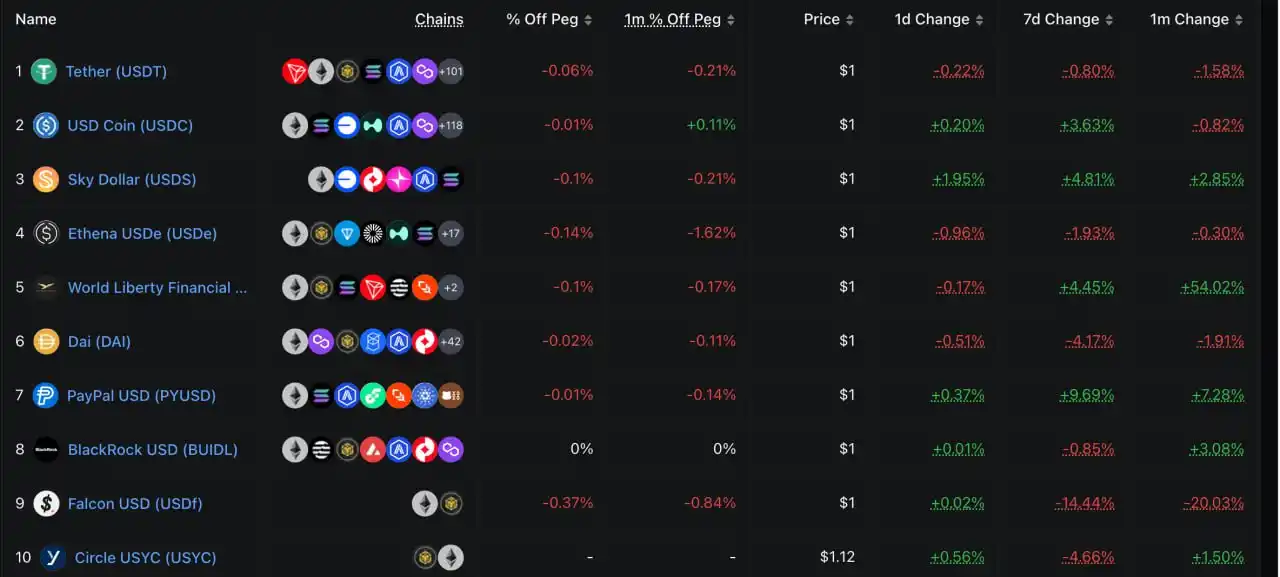
At the same time, from a compliance perspective, there is a background relationship between the issuer of USD1 and certain US government agencies, giving it a higher level of compliance trust than USDC. You can think of it as a more modern, more policy-friendly stablecoin structure. According to the requirements of the GENIUS Act, compliant stablecoins are not allowed to generate interest directly, which also means that their value is more reflected in the settlement and circulation layers rather than the yield layer. It is precisely because of this that USD1 naturally needs to collaborate with on-chain yield platforms to complement its asset allocation and fund efficiency in an ecosystem loop with independent yield product forms.
So I believe that USD1 is the first stablecoin to have both the "potential for large-scale circulation in the market" and "policy regulatory compatibility" simultaneously. This is its greatest value.
BlockBeats: From your perspective, what is the biggest bottleneck that USD1 needs to overcome in order to truly become a mainstream on-chain yield asset?
Matt: The first is still the expansion issue of adoption. This includes support from more DeFi protocols and CeFi platforms, as well as access from more funding sources. In other words, there needs to be a broader fundraising base upstream and more applications such as trading, asset management, lending, etc., downstream. This is not really a "bottleneck" but rather a process that requires time to refine and build, which is the path any new asset must go through.
The second challenge is more fundamental: it relates to the asset management capability behind the stablecoin. The essence of stablecoin asset management is fund reallocation and income distribution. The issue is that no Alpha can be infinitely leveraged. Any strategy has a capacity limit, and as the fund size grows, the yield will inevitably decrease.
We have personally experienced this very clearly in the process of running quantitative strategies in the past: when the fund volume goes from millions to billions or tens of billions, the difficulty of implementing the strategy sharply increases, and at the same time, the yield also significantly drops.
So when the fund size of USD1 truly reaches the level of tens or hundreds of billions of dollars, how to continuously find matching, efficient, and scalable strategy combinations will become the most important management challenge.
This places very high demands on the team. On the one hand, they must continuously iterate fund allocation and strategy engines, and on the other hand, they must enhance Alpha discovery capabilities, continuously expand into new markets and opportunities, while also dynamically balancing between liquidity and risk control.
If we look at Ethena, a product that has performed quite prominently in the market, we can also see similar issues. Recently, its annualized yield has fluctuated between 2% and 5%, far below its early levels.
This illustrates a problem: if you do not continuously iterate and upgrade the underlying strategy, even a star product will quickly see its yield decline. So, this is actually the biggest challenge for the long-term sustainability of USD1.
Whether you can maintain a flexible strategy deployment capability and a high-quality yield portfolio structure while the fund size grows—this is the issue that any product aiming to become the "standard for stablecoin asset management" must address.
For all DeFi or FinTech-related projects, there is a core proposition that always holds true: Can you consistently attract and retain funds on your platform?
If you cannot achieve this, everything else becomes secondary. It is based on this premise that we have set USD1 as a breakthrough point, aiming to attract more attention and funds to the Lorenzo platform through this asset, providing users with a reliable financial starting point.
This is our first step forward: fund gathering and user attention concentration.
After establishing this foundation, our second step is to drive Lorenzo to become a more fair and open asset issuance platform. This means that we will not only offer self-developed strategies but will also proactively collaborate with externally competitive yield parties, including quant trading firms, strategy teams, and some high-performing fund managers.
We will tokenize these trusted products and strategies and complete fundraising, issuance, and circulation through our platform. This not only benefits the asset side to expand funding sources but also provides users with more diverse financial options.
So the logic of the entire system is mutually beneficial: we have users, liquidity, and platform attention that can empower partners; and the robust returns brought by these high-quality strategies can in turn benefit platform users, building a virtuous cycle.
Our goal is not closed-loop operations but rather to build a sustainable, co-developed on-chain financial ecosystem through Lorenzo. This is not just a growth logic at the platform level but also a vision we have for the future of on-chain asset management.
BlockBeats: So why choose USD1?
Matt: As we mentioned before, what we are actually doing is trying to bridge the connection between the capital side and the financial product side. In my opinion, funds are like blood, the entire platform is like a vine, and all exchanges, yield-generating financial products are like fruits grown on the vine.
Without that vine, without blood circulation, the fruits cannot ripen. What Lorenzo wants to do is become that vine connecting everything, using USD1 as the backbone to transport funds to various financial products in the ecosystem, supporting the entire on-chain yield network.
So we have set a very clear goal: to develop USD1 into the most core and universal settlement stablecoin on our platform. Whether it's subscribing to financial products, redeeming, distributing returns, or engaging in collateralized lending, reinvestment, as long as it involves stablecoin settlement in our financial ecosystem, we hope to use USD1 to accomplish it.
Essentially, this is about building a stablecoin-driven asset settlement system, which is also a key pathway we hope to enhance USD1 adoption in on-chain finance.
Ultimately, the importance of an asset depends on its widespread use and whether it becomes the "settlement benchmark" within the system. We want USD1 to be an integral part of this system.
BlockBeats: So, let's go back to the sUSD1+ product itself, which is one of the core products in your entire revenue system. I noticed that you chose the "non-inflationary net value increment" design instead of the common interest return model. Can you explain the difference between these and why you chose this model?
Matt: When designing the sUSD1+ product, we indeed prioritized the non-inflationary net value increment model over the rebasing approach used by some stablecoins.
First, let me explain. The so-called reward-bearing means that the asset's face value remains the same, but its net value increases with earnings. You won't receive additional coins; instead, the value per unit of the tokens you hold continues to grow. In contrast, the rebasing model reflects earnings by periodically "increasing" the token quantity.
We prioritize the reward-bearing model for two main reasons:
First, it's about DeFi compatibility.
Currently, the vast majority of DeFi protocols, especially exchanges and lending platforms, are not very friendly to rebasing assets. For example, when a token continues to "inflate" in a pool, on-chain accounting logic becomes complex and even confusing. Most CEXs and DEXs do not support dynamically changing token quantities, nor are they sophisticated enough to automatically account for "interest-bearing assets."
The same problem arises in lending protocols—if you place an asset that will continually increase in balance into a lending pool, liquidation, valuation, interest rates, and other calculations all face challenges. To avoid these troubles, we believe that reward-bearing is the currently more easily deployable and integrable technical route.
Second is operational efficiency and product implementation speed.
For example, projects like Lido initially adopted the rebasing model with stETH, and later introduced WstETH to cater to DeFi. Similarly, Ethena underwent a transition from USDe to sUSDe, moving from a rebasing model to a non-inflationary design. At this stage, we believe that a reward-bearing model is more suitable as a form of market launch due to its lower barrier to entry and better compatibility.
Of course, we will also consider introducing a rebasing model in the future. Especially when facing more complex financial structures, such as scenarios requiring interest and principal splitting or periodic dividends, a rebasing or its derivative form would be more appropriate. However, in the early stages, we prioritize optimizing composability and integration costs to quickly enter mainstream scenarios such as lending, AMM, and collateralization. In short, the rebasing model will be the next stage of our product strategy after achieving a more comprehensive system and diverse range of use cases.
The Macro Vision and Evolutionary Path of "On-Chain Investment Banking"
BlockBeats: During the BTCFi phase, Lorenzo launched stBTC and enzoBTC along with related products, integrating with 30+ DeFi protocols, positioning it as a leading project in the BTC LST track at the time. What underlying accumulations did these early explorations establish for OTF? What prompted subsequent strategic upgrades?
Matt: I think we can address this from two perspectives. Firstly, from the evolution of a single financial product to a diversified range of financial products. During the BTCFi phase, we gained a lot of experience, successes, and lessons learned. For example, in building on-chain liquidity assets, distributing dividends to these assets, interfacing with DeFi protocols, and effectively managing tail assets, we learned a great deal. These experiences greatly aided us in subsequent product design and platform operations.
From a more macro perspective, for a platform to continue attracting funds, it must have the ability to evolve continually. Adapting to market changes, maintaining its vitality and competitiveness, is a question I have always pondered. Especially in financial products, whether CeFi, DeFi, or more traditional financial logic, as long as your goal is to continuously attract funds, you must have the ability to continuously launch new products that align with market trends.
Therefore, regardless of the type of product you are developing, it fundamentally revolves around the core concept of "funds". Whether a platform can operate sustainably depends on whether it has sufficient liquidity and the ability to continuously attract funds. This is why we expanded from the original BTCFi to include more asset categories.
On the one hand, we hope that the scale of funds can be further expanded to accommodate a more diverse range of user preferences and financial goals; on the other hand, we also see that there is greater room for stablecoins to reach users. Although BTC is highly popular as an asset, the average user actually does not hold a large amount of BTC; in contrast, stablecoins have a wider usage frequency and user coverage in daily life. For example, we also know that many domestic users engaged in foreign trade or small commodity businesses, such as markets like Yiwu, actually hold a considerable amount of USDT. These are new users who are closer to everyday life and have more practical usage scenarios.
Next, we hope to reach the next stage of users and funding sources, naturally aiming to serve these new users with higher quality and more mature products, especially the new generation of Web3 user groups. Therefore, in selecting the platform, we have decided to continue focusing on stablecoins. Whether it's Staking, quantitative strategies, more traditional compliance funds, or even new subscription-based products like RWA, stablecoins are the most widely covered and operationally flexible asset class.
From product richness to underlying adaptability, stablecoins are undoubtedly one of our most imaginative directions. So when we decided to develop a new asset class, stablecoins were the natural first choice. Not only can they support a larger volume of funds, but they can also reach a broader user base, providing us with more space for innovation and combinations. Therefore, as we enter the second stage of the platform, stablecoins are an ideal entry point.
BlockBeats: So why did you choose BNB Chain as your first choice?
Matt: There are actually two reasons here. The first reason is emotional and trust-based. Our earliest supporters were from the BNB Chain community. When we were selected as an MVP project, we also received investment and recognition from Binance Labs. This support was crucial for us—it can be said that if the project did not have that investment and endorsement from BNB Chain, it might still exist, but would not have developed as smoothly. Out of gratitude, many of our new product launches will prioritize BNB Chain over other chains.
The second reason is that BNB Chain has indeed been rapidly evolving over the past two years, with many initiatives and significant achievements. For example, after Alpha was launched, it directly drove significant growth in BNB Chain users and liquidity, and the activity of e-commerce transactions also increased significantly. Now, in terms of overall liquidity, BNB Chain is already one of the strongest public chains in the industry.
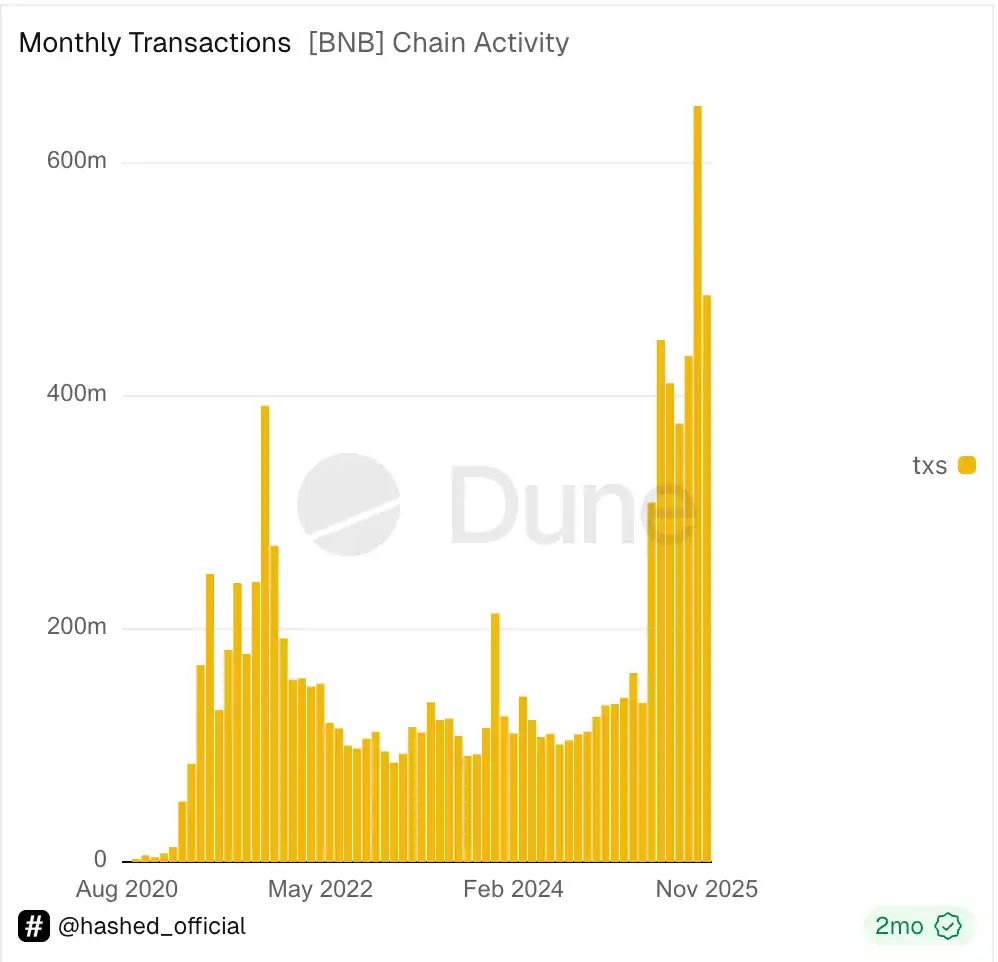
In addition, it is also very proactive in driving new asset classes—whether it is RWAs or institution-oriented large-scale stablecoin projects like USD1, all can find landing scenarios on the BNB Chain.
Another point worth mentioning is its strong support for AI projects. This upstream and downstream support from technology to funding, from assets to infrastructure, allows us to more flexibly integrate new technologies and asset forms when designing products. For us as project parties, these actions of the BNB Chain have created a lot of space for product innovation, making it a truly suitable platform choice.
BlockBeats: Lorenzo's vision of "On-Chain Investment Banking" is a very bold idea, how do you define this concept? What are the similarities and differences with the "investment banking" role in traditional finance?
Matt: I think the relationship between traditional investment banking and "On-Chain Investment Banking" in Web3 is more likely to be a complementary or mutually beneficial one.
Traditional investment banking certainly has its very mature side, such as in the transparency of the pricing process, where they are more systematic and standardized. Processes like IPOs or bond issuances have a whole set of relatively publicly transparent frameworks, from prospectuses, roadshows, to information disclosure mechanisms. And these are exactly what many Web3 projects lack at the moment. In the Web3 field, many projects still tend to be more of a "black box," with unclear information disclosure and lack of regulation, making it difficult for users to truly understand what they are investing in and how it operates.
But Web3 also has advantages that traditional finance cannot match. For example, the barrier to entry for funds is lower, there is no complex investor accreditation screening, and you are not required to be an accredited investor to participate. You do not need to meet many requirements in terms of identity and asset background, especially for some lightweight products, the entry threshold is more friendly. The recent trend of bringing U.S. stocks onto the blockchain is a direct example; you don't need to open a U.S. stock account or buy through traditional means, reducing the entry barrier.
Furthermore, Web3's financial infrastructure operates 24/7, the DeFi ecosystem has no business hour restrictions, global users can access it, significantly increasing the "accessibility" and "autonomy" of finance. This is also one of the reasons for the U.S. stock on-chain trend, as some U.S. stock contracts can be traded 24 hours a day, and on-chain U.S. stock spot can enter DeFi.
So what we are considering is actually how to combine the professionalism of traditional finance with the openness of Web3. Since we are ourselves a Web3-based project, we have already enjoyed many of Web3's natural advantages at the protocol level. Our next focus is to fill the gap in "transparency."
For example, we will pay special attention to the public transparency of underlying assets, especially when it comes to quantitative strategies. At the same time, if we onboard third-party products on our platform, we will rigorously audit their qualifications, requiring them to provide detailed disclosures such as fund flows, product descriptions, net asset value changes, position structure, historical performance, and more. What we hope to achieve is that users can clearly see: what type of assets I am investing in, how the assets are managed, the current operational status, and what returns or risks are involved.
This disclosure mechanism is both a respect for users and a baseline that we, as a "DeFi Investment Bank," want to establish. What we aim to create is a platform where users can confidently engage, retaining the efficiency and openness of Web3 while embodying the clear, professional, and transparent operational standards of traditional finance.
Many times, the reason why users are willing to trade on platforms like Binance, OKX is fundamentally because they trust the brand. They believe that the platform will take responsibility for the products it issues and that their funds are secure on this platform.
Therefore, I believe that "brand" is a feather that any institution should cherish. The same goes for us. We have a strict selection and review mechanism for deciding which products to list. We are responsible for the security of user funds. It is under this premise that the platform can continue to attract more users and funds, engaging in various products we issue. Only then can a virtuous cycle truly form—where more and more users and funds join, and we can select high-quality, competitive products for fundraising on the platform, further enhancing the platform's attractiveness and reputation.
The second point is about the relationship between crypto and traditional finance. Many people wonder where the barrier between these two lies. In my opinion, these two worlds are accelerating their integration, with stablecoins being a crucial bridge.
Recently, I've also discussed with some friends where the new funds in Web3 will come from. Some believe that the traditional markets, such as the stock market, want to "leverage" liquidity from the crypto market, while the crypto market hopes to "leverage" liquidity through US stock listings. However, this one-way path of taking without giving makes it challenging to achieve the expected growth.
In contrast, I think a healthier and more sustainable approach is to attract more incremental funds through a true integration.
How to do it specifically? I think we can fully standardize and regulate some excellent Crypto wealth management products, make their performance and management more professional, and then securitize and tokenize these assets. By connecting traditional private placement, public offering, and other channels, we can promote them to more traditional fiat currency users, even users in traditional content ecosystems.
In this way, not only can we expand the product distribution channels, but we can also truly achieve incremental capital flow from traditional finance to the Crypto world. In this sense, we do have the opportunity to promote a deeper integration between these two worlds.
BlockBeats: sUSD1+ OTF is Lorenzo's first stablecoin yield product. What is your view on the future of stablecoin wealth management? In addition to stablecoins, we have noticed that Lorenzo recently launched the BNB+ OTF and Lorenzo Earn new product line. What other assets or product forms do you think have the potential for scalable growth? How will Lorenzo continue to iterate on product form and user experience?
Matt: I think in the future, we will more clearly strengthen the role of the "Asset Issuance Platform." Many users may still have a vague perception, thinking that we are constantly launching our own products, such as BTCFi, stablecoin-related wealth management, and so on. But next, we will make everyone feel more clearly that we are actually more like a Launchpad for yield-bearing assets—not just self-operated products, but a platform that provides issuance channels for more high-quality projects.
For example, our recently launched BNB+ OTF is essentially an extension of this logic. It tokenizes institutional-grade BNB enhancement strategies (such as Hash Global's BNBA Fund), allowing ordinary users to easily access the revenue path that was previously only available to institutions. This proves that in addition to stablecoins, "revenue-enhancing certificates" for mainstream public chain assets are also a product form with considerable scalability potential.
Currently, we are indeed advancing a series of collaborative projects, with many products from pipelines and partners in the scheduling phase. In the future, everyone will see more and more third-party products launched through our platform, where we will act as "filters" and "guides," pushing high-quality assets to users.
In addition to asset issuance itself, we are also considering building more complete financial service packages around these assets. Not to say that traditional lending and trading platforms are not good, but we want to start from a perspective closer to the product itself to supplement many functional details.
For example, for our proprietary products, we may consider introducing a more sophisticated interest rate trading mechanism in the future, or developing complementary collateralized lending functionality. In simple terms, we hope to build a more comprehensive financial ecosystem around the issued assets, connecting users from the entire chain of "product purchase" to "asset operation." This way, the user experience will be more closed-loop and professional.
In the future, we will provide users with a more comprehensive one-stop asset management solution. Specifically, we will continue to regularly introduce new yield-bearing assets through the platform's Launchpad mechanism to enrich the product pool available for users to invest in. Based on this, we also plan to offer services similar to investment advice or investment advisory to help everyone find more suitable assets or asset combinations based on their risk preferences and return objectives.
This is the first layer. After users have completed their investments, we will also support them in further managing these assets, such as trading, collateralized lending, participating in various yield strategies combinations, all of which can be done in a one-stop manner on the platform. What we hope to build is not just a "product pool," but a complete asset operation universe that allows users to experience the entire process from investment selection to fund management on one platform. Recently, we also launched Lorenzo Earn, and the first Earn product to go live is an LP Vault based on PancakeSwap V3, designed to deploy assets such as sUSD1+ and USD1 in automated market-making and liquidity strategies on the BNB Chain as an additional yield enhancement path beyond sUSD1+ OTF.
BlockBeats: Can you share more about Lorenzo's upcoming expansion plans? For example, besides the BNB Chain or the Asian market, do you have any mid- to long-term plans in other dimensions?
Matt: In fact, we have good relationships with many public chains, whether it's the currently popular new chains or mature public chains accumulated over the past few cycles, and our cooperation and communication are quite close. Next, we will focus on the positioning of "institutional-grade wealth management infrastructure" and implement and promote our product logic and service system in more public chain ecosystems.
Specifically, the assets we will launch in the future will not be limited to a single chain but will have corresponding liquidity deployed on multiple chains, opening up staking and use cases, and assisting each chain in establishing a financial product framework suitable for itself. We hope to replicate this combination of "high-quality asset issuance by Lorenzo + complementary financial services" that Lorenzo has built in various ecosystems.
I believe that this is actually a new public blockchain infrastructure construction. In the past, the commonly understood "public blockchain trinity" may have been transactions, exchanges, lending, plus stablecoins, but I think "financial management" is also an indispensable underlying infrastructure for a public blockchain.
Right now, many people may not yet realize the importance of financial products to the on-chain ecosystem, but as the market gradually matures, users are paying more attention to long-term returns and asset preservation. Strategies that rely on PvP, high leverage, and short-term speculation are actually difficult to sustain in the long run. It's not that speculation has no value; indeed, many people can make money through high-frequency trading or short-term strategies. However, for the majority of ordinary users, speculation is not the healthiest or most sustainable asset management approach.
Therefore, our direction is: on every potentially successful chain, establish a long-term yield financial infrastructure specific to that chain, providing users with a more robust asset allocation channel, while also injecting new growth momentum into the public blockchain ecosystem.
In fact, from a healthier, more sustainable perspective, an ideal model would be for users to always reserve a certain position on the platform for participating in passive, relatively conservative financial management. For most users with asset allocation awareness, this is a more long-term and rational practice.
However, to achieve this goal, you need a truly comprehensive, professional asset management platform to support such operations. Especially when we hope to attract more incremental funds from the traditional financial market, and even institutional funds entering Web3, such platform infrastructure becomes particularly crucial.
Instead of having users invest sporadically in different protocols, it is better to provide a unified platform that allows them to systematically allocate funds—whether it's products of different risk levels, combinations of different types of returns, or further derived trading, lending, and other financial services—all can be completed on the same platform. This clean, simple one-stop solution is clearly more appealing to users who truly want to make long-term allocations.
For many public blockchains, this kind of infrastructure is actually a missing puzzle piece that is urgently needed. The progress we have made on the BNB Chain has indeed received strong support and resource tilt from the ecosystem, for which we are very grateful. But from another perspective, what we are doing also brings value to the BNB Chain itself, filling the gap in the "on-chain asset management" area.
For other public blockchains, this value may be even more significant. Especially for those chains that have not yet established a complete infrastructure in asset management, they need us to provide such a standardized, replicable system for asset issuance and financial management.
So we also hope that in the future, more people—whether they are public chain teams or users—will gradually realize that asset management is also an indispensable part of public chains' infrastructure. We will continue to invest in this matter, delving deep into it, not only in terms of product promotion but also in terms of influencing the concept, truly integrating this long-term asset management mindset into more chains and ecosystems.
To better support this long-term architecture, we recently launched the Proof of Commitment (PoC) incentive system. Through PoC, we will provide rewards to users based on their participation depth in the Lorenzo product, duration of asset holding, and contributions to ecosystem development, as well as incentives for early supporters of Lorenzo. This ensures that those who truly stand with the protocol in the long run can enjoy the benefits of ecosystem growth first and lay the foundation for future governance token distribution.
BlockBeats: What do you see as the most important structural opportunities in the DeFi field in the next three years? Especially in the direction of yield-bearing products, what breakthroughs are worth paying attention to?
Matt: I think from a macro perspective, the next stage of DeFi is actually undergoing a process of "values reconstruction." Over the past few years, there has been a period in the industry where a kind of "moral purity"-like decentralized faith existed, emphasizing that everything must be extremely decentralized. Although this concept is not wrong in itself, I believe that in practical implementation, pursuing 100% decentralization will instead become a constraint on efficiency, governance, and even innovation. Many designs end up being a trade-off.
If you look at some projects that have done relatively well in this cycle, such as Hyperliquid, it is essentially a semi-decentralized platform. Its account management and fundraising adhere to the Web3 paradigm, but operationally, it is very centralized. For example, the entire RWA track, including stablecoins, is actually a somewhat centralized structure. The key to their success lies not in whether they are absolutely decentralized, but in whether they truly solve problems, provide the value and experience users need.
So to a certain extent, the greatest value brought by on-chain settlement and open ledgers is that they provide a financial operating system that can accommodate large-scale capital for these products. It eliminates many artificial barriers in the traditional financial system, such as lengthy approvals, taxes, institutional barriers, and so on. Its significance lies not in the "on-chain" form but in "whether it has created greater efficiency space for the business."
Returning to the product itself, if it truly has value, provides a good user experience, and has sufficient liquidity, then regardless of whether it is "perfectly decentralized," it can attract enough users and funds. Whether it's Hyperliquid, structured asset platforms, high-quality stablecoin projects, the reason they can develop is not the form but the value itself.
I believe that one of the biggest opportunities in the next phase is actually "post-stablecoin," where the entire DeFi market will refocus on more fundamental PMF and real profit potential. In other words, we will see funds starting to make more cautious and rational judgments on whether a project can solve real problems and provide sustainable returns. Products that are truly valuable, have users, and possess a profitable model will attract more funds; conversely, projects that are idle and rely solely on incentives will be gradually phased out.
I have always emphasized that the structural opportunity of DeFi comes from first principles: Does your product address a clear and real user pain point? Are you providing a service that a certain group of people genuinely need? Is the service you provide an indispensable part of the user's path to their goal? This is the fundamental criterion for determining whether a project has long-term value.
Therefore, for all projects, whether new or old, it is now essential to seriously consider two questions: First, am I solving a real problem? Second, is my product the optimal solution for the current problem?
I believe the next three years will be a stage of "survival of the fittest." A group of truly value-creating new products will stand out, while a group of old projects that cannot keep up, lack users, will be gradually eliminated.
Welcome to join the official BlockBeats community:
Telegram Subscription Group: https://t.me/theblockbeats
Telegram Discussion Group: https://t.me/BlockBeats_App
Official Twitter Account: https://twitter.com/BlockBeatsAsia