Zcash Team Split, Bank of America Upgrades Coinbase Rating: What's the Overseas Crypto Community Talking About Today?
Publication Date: January 9, 2025
Author: BlockBeats Editorial Team
Over the past 24 hours, the crypto market has shown a trend of parallel evolution in multiple dimensions. The mainstream topics focus on the core divergence in Ethereum's expansion path, the structural adjustments in the ZCash team, and the continued entry signals from traditional financial institutions; in terms of ecosystem development, the Solana prediction market and application distribution are accelerating, Ethereum is making progress in institutional DeFi and financial inclusion scenarios, and Perp DEX is exposed to short-term volatility and structural risks due to large-scale unwinding by whales.
I. Mainstream Topics
ZCash Team Structural Divergence
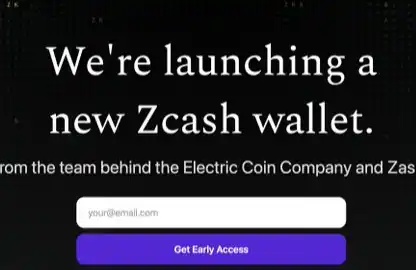
ZCash's original core development team, Electric Coin Company (ECC), former CEO Josh Swihart announced the establishment of a new startup, CashZ.org, focusing on ZCash wallet development and commercialization, with the goal of pushing ZCash to a "billion-user scale" through a sustainable profit model. He frankly stated that non-profit organizations face structural constraints in product iteration and market expansion.
The new company plans to launch a brand-new ZCash wallet and offer early access. At the same time, board-level adjustments are also seen as a proactive dismantling of potential legal risks, clearing obstacles for core developers to privatize and speed up feature deployment.
Haseeb Qureshi likened ZCash to BitTorrent, stating that it retains "cyberpunk integrity"; Chainyoda summarized this change as a mid- to long-term positive for $ZEC.
The overall community sentiment is noticeably positive, with expressions like "LFG," "Viva Zcash," and "renaissance begins" frequently appearing, with many seeing it as a "reboot" for privacy coins. Optimists even have very high price expectations for $ZEC; however, there are also voices of doubt, focusing on ZCash's historical baggage, whether a new coin should be launched directly, and comparisons with projects like Monero and Chia. Overall, the community tends to see it as a constructive split: a path adjustment, but with an unchanged mission.
Vitalik Revisits Ethereum's Expansion Path: Bandwidth Over Latency
Ethereum co-founder Vitalik Buterin reiterated that, compared to extremely reducing latency, prioritizing bandwidth is a more secure and decentralized extension direction. Through PeerDAS and ZKPs, Ethereum can achieve a thousandfold expansion without sacrificing node verifiability; while latency is constrained by the speed of light and node geographic distribution, the feasible range in reality is 2–4 seconds.
Vitalik positions Ethereum as the "heartbeat of the world," not a game server, with high-frequency applications to be handled by Layer 2. Ryan Sean Adams describes Ethereum as Vitalik's "hint-engineering artifact"; Tetranode agrees that a 2–4 second latency is enough for L1 to become a national trust layer.
Opposing views are equally sharp: Max Resnick criticizes this approach as too conservative, arguing that Solana has already proven that low latency and high throughput are not mutually exclusive. He outright states that the L2 roadmap "has not delivered on its promises" and calls for slot compression to 6 seconds as soon as possible.
The divergence is highly concentrated. Supporters emphasize modularity, decentralization, and L2 division of labor; critics believe that Ethereum is avoiding direct competition with Solana, with L2 complexity leading to user and market share loss. Some see Vitalik as an ecosystem guide akin to a "benevolent AI," but the "slow, expensive" critique still persists. The discussion always revolves around the core trade-off between latency and bandwidth.
SharpLink Deploys Institutional ETH Yield Strategy on Linea
Publicly traded company SharpLink ($SBET) announces the deployment of approximately $170 million in ETH on the Ethereum L2 Linea, integrating native staking, EigenLayer super staking, Linea, and ether.fi incentives, and providing institutional-grade custody through Anchorage, aiming to achieve the "most efficient institutional ETH holding solution."
Joseph Chalom refers to 2026 as the start of Ethereum's "productivity era," believing that DeFi yields are being formally introduced to the public markets. Meanwhile, the Optimism Foundation proposes allocating 50% of Superchain revenue to monthly OP buybacks, further tying token value to network growth.
The market's response is highly positive, seen as a "milestone event for institutional DeFi," with many calling it the "SharpLink edge" or a "turning point." Discussions focus on actual APY, Linea ecosystem growth, and the valuation logic of $SBET, with overall sentiment revolving around "ETH transitioning from a narrative asset to a productivity asset."
Bank of America Upgrades Coinbase to "Buy"
Bank of America upgrades Coinbase (COIN) to a "buy" rating with a target price of $340 (implying about 38% upside potential). Reasons include product line expansion (stocks, ETFs, prediction markets), the infrastructure value of Base L2, and the potential of Coinbase Tokenize in tokenizing real-world assets.
Despite a ~40% pullback from its July highs, BofA believes that momentum is improving in the second half of the year and sees Coinbase as a long-term core player in the 2026 crypto infrastructure.
Commonly interpreted as another signal of the cryptocurrency industry's "maturation," with key words focusing on "infrastructure" and "platform play." Most opinions believe that Coinbase is no longer just an exchange, but a diversified fintech platform; a few remain cautious about investment banking motives, but overall sentiment is clearly bullish.
Morgan Stanley May Launch Cryptocurrency Wallet
Morgan Stanley plans to launch its own cryptocurrency wallet in 2026 (second half of the year) and introduce cryptocurrency trading services through E*Trade in the first half of the year, aiming to bridge digital assets, tokenized assets, and traditional wealth management workflows. At the same time, its deepening partnership with Carta and the acquisition of EquityZen are also seen as important moves to enhance efficiency in the private markets and serve multi-generational wealth management.
Sentiment is leaning towards excitement, seeing this as a clear signal of deep integration between TradFi and DeFi, with "ticker is $ETH" becoming a common joke. Some interpretations link this to regulatory improvements, but the mainstream view still focuses on institutions transitioning from "testing the waters" to "systemic integration."
II. Mainstream Ecosystem Developments
Solana: Prediction Markets and Tokenomics Experiments Advance
DFlow announced that its prediction market API launched in partnership with Kalshi has significantly boosted transaction activity on the front-end applications of the Solana ecosystem in just two weeks since its public release. A variety of products, including Pieverse, Solprice, O1 Exchange, Synthesis Trade, Pocket Wallet, Human Plane, Duel Trade, Stand Trade, Mira, Trade Onsight, Raptor, Kairos Trade, Sharpe Terminal, Simmer Markets, Cobot, among others, have for the first time achieved scalable adoption of prediction markets on Solana.
This round of diffusion is seen as validating DFlow's advantages in low latency, high accuracy, and composability, as well as showcasing the potential of prediction markets as a new application distribution layer on Solana.
Meanwhile, Avici and MetaDAO are seen as two attempts to rectify the "flaws in cryptocurrency token design": the former focuses on privacy and usability, exploring a neo-banking path, while the latter seeks to reconstruct the ICO mechanism through futarchy (prediction market governance), aiming to reduce VC dominance and early sell-offs, and achieve a more equitable value discovery and distribution.
The discussion around DFlow is heating up, being referred to as the "True Renaissance of the Solana Prediction Market" and the "Milestone Moment of AI × Trading," with many users directly linking it to a mid- to long-term reevaluation of $SOL's valuation.
The debate between Avici and MetaDAO is more structurally focused: supporters see it as the "future of neobanks" and the "rescue plan for ICOs," emphasizing mechanism innovation and execution capabilities; while skeptics focus on regulatory risks and complexity. Overall, the community sees it as a cutting-edge experiment for Solana in ownership, distribution, and governance mechanisms, calling for broader participation in the discussion.
Ethereum: Resilience Narrative, Cultural Conflict, and Institutional Coexistence
Vitalik Buterin once again emphasized that Ethereum's core goal is not extreme efficiency or convenience, but to provide a minimal systemic risk of failure, political neutrality, globally accessible sovereign financial infrastructure. He analogized Ethereum to a "financial edition amplifier" of BitTorrent and Linux, emphasizing that L1 should be the long-term home of decentralized finance while remaining compatible with enterprise needs without sacrificing decentralization.
This idea has sparked a cultural backlash once again. Threadguy criticized Vitalik for publicly rejecting ETH meme culture in 2021 and selling tokens gifted to him by projects like Shiba Inu (which he later donated to the India Covid fund), believing that this "undermines the narrative and community momentum," contrasting it by saying Solana founder Toly would not intervene in such a way.
At the execution level, SharpLink ($SBET) deployed $170 million in ETH on Linea, integrating staking, EigenLayer deep staking, protocol incentives, and Anchorage custody, seen as a key case of ETH's transition to "institutional-grade productive assets."
Furthermore, the ADI Chain Foundation partnered with M-Pesa Africa to extend institutional-grade blockchain infrastructure to 8 countries in Africa, serving approximately 60 million users, directly targeting the unbanked population as high as 42% in sub-Saharan Africa.
Vitalik's statement has elicited polarized reactions: supporters see it as the "last bastion of trust minimization," while critics believe he is overly conservative and overlooks the efficiency competition with high-performance chains like Solana.
Threadguy's video further amplifies the camp confrontation of ETH vs. Solana: ETH supporters emphasize the legitimacy of Vitalik's "cleaning of scams," while Solana supporters mock him for "personally strangling culture."
On the other hand, the SharpLink and ADI use case has received more consistent praise, seen as a "DeFi maturity signal" and "Ethereum productivity realization," but questions about the revenue structure and execution details continue.
Perp DEX: Emotion Impact Triggered by Whale Unwinding
On-chain data shows that the whale Loracle sold approximately 277,000 $HYPE tokens (about $7.1 million) in a few hours, while still holding a net $HYPE position of around $6.8 million on HyperEVM (collateralized with $11.6 million HYPE, borrowed around $4.8 million USDC). If for deleveraging, they may further sell about 270,000 $HYPE tokens, with trading behavior indicating a continuous unwinding state.
Market sentiment has significantly weakened, with some accusing them of "verbal long-termism, actual dumping," and calling for a boycott; while others view this as a typical profit-taking or risk management operation. Overall, the event is seen as a reminder of the vulnerability of the perp DEX ecosystem under high leverage and liquidity structures, putting downward pressure on short-term price formation.
Others
Delphi Digital partners with Polymarket to launch a prediction market data platform, offering real-time market data, event tracking, and analysis tools, aiming to elevate the prediction market into a "systematically exploitable information layer." The Delphi × Polymarket partnership is referred to as an "upgrade to the prediction market intelligence layer," with some users considering it a critical data source for AI training and decision-making.
Wintermute Ventures releases its 2025 dealflow summary: reviewing approximately 600 companies throughout the year, with 20% undergoing due diligence, and ultimately around 4% receiving investment, focusing primarily on financial infrastructure, foundational platforms, and AI/DeFi, emphasizing a hybrid structure of equity + token warrants, while also reflecting on the need to enhance responsiveness to founders. The Wintermute report is widely praised for its "rare transparent disclosure," sparking discussions on VC funnel efficiency and sector preferences.
The Sui development team publishes the Seal whitepaper, introducing programmable data access control based on Move contracts, allowing on-chain fine-grained decryption permissions, time, and conditions, exploring a new paradigm of privacy data sharing. The Seal whitepaper has sparked heated discussions in the Sui community, seen as a "breakthrough in data privacy orientation," especially drawing attention in gaming and wallet integration scenarios, but there are also concerns about governance issues with keys and execution layer permissions.
Welcome to join the official BlockBeats community:
Telegram Subscription Group: https://t.me/theblockbeats
Telegram Discussion Group: https://t.me/BlockBeats_App
Official Twitter Account: https://twitter.com/BlockBeatsAsia