



Exclusive: Ex-Hearthstone Champion on Reimagining GameFi Through Poker
In the crypto world, there’s a saying that every trader knows: 「Before you make a trade, you should probably play a hand of poker.」
Whether it’s in Telegram chats or casual conversations at crypto events, poker is a recurring topic in conversation. Bull or bear, from early Bitcoin forums to today’s memecoin groups, it has remained part of the space as it evolved.
For many, the connection between poker and trading feels natural. Poker isn’t just a game. It’s a test of mental fortitude, probability, and strategy, skills that closely mirror what it takes to survive volatile markets.
And yet, while this culture of strategic play has persisted, GameFi, once one of Web3’s most ambitious frontiers, has struggled to maintain momentum since its last peak.
What went wrong? Was it the market bubble that inflated too quickly? Or did the core mechanics of these games fail to capture players for the long run?
The answer may be simpler than we think. Truly enduring games are not built on token mechanics alone. They are built on gameplay that players genuinely want to return to. Gameplay that creates tension, obsession, and mastery.
And for crypto-native players, what form of games are more familiar than poker and gambling.
In this interview with BlockBeats, Stanislav Cifka, a former Magic: The Gathering Pro Tour champion, the world’s top-ranked Hearthstone player, and co-founder of a crypto trading firm, reflects on that intersection.
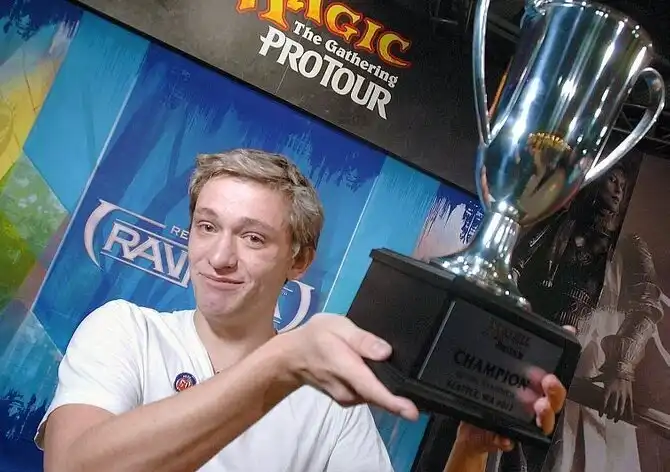
Stanislav Cifka at MTG Pro Tour
Drawing from his experience as a world-class competitor and trader, Stan offers his perspective on the shared logic between trading and card games, the structural limitations of traditional TCGs and online poker, and why combining both with Web3 may point toward a more durable future for on-chain gaming.
The interview begins below.
From Competitive Mastery to Game Design
BlockBeats:
Your journey is remarkable: Magic: The Gathering Pro Tour Champion, the world’s top-ranked Hearthstone player, FIDE Chess Master, and co-founder of OU Capital, a prop trading firm managing over $50 million. How did you reach a world-class level across such different domains? What common threads connect these achievements?
Stan: I would say these experiences are quite similar. They all come down to making the right decisions, understanding what truly matters in a given situation, and staying fully focused on the task at hand.
I played chess at a very competitive level as a child. I experienced both wins and losses early on, and learning from those mistakes, rather than avoiding them, is what gradually makes you stronger.
BlockBeats: You’ve described yourself as both a gamer and a trader. What kind of assets do you trade? And did your experience in trading influence the way you think about game design?
Stan: I began with stock trading in 2020, focusing on the EU market. In 2022, I co-founded a crypto trading firm. My main expertise is in macroeconomics, although I helped shape the firm’s entire trading strategy.
The key connection between crypto and poker lies in risk tolerance. Even if you make all the right decisions on a given day, you can still lose money in the short or medium term. Not everyone can handle that kind of uncertainty. Over the long run, though, good decisions tend to pay off.
That thinking directly shaped Showdown. I wanted to create a balanced playing field where smarter players win over time, while recreational players still have a real chance.
Why Started Showdown
BlockBeats: You were already highly successful as a professional player What motivated you to leave those paths and start Showdown? How did the idea first emerge?
Stan: I’ve always been determined and unafraid of challenges. When an idea feels worth pursuing, I act on it without hesitation.
For instance, I left Magic: The Gathering while being a top-five player in the world to move into a new game, Hearthstone. Almost everyone thought the decision was crazy at the time. A few years later, Hearthstone became more than ten times bigger, and I managed to become one of the top players and the number-one ranked player for a brief period.
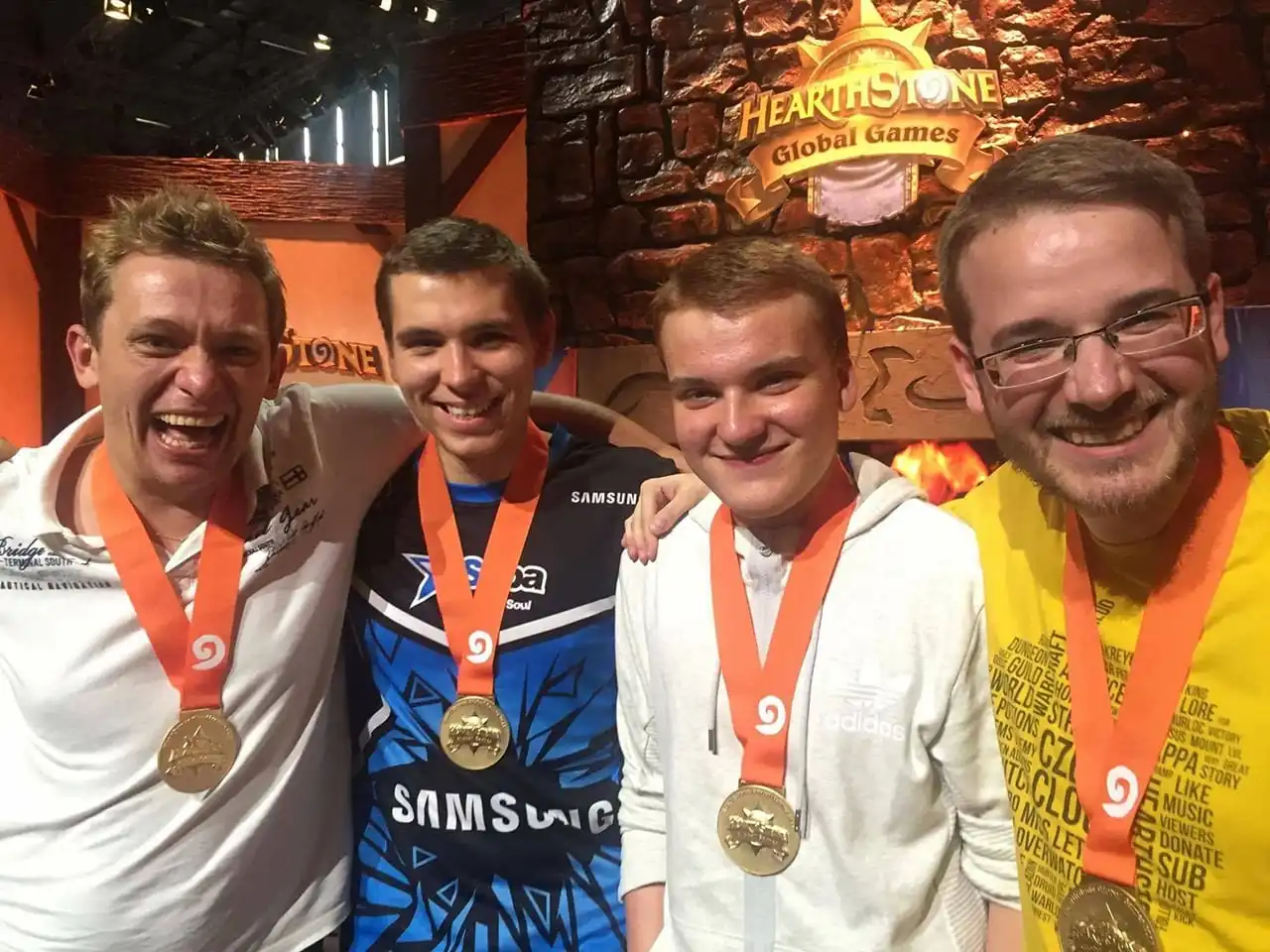
Czech Won Heartstone World Champion, Stan (far left)
On the other hand, not all the decisions I made turned into gold. I later left Hearthstone for a game called Artifact from Valve. I invested over a year trying to get good at it, but Artifact never gained traction.
When I set my mind to something, I usually just go for it, even if it might seem unreasonable to others. Showdown came from that same place.
The idea first emerged in early 2024. I took some time off to support my wife and look after our one-month-old son. During that period, I spent time playing Parallel, which was considered the most promising TCG in the crypto space at the time.
From my perspective, the experience was rather disappointing. It made me want to present Web3 gaming in a completely different way, which led to the inception of Showdown.
Poker, Cards, and the 1+1>2 Effect
BlockBeats: Showdown’s core innovation is combining Texas Hold’em with action cards, creating an entirely new game category. Why does this combination work?
Stan: I’ve always loved both poker and trading card games (TCGs). By combining the best aspects of these two genres, Showdown creates a completely new experience.
Luck is always a part of card games, and that’s what makes them exciting. A beginner can beat a professional from time to time. But over the long run, better players still tend to win, which leaves room for personal improvement and strategy refinement.
What I disliked about traditional poker is that the best decision is often to fold, which can make the game feel slow and, at times, less exciting. In Showdown, action cards let you outplay the odds and win games you would have otherwise lost.
Another aspect I enjoy is that, instead of flipping the table completely, you’re shifting the odds slightly in your favor by playing wisely, though it’s almost never a guaranteed win.
To provide a simple example let me show the card Fantasy Land:

Fantasy Land replaces your pocket cards with QQ, so if you’re holding weaker cards like 8-3, QQ drastically improves your chances of winning (in this example from 1/3 to 4/5 vs random hand). This significantly increases your odds of victory. Since poker remains the core of the game, you still need some luck to win. But playing wisely helps you meet it halfway.
How Web3 Changes the Game
BlockBeats: With your background in traditional card games, you’ve seen the limitations of online poker and TCGs firsthand. What convinced you that Web3 is not just an option, but a necessity?
Stan: One reason I started Showdown is that I see strong long-term potential in blockchain. For Web3 to become mainstream, it needs consumer applications. It can’t focus on finance alone.
Over the past five years, the infrastructure has improved significantly. Web3 now offers better products, even if most people aren’t fully aware of it yet, similar to how the internet wasn’t immediately understood twenty-five years ago.
With blockchain, Showdown battles are secured by smart contracts and can be played for any amount. Players don’t have to worry about funds being stolen or misused, which has been a real issue on traditional poker platforms.
Players also truly own their cards as NFTs. They can resell them on OpenSea or elsewhere. When I left Hearthstone, my cards were locked in my Blizzard account, and I walked away with nothing.
Onboarding is also much easier. You can connect a wallet and start playing within minutes. Traditional gaming or gambling platforms often require KYC and restrict access by region. Blockchain removes those barriers.
BlockBeats: Showdown is one of MegaMafia’s first projects. How did you meet the Mega team, and why did you choose MegaETH?
Stan: The decision to build on MegaETH came from our cofounder Filip, who has been deeply involved in crypto for years. He previously worked as a machine learning engineer at CERN and at Rockaway, a well-known European Web3 fund.
He recognized MegaETH as a strong fit, not just technically with its fast and low-cost network, but also from a go-to-market perspective, given how actively the team supports developers.
We first met the MegaMafia team at a meetup in Thailand in 2024. We showcased our prototype, people stopped by and played the game, and we became part of the first batch of Mafia projects.
I’m not a crypto-native founder myself, but the MegaETH team is. Their guidance across many areas has been extremely valuable for us.
Players, Design, and Retention
BlockBeats: Who do you see as Showdown’s core users?
Stan: Our primary audience consists of people who enjoy games, are comfortable with a bit of gambling, and like trying new things. That includes poker players, crypto-native users, and gamers more broadly.
In many traditional setups, whether poker venues or crypto exchanges, value is extracted, and 90 to 95 percent of users lose money.
Showdown aims to flip that dynamic. For the first year, we’ll take zero commission. With incentives from MegaETH and Showdown, we project that around 90 percent of players will actually make money.
Players can earn through winning matches, leaderboard performance, daily quests, Showdown points, and the MegaETH mainnet campaign.
BlockBeats: The website describes Showpoints as a loyalty system redeemable for rewards like merch and tournament dollars. Should early players see it as a potential pathway to future governance or utility tokens?
Stan: Think about Showpoints as additional in-game currency. You can spend them for NFTs, tournament entries, or real-world rewards like hoodies or even a Lambo if you collect enough.
Or, you can keep them and participate in the Showtoken AIRDROP when Showtoken goes live (most likely Q4 2026).
BlockBeats: TCGs typically have steep learning curves, and poker requires substantial experience. Showdown promises new players can learn in 5 minutes, with games lasting under 10 minutes. How do you keep the game accessible while maintaining depth?
Stan: Our first rule was to keep it simple. That’s a lesson from Hearthstone. If you can’t explain the game to your grandmother, it will never be huge.
We removed complex systems like mana, the resource used in games like Magic to cast spells. All you need are the basic rules of Texas Hold’em. Most players can learn the game in minutes.
If you’ve played any TCG before, it’s even easier.
In one line: imagine Hearthstone and poker having a child. That’s Showdown.
BlockBeats: In Closed Alpha, Showdown achieved 40 percent 30-day retention with 73 minutes of average daily playtime. How did you achieve this? What keeps players coming back?
Stan: In November, we crossed an average of 90 minutes of daily playtime per active user. At a simple level, it comes down to the fact that Showdown is competitive and genuinely fun. The poker element ensures no two games are the same, and combined with deck-building, it creates billions of possible combinations.
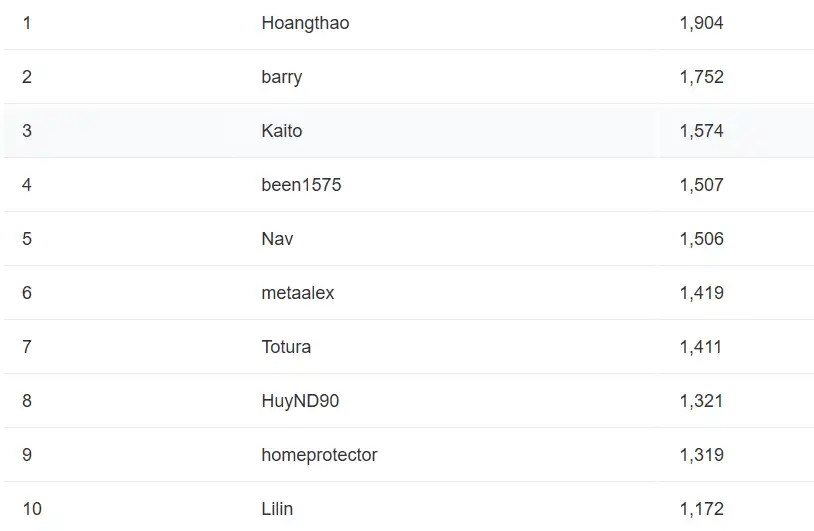
Looking at our top ten players by games played, they complete around five games per hour on average. Many have been playing for months, and all of them have logged more than 200 hours.
I didn’t know any of these players before Showdown. Almost all of that playtime happened without incentives. As we move toward mainnet, we’re adding more features. Real-money matches will go live after the MegaETH mainnet launch. Until then, most players have simply been playing for fun.
Business Model and Long-Term Sustainability
BlockBeats: Showdown promises that all regular cards are free to obtain, unlike Hearthstone’s “pay-to-draw” model. From a business perspective, how can this model be commercially viable?
Stan: Our business model is closer to that of traditional poker venues. Only at a later stage, starting around 2027, we plan to take a small commission.
So for example, if two players each bet $100, the winner receives $195, while the remaining $5 goes to Showdown token holders.
New players can easily jump in and play for free, or with very small stakes, and only increase their bets when they feel comfortable.
We also plan to sell NFTs. These will focus on visual upgrades and customization, but they will not increase a player’s chances of winning (similar to skins in games like League of Legends).
BlockBeats: Many Web3 games struggle because their Play-to-Earn economies become unstable over time. How is Showdown designed to remain sustainable in the long run?
Stan: In the long run, the key is whether enough people enjoy the game and play it without relying on money incentives.
Take lotteries, for example. Even though they extract a lot of money, people still play for the thrill. In the Czech national lottery, only 50 percent of funds go toward prizes.
Showdown is designed so that thousands of players enter tournaments, with a small cut, around five to ten percent, distributed to token holders, while 90 to 95 percent goes directly to players.
That gives players a much better expected value. And if they’re good at the game, they can actually shift the odds in their favor.
BlockBeats: Showdown uses a hybrid business model: "game rake (1-5% for 1v1, 5-10% for tournaments) + skins and NFT marketplace." Which will be the primary driver? How feasible is the target of 100K MAU and $500K MRR? How will you grow to 100K MAU?
Stan: The majority of our revenue will come from game rake.
For example, poker venues typically generate 10-100 times higher revenue per user (RPU) compared to trading card games, simply because the element of gambling encourages users to spend more. Thus, a target of $500K MRR with 100K MAU is a conservative projection.
That being said, growing to 100K MAU is indeed a challenge. The first step is to succeed with crypto-native users through the MegaETH launch. The next step is to onboard streamers and influencers to play Showdown on a massive scale.
I was a streamer myself, and I believe Showdown is a perfect product for content creation. It provides high-adrenaline moments (https://www.youtube.com/watch?v=sm-jMT9smF0&t=1s).
When real-money matches are introduced, it will raise the stakes even further.
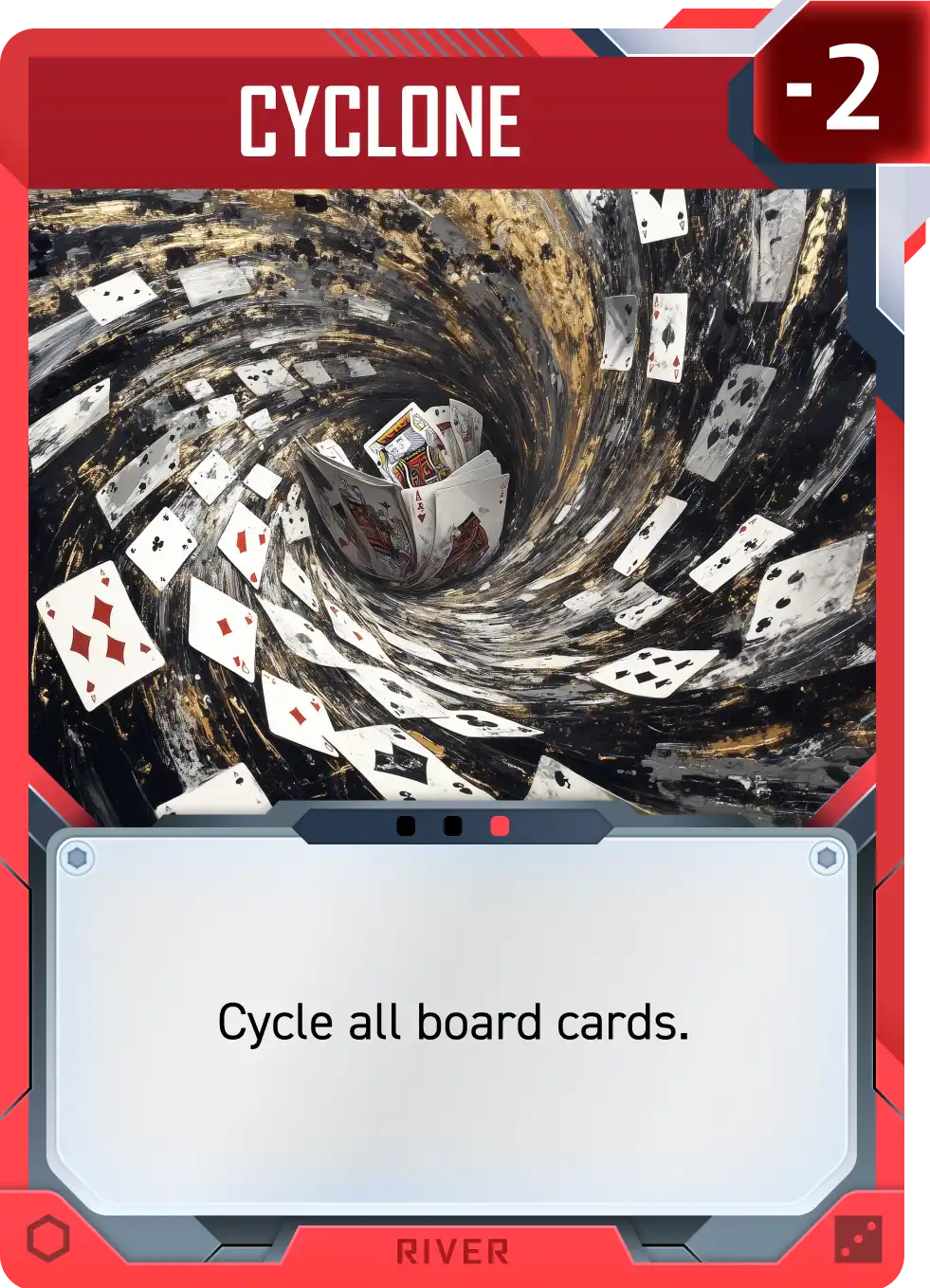
Showdown cards visual
What Comes Next
BlockBeats: Your roadmap shows a Q1 2026 Steam launch. Given Steam’s skepticism toward crypto, how do you plan to approach this?
Stan: We plan to release special versions for the App Store and Steam that don’t involve real-money transactions. Steam users can experience the core game, and if they enjoy it, they can upgrade to the pro version with full features.
This allows us to onboard Web2 players without overwhelming them with wallets or gas fees, while still introducing them to Showdown’s core experience.
BlockBeats: Can you share a bit more about your roadmap over the next one to two years?
Stan: The next major milestone is the MegaETH launch, which will introduce real-money matches.
Other milestones include the App Store release, scheduled for February, and the Steam launch.
Longer term, we plan to add prediction markets, multiplayer modes, a solo adventure mode, and of course, the Token Generation Event.
Welcome to join the official BlockBeats community:
Telegram Subscription Group: https://t.me/theblockbeats
Telegram Discussion Group: https://t.me/BlockBeats_App
Official Twitter Account: https://twitter.com/BlockBeatsAsia






