Why Did Japan Raise Interest Rates While Bitcoin Crashed?
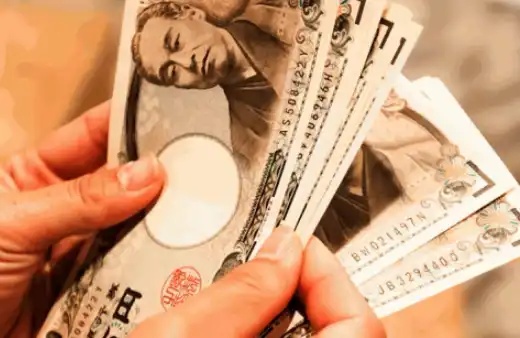
The key reason for the sharp market turbulence was a very hawkish speech by Bank of Japan Governor Haruhiko Kuroda on December 1st in Nagoya, interpreted by the market as a signal that Japan is about to raise interest rates.
So why did Japan's decision to raise rates lead to a Bitcoin crash?
To understand all this, we must go back to the most fundamental logic of the capital markets: liquidity.
For the past few decades, a significant portion of global capital market liquidity has not actually come from the United States, but rather from Japan. Due to Japan's long-standing zero or even negative interest rate policies (NIRP), combined with an extremely accommodative monetary environment, Japan has effectively acted as a cheap funding ATM for the global financial system.
According to a report from the Japanese Ministry of Finance, by the end of 2023, Japan's net foreign assets balance had reached a record 471.3 trillion yen (about $3 trillion).
So why did zero interest rates turn Japan into the global capital markets' ATM? This brings us to the concept of the Yen carry trade.
In simple terms, Wall Street and global speculators borrow yen in Japan at near 0% cost, exchange it for dollars, and invest in high-yield assets such as Bitcoin and US stocks. It's like someone lending you money for free to invest in cryptocurrency. With interest-free loans, aren't you happy? This way, trillions of dollars were lent out.
Now, with Japan set to raise interest rates, what will be the result? It means there's no more free money; the borrowed funds will now have interest costs, reducing profits, prompting investors to unwind their positions. US Treasuries play a significant role in this scenario.
Japanese investors are the largest foreign holders of US Treasuries. According to US Treasury Department TIC data, as of early 2024, Japan held approximately $1.15 trillion in US Treasuries, ranking first in the world.
When the Bank of Japan raises interest rates, yields on Japanese Government Bonds (JGBs) start to rise (e.g., the 10-year JGB yield surpasses the 1% mark). This means that Japan's money no longer needs to take the risk of exchange rate fluctuations to buy US Treasuries but rather decides to sell them and repatriate funds to Japan to purchase domestic bonds.
Selling US Treasuries leads to a drop in prices, pushing up Treasury yields. Rising Treasury yields imply higher global dollar borrowing costs, which introduce risks to global risk assets. Looking back at the Black Swan event of 2020, Bitcoin has consistently been the first risk asset to be abandoned by capital, given its 24/7 speculative nature and the fact that it is a tech asset with the least fundamental data support. Today, Bitcoin still seems to be the first asset that gets abandoned.
Welcome to join the official BlockBeats community:
Telegram Subscription Group: https://t.me/theblockbeats
Telegram Discussion Group: https://t.me/BlockBeats_App
Official Twitter Account: https://twitter.com/BlockBeatsAsia