Capital Markets Meets Crypto at the Forefront: Crypto IPO Company Forum & Digital Art Night Successfully Held
Original Article Title: "Dialogue on Capital Markets and Crypto Frontier: Successful Forum on Crypto Public Companies & Digital Art Night"
Original Source: Waterdrip Capital
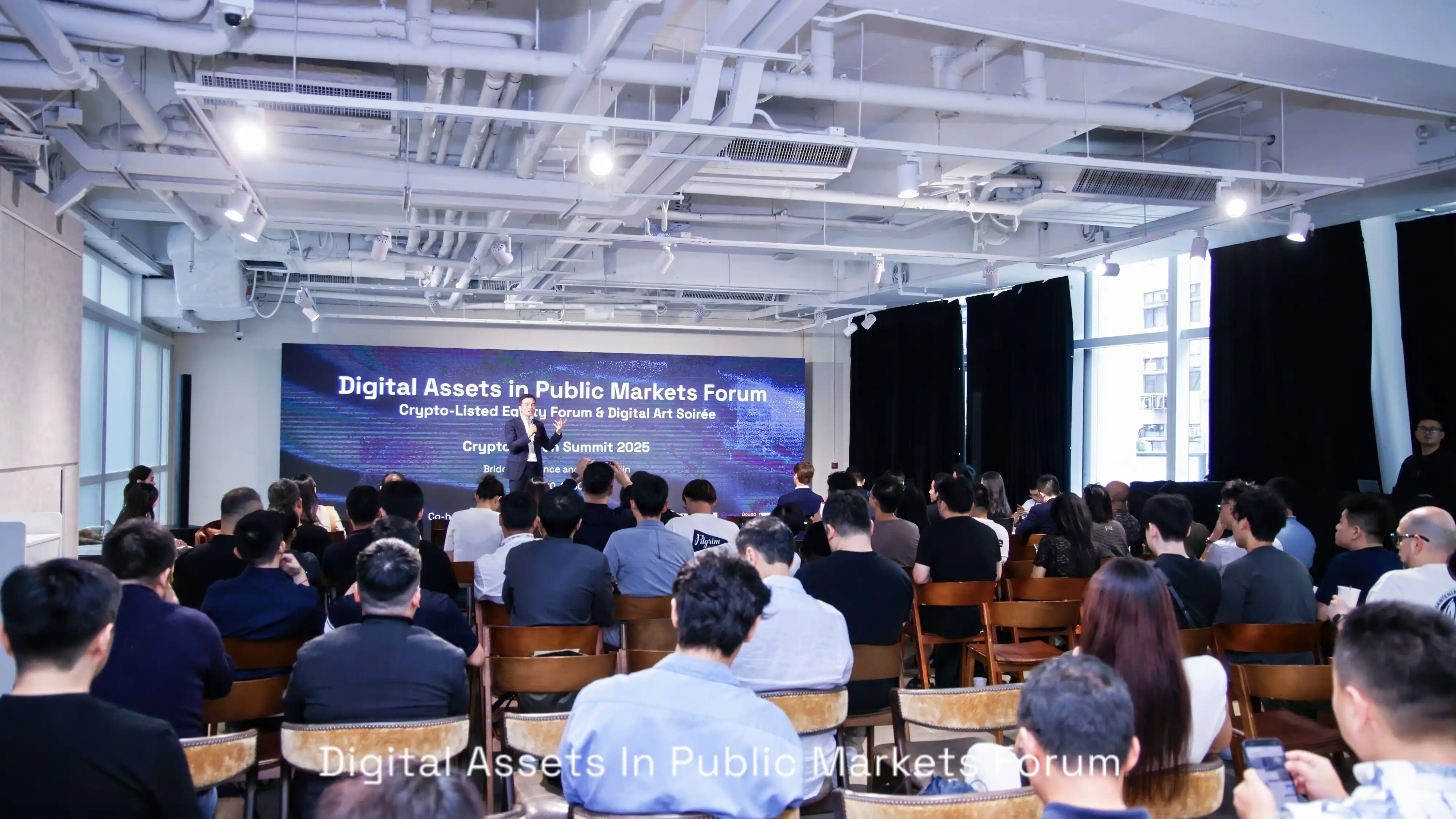
Co-hosted by Waterdrip Capital and CPIC Investment Management (H.K.) Company Limited, with co-organizers Hivemind Capital, Web3Labs, and Stellaxis, the Digital Assets in Public Markets Forum concluded successfully at SoHo House Hong Kong on August 28th.
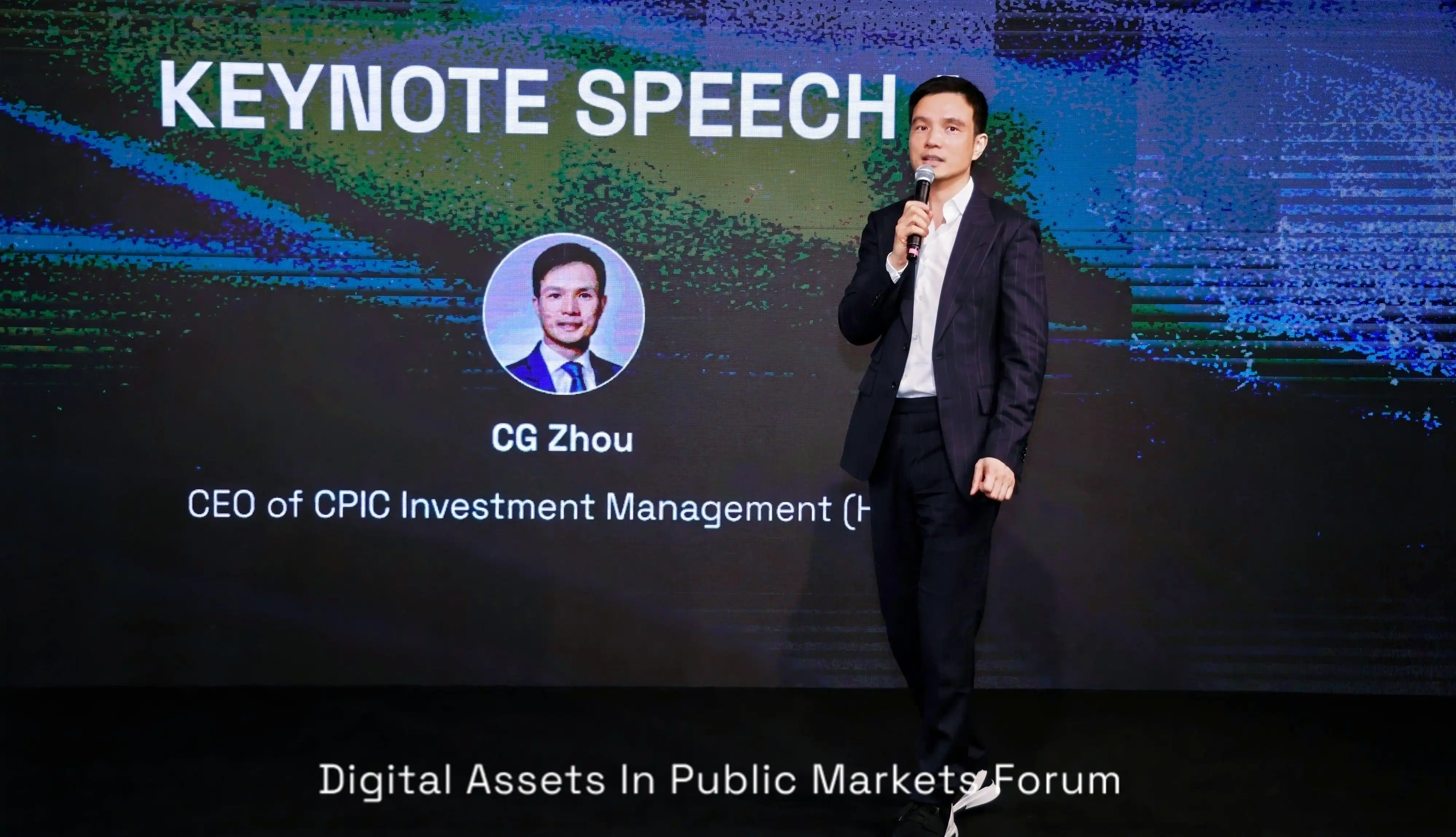
To kick off the forum, C.G. Zhou, CEO of China Pacific Insurance Investment Management (Hong Kong) Co., Ltd., delivered a keynote speech, reflecting on the industry's transformation from independent development to deep integration with traditional finance over the past two years. He also shared Taikang Asset Management's exploration in virtual asset funds and RWA direction.
He introduced that Taikang Asset Management has obtained the Virtual Asset Management License from the Securities and Futures Commission (SFC) of Hong Kong. The company has established four funds in VC, secondary markets, Bitcoin, and arbitrage. In March of this year, they successfully tokenized a USD money market fund on-chain using the Hong Kong OFC framework, custody by Standard Chartered Bank, and approved by the SFC. In the process of promoting tokenization, Taikang Asset Management also invested in incubating The PAC, which has become an important technical partner in Hong Kong and Asia's RWA track.
C.G. Zhou pointed out that stablecoins are currently the only mature RWA application, but the overall market is plagued by hype and misinformation. Some projects lack ownership rights and liquidity conditions, which may harm the industry's health. He called for the establishment of an RWA professional committee to promote standard formulation and regulatory communication, emphasizing that only by maintaining a calm and long-term perspective can RWA achieve true value.
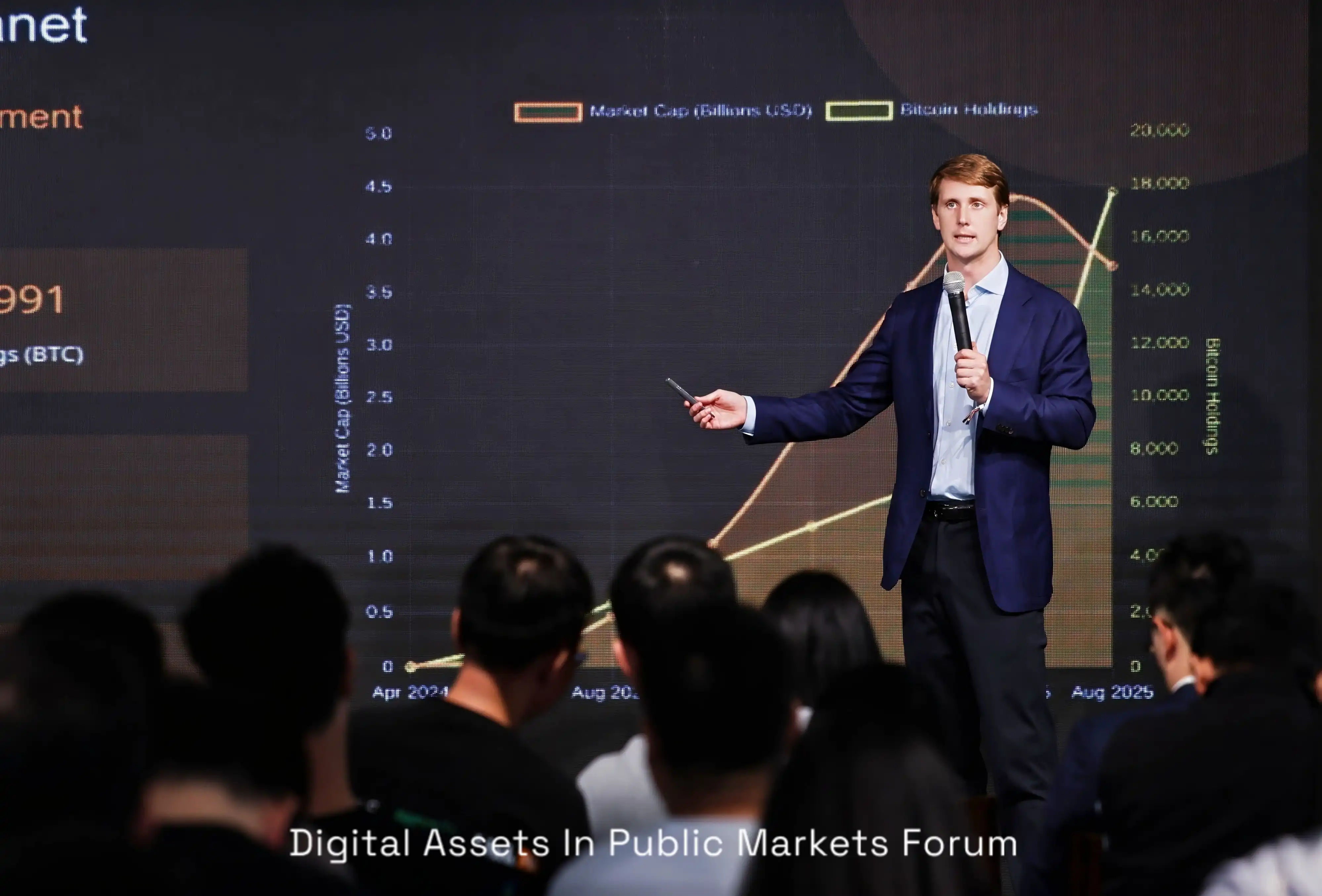
Subsequently, John Riggins, CEO of Moon Inc. (01723.HK), delivered a keynote speech, sharing Moon Inc.'s transformation path and the strategic value of Bitcoin in the public market.
John Riggins stated that Moon Inc., originally focused on prepaid product businesses, is now undergoing a strategic transformation towards a "Bitcoin-first" approach under his leadership. He reviewed the successful experiences of MicroStrategy and MetaPlanet, emphasizing that the public market is the best channel to acquire Bitcoin exposure. Moon Inc. has launched a Bitcoin prepaid card in Hong Kong and plans to expand its business to markets in Thailand, South Korea, and other Asian regions, gradually turning the company into a regional Bitcoin asset carrier.
He pointed out that the Hong Kong Exchange (HKEX), with its efficient and clear regulatory framework, has a unique advantage at the intersection of Eastern and Western finance, and is becoming a key hub to drive Bitcoin and digital assets into the capital market. In the future, Moon Inc. will continue to purchase Bitcoin through the capital market and create long-term value based on its operational business. He firmly believes that Bitcoin-heavy enterprises will gradually emerge in major capital markets, as seen with MicroStrategy in the United States, MetaPlanet in Japan, and Hong Kong also has the opportunity to nurture representative companies.
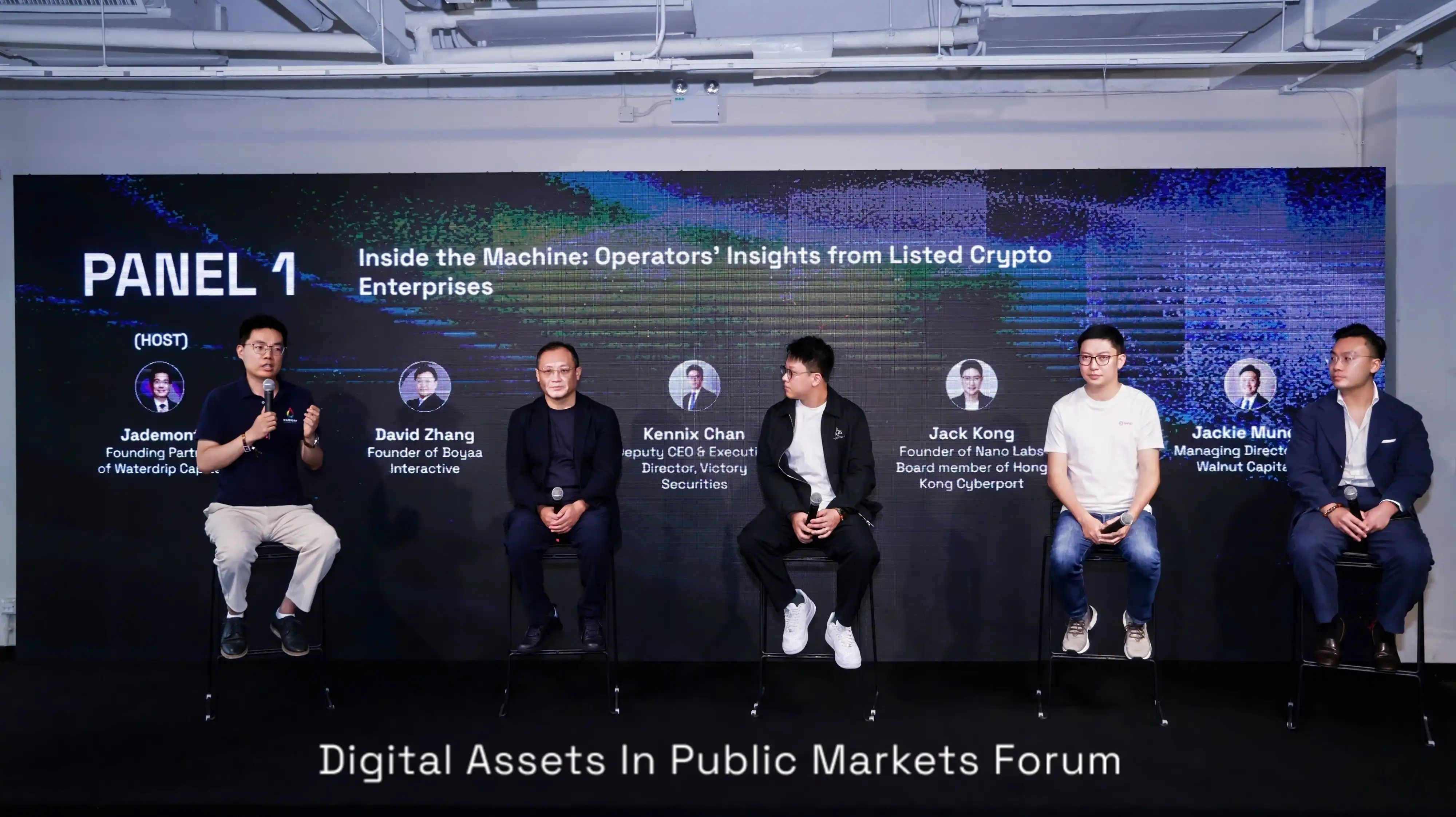
The first roundtable discussion was hosted by Jademont Zheng, Founding Partner of Waterdrip Capital, with guests including David Zhang, Founder and CEO of BoYa Interactive (00434.HK); Kennix Chan, CEO of Victory Securities (08540.HK); Jack Kong, Founder of Nano Labs (NASDAQ: NA) and Board Member of Hong Kong Cyberport; and Jackie Mung, Managing Director of Walnut Capital (00905.HK). The discussion revolved around "Into the Core: Insights from Publicly Listed Crypto Companies' Operators".
The guests first shared their motivations for transitioning from traditional industries to the crypto field: BoYa Interactive entered Bitcoin following MicroStrategy's lead due to being undervalued by the capital market for a long time; Victory Securities experienced counterparty risk after the FTX meltdown, leading to license application and transformation; Nano Labs went from mining chips to listing on the U.S. stock market, ultimately becoming a pioneer in blockchain listings; Walnut Capital explored cryptocurrency payments due to disruptions in cross-border settlements caused by the Russia-Ukraine war and established a Web3 strategy to serve traditional industries.
During the discussion, the guests categorized the concept of crypto concept stocks into three types: Treasury-based companies, which are intuitive in valuation but highly volatile; businesses with a main operation combined with crypto assets, stacking Bitcoin allocations on a stable cash flow basis to enhance valuation; and service-oriented companies that provide compliant services such as brokerages, exchanges, and infrastructure, offering the greatest long-term growth potential. David Zhang emphasized that the "real potential lies in building applications"; Kennix Chan pointed out that he "sees short-term potential in Treasury and long-term potential in compliant services"; Jack Kong believed that the "key is to cross the cycle and continue to build"; while Jackie Mung leaned towards the "robust path of integrating traditional businesses with crypto."
Looking ahead, the guests unanimously agreed that stablecoins, payments, and gaming are the most promising breakout scenes, and the boundary between Web2 and Web3 will gradually blur. Recommendations for traditional enterprises include using Bitcoin as a foundational allocation, entering business through stablecoin settlements, preparing for licenses and compliance frameworks in advance, and maintaining an open mindset, being willing to pay tuition fees, in order to seize long-term industry opportunities.
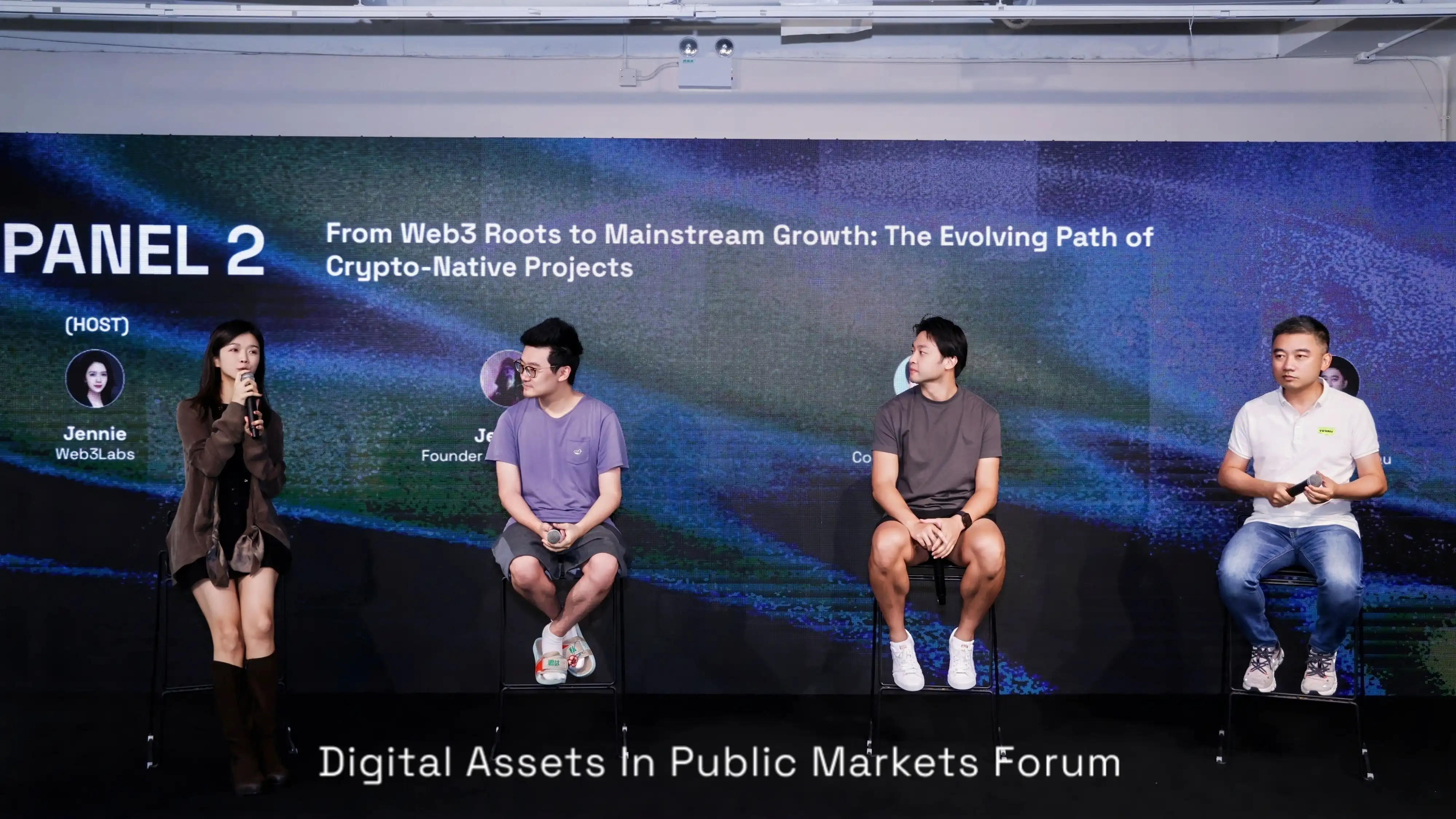
The second panel discussion was moderated by Jennie from Web3 Labs, with Jeff Yin, Founder of Merlin Chain; Ryan Chow, Co-Founder of Solv; and Mac Li, Founder of Tevau, discussing "From Web3 Origins to Mainstream Rise: The Evolutionary Path of Crypto-Native Projects."
The guests first introduced their respective projects: Merlin is dedicated to building a BTC Layer 2 to drive Bitcoin's cross-chain liquidity and DeFi applications; Solv positions itself as a decentralized bank on the Bitcoin blockchain, managing over $2 billion in assets and obtaining regulatory approvals in regions such as the Middle East; Tevau combines wallets with Visa cards to solve real-world payment issues for crypto assets and has launched Web3 phones to lower user entry barriers.
When discussing Web3-native projects and their path to listing, Mac Li emphasized that Web3 enterprises seeking entry into the capital markets must meet compliance and financial transparency requirements consistent with Web2. Ryan Chow proposed the "Coin-Equity 2.0" model, which combines tokens, equity, and business revenue in a triangular flywheel to drive deep integration between Crypto projects and the capital markets. Jeff Yin pointed out that an increasing number of publicly traded companies are exploring collaboration with crypto protocols to achieve mutual empowerment through Bitcoin asset management and yield services.
Regarding the integration of stablecoins and Bitcoin, Jeff Yin believed that the Bitcoin mainnet and Lightning Network could become important issuance venues for stablecoins, providing low-cost and highly secure payment capabilities. Ryan Chow emphasized that Bitcoin could become the anchor asset for a global stablecoin, forming a BTC-centric liquidity pool in the future. Mac Li reminded that the stablecoin ecosystem faces the challenge of regulatory fragmentation across countries, and its success will depend on actual use cases and developer ecosystems.
On the development of BTCFi, the guests unanimously agreed that the industry has moved beyond the early exploration phase and is entering a high-growth phase. Jeff Yin projected that the BTCFi scale could expand from billions of dollars to hundreds of billions of dollars in the next year. Ryan Chow interpreted BTCFi from both broad and narrow perspectives, highlighting that collateralized lending and Bitcoin asset management are the major scenarios, and Bitcoin may become the primary collateral asset for the younger generation. Mac Li believed that DeFi and BTCFi are fundamentally the online reconstruction of traditional finance, and the future breakthrough lies in more builders' continuous input and innovation.
Finally, the guests emphasized that whether it is a native team or a traditional institution, the entry points into Web3 may differ, but compliance, business models, and the spirit of builders are key to achieving long-term growth.
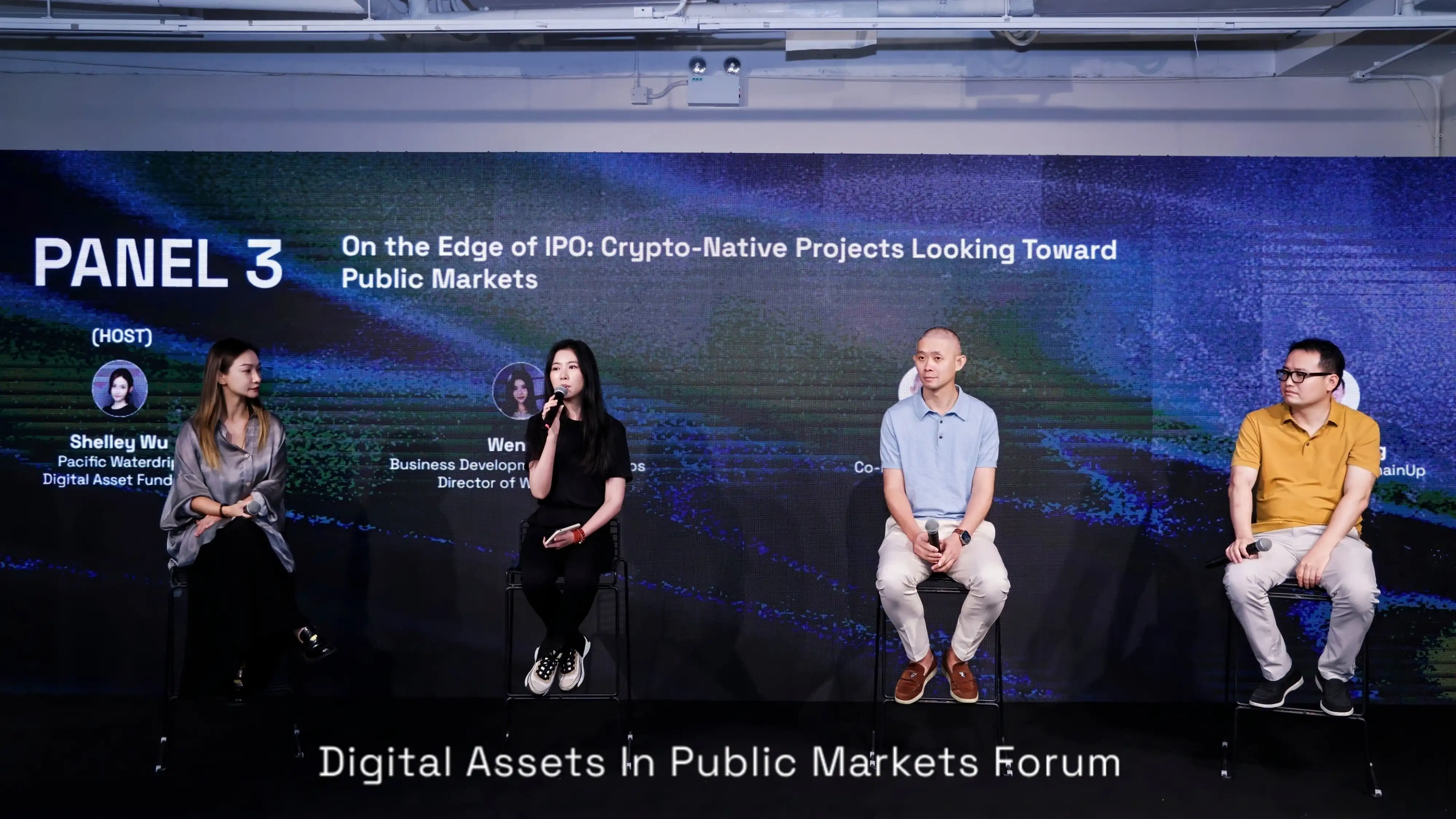
The third roundtable discussion was hosted by Shelley Wu, Partner at Pacific Water Drop Digital Asset Fund, with Wenxin, Director of Business Development and Partnerships at Wintermute, Kevin Liu, Co-Founder of GOAT Network, and Sailor Zhong, Founder and CEO of ChainUp, discussing "IPO on the Horizon: Targeting the Public Market for Crypto-Native Projects."
The guests first introduced their respective business layouts: Wintermute has grown into a global leader in spot liquidity provision, with a daily trading volume in the tens of billions of dollars, and has a strong presence in OTC, derivatives, and institutional lending; GOAT Network is dedicated to building a Bitcoin Layer 2 based on zero-knowledge proof and BitVM, unlocking BTC liquidity, and providing native rewards; ChainUp focuses on To B transaction infrastructure and asset management strategies, currently managing a fund size of over 5 billion dollars.
When discussing why crypto-native projects are seeking IPOs, Wenxin pointed out that the market liquidity is showing "polarization": institutional funds are concentrated in mainstream assets such as BTC and ETH, while retail investors are more drawn to memes and other hot topics, resulting in a constrained funding environment for high-quality new projects in the secondary market. Kevin Liu added that the downturn in the secondary market has made it difficult for many projects to obtain incremental funding, and IPOs can provide compliance endorsement and capital strength, especially helping to connect with institutions such as ETFs and sovereign wealth funds. Sailor Zhong emphasized that the traditional capital market's PS and PE valuation models set higher requirements for Crypto projects but also bring more sustainable funding channels.
Regarding the challenges of listing crypto-native projects, the guests generally agreed that compliance and audits are the biggest challenges. Kevin Liu mentioned that Web3 projects should focus more on growth and user scale as valuation anchors, demonstrating global scalability; Sailor Zhong pointed out that the traditional market requires clear financial audits and compliance permits, which many decentralized protocols find difficult to meet; Wenxin believed that the ultimate trend is the integration of liquidity pools, as Real World Assets, stablecoins, and other compliant products mature, bridging the gap between traditional finance and Crypto Native gradually.
Concerning the balance between decentralization and shareholder responsibility, Kevin Liu believed that the two are not contradictory: the underlying protocol must remain decentralized to ensure security, while the business layer needs to reward shareholders with real users and revenue. Sailor Zhong added that currently, projects that truly enter the capital market are mostly stablecoins, custody, and projects close to the traditional model, with fully decentralized DeFi and Dex having no successful cases yet.
When looking ahead to the future, the speakers unanimously agreed that it is not a matter of "mutual exclusion" but rather "complementary integration." Wenxin believes this is a process of mutual embrace; Kevin Liu emphasized that BTCFi is poised to move towards Wall Street, becoming a new narrative in the capital markets; Sailor Zhong pointed out that opportunities should be viewed in conjunction with track differences, for example, stablecoin cross-border payments have efficiency advantages, while the securities brokerage and exchange fields are more suitable for traditional finance to play a role.
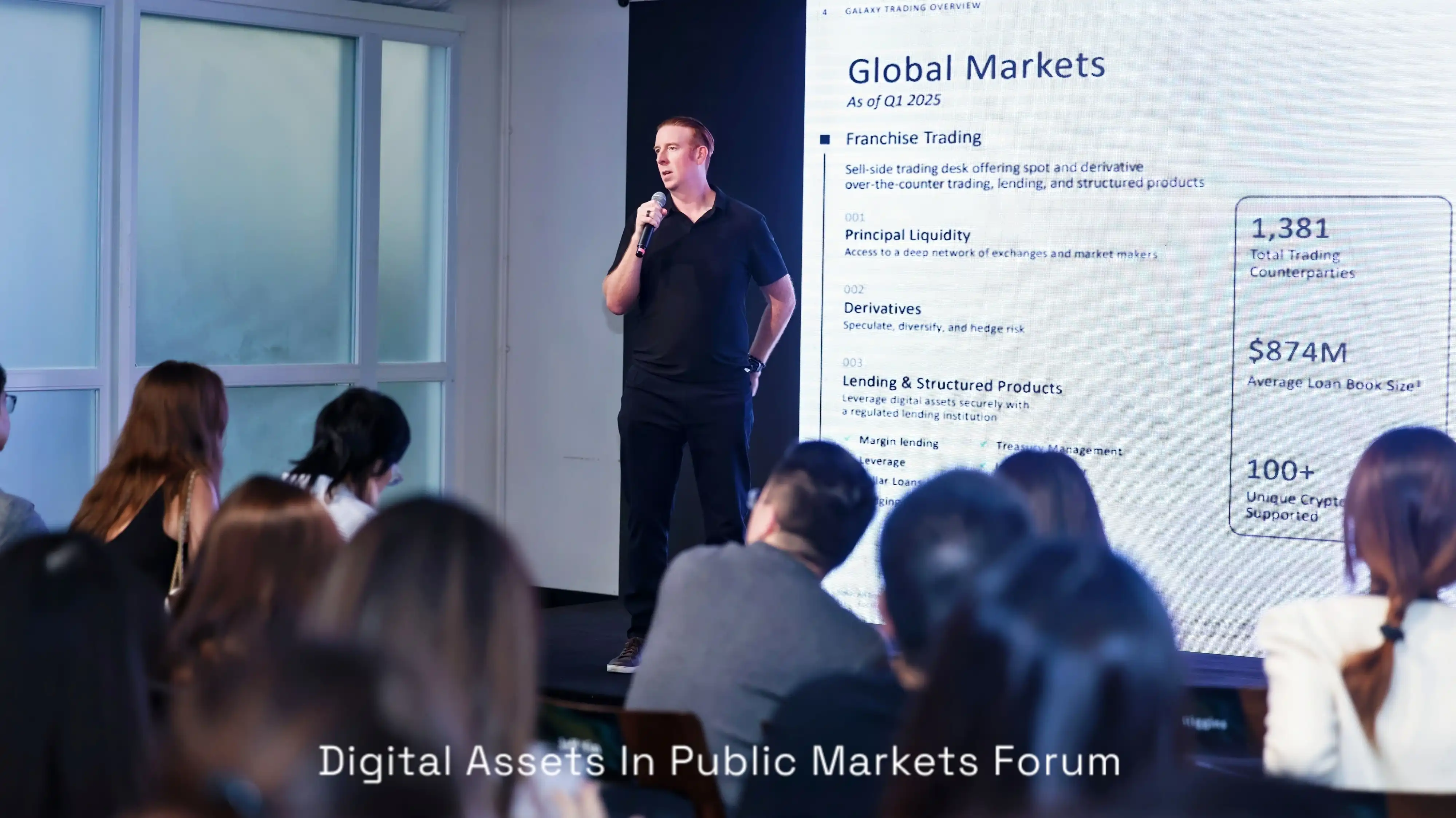
After three roundtable forums, John Cahill, Chief Operating Officer of Galaxy Digital (NASDAQ: GLXY), took the stage to deliver a keynote speech, providing a comprehensive overview of Galaxy Digital's business landscape, capital operations, and industry outlook.
John Cahill recounted his personal journey from Goldman Sachs to digital assets and emphasized that Galaxy Digital, as a global leading crypto financial institution, successfully went public on Nasdaq in 2024 with a current market value of around $9 billion. The company's business covers digital asset markets and asset management, structured products and lending, investment banking and advisory, as well as infrastructure solutions. Its proprietary trading and liquidity provision scale leads the industry, loan volume approaches $900 million, asset management exceeds $7 billion, and globally cooperates with traditional financial giants like Invesco, DWS to launch ETFs and ETPs.
He pointed out that Galaxy Digital's differentiating advantage lies in its full-stack service capability: it can provide customers with trading, hedging, staking, custody, and other operational support, as well as lead capital raising and investment management, forming a closed loop from strategic advisory to fund execution. The company recently assisted several top projects in fundraising and custody, including key participants in the Ethereum ecosystem, Sharplink, and ConsenSys.
On the infrastructure level, Galaxy Digital operates validation nodes for multiple public chains, launched the institutional-grade custody solution GK8, and actively collaborates with global regulatory bodies to promote compliance. John Cahill emphasized that Galaxy Digital is at a "moment of convergence between Wall Street and crypto assets," and with the influx of institutional capital, digital assets will gradually no longer be seen as a standalone asset class but will become a mainstream asset class alongside stocks and commodities.
He concluded by stating that Galaxy Digital has accumulated long-term market experience and risk management capabilities, able to maintain stability during volatile cycles, and win the trust of institutional clients through transparent and compliant operations. With the ongoing trend of capital raising, Galaxy Digital will continue to lead the wave of institutionalization, driving digital assets into the mainstream of the global capital markets.
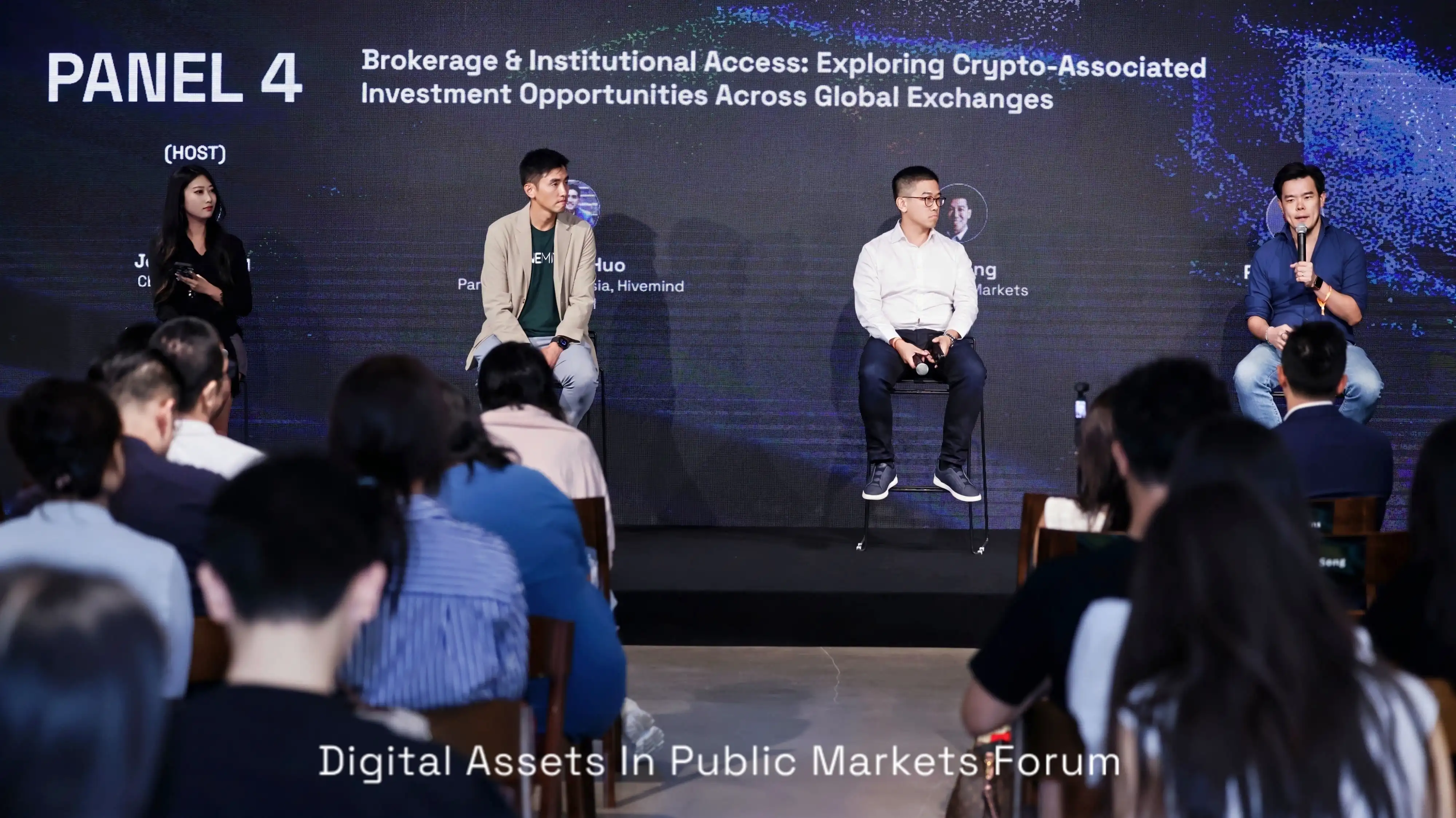
The fourth panel discussion revolved around "Brokerage Services and Institutional Access: Exploring Crypto-Related Investment Opportunities in Global Exchanges," hosted by Joy Chen, Investment Director at Waterdrop Capital. The panelists included Stanley Huo, Partner and Head of Asia at Hivemind Capital; Xin Song, CEO of GSR Markets; and Paolo Chen, Chief Strategy Officer at VDX.
The guests first shared insights into their respective business focuses. Stanley Huo introduced Hivemind as a global digital asset multi-strategy fund covering primary VC, secondary token trading, crypto-themed stocks, and NFT investments. Xin Song noted that GSR provides market-making and full-lifecycle financial services to over 200 projects and a dozen exchanges, gradually expanding into asset treasury and fundraising. Paolo Chen emphasized that Victory Securities and VDX are driving the development of virtual asset business in Hong Kong through compliant innovation, ranging from structured products to RWAs and broker-level virtual asset solutions, establishing a broad institutional cooperation network.
When discussing the relationship between traditional financial exchanges, crypto exchanges, and decentralized platforms, the panelists generally agreed that the trend is moving from differentiation towards integration. Paolo Chen pointed out that blockchain will become the underlying settlement layer for all financial transactions in the future, with CEXs gradually integrating with traditional brokerages. Xin Song added that tightening regulations and institutional capital inflow will drive trading volumes towards compliant platforms, while the future of DEXs depends on improvements in trading experience and custody. Stanley Huo believed that policies like the U.S. "Project Crypto" are accelerating the on-chainization of traditional financial assets, benefiting both the Hong Kong and Asian markets.
In the discussion on asset allocation and crypto-themed stock selection, the panelists presented different perspectives. Stanley Huo stated that the emergence of ETFs and Digital Asset Treasuries (DATs) has enriched institutional channels to acquire mainstream assets like BTC and ETH, driving market attention towards assets like Ethereum. Xin Song emphasized that DAT stocks have been popular as they expanded investment opportunities for institutions and retail investors, particularly attracting traditional funds limited to stock or bond investments. Paolo Chen categorized the field into "Trading Platforms (commission-based)" and "Hodl Treasury Platforms (asset appreciation-based)," noting that the former is relatively stable while the latter exhibits leveraged amplification effects during bull markets.
In the future outlook and "Wealth Passphrase" discussion, all three panelists mentioned the huge potential of RWAs (Real World Assets on-chain). Paolo Chen believed that RWAs will reshape the asset issuance and clearing chain, representing an irreversible trend. Xin Song added that true institutional investors (such as pension funds) currently have a digital asset allocation of only 1-5%, centered on ETFs with stocks and opportunistic investments as supplements, indicating significant growth potential. Stanley Huo pointed out that macroeconomic conditions and policy expectations (including Trump's impact on the Fed) will influence the trend of risk assets, with mainstream assets like BTC, ETH, and Solana remaining core directions for allocation.
The guests unanimously agreed that with clear regulation and improved market tools, the boundaries between traditional finance and the crypto market are rapidly being broken down. Whether it is exchanges or asset classes, the future will usher in a deeper integration phase.
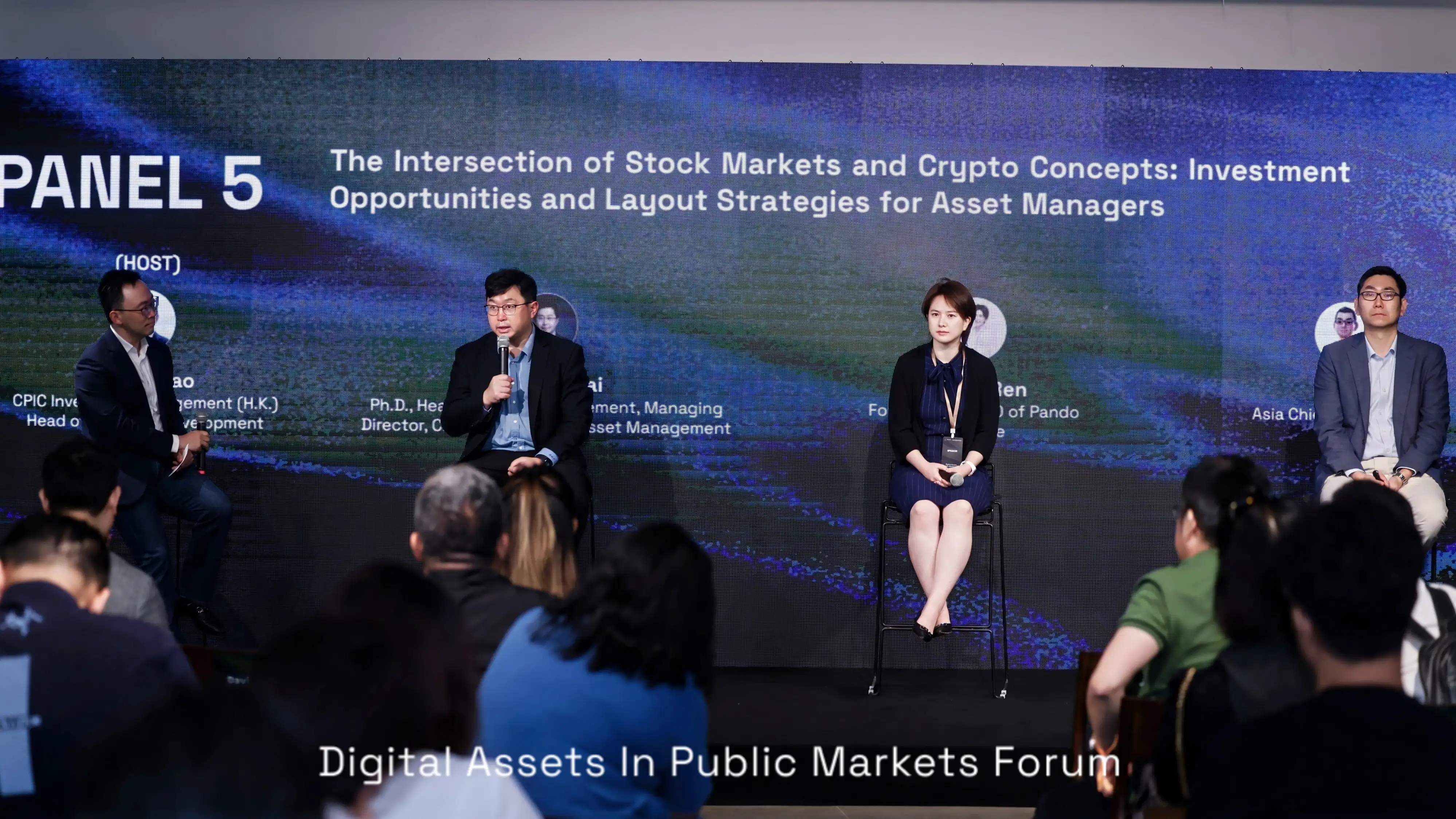
The fifth roundtable forum, themed "Intersection of Stock Market and Crypto Concepts: Investment Opportunities and Strategic Layout for Asset Managers," was moderated by Daniel Cao, Head of Business Development at China Taiping Asset Management Hong Kong Limited. The guests included: Dr. Bai Haifeng, Managing Director of Asset Management at CMB International, Junfei Ren, Founder and CEO of Pando Limited, and Xia Le, Chief Economist for Asia at BBVA Spain.
During the introduction session, Dr. Bai Haifeng mentioned that CMB International Asset Management had deployed a USD money market fund on various chains such as Solana, Ethereum, Arbitrum, and Plume, building the first multi-chain public mutual fund within the Singapore-Hong Kong mutual recognition fund system on top of a currency fund. They are actively exploring RWA practices. Junfei Ren shared his journey from Huobi and Zhen Fund to Silicon Valley entrepreneurship, highlighting Pando's issuance of a Bitcoin ETF on the Hong Kong Stock Exchange and several actively managed funds, as well as their focus on building a tokenization product line. Xia Le, from a macro research perspective, emphasized his research on Bitcoin dating back to 2013, with a particular focus on stablecoins and their interaction with the international monetary system.
When discussing the investment opportunities of Coin-Stock Linkage (DAT Stocks), the guests unanimously agreed on its key role in connecting crypto and traditional capital markets. Dr. Bai Haifeng categorized participants into four groups: crypto assets themselves, listed companies, convertible bond/PIPE investors, and common shareholders. He believed that DAT Stocks are equivalent to "automatic investment," lowering the investment threshold. Junfei Ren added that as exchanges, brokerages, and crypto platforms cross-border and intermingle, different markets globally have varying premiums on DAT Stocks, which are expected to converge in the long term. Xia Le pointed out that high-net-worth clients have strong demand for DAT Stocks, but their leveraged nature requires evaluation by professional investors, reflecting the "mismatch" issue in the integration process between traditional finance and the crypto market.
Regarding Investment Trends and Asset Selection, Dr. Bai Haifeng put forward three principles: prioritize regions with high market depth, focus on the financial operational capabilities of teams, and have a clear view on which core crypto assets to invest in. Junfei Ren emphasized the long-term reliance on Ethereum's ecosystem fundamentals, while the short term depends on the project's fundraising ability and capital sources. Xia Le added that although DAT Stocks are convenient, their core business model remains financial risk management, and caution is required for risk contagion effects.
Regarding risk points, Dr. Bai Haifeng reminded to be alert to whether the blockchain's performance can withstand extreme transaction volume, the uncertainty brought by an excessive reliance on the political cycle, and the potential bubble process. Junfei Ren then used the "impossible triangle" as an example to point out that decentralization, efficiency, and cost are difficult to achieve simultaneously, and applications should vary depending on the scenario. Xia Le further emphasized that DAT stocks need to strengthen risk management; otherwise, there may be cross-market risk contagion in the process of financial and crypto integration.
Regarding business and product layout, Junfei Ren pointed out that Pandu is not only issuing crypto-related ETFs in Europe and Hong Kong but also promoting traditional asset tokenization to meet the strong demand in the market for tokenized US bonds and stocks. Xia Le emphasized that traditional institutions can meet investors' allocation needs for DAT and RWA through securitization and centralized solutions.
On the topic of stock tokenization, Dr. Bai Haifeng used the history of ETFs as an example to point out that the current on-chain trading lacks sufficient market-making and arbitrage mechanisms, which could lead to a long-term price dislocation. Junfei Ren believed that significant market demand would accelerate stock tokenization, and a model where publicly listed companies directly acknowledge the one-to-one binding of on-chain tokens with stocks holds more potential. Xia Le, however, took a cautious stance, suggesting that 24/7 trading might not necessarily improve market efficiency and that the depth and stability of the financial market are more critical.
The three guests concluded that although the linkage between cryptocurrency and stocks and stock tokenization are still in the early stages, they represent the accelerating trend of the integration of traditional capital markets with crypto finance. For institutions, they need to seize the new asset allocation opportunities while also paying close attention to risk control and market mechanism development.
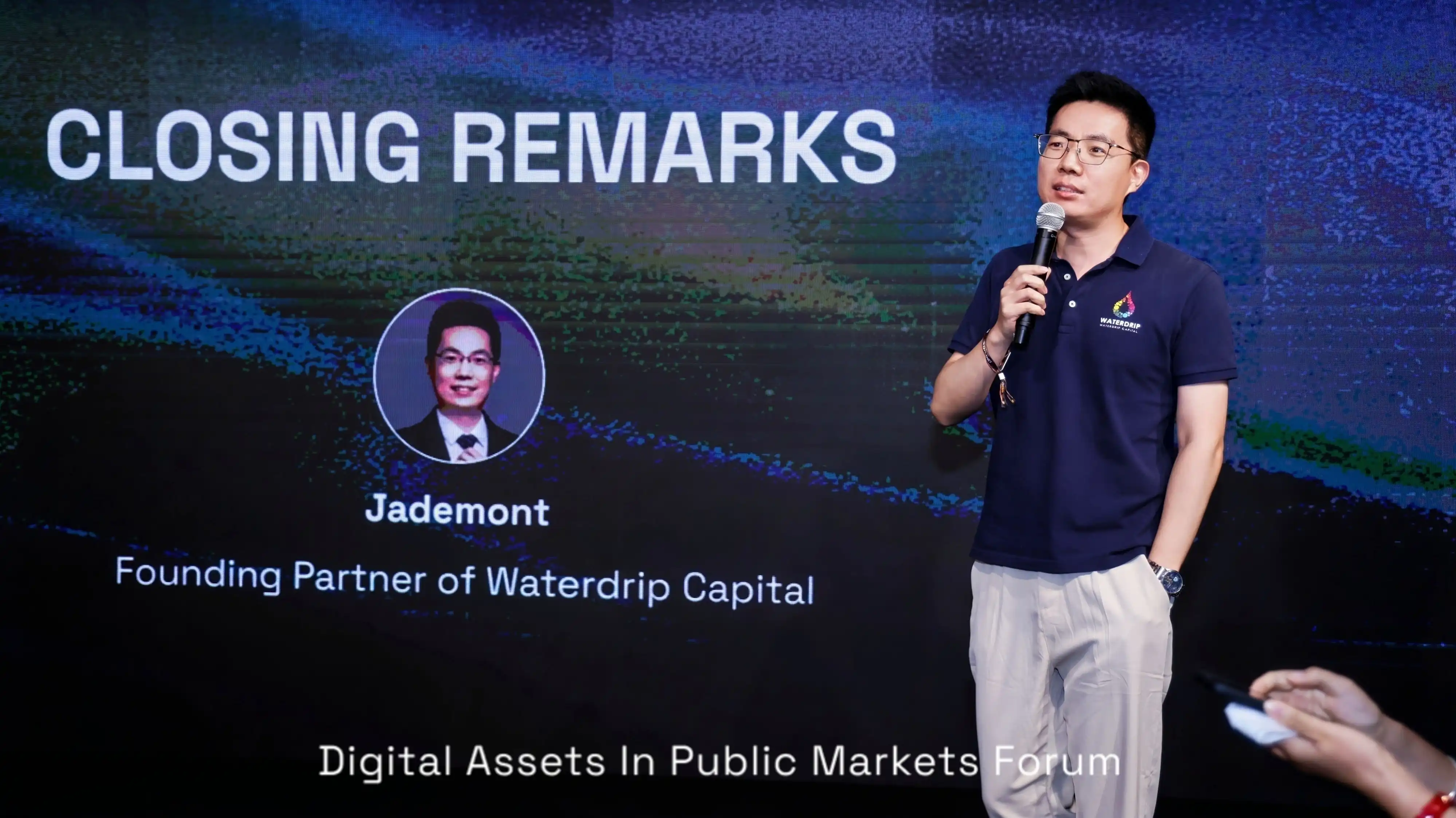
Finally, the Cryptocurrency IPO Forum concluded with a closing session. Jademont Zheng, Founding Partner of Waterdrip Capital, took the stage to deliver the closing remarks.
In his closing speech, Jademont Zheng stated that the conference was truly a grand event that achieved "deep integration between the cryptocurrency industry and the traditional financial industry": early Bitcoin ecosystem entrepreneurs shared experiences on decentralization and native encryption, while international investment banks and asset management institution guests provided in-depth analyses of the crypto industry from macro, capital market, and regulatory perspectives. Jademont Zheng emphasized that the convergence of these two systems on the same stage is a microcosm of the industry's development trend and expressed gratitude to all guests and attendees for their participation.
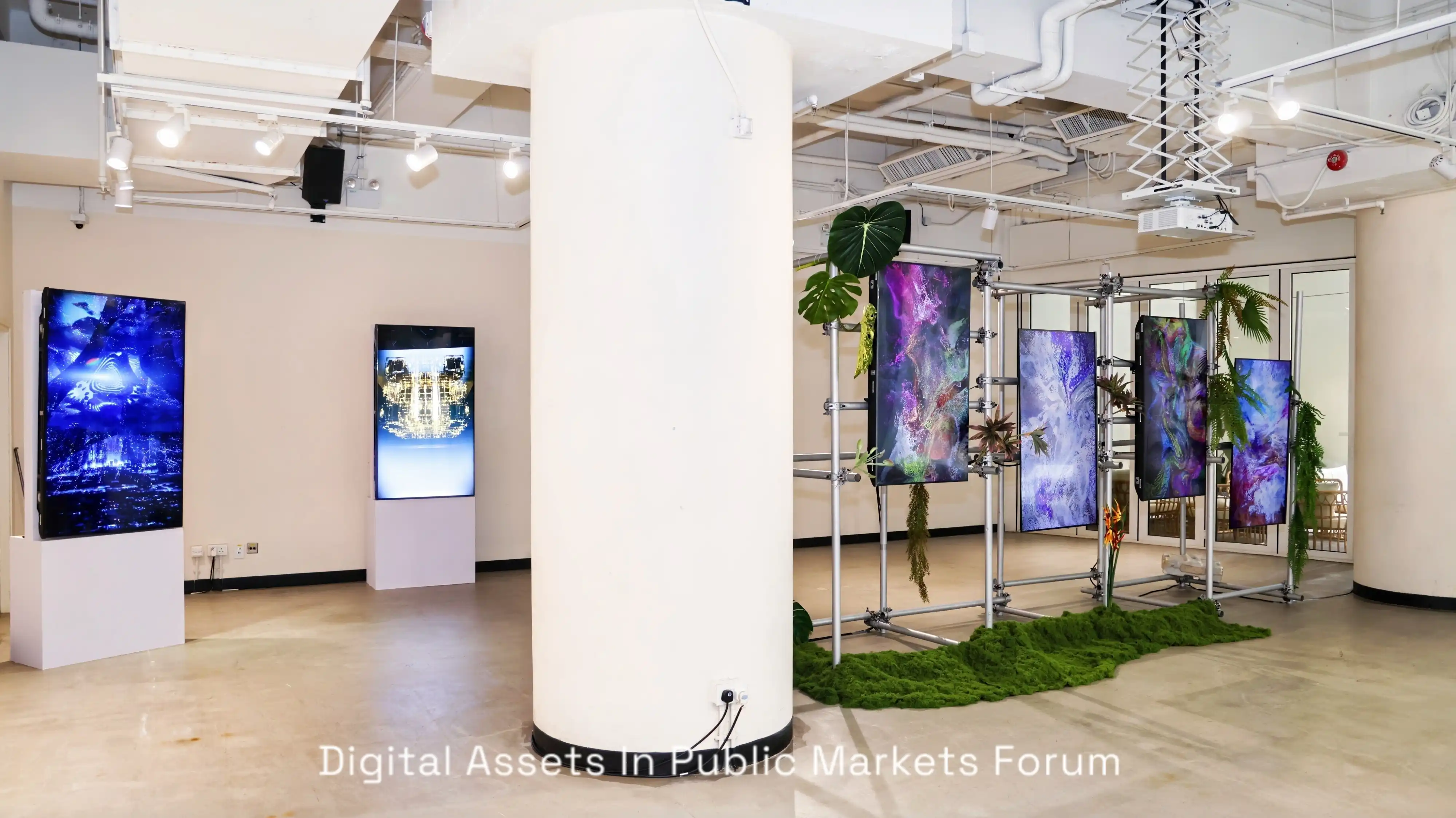
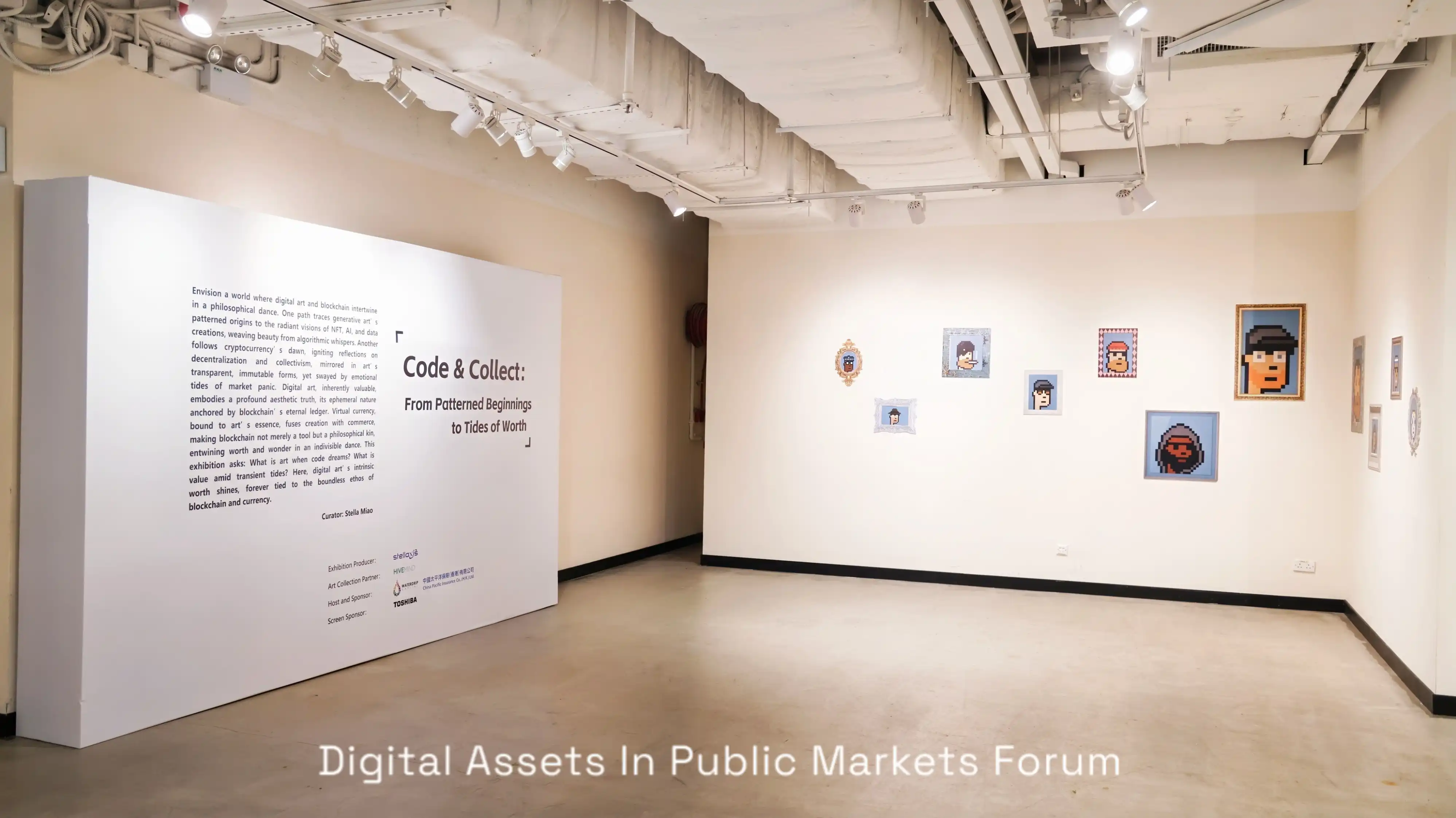
After the closing remarks, guests and attendees proceeded to the second floor to participate in an immersive digital art experience. The art exhibition, Code & Collect: From Patterned Beginnings to Tides of Worth, was curated by Stella Miao, the founder of Stellaxis, showcasing exciting works from internationally renowned artists including Rui Huang, Ting Song, Henry Chu, Tyler Hobbs, Beeple, Refik Anadol, and Larva Labs. The exhibition used a diverse visual language to explore the intersection of technology and art, presenting a cross-disciplinary immersive experience that showcases and discusses the organic integration of art culture and digital assets, as well as the significant value of digital art as an indispensable part of the Web3 ecosystem's future.
Welcome to join the official BlockBeats community:
Telegram Subscription Group: https://t.me/theblockbeats
Telegram Discussion Group: https://t.me/BlockBeats_App
Official Twitter Account: https://twitter.com/BlockBeatsAsia

 Related Articles