How to integrate RWA with the Stablecoin craze for R-Asset interoperability?

Original Title: "How to Integrate RWA with Stablecoin Hype for R-Stock Interconnection?"
Original Author: Kai Ye, Huaxia Digital Capital
In the recent waves of hype in the financial world, the hottest topics are undoubtedly stablecoins and tokenization of US stocks. The combination of these two has undoubtedly brought many new opportunities to the global capital market, especially igniting market enthusiasm for the interconnection and development of Hong Kong stocks and R stocks. Today, we delve into the detailed discussion of the theme of R-stock interconnection mentioned two years ago, exploring how to leverage the hot topics of RWA and stablecoins to link Hong Kong stocks and even Chinese mainland stocks to the global liquidity network. (The analysis in this article is for illustrative purposes only and does not constitute investment advice)
1. Liquidity Logic and Background
1. The Logic Behind the Stablecoin and RWA Hype
The essence of the stablecoin and RWA tokenization hype essentially points to a common goal—improving asset liquidity and transparency. Stablecoins, through on-chain asset settlement, have addressed the efficiency issues of traditional finance, allowing global funds to flow smoothly like water. RWA, on the other hand, through digitization and tokenization, brings traditional assets (such as renewable energy, gold and precious metals, debt, equity, etc.) onto the chain, thereby gaining more liquidity and funding support.
So, when these two hot trends are combined, what kind of opportunities do they provide for R-stock interconnection?
Firstly, as a highly liquid tool, stablecoin's introduction enables RWA assets such as equities and debts to circulate efficiently on-chain. At the same time, stablecoin's payment channels and cross-border settlement capabilities allow Hong Kong's capital market to directly connect with the global market. This connectivity extends not only to the traditional stock market but also accelerates enterprises' financing, mergers and acquisitions, and other operations through RWA tokenization.
2. Impact of US Stock Fund Inflows and Foreign Exchange Reserves
Recently, the inflow of funds from US bonds and stocks into the Hong Kong market, along with foreign exchange reserves, has undoubtedly injected liquidity into the Hong Kong market. This fund inflow has brought new development opportunities to Hong Kong stocks and has also spurred more controlling shareholders of listed companies to consider R-stock interconnection.
The combination of fund inflows into Hong Kong stocks and RWA can help Hong Kong better access the global capital market. For example, by issuing stablecoins to support the liquidity of Hong Kong stocks or by leveraging RWA tokenization, Hong Kong stock assets that could only be traded in traditional markets can be directly connected with global investors.
3. The Role of Stablecoins in R-Share Linkage
Stablecoins, as an important tool in R-share linkage, can not only assist enterprises in cross-border financing but also act as a bridge in asset tokenization. Through the global cross-border settlement and real-time clearing function of stablecoins, Hong Kong's R-share assets can easily access the view of global investors. At the same time, the combination of stablecoins and RWAs can allow shareholders and investors to achieve seamless fund transfers between global markets. This enhanced liquidity can not only bring about a stronger appeal to the capital markets but also further drive the internationalization of the Hong Kong capital market.
If we add the trend of tokenizing US stocks, the R-share linkage in the Hong Kong market can explore new fund inflows globally through a similar model. In other words, Hong Kong stocks are no longer a closed "pond"; they can interact and link with fund pools from other parts of the world, similar to US stocks.
II. Seven Ways of R-Share Linkage
With the inflow of funds from US Treasury bonds and stocks, coupled with continuous foreign exchange reserves entering the market, the activity of the Hong Kong capital market (especially Hong Kong stocks) has significantly increased. More investors are starting to focus on how to strategically position themselves in the R-share linkage framework amidst this trend. We will explore how to combine RWA tokenization with market hotspots like stablecoins in several innovative ways to promote the interconnected development of the R-share market.
1. Asset Allocation with BTC and Issuance Model: Microstrategy's Commercialization Practice
In the current financial market environment, the Microstrategy Mode is gradually gaining favor in the capital markets. This mode combines asset allocation with digital assets like Bitcoin and an issuance strategy, bringing new growth drivers to the traditional stock market. By using Bitcoin and other digital assets as allocation tools, companies can enhance their market valuation through their balance sheets. They can then tokenize these assets and enter licensed trading platforms to create higher capital returns and appreciation.
In this context, through the R-share linkage model, the capital market can enhance the liquidity of its transactions based on asset allocation while providing investors with more diversified risk management tools. By combining RWA tokenization, we can map and transform real assets (such as new energy, minerals, gold, etc.) into highly liquid stablecoin collateral assets, conduct issuances and asset securitization, and bring stable appreciation returns to shareholders and investors.
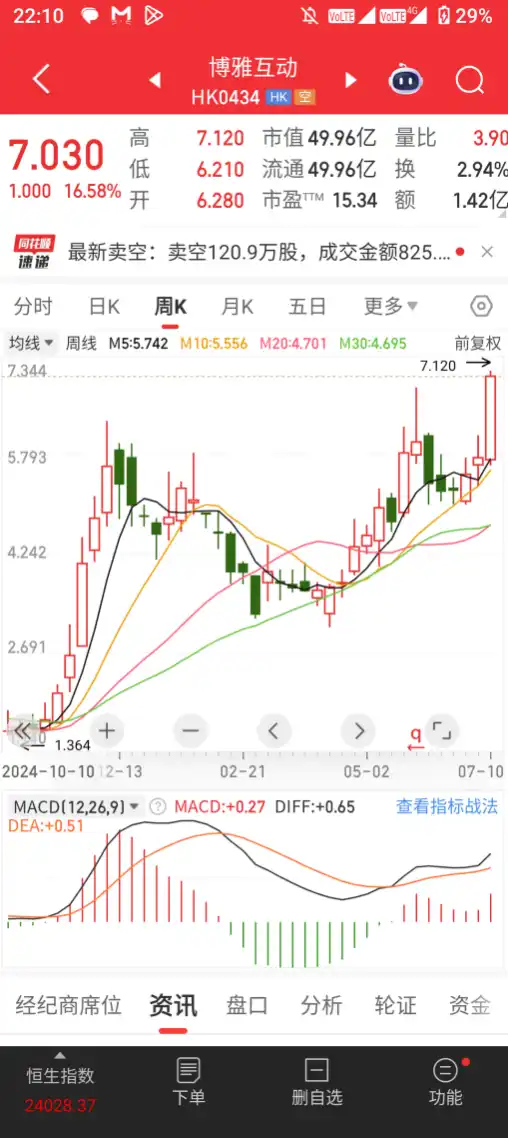
(Hong Kong Stock Microstrategy Mode: Boya Interactive)
2. Reverse Merger: Integration of Web3 Platforms, Public Blockchains, and Exchange Platforms
A reverse merger has been an important investment strategy in the capital markets in recent years, especially in the field of Web3 platforms, public blockchains, and exchange platforms. One of the most typical cases is Justin Sun's reverse merger of the US stock SRM into Tron's BitTorrent chain, resulting in a continuous increase of over ten times. In these fields, many innovative enterprises, especially decentralized crypto enterprises or platforms, do not yet have the qualifications or scale to go public, but they possess enormous growth potential and market value. With the recent efforts of the traditional financial market to embrace the Web3 forces, through reverse mergers, the traditional financial market can rapidly acquire these innovative platforms and technologies, thus achieving a breakthrough development in the traditional capital market (Web3 gains fiat access).
Combining RWA tokenization and stablecoin applications, this reverse merger model provides the capital market with new trading tools and business expansion paths. For example, combining Web3 platforms and public blockchains with traditional industries can not only align with hotspots in the traditional financial market but also bring tokenized returns based on real-world assets (such as gold, real estate, financial assets, etc.) to crypto investors. Additionally, by issuing stablecoins to provide liquidity support, it further promotes the activity and growth of the R-share market.
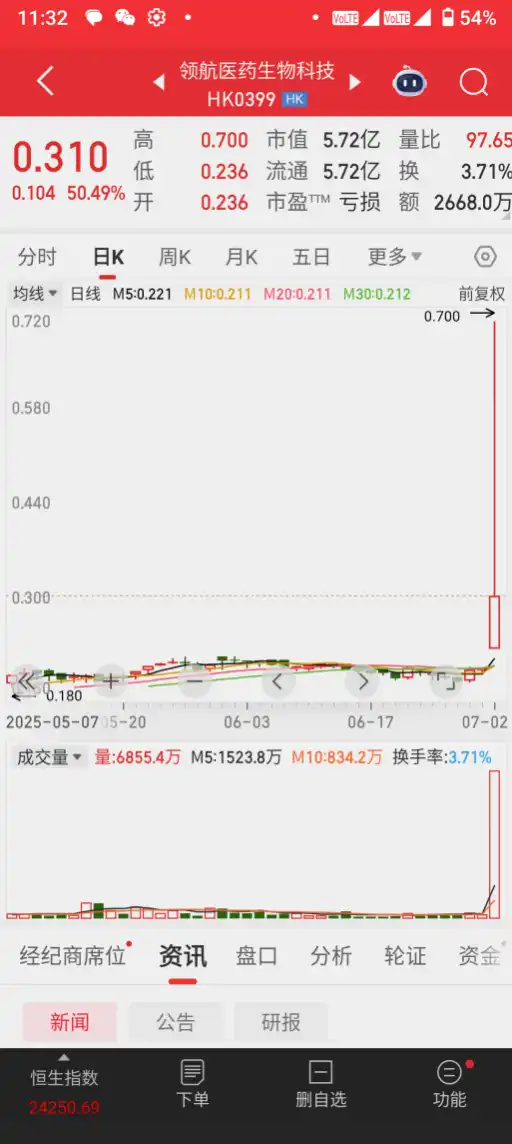
(Similar to the reverse acquisition model of US stock SRM)
3. RWA Asset Issuance and Licensing: New Business Directions such as VA1, VA9
One of the core goals of RWA tokenization is to introduce real-world assets to blockchain tokenization, breaking down assets' geographical and liquidity restrictions. In Hong Kong, an international financial center, RWA asset tokenization can not only inject more liquidity into the capital market but also provide compliant trading channels through licensed platforms such as VA1, VA9. Licensed trading platforms and asset management investment banking platforms will also become key participants in this process, providing stronger support for the activity of the R-share market.
Recently, some brokerages have obtained digital asset licenses such as VA1, VA9, causing a sharp rise in the Hong Kong stock capital market, especially the fate of Chinese-funded brokerages in Hong Kong, representing the attitude of state-owned institutions, with even greater increases and the license becoming the theme.
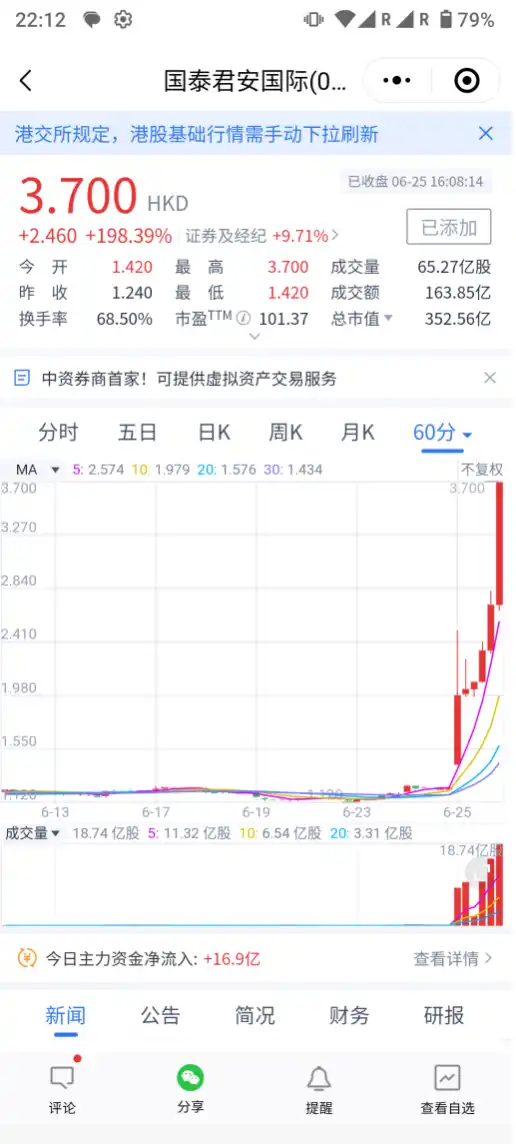
(Enhanced VA1 with a case of a Chinese-funded brokerage)
4. Deep Engagement in Stablecoin Licensing and Use Cases
With the gradual improvement of the global digital currency regulatory framework, the use cases of stablecoins are gradually penetrating into practical market scenarios. As an international financial center, Hong Kong passed a stablecoin ordinance in May, which was officially implemented in August, rapidly advancing the issuance of stablecoin-related licenses. This measure not only helps enhance market compliance but also brings more participants to the capital market, especially institutional investors. It is rumored that over 200 institutions have actively applied for a Hong Kong stablecoin license, but only a few will be approved in the first batch. Who will receive the license? Who will participate in the stablecoin licensing? They will be the focus of Hong Kong's capital market.
From a business perspective, stablecoins can be combined with traditional stock market asset pools to create new investment products. For example, based on the structure of Hong Kong stablecoins and RWA tokenized assets, compliant trading products can be developed to increase market liquidity and depth. Through the application of these stablecoins, the market can form a stable and efficient trading environment, thereby promoting the market-oriented development of R-share linkage.
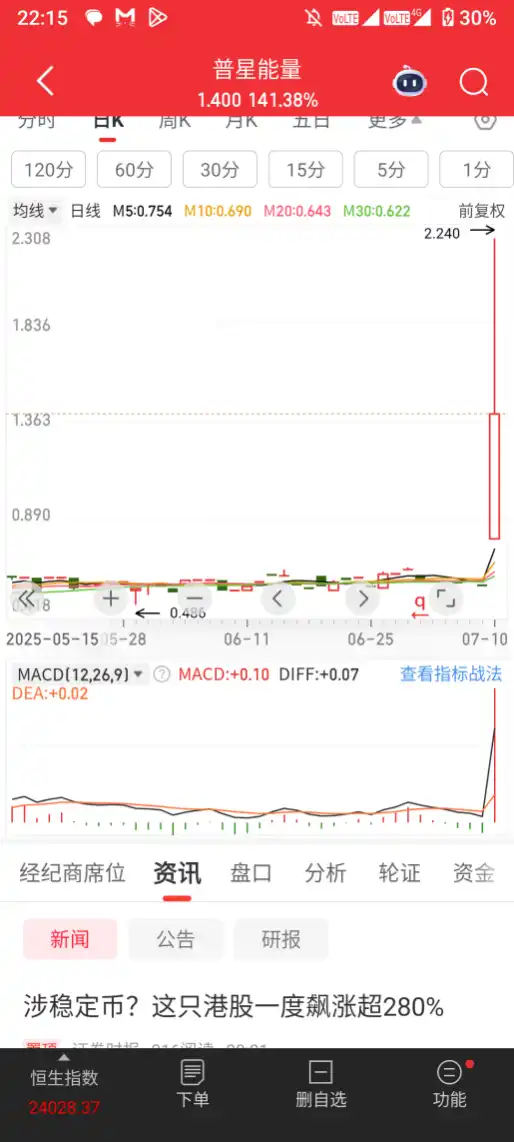
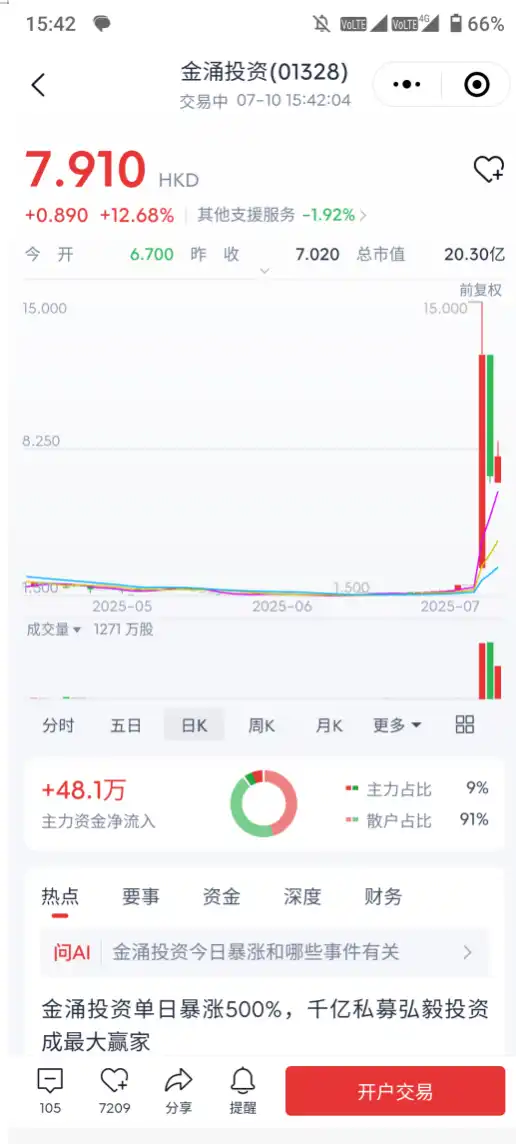
(Related to Stablecoin Concept Stocks)
5. M&A of New Energy, Gold, and Other Assets with RWA Rollout
In line with the current market trends, the merger and acquisition of traditional assets such as new energy and gold will become a significant trend in the capital market. By integrating these assets into the corporate asset pool of listed companies and managing them through RWA tokenization, the market can benefit from more investment opportunities and liquidity.
Specifically, listed companies can acquire new energy enterprises or gold mining companies, incorporate their assets and profits into the company's financial reports, and finance through the rolling issuance of RWA tokenization. This not only helps enhance the transparency of assets but also provides shareholders and investors with more investment opportunities, driving the market value of R-share-linked listed companies.
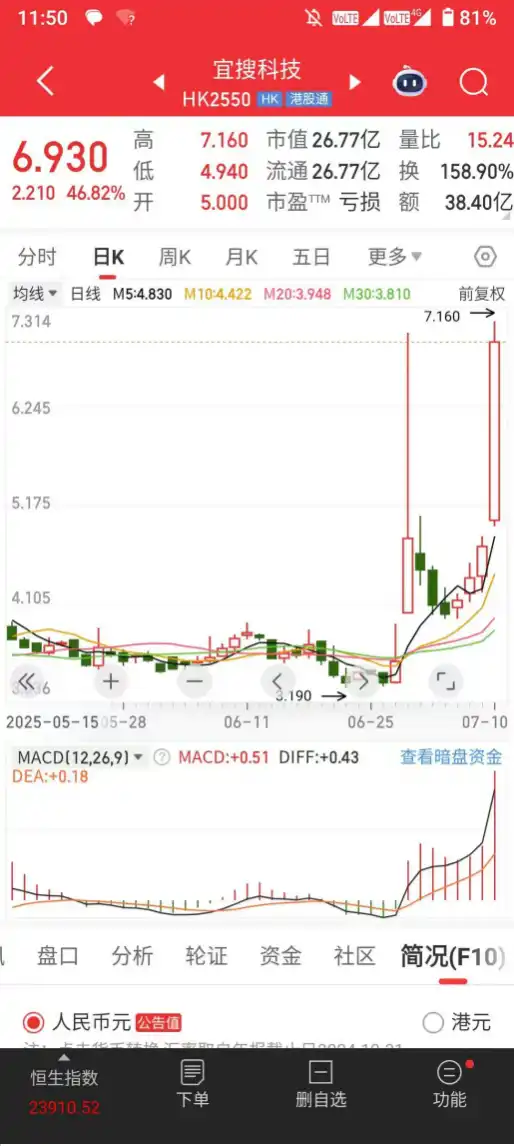
(Planned Asset Tokenization Issuance)
6. Development of Asset Management Platforms and Trading Platforms Based on Asset Issuance
With the continuous development of RWA tokenization and stablecoins, asset management platforms and trading platforms will become an indispensable part of the capital market. By establishing dedicated asset management platforms, investors can access more diversified investment channels through the trading of stablecoins and RWA tokenized assets. The compliance and transparency of these platforms will also be key drivers for market development.
As the rolling expansion of the RWA asset pool of listed companies, the RWA asset management platform and trading platform can enhance market liquidity, increase trading depth, and further promote the market growth and liquidity of R-shares through the issuance and management of stablecoins combined with the R-share linkage model.
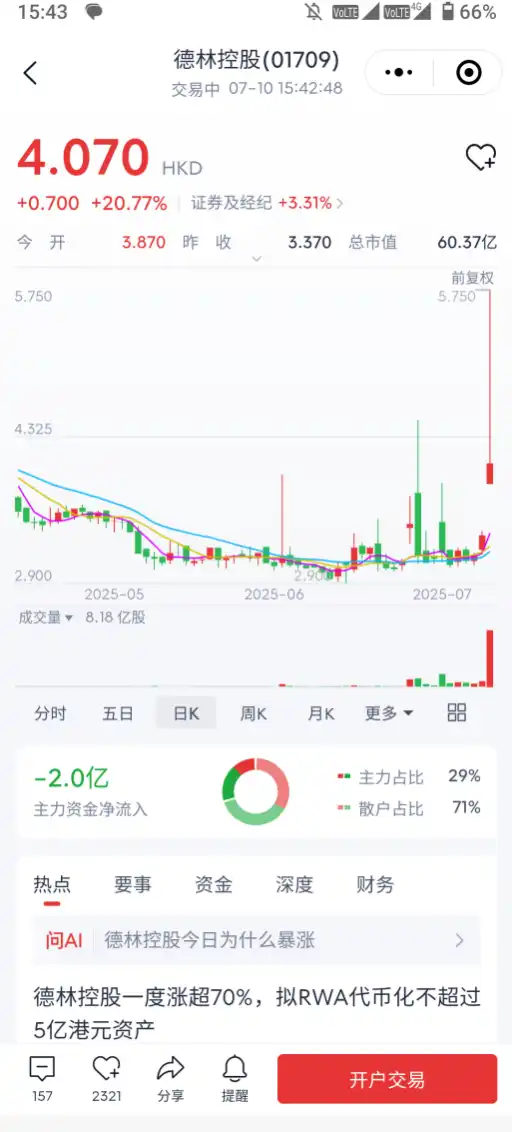
(In strategic cooperation with related RWA asset management platforms)
7. Strategic Cooperation with Chinese-funded Institutions in Hong Kong
In the Hong Kong market, Chinese-funded securities firms, central enterprises, and banks have always been important participants in the market. Through strategic cooperation with these institutions, it is possible to further promote the openness and liquidity enhancement of the R-share linkage market. The deep resources and investor network of Chinese-funded institutions in the Chinese market will bring more capital and liquidity support to the Hong Kong market.
Through cooperation with these Chinese-funded institutions, especially in the participation of market hotspots such as the tokenization of Hong Kong stocks for institutional clients, stablecoins, among others, more capital can be brought into the R-share linkage market. This will also provide investors with more asset allocation opportunities, further driving the development of the R-share linkage market.
III. Conclusion: From "Local Play" to "Global Expansion"
Inspired by the tokenization of US stocks, Hong Kong's R-share linkage has evolved from a local market attempt to a direction of global expansion. Behind all this is the strong driving force of stablecoins, RWA asset tokenization, and cross-border capital flows.
The core of R-share linkage lies in how to attract more capital and investors through innovative financial tools and structured RWA assets. By combining various market hotspots such as stablecoins, RWA tokenization, trading platforms, and the acquisition of new energy and gold assets, we can, within a regulatory compliant framework, bring more investment opportunities and higher liquidity to the Hong Kong capital market. This will further boost the popularity of the R-share linkage market and provide global investors with more asset allocation and investment choices.
By drawing lessons from the successful experience of US stock tokenization, Hong Kong can strengthen its financial infrastructure, promote the tokenization and globalization of Hong Kong stocks, with stablecoins undoubtedly becoming one of the most critical tools in this process. The future Hong Kong capital market will not only be Asia's digital financial hub but also a new market for global investors to access.
(All analyses in this article are for reference only and do not constitute any investment advice)
Huaxia Digital Capital is a digital investment banking institution focusing on the RWA (Real-World Asset Tokenization) track, committed to RWA track market research and education, issuance and investment incubation, RWA asset management platform, digital financial innovation, and other solutions, aiming to build a bridge between real-world assets and the value of the crypto world.
#ARAW Always RWA Always Win! By 2025, the RWA market will quickly find its place in the brutal growth, and Hong Kong Stock Real Controlling Persons interested in collaborating with top RWA resources and assets for R-Stock linkage can add WeChat YekaiMeta for private board battle rules.
This article is contributed content and does not represent the views of BlockBeats.
Welcome to join the official BlockBeats community:
Telegram Subscription Group: https://t.me/theblockbeats
Telegram Discussion Group: https://t.me/BlockBeats_App
Official Twitter Account: https://twitter.com/BlockBeatsAsia

 Related Articles