Puffverse's party game PuffGo ignites another GameFi craze, with its popularity skyrocketing and participation in the new season surging dramatically!
Is GameFi About to Rally Again?
After a prolonged period of dormancy, GameFi is once again drawing market attention in recent weeks, with an increasing number of TGE (Token Generation Events) featuring gaming projects. A notable highlight is the Web3 version of the legendary game "MapleStory," which saw its servers fully occupied on the day of its launch—arguably one of the most anticipated blockchain games to date. Additionally, Binance has listed several new gaming tokens, further energizing the GameFi sector. Examples include the native token, $GUN, for Gunzilla Games' tactical shooter game *Off the Grid*, and the Puffverse blockchain gaming platform featured on Binance Alpha.
On May 27, Binance Alpha introduced Puffverse (PFVS) with much fanfare, and trading commenced on the same day. Even before its official launch, Puffverse, featured as the inaugural project on Gate.io Launchpad, achieved a remarkable subscription total exceeding $650 million USDT, making it one of the most talked-about projects amidst the current GameFi resurgence.
Moreover, $PFVS was simultaneously listed across multiple exchanges—including Bybit, Gate.io, KuCoin, and MEXC—on May 27 at 12:00 PM UTC, marking the completion of its TGE. Post-launch, $PFVS reached an impressive 24-hour trading volume of over $50 million.
These signals seemingly point to a new cycle of sectoral rotation within GameFi. While it’s been more than a year since the last major wave, the "Play to Earn" narrative has never truly disappeared. With the integration of emerging technologies like AI and UGC (User-Generated Content) alongside traditional mobile game developers transitioning to Web3, GameFi is poised for a comeback with enhanced content and more flexible economic models.
Unlike previous iterations relying on lightweight, single mini-games, Puffverse positions itself as the "Web3 Disney Universe." It aims to build an ecosystem moat around its core offerings, including the flagship product PuffGo, the asset platform PuffTown, and user-generated content gameplay. So, why did Puffverse choose this timing for its TGE? And how do its product portfolio and technological roadmaps support the foundation for a sustainable GameFi ecosystem?
Puffverse: A Rising Star in the GameFi Core Circle
The core development team of Puffverse originates from the former Xiaomi Games division. Unlike traditional Web3 projects, which are often transformed from DeFi teams, Puffverse was established from the outset as a game development team with extensive industrial experience. Within the Xiaomi ecosystem, the team has worked on multiple mobile gaming products targeted at global markets, boasting solid expertise in user growth strategies, monetization model construction, and Unity engine development. Moreover, team members also have hands-on experience in operating DeFi projects, equipping them with practical insights into cross-industry integration.
This cross-disciplinary background gives Puffverse a distinct advantage in building the Web3 gaming ecosystem: it not only understands the high standards that Web2 gamers hold for gameplay, graphics, and overall experience but also has the expertise to design token incentive mechanisms that align with the behavioral logic on-chain. When it comes to product design, Puffverse strikes a balance between being "fun-to-play" and "play-to-earn," without sacrificing user experience in exchange for speculative traffic.
More importantly, Puffverse doesn’t just position itself at the right narrative window but also boasts a robust resource-backed moat. In 2024, Puffverse closed a $3 million strategic funding round led by blockchain gaming giant Animoca Brands, with Axie Infinity’s parent company, Sky Mavis, joining as a co-investor. Other participants include renowned industry names like Arcane Group, Spartan Group, HashKey Capital, Foresight Ventures, and Xu Family Office.
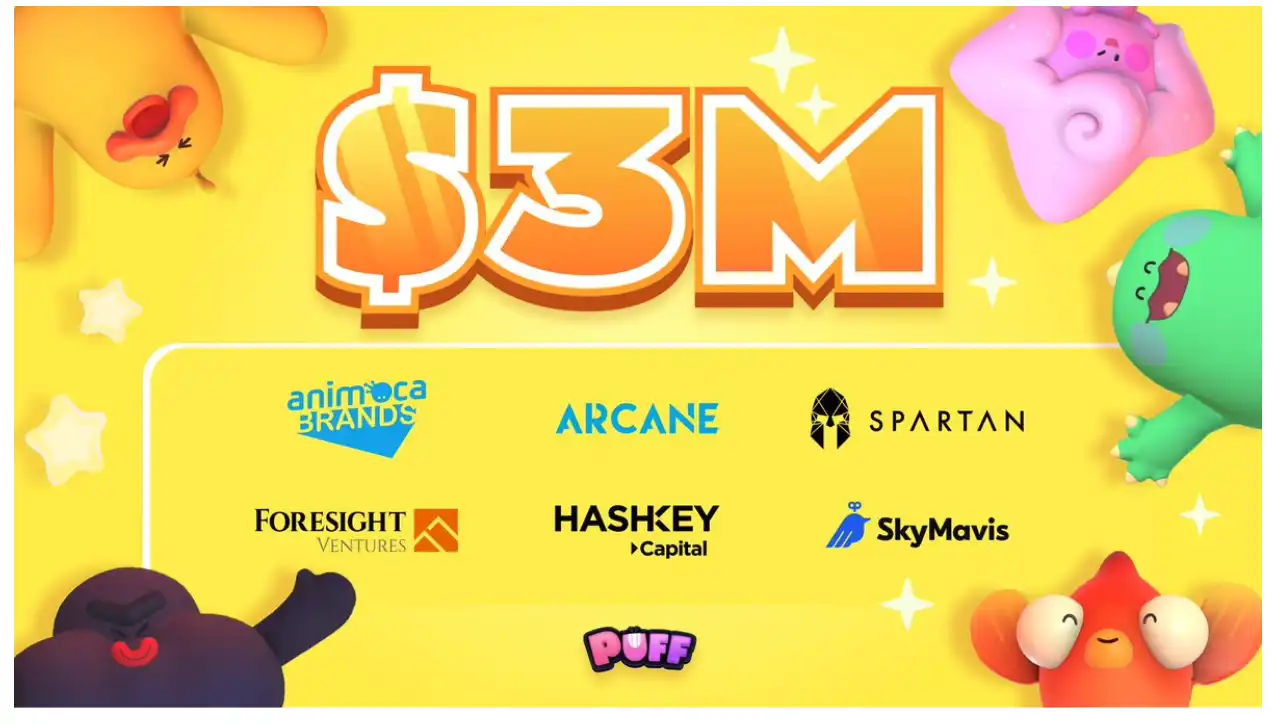
This funding round not only highlights recognition of the team’s capabilities but also reflects a significant bet on the project’s envisioned ecosystem. As a key collaborative project within the Ronin ecosystem, Puffverse has fully migrated to the Ronin Network, receiving extensive support from Sky Mavis in traffic, resources, and on-chain integration. With Ronin boasting the world’s most active gaming user base, Puffverse plans to launch its native token $PFVS and an exclusive NFT series on Ronin, further solidifying its platform position.
The involvement of Animoca Brands also carries substantial weight. As one of the core drivers in the Web3 gaming space, Animoca is not only an investor but also Puffverse’s market-making partner, providing support from its Mocaverse community resources. This means Puffverse will benefit from a natural gateway for traffic and ecosystem synergy, covering everything from marketing campaigns and airdrops to user acquisition and community penetration.
Under the multifaceted empowerment of the team, capital, and platform resources, Puffverse has positioned itself at the forefront of Web3 gaming narratives from the very beginning. This dual-driven combination of "Web2 product industrialization + Web3 ecosystem-building capability" may well be the key differentiator that sets it apart from other GameFi projects.
With such resource advantages, let’s take a closer look at the achievements Puffverse has delivered so far.
PuffGo as the Starting Point: Building the "Web3 Disney Universe"
As the foundational project of the Puffverse ecosystem, PuffGo serves as the starting point of the entire gaming universe and stands as its most representative product.
PuffGo is a multiplayer party game that combines casual competition with on-chain asset gameplay. It features a lighthearted style, fast-paced action, and its gameplay draws inspiration from Web2 blockbusters like Fall Guys and Brawl Stars. Simultaneously, it introduces an innovative "Skill to Earn" model within the Web3 narrative. The game includes multiple levels and modes, ranging from solo challenges and duo collaborations to multiplayer free-for-alls, allowing different players to choose from various match types based on their preferences and strategies. One of its key elements is the League season mechanism, which deeply integrates PuffGo with the Web3 economic system. Players can participate in League matches, compete, and earn token rewards, achieving a play-to-earn experience.
Beyond its diverse gameplay, another highlight of PuffGo is its built-in UGC (User Generated Content) editor: PuffGo Workshop. This is a fully open map creation platform that allows players to design and publish their own game levels. Within this system, creators can not only craft unique maps but also share them with the community for challenges and engagement. This fosters interaction, competition, and strategy among players, further enhancing the game's playability and social stickiness.
As product versions evolve, PuffGo is also gradually introducing more creation tools that integrate with AIGC (AI-Generated Content). In the future, users will be able to quickly generate game content using natural language or simple commands, thereby lowering the threshold for creation and motivating more creators to contribute to the game’s ecosystem development.
In terms of distribution strategy, PuffGo has not limited itself to the Web3 market but instead adopts a dual-track approach. On the one hand, it targets on-chain users by building a complete NFT gear system and token reward mechanism. On the other hand, it retains traditional monetization models and game entry points for Web2 users, supporting direct downloads, in-app purchases, and familiar commercialization paths. By blending Web2 and Web3 strategies, PuffGo has successfully filled a gap in the blockchain gaming space for mobile "Party Games" while laying the foundation to attract and retain a larger mainstream gaming audience for Puffverse.
PuffGo is a "party game that lets you earn money," but its true significance goes far beyond just the word "earn." It is the starting point for Puffverse to bridge on-chain and off-chain users, building a creative gaming ecosystem, and more importantly, it represents the first step toward mainstream adoption for this "Web3 Disney Universe."
All of this is grounded in the grander ecosystem design and narrative framework of Puffverse.
As a "multi-platform interactive magical world," Puffverse is leveraging Web3 as its technological backbone, Web2's refined content, and the future potential of AIGC, aiming to reshape the mobile gaming landscape. The entire universe operates on the high-performance Ronin blockchain, ensuring sufficient security and scalability for the gaming ecosystem. Within Puffverse, users own tradeable and cross-scenario reusable NFT character assets. These characters not only have unique skills, attributes, and traits but also lead distinct "lives" as they interact within different mini-games and content experiences.
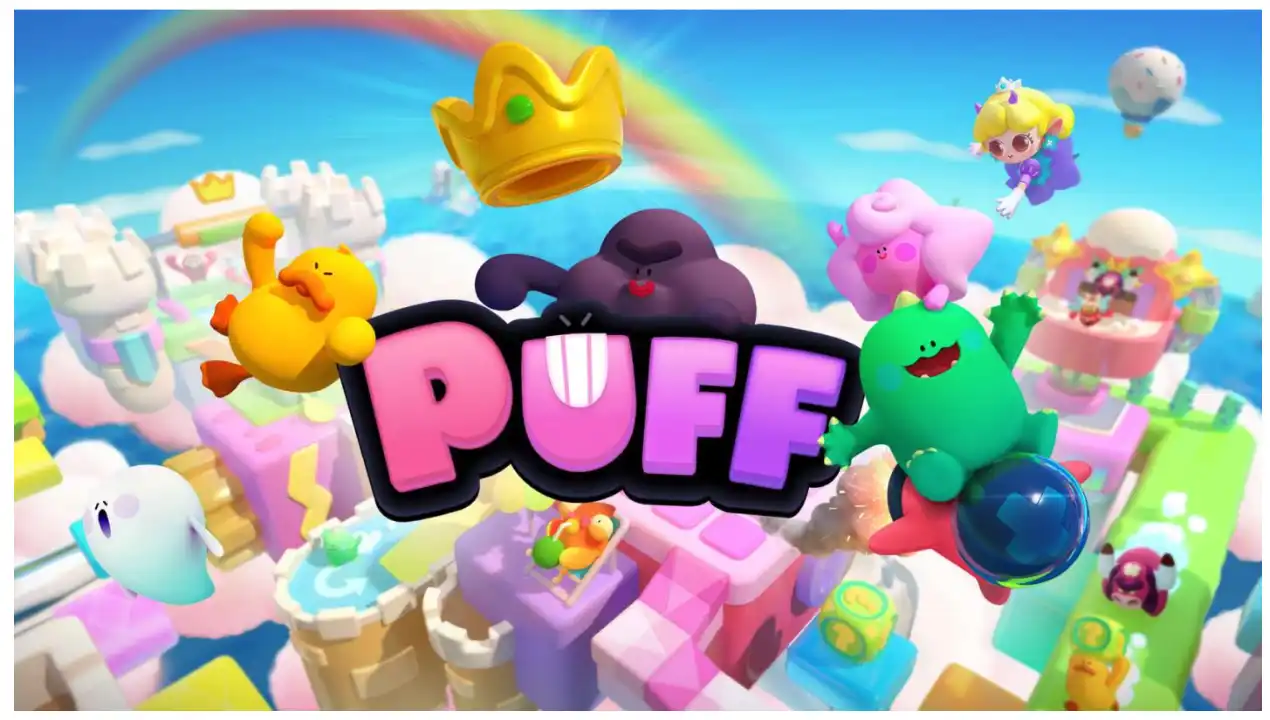
In the officially crafted lore, this magical land was once at peace as monsters coexisted in harmony. However, with the disappearance of the Demon King and the invasion of evil forces, the kingdom fell into chaos. A small dinosaur named Patty escapes with the princess, carrying pieces of a shattered magical crown. Together, they embark on a journey to find the fragments and rebuild the kingdom. This lighthearted and imaginative story provides a unified visual system and character logic for the entire ecosystem, laying the foundation for the future "metaverse-driven IP" development.
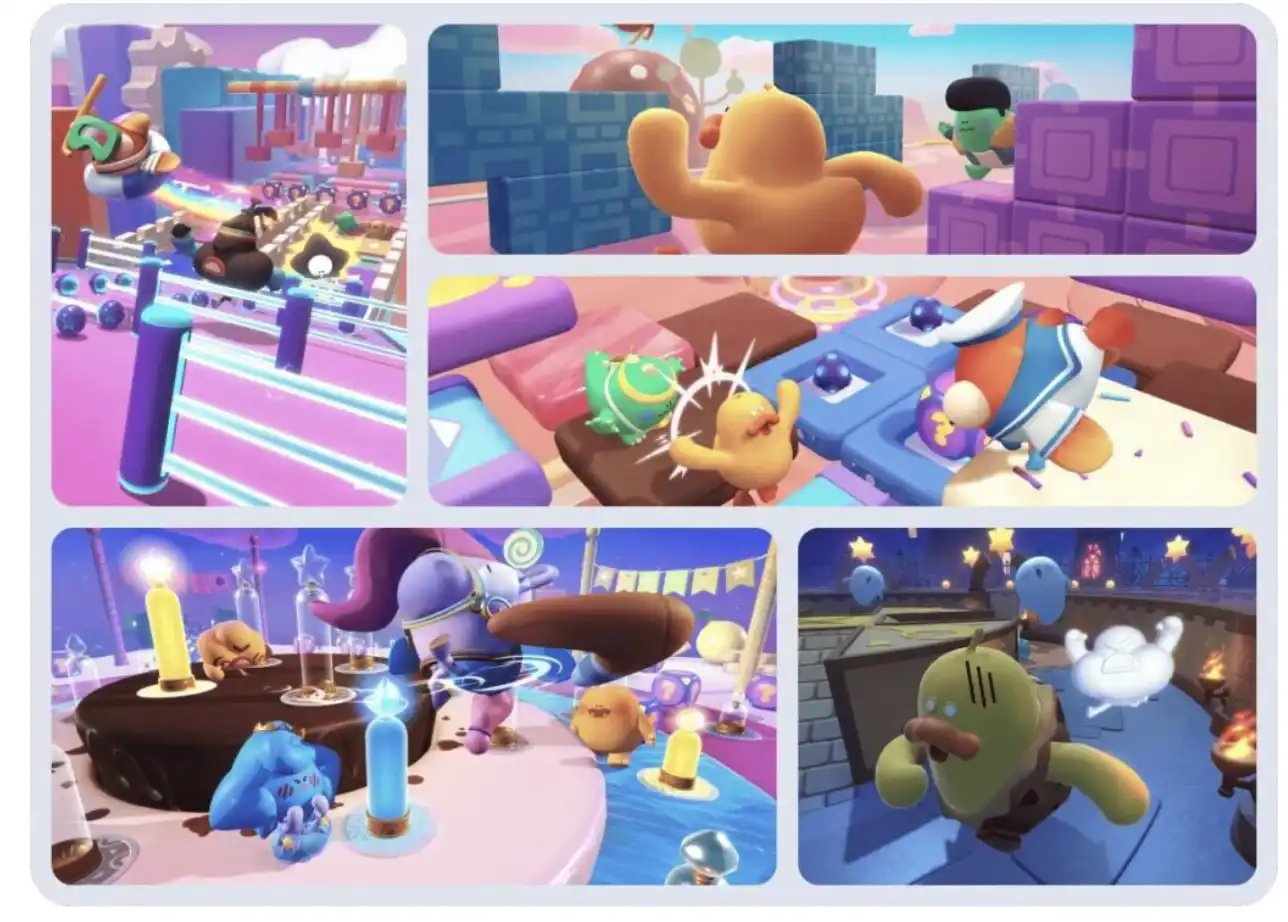
Puffverse is not just one single product; it is a continuously expanding universe of diverse content. In addition to PuffGo, Puffverse includes other products rolling out, such as the idle-income game PuffSim and the asset and data management platform PuffTown.
PuffGo Ignites a New GameFi Frenzy, Post-TGE Seasonal Participation Hits Record Highs!
As the flagship product of Puffverse, PuffGo naturally takes center stage after the TGE.
In late May, Puffverse launched a new official game season for PuffGo alongside its TGE. Prior to this, multiple preseasons had already been hosted for PuffGo. With its lightweight Skill-to-Earn gameplay and the strong momentum provided by the TGE, the launch of the official season immediately broke participation records on the platform. It showcased robust market appeal, with participation reaching unprecedented levels.
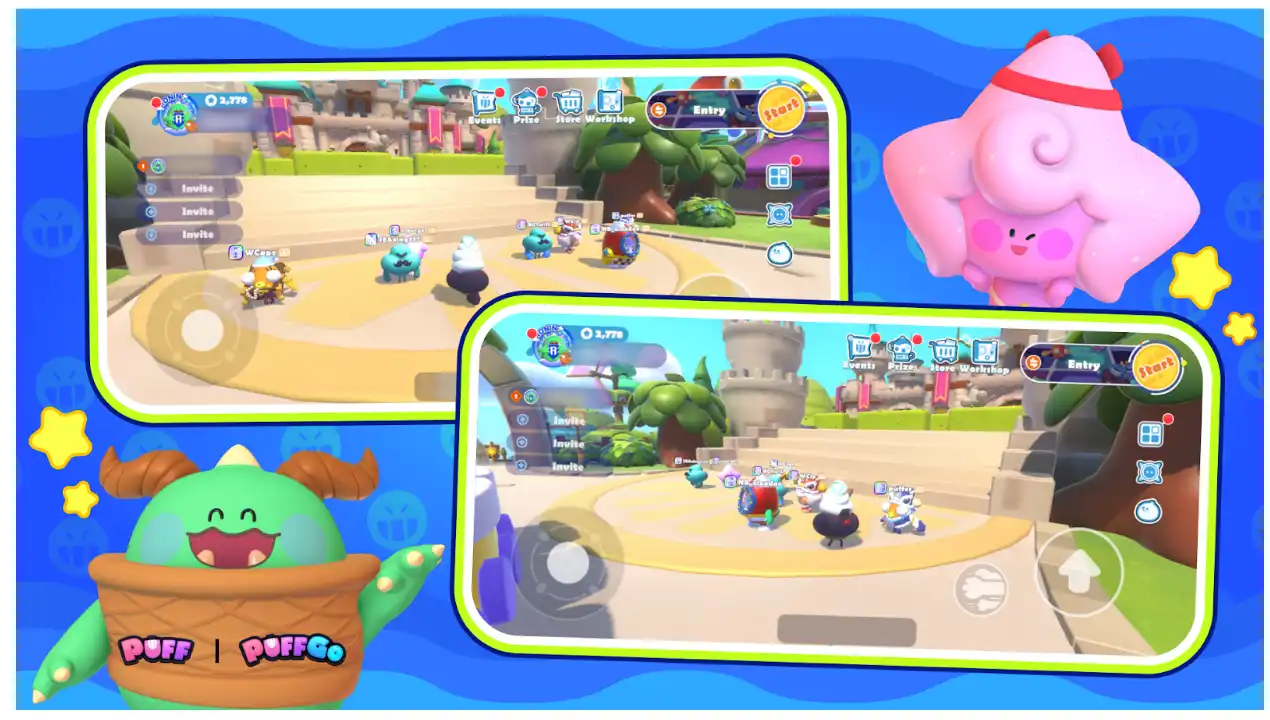
After the official TGE of $PFVS, PuffGo quickly became one of the most popular blockchain games, thanks to its competitive party game + social interaction + high-reward model. The intense and thrilling real-time gameplay, diverse social interactions, and generous reward mechanisms have attracted a large number of players and streamers. It has also sparked a significant wave in the realm of Web3 game streaming.
PuffGo adopts a Skill-to-Earn model where players' ranks and standings directly determine their rewards for the season. Whether it's the precision of individual gameplay or the coordination of team tactics, everything is reflected clearly on the season leaderboard. The high-level competitive matches have continuously driven PuffGo’s popularity across various streaming platforms.
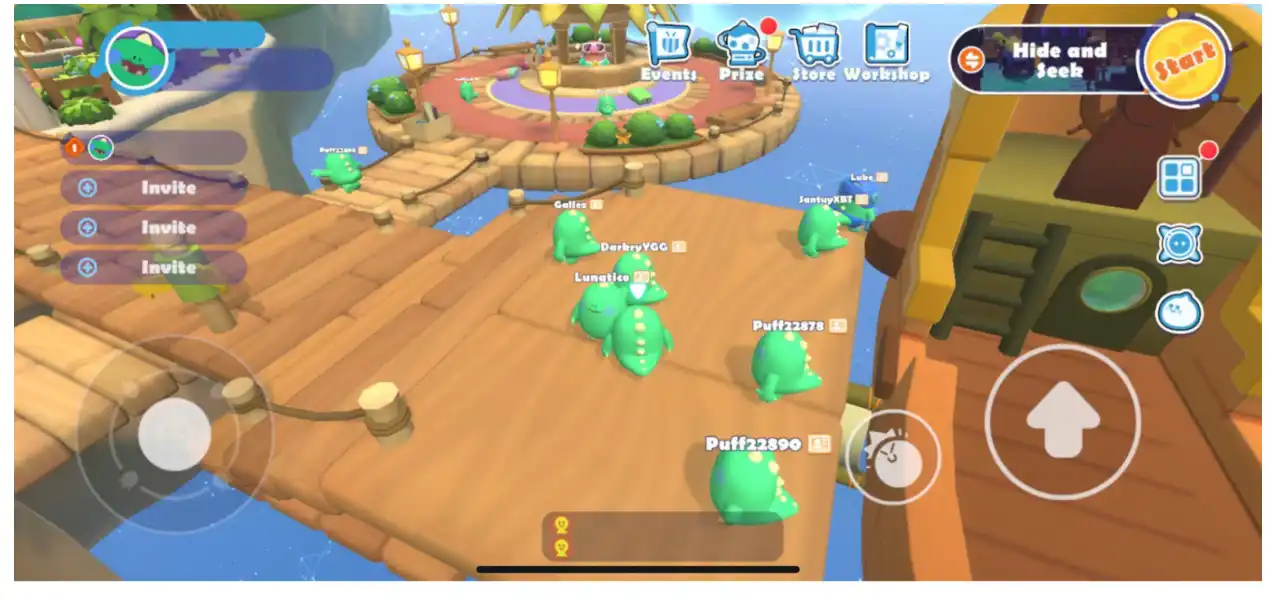
Apart from individual competition, PuffGo also supports a team system. Players can create their own teams in PuffTown and compete for higher positions in the season rankings. The in-game large-scale interaction-based social system ensures seamless social engagement among users. Many players have even formed long-term gaming partnerships through PuffGo, creating stable gaming social circles.
The Core Gameplay of PuffGo Seasons: Lock Puff NFTs to Climb Ranks and Share a Generous vePUFF Prize Pool!
PuffGo has continued to attract streamers and new users not only because its season rules are easy to grasp but also due to its relatively low participation threshold compared to other blockchain games.
Players only need to own one Puff NFT from the collections Puff Genesis, Puff Limited-Edition (Puff Football, Puff New Year, Puff Astronaut), Puff Classic, or Puff General, and lock it into the PuffGo game to join the seasonal challenges. By consuming the free chances that come with the Puff NFTs or using $PFVS to purchase a Pass, players can compete in and win League-level matches to advance their rankings.
As long as the rank reaches Gold or above, players can share a reward of 1,000 vePUFF from the Basic Pool. If their rank reaches Amber and they are among the top 100 players in the season rankings, they can share an additional 9,000 vePUFF reward.
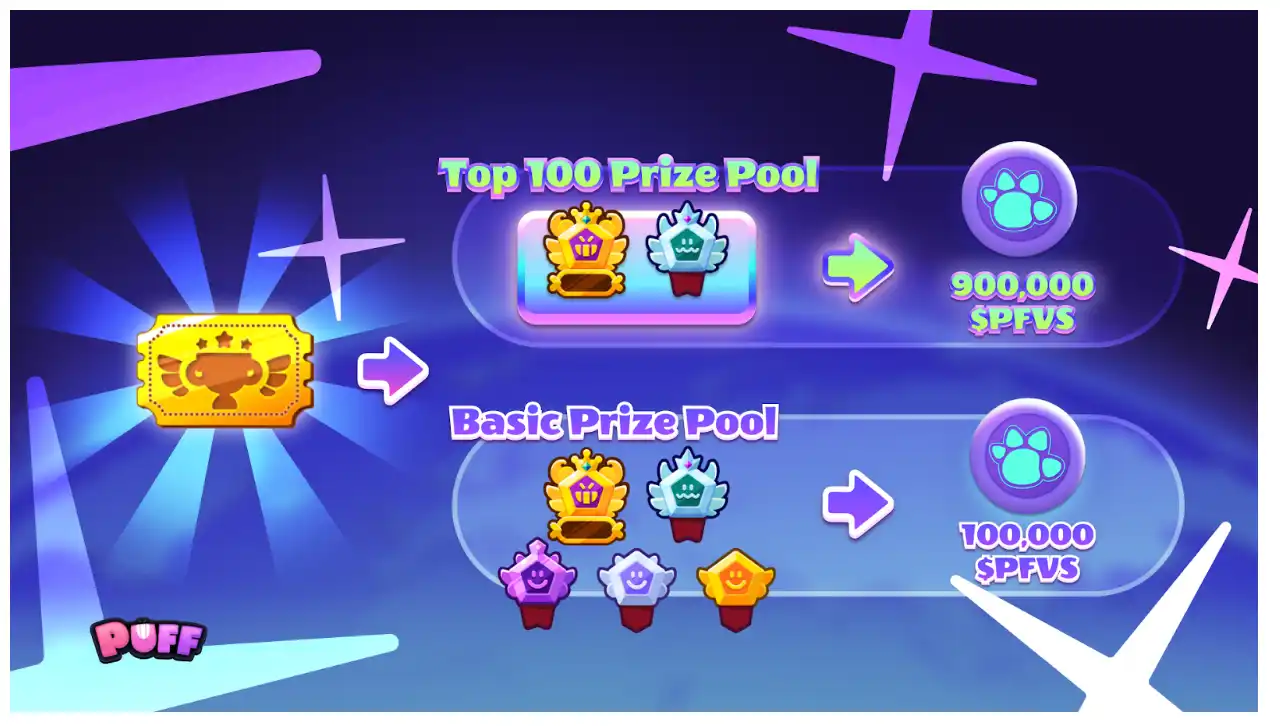
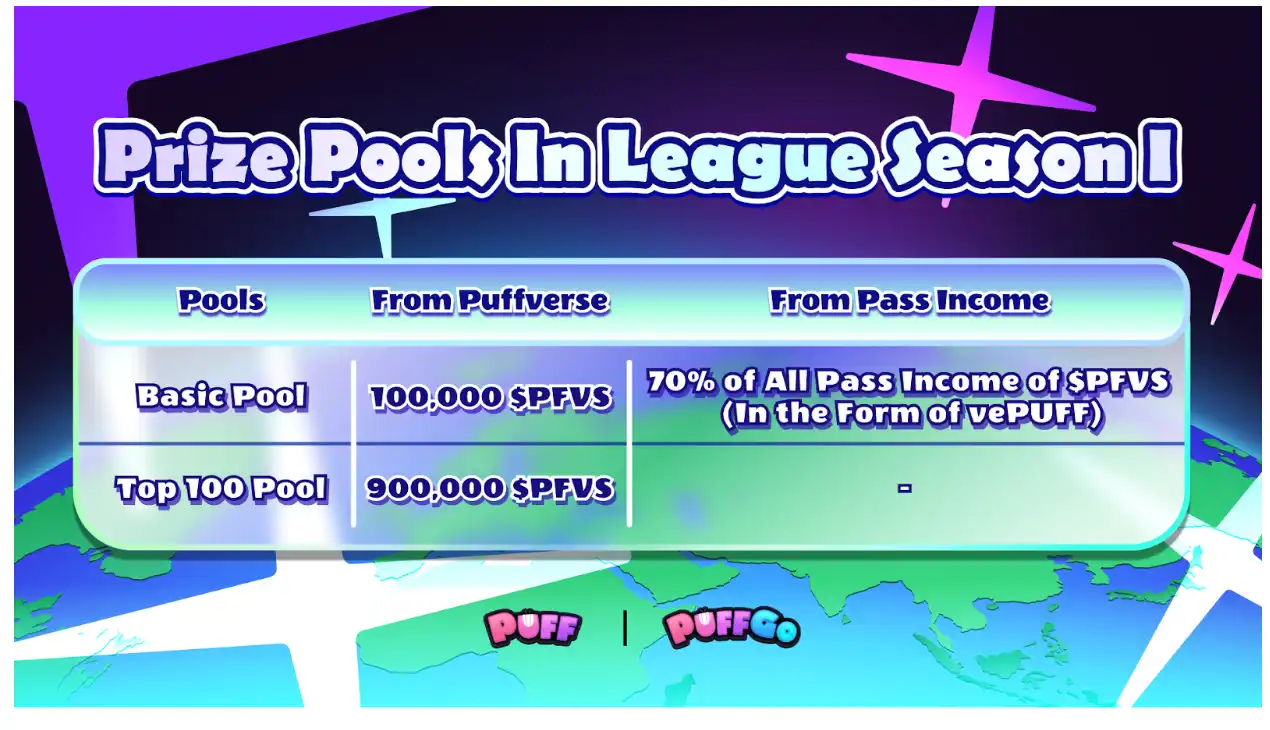
Meanwhile, 70% of the revenue from users purchasing Pass with $PFVS will be allocated to the Basic Pool reward pool. The more users participate and the higher the amount spent on Pass purchases, the larger the pool of rewards that leaderboard users can split.
Advanced Earnings — Stake Seasonal vePUFF Rewards to Earn Abundant $PFVS Rewards!
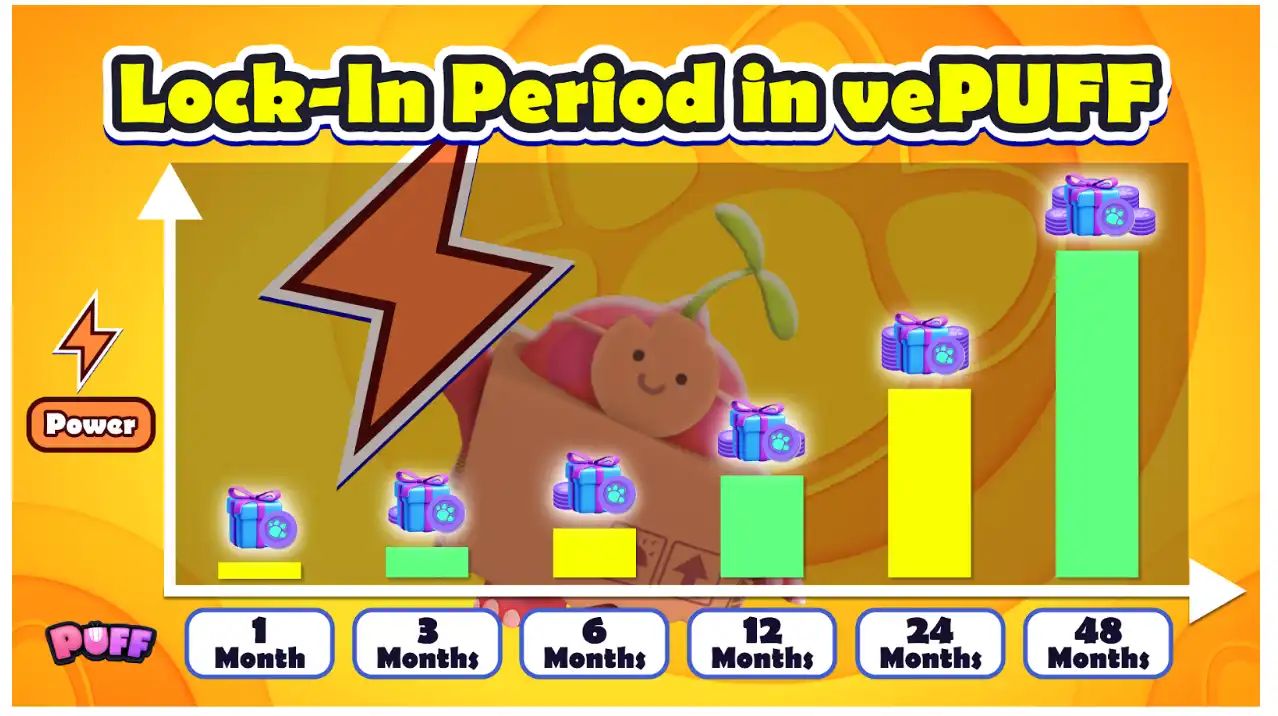
At the end of the PuffGo season, all eligible players can claim their vePUFF rewards in PuffTown and stake them with one click. While staking vePUFF, different staking durations can be selected. Under the same staking amount, the longer the staking duration, the more $PFVS rewards can be earned.
Puff Genesis and Membership Certificate can further apply a 130% and 110% Boost Up effect on vePUFF staking orders, generating even more $PFVS rewards.
vePUFF orders settle every Thursday at 12 AM UTC, at which time users can claim their $PFVS rewards. The $PFVS rewards claimed weekly can be used to purchase Passes for the current or subsequent seasons. Alternatively, these rewards can be used to create new vePUFF staking orders to earn even greater $PFVS rewards. Additionally, 20% of the Pass revenue during the season will also be added to the weekly reward settlement pool.
The Dual Strategy of PuffGo Gameplay and Staking
The staking of vePUFF complements the PuffGo season, allowing users to easily participate in low-barrier gameplay while enjoying the fun of the game. At the same time, they can earn more substantial rewards through both gameplay and staking. This dual incentive model is one of the main reasons behind the increasing popularity of the PuffGo season and the $PFVS staking feature in the Puffverse.
Since the launch of Puffverse, its popularity has remained high over the three years following the TGE, including the 5 Preseasons and the current League Season I. This success can be credited to Puffverse's efficient economic cycle strategies and its well-designed game products.
In the vast landscape of GameFi, the PuffGo game product stands out among the rest. Even the best economic loops require robust game products to back them up. Apart from the League mode for season challenges, PuffGo offers UGC (User-Generated Content), the PuffWorld 3D metaverse social platform, and zero-barrier Web2 gaming and entertainment modes. These diverse gaming modes allow users to purely enjoy the fun of gaming even between seasons.
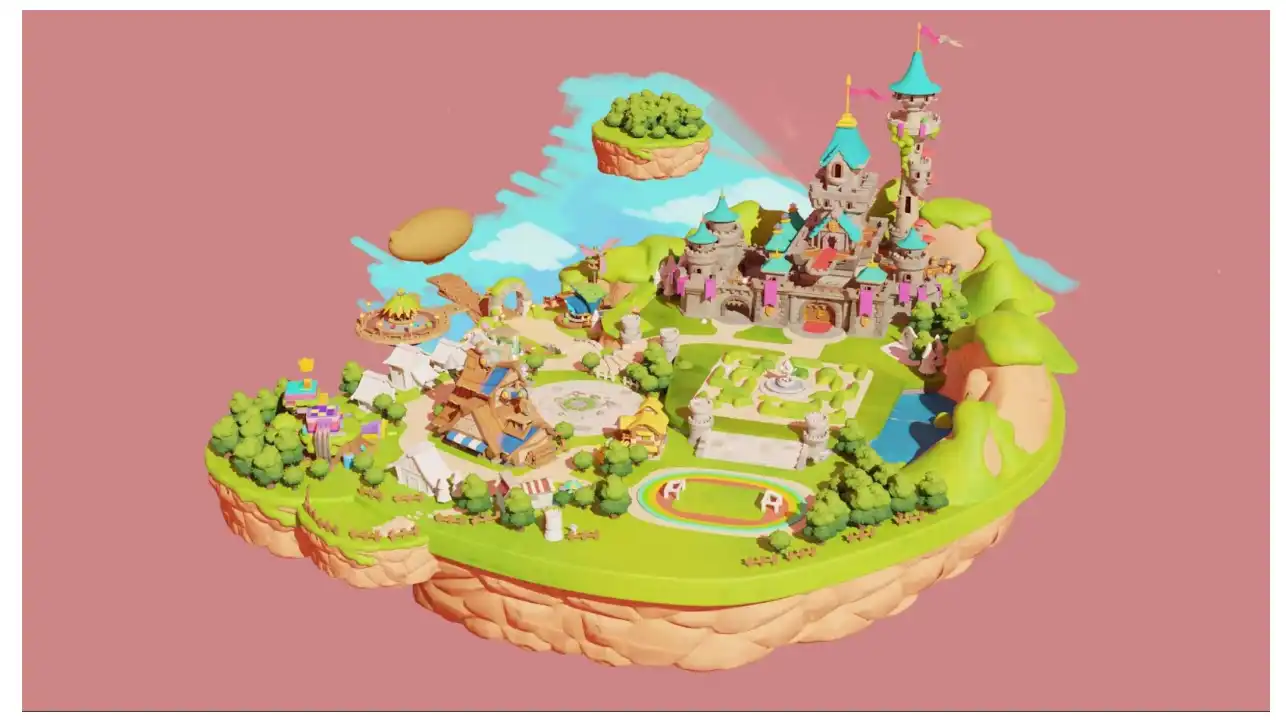
At the same time, the zero-barrier gaming and entertainment modes have the potential to attract more Web2 users into the world of Web3. Puffverse has always been committed to being a bridge between Web2 and Web3. Web2 gaming users represent a massive audience, and while Puffverse continues developing new seasonal gameplay and maintaining its existing Web3 users, it's constantly creating additional gaming modes to bring more Web2 users onboard.
This dual-engine model of "seasonal gaming + staking" forms the unique value loop of Puffverse. With the former Xiaomi team putting their heart into building a Web2-grade gaming experience combined with a meticulously designed Web3 economic model, PuffGo has emerged as a phenomenal product in the GameFi sector.
Moving forward, Puffverse will continue leveraging the combination of PuffGo gaming and staking. Additionally, the highly anticipated PuffSim, which gained significant attention even before TGE, has raised expectations even further. After TGE, PuffSim will be upgraded while maintaining its core gameplay, delivering users an enhanced experience and higher rewards. Let us look forward to Puffverse's outstanding performance in the future.
Beyond Gaming: Puffverse's Next Stop is the AI Universe
The player reward mechanism was once the biggest selling point for GameFi in attracting new users. However, in hindsight, most Web3 games have failed to escape the pitfalls of short lifecycles, shallow gameplay, and poor user retention. A lack of sustained incentives and weak product offerings have become the two major hurdles for blockchain games to overcome.
By 2025, if we aim to build a truly sustainable GameFi ecosystem, relying solely on token issuance to attract users will no longer suffice. Puffverse has chosen a deeper path—not just as a gaming company but as a technology platform. It incorporates generative AI, AI Agents, cloud rendering, and hardware integration into game design, crafting a future narrative centered on "virtual personalities + real connections."
Specifically, Puffverse is developing an AI Agent system that integrates AIGC with IP avatars. Users will not only control characters to complete challenges and defeat enemies but also interact with these characters and grow alongside them. Each character will become a unique AI digital entity, capable of learning continuously through players' in-game actions, custom inputs, and conversational data, gradually evolving their unique language style, behavioral preferences, and even social personality.
Characters are no longer mere tools within the game but are digital extensions of the players themselves. As interaction data accumulates, AI characters can gradually change their outfit styles, idle animations, speaking mannerisms, and more, enabling human-like evolution. And all of this doesn't just happen in the virtual world.
Puffverse also plans to bridge the virtual and physical worlds through wearable devices (such as smartwatches and fitness bands). Players' real-life activity data, heart rate fluctuations, and habitual patterns will feed back into the growth of their characters, creating personalized AI personas. This tightly integrated loop, merging SportFi, GameFi, SocialFi, and AI, not only extends the lifecycle of the gaming product but also transforms users' "fragmented time" into a companion-driven immersive experience.
GameFi isn't about a passing trend but has reached the stage where "content creation" truly begins. Puffverse's emergence at this critical juncture is not coincidental—it marks the deliberate opening of a brand-new path. From industrial capabilities in Web2, to the economic model design of Web3, and the fusion of AI and hardware into virtual life systems, it offers a narrative depth and technological imagination far beyond traditional "blockchain games."
While most GameFi projects are still searching for gameplay breakthroughs and narrative pathways, Puffverse is already building its own worldview and order.
The story of Puffverse's magical world has only just begun.
Welcome to join the official BlockBeats community:
Telegram Subscription Group: https://t.me/theblockbeats
Telegram Discussion Group: https://t.me/BlockBeats_App
Official Twitter Account: https://twitter.com/BlockBeatsAsia

 Related Articles