God V: have all the 16 blockchain challenges of five years ago been solved?

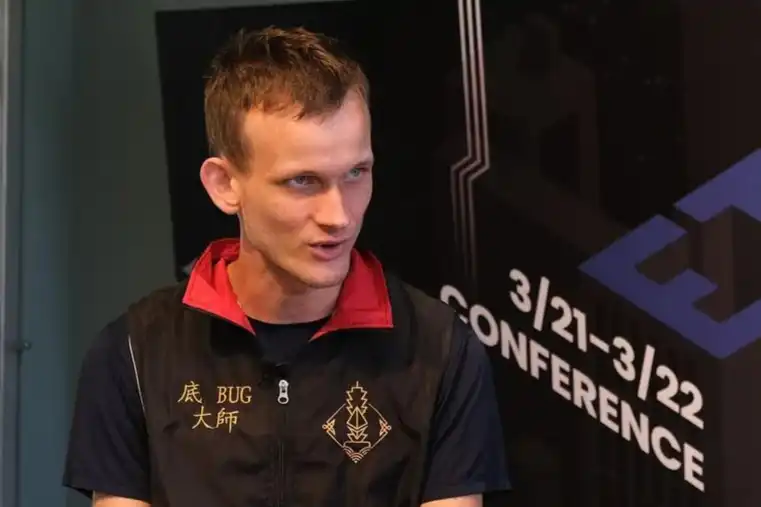
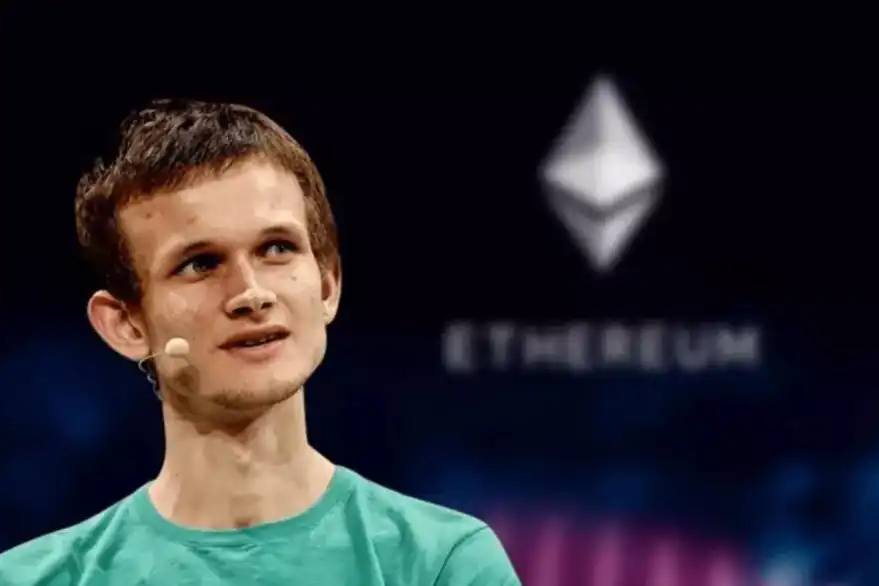
Vitalik Buterin, founder of ethereum
Block beat BlockBeats-HQ
Block rhythm BlockBeats, founder of the paper is the etheric fang Vitalik Buterin back five years ago, published discussing encryption currency ecological, 16 questions mentioned in the original, including scalability, time stamps, example code certificate, confusion, mining machine, PoS, Proof of Storage, stable assets, the rest of the system, the witch attack resistance, decentralized success, etc. Now, five years later, have all the 16 questions that were once critical to the cryptocurrency ecosystem been solved? Are there any new problems?
Read the full text below:
Special thanks to Justin Drake and Jinglan Wang for their feedback
In 2014, I (original author Vitalik Buterin) published an article and introduction on a series of hard core issues in mathematics, computer science and economics that I think are important to the cryptocurrency world (as I later called it). A lot has changed in the past five years. But how much progress has been made on things that we thought were important at the time? Where have we succeeded, where have we failed, where have we changed our thinking, and what is important? In this article, I'll take a fresh look at the 16 questions I asked in 2014 to see where they are now. Finally, this article will address new forms of the tough issues that will face us in 2019.
These problems fall into three categories :(1) cryptography, if it is desired to be completely solved, may be solved by purely mathematical means; (2) consensus theory, workload proof and equity proof have been improved to a great extent; And (3) economic issues, so structures must be created that contain incentives for different actors, often involving the application layer rather than the protocol layer. We have seen significant progress on all issues, although the degree of progress varies from issue to issue.
cryptography
1, block chain Scalability (Blockchain Scalability)
One of the biggest issues facing cryptocurrencies today is scalability. ] [large block chain network is the main focus, trust: if there are only a few entities can run full node, then these entities can be conspired to agree to give yourself a lot of extra COINS, if not the whole blocks, other users will not be able to see this block is invalid.
Problem: creating a secure blockchain network design similar to bitcoin, but requiring the maximum number of the most powerful nodes to maintain network functionality, is essentially sublinear in the number of transactions.
Status:There has been a lot of progress in theory, but more practical assessments are needed.
Scalability is a technical issue, and we've made a lot of progress in theory. Five years ago, almost no one thought about technology; Sharding technology is now commonplace in design. In addition to ethereum 2.0, we have OmniLedger, LazyLedger, Zilliqa, and other research papers that publish new developments almost every month. I personally believe that progress on this point has been gradual. Basically, we already have many of the techniques that allow the validator node group in the node can process data much more than individual validator, safely reach a consensus, and these technologies allow the client to complete validity and usability of indirect verification module, even 51% cases exist.
Note: OmniLedger is a sharp-based blockchain designed to balance the impossible triangle of blockchain design, providing secure, decentralized horizontal scaling up to a visa-level throughput of 1800 verifiers, 6000 transactions per second, and a peak of 50000.
(note: the team of Zilliqa(ZIL) is mainly from Singapore, and plans to solve the expansion problem of block chain with Sharding technology. In December 2017, Zilliqa received a VC investment of us $20 million. On January 31, 2019, Zilliqa main network will be launched.)
These are probably the most important techniques:
Random sampling, allowing a randomly formed small committee to represent the complete validator node set in a statistical sense:https://github.com/ethereum/wiki/wiki/Sharding-FAQ#how-can-we-solve-the-single-shard-takeover-attack-in-an-uncoordinated-majority-model
Fraud to prove, allowing the wrong node to broadcast the existence of the error to all other nodes:https://bitcoin.stackexchange.com/questions/49647/what-is-a-fraud-proof
Managed to prove, allowing validator nodes to prove that they can download and verify some data independently with a certain probability:https://ethresear.ch/t/1-bit-aggregation-friendly-custody-bonds/2236
Proof of data availability, allowing the client to detect when the block body with the title is not available:https://arxiv.org/abs/1809.09044See also updated version of the programmed Merkle tree proposal
There are other smaller developments, such as cross-shard communication through reception, and "constant-factor" enhancements, such as BLS signature aggregation.
Note: BLS signature algorithm is an algorithm that can realize signature aggregation and key aggregation, that is, multiple keys can be aggregated into a single key and multiple signatures into a single signature. Algorithms for such signature aggregation will be implemented in ethereum's future Casper.
In other words, a fully sharded blockchain network is not yet available in practice (Zilliqa, which implements partial sharding, recently started running). On the theoretical side, the main details of the dispute, and related to the stability of the sharded network, the developer's experience, and the challenges of reducing the risk of centralization; The possibility of implementing the underlying technology no longer seems in doubt. But the challenges that remain are problems that cannot be solved by thinking; This can only be overcome by developing the system and implementing ethereum 2.0 or other similar corporate chain operations.
2. Timestamping
Problem: create a distributed excitation compatible system that maintains the current time at a high precision, whether based on other blockchains or its own. The clocks of all legitimate users are normally distributed, about 20 second standard deviations of "real" time, and no two nodes are more than 20 seconds apart. This will be done in practice with reference to proof of interest, or non-sybl tokens (see #9). The system shall continuously provide a time of 120 seconds (or as little time as possible) within the internal time of the more than 99% honest participating node. External systems will ultimately depend on this system; Therefore, whatever the motivation, it should remain secure in case an attacker takes control. 25% of the nodes.
Status:Make some progress.
Ethereum actually survived pretty well, with a 13-second block time and no particularly advanced timestamp technology; It USES a simple technique that the client will not accept a block whose timestamp it claims is earlier than the client's local time. That is, this is not tested in the case of a severe attack. The latest network-adjusted timestamp proposal attempts to improve the status quo by allowing clients to agree on the time without knowing exactly what time it is locally. This has not been tested. But overall, timestamps are not yet planned for future research challenges; Perhaps this will again change the proof of entitlement chain (including ethereum 2.0 and others) coming online as a real real-time system, which is where we see the problem.
3. Arbitrary Proof of Computation
Problem: create program code POC_PROVE(P,I) -> (O, Q) and POC_VERIFY (P, O, Q) - & gt; {0, 1} so that POC_PROVE runs program P after input I and returns program output O, force proof Q and POC_VERIFY accept P, O and Q and output values, whether Q and O are legally generated by the POC_PROVE algorithm using P.
Status:Great progress has been made in both theory and practice.
This basically means developing a SNARK (or STARK, or SHARK, or...) And we did it! SNARKs are now known to more and more people and are even used in multiple blockchain networks (including tornado. Cash on ethereum). SNARKs are useful both as a privacy technology (see Zcash and twist.cash) and as an extensibility technology (see ZK Rollup, STARKDEX, and STARKing eliminate encoded data roots).
(note to BlockBeats: SNARK is the abbreviation of "succsuccincy-based non-interactive ARgument of Knowledge", which is usually combined with zero-knowledge proof. It is the underlying and basic technology of privacy transaction. The most famous practical application project of zk-snark is ZCash)
But efficiency challenges remain; Algorithmically friendly hash functions (see here and here for bonuses for breaking the proposed candidate functions) are one big challenge, while effectively proving random memory access is another. In addition, there is an unsolved problem, namely the validation time of O (n * log (n)), is a basic restrictions, or whether there is some kind of method can be like a bulletproof (bulletproofs) using only linear cost for proofs (unfortunately, this need to verify the linear time). There are risks in existing plans, too. In general, they are details, not fundamentals.
4. Code Obfuscation
The holy grail of technology is to create a obfuscator O, so that given any program P, the obfuscator can produce a second program O (P) =Q, so that if P and Q have the same input, then P and Q can return the same output, and, importantly, Q will not show any information about what's inside P. You can hide a password in Q, a secret encryption key, or you can simply use Q to hide the specific work of the algorithm itself.
Status:Progress has been slow.
The problem, in plain English, is that we want to come up with a way to "encrypt" a program so that it can still produce the same output after the same input, but the "insides" of the program will be hidden. An example use case for obfuscation is a program that contains a private key that allows only certain messages to be signed by the private key.
The solution to code obfuscation is very useful for the block chain protocol. These use cases are subtle because you have to deal with the possibility that programs that are confused on the chain will be copied and run in a different environment than the chain itself, but there are many possibilities. One of my personal interests is that by replacing the operator with a obfuscating program that contains some proof of effort, the centralized operator is removed from the collusion prevention tool, which makes it very expensive to run multiple times with different inputs while trying to determine the behavior of a single actor.
Unfortunately, this remains a thorny issue. There is an ongoing attack on this problem, both by constructing (for example, this) an attempt to reduce the number of assumptions about mathematical objects we do not know (for example, generic cryptographic multi-linear mapping) and by trying to implement the actual implementation of the required mathematical objects. Yet all of these approaches have yet to create anything that is feasible, known, or safe. Please refer to the https://eprint.iacr.org/2019/463.pdf, know about general overview of the problem.
5. Hash-based Cryptography
Problem: create a signature algorithm that does not rely on security assumptions, but maintains only 160 bits of security for the random predictor property of hash values compared to a classical computer with optimal size and other properties (i.e., 80 pairs of quanta based on the Grover algorithm).
Status:There is some progress.
Since 2014, there has been progress on two fronts. SPHINCS, a "stateless" signature scheme (meaning that you don't need to remember information like nonce when you use it multiple times), was released shortly after the list of "hard core issues" was made public, offering a pure hash signature scheme with a size of about 41kB. In addition, STARKs have been developed so that people can create signatures of similar size from them. In fact, it's not just signatures, it's generic zero-knowledge proofs, you just need a hash value to do that, which is definitely something I didn't expect five years ago; I'm glad this has happened. That said, size is still an issue, and ongoing progress (e.g., the recent DEEP FRI) is continuing to reduce the size of the proof, although further progress appears to be gradual.
As for hashing based cryptography, the main unsolved problem is the aggregation signature, which is similar to what can be achieved by BLS aggregation. It is well known that we can create a STARK with many Lamport signatures, but this is inefficient; A more efficient solution would be much more popular (if you want to know if hashing based public key encryption is feasible, the answer is, no, you can only use secondary attack costs
Problem of consensus theory
6. Asic-resistant Proof of Work
One way to solve this problem is to create a proof of work algorithm based on a type of computation that is difficult to specialize. For an in-depth discussion of more ASIC resistant hardware, see & NBSP;https://blog.ethereum.org/2014/06/19/mining/
Status:As far as possible.
Six months after the release of the "hard core issues" list, ethereum completed its anti-asic workload proof algorithm: Ethash. Ethash is referred to as the memory-hard algorithm. The theory holds that random-access memory in conventional computers is so well optimized that it is difficult to improve in specialized applications. Ethash's goal is to achieve anti-asic by making memory access a major part of running PoW calculations. Ethash wasn't the first memory hard algorithm, but it did become an innovation: it used pseudo-random lookup on a two-level DAG, allowing two methods to compute functions. First, if you have the whole (about 2GB) DAG, you can do fast calculations. This is a hard "fast path" to memory. Second, if only the top level of the DAG is present, the computation is much slower (but still fast enough to make a quick check on a provided solution); This is for block validation.
Ethash has had great success against ASIC; After three years and billions of dollars in block awards, ASIC does still exist, but at best it's two to five times as powerful and cost effective as a GPU. ProgPoW has been proposed as an alternative, but there is A growing consensus that anti-asic algorithms inevitably have A limited useful life, and that a-anti-asic has drawbacks because it makes 51% attacks cheaper (see the classic 51% attack on ethereum, for example).
I believe that it is possible to create a PoW algorithm that provides moderate ASIC resistance, but this level of ASIC resistance is limited, and both ASIC and non-asic pows have disadvantages; In the long run, the consensus mechanism for a better blockchain network should be proof of equity.
7. Useful Proof of Work
What makes the proof of work work at the same time is something like folding@home, an existing program that allows users to download software to their computers to simulate protein Folding and provide researchers with vast amounts of data to help them treat diseases.
Status:Probably not, with one exception.
The challenge of effective workload proof is that the workload proof algorithm requires many attributes:
, & have spent & have spent & have spent Is hard to calculate
, & have spent & have spent & have spent Easy to verify
, & have spent & have spent & have spent It doesn't rely on a lot of external data
, & have spent & have spent & have spent Small blocks can be computed efficiently
Unfortunately, there are not many useful computations that can have all these properties, and most of the "useful" computations that have these properties are "useful" only for a short period of time and cannot be used to develop cryptocurrencies based on them.
However, there is one possible exception: the formation of zero-knowledge proofs. Zero-knowledge proof of blockchain technology effectiveness (for example, the data availability root in a simple example) is hard to compute and easy to verify. Moreover, they are hard to calculate; If the proof of "highly structured" computing becomes too easy, one can simply convert the entire state of validating the blockchain, which would become very expensive due to the need to model virtual machines and random memory access.
Zero-knowledge proof of blockchain effectiveness provides great value for blockchain users, as they can replace the need to directly verify the chain; Coda is already doing this, albeit with a simplified blockchain network design and a number of optimizations for provability. Such a proof mechanism can greatly improve the security and scalability of block chain network. That is, the actual amount of computation that needs to be done is still far less than the amount currently done by the workload proving miners, so this is at best an add-on to the equity proving blockchain network, rather than a completely consistent algorithmic mechanism.
8. Proof of Stake
Another way to address the centralization of mining is to eliminate the mining mechanism altogether and move to other mechanisms to calculate the weight of each node in the consensus mechanism. The most popular alternative in the discussion so far is the "proof of entitlement", which means that instead of treating the consensus mechanism as "one CPU power unit for one vote", it becomes "one currency unit for one vote".
Status:Great theoretical progress has been made and more practical applications are needed.
Toward the end of 2014, the equity proof community clearly recognized that some form of "weak subjectivity" was inevitable. To maintain economic security, nodes need to get the latest checkpoint add-on protocol the first time they synchronize, and again if they are offline for more than a few months. This is a lot of difficulty to face: many PoW advocates still support PoW precisely because in the PoW chain, only data from a trusted source of the blockchain client software itself can find the blockchain "head". However, proponents of PoS are willing to face these difficulties because they believe that the increased need for trust is not great. Since then, the path to proof of equity through long-term secured mortgages has become clear.
Consensus algorithm is the most interesting, is basically similar to PBFT, but with a dynamic list to replace the fixed validator node set, anyone can send tokens to a system level of intelligence in the contract, to join the dynamic list, the intelligent contract has a time lock tokens, remove the function (for example, in some cases, tokens, remove may need 4 months to complete). In many cases (including in ethereum 2.0), these algorithms achieve "economic finality" by punishing validators that in some way violate the agreement (see here for a philosophical perspective on proof of entitlement).
So far, we (among many other algorithms) have:
Casper FFG:https://arxiv.org/abs/1710.09437
Tendermint: https://tendermint.com/docs/spec/consensus/consensus.html
HotStuff: https://arxiv.org/abs/1803.05069
Casper CBC: https://vitalik.ca/general/2018/12/05/cbc_casper.html
Improvements are ongoing. Eth 2 phase 0, which is the chain to implement FFG, is currently being implemented and has made great progress. In addition, the Tendermint has been running as a Cosmos chain for several months. The other debate about proof of entitlement, in my view, has to do with optimizing economic incentives and further standardizing strategies to respond to the 51 per cent attack. In addition, the Casper CBC specification can still be used for specific efficiency improvements.
9. Proof of Storage
A third way to solve this problem is to use computing power or scarce computing resources other than money. The two main options that have been proposed in this regard are storage and bandwidth. In principle, there is no way to provide an after-the-fact encryption proof that the bandwidth is given or used, so the bandwidth proof, most accurately, should be considered as a subset of the social proof, which will be discussed later, but the storage proof, is certainly computable. One advantage of the storage proof is that it is completely ASIC resistant; The type of storage we have in the hard drive is close to optimal.
Status:Great progress has been made in theory, although much work remains to be done and more practical assessments are needed.
A number of blockchain networks are planning to use storage proof protocols, including Chia and Filecoin. In other words, these algorithms haven't been tested in real life. My main personal concern is the question of centralisation: are these algorithms dominated by smaller users using surplus storage capacity, or by larger mines?
Economic problems
10. Stable-value cryptoassets
One of the main problems with bitcoin is price volatility. Problem: construct a price stable crypto asset.
Status:Make some progress.
MakerDAO is still alive and has been running steadily for nearly two years. It survived a 93 per cent fall in the value of the underlying underlying asset (ETH) and has now issued more than $100m in DAI. It has become a pillar of the ethereum ecosystem, with many ethereum projects either already integrated or in the process. Other synthetic token projects, such as UMA, are also growing rapidly.
However, while the MakerDAO system has survived the tough economic conditions of 2019, this is by no means the toughest scenario that could happen. In the past, bitcoin prices have fallen 75% in two days; The same could happen one day with ether or any other collateral. An attack on the underlying blockchain network is an untested greater risk, especially if prices fall simultaneously. Another major challenge, and arguably a bigger one, is the stability of systems like MakerDAO that depend on some underlying predictor scheme. Different attempts at predictive systems do exist (see #16), but it remains unclear whether they can withstand a lot of economic pressure. So far, the collateral controlled by MakerDAO has fallen below the value of the MKR token; If this relationship is reversed, MKR holders may have a collective incentive to try to "loot" the MakerDAO system. While there are many ways to prevent such attacks, they have not been tested in practice.
11. Decentralized Public Goods Incentivization
One of the universal problems of the economic system is that of the "public good". For example, let's say you have a research project that costs a million dollars to complete, and you know that if it's done, the end result will save a million dollars per person. Overall, the social benefits are obvious. [but] from each individual's point of view, there is no point in making a contribution. So far, most of the questions about public goods that involve Additional Assumptions And centralized Requirements (Additional Assumptions And Requirements) : that is, there is a fully trusted machine, is used to determine whether a public task has been completed (in fact, this is wrong, but it is a problem in the field of another).
Note: Oracle, Oracle, is a smart contract that allows blockchain to connect to any existing API, allows payment to be made using the traditional payment network from blockchain, and allows interaction between smart contracts and other blockchains.
Status:Make some progress.
It is generally believed that the problem of funding the public good is divided into two parts: the problem of funding (where to get the money for the public good) and the problem of preference set (first, how to determine what is the real public good and not someone's pet project). This problem focuses on the former in particular and assumes that the latter has been resolved (see the "decentralized contribution indicators" section below for this).
Overall, there are no major breakthroughs. There are two broad categories of solutions. First, we can try to attract individual contributions, that is, give people some social rewards for doing so. My own proposal is that philanthropy through marginal price discrimination is one example; Another example is the malaria donation badge on Peepeth. Second, we can collect money from applications that have network effects. in
On blockchain land, there are several options:
, & have spent & have spent & have spent Issue cryptocurrency
, & have spent & have spent & have spent At the agreement level, collect a portion of the transaction fee (for example, through EIP 1559)
, & have spent & have spent & have spent Collect a portion of the transaction fee from certain layer-2 applications (for example, from Uniswap or some extensibility solution, or even from the state rent of the execution environment in ethereum 2.0)
, & have spent & have spent & have spent Collect a portion of other fees (e.g., ENS registration fee)
Outside blockchain land, it's just an old question: if you're the government, how do you tax it; If you are a business or other organization, how much will it cost?
12. Reputation systems
Problem: design A formal reputation system that includes A rating representative (A,B) -> V, where V looks at B's reputation from A's perspective, the probabilistic mechanism by which one party determines that the other can be trusted by the other, and the credibility update mechanism given A specific open or final interactive record.
Status:Progress has been slow.
There hasn't been much progress on the reputation system since 2014. Perhaps the best approach is to use a token managed registry to create a managed list of trusted entities/objects; Kleros ERC20 TCR (yes, this is a token management registry for legitimate ERC20 tokens) is one example, and there is even another interface for Uniswap (http://Uniswap.ninja), which USES it as a back end to get lists, codes, and flags of substituted COINS. The reputation system, with its subjective diversity, has not really been tried, perhaps because the "social graph" of how people relate to each other has not accumulated enough information that has been published in some form on the chain. If such information begins to exist for other reasons, then the subjective reputation system may become more popular.
13. Proof of excellence
An interesting, and largely unexplored, solution, especially one that involves [token] allocation (there are reasons it can't be mined so easily), is to employ socially useful tasks that require primitive human-driven creative effort and talent. For example, one could come up with a cryptocurrency that USES "proof of proof" to reward players for mathematical proofs of certain theorems
Status:Without progress, the problem is largely forgotten.
The main alternative to token distribution is airdrop; Usually when tokens go online, they are proportionally distributed to existing other tokens to hold, or based on other indicators (such as a Handshake). No real attempt has been made to directly test human creativity, but with the latest advances in artificial intelligence, the problem of creating a task that only humans can do but computers cannot verify may be too difficult.
Anti-sybil systems (anti-sybil systems)
One issue that has something to do with the reputation system problem is the challenge of creating a "unique identity system," a system that generates tokens that prove identity is not part of the Sybil attack. But we want a better, more equal system than "one dollar, one vote"; It can be said that one person one vote is the ideal.
Status:Make some progress.
Many attempts have been made to solve human problems. Thought attempts include (incomplete list!) :
HumanityDAO: https://www.humanitydao.org/
Pseudonym parties: https://bford.info/pub/net/sybil.pdf
POAP ("proof of attendance protocol"): https://www.poap.xyz/
BrightID: https://www.brightid.org/
As people vote on secondary (quadratic voting) and secondary financing (quadratic funding), such as more and more interested in technology, people demand for the sybil system based on people continue to grow. It is hoped that these technological advances and the continuous development of new technologies can realize it.
The serial number of the original text is 14 Decentralized contribution metrics.
Unfortunately, stimulating the production of public goods is not the only problem that centralisation can solve. The other problem is to determine, first, which public goods are worth producing, and second, to what extent a particular effort actually produces them. This question concerns the latter.
Status:Some progress, some change of focus.
Recent work on determining the contribution value of the public good has not attempted to separate the determination of the task from the determination of the quality of completion, because in practice it is difficult to separate the two. The work done by a particular team is often irreplaceable and subjective, so it makes most sense to look at the relevance of the task and the quality of performance as a whole and use the same techniques to evaluate both.
Fortunately, much progress has been made in this area, especially in the exploration of secondary financing. Secondary financing is a mechanism by which individuals can contribute to a project and then put in the amount based on the number of donors and the amount of contributions, using a formula to calculate how much they would give if they were fully coordinated (that is, considering each other's interests, rather than falling victim to the tragedy of the Commons). The difference between the amount donated to any given project and the actual amount donated will be provided to the project as a subsidy to a central pool of funds (see #11 for the source of the central pool of funds). Note that this mechanism focuses on meeting the values of a community, not meeting a given goal, whether or not anyone CARES about it. Due to the complexity of numerical problems, this method is likely to be more robust to unknown unknowns.
In the recent cycle of gitcoin secondary financing, secondary financing has even been tried in reality and achieved considerable success. At the second mechanism, financing and similar improvement, also some gradual progress has been made, especially on the decrease of collusion in pairs of bounded quadratic financing (pairwise - bounded quadratic funding). In addition, the development of anti-bribery voting technology has been standardized and implemented to prevent users from proving to third parties who they voted for; This prevents multiple types of collusion and bribery attacks.
16. Decentralized success metrics
Problem: propose and implement a decentralized approach to measuring variables in the digital real world. The system should be able to measure anything that humans currently can broadly agree on (e.g., asset prices, temperature, global co2 concentrations)
Status:Make some progress.
This is often referred to as the "predictor problem". The largest known example of a decentralized prediction machine is Augur, which has processed the results of millions of dollars' worth of bets. Registries that manage tokens, such as Kleros TCR, are another example. However, these systems have not yet been physically tested against the forking mechanism (search for "subjectivocracy" here), either because this is a highly controversial issue or because of a 51% attack attempt. In addition, in the form of "peer prediction" literature, the prediction problems outside the block chain domain are studied. See here for the latest developments in this area.
Another immediate problem is the desire to rely on these systems to guide the transfer of assets in quantities greater than the economic value of the tokens inherent in the system. In this case, the token holder would in theory have an incentive to collude and give the wrong answer to steal the money. In that case, the system would bifurcate and the original system's tokens would probably become worthless, but the original system's token holders would still be rewarded for any transfer of assets they misled. Stability COINS (see #10) are a particularly striking example. One way around this problem is to posit the existence of altruistic honest data providers and create a mechanism to identify them and allow them to operate only slowly, so that if malicious users start voting, users dependent on the predictor system can complete an orderly exit first. However, the further development of predictive technology is a very important question.
New problems arise
If I write a list of hard core issues in 2019, some of them will be extensions of the above, but the focus will change a lot and major new issues will emerge. Here are some examples:
Encryption confusion: same as #4 above
Postquantum cryptography under development: "structured" mathematical objects based on both hash and post-quantum security, such as elliptic curve isogenies, lattices...
Anti-collusion infrastructure:Developing and improving & & NBSP;https://ethresear.ch/t/minimal-anti-collusion-infrastructure/5413, including increasing the privacy of node operators, and increasing multi-party computing in the most practical way.
Predicting machine:As in #16 above, the emphasis on "success metrics" has been removed in favor of the general issue of "getting real data.
Unique human identity(or, more realistically, semi-unique human identity) : the same as #15 above, but emphasizing a less "absolute" solution: getting two identities is much harder than getting one, but getting multiple identities is both impossible and potentially harmful, even if we succeed
Homomorphic encryption and multi-party computation:Practicality still needs to be improved
Decentralized governance mechanism:DAOs is cool, but DAOs is still very primitive; We can do better
· Fully formalized response to 51% PoS attack:Continuous progress and improvement & & NBSP;https://ethresear.ch/t/responding-to-51-attacks-in-casper-ffg/6363
More sources of public goods funding:Ideally, it would be desirable to charge for crowded resources (e.g., transaction fees) within a system with network effects, but doing so in a decentralized system requires public legitimacy; So it's a social problem, but it's also a technical problem of finding possible sources
Reputation system:Same as #12 above
In general, the problems at the base layer are slow, but certainly slow, but the problems at the application layer are just beginning.
Silver block rhythm BlockBeats reminded, according to the circ and other five departments issued in August 2018 on the guard against in the name of the "virtual currency" "block chain" illegal fund-raising risk warning "file, please the public rationality block chain, don't blindly believe in reduction commitment, set up correct concept of money and investment philosophy, effectively raise the risk consciousness; To the illegal crime clue that discovers, can report to concerned branch actively reflect. & have spent & have spent
Welcome to join the official BlockBeats community:
Telegram Subscription Group: https://t.me/theblockbeats
Telegram Discussion Group: https://t.me/BlockBeats_App
Official Twitter Account: https://twitter.com/BlockBeatsAsia
 Related Articles