



Farcaster data analysis: How to maintain long-term engagement among people?
Original Title: Quantifying Vibes
Original Author: Sid Shekhar, paragraph
Original Translation: Deep Tide TechFlow
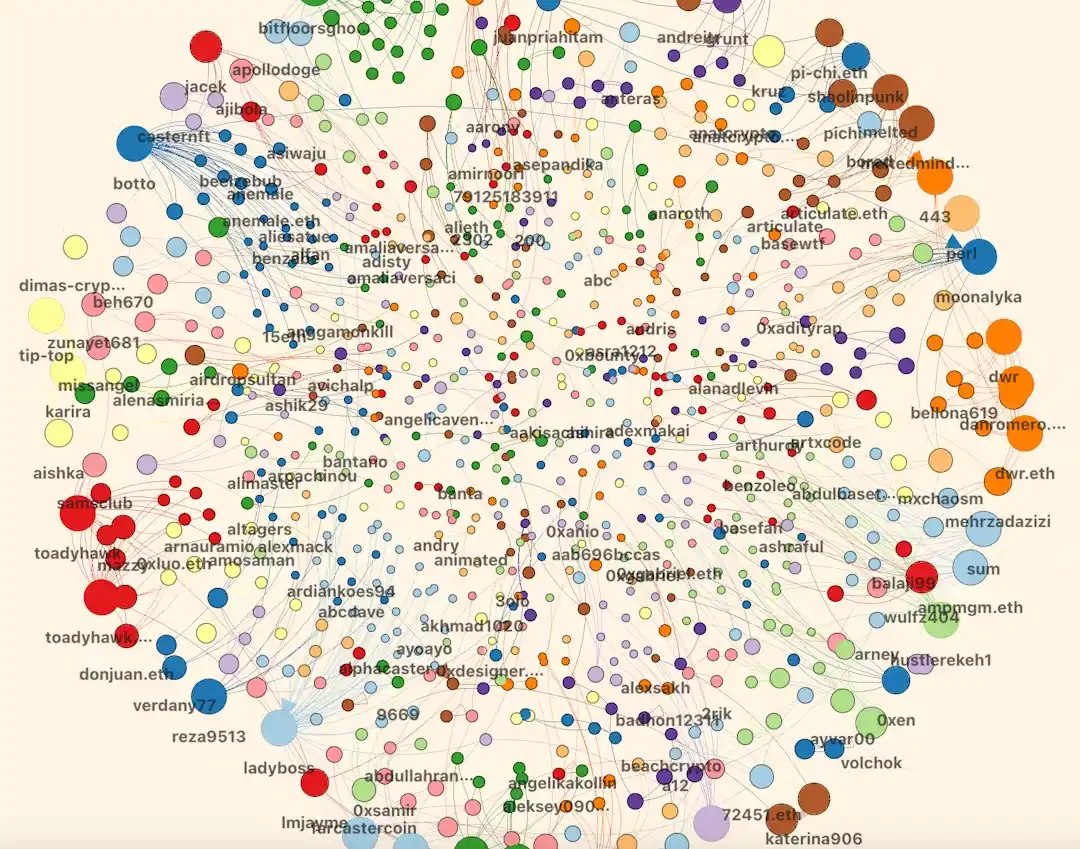
Reaction to Farcaster in the past week
Cryptocurrency has always been a community movement. The community defines the meaning in this industry - whether it is Bitcoin being seen as a meme of hard assets, or NFT projects being hailed as the next global IP after Pokemon and Barbie dolls.
Communities formed around these assets gather together around shared focal points of interest, creating vibrant, albeit temporary, ecosystems. Despite their fascinating formation, they often face inevitable challenges such as interest shifts, declining engagement, and loss of attention.
The transience of attention within these groups highlights a major challenge: how to maintain long-term engagement.
How does Farcaster keep people engaged?
Farcaster now has over 200,000 users. Interestingly, even with the hockey stick growth this month due to the Frame frenzy, the daily number of posts and engagement has not significantly decreased. Cryptocurrency applications are typically profit-driven (users striving for the next 10x or airdrop), but Farcaster has a different "vibe".
I have a deep understanding of open source release data, what quantification is, and who is driving this atmosphere. Here are some of my favorite farcaster "character portraits" (with some interesting statistics):
Questioner
Nearly 38% of the voters have raised questions online. These questions are not ordinary questions, but often have profound meanings. Essentially, users are interested in the opinions of others and invite them to engage in dialogue. In terms of quantity, there are nearly 400,000 posts containing questions, accounting for about 6% of all posts!
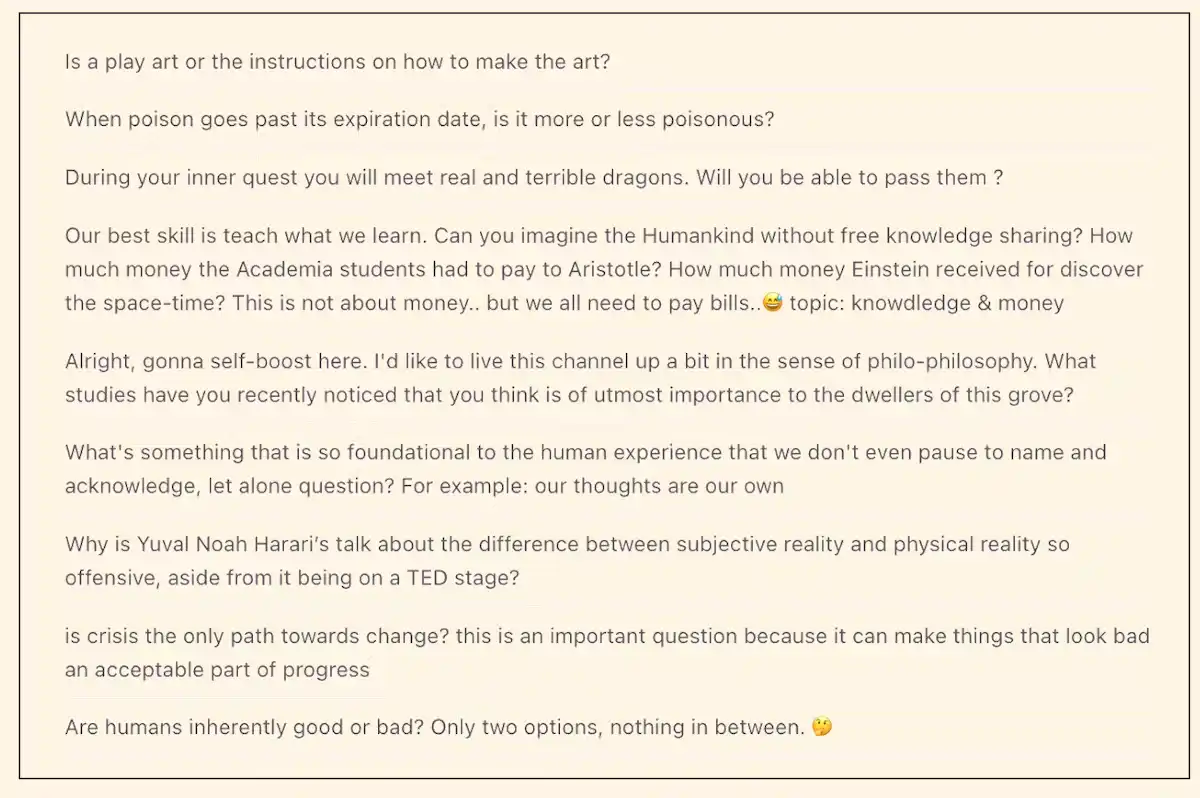
Selected questions from the Philosophy channel
The above image is a selected question from the Philosophy channel.
Responder
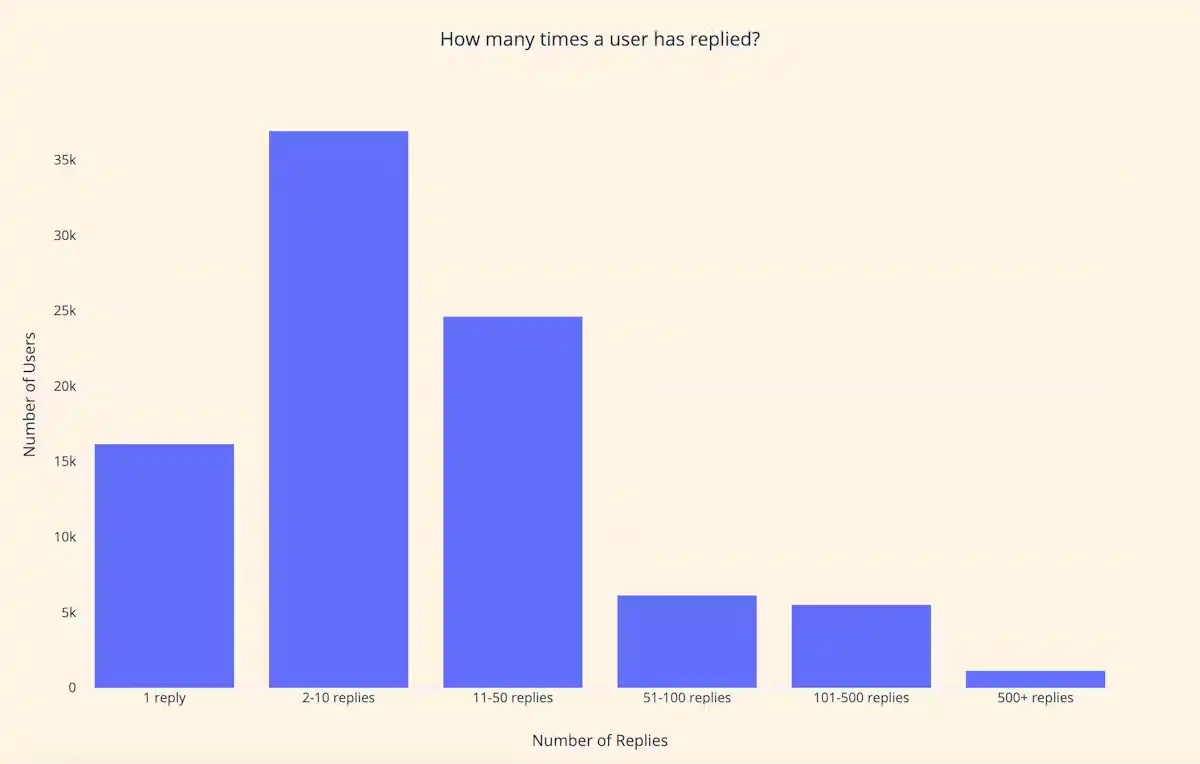
Adhering to the spirit of replyguys, over 64% of the posts on Farcaster are replies. When grouping users based on their number of replies, most users seem to belong to the category of multiple-reply users (as shown in the figure below), with some extreme reply users having replied thousands of times (just after a few weeks of activity).
Long content is liked
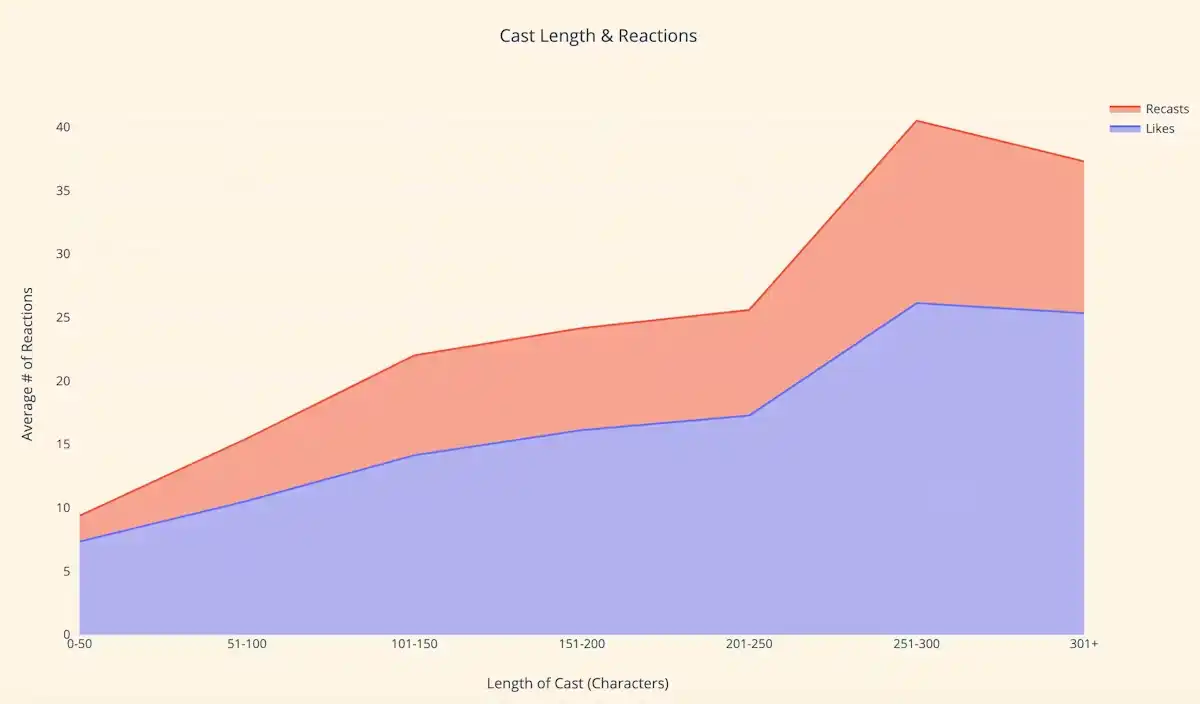
We know that the publisher is a passionate book reader. Originally, the entire network also likes long-form writing in the publication. Data shows that the length of the publication is significantly related to user engagement: longer publications usually receive more likes and shares. Although the general character limit for each publication is about 320 characters, data tells us that depth and detail resonate more with Farcaster audiences.
打赏者
Tipper
Last week, a friend and I decided to connect to the real-time release stream of Farcaster Hub. After running for a while, we realized that most of our screen was filled with $DEGEN.
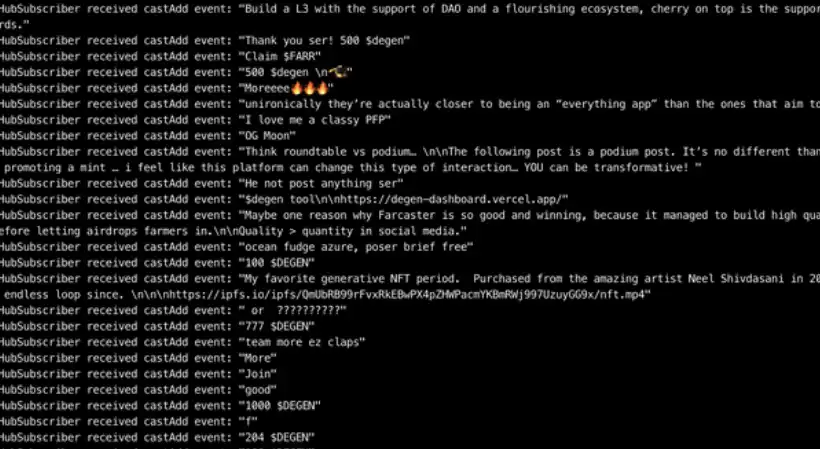
From Farcaster Hub to real-time source subscription via GRPC
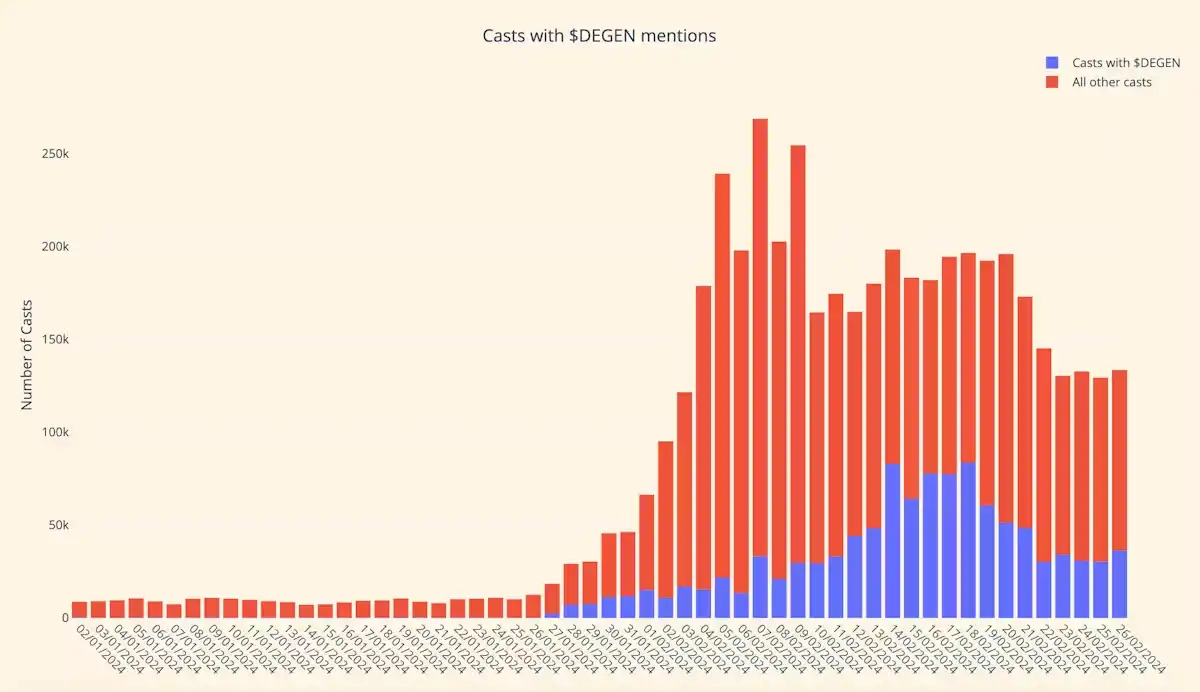
So far, the most commonly used word on Farcaster is $DEGEN, which serves as the primary currency for tipping (people can reply to a post with a number and $DEGEN to tip the poster). While projects like Steemit do have the ability to pay small amounts for posts, tipping for social media content has yet to be explored on a large scale and achieve success.
Some high-level statistical data on this phenomenon:
Over 37,000 users voted for $DEGEN at a certain point in time, with nearly 16% of the votes containing "$DEGEN".
Builder
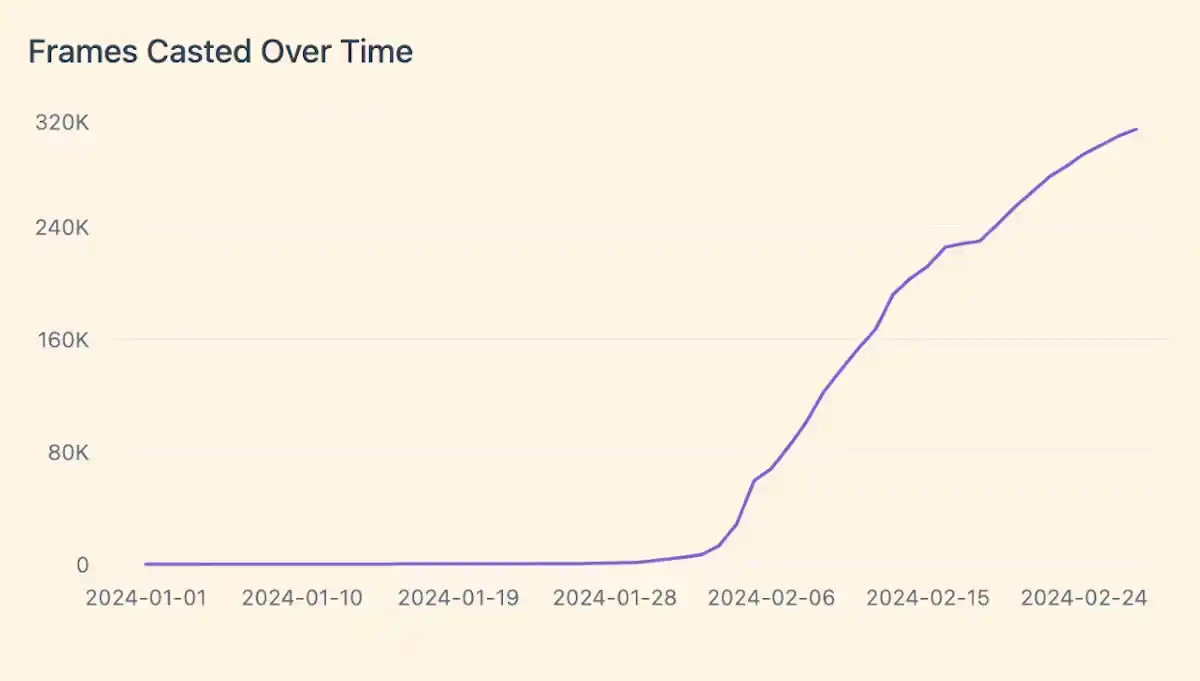
Finally, let's talk about the gorilla in the room. The introduction of Frames and the frame-ification of NFT minting, applications, games, and more have unlocked a wealth of creativity and fun experiences for users and developers on Feed. Not only has the number of releases with Frames increased significantly this year (as seen below), but by 2024, Frames releases are expected to account for nearly 22% of total likes on Farcaster.
 The content you provided is:
Source: https://frames.spindl.xyz/
Some Key Points
a) During this growth stage, maintaining Farcaster's engagement is a core culture, where people generously share their problems, answers, likes, tips, and ideas. Deep engagement > shallow engagement.
b) The underlying protocol and its social graph are open and analyzable, which is great.
I may delve deeper into researching more data of this kind, including the constantly changing channel landscape and how niche communities are beginning to merge and develop.
Original article link
Welcome to join the official BlockBeats community:
Telegram Subscription Group: https://t.me/theblockbeats
Telegram Discussion Group: https://t.me/BlockBeats_App
Official Twitter Account: https://twitter.com/BlockBeatsAsia







