Sora emerges out of nowhere, will 2024 become the year of AI+Web3 revolution?

Original Title: "Sora Emerges, Will 2024 Become the Year of AI+Web3 Revolution?"
Original Author: Zeke, YBB Capital
On February 16th, OpenAI announced its latest text-controlled video generation diffusion model "Sora". Through high-quality generated videos covering a wide range of visual data types, Sora showcases another milestone moment for generative AI. Unlike AI video generation tools like Pika that are still in the state of generating a few seconds of video using multiple images, Sora trains in the compressed latent space of videos and images, decomposing them into spatiotemporal position patches to achieve scalable video generation. In addition, the model also demonstrates the ability to simulate both the physical and digital worlds, and the final 60-second demo can be described as a "universal simulator of the physical world". As for the construction method, Sora continues the technical path of "source data-Transformer-Diffusion-Emergence" of the previous GPT model. This means that its development also requires computing power as an engine, and due to the much larger amount of data required for video training than text training, the demand for computing power will further increase. However, we have already discussed the importance of computing power in the AI era in our earlier article "Prospects for Decentralized Computing Power Market", and with the continuous rise of AI popularity, there are already a large number of computing power projects emerging in the market, and other Depin projects (storage, computing power, etc.) that passively benefit have also experienced a wave of explosive growth. So besides Depin, what kind of sparks can be collided in the intersection of Web3 and AI in this track? What opportunities are hidden in this track? The main purpose of this article is to update and supplement previous articles, and to consider what possibilities exist for Web3 in the AI era. Artificial Intelligence (人工智能) is an emerging science and technology aimed at simulating, extending, and enhancing human intelligence. Since its birth in the 1950s and 1960s, AI has undergone more than half a century of development and has become an important technology driving social life and various industries. In this process, the interweaving development of three major research directions, namely, symbolics, connectionism, and behaviorism, has become the cornerstone of the rapid development of AI today. Also known as logicalism or rule-based AI, Symbolic AI believes that simulating human intelligence through symbol manipulation is feasible. This approach represents and manipulates objects, concepts, and their relationships within a problem domain using symbols, and uses logical reasoning to solve problems. Symbolic AI has achieved significant success, particularly in expert systems and knowledge representation. The core belief of Symbolic AI is that intelligent behavior can be achieved through the manipulation of symbols and logical reasoning, where symbols represent highly abstracted concepts of the real world. Also known as neural network approach, it aims to achieve intelligence by mimicking the structure and function of the human brain. This method constructs a network composed of numerous simple processing units (similar to neurons) and achieves learning by adjusting the connection strength (similar to synapses) between these units. Connectionism particularly emphasizes the ability to learn and generalize from data, and is particularly suitable for pattern recognition, classification, and continuous input-output mapping problems. Deep learning, as a development of connectionism, has made breakthroughs in fields such as image recognition, speech recognition, and natural language processing. Behaviorism is closely related to the study of bionics and autonomous intelligent systems, emphasizing that intelligent agents can learn through interaction with the environment. Unlike the former two, behaviorism does not focus on simulating internal representations or thought processes, but achieves adaptive behavior through the cycle of perception and action. Behaviorism believes that intelligence is manifested through dynamic interaction and learning with the environment, and this approach is particularly effective when applied to mobile robots and adaptive control systems that need to operate in complex and unpredictable environments. Although these three research directions have essential differences, they can also interact and integrate with each other in practical AI research and applications, promoting the development of the AI field. At present, the generative AI (Artificial Intelligence Generated Content), which is experiencing explosive development, is an evolution and application of connectionism. AIGC can imitate human creativity to generate novel content. These models are trained using large datasets and deep learning algorithms to learn the underlying structures, relationships, and patterns in the data. Based on user input prompts, they generate unique and novel output results, including images, videos, code, music, design, translation, question answering, and text. Currently, AIGC is mainly composed of three elements: deep learning (DL), big data, and large-scale computing power. Deep learning is a subfield of machine learning (ML), and deep learning algorithms are modeled after the neural networks of the human brain. For example, the human brain contains millions of interconnected neurons that work together to learn and process information. Similarly, deep learning neural networks (or artificial neural networks) are composed of multiple layers of artificial neurons that work together inside a computer. An artificial neuron is a software module called a node that uses mathematical calculations to process data. Deep learning algorithms use these nodes to solve complex problems. Neural networks can be divided into input layer, hidden layer, and output layer based on their hierarchy, and the parameters are the connections between different layers. ● Input Layer: The input layer is the first layer of the neural network and is responsible for receiving external input data. Each neuron in the input layer corresponds to a feature of the input data. For example, when processing image data, each neuron may correspond to a pixel value of the image. In order to effectively train, neural networks typically require large, diverse, high-quality, and multi-source data. It is the foundation for training and validating machine learning models. By analyzing big data, machine learning models can learn patterns and relationships within the data, enabling prediction or classification. The multi-layered and complex structure of neural networks, large number of parameters, big data processing requirements, iterative training methods (during the training phase, the model needs to iterate repeatedly, including forward and backward propagation calculations for each layer, activation function calculations, loss function calculations, gradient calculations, and weight updates), high precision computing requirements, parallel computing capabilities, optimization and regularization techniques, as well as model evaluation and validation processes, all contribute to the high computational power demand of neural networks. As the latest video generation AI model released by OpenAI, Sora represents a huge advancement in the ability of artificial intelligence to process and understand diverse visual data. By adopting video compression networks and spatiotemporal patch techniques, Sora is able to transform massive visual data from around the world and different devices into a unified representation, thus achieving efficient processing and understanding of complex visual content. With the support of text-conditioned Diffusion model, Sora can generate videos or images highly matched to the text prompts, demonstrating high creativity and adaptability. However, despite Sora's breakthroughs in video generation and simulating real-world interactions, it still faces some limitations, including the accuracy of simulating the physical world, consistency in generating long videos, understanding complex text commands, and training and generation efficiency. Moreover, Sora essentially continues to rely on OpenAI's monopolistic computing power and first-mover advantage, following the old technology path of "big data-Transformer-Diffusion-emergence" to achieve a kind of violent aesthetics, while other AI companies still have the possibility of overtaking through technological shortcuts. Although Sora has little to do with blockchain, I personally believe that in the next year or two, due to the influence of Sora, it will force other high-quality AI generation tools to emerge and develop rapidly, and will radiate to multiple tracks such as GameFi, social, creative platforms, Depin, etc. within Web3. Therefore, it is necessary to have a general understanding of Sora, and how AI will effectively integrate with Web3 in the future may be a key point we need to consider. With the continuous improvement of generative AI tools, we will experience more epoch-making "iPhone moments" in the future. Although many people scoff at the combination of AI and Web3, in fact, I think that most of the current directions are not a problem, and there are only three pain points that need to be solved: necessity, efficiency, and fit. Although the integration of the two is still in the exploration stage, it does not prevent this track from becoming the mainstream of the next bull market. It is essential for us to always maintain a sufficient level of curiosity and acceptance towards new things. Throughout history, the transition from horse-drawn carriages to automobiles happened in the blink of an eye. Similarly, holding too many biases will only cause us to miss out on opportunities, just like with inscriptions and past NFTs. Welcome to join the official BlockBeats community: Telegram Subscription Group: https://t.me/theblockbeats Telegram Discussion Group: https://t.me/BlockBeats_App Official Twitter Account: https://twitter.com/BlockBeatsAsia
I am a practitioner in the encryption industry. Please translate the following Chinese text into English without considering the context or industry-specific terms and names. Do not omit any English words or phrases, including capitalized ones such as ZKS, STARK, and SCROLL. If there are English characters in an tag, do not translate them and return the tag as is. If the content consists only of punctuation marks, return them as is. Do not translate HTML tags such as , , , and
. If an HTML tag contains English characters, omit the translation and return the tag as is. Please preserve the content within tags. Translate all Chinese characters.
The text to be translated is:
Foreword

Three Major Directions of AI Development History
Symbolism
Connectionism
Behaviorism
AIGC Overview
Deep Learning
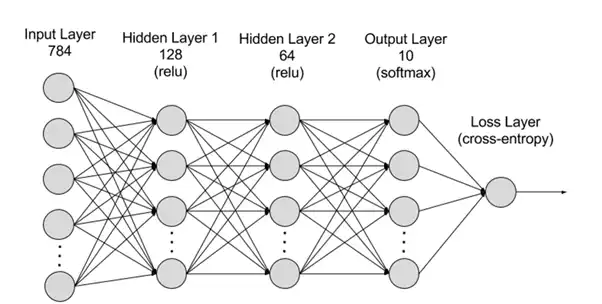
● Hidden Layer: The input layer processes data and passes it on to further layers in the neural network. These hidden layers process information at different levels and adjust their behavior when receiving new information. Deep learning networks have hundreds of hidden layers that can be used to analyze problems from multiple perspectives. For example, if you have an unknown animal image that needs to be classified, you can compare it to animals you already know. You can judge what kind of animal it is by its ear shape, number of legs, and pupil size. The hidden layers in a deep neural network work in the same way. If a deep learning algorithm tries to classify an animal image, each hidden layer will process different features of the animal and try to accurately classify it.
● Output Layer: The output layer is the last layer of a neural network and is responsible for generating the network's output. Each neuron in the output layer represents a possible output category or value. For example, in a classification problem, each output layer neuron may correspond to a category, while in a regression problem, the output layer may have only one neuron, whose value represents the predicted result.
● Parameters: In neural networks, the connections between different layers are represented by weight and bias parameters. These parameters are optimized during the training process to enable the network to accurately identify patterns and make predictions in the data. Increasing the number of parameters can improve the model capacity of the neural network, which means the model's ability to learn and represent complex patterns in the data. However, increasing the number of parameters also increases the demand for computing power.Big Data
Large-scale computing power

Sora
AI x Web3 Four Paths

 Related Articles