Final Interpretation (Part 1) - Ethereum is Winning.
Original Title: "The Ultimate Interpretation (Part 1) - Ethereum is Winning"
Original Author: Gulu, Founder of Bihu
I believe that the ultimate goal of the cryptocurrency industry in the financial field is to form a large-scale, efficient, and neutral asset platform that serves as the "Internet Financial Center" for all mankind. I will write two articles to explain: 1) why only decentralized blockchains with sufficient throughput can build such an Internet Financial Center; 2) why a blockchain-based Internet Financial Center is particularly needed in our era and what it might look like in the future.
The Internet Finance Center is built on top of blockchain protocols and is the infrastructure of global finance, directly and indirectly reaching billions of users with assets worth at least trillions of dollars. The Internet Finance Center has issued a wide variety of assets because assets on the blockchain naturally possess programmable properties, and are efficiently managed day and night through transfers, trades, mortgages, packaging, splitting, and issuing derivatives as underlying assets, among other things.
Why is blockchain valuable?
Why is blockchain valuable? This is a question that all cryptocurrency investors have asked. The consensus answer in the crypto industry is: because of decentralization. I believe this answer is correct, but when we talk about "decentralization", what exactly are we talking about?
I believe that "decentralization" is a means, and the goal is "trustlessness".
So, what is trustless?
So let's talk about what trust is first. When you give someone trust, you give them the "power" to hurt you, while holding positive expectations that they won't. People used to store their gold in a vault and receive a deposit certificate, promising that the gold would be returned if they presented the certificate. You gave the vault your trust, and now they have the power to hurt you by not returning your gold, but you believe that they will. As we all know, the vault eventually started lending out some of the gold to earn interest, which led to the development of the "fractional reserve system" and the vault becoming a bank, and then bank runs happened again and again. In 1971, the promise of exchanging dollars for gold was broken, and the deposit certificates became invalid. The "US dollar" became an anchorless "dollar," and we entered the era of fiat currency with rampant issuance of credit money.
What is trustlessness? Trustlessness means that you do not need to give the other party the power to harm you. Therefore, "trustless services" means that you do not need to give the service provider the power to harm you, and you can still receive the service. Blockchain provides trustless services. In the world of blockchain, as long as you control the private key, no one can take away or freeze your BTC or ETH; as long as you pay the mining fee of the blockchain, you can definitely send coins to any address. Yes, no one can harm you. These trustless services are achieved through decentralized means and are the core value provided by blockchain. Trustless services are particularly suitable for application in the financial field, including issuing assets (BTC, ETH) according to pre-agreed rules, and various disposals of assets, such as transfers, transactions, mortgages, and so on.
Today's traditional financial centers, such as New York, London, and Singapore, without exception, are built on a strong rule of law environment, because in the traditional model, only good rule of law can provide enough trust: the money you have in the bank, if someone else takes it away or freezes it at will, they will be punished by law, so you trust them not to do so. This belongs to the category of "Don't be evil", not that they "Can't be evil". Former financial centers can become "financial ruins" because they have the ability to do evil, just as Hong Kong is experiencing today's transformation.
Trust, by nature, is fragile. It can go a long time without any issues, but once something goes wrong, the party that trusted can suffer huge losses. Just like the large depositors who had their savings "haircut" during the 2013 Cyprus banking crisis, or the people who held gold exchange certificates (in US dollars) in 1971, or the immigrants leaving Hong Kong who cannot retrieve their pension funds, which was originally allowed under Hong Kong law.
On the contrary, trustlessness is naturally antifragile and extremely stable because it does not give the other party the power to cause harm from the beginning. Blockchain achieves "Can't be evil" through decentralization, which is even more advanced and establishes the center of Internet finance in a "brilliant and witty" manner beyond their imagination.
Blockchain is 10 times better!
Peter Thiel mentioned in his book "Zero to One" that if a new product is 10 times better than an old product, it will sweep the market at a storm-like speed and users will migrate in large numbers. In creating an internet finance center, I believe that blockchain is more than 10 times better than traditional methods in the following aspects: 1) in providing trust, "trustless" is more than 10 times better than "trust"; 2) creating an address on the blockchain is more than 10 times easier than flying to Switzerland to open a bank account; 3) the global financial platform established on the blockchain will have a huge "network effect" and extremely efficient disposal efficiency, both of which are more than 10 times better than traditional financial infrastructure. Do you have the feeling that after using blockchain, you can never go back to using banks? In the next article of this series, I will discuss why we built such an internet finance center based on blockchain and why it is the call of our era. This article will continue to discuss why this blockchain is based on Ethereum.
To build a blockchain for the Internet finance center, it must be: (A) sufficiently decentralized; (B) able to provide sufficient throughput services. Both of these points must be met at the same time, and one cannot be lacking. In my opinion, Ethereum is the only player in this field.
Why must it be sufficiently decentralized? Looking back at our previous discussion, the property of decentralization provides trustless services, which is the foundation of decentralized finance. Why is trust, or "trustlessness," so important?
Imagine if the Bitcoin blockchain was not decentralized, but instead ran on a centralized server, then:
· Satoshi Nakamoto wants to open an account for each user on the Bitcoin network. During the account opening process, Satoshi Nakamoto will review the documents uploaded by each user, such as identification and proof of address.
· Satoshi Nakamoto will ask you, where did your BTC come from? Please provide proof of funds!
· Satoshi Nakamoto plans to apply for operating licenses from various governments.
· Satoshi Nakamoto will report suspicious transactions to governments around the world.
· Satoshi Nakamoto is going to provide tax-related information to the governments.
· Satoshi Nakamoto is required to follow instructions from various governments to freeze BTC and sometimes transfer the frozen BTC to designated accounts.
· Satoshi Nakamoto may receive instructions from the US government to freeze BTC held by the Russian central bank. So what should Satoshi Nakamoto do? After all, Satoshi Nakamoto has also applied for an operating license in Russia.
· Satoshi Nakamoto received another instruction: Let's do a "quantitative easing" for BTC. Please help print 700 billion BTC first. Thank you.
Satoshi Nakamoto realized that obviously one server cannot run the Bitcoin network. So why can a decentralized network do it? Because decentralization is like an "army", providing the blockchain network with a "sovereign independence" similar to that of a nation, thus providing neutral, independent, and predictable security services for the Internet financial center.
Indeed, blockchain networks are very similar to countries and provide government-like services in some aspects, especially in protecting property rights, which they do exceptionally well, more than 10 times better.
First of all, let's talk about why people need government and what government should do for people. John Locke, a pioneer of the Enlightenment in the 17th century, explained in "Two Treatises of Government" that "every person has inherent natural rights, including the right to life, liberty, and property. These natural rights are not granted by the government, but are innate to human beings. The reason why people transfer some of their rights to society and form a government is to protect these natural rights. If a government deprives people of these inherent rights, it is evil."
Are there many evil governments in the world? Yes, there are! And they have been increasing in number over the past few decades, especially in terms of protecting property rights. This is the background in which Bitcoin was born. The genesis block of Bitcoin contains the message: "The Times 03/Jan/2009 Chancellor on brink of second bailout for banks." This translates to "The Chancellor is on the brink of a second bank bailout" and was the headline of the front page of The Times on January 3, 2009.
The independent space constructed by blockchain can better protect property rights than the government, because decentralization provides trust-free guarantees. The numerous decentralized nodes of blockchain form an "army" to build a long-term, centuries-long independent space, where a large-scale "Internet financial center" convenient for all mankind will be born. This independent space, as the name suggests, is independent of the government, but it does not destroy the government and its established order, but competes and provides services and products that are 10 times better in some aspects, establishing a better order.
The government does not like competition, because no one likes others to compete with themselves. Switzerland was able to maintain neutrality during World War II because of its unique geographical advantage and strong military. "Independence" is never begged for, but relies on its own strength to stand among the world's nationalities. Blockchain is also the same. The blockchain where the Internet financial center is located must have sufficient decentralization to achieve its sovereignty, protect the economy worth trillions of dollars, and have a strong enough military so that the potential attackers (the most powerful being governments) would pay too high a price to launch an attack, and they would be willing to coexist, after all, the Internet financial center only provides competitive services, does not threaten the existence of the government itself, and does not destroy the order established by the government, just like the current offshore financial center.
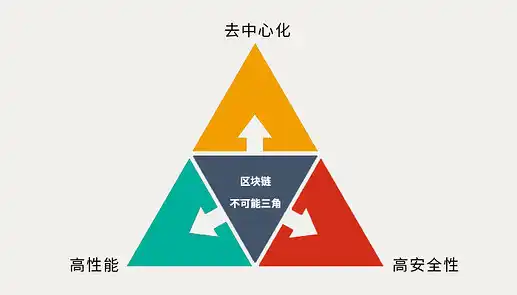
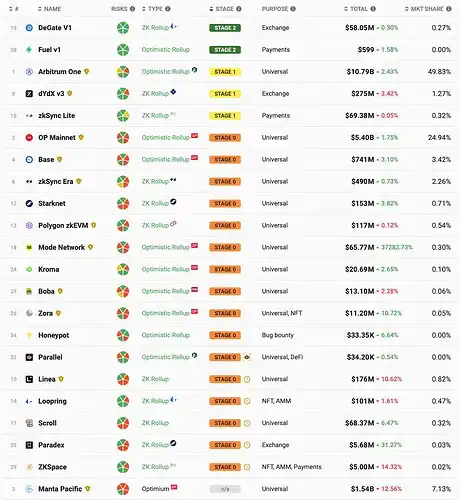
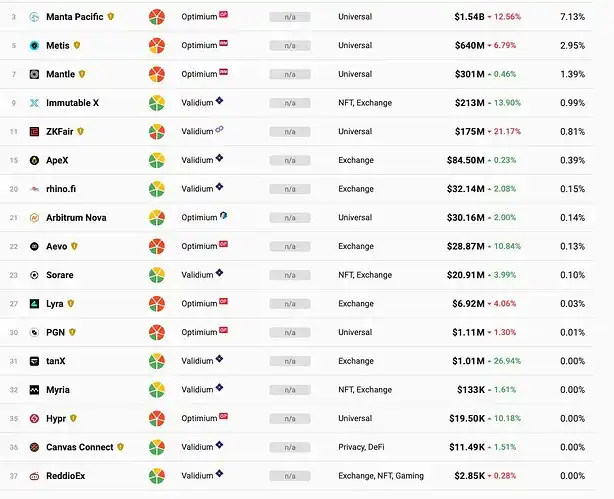
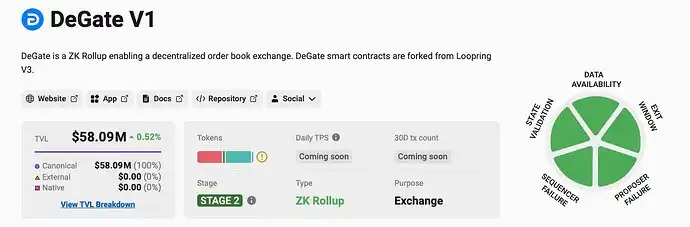
Now, let's discuss the first challenge of the two major challenges: why is it so difficult to achieve "L1 trust-free equivalence" technically in L2? The core reason is that the L2 system is very complex. The more complex the system, the more difficult it is to achieve secure operation, and the longer it takes to build the necessary security. Moreover, whether it is Optimistic Rollup or ZK Rollup, they are both new technologies. Especially, the zero-knowledge proof used in ZK Rollup is very advanced in the cryptography field. In fact, it is the application of ZK Rollup that is rapidly promoting the development of zero-knowledge proof in the academic world. Among the L2 systems displayed on L2Beat, Loopring, which is the earliest system to implement ZK Rollup that I know of, has gone through at least 5 years from project initiation to now; DeGate, which has implemented STAGE 2, has taken 3 years and has undergone 5 rounds of "security audits" and 1 ongoing "security vulnerability bounty program".
Despite many technical difficulties, as I mentioned earlier, I believe the future is bright because a mature "L1+L2" blockchain system will create a multi-trillion dollar internet financial center that serves all of humanity. Currently, on L2Beat, 5 projects have achieved STAGE 1 or higher, namely DeGate, Fuel, Arbitrum, dYdX, and zkSync. Let's give them a thumbs up.
The second biggest challenge is to give up the concept of "trustlessness", that is, it is impossible to achieve the "trustlessness" level of L1 in design, which I call "pseudo L2". I guess the biggest motivation here is to reduce gas costs and provide cheaper services. Cost is certainly important, but it cannot be at the expense of giving up the core value of "trustlessness". I believe that such a compromise has crossed the bottom line, and the cost is that these L2 systems cannot become part of the "L1+L2" trustless system, only "true L2" has the ability to carry hundreds of trillions of Internet financial centers together with L1. On the other hand, "true L2" can also reduce costs in other ways. The biggest cost of "true L2" is the data cost of being uploaded to L1, which will significantly decrease after Ethereum implements EIP4844 this year. I expect it to decrease by at least 80%.
Recently, there has been a discussion in the blockchain industry about modularizing the DA (data availability) layer. Some have proposed migrating the DA service from Ethereum to other, cheaper data services. If the DA service is migrated from Ethereum and the Rollup system can still maintain the "trustless" attribute at the L1 level, I fully support it. In fact, there are such solutions (see Faust, the geek web3 article 8), and excellent teams are actively exploring and practicing. However, the recent discussion is actually about giving up the "trustless" attribute at the L1 level and downgrading L2 to "pseudo L2" for lower costs.
I believe that all L2 practitioners in the financial application industry aim to achieve large-scale success and become important members of the "L1+L2" system. However, it is important to consider whether to give up the "trustless" level of L1 in the design from the beginning, because a "golden necklace" that rusts around your neck is not a real golden necklace. I think giving up "trustlessness" will seriously hinder the scalability of "pseudo-L2". Among the 38 L2 projects currently running on L2Beat, the funding scale of "real L2" is more than 10 times that of "pseudo-L2", which shows that the market cares about this issue and no one wants to end up being a "human mine".
Summary
Summing up, this article discusses:
· Why is blockchain valuable? Because of decentralization.
· Decentralization is like an "army", with the goal of achieving "trustlessness".
· Only a powerful "army" can provide security for the Internet financial center.
· Described how much decentralization is enough.
· To build a blockchain for the internet finance center, it is necessary to meet both (A) sufficient decentralization and (B) provide services with sufficient throughput. Currently, only Ethereum is a player in this field.
· Explained how L2 breaks the "Blockchain Trilemma".
Thank you for reading.
Welcome to join the official BlockBeats community:
Telegram Subscription Group: https://t.me/theblockbeats
Telegram Discussion Group: https://t.me/BlockBeats_App
Official Twitter Account: https://twitter.com/BlockBeatsAsia