Analysis of the network upgrade proposal Dynamic TAO: What impact will it have on Bittensor?
Original Title: "Bittensor Economic Model Changes Dramatically - Dynamic TAO"
Original Author: 0xai
(Note from the author: The following content is based on the information in Dynamic TAO: Bittensor Improvement Template 1. Given that the proposal is still under discussion, there is a possibility of changes.)
What is Dynamic TAO?
Dynamic TAO (BIT001) is a network upgrade proposal submitted by Opentensor Foundation. Its aim is to alleviate the concentration of power among Root Validators and potential collusion issues by reforming the Bittensor network staking mechanism and the distribution rules of $TAO block rewards. It also empowers all $TAO holders to actively participate in the distribution of Bittensor block rewards.
Dynamic TAO will change which mechanisms?
1. Change the staking mechanism of $TAO:
In the current scheme, Validators stake their $TAO holdings on a Subnet and complete validation work to receive a certain amount of newly minted $TAO as a validator incentive, and the amount of $TAO staked previously will not decrease. In other words, in the current scheme, the "principal" staked by Validators will not suffer any losses. With such a "guaranteed harvest" mechanism, the circulation-to-stake ratio of $TAO is quite high: currently, the total circulation of $TAO is about 6.25 million, of which about 4.75 million are staked, with a staking ratio of about 75.94%. Validators earn an average annualized return of about 19.38% through staking.
However, this situation may be changed. Dynamic TAO proposes to allow each Subnet to issue its own "Token", collectively referred to as "Dynamic TAO" ($dTAO), distinguished by different Greek letter symbols.

Each "Subnet Token" cannot be traded directly and can only be exchanged (unstake/swap) for $TAO through a unique liquidity pool.
Each Subnet will have a unique liquidity pool, which stores a certain amount of $TAO and corresponding $dTAO. When exchanging, the pricing mechanism for $TAO and $dTAO follows the constant product formula of Uniswap V2.
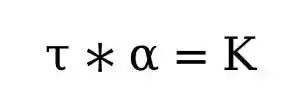
Where τ represents the quantity of TAO, and α represents the quantity of dTAO. Without additional liquidity injection, the value of K will remain constant regardless of how much TAO is exchanged for dTAO or how much dTAO is exchanged for TAO.
When TAO holders engage in staking operations, it is equivalent to using TAO to purchase the corresponding dTAO, which can be exchanged for a certain amount of dTAO.
Follow the following formula to calculate:

On the contrary, when the holder of $dTAO performs the operation of releasing the pledge, it is equivalent to using $dTAO to purchase $TAO, which can exchange for the quantity of $TAO.
Follow the following formula to calculate:

However, unlike Uniswap V2, the liquidity pool of $dTAO does not allow direct addition of liquidity. Except when the Subnet Owner creates a Subnet, all newly injected liquidity comes entirely from the allocated $TAO and 50% of the total newly issued $dTAO. In other words, the newly issued $TAO allocated to each Subnet is not directly distributed to the Validator\Miner\Owner of that Subnet, but is all injected into the liquidity pool for hedging. At the same time, 50% of the newly issued $dTAO is also injected into the liquidity pool, and the remaining 50% is distributed to the Validator\Miner\Owner according to the incentive mechanism agreed upon by the Subnet itself.

Stake\Unstake will not change the size of K, while liquidity injection will increase K to K'.
2. Change the distribution rules for newly added $TAO:
In the current scheme, the proportion of new $TAO that each Subnet can receive is determined by the Validator of the Root Network. This scheme has exposed some potential issues. For example, due to the concentration of power in the hands of a few Validators in the Root Network, even if the Validators conspire to allocate new $TAO to low-value Subnets, they will not be punished.
Dynamic TAO proposes to suspend the privileges of the Root Network and transfer the power to decide how to allocate new $TAO to all $TAO holders. The specific approach is:
Using the brand new Yuma Consensus V2, the corresponding release ratio of each Subnet Token is obtained by performing softmax operation on their prices.
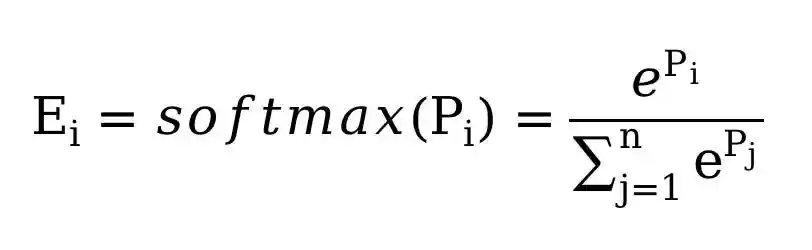
Softmax is a commonly used normalization function that can convert each element in a set of vectors into a non-negative value while preserving the relative size relationship between each element, and ensuring that the sum of all elements after conversion is 1.
其中,
translates to其中,
in English.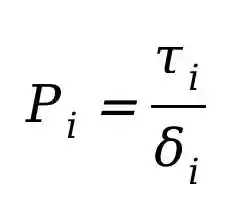
P is the price of $dTAO relative to $TAO, calculated by dividing the quantity of $TAO in the liquidity pool by the quantity of $dTAO.
According to the formula, when the relative price of a Subnet Token is higher, the proportion of newly released $TAO that can be obtained is also higher.
3. Empowering each Subnet to set its own incentive mechanism:
In the current plan, the $TAO incentive obtained by Subnet is distributed to Validator, Miner, and Owner in a fixed ratio of 41%-41%-18%.
Dynamic TAO proposes to empower each Subnet to issue its own "Subnet Token", and stipulates that 50% of the additional issuance must be injected into the liquidity pool, while the remaining 50% will be allocated to Validators, Miners, and Owners according to the mechanism determined by the Subnet participants themselves.
Example:
According to the current proposal, when Dynamic TAO is officially submitted for network upgrade, all existing Subnets will mint corresponding $dTAO. The genesis quantity of $dTAO is equal to the number of $TAO locked by the Subnet Owner when creating the Subnet. Among them, 50% of $dTAO is injected into the liquidity pool of the Subnet, and the remaining 50% is allocated to the Subnet Owner.
Welcome to join the official BlockBeats community:
Telegram Subscription Group: https://t.me/theblockbeats
Telegram Discussion Group: https://t.me/BlockBeats_App
Official Twitter Account: https://twitter.com/BlockBeatsAsia

 Related Articles