Why do ERC-5169 and TokenScript need a Smart Layer?
Original Title: "Why ERC-5169 and TokenScript Need Smart Layer?"
Original Author: LINDABELL, ZHIXIONG PAN, ChainFeeds
When the AlphaWallet team proposed the TokenScript concept in 2019, it significantly expanded the industry's understanding of "tokens". Whether it is ERC-20 or ERC-721, by adding the extension capability of TokenScript, it can be more convenient to execute preset functions. After proposing the ERC-5169 standard, its programming and execution capabilities were improved. Their next milestone, the Smart Layer Network, is another upgrade based on these foundations, further expanding the boundaries beyond the blockchain.
or it can be understood as:
TokenScript: Provides a secure, programmable token front-end for tokens.
ERC-5169: Call the corresponding token front-end through the token contract;
Smart Layer Network: Coordinating with blockchain to extend token logic and execution beyond the chain.
Smart Layer can be seen as a service layer that connects the blockchain world and traditional network services, providing support and incentives to tokenize network services or integrate smart tokens, thus improving user experience and business efficiency. For token issuers, Smart Layer provides support for creating and managing programmable smart tokens. For traditional network services, Smart Layer simplifies the process of integrating network services and token functionality.
Smart Layer redefines token economics to a certain extent, where tokens are no longer just assets, but can promote economic activity through the integration of rights, functions, and systems.
TokenScript
TokenScript is a programming interface designed specifically for tokenization, proposed by Smart Token Labs in 2019. This interface not only helps users access all the functions of tokens, but also allows for the creation of more advanced, complex, and flexible "user token" interactions.
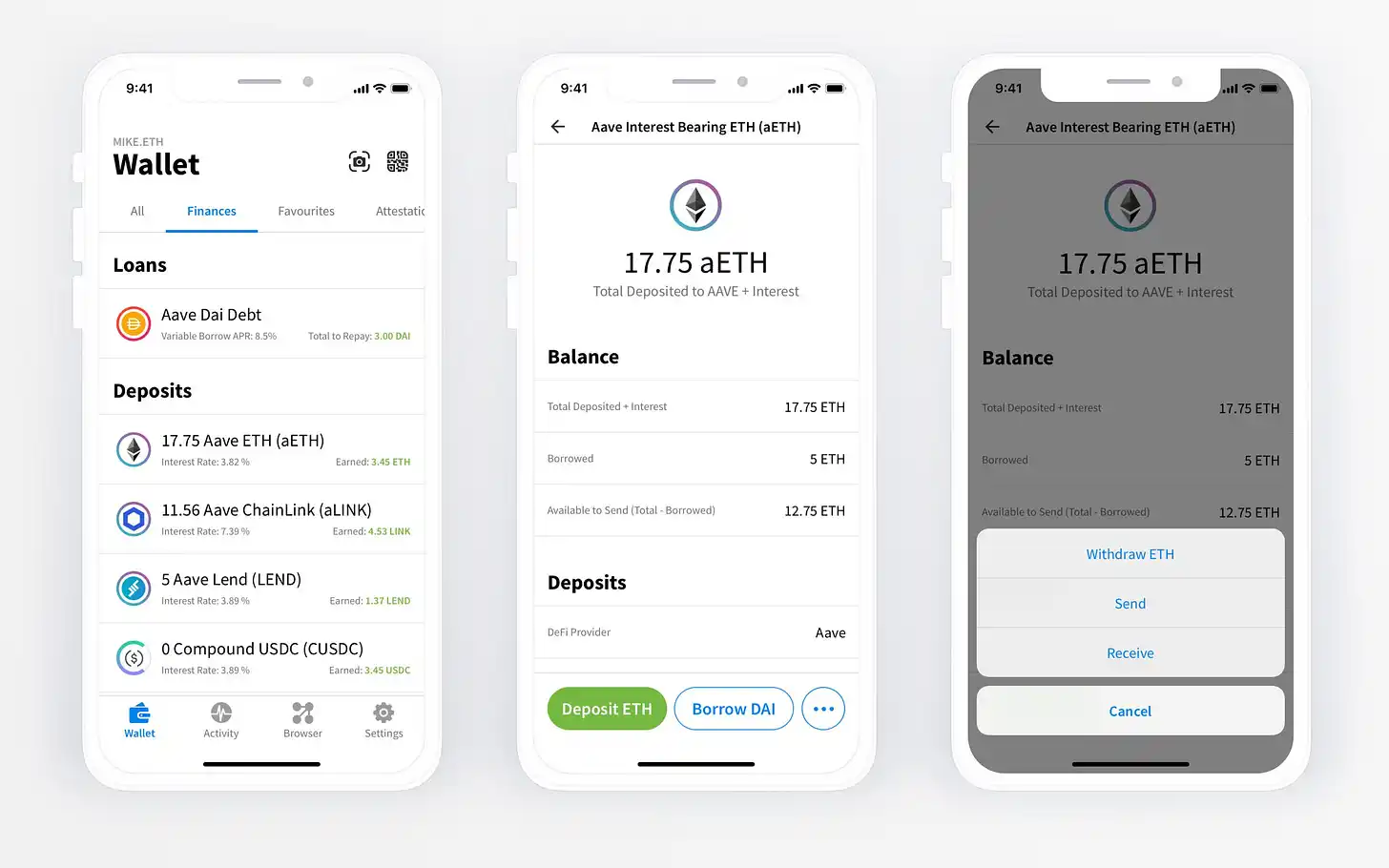
In simple terms, TokenScript is a JavaScript code layer with XML tags that describes the attributes, logic, operations, and user interface elements related to tokens. TokenScript files are issued and signed by the corresponding token issuers and can be imported by any service or device that integrates the TokenScript engine. Token issuers can add any information and rules to tokens without being limited by smart contracts. The main focus of TokenScript is to allow tokens to seamlessly operate across different platforms and wallets while integrating all token information for easy asset management and understanding by users. Currently, AlphaWallet supports all tokens implemented according to the TokenScript standard.
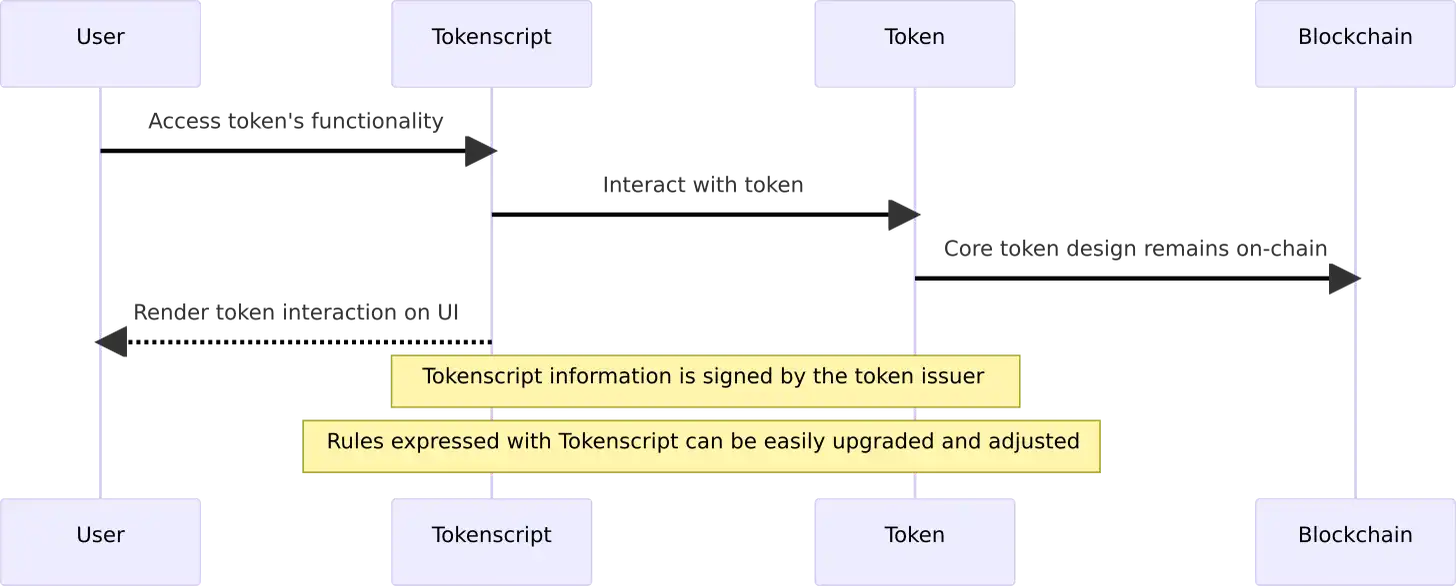
We can think of TokenScript as a computer program for processing music files, where the music files are similar to tokens and are immutable, but the playback software can be flexibly switched. The program can also be automatically updated, supporting recording, cutting audio, and organizing them into your favorite music library. TokenScript also ensures that the interaction between tokens and software is not arbitrary, but is built by the token issuer.
ERC-5169
TokenScript improves the scalability of tokens. However, in order for tokens to interact with various services and applications in the Web3 ecosystem, Smart Token Labs proposed the Ethereum standard ERC-5169 (which has become Final) in May 2022. This standard introduces the concept of executable scripts, allowing tokens to carry their own logic and behavior, and have stronger interaction capabilities. TokenScripts can embed tokens according to the ERC-5169 standard, allowing tokens to exhibit dynamic behavior when interacting with various services and platforms.
Specifically, ERC-5169 ensures that users are using the correct script by providing a URI that points to the official script when calling the token contract (scriptURI). This URI can be any URI that complies with the RFC-3986 standard, such as a link to IPFS multi-hash, GitHub gist, or cloud storage service. Each contract that implements this ERC includes a scriptURI() function that returns the download URI for the client script, providing a client executable file for hosting tokens. In addition, to address the key risks, operational and storage costs associated with storing client scripts directly on smart contracts, ERC-5169 allows for mutable data to be stored off-chain.
ERC-5169 provides many possibilities for interactive tokens that can connect Web2 and Web3, including customizing "miniDapps" for individual tokens, allowing users to interact with contract functions not provided by their wallets, expanding hardware wallets, and even controlling IoT devices through tokens in their wallets. From an asset perspective, this standard significantly improves the user experience by allowing users to run programs directly in their wallets, avoiding the hassle of frequent account and password creation. In addition, since the logic is embedded in the token itself, the need for external interfaces is reduced, increasing the security and privacy of token interactions.
Tokenscript + ERC-5169 =?
Hashed partner Baek Kim once stated that Hashed's investment philosophy is based on the idea that all assets will eventually be tokenized. In fact, we have already experienced two waves of tokenization, but it has not yet led to widespread adoption. In order to achieve widespread adoption of tokenization, we must address two core issues:
· How to enable users to obtain a better experience through tokenization?
· How can enterprises achieve greater efficiency through tokenization?
This is exactly the vision that Smart Token Labs has always wanted to achieve: fragmenting all services into a smart token (executable token and executable NFT), and users have all the calling and usage rights of these smart tokens, and can access various third-party services through them. For example, we can issue a "Car Smart Token" that represents ownership of a car. When users access third-party services through this smart token, such as an insurance company, they do not need to fill in any information. Through the smart token, the insurance company can directly recommend suitable insurance products for users. In addition, insurance can also become a token corresponding to the "Car Smart Token".
This vision is realized thanks to the integration of ERC-5169 and TokenScript by Smart Token Labs. According to the ERC-5169 standard, scripts defined by TokenScript can be embedded into tokens, allowing these tokens to interact with various services and platforms in a dynamic way. By transforming tokens from simple asset properties to functional tokens, smart tokens not only enhance asset scalability but also bring new development paths for Web3 games, loyalty programs, and other fields.
Web3 Games:
Intelligent tokens can serve as an in-game item that connects users and project parties. Users can call various functions encapsulated in tokens within the digital services of project parties, such as completing specific tasks in the game and achieving cross-game accomplishments.
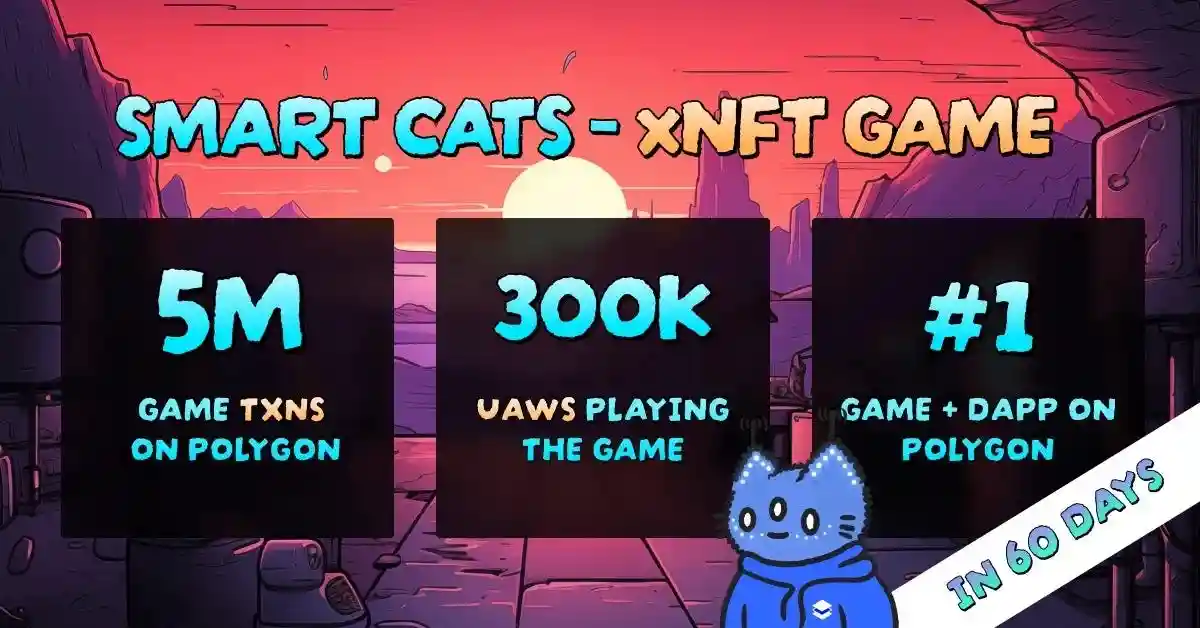
Smart Cats is a fully on-chain derivative collection of Cool Cat #2426 launched by Smart Layer on Polygon, and it is also an intelligent token. This NFT can run directly in the wallet like an application, and users can interact with Smart Cats directly without redirecting to third-party websites, including feeding, cleaning, inviting other Smart Cats to play, and more.
Open Loyalty:
In 2023, Smart Token Labs CTO Weiwu Zhang introduced the concept of "Open Loyalty" at EDCON 2023 and collaborated with the EDCON 2023 team to launch the "Open Loyalty" permissionless perks solution. Attendees will receive proof of ownership of their tickets via email, which can be stored locally in their browser and used to verify their ticket and claim multiple exclusive benefits from any third party.
Through Smart Layer, users can obtain rights based on specific identities by verifying off-chain smart tokens through URLs without opening their wallets or consuming gas. The ticket information that should have belonged to the EDCON ticketing system is now held by the users, eliminating the need for the EDCON ticketing system to integrate with third parties.
AI Agent:
With all service providers tokenizing their services, the intelligent token system will gradually be built into a modular framework. This framework can maximize the possibility of service calls, thereby achieving the maximization of service value. For integrators, it also means a more open integration market and lower integration costs. In the future, with the integration of intelligent token systems and artificial intelligence, when modular service ownership is in the hands of users, users can authorize AI agents to freely call intelligent tokens from different websites and achieve personalized customized services through combination.
Decentralized Service Network Smart Layer Network
As the integration hub of tokenized networks, intelligent tokens encapsulate business logic, enabling tokens to interact with various systems and tokens in a complex and interoperable manner. However, blockchain can only provide trust guarantees and cannot directly use intelligent tokens on any website. We still need to expand through integration. To this end, Smart Token Labs has launched a programmable blockchain-based service network, Smart Layer, which introduces intelligent tokens into games and loyalty through ERC-5169 and Tokenscript.

Welcome to join the official BlockBeats community:
Telegram Subscription Group: https://t.me/theblockbeats
Telegram Discussion Group: https://t.me/BlockBeats_App
Official Twitter Account: https://twitter.com/BlockBeatsAsia

 Related Articles