Explore Attestation History and Its Related Projects

Original Title: "Connecting Web2 and Web3: Exploring the History of Attestation and Related Projects"
Original Authors: 0XNATALIE, ZHIXIONG PAN, ChainFeeds
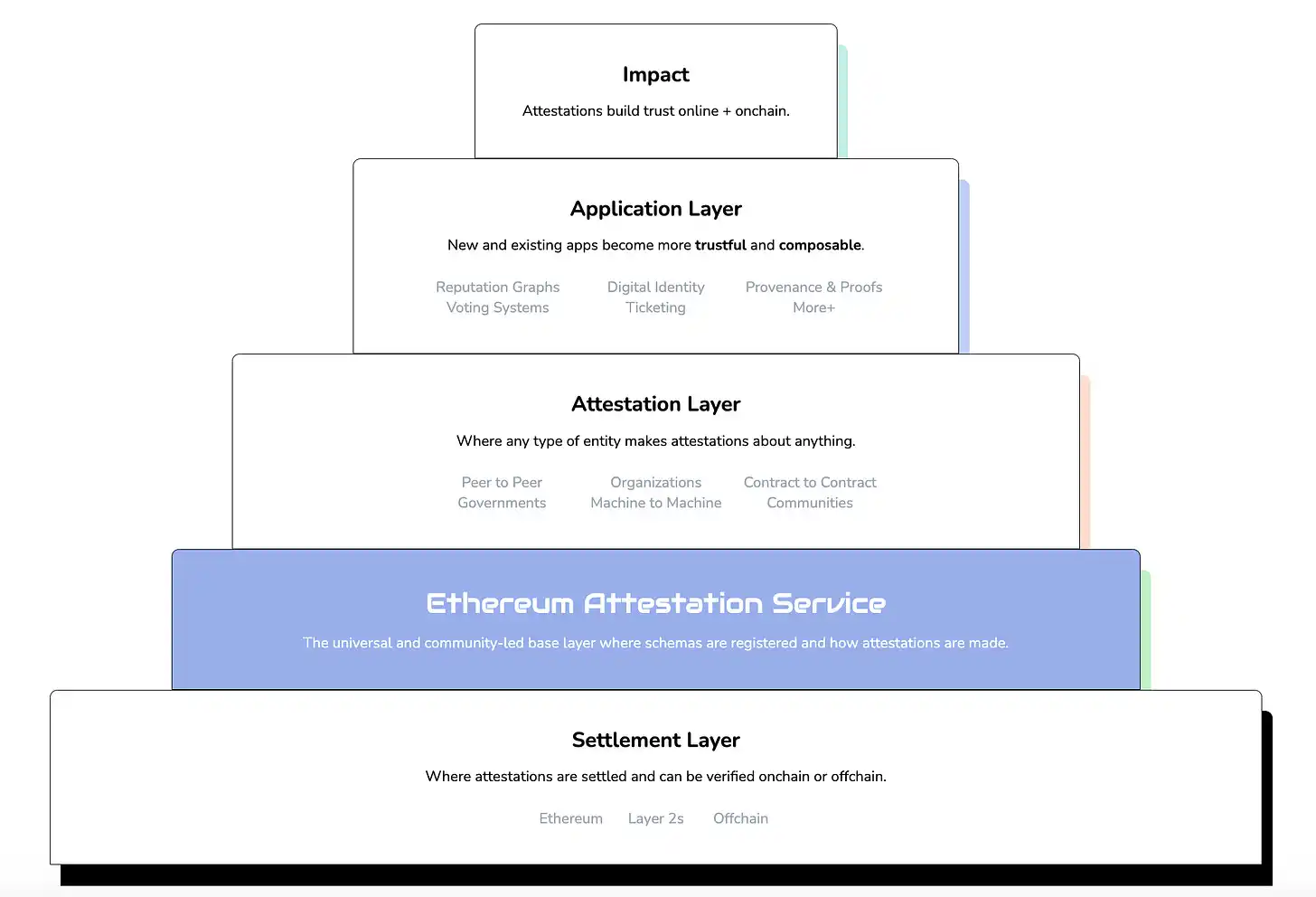
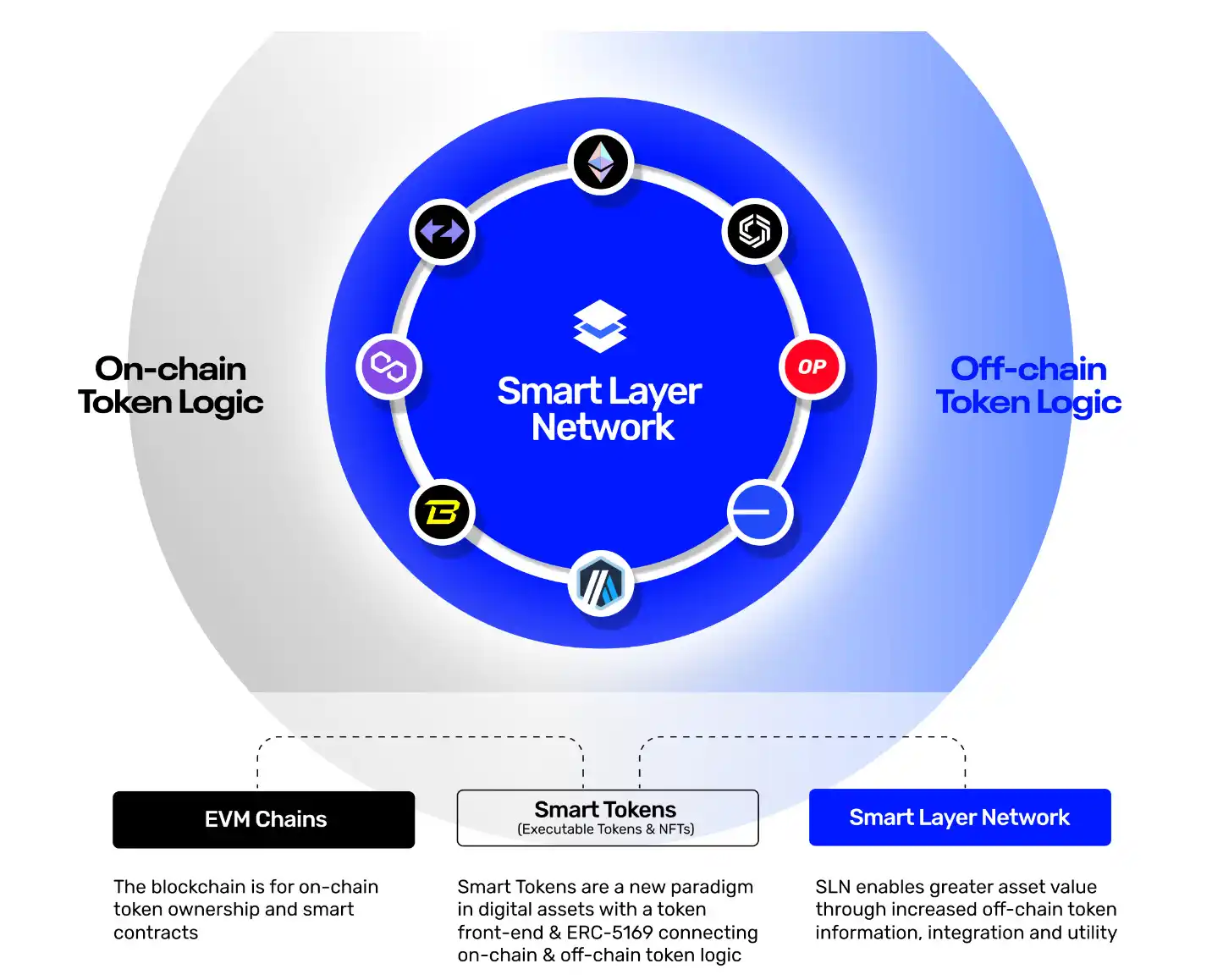
Attestation is not a new concept, especially if you are familiar with the PoS consensus of Ethereum, where some steps are referred to as Attestation. In addition, protocols such as EAS, Smart Layer, EthSign, Verax, and PADO Labs also emphasize their protocol layer and the concept of Attestation. So what exactly does Attestation mean? And what is the difference between Attestation and Verification?
Attestation History and Definition
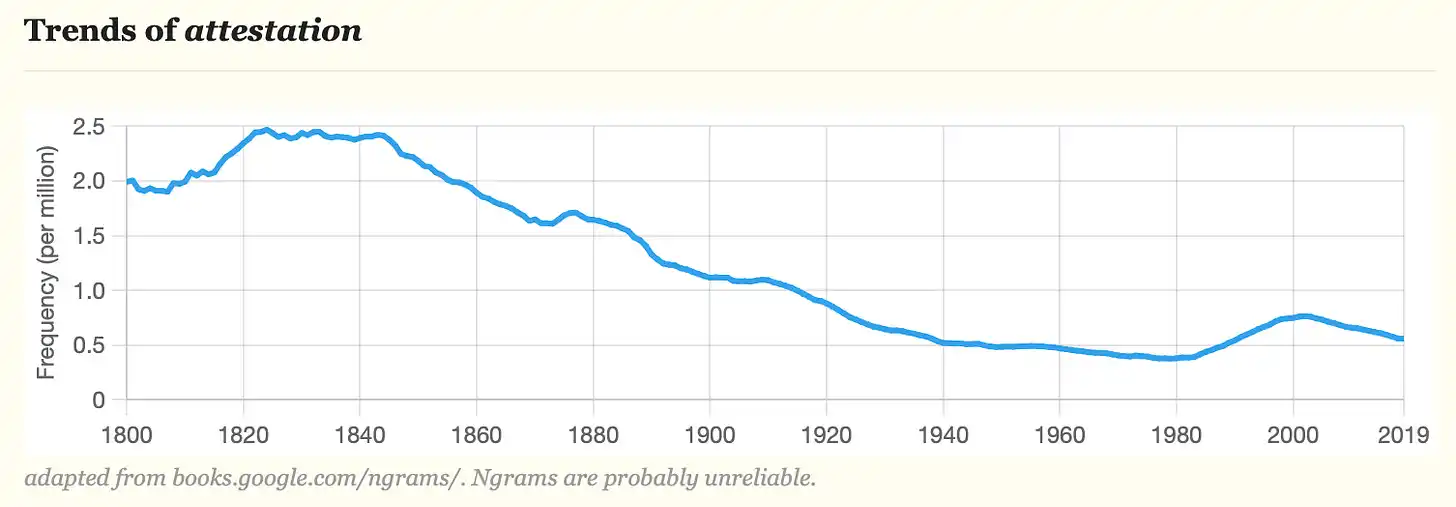
Looking at the etymology, Attestation originated in the mid-15th century, meaning "testimony" or "a declaration in support of a fact". Verification has an earlier origin, meaning "confirmation" or "corroboration". According to the frequency of use in literature over the past two centuries, the frequency of use of Verification has been increasing year by year, while Attestation has been decreasing. Moreover, the frequency of use of Verification is more than ten times that of Attestation, indicating that Attestation is a relatively niche word.
In the consensus process of Ethereum, Attestation refers to the recognition of the current block's final state by validators, similar to a voting process. In addition, if validators engage in malicious behavior (Surround Vote) or passively participate (or drop out) in this process, they will be punished by the consensus algorithm (Slashing / Inactivity Leak). This means that there is some subjectivity in validators' participation in Attestation.
According to the Cornell Law School dictionary, the meaning of Attestation is similar to "testimony", which usually requires a witness to be present and sign to attest to the authenticity of the document's content and the authenticity of the parties' signatures when signing a contract, making a will, or signing other written documents. This process can also be summarized as "witnessing".
Therefore, according to the above information, Attestation is more similar in meaning to "witnessing", "testimony", and "declaration", and Attestor is subjectively recognized to a certain extent, and others cannot verify its accuracy through other methods. The meaning of Verification is too common, based on a method that can be repeatedly verified.
After understanding these differences, we can understand why so many projects use Attestation as a core concept to explain. It is not solving a technical or algorithmic problem, but rather solving a social consensus problem. How to define these visible and declarable events according to certain standards, and then store this data through blockchain, implement more combinable logic through smart contracts, and generate liquidity, etc.

Application scenarios of Attestation in Web2:
· Account Verification: Verify user accounts through email or phone number.
· Work Certificate: A certificate provided by the employer that includes basic employee information, employment period, position, etc. It is usually provided by the company's human resources department.
· Educational Certificate: An official certificate issued by a school to confirm that an individual has completed a specific course of study, which can be verified through platforms such as China Higher Education Student Information and Career Center (CHESICC).
· Identity Verification: Identity verification documents issued by government agencies, such as driver's licenses, passports, etc.
Web3 has introduced a paradigm shift towards proof-of-functionality. Trust is no longer dependent on a single centralized entity, but is decentralized across a network of multiple nodes, protected and ensured through cryptographic techniques and consensus algorithms to maintain the security and credibility of information.
Application scenarios of Attestation in Web3:
· Digital Asset Ownership Proof: A digital signature proof generated on the blockchain to prove that a specific address owns a specific quantity or type of digital assets, such as NFTs.
· Identity Verification: Obtain individual identity authentication on the blockchain through decentralized identity systems.
· Smart Contract Execution Proof: The smart contract issues an Attestation to prove that it has been executed as expected, triggering certain conditions or events.
· Data integrity and traceability: By generating digital signatures on the blockchain, data integrity and immutability are ensured. The signature will only be verified successfully if the data has not been tampered with.
Attestation combining Web3 and Web2 opens up a vast realm of possibilities. Attestation acts as a bridge between the digital and real world, providing proof mechanisms for verification, endorsement, voting, authentication, and security in various scenarios. For example:
· Activity Tickets: The event organizer uses blockchain technology to issue tickets Attestation to prevent counterfeiting or duplicate use of tickets.
· Attendance Certificate: By using on-chain Attestation, not only can it prove that the user participated in a specific event, but it also provides digital souvenirs.
· Email: Users can use the email Attestation to link their identities between Web3 and Web2, simplifying the identity verification process.
· Medical Record Verification: Medical information such as patient health information, diagnosis, and treatment processes are recorded on the blockchain. Doctors can generate a digital signature Attestation to prove the integrity of the records.
· ……
值得关注的 Attestation 概念项目
Worthwhile Attestation Concept Projects to Watch
Although the concept of Attestation is still in its early stages of development, there are already some projects that have attracted widespread market attention.
1.Ethereum Attestation Service (EAS): Universal Attestation
EAS is an open-source infrastructure project used for proof on-chain or off-chain. It utilizes structured information's digital signature attestation as a means of verifying facts, proving authenticity, and establishing trust in various online and on-chain interactions. EAS operates through two smart contracts, the Schema Registry Contract for registering proof schemas and the Attestation Contract for conducting proofs.
Schema Registry Contract's main function is to allow users to register proof templates and define the structure and format of proof data. Users first define a schema, which is submitted to the Schema Registry Contract for registration. After the schema is registered, the contract assigns a unique identifier (UID) to the schema for future reference in proofs.
Attestation Contract mainly manages the cycle of attestations. Users create attestations using previously registered templates, fill in specific content according to the previously defined format, and digitally sign them on-chain or off-chain. The signed data, along with the UID of the template, is submitted to the Attestation Contract. The contract verifies the signature and UID. If the verification passes, the attestation is recorded on the blockchain, and anyone can verify its authenticity. If the status of the attestation needs to be changed, it can be revoked. Revocation does not edit the attestation itself, but rather makes it no longer considered valid.
Welcome to join the official BlockBeats community:
Telegram Subscription Group: https://t.me/theblockbeats
Telegram Discussion Group: https://t.me/BlockBeats_App
Official Twitter Account: https://twitter.com/BlockBeatsAsia