Covalent Network: A legacy on the decentralized infrastructure circuit

Original Title: "Covalent Network: A Hidden Gem in the Decentralized Infrastructure Race"
Original Author: Alex Xu, Research Partner at Mint Ventures
1. Report Highlights
1.1 Core Investment Logic
Covalent is a top project in a rapidly developing industry, with rapidly increasing business data and revenue. In terms of revenue, Covalent has several times the revenue of the current leading project in the industry, The Graph, and seems to have achieved better PMF (Product Market Fit). However, due to the fact that its revenue stream has not yet been put on the chain, there may be a significant cognitive gap among market investors.
Regarding new business, its Ethereum Wayback Machine being developed serves as a long-term blob DA (blob is a new data storage structure after the Ethereum EIP4844 upgrade, used to store data that does not need to be stored permanently on the chain), which also aligns with current market trends.
In terms of the team, the founding team has professional resumes and entrepreneurial backgrounds that match the industry. The investors also include various top industry players, including public chain foundations, leading exchanges, major clients, and more.
1.2 Main Risks
1. If other centralized blockchain data service providers with larger user bases, such as Alchemy, Infura, Quicknode, etc., enter the data indexing service track downstream from RPC and provide similar data indexing services, it may squeeze Covalent's market share and pricing. For example, Alchemy completed the acquisition of data indexing platform Satsuma in September 2023.
2. Data indexing is a relatively obscure field that is not well-known to the general public. Currently, it has not received much attention from investors, and this trend may continue in the absence of hot events in the field.
1.3 Valuation
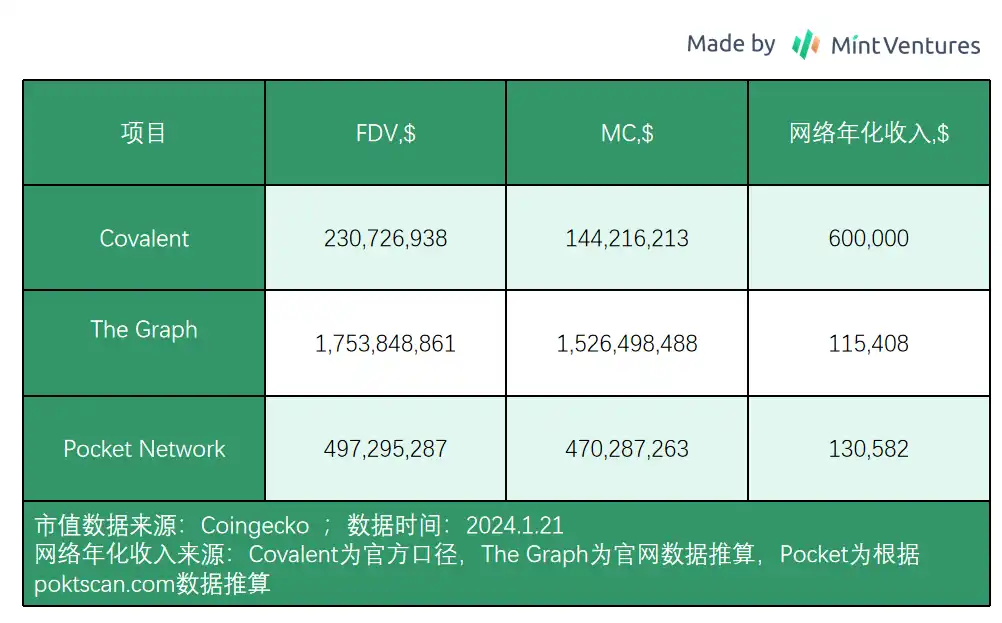
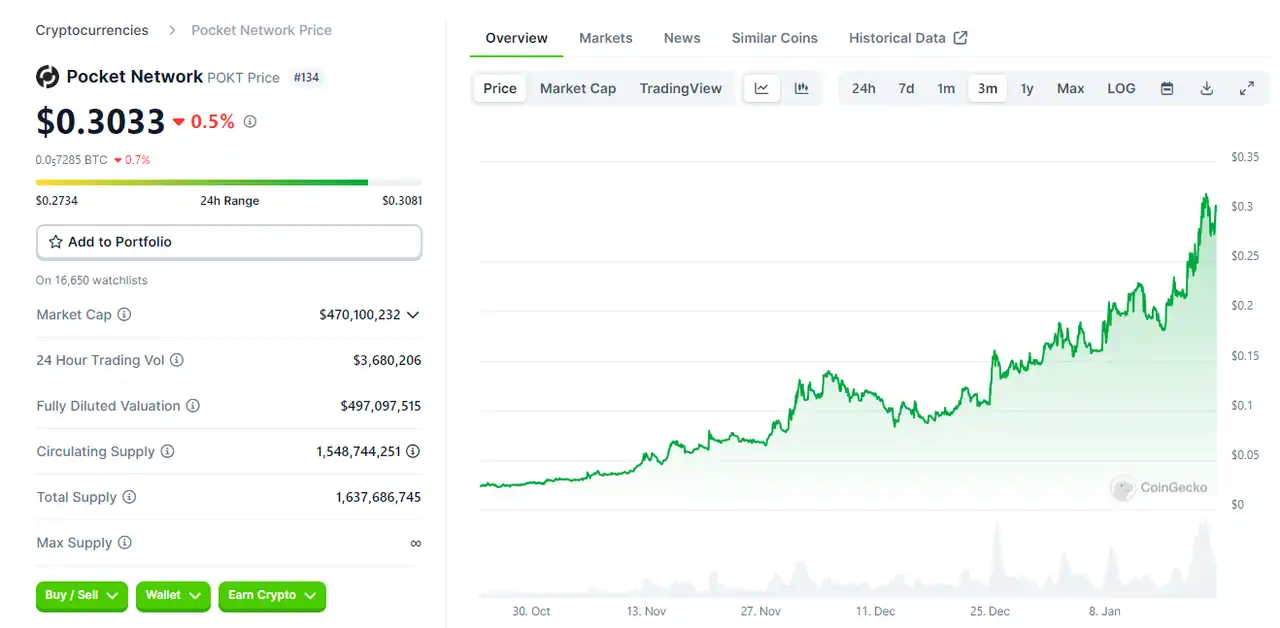
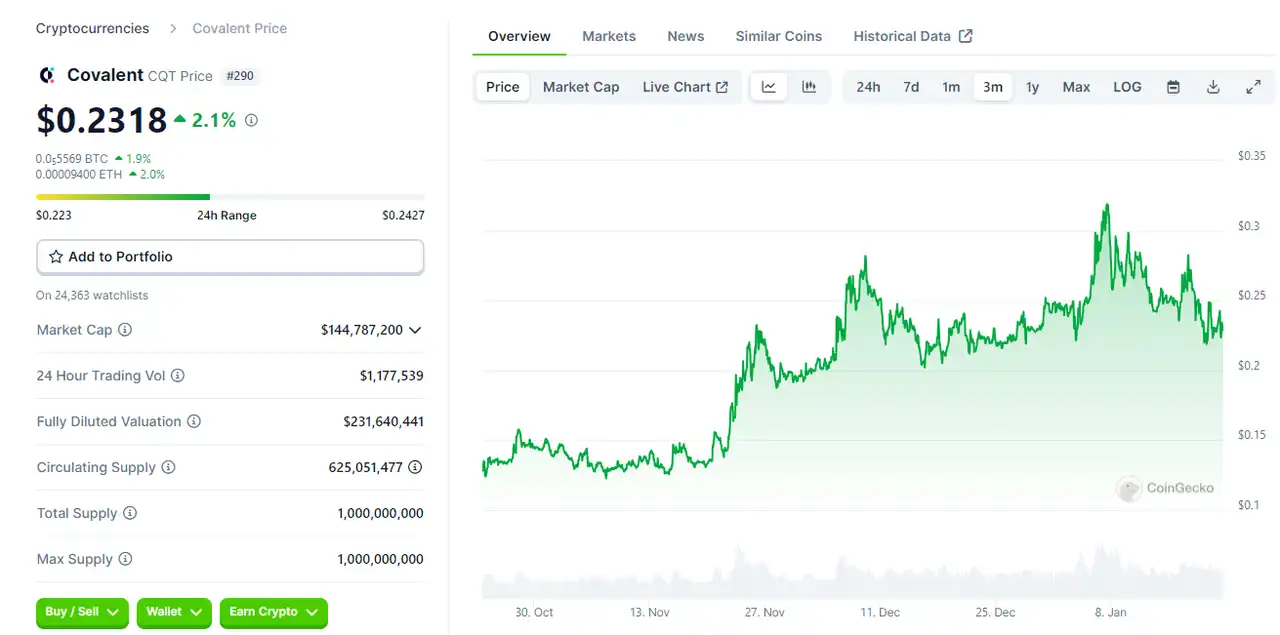
Compared to the leading project in the same field, The Graph, it has a higher valuation appeal.
2. Project Overview
2.1 Business Positioning
Covalent provides a Blockchain Indexer service, which offers a unified Blockchain data API that allows developers to query across multiple Blockchains.
Before explaining the data indexing service, it is necessary to briefly introduce its upstream services - blockchain nodes and blockchain RPC.
Blockchain Node:
Blockchain nodes are the basic elements that make up the blockchain network. Each node stores a complete copy of the blockchain (or in some cases, a partial copy, such as a light node). Nodes synchronize and verify all transactions and blocks through consensus mechanisms to ensure the consistency and security of the network's data.
Blockchain RPC:
RPC is a service interface that allows external clients to interact with blockchain nodes. It is a middleware that provides a set of standardized commands or function calls, enabling developers to perform operations such as reading data, sending transactions, executing smart contract functions, and more.
Blockchain Index:
Blockchain Index is a data service based on blockchain nodes and RPC. It reads data from blockchain nodes through RPC, processes and organizes the data to create an efficient query database. This allows users and applications to quickly retrieve the information they need without having to perform complex queries directly from the blockchain nodes.
In brief, the relationship between nodes, RPC, and indexing services is as follows: blockchain nodes are the source of data, RPC services are the channels for accessing this data, and indexing services are the data processing factories that optimize data retrieval and usage.
In the blockchain data indexing field, there are both centralized service providers such as @Bitquery_io, @etherscan, @MoralisWeb3, @blockvisionhq, and decentralized service providers, among which the most well-known is The Graph.
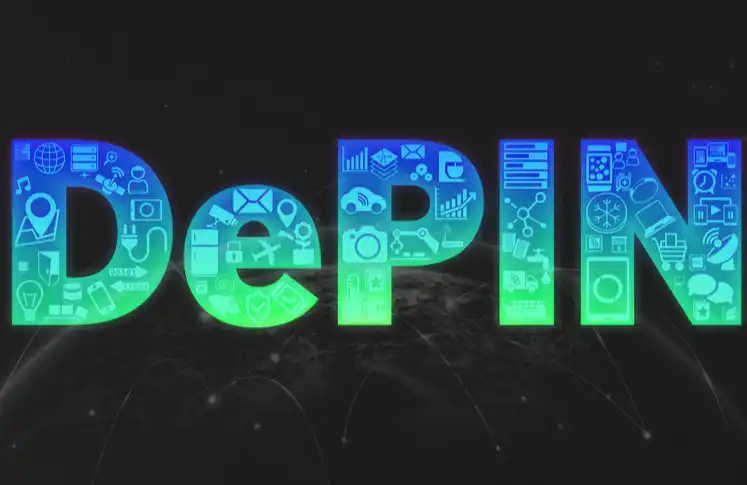
In addition, in the Depin track mapping released by Messari in 2023, data indexing is also included in the scope of Depin, classified as the "digital resource network" category of Depin, where The Graph and Covalent both appear as representative projects in the chart.
Image source: Messari
2.1.1 User Groups
Covalent's customers are mainly B-side, including Dapp projects such as various Defi, as well as many centralized crypto companies such as Consensys (investment board), CoinGecko (asset market), Rotki (tax tools), NFTX (NFT curation), and Rainbow (crypto wallet).
2.1.2 Value Proposition
The economic scale of the blockchain world is growing exponentially: more ecosystems, more L1s, and more Rollups.
More and more users and economic activities mean more transactions and more data, all of which are stored in a distributed manner by blockchain nodes. On the one hand, this means decentralization, openness, and accessibility of data, but on the other hand, it also means complexity, enormity, and low efficiency in reading. The data size of the Ethereum blockchain alone has exceeded 1TB, and data faces the problem of "read and parse scalability".
When applications (such as wallets, NFT markets, or more complex web3 products) need data from multiple blockchains with different output formats, the situation becomes more complicated. Covalent has built a protocol that can standardize data from various blockchains, called the "Unified API". This unified API allows users and dApps to obtain all on-chain data in a structured way, which they can integrate into existing products without the need for tedious data processing.
GoldRush
https://www.covalenthq.com/staking/#/
https://www.covalenthq.com/staking/#/
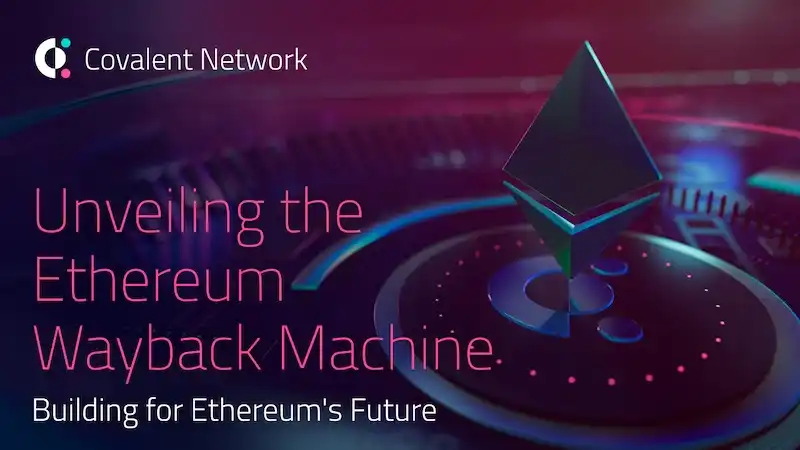
Ethereum Wayback Machine(EWM)
3. Off-chain state: For some scalability solutions, such as state channels or sidechains, it may be necessary to periodically submit snapshots or proofs of off-chain state to the Ethereum main chain. Blob data can be used to contain the data of these states.
4. Large-scale Data Sets: For decentralized applications (DApps) that require processing large-scale data sets, such as decentralized social media platforms or data markets, blob data can be used to store user-generated content or other large-scale data sets.
5. Batch Signing Information: In some cases, it may be necessary to verify a large number of signatures, such as in multi-party signing or batch authorization operations. Blob data can contain this signing information.
As a type of data temporarily stored on the Ethereum network, blob's storage and retention duration are determined by nodes themselves, which creates the "long-term data availability problem" for blob data.
For the specific technical mechanism of the Ethereum retrospective machine, limited by the length, the author will not elaborate here. We only need to know that the Ethereum retrospective machine also uses Covalent's network and data indexing mechanism to ensure the accessibility and availability of historical blockchain data. By using the Ethereum retrospective machine, anyone can rebuild a comprehensive representation of the blockchain and create a database with standardized patterns based on it.
For more information about the Ethereum Wayback Machine, please visit https://www.covalenthq.com/blog/the-ethereum-wayback-machine/.
The product is currently under development and has not yet been officially launched.
It is worth mentioning that Ethstorage, a project that also aims to decentralize storage using blob, received a $7 million investment with a valuation of $100 million in its seed round in July 23.
2.2.4 Business Model
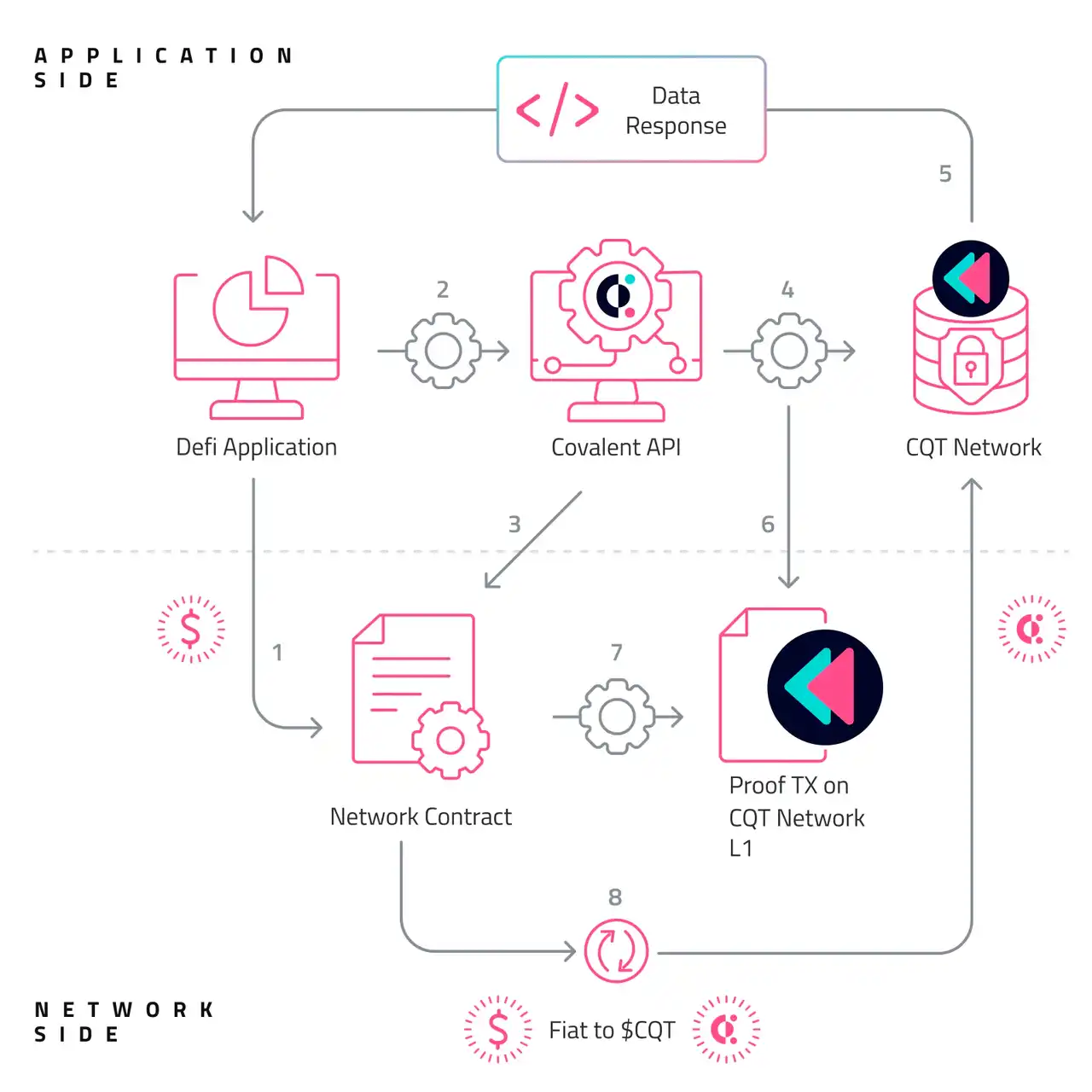
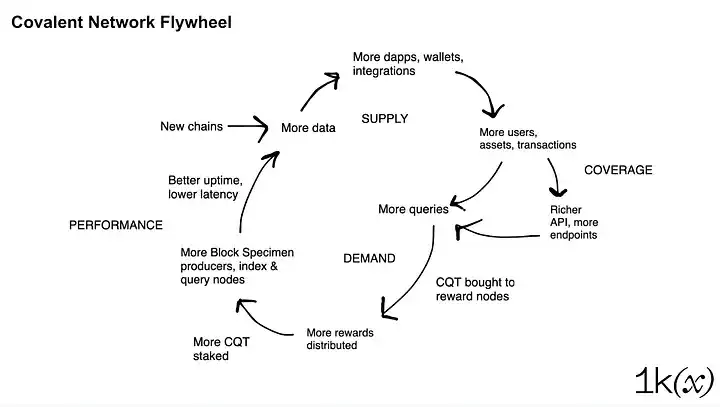
Covalent's business model is based on demand-side payment for data needs (which will be done through Covalent in the early stages), with fees paid to network operators who need to pledge project tokens CQT to provide services. The specific process is as follows:
When individuals call the API, they will pay with a stablecoin priced in US dollars, such as USDC. The contract will then use these USDC to purchase CQT on the secondary market, driving demand for the token. The CQT is then allocated to the wallet of the node as a reward for responding to the API query.
1. The application/developer will deposit stablecoin assets into the smart contract of the Covalent protocol.
2. Query the Covalent API for application.
3. Before sending the corresponding query request to the operator, it will check whether there is sufficient funds in the recharge account.
4. The query request is sent to the query operator to fulfill the request.
5. The required data is sent back to the application.
6. The Moonbeam ledger will record the data being used, which operators are fulfilling requests, and their costs.
7. The balance between the network contract, CQT and the executed work will be reconciled.
8. The US dollar funds are deducted from the developer's recharge account and exchanged for CQT through the market purchase mechanism, and then settled with the validator's unsettled balance.
As the profit of the network increases, more and more operators hope to enter the network, resulting in a greater demand for CQT pledge. This will create buying pressure on the CQT token due to the increase in pledge and payment volume. Of course, when operators sell CQT for stablecoins, it will also create selling pressure on CQT.
Obviously, the business situation of Covalent is determined by the external demand for data indexing. The more developers and institutions that require data, the better their business development will be.
Attention, the business switch of "buying income flow and distributing it to operators with CQT" mentioned above has not been turned on yet. However, according to official statements, the switch will be turned on in the near future and the process will be displayed on the chain. At that time, the repurchase will be conducted on Sushiswap, where CQT's current liquidity is mainly located, for the convenience of users to supervise.
So, what is the current business situation of Covalent? We will analyze it from the number of supported chains, user data, pricing and fees, and customer situation.
2.3 Business Situation
2.3.1 Number of Supported Blockchains by Indexing Service
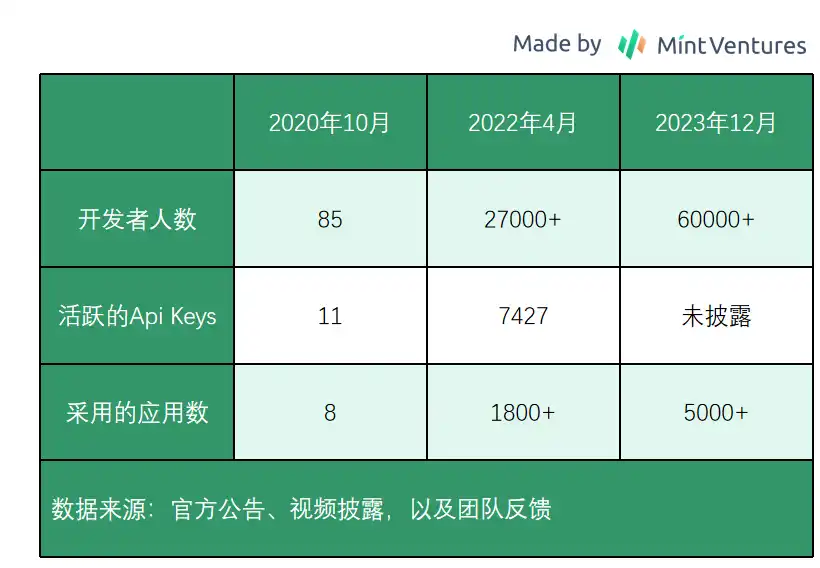
2.3.2 User Count
2.3.3 Charging Situation
1. Pricing
According to the price list provided by Covalent, the minimum consumption unit on the platform is "credits", and the amount of credits required for different query behaviors varies.
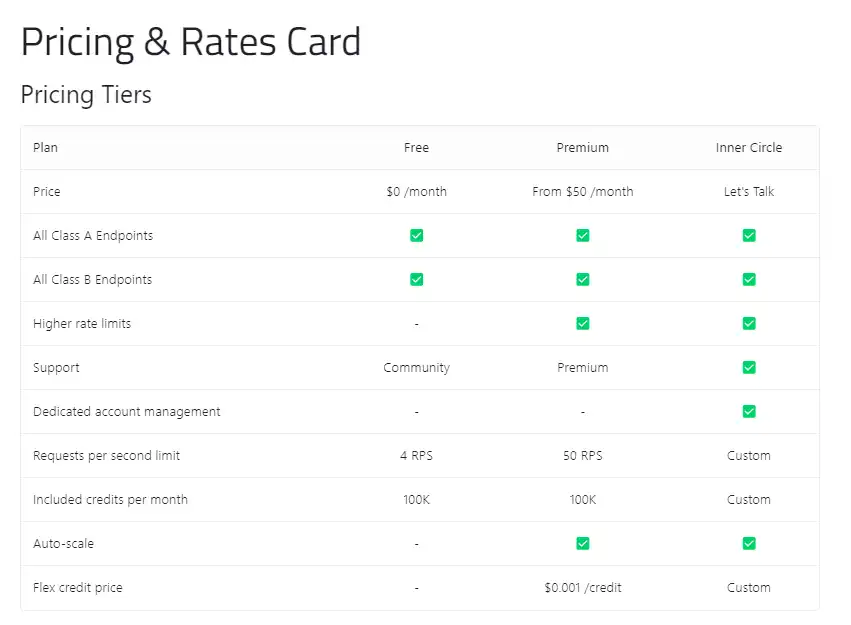
Using a small wallet project as an example, let's calculate its monthly indexing service consumption:
1.Ethereum (7,000 daily active users)
2.Polygon (3,000 daily active users)
3.Optimism (1,000 daily active users)

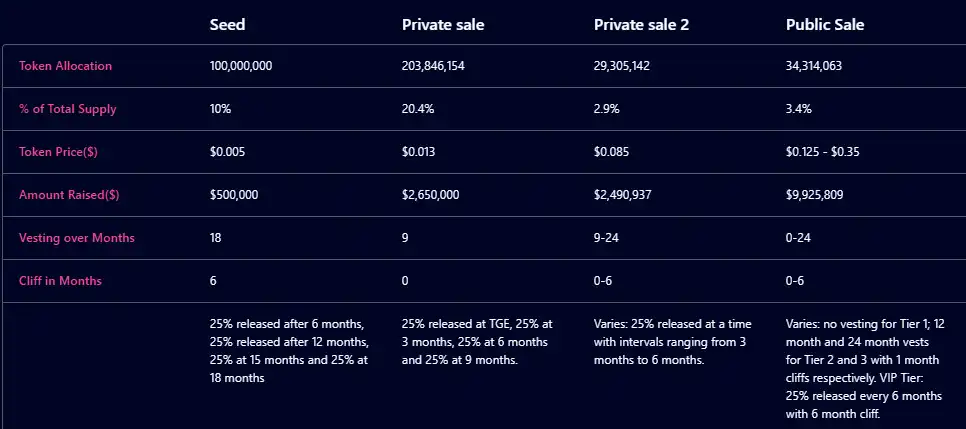 The content you provided is:
Image source: https://www.covalenthq.com/token/
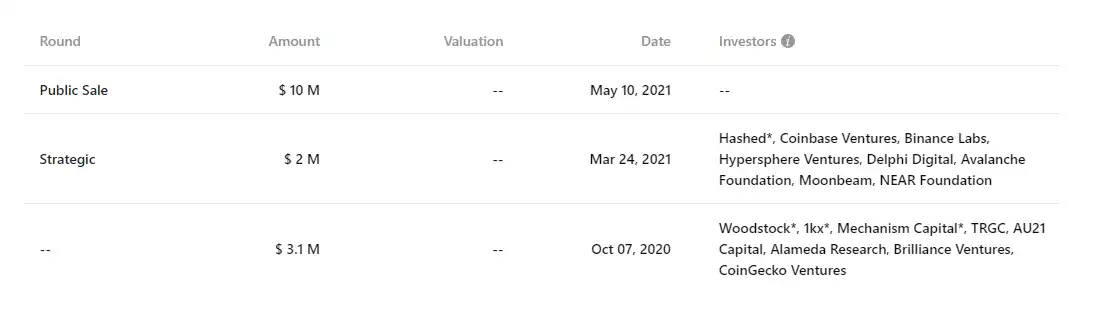
The investors are also very luxurious, basically gathering various top Web3 institutions, including Hashed, Delphi Digital, etc., among which two major leading exchanges Binance and Coinbase have also invested.
However, the project's most recent round of financing was in May 2021, and more than two years have passed since then.
2.4.3 Important Partners
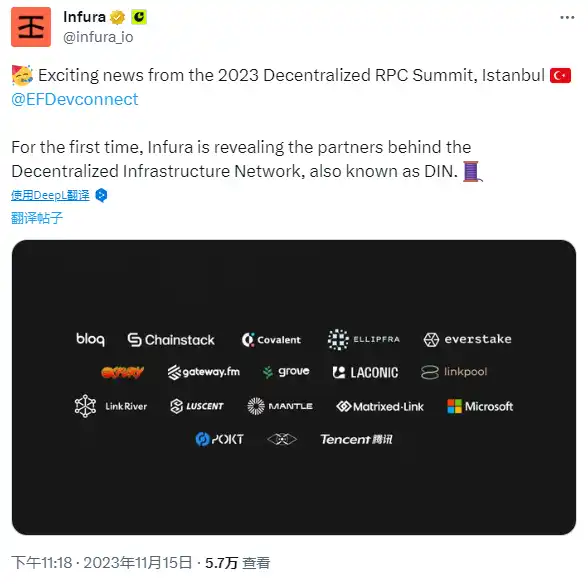
Through collaboration, Infura will integrate Covalent's API into its existing service suite, ensuring developers have a seamless and efficient experience, eliminating entry barriers and accelerating development cycles.
Overall, Covalent is a top project in a rapidly developing field, with its various business data rapidly increasing and revenue data surging. In terms of revenue, Covalent has several times the revenue of the current leading project in the field, The Graph, and seems to have achieved better PMF (Product Market Fit). However, since its revenue stream has not yet been put on the chain, there may be a significant cognitive gap among market investors.
In terms of new business, its Ethereum Wayback Machine being developed as a long-term blob DA solution is also in line with the current market trend.
In terms of the team, the founding team has professional resumes and entrepreneurial backgrounds that match the industry. The investors also include various top industry players, including public chain foundations, leading exchanges, major clients, and more.
3. Token Model
3.1 Token Total Supply and Distribution
Covalent token has a total supply of 1 billion, and the specific allocation is as follows:
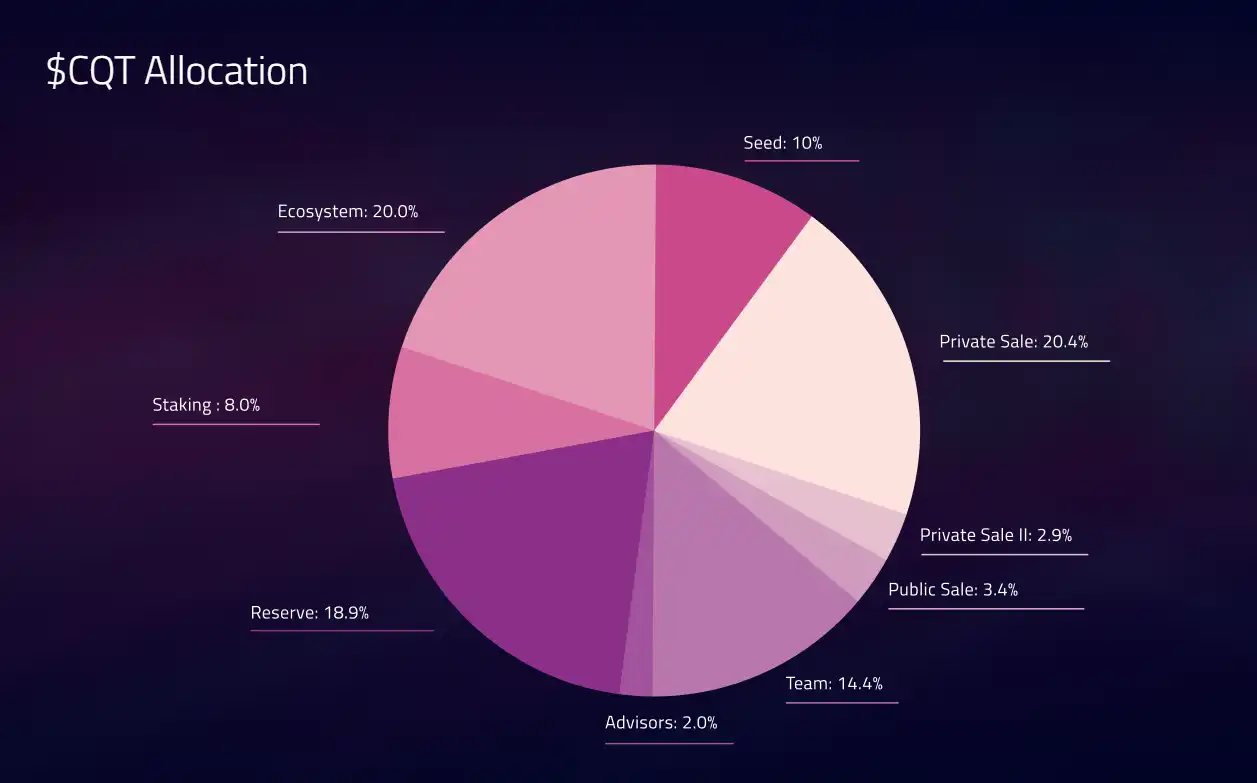
· Team and Advisors: 16.4%
· Reserve: 18.9%
· Ecology: 20%
The current token circulation rate is 62.5%, located in the following release positions:
Data source: https://messari.io/report/covalent-a-unified-api-for-retrieving-blockchain-data
3.2 Token Use Cases and Requirements
· Governance: Token holders vote on proposals to change system parameters, such as new data sources, specific geographic locations, and data modeling requirements.
· Pledge and Verification: $CQT is a pledge asset. Validators earn fees by ensuring the integrity of network data. Token holders can delegate to validators and earn profits by participating in the security mechanism.
· Economic settlement within the system: Paying users purchase data services with stablecoins, which will be exchanged from the market for CQT and distributed to stakers and network operators working normally.
· Pledge reward: Pledging CQT itself will also receive pledge incentives, but this part of the income will only last for 4 years, which is used to activate early network participants. The cost of long-term network operation will be maintained by payments generated by users' real needs.
Overall, the token's economic model design is reasonable, especially considering the payment and budget preferences of enterprise-level clients: enterprise clients do not want to hold volatile tokens, namely CQT, on their balance sheets.
4. Market and Competitor Situation
4.1 Market Segmentation
There are many participants and levels in the on-chain data market, and we need to classify them.
Covalent belongs to the indexing layer of data, which is the layer of processing and outputting data after it is obtained. In the competition of this layer, there are also competitors such as @Bitquery_io, @etherscan, @MoralisWeb3, @blockvisionhq, but they are all centralized. The Graph is the decentralized indexing service provider that has introduced tokens.
The relative value of decentralized data indexing layer lies in providing stronger anti-censorship, openness, and verifiability of data sources and construction methods. The distributed working mode also makes the system less prone to single point of failure.
4.2 Competitor Comparison
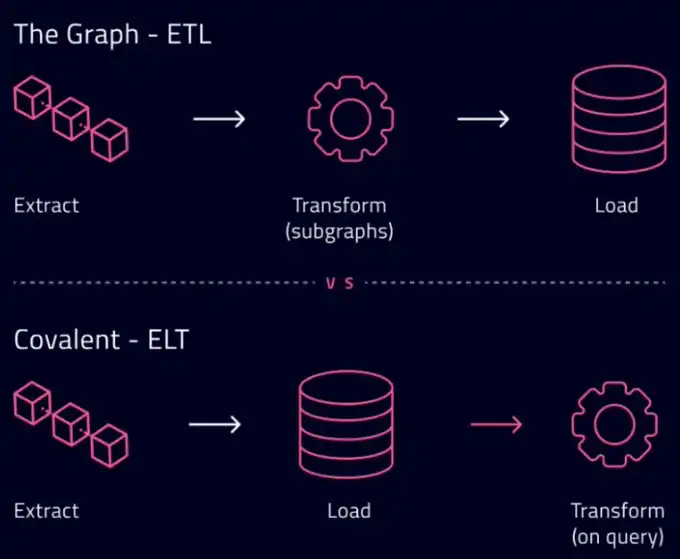
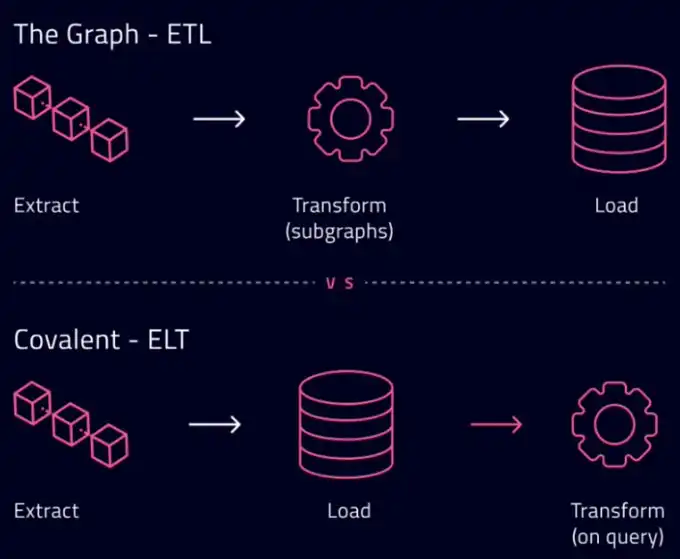
Compared to The Graph, the main differences of Covalent lie in:
1. Different Data Processing Methods
Messari:Covalent: A Unified API for Retrieving Blockchain Data
1KX:Indexing the universe of blockchains with Covalent
Welcome to join the official BlockBeats community:
Telegram Subscription Group: https://t.me/theblockbeats
Telegram Discussion Group: https://t.me/BlockBeats_App
Official Twitter Account: https://twitter.com/BlockBeatsAsia

 Related Articles