Understanding Yaka Finance: DeFi+NFT, the pioneer of DEX on Sei.

Sei urgently needs a native DEX to accommodate Sei's future ecological traffic.
As of the time of writing, DeFiLlama data shows that Sei's TVL is currently $9.54 million, of which approximately $9 million comes from Astroport in the Cosmos ecosystem. Therefore, launching its native DEX is a necessary step for Sei. The Sei ecosystem is still in its very early stages of development, but with the recent liquidity brought by NFTs and memes on Sei, new DeFi projects in the ecosystem are beginning to emerge.
One of the most eye-catching projects is Yaka Finance, which aims to become the liquidity center of the Sei ecosystem.
Yaka: Sei Native Liquidity Center for Ecology
Yaka Finance is a Ve(3,3)DEX combined with Launchpad, which won the first prize in the "Code Sei" hackathon. It used the grant from the Sei Foundation to complete the early stage of the project and aims to become the native liquidity center of the Sei network. Its utility token is YAKA and its governance token is veYAKA. It has been launched on the testnet and the Airdrop interface is open for users to earn points through interaction.
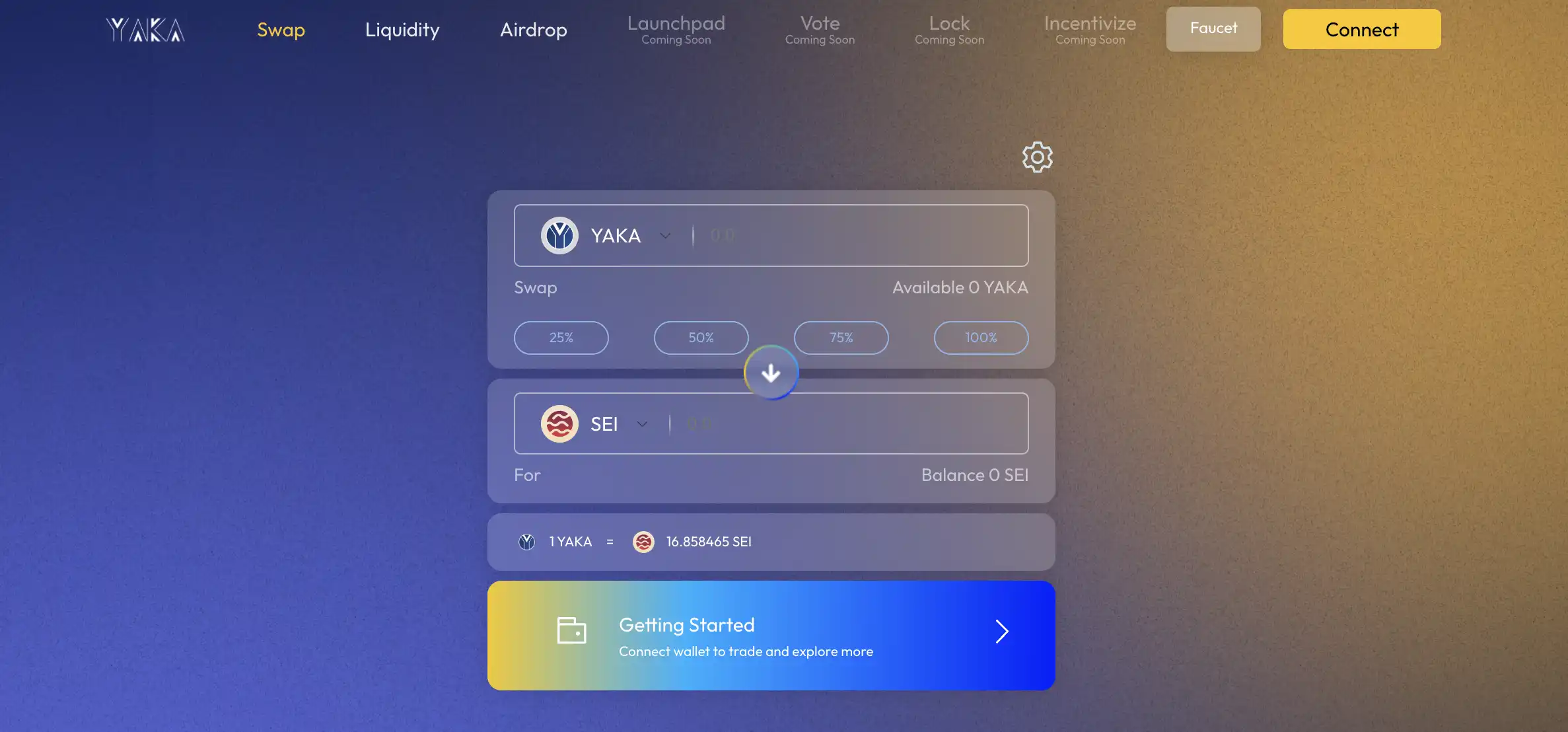
The uniqueness of Yaka Finance to Sei lies in its adoption of the Ve(3,3) model to introduce a fee and incentive system, which better incentivizes LP and governance token holders. When users stake YAKA, they receive veYAKA tokens, which grant them voting rights to determine the issuance allocation of various assets in the liquidity pool. The amount of veYAKA tokens received by users is proportional to the amount of locked YAKA tokens and the duration for which these tokens are locked.
When users use veYAKA tokens to vote in specific liquidity pools, they will affect the incentive allocation of the LP pool. The more veYAKA tokens the pool receives, the higher the YAKA allocation of the pool, and the stakers will also receive more bribe incentives. This includes LPs providing liquidity for Yaka, holders who re-stake transaction fees to receive veTokens, protocol revenue, and users who can enjoy benefits such as low slippage.
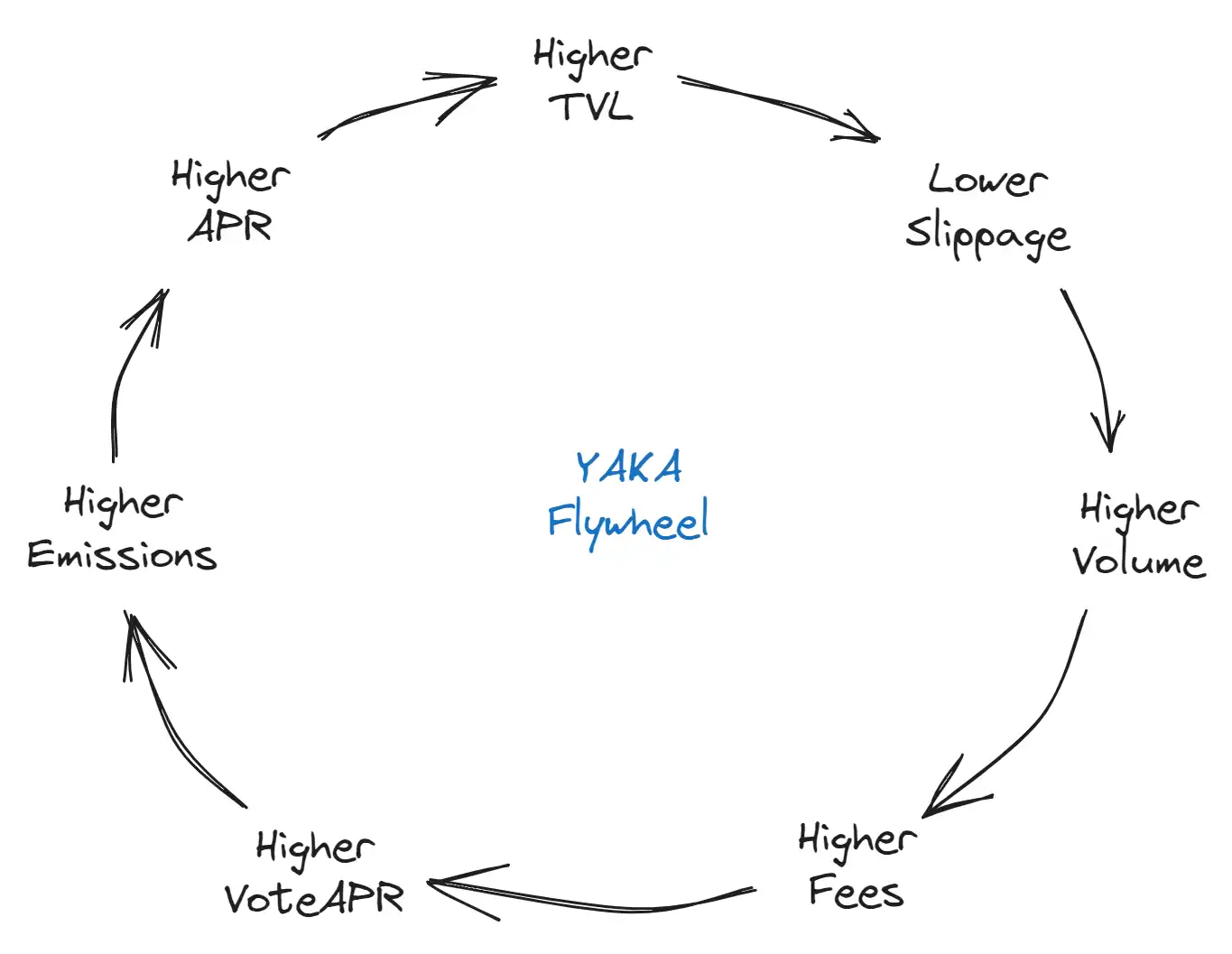
The increase in the collateralization ratio reduces the selling pressure of the token, thereby driving up the token price. The price increase leads to an increase in the market-making APR, further attracting more liquidity aggregation and creating better trading depth, and attracting more trading volume, forming a self-reinforcing business cycle. Through the Ve(3,3) model, Yaka will achieve a balance between increasing governance token rewards, encouraging holders to lock assets, reducing selling pressure, and maintaining token value and APY. To become a native liquidity center, the most important thing is to attract traffic into the cycle, and Yaka Finance's breakthrough in this regard is NFT.
DeFi+NFTFi, Yaka's breakthrough in business flywheel
On January 15th, Yaka Finance announced the launch of the Yaka Voyager NFT program, which offers multiple incentives to holders through mechanisms such as airdrops, fee incentives, and staking. The total supply of Yaka Voyager NFT is 2000, with a whitelist mint price of 120 SEI and a public sale mint price of 150 SEI, expected to raise a total of 240,000 SEI. 50% of the supply is specifically used to bribe and increase the staking rate of YAKA, and to provide incentives for mining pools such as SEI/USDT without existing bribers. The other 50% is used to establish initial liquidity and pay for operational and research costs.
First of all, holding Voyager NFT will receive a 6 million YAKA token airdrop, accounting for 3% of the initial supply, of which 30% will be unlocked at TGE, and the rest will be linearly unlocked within 12 weeks. In addition, you can also receive 2% of the royalty income from NFT. Staking Voyager NFT can earn a portion of the transaction fees of Yaka Finance, which is 15% for the first 3 months and fixed at 10% thereafter. The NFT staking function will be launched after the Sei parallel EVM mainnet is launched.
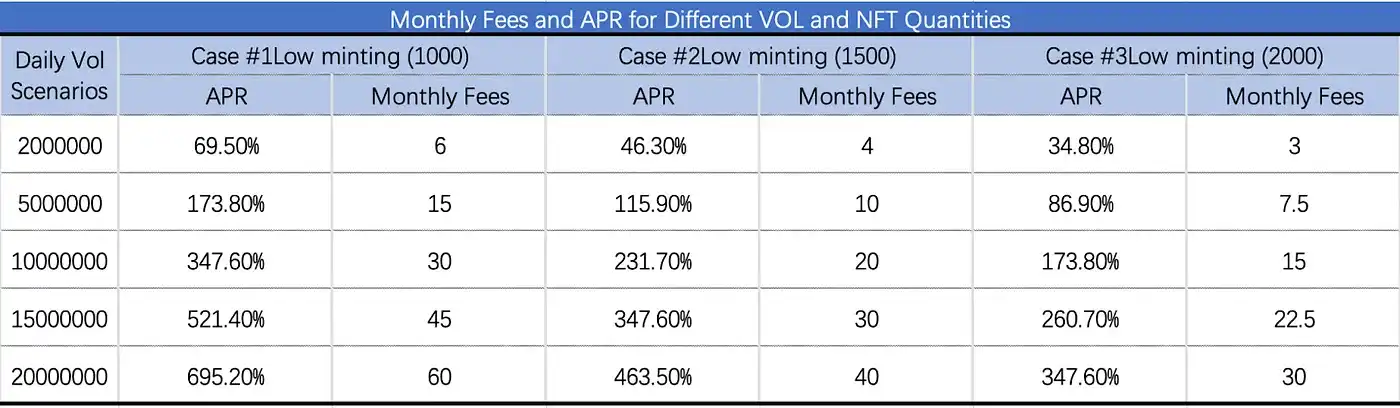
质押 NFT 所得手续费分成变化
The sharing of transaction fees earned from NFT collateralization has changed.
The fewer NFTs that are minted, the greater the airdrops and transaction fee dividends that each individual NFT will receive. However, according to official data, if all NFTs are minted, based on an initial YAKA valuation of 7.5 million tokens, each NFT will receive approximately 3,000 YAKA tokens in airdrops, worth around $112.5, covering the minting cost of 150SEI in the public sale phase.
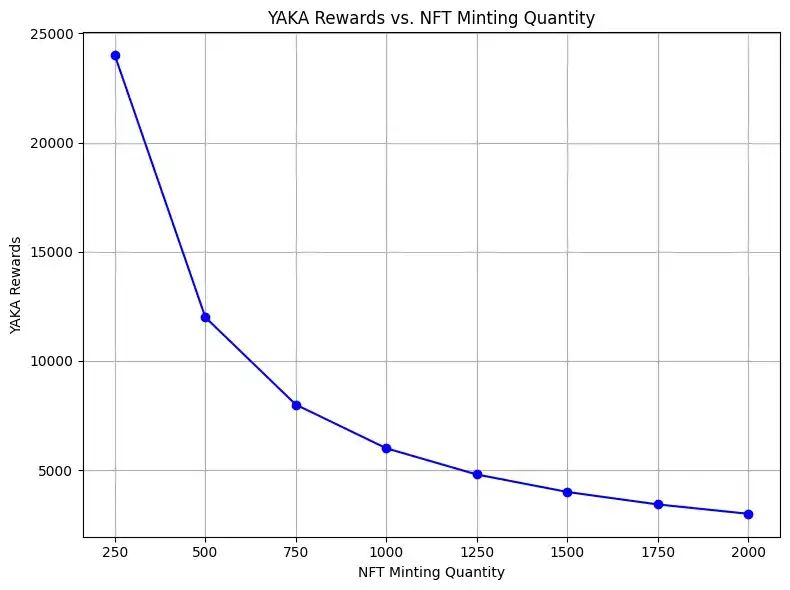
NFT minting quantity and airdrop rewards
By issuing Voyager NFT, Yaka Finance has gained user stickiness support in the cold start phase, which helps the protocol operate for a longer period of time. YAKA's staking certificate has changed from veYAKA to veNFT, where veYAKA is non-transferable and veNFT is transferable. This means that users can resell or re-mortgage their ve certificates, further improving capital efficiency.
Token Economy
Yaka Finance uses two tokens to manage its utility and governance, with the utility token being YAKA, used for airdrops, distribution to LP, etc.; and the governance token being veYAKA, which YAKA holders can lock and receive veYAKA, while also being able to add additional tokens to veYAKA NFT at any time. The lock-up period can be up to 2 years, and the longer the exercise time, the higher the voting weight.
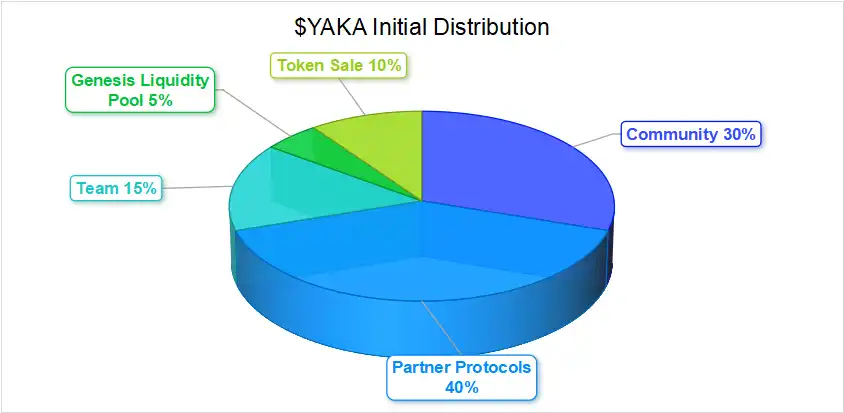
YAKA's initial supply is 2 billion tokens, with 40% allocated to partnership agreements, 30% allocated to the community, 15% allocated to the team, 10% used for token sales, and 5% allocated to the genesis liquidity pool.
As one of the earliest DrFi infrastructures in the Sei ecosystem, Yaka's prospects are worth looking forward to. There are two reasons for this. Firstly, as mentioned at the beginning of the article, Sei currently needs native network liquidity, and Sei focuses on Layer 1 specifically for trading. To support this, basic transaction security needs to be provided by DeFi infrastructures such as Yaka and Silo.
Secondly, due to the fact that the Sei ecosystem is still in its early stages of development, Yaka has the advantage of being a first mover with its "First is First" approach. Additionally, the marketing linkage of Sei's ecosystem projects has also boosted Yaka's market volume. By airdropping Voyager NFT to other projects in the ecosystem, Yaka has attracted the first batch of "B-side customers" to its liquidity procurement market, similar to how internet products offer "free trial coupons" to customers. Here, the experience is the "liquidity procurement service" rights of the project. Yaka will also create a launchpad platform to drive the launch of other early-stage projects in the Sei ecosystem, injecting sustained liquidity into Sei.
Welcome to join the official BlockBeats community:
Telegram Subscription Group: https://t.me/theblockbeats
Telegram Discussion Group: https://t.me/BlockBeats_App
Official Twitter Account: https://twitter.com/BlockBeatsAsia

 Related Articles