



After Inscription, will the next explosion of the BTC ecosystem be Bitcoin Layer 2?
Original Title: "After Inscriptions, Will the Next Breakthrough in BTC Ecology be Bitcoin Layer-2?"
Original Author: Bitwu.eth
Original Source: medium
The craze for NFTs has been going on for some time now. After the hype around Meme and mining, the market is now looking for new opportunities in the #BTC ecosystem. It seems that many people believe that the breakthrough point in the later stage will be Bitcoin Layer2.
Let's take a look at Bitcoin Layer2s today.
This article contains over 3000 Chinese characters, providing a large amount of information and presenting novel perspectives. Reading it will require some time, so we recommend bookmarking it and reading it carefully later:
This article is divided into 3 parts:
1. Bitcoin Layer2 from 10 years ago.
2. Bitcoin Layer2 Development
3. Several new Bitcoin Layer2 analyses in the market.
·ZTC Global(@ZTCGlobal)
·B² Network(@BsquaredNetwork)
·BL2(@BL2_official)
4. Summary of Relevant Information
One, Bitcoin Layer2's Past Life
Actually, the controversy surrounding Bitcoin Layer2 is not a recent development. It has been discussed since 2015 and continues to be a topic of debate. The BTC community has previously experienced intense arguments regarding this matter.
The maximum capacity limit of the BTC blockchain is 1M, which greatly restricts the number of transactions that can be accommodated in each block. These disputes have gradually formed two factions: the expansion faction and the core (conservative faction).
Core believes that a sidechain should be developed outside of the main chain. The technical solution is to build a layer-two network protocol (such as the Lightning Network), which has led to the emergence of various alliance chains, private chains, cross-chains, and so on.
The current situation is that BTC continues to operate with small blocks. Since the blocks are small, there is a ceiling on the total number of transactions that miners can process, and there is also a ceiling on the income from each transaction. For example, if a user can only accept a few hundred blocks of Gas for a transaction, they may choose to conduct off-chain transactions or use alternative solutions such as Bitcoin Layer2. This will result in a decrease in the miner's income from Gas.
The expansionists believe that the 1MB block size is too small, and there is a ceiling on gas fee revenue. When gas fees are too high, users will go to Bitcoin Layer2 networks such as the Lightning Network to trade, resulting in a decrease in miner revenue.
This won't do. We must expand the block size to 8MB, 32MB, or even higher capacities, so that users can trade on the main network and miners can make money while lying down.
So the biggest fork of BTC came out, the first fork was BCH, which led to the first wave of frenzy after ICO in 2017. Various fork coins of BTC were flying all over the sky, and many people became rich overnight, while more people saw their fork coins become worthless overnight. Looking back at that year, I also invested in various fork coins with my BTC, but in the end, it was all for nothing!
The expansion of the community is not so united, and there are constant internal disputes. On November 16, 2019, BCH hard forked into BCH SV and BCH ABC.
Summary:
Bitcoin Cash aims to expand the network through on-chain methods. Its community members believe that Bitcoin Cash will continue the vision of "peer-to-peer electronic cash" proposed by Satoshi Nakamoto.
Meanwhile, the Bitcoin project initiated by Satoshi Nakamoto has taken the offchain scaling path (such as Lightning Network) under the leadership of the Core development team, which means achieving offchain scaling through Segwit (in 2017) and Lightning Network.
二、Bitcoin Layer2 Development
There were many Layer2 solutions for Bitcoin in the early days, such as Lightning Network, Rootstock, Stacks, Liquid Network, and so on...
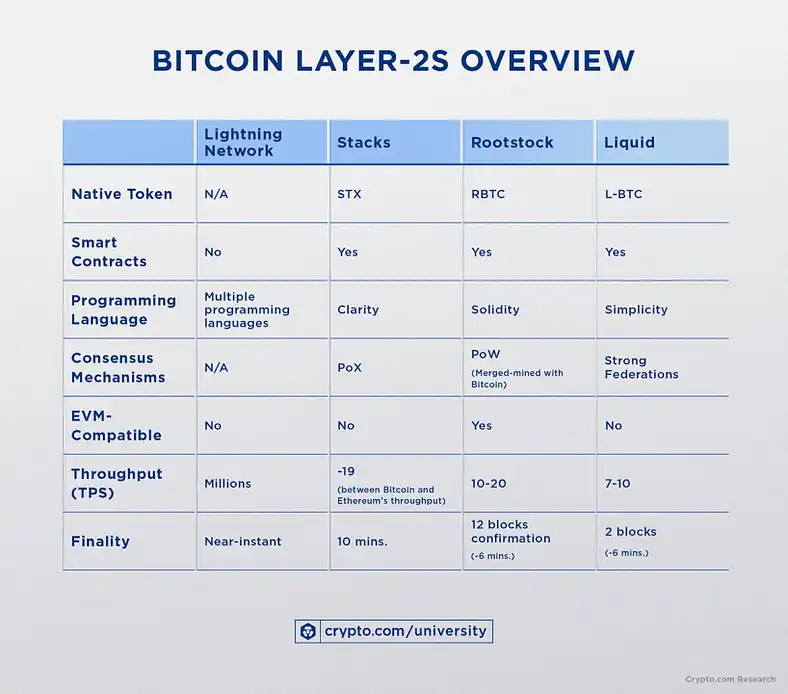
Today we won't explore the technology of classical Bitcoin Layer2, because many strong technical concepts have been performing mediocre in the market (such as EOS).
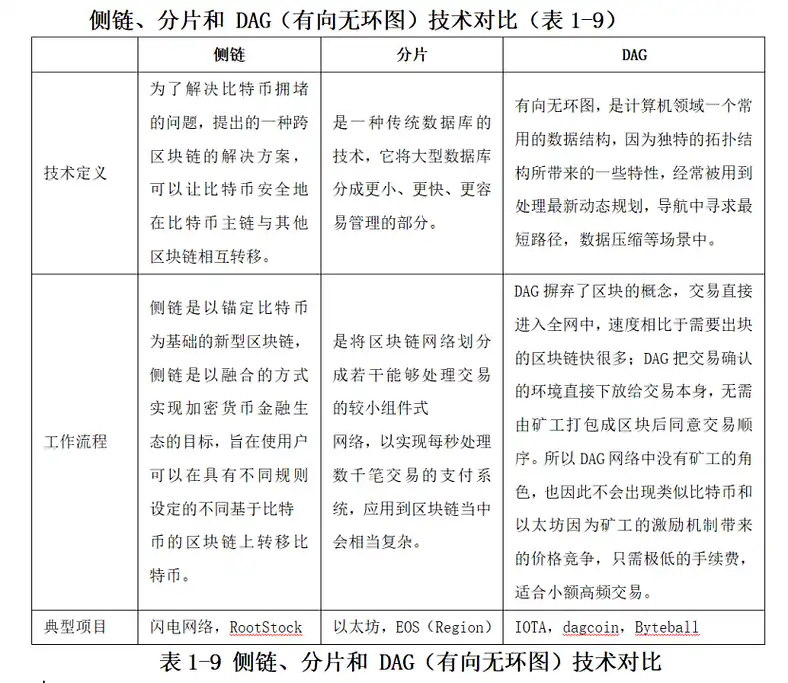
Regarding Layer 2 protocols, there is an illustration in a book I was preparing to publish in 2018. This illustration shows that around 2018, the Layer 2 concepts for BTC and ETH were the Lightning Network and Raiden Network...
After the prosperity and development of the Ethereum ecosystem (excluding ICOs) in 2019, many Ethereum Layer2 solutions and the huge wealth effect brought by NFTs emerged in the following years. Some members of the BTC community seem to realize that the history of Ethereum can also be repeated on Bitcoin.
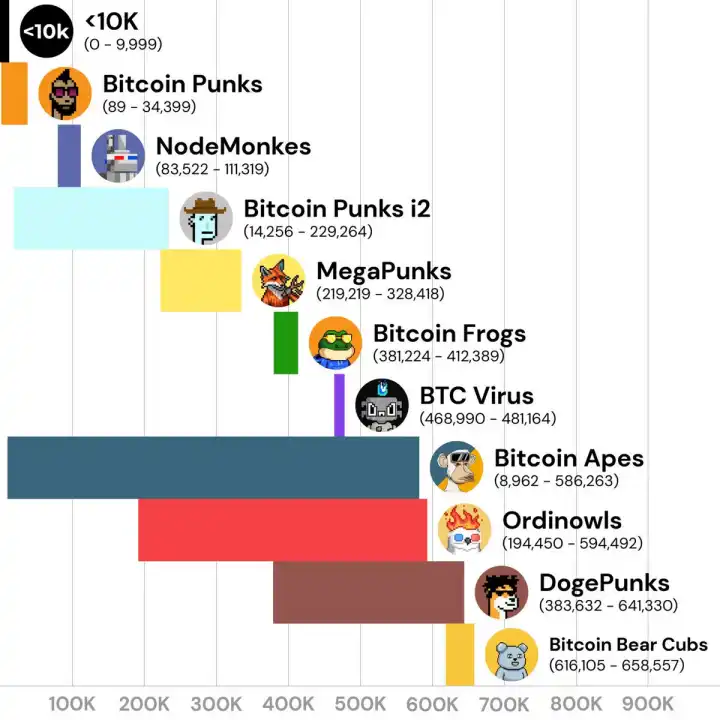
Therefore, in January 2023, the NFT protocol Ordinals on Bitcoin emerged, and on March 8th, Yuga Labs auctioned BTC NFTs on Ordinals, with 288 NFTs selling for a total price of $16.5 million.
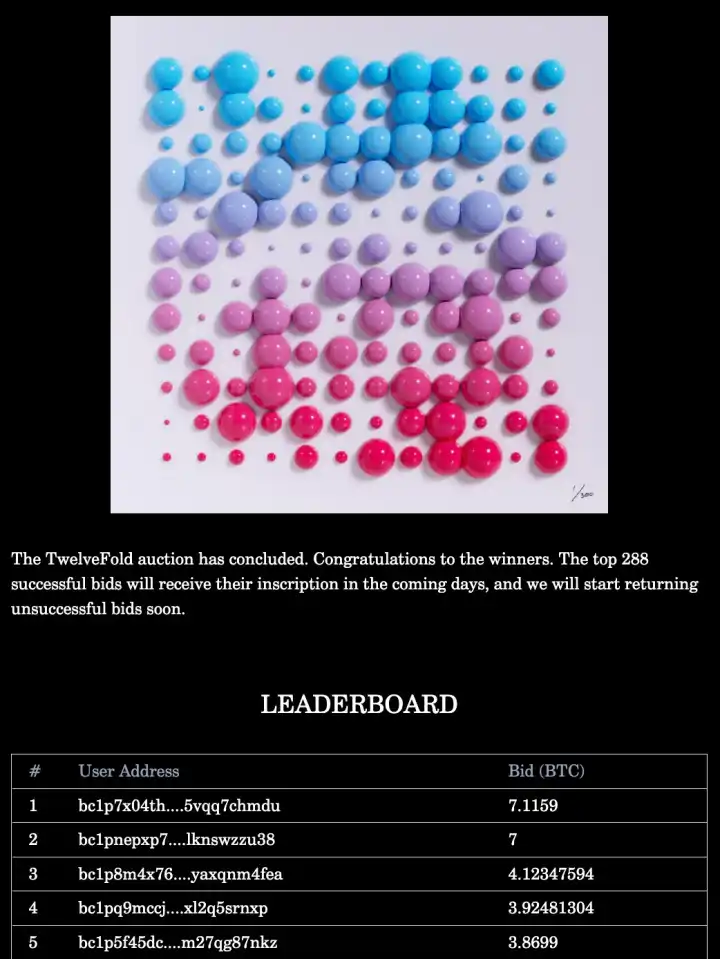
This Ordinals protocol, proposed by Casey Rodarmor in January 2023, puts forward an idea:
Can we arrange these "聪" in a certain order and assign them a unique ordinal number between 0 and 2,100,000,000,000,000, and then connect them to other information: pictures, text, videos, or even a string of code, so that each "聪" becomes unique and irreplaceable.
This is equivalent to giving Bitcoin the native ability to create NFTs.
(1)BL2(@BL2_official)
(2)B² Network(@BsquaredNetwork)
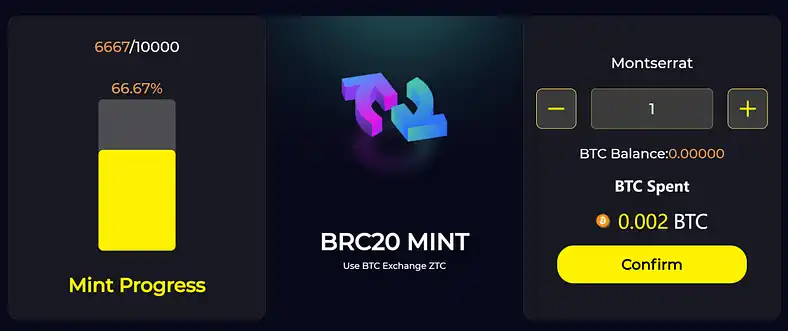
(3)ZTC Global(@ZTCGlobal)
Welcome to join the official BlockBeats community:
Telegram Subscription Group: https://t.me/theblockbeats
Telegram Discussion Group: https://t.me/BlockBeats_App
Official Twitter Account: https://twitter.com/BlockBeatsAsia







