Ethereum on-chain data review in 2023: On-chain activities are concentrated in DeFi, and liquidity staking leads new use cases
Original Title: "Ethereum Wrapped: An Onchain Year in Review for 2023"
Original Author: J Hackworth
Original Source: Mirror
Translated by: Deep Tide TechFlow
At the end of 2022, the cryptocurrency industry was facing the collapse of FTX, and the market sentiment was extremely low. Today, the industry is filled with excitement and positivity from cryptocurrency users and developers.
So, what does the on-chain data tell us about the situation in 2023? This article explores Ethereum's on-chain data to determine which activities and trends influenced Ethereum in 2023.
Facing the Bear Market
Due to the fact that we have been in a bear market for most of the year, it is not surprising that various indicators have fallen across the board. However, it is not all bad news.
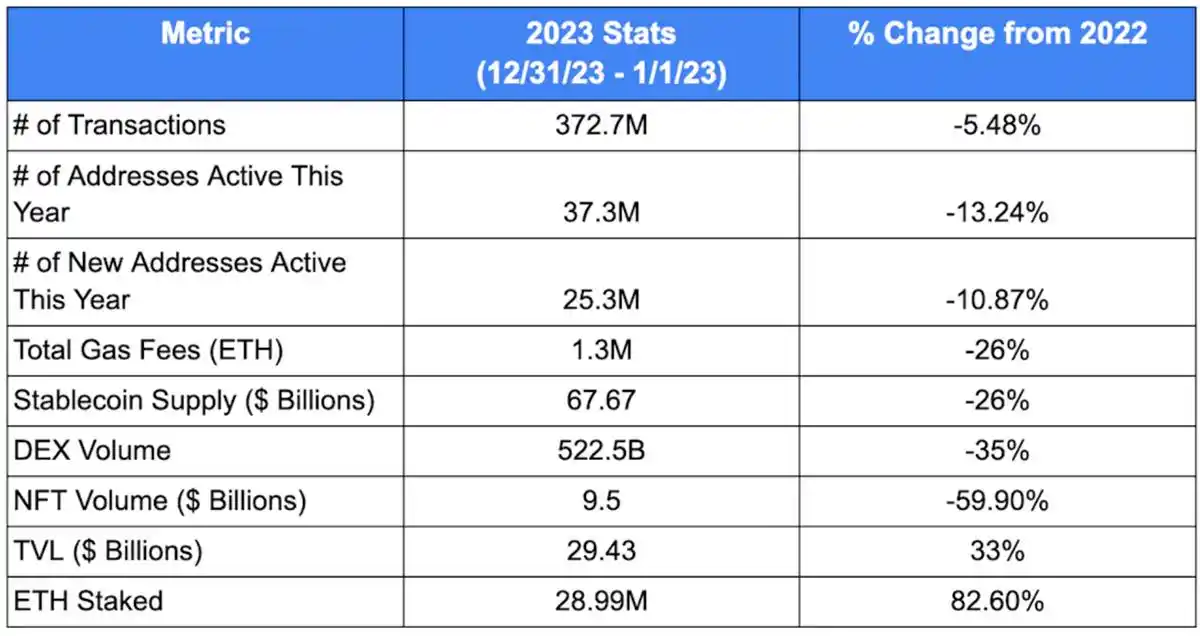
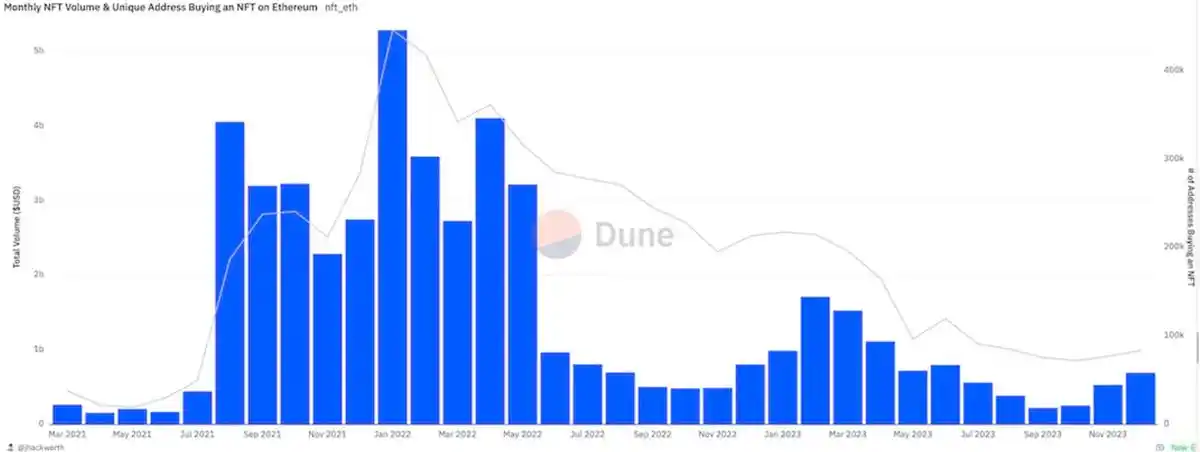
Negative side: By 2023, all major indicators have shown a decline. The notable drops include total gas fees (-26%), NFT trading volume (-59.9%), and DEX trading volume (-35%).
Positive side: Data is expected to rebound by the end of 2023. Since the beginning of 2023, TVL has increased by 33%, which may be attributed to the rise in ETH and other token prices. In addition, although some indicators have not performed well, the situation is now improving, including the influx of $20 billion in stablecoins since October and the strong upward trend of Gas.
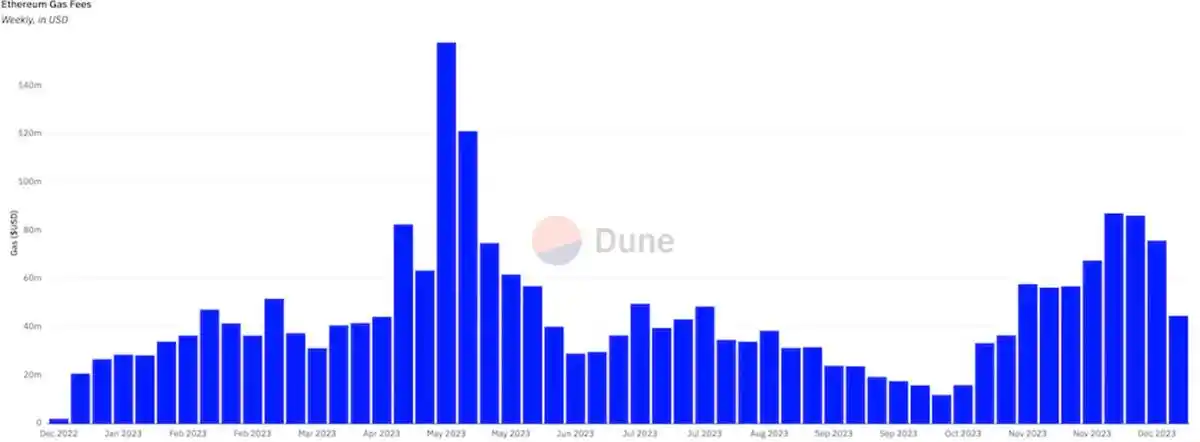
To further explore what happens on the chain, we can see three major trends that shape the Ethereum ecosystem in 2023:
·L2 Growth
·DeFi drives gas demand, while NFT interest declines.
The content you provided is:
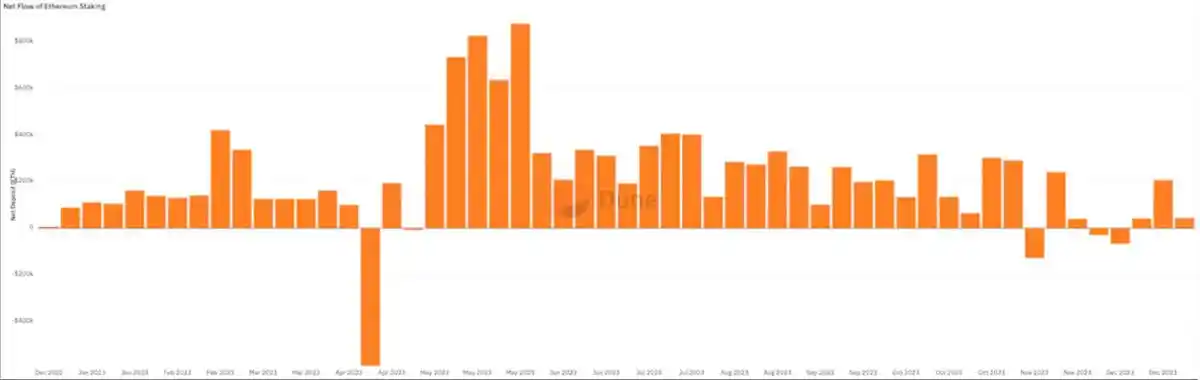
·ETH staking volume increases.
Embrace L2
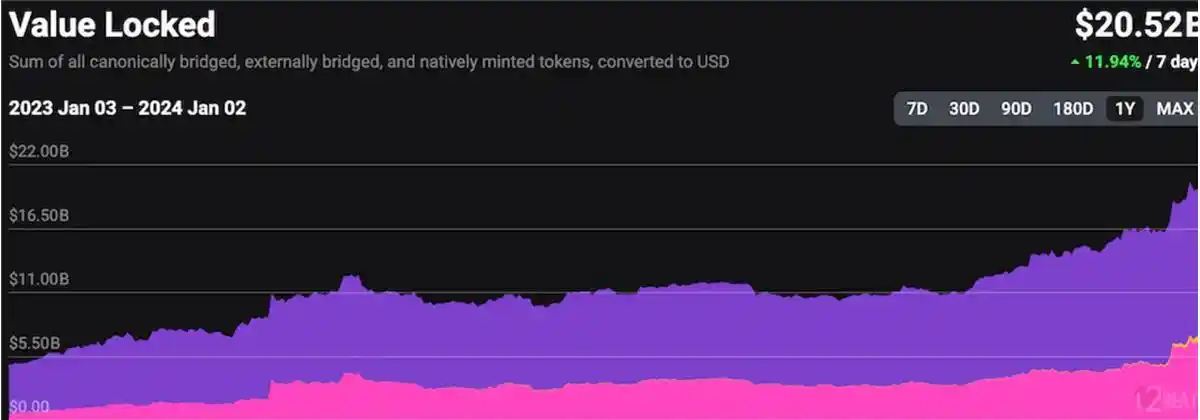
Despite the decrease in activity on Ethereum, the use of L2 continues to grow. As of early 2023, there are a total of 16 active L2s in the market with a TVL of 4.95 billion USD. By the end of 2023, there will be over 34 L2s in the market with a TVL of 20.74 billion USD.
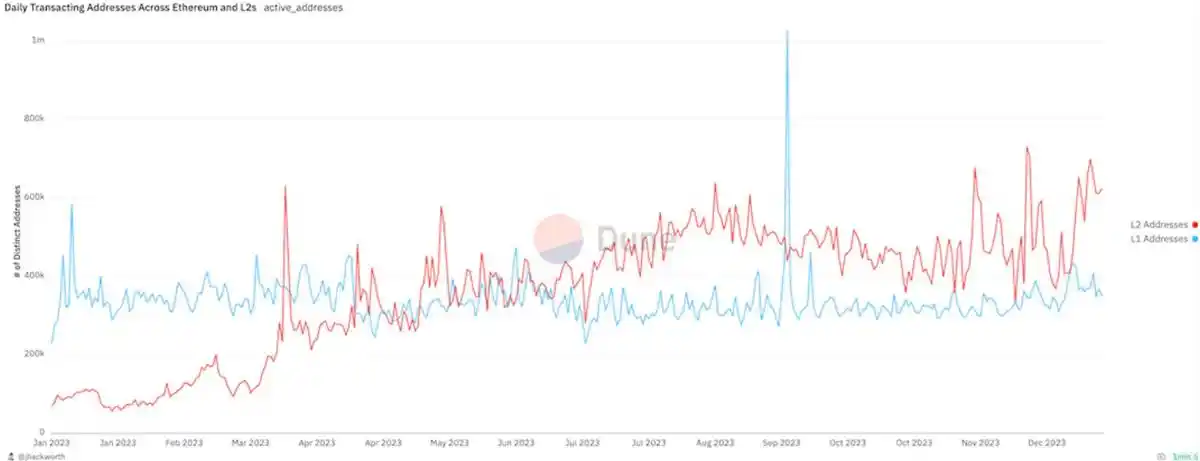
The increase adopted by L2 has led to a surge in activity. The active addresses on L2 have increased from less than 70,000 addresses to over 400,000 addresses, even surpassing the total addresses on Ethereum.
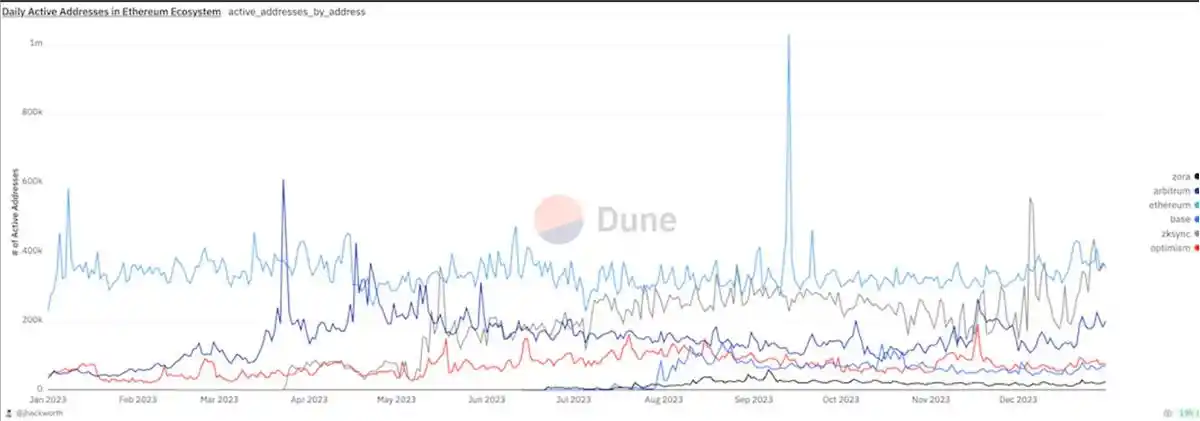
Although the active addresses of L2 overall exceed those of Ethereum, no L2 can match Ethereum: during the period of 2023, only 9 days, the active addresses of a single L2 exceeded Ethereum (zkSync, Arbitrum). Therefore, the conclusion is that L2 still needs to further develop its ecosystem and infrastructure to compete with Ethereum's activity.
In 2023, L2 made significant progress by attracting new capital and users, providing cost-effective features for protocols, and allowing the creation of unique applications that are not feasible on Ethereum.
Exploring DeFi Data in Depth
Through the chart below, you can see the top ten applications with the highest trading volume this year and the categories classified by Gas. We can draw a clear conclusion: the Ethereum mainnet activity in 2023 will mainly focus on DeFi.
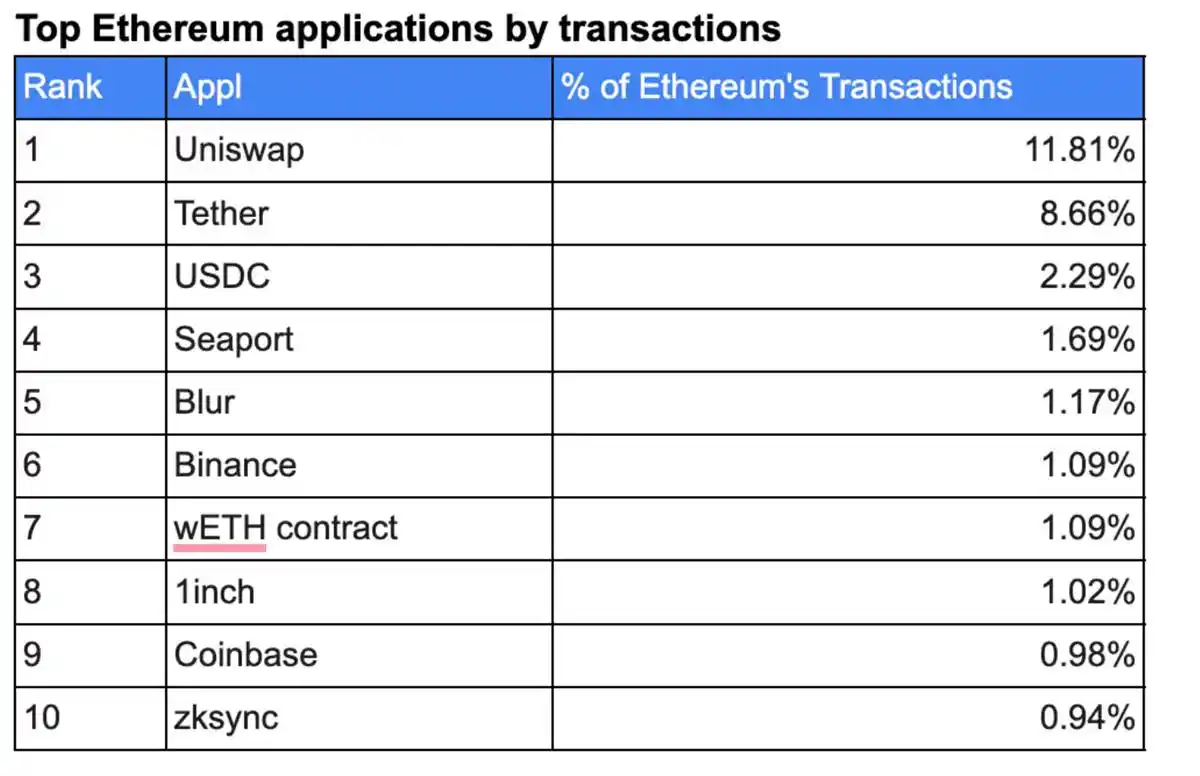
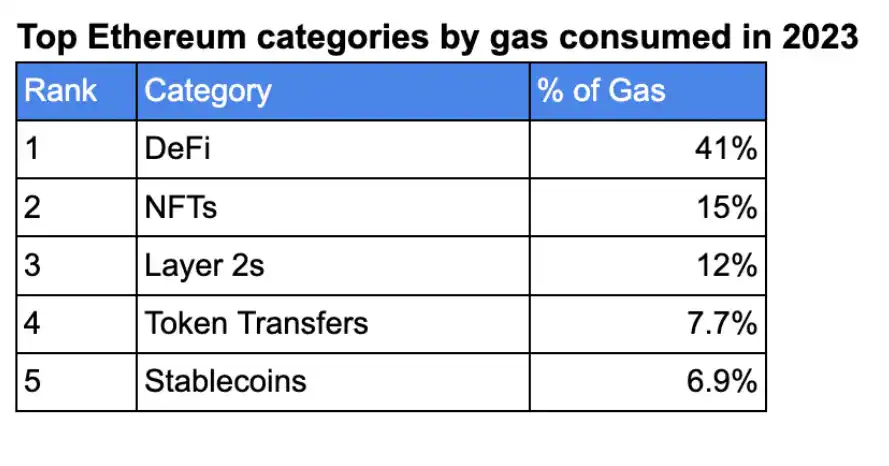
You will immediately notice two things:
·USDC and Tether are the two highest trading volume applications, accounting for 7% of Gas usage, highlighting the demand for stablecoins on Ethereum.
·Led by Uniswap, DeFi accounts for 41% of Ethereum gas usage, highlighting the important role of DeFi and DEX in Ethereum use cases.
DeFi has indeed had a pretty good year. At the beginning of the year, in January, DeFi accounted for about 31% of the total Gas on Ethereum, but by the end of the year, it used nearly half of Ethereum's Gas.
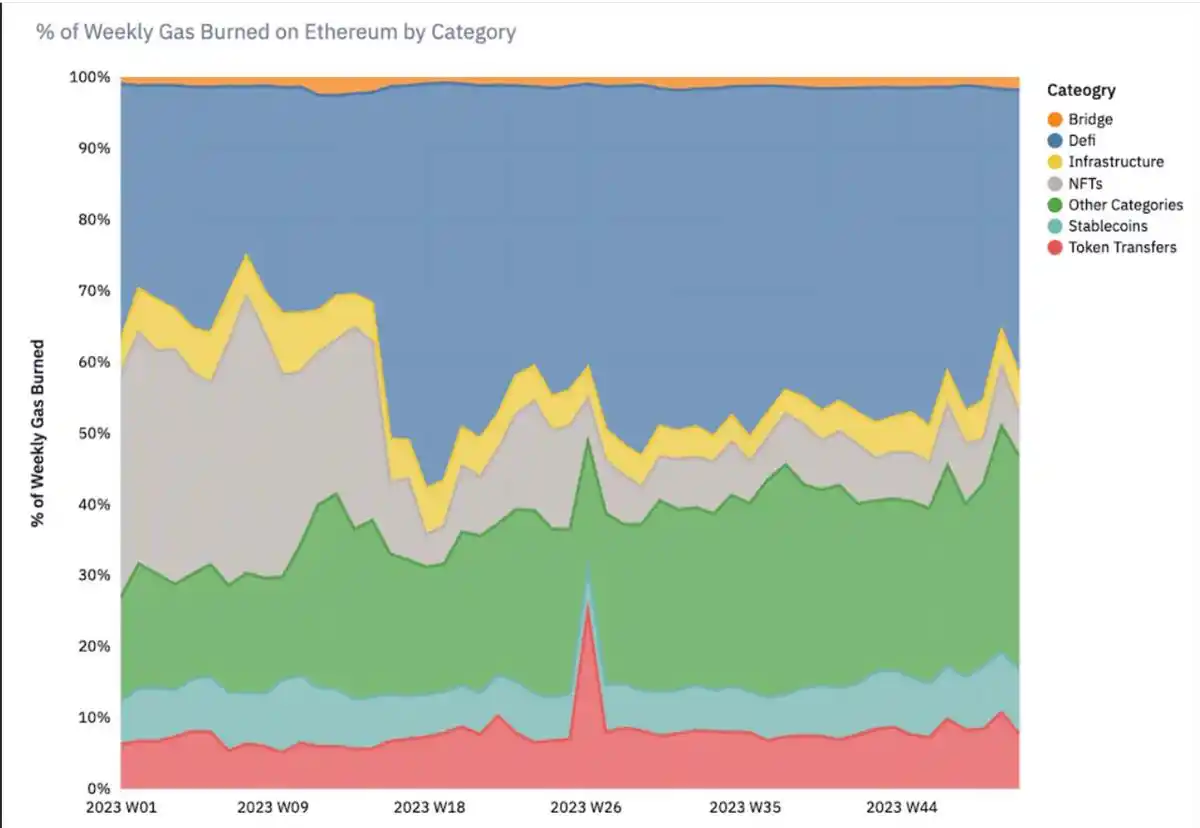
Although most of the usage of Gas comes from DEX, there are still other strong use cases:
·Maker set a new record in total expenses, exceeding $105 million, and reached the highest daily revenue in history this year.
·Curve and Aave have launched new stablecoins, with growth of over 103 million and 34 million US dollars respectively.
Tokenized national debt is part of the surge in real-world assets, growing to over $450 million on Ethereum in the past year.
Welcome to join the official BlockBeats community:
Telegram Subscription Group: https://t.me/theblockbeats
Telegram Discussion Group: https://t.me/BlockBeats_App
Official Twitter Account: https://twitter.com/BlockBeatsAsia
 Related Articles