Founder of Ordinals: Why Criticizing Inscriptions Will Only Weaken You and Bitcoin's Value?
Original Title: "Inscriptions: A Guide for the Ideological Maxi"
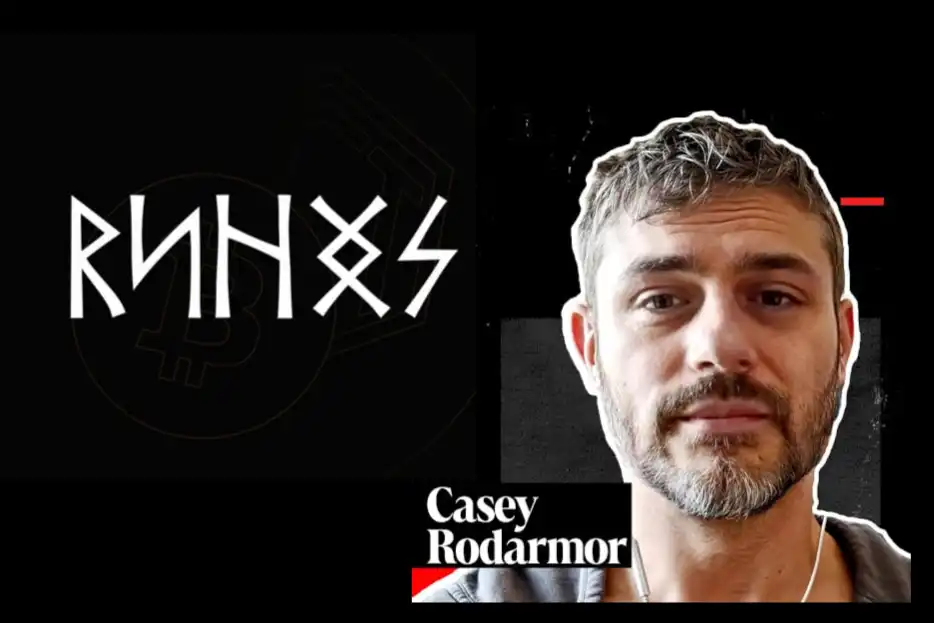
Author: Casey Rodarmor
Translation: Deep Tide TechFlow
Editor's Note:
Casey Rodarmor, the founder of Bitcoin protocol Ordinals, wrote that the current paradigm of criticism of inscriptions is not wise enough. He hopes that Bitcoin extremists will put down their complaints about inscriptions and suggests that they ignore inscriptions because more valuable use cases in the future will eliminate most inscriptions. The following is the full translation.
If you ask me about my attitude and viewpoint, they are almost identical to those of Bitcoin ideological extremists. I detest the state, do not respect authority, and believe that Bitcoin is the path to rid ourselves of the corruption caused by fiat currency on our lives and civilization.
However, I do not consider myself an ideological Bitcoin extremist, mainly because ideologies often cannot survive when confronted with reality.
Ideological Bitcoin extremism and its shallow culture are currently in an unhappy position: in contact with a reality that does not match them.
This article contains suggestions for ideological Bitcoin extremists, hoping that these suggestions can help them stop self-inflicted harm and avoid non-coerced errors. In other words, it is about how to prevent them from becoming losers.
First of all, I want to say that this article is not written to defend Ordinals and inscriptions. They do not need defending. The fact is that inscriptions already exist and no one can make them disappear.
Now, let's take a look at the suggestions.
My first suggestion is that complaining about inscriptions will make you and Bitcoin look weak. It is contradictory to both believe that Bitcoin is an unstoppable internet currency and that posting small pictures on the chain is foolish. We all know that in a forced situation, the former is correct and the latter is wrong. Bitcoin is an unstoppable internet currency, while small pictures on the chain are an insignificant issue. However, if you support both views at the same time, you will weaken any argument you believe that Bitcoin can resist the state.
Despite many complaints on Twitter, no one can cause any harm to Oridinals and inscriptions. Therefore, given that we still have important work to do in destroying fiat currency, perhaps you should stop complaining about things you cannot change and adapt to the reality that on-chain small images have come to Bitcoin. Undoubtedly, inscriptions will not be the last unpleasant thing people do on Bitcoin, so starting to accept Bitcoin now will be a good practice. Then, you can refocus your energy on more important things, such as spreading Satoshi's message and helping as many people as possible learn how to use Bitcoin.
Complaining about inscriptions will only make more people aware of them and make inscription developers more enthusiastic about developing them. This is just to make you look like a fool. If ordinary people like to do something, you will not make any friends or make any progress by scolding them for doing so.
If you still insist on complaining about inscriptions, at least take some time to understand them so that you can abandon your flawed argument. This includes:
Anyone can right-click and save the NFT in JPEG format. Everyone who purchases the inscription knows this, every single person. Accepting this fact and updating your worldview will bring it closer to reality.
The inscriptions are not real, they are just a collective illusion. I have been saying this basically since day one, that Ordinals and inscriptions are a selective perspective on how to view Bitcoin. If you think that inscriptions are some kind of destructive revelation about Bitcoin, it makes you look like an idiot. Furthermore, it also shows that you misunderstand one of the most basic things about humanity, civilization, and culture: everything important is just a social convention. In fact, Bitcoin is just a social convention. Or to put it another way, what is important is not the software or data, but the social convention surrounding it. Inscriptions are no exception.
You can store data off-chain. People value on-chain data, which makes inscriptions scarce and greatly improves reliability and user security. All other NFT ecosystems use off-chain data, and uninformed users may trust file hosts on IPFS, who can stop hosting at any time. On-chain data greatly improves credibility, and as far as I know, this is also highly valued by Bitcoin extremists.
The inscription is illegal. There is a clear distinction between illegal activities such as state violence and things that you consider foolish. It makes you look like an idiot to think that something is illegal just because you don't like or understand its purpose.
The inscription is an attack on Bitcoin. For some reason, you see NFTs and shitcoins on other chains and understand that they exist because of passion, demand, fraud, and corruption. You don't think these things are a national attack on Ethereum, and then turn around and think they are a national attack on Bitcoin?
Trying to scrutinize inscriptions is exactly the same as trying to scrutinize other types of transactions. Any mechanism you establish or public support you gain will immediately provide support for scrutinizing Bitcoin. Fortunately, dealing with transactions that are considered illegal is exactly what Bitcoin was intended for, so you will ultimately fail, but if you don't try to convince people that scrutinizing Bitcoin transactions is something they should try, we'll all be better off.
So, how should you treat inscriptions?
Ignore them. More valuable use cases will make most inscriptions lose their price advantage. There will always be some high-value inscriptions, but they cannot compete with hard currency and unverifiable transactions. The fate of Bitcoin is high fees, embrace it.
"Original article link"
Welcome to join the official BlockBeats community:
Telegram Subscription Group: https://t.me/theblockbeats
Telegram Discussion Group: https://t.me/BlockBeats_App
Official Twitter Account: https://twitter.com/BlockBeatsAsia

 Related Articles