



Multiple statistical errors have been reported, and the pepe-RGB whitelist has been questioned by the community.

Table of Contents:
· White list "data source error" triggers community controversy
· What is the hotly debated RGB protocol?
Yesterday afternoon, the first meme token pepe-RGB based on the Bitcoin ecological protocol RGB was released and its whitelist was announced. However, multiple users subsequently reported that the whitelist data was incorrect, which sparked further discussion about pepe-RGB in the cryptocurrency community.
白名单「数据来源错误」引发社区争议
translates to
White list "data source error" triggers community controversy
On the afternoon of the 15th, @PepeRgb20 announced the white list of pepe-RGB on social media, stating that "this white list is enabled by points from zealy quest and modified by the pepe-rgb team. Any measures have been taken to prevent bot operations, and all bad data will be eliminated." In other words, users can quickly check whether they have entered the white list by using their zealy platform username and opening a Google document.
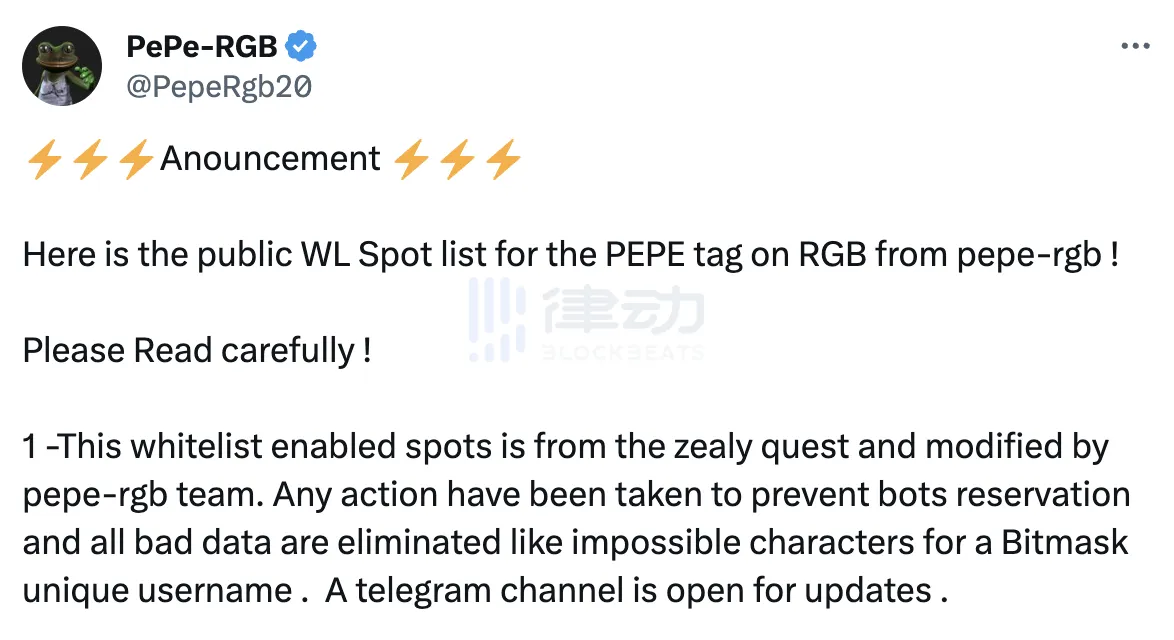
However, some community members pointed out that the whitelist was initially in an editable state and believed that this was a "low-level mistake" that should not have been made. At the same time, some people pointed out that "collecting according to the zealy username rather than the wallet address" is not reasonable in itself. In addition, several members pointed out that the list only contains English names and "directly filters out Chinese names".
Later, @DaPangDunCrypto, a loyal supporter of the RGB protocol and a community KOL, said that he has been communicating with the other party: "He may have exported the data and used zealy's platform username as the id for bitmask, because bitmask's id does not support special characters, so this list was formed. I have pointed out this issue and he will rework."
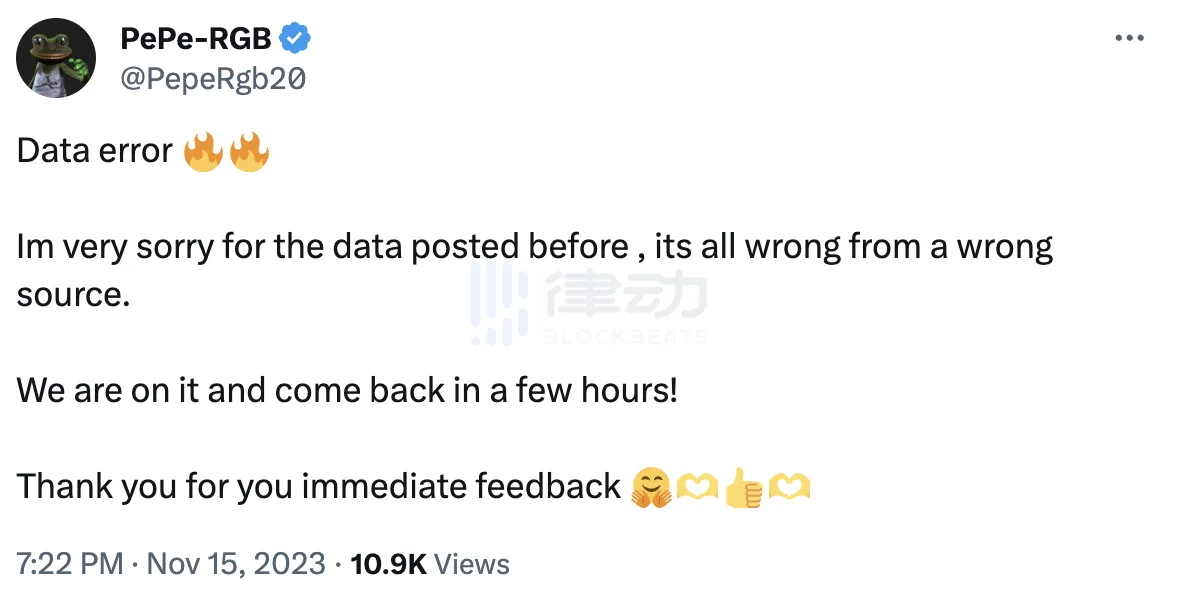
Later, @PepeRgb20 once again posted a tweet stating "Data error, I am very sorry for the data I previously released, its sources were all incorrect, and we are dealing with it."
At around 2am this morning, a new whitelist was announced. According to BlockBeats, some users pointed out that there was a problem with "name and ID mismatch" in the whitelist. Cryptocurrency community KOL @xiaowuDD666 also commented: "Is this what you call professional handling? You don't even handle such obvious robot behavior? You don't handle one or two, but you don't handle 46 either."
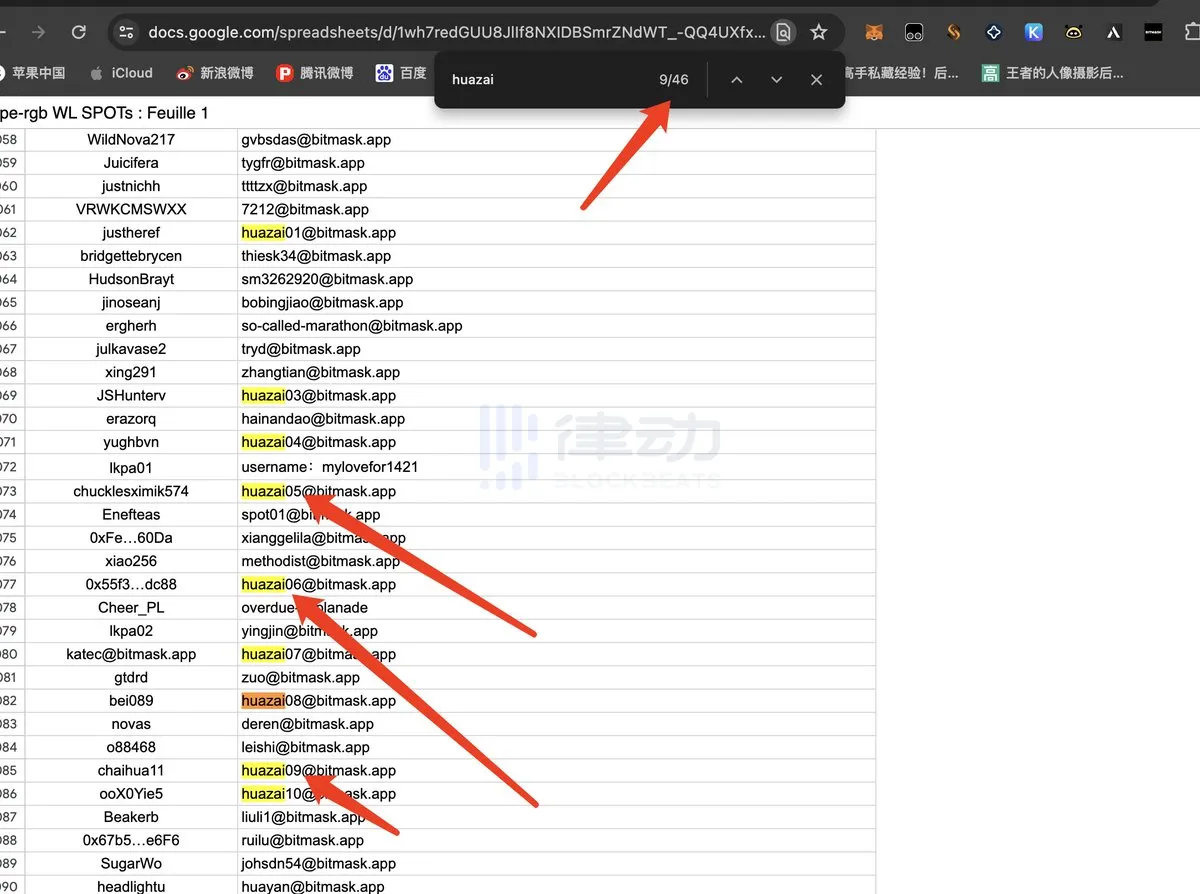
Source of the image: @xiaowuDD666
There were various issues with both releases of the whitelist, which also caused pepe-RGB to be embroiled in community controversy.
What is the hotly debated RGB protocol?
Pepe-RGB is a token issued based on the RGB protocol, which is currently considered by many community KOLs to be one of the most promising protocols in the Bitcoin ecosystem.
RGB Protocol is a scalable and confidential Bitcoin and Lightning Network smart contract system developed by the non-profit organization LNP/BP Standards Association in Switzerland. Its aim is to introduce the complex programmability and flexibility of smart contract platforms such as Ethereum into the Bitcoin ecosystem. It adopts the concepts of private and co-ownership and is a Turing-complete, trustless distributed computing form that does not require a non-block decentralized protocol with tokens.
Related reading: "The underestimated RGB protocol, a solid foundation for the complex BTC ecosystem."
"In the RGB protocol, transaction verification and data storage are completed on the client side (such as wallet software), rather than on the blockchain. This makes transaction data not publicly available on the chain, thereby increasing privacy. Client-side verification can also reduce the demand for on-chain data storage and improve network scalability. This is also a major difference between RGB and BRC20. Since transaction data is on the client side rather than on the chain, it can theoretically greatly reduce current network congestion and high transaction fees."
Previously, Tether CTO Paolo Ardoino publicly supported the RGB protocol twice. On August 18th, Paolo Ardoino stated that he is actively contributing to the development of the RGB project with Bitfinex and Fulgur Ventures, and firmly believes that once USDT is launched on RGB, the world will witness a powerful and scalable USDT on the Bitcoin layer.
October 19th, Paolo Ardoino stated in an interview with The Block that the RGB protocol represents the "best opportunity" for issuing stablecoins on Bitcoin. He also pointed out that many well-known figures in the Bitcoin community unanimously support RGB, "We believe that RGB integrates all the correct elements and can become a legitimate successor to Omni."
Welcome to join the official BlockBeats community:
Telegram Subscription Group: https://t.me/theblockbeats
Telegram Discussion Group: https://t.me/BlockBeats_App
Official Twitter Account: https://twitter.com/BlockBeatsAsia







