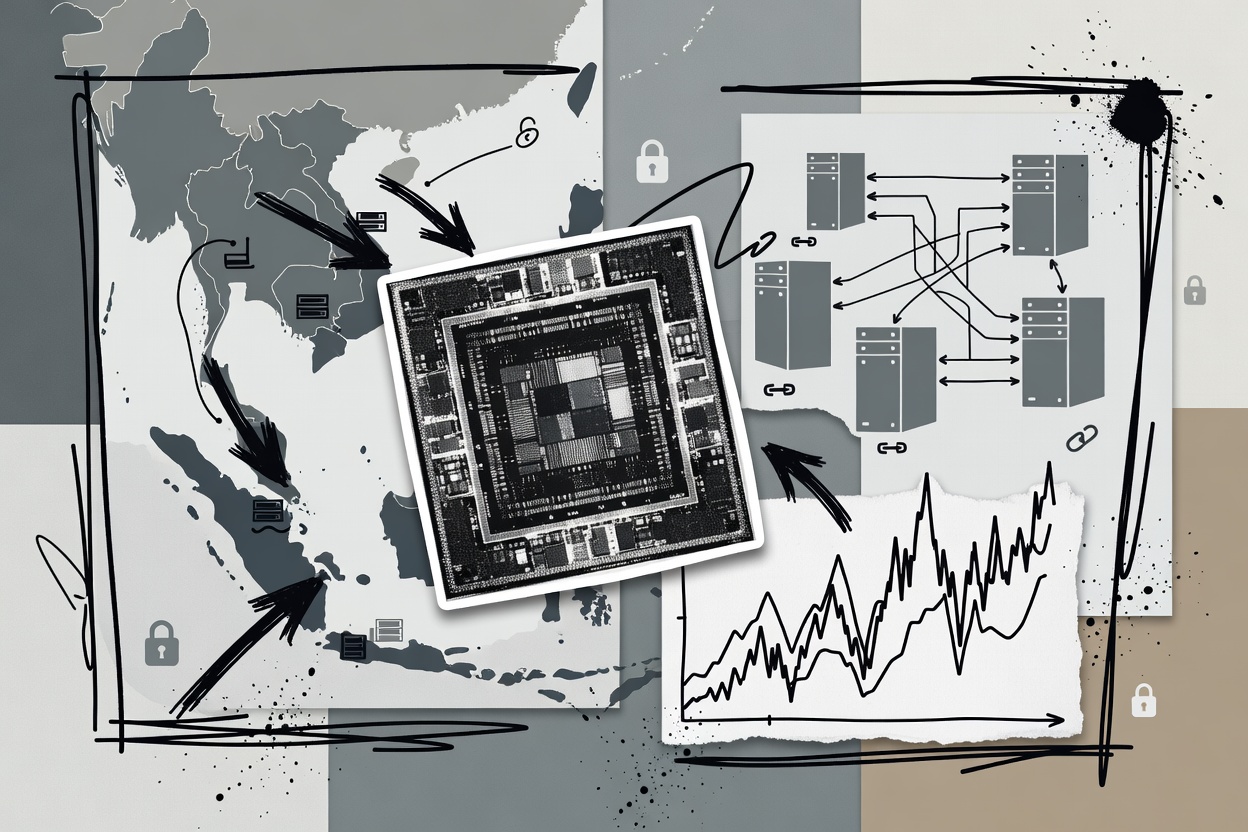
RCSV announces its BTC full-chain gaming plan.
Source: RCSV
On November 13th, the total number of Ordinals inscriptions exceeded 40 million, and various protocols have seen a recovery, including BRC-420. Unlike other token protocols, the 420 protocol (also known as the Metaverse protocol) focuses on modularizing on-chain inscriptions, with assets that are not homogeneous "4-letter" tokens, but rather a new type of asset unique to Bitcoin.
As of today, the first token of BRC-420 (commonly known as the Blue Box) has seen a 4000-fold increase (from a mint price of $0.15 to $600), and developers have earned over 1 million in on-chain royalties in just two weeks.
BRC-420: Asset Protocol Based on Bitmap
In early November, the number of Holder addresses for Bitmap has reached 25,000, surpassing Sandbox to become the metaverse asset with the most Holder addresses in the entire chain. The fair launch mechanism, the DMT concept mapped to the Bitcoin block, and the construction of Bitmap by more than 200 developer teams around RCSV make the metaverse on Bitcoin particularly "halal".
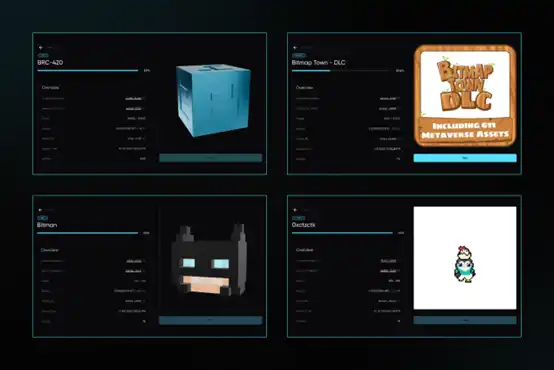
BRC-420 protocol was born, which is different from other protocols such as Ordinals in that it is a "multi-ciphertext" protocol that recursively combines multiple ciphertexts into a complex one. From small things like a character image or pet, to large things like combining the entire game script, virtual machine, and even AI models into on-chain assets, for developers to purchase or pay royalties.
These assets, due to their open-source nature on the chain, can be run or verified by any client, embodying the spirit of "Client Agnostic" in the entire chain game. Although RCSV's Bitmap browser currently has over 95% of the traffic, any team can develop a client to run BRC-420 assets.
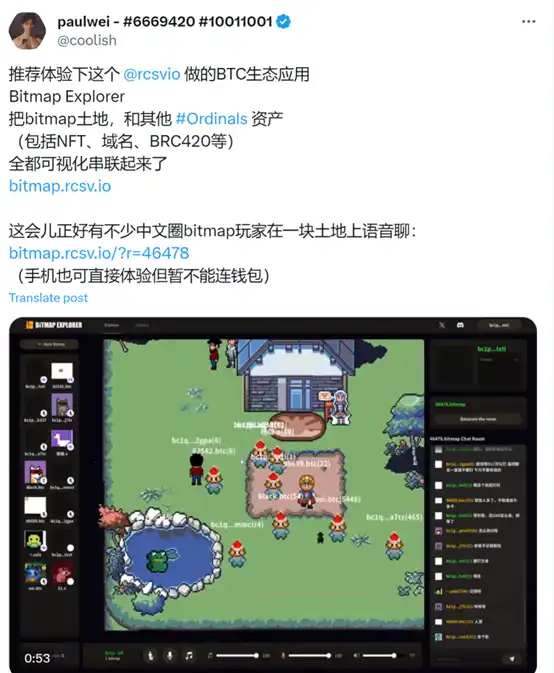
(The picture shows RCSV's Bitmap browser)
「1 Billion+10 Million+1000 Development Teams」
Bitmap's Holder may be most eager to return to October, when Bitmap's market value was only about $4 million. With the launch of the Bitmap browser and the BRC-420 protocol, Bitmap's market value has reached around $30 million. With the increasing number of users, Bitmap, as the underlying asset of BTC, has a high demand in overseas and Asian markets. Other tokens or NFT communities are building their own communities and trading markets on Bitmap. The RCSV team believes that Bitmap reaching a market value of $100 million in the foreseeable future is expected, after all, centralized assets such as Sandbox/Decentraland have also reached a market value of tens of billions of dollars.
BRC-420 protocol has a different goal. Currently, assets and games from over 200 teams have been released on the protocol, including game characters, game DLC, HTML scripts, music, videos, etc., and have received a large amount of on-chain royalties. RCSV is expected to have over 1,000 teams receive over $10 million in royalties on the BRC-420 protocol by the end of the year.
BTC-based blockchain games
Today in Istanbul, the Ethereum Full-Chain Game Conference is in full swing. At the same time, RCSV has also released the "BTC Full-Chain Game Plan", hoping to create full-chain games on the Bitcoin blockchain with developers from the entire ecosystem. The plan consists of four parts:
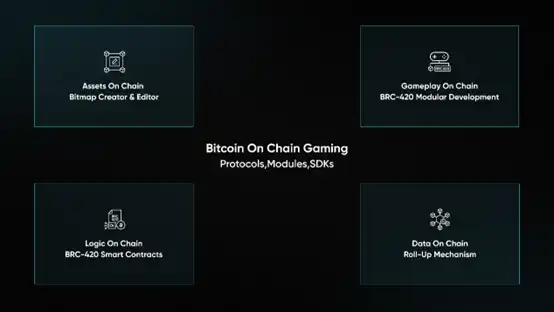
One is on-chain assets, which, compared to Ethereum, do not exist on-chain, highlighting the advantages of the Mingwen ecosystem. For example, if a developer launches a popular street fighting game on BRC-420, other developers can recursively use its "fighting module" to quickly launch new games such as "animal fighting" and "zombie fighting", just by paying royalties through the protocol.
The second is full-chain gameplay, where all game scripts need to be engraved on the chain, and any client can render and run them, eliminating centralization issues.
The third is full on-chain logic, the financial attributes in the game will be engraved on the chain in the form of BRC-420 smart contracts and run in the virtual machine, with such a verification mechanism to avoid the risk of malicious behavior.
The fourth is full-chain data, where all games will run in specific modules and boxes, and user payment data and game data will be transmitted back to the chain for verification in conjunction with the source code.
BTC's full-chain game in the ecosystem is the most "halal" because all images, scripts, and even music are stored on the chain, but the efficiency of its first layer is worrying, so the RCSV team has also proposed their own scaling solution.
Based on Bitmap, building a scaling solution for BTC
The Ethereum ecosystem can accommodate hundreds of thousands of users, while Bitcoin experiences a surge in Gas when processing thousands of transactions. Therefore, if you want to do Defi or games in the Bitcoin ecosystem, scalability solutions will be an unavoidable factor.
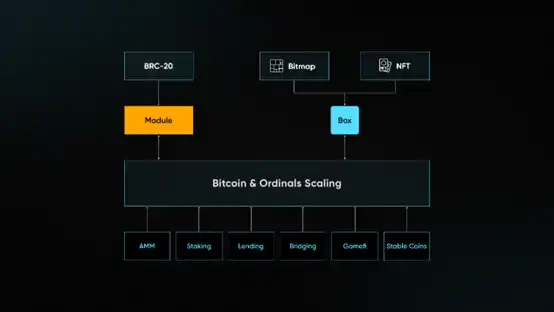
Compared to solutions like BitVM and RGB that currently have no possibility of implementation, RCSV proposes a more practical solution to achieve the scalability of the Bitcoin network. First, it addresses how to migrate assets from layer one to layer two, using a module-based approach similar to Unisat, ensuring the security of user assets while allowing them to enter a low-fee/high-efficiency interactive environment. At the same time, a complete set of virtual machine environment is implemented in the next layer of the module, allowing Bitcoin layer one assets to meet financial product demands such as smart contracts, AMM, staking, and borrowing through an account model on layer two.
This solution ensures security to the maximum extent while also providing liquidity scenarios for the overflow of Bitcoin layer one assets, addressing the objective needs of high Gas fees and assets unable to generate interest for users. However, the specific code for this solution has not yet been released, and the implementation process seems to require a certain amount of time.
Ordinals asset issuance is a foregone conclusion, but application landing still needs time
The Bitcoin ecosystem in 2023 seems to resemble Ethereum in 2017. In less than a year, the Bitcoin blockchain has already issued millions of different assets.
However, the emergence of more assets also highlights the congestion and expense of the Bitcoin layer one network. As protocols and applications are implemented, these assets will require longer-term development. With the implementation of the BRC-420 protocol and the landing of full-chain games, it seems that these assets have found new destinations.
This article is from a submission and does not represent the views of BlockBeats.
Welcome to join the official BlockBeats community:
Telegram Subscription Group: https://t.me/theblockbeats
Telegram Discussion Group: https://t.me/BlockBeats_App
Official Twitter Account: https://twitter.com/BlockBeatsAsia