"BRC Venture Capitalist", why did OKEx become the biggest winner in the Bitcoin ecosystem?
Since the beginning of this year, the expected approval of Bitcoin spot ETF and the halving cycle have spawned a Bitcoin ecosystem, which has almost become one of the core narratives in the cryptocurrency community and has been widely sought after by the community.
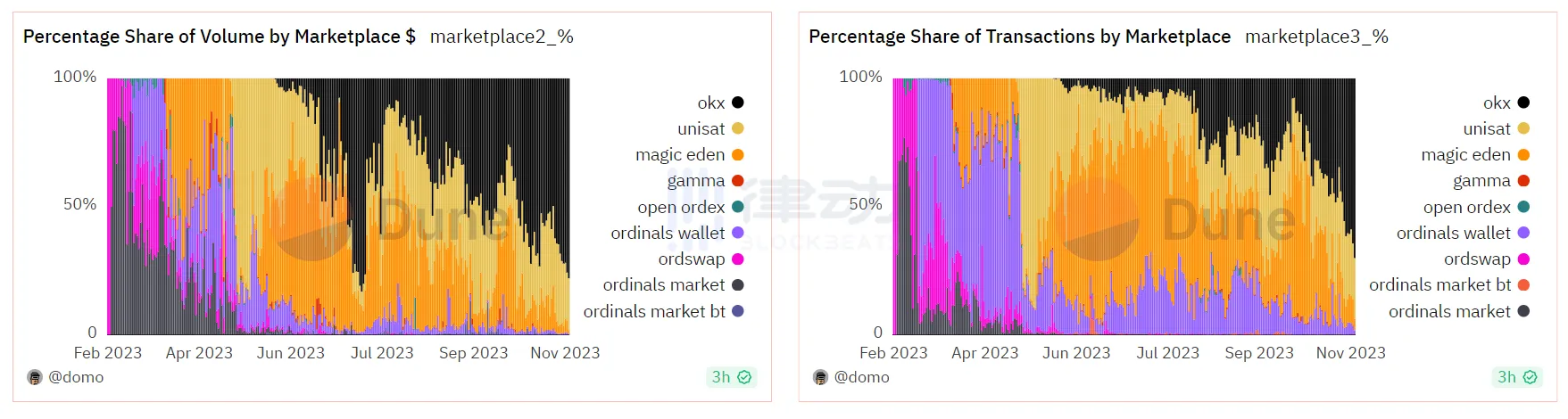
After a brief three-month lull, the Bitcoin ecosystem has come back to life, with OKX emerging as the biggest winner. According to Dune data, OKX's trading volume and market share in the Bitcoin Ordinals market have both reached 70%, with its total trading value far surpassing that of other platforms, making it the industry leader.
OKX discovered the opportunity of BRC in what way?
On January 30th of this year, software engineer Casey Rodarmor launched the NFT protocol "Ordinals" on the Bitcoin mainnet. This allows users to create Bitcoin versions of NFTs - "digital artifacts" - that support JPEG images, PDFs, videos, or audio formats. These "digital artifacts" are described as "digital relics" or "NFTs" on the Bitcoin network.
In the official manual of the Ordinals protocol, Casey envisions Ordinals as a protocol that creates "digital artifacts" or "NFTs" through Bitcoin. However, as the Ordinals protocol develops, similar to many NFT projects on the Ethereum network, these "digital artifacts" will be minted on the Bitcoin network.
Inspired by the Ordinals protocol, anonymous developer domo launched the experimental standard protocol BRC-20 on March 9, 2023. Although the name is similar to ERC-20 tokens, BRC-20 cannot be programmed to implement more applications. It deploys token contracts, mints, and transfers tokens by writing a JavaScript Object Notation (JSON) text into a Bitcoin NFT through the Ordinals protocol.
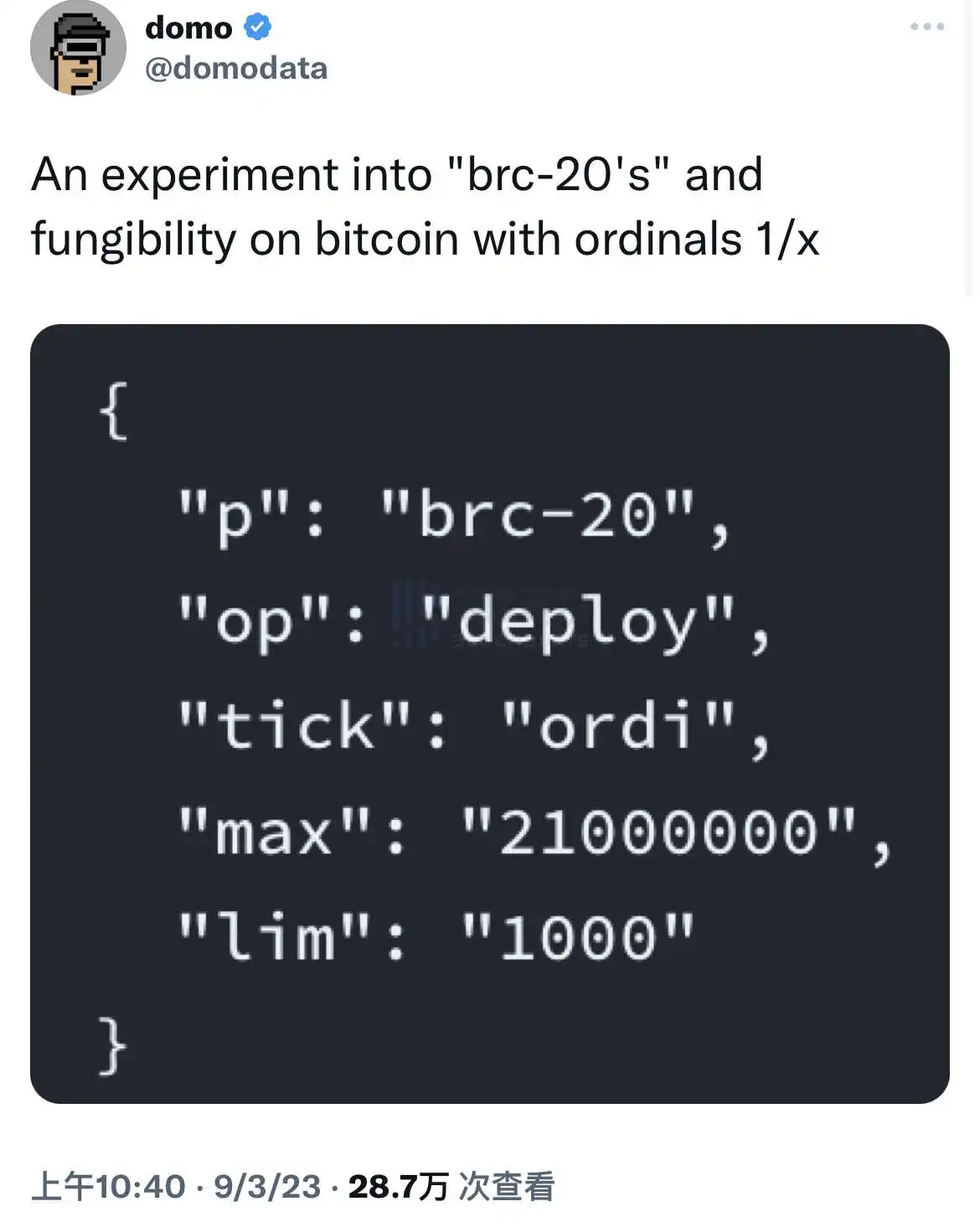
Meanwhile, Domo has deployed the first BRC-20 standard token, Ordi, with a total supply of 21,000,000 tokens. The minting of 1,000 tokens is limited per time, and it was completed within 18 hours. As of November 9th, according to OKX market data, ORDI is priced at $17.1 with a 24-hour increase of 42%.
At the beginning of the year, some members of the OKX team recognized the potential of this field and foresaw the possibility of the Bitcoin ecosystem becoming part of future trends, seeing the opportunities that came with it, as the market heated up and trading volume increased, based on user feedback and market popularity.
OKX explains how they achieve "value discovery". On this issue, Jason Lau, the Chief Innovation Officer of OKX, told BlockBeats: "This is a bottom-up process. First, employees discover opportunities in the market, and then gradually expand the discussion circle to find more opportunities. At the same time, the product team will participate more in the market and look for new opportunities. This is also our requirement for product development and market discovery."
In March, OKX began to discuss the development of NFT in the Bitcoin ecosystem in more depth. Shortly thereafter, the OKX team organized a sharing and discussion meeting internally, encouraging team members to share their understanding and opinions. After reaching a consensus, the Tenm Leader also participated and conducted further discussions, further believing that this new direction should be explored.
"Finally, we scheduled a meeting with the senior management to report on the Bitcoin ecosystem. In the end, we reached a consensus that we could try this. The entire discussion and decision-making process was quick, completed in about one or two weeks. Jason continued to say to BlockBeats: "I think there is a large development space for the future of the Bitcoin ecosystem market. Because the narrative in the Bitcoin field is too few, and there has been a lack of obvious trends in recent years. Previously, everyone also discussed that Bitcoin may be the future trend, but there has always been a lack of a clear opportunity, and now perhaps it is an opportunity." BlockBeats learned from Jason.
"
During a period of time after
, OKX conducted a series of in-depth explorations. On March 9th, OKX was a guest on the official Twitter Space hosted by BlockBeats, and had a live conversation with ArkStream Capital and BTCStudy on the topic of "How to play in the Bitcoin ecosystem?"
On April 24th, OKX Web3 wallet plugin now supports the display and transfer of Ordinals protocol BTC NFT, making it the first multi-chain wallet to support Ordinals BTC NFT. In addition, OKX Web3 wallet has pioneered a one-click switch address payment network fee function, allowing users to use the balance in other addresses in the current wallet to pay for Gas when transferring BTC NFT, ensuring the safe transfer of NFT. It is worth noting that OKX NFT market will also soon launch free Mint and trading of Ordinals BTC NFT.
On May 11th, OKX NFT Market and Bitcoin Ordinal's largest ecosystem BTC Machines jointly launched a free NFT airdrop event. Users who pass the verification through OKX Web3 wallet can participate in the subscription, and those who are selected will receive the airdrop reward.
捕客高手
translates to
Master of Bounty Hunting
in English.
In March, when Ordinals and BRC-20 were born, OKX Web3 wallet was in the stage of capturing customers. In order to attract new users and promote activity, OKX used various methods to attract new users and promote activity: NFT whitelist lottery to attract new users and cultivate user habits, Gas subsidies to reduce users' transaction costs, such as the previous NFT limited-time transaction subsidies and LIDO pledge Gas return. In addition, OKX wallet also improves the wallet opening rate by free minting AI-generated NFTs and Cryptopedia airdrop tasks.
After a series of marketing promotions, the growth of OKX DEX users has also been reflected. According to DUNE data, since April, the number of OKX DEX users has entered an explosive growth, with the total number of daily user addresses on the Ethereum chain increasing from 12,205 at the beginning of the year to 28,383 in June, an increase of more than 130%.
Related reading: "Seven sets of data review OKX Web3 wallet in the first half of the year".
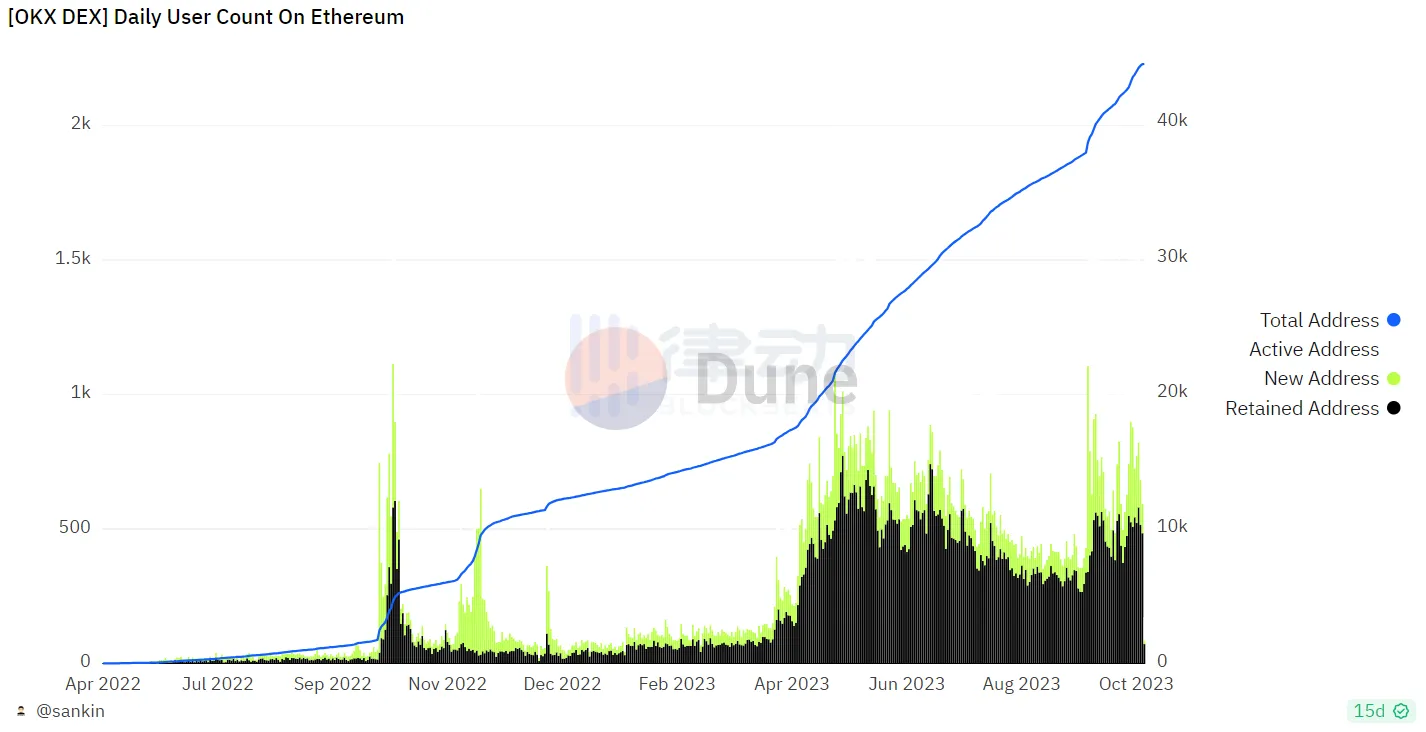
Data source: DUNE
Behind this series of data, OKX actually started exploring the wallet field as early as 2018 and 2019, and launched the first version of the on-chain wallet. "However, we didn't do much work in terms of user experience and interaction, but did a lot of basic research and coordination, especially at the technical level. Later, when defi summer appeared and smart contract platforms gradually emerged, we began to realize the huge potential of this field. Since then, we have started to think deeply and layout in this field." Jason, the Bitcoin Ecological Director of OKX, said in an interview with BlockBeats.
Discover Unisat
After contacting and communicating with OGs and founders such as Casey Rodarmor, founder of the "Ordinals" protocol, and domo, founder of the BRC-20 protocol, OKX continued to engage with some industry builders upstream and downstream.
On May 12th, OKX announced an official partnership with Bitcoin-based UniSat Wallet to jointly establish the BRC-20 industry standard. Based on OKX's self-developed BRC-20 ledger analysis and indexing library, the two companies have decided to carry out dual verification cooperation. UniSat will also become a data supplier for OKX Web3 BRC-20 market. In the future, OKX plans to explore the exchange of BRC-20 order liquidity with UniSat and continue to build the BTC ecosystem.
In the early days, there were very few players who were truly committed to BRC, and UniSat was one of the earliest. BlockBeats also interviewed UniSat founder Lorenzo at the time. When faced with questions like "Why did you decide to open source UniSat's index parsing code? Will this make it easier for trading platforms to access BRC-20 tokens and impact UniSat's trading volume?" Lorenzo's answer was: "Parsing the index is an important part of the entire ecosystem. If we don't open it up, others will surely be able to develop it, it's just a matter of sooner or later. But if we open it up in a timely manner, all developers will have a default reference, they will have a clear understanding and can easily verify "UniSat's code logic is judged in this way", they will have a homework to copy, which can save everyone's time and minimize potential differences."
"For the demand of trading platforms to quickly launch BRC-20, we understand and support it. This is not just lip service. We strive to provide real technical support for various trading platforms in terms of documents, APIs, and data, even if it means that our development time and resources are fully occupied during this period. We hope that these CEXs will be launched as soon as possible, which is not only a recognition of UniSat as the largest infrastructure, but also a real way to let more new users know about BRC-20, understand Bitcoin Ordinals, and get involved. This is a true win-win situation," Lorenzo continued.
Related reading: "Interview with UniSat: Valuation rumors of $1 billion, a new leader in the Bitcoin race with a team of 10 people".
At the same time, OKX has shown a proactive attitude during this process. Through in-depth technical exchanges with UniSat, OKX has demonstrated its early investment in BRC-20 research and development, while also providing valuable ideas for UniSat in public indexing and cross-validation.
By the end of May, OKX Web3 wallet fully integrated with the Ordinals market, deeply integrating the wallet with the OKX trading platform, providing a flow for trading platform users to migrate to the wallet. Coupled with airdrops and rewards, it has gradually become the preferred platform for many Bitcoin newcomers to enter the ecosystem.
OKX's Determination
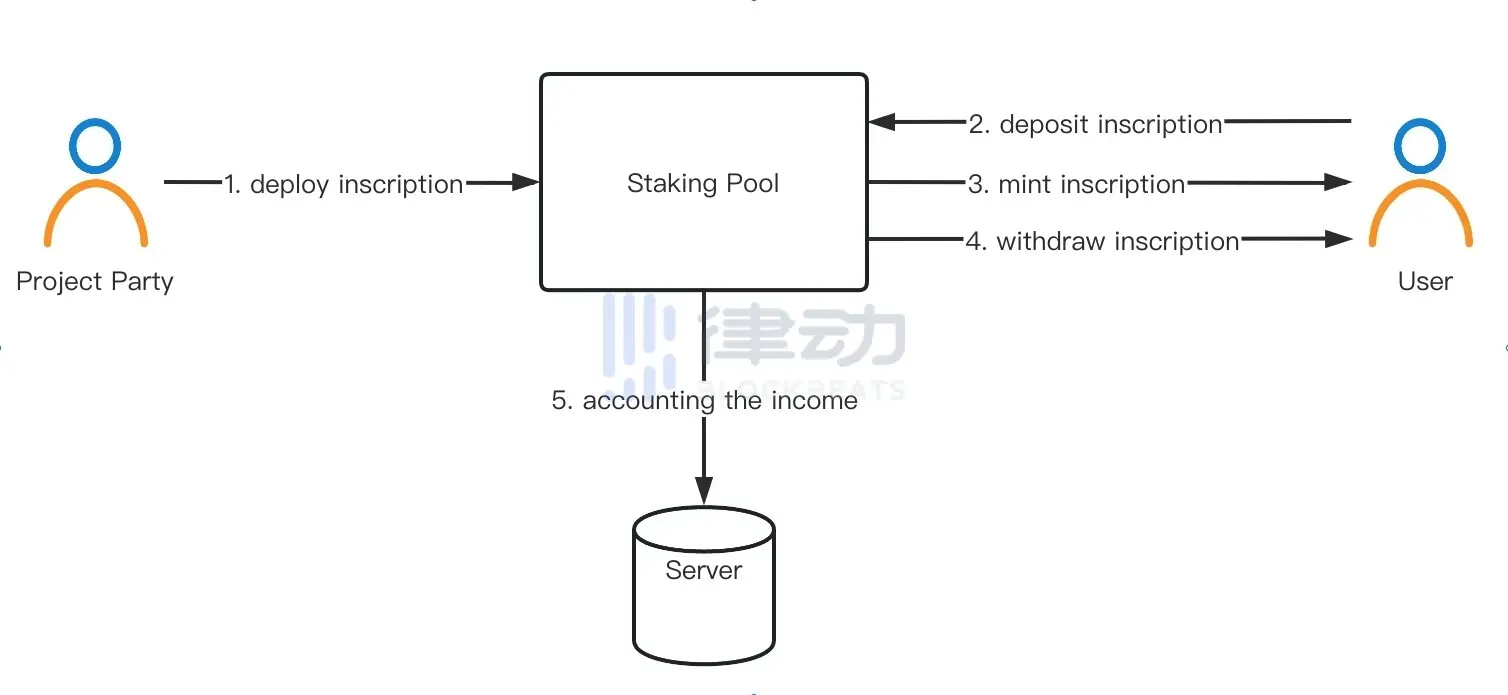
"Our investment is not an additional injection, but rather the result of our team members' continuous research and promotion of the Bitcoin ecosystem. Of course, we do not have a separate team dedicated to handling these matters; instead, different teams are working on multiple projects in parallel. During periods of relatively abundant resources, we will allocate our energy to EBM and other ecosystems or activities. However, there is still much work to be done in the Bitcoin field. The allocation of resources may be adjusted as the heat changes." Jason said in a conversation with BlockBeats.
Therefore, OKX's work is not only focused on Ordinals, but during this time, it has also paid attention to many other potential areas. For example, the Lightning Network is committed to solving payment problems, and the RGB protocol aims to issue assets based on Bitcoin, and so on. OKX found that exploring these different fields requires a lot of resources to conduct industry and market research, as well as product technology research.
In September, the Bitcoin ecosystem experienced a significant split. Casey, the founder of Ordinals, publicly expressed dissatisfaction with BRC20 in the Ordinals protocol.
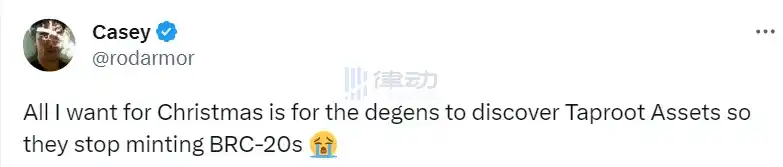
My most desired Christmas gift is for speculators to discover Taproot Assets (Taro), so they can stop minting BRC-20 Tokens.
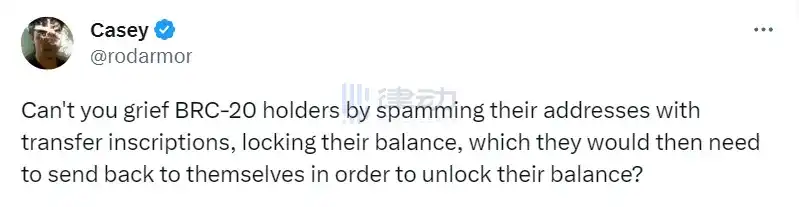
Can't we engrave the "transfer inscription" to lock the balance of BRC-20 token holders, so that they have to send the transfer inscription to themselves in order to unlock the balance?
Casey publicly expressed his dissatisfaction with the fate of these "garbage" assets, which led to a certain degree of panic in the market. During the release of Odinos' ODI version 0.6 to 0.8, the market was once worried about the double-spending problem of BRC 20. In response to this emergency situation, OKX quickly followed up and upgraded the version to stabilize the market sentiment and prevent double-spending by users.
You can see that even though the market was sluggish in June and July this year, and the market performance was mediocre in September and October, OKX did not slow down.
Steady Rise
With many advances in Bitcoin spot ETF and market sentiment driving it, the Bitcoin ecosystem has unexpectedly ushered in a second spring.
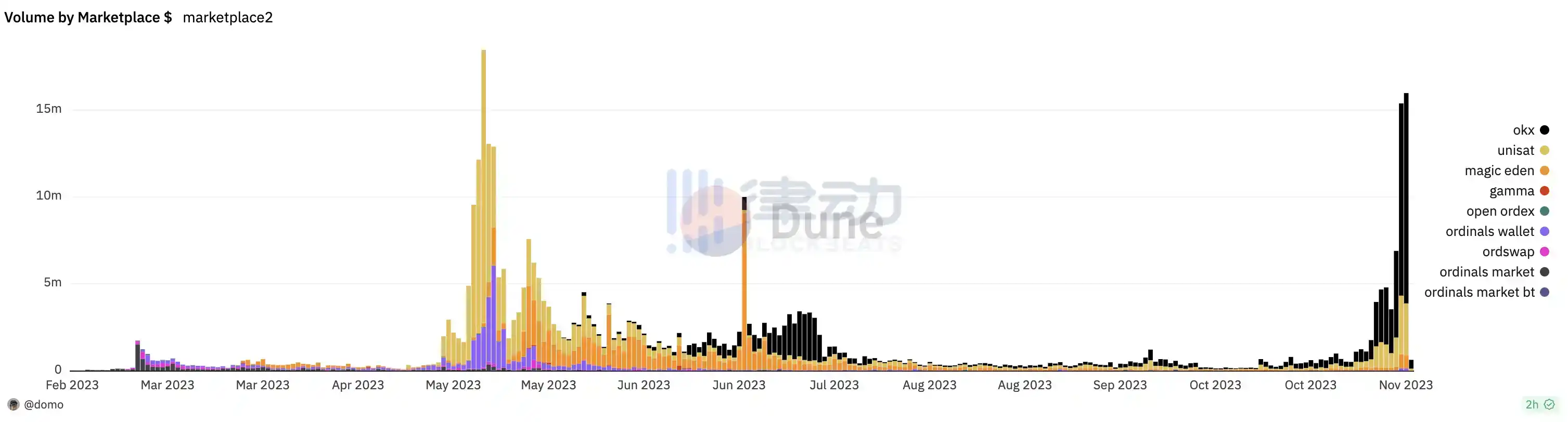
No one expected that during the long "winter", OKX has become the leader in Bitcoin wallets. According to Dune data, the trading volume and share of OKX market have reached 70%, and the total trading value far exceeds that of other trading platforms.
Especially in the past week, the rapid development of the market seems to confirm the correctness of OKX's decision to build infrastructure in the past three months. In this recent bull run, OKX's products have reached many new entrants to the Bitcoin ecosystem, providing them with a satisfying product experience.
Unexpected
There are many reasons for the success of OKX. As early as in the field of Bitcoin wallets, OKX began in-depth research and basic grinding, especially in the accumulation of technology. Secondly, OKX's sensitivity to market trends and accurate prediction of the potential of the Bitcoin ecosystem allowed it to quickly respond to the hype caused by Ordinals and BRC-20 standards, and successfully capture growth opportunities.
Additionally, its careful layout in terms of market promotion and user experience, including but not limited to NFT whitelist lottery, transaction subsidies, and multi-chain wallet support, has greatly promoted the platform's user growth and activity. Finally, OKX's continuous investment and optimization in infrastructure, especially its strategic adjustments and resource allocation during the market cooldown period, have laid a solid foundation for its success in the ecological competition. These factors work together to ultimately make OKX the biggest beneficiary of the "second spring" of the Bitcoin ecosystem.
Welcome to join the official BlockBeats community:
Telegram Subscription Group: https://t.me/theblockbeats
Telegram Discussion Group: https://t.me/BlockBeats_App
Official Twitter Account: https://twitter.com/BlockBeatsAsia

 Related Articles