How will spot ETFs kickstart the next bull market for Bitcoin?

Source: Feng & Carol, DFG
Introduction
The largest cryptocurrency by market value, Bitcoin, has been developing rapidly recently, with a cumulative increase of nearly 25% in the past month, breaking through the $35,000 mark and reaching a new high in nearly 17 months. This is mainly due to the expectation that Bitcoin spot ETF will soon be approved in the United States. The signs are increasingly indicating that the time for the approval of Bitcoin spot ETF is approaching, as the SEC's reasons for rejecting ETF are becoming fewer and fewer, the decision time is being postponed time and time again, and the SEC has given up appealing the Grayscale ruling, etc. In a recent report, JPMorgan said that the SEC may soon approve multiple Bitcoin spot ETF applications, with the most likely approval time being before January 10, 2024.
The approval of the US Bitcoin ETF is a significant milestone event for the entire cryptocurrency industry. Although the final approval time is difficult to determine, some possible impacts of the approval of the Bitcoin ETF can be roughly predicted. On the one hand, Bitcoin and even the entire cryptocurrency market are highly price-sensitive to the approval of the ETF, as recent market fluctuations have demonstrated. On the other hand, the Bitcoin ETF will greatly improve the convenience and compliance of Bitcoin exposure, and is expected to bring a large amount of incremental funds to the cryptocurrency market, which will have a significant impact on the long-term development of the entire industry. Our views will be elaborated in the following text.
Highly Sensitive Cryptocurrency Market
The BTC market and even the entire cryptocurrency market have been proven to be sensitive to news related to US Bitcoin spot ETF, especially in the current bearish sentiment. In recent months, the main market hotspots have revolved around Bitcoin and its spot ETF's new developments. Starting from BlackRock's submission of the Bitcoin spot ETF application form in June, every subsequent news related to the approval of Bitcoin spot ETF has clearly been conveyed to the secondary trading market of Bitcoin, highlighting the high sensitivity of the cryptocurrency market to institutional actions. Although some of the subsequent positive news has been proven to be false, Bitcoin's trading activity remains highly active, and currently BTC is maintaining a high level of volatility around $35k.

Bitcoin price trends and major events in the past six months / Data source: TradingView
The Development History and Enlightenment of Gold ETF
Bitcoin is known as "digital gold", and the connection between gold and Bitcoin as a means of value storage is also evident. Therefore, studying the process and historical trends of gold ETFs is of great significance for predicting the future trends of Bitcoin ETFs. The key time points and price trends of gold ETFs are as follows:
1. In March 2003, the world's first gold ETF, named Physical Gold, was listed in Sydney, Australia. After that, gold saw a significant increase and continued until the US ETF began trading.
2. In October 2004, the SEC approved the first gold ETF in the United States, StreetTracks Gold Trust (GLD); the price of gold continued to rise slightly after approval.
3. In November 2004, the American gold ETF GLD was officially listed and traded on the New York Stock Exchange (NYSE). Two months after the start of trading, the market fell by about 9%, dropping below the price at which the ETF was issued. After nearly 8 months of consolidation, gold began to enter a period of rapid growth.
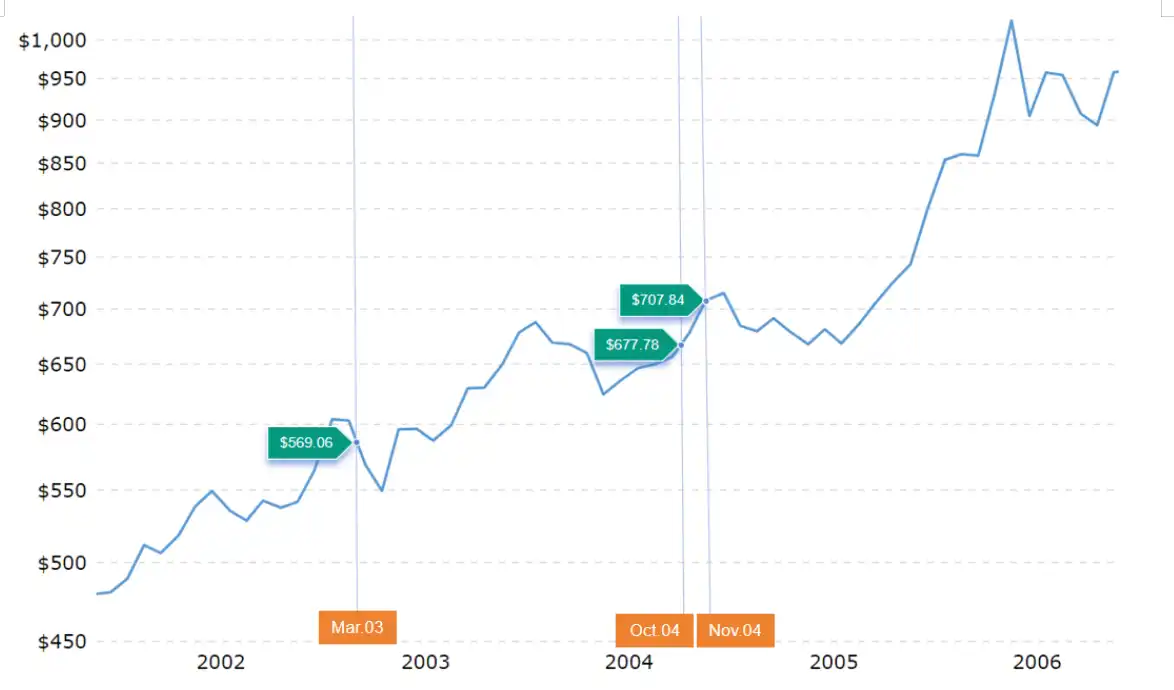
ETF pre- and post-listing trends in spot gold prices / Source: macrotrends.net
The popularity of gold ETFs has allowed more traders to invest in gold without the need to store the metal or hold it in a bank. In the following years, gold ETF products have sparked a buying frenzy worldwide and have become a mainstream investment tool for gold, attracting a large amount of capital. It is widely believed that the introduction of gold ETFs directly contributed to the 10-year bull market in gold that followed. Of course, on the other hand, the strong performance of gold can also be attributed to a relatively stable economic environment and loose monetary policies.
Referring to the historical process of the gold ETF, we can make some preliminary predictions by comparing the trend of the market before and after the approval of the Bitcoin ETF.
Phase 1: Before the approval of the US Bitcoin spot ETF, the market will have sustained expectations that can be seen as positive.
Phase 2: After the official approval of the US Bitcoin spot ETF, the market will still experience a small surge.
Phase 3: Shortly after the listing and trading of the US Bitcoin spot ETF, there may be a significant decline, even falling below the price before the ETF was approved, followed by a period of consolidation to absorb more funds, and then accelerate the rise.
Stage 4: In the long term, the listing of a Bitcoin spot ETF in the United States will open the door for traditional funds to enter, becoming an important catalyst for driving a bull market in Bitcoin.
Impact of Spot ETF on BTC Market Size
We have examined the distribution of institutional investors in listed companies with Bitcoin exposure and a market value exceeding $1 billion. Even with incomplete statistics, the total market value of institutional holdings in these listed companies' stocks exceeds $60 billion. Major holders include internationally renowned asset management companies such as Vanguard, BlackRock, and Morgan Stanley. As these asset management institutions have already conducted Bitcoin-related businesses for their clients, we believe that it is possible for 10% to 20% of listed company stock positions to shift to directly holding BTC ETFs as investment exposure, with an estimated AUM scale between $6 billion and $12 billion.
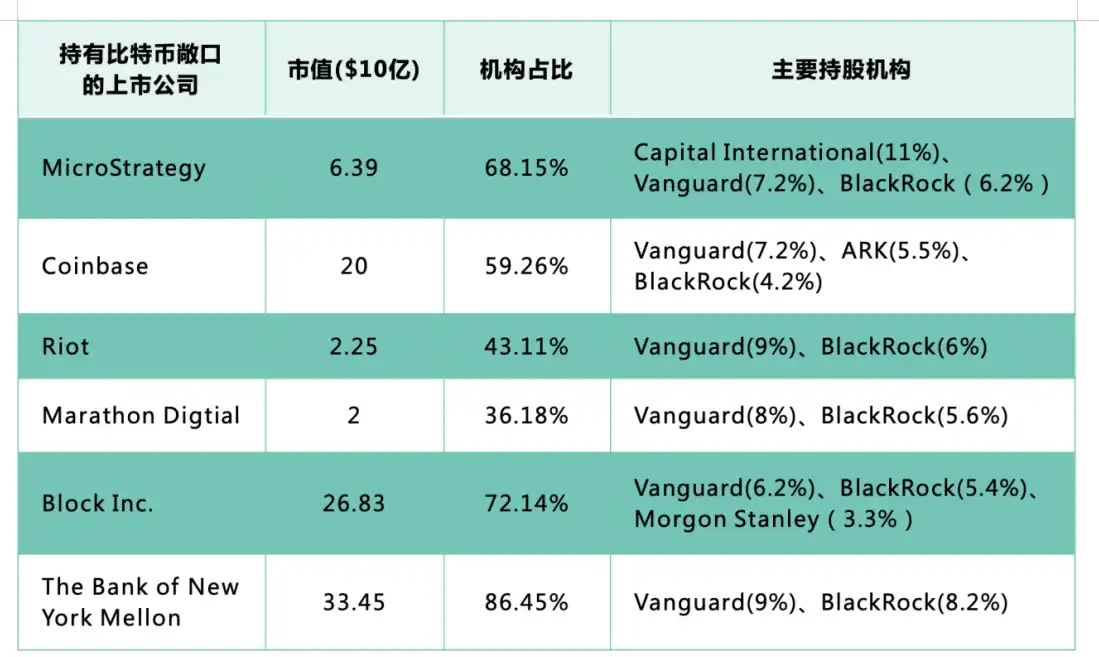
Major listed companies with Bitcoin exposure / Source: Yahoo Finance
From a more macro perspective, according to recent analysis by Galaxy Digital Research, the US wealth management industry may be the most accessible and direct market for BTC ETF approval, thus obtaining the most net new accessibility. As of October 2023, the total assets managed by US traditional brokerage firms ($27 trillion), banks ($11 trillion), and RIAs ($9 trillion) amounted to $48.3 trillion.
Galaxy estimates the growth rate of Bitcoin spot ETFs entering various channels in the industry. Assuming that 10% of the available assets in each wealth channel adopt Bitcoin, with an average allocation of 1%, which translates to a final conversion rate of 1‰. The final conclusion is that nearly $80 billion of funds will flow into Bitcoin spot ETFs within three years.

Estimated market size and fund inflows for BTC ETF in the first three years / Source: Galaxy Digital Research
The CEO of Bitwise, a well-known crypto index fund management company, Matt Hougan, recently stated that if a spot Bitcoin ETF product is approved, the overall scale could quickly reach the level of hundreds of billions of dollars. He believes that in the first year of the launch of a spot Bitcoin ETF, it can reach a level of $5 billion, and may attract about $50 billion in funds within five years. The total size of the US ETF market is currently about $7 trillion, and it is estimated that a Bitcoin ETF product may attract 1% of assets relative to the existing size, which is $70 billion. Currently, Grayscale Bitcoin Trust (GBTC) has already reached $20 billion, leaving about $50 billion of space.
Therefore, it is reasonable for the initial inflow level of BTC spot ETF to be in the scale of billions of dollars. However, the actual rate of fund inflow ultimately depends on the market conditions at the time of ETF approval, as well as the preferences of institutional and retail investors.
Impact of Spot ETF Approval on BTC Price
Galaxy Digital provided insightful estimates on the impact of ETF fund inflows on BTC prices in their recent article "Sizing the Market for a Bitcoin ETF". However, due to the highly time-sensitive nature of these predictions, BTC prices have increased by at least 30% since the article was written, rendering some of the parameters no longer applicable. Therefore, we have updated and optimized the data based on Galaxy's estimation model.

Comparison of the gold and BTC markets by size/data: World Gold Council, buybitcoinworldwide
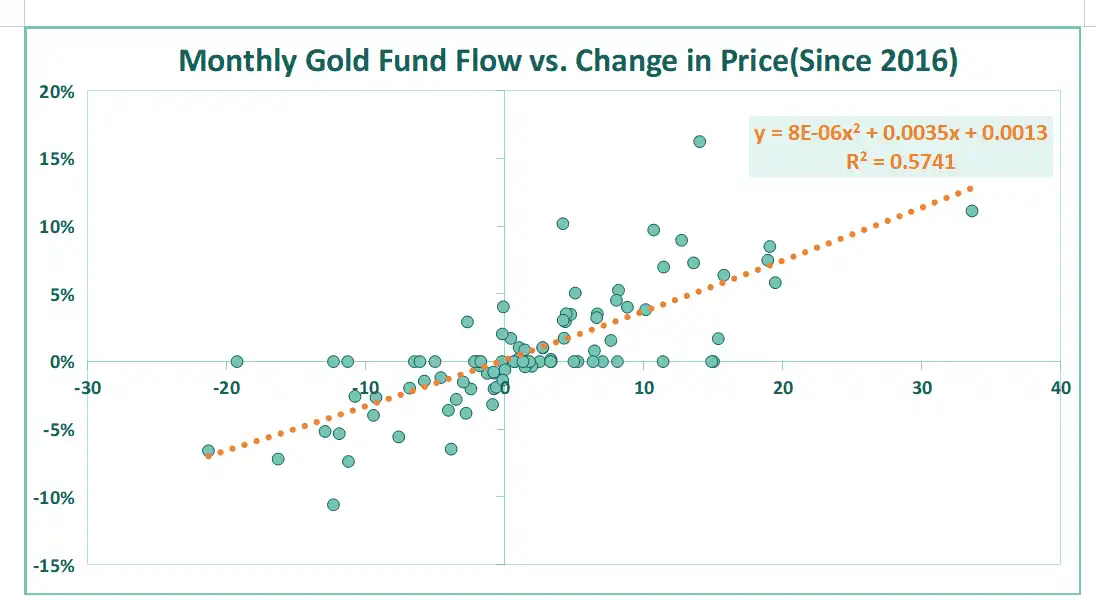
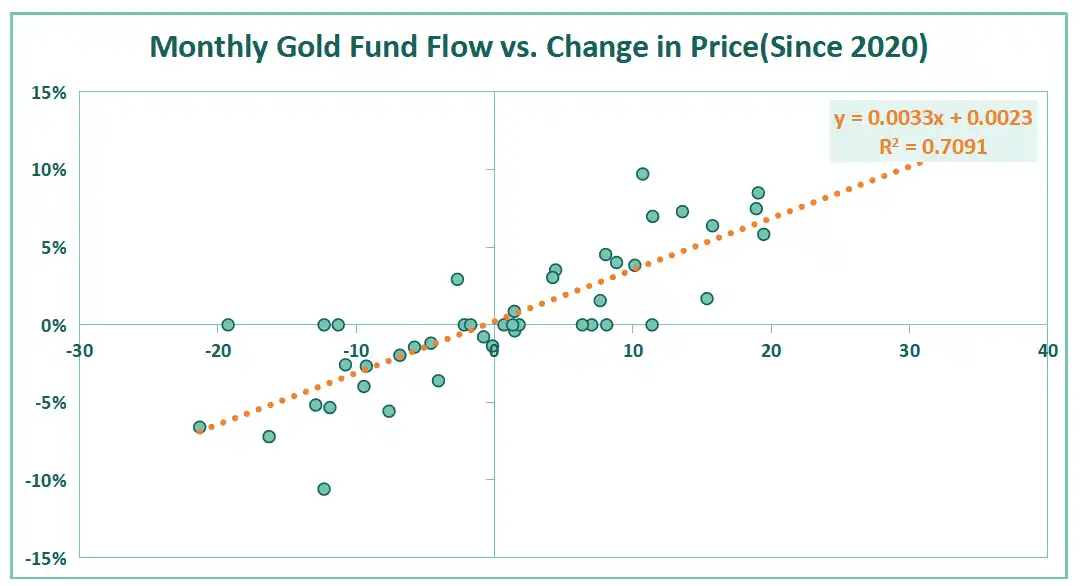

With the continuous clarification of Bitcoin's listing on ETF and the increasing participation of institutions, its role as a powerful financial fortress in the global landscape is becoming increasingly apparent. With the upcoming halving of Bitcoin in 2024, the annual inflation rate of Bitcoin will be lower than that of gold, making it one of the most scarce value assets. Because the total amount of BTC is constant and halved every 4 years, it has a high degree of scarcity and reliable storage value, which has led to a series of devalued fiat currencies such as the Argentine peso, Nigerian naira, and Turkish lira hitting historic lows against the BTC exchange rate. Spot ETFs will continue to give BTC unprecedented asset compliance and liquidity above scarcity, further expanding the overall potential market size (TAM) of Bitcoin ETFs.

Bitcoin and gold current total quantity and inflation data: World Gold Council, US Geological Survey
Due to the potential strong demand, it is expected that other global and international mainstream markets will follow the United States in the short term and approve and offer similar Bitcoin or Ethereum spot ETF products to a wider range of investors. Various traditional investment or wealth management institutions will inevitably increase their Bitcoin exposure in their investment strategies (such as sovereign, mutual, closed-end funds, and private equity funds, etc.).
Long-term, the target market for Bitcoin investment products may further expand to all third-party managed assets (according to McKinsey's data, AUM is approximately $126 trillion), and even more broadly to global wealth (according to UBS's data, $454 trillion). Based on these market sizes, if Galaxy's previous assumptions remain unchanged (10% of funds adopt Bitcoin, with an average allocation of 1%, or a conversion of 1‰), it is expected that the potential increase in inflows of Bitcoin investment products will be between $125 billion and $450 billion for a long time, which is a capital scale of hundreds of billions that cannot be ignored. If we refer to the overall asset size of gold, a multi-trillion-dollar cryptocurrency market is about to emerge.
Original article link
Welcome to join the official BlockBeats community:
Telegram Subscription Group: https://t.me/theblockbeats
Telegram Discussion Group: https://t.me/BlockBeats_App
Official Twitter Account: https://twitter.com/BlockBeatsAsia