Injective token surges over 100% in a month, according to post-analysis of the "Fat Application Chain Theory".

The Fat App Chain Thesis
Author: HOPYDOC
Translation: Joyce, BlockBeats
Editor's note:
Injective, a Layer 1 blockchain based on Cosmos, has recently attracted attention from the community due to the continuous 1-month increase in its token INJ. According to Coingecko data, INJ has increased by 103.5% in the past month.

Injective's architecture is different from other DEXs running on Layer 1. The protocol provides trading services on its own execution layer and allows third parties to build trading platforms on Injective without permission. All trading platforms built on Injective share the same order book, maximizing capital utilization.
This feature can be understood through the "Fat Protocol Theory" that is not unfamiliar to the community. In this article, HOPYDOC introduces the Fat Protocol Theory, the Application Chain Theory, and the "Fat App Chain Theory" that combines the characteristics of both. The author believes that Injective's recent performance proves the "Fat App Chain Theory". The following is the translation by BlockBeats:
As an investment analyst, evaluating application chains has always been a tricky task, because the functionality of application chains is fundamentally like an independent application, but at the same time inherits the functionality of protocols or what we now call the underlying layer, such as security and data availability.
Therefore, it is unfair to apply the transactions of multiple independent applications to the application chain; however, considering the significant differences in the value accumulation mechanism, it is difficult to say that the application chain should trade at multiples of the underlying layer.
As a fitting example: Injective's rise this year is widely regarded as a re-rating of trading. When the team announced the establishment of an ecosystem fund supported by companies such as Pantera Capital and Jump Crypto to support the construction of other applications on top of the application-specific layer, the market began to view application chains as a protocol.

Injective announces 150 million ecosystem fund announcement
It sparked my interest in the first generation "fat protocol theory" because I believe that understanding the evolution of the market's perception of the value of blockchain will inspire me to think about the current value of application chains, or more specifically, how to think about application program chains with ecosystems.
"Fat Protocol Theory"
"Fat Protocol Theory" was originally proposed by Joel Monegro in August 2016 when he was still at Union Square Venture. This paper revolves around the idea of how cryptographic protocols should capture more value than the applications built on top of them in theory. Joel Monegro

In short, the paper proposes that the protocol (or what we call the base layer) now offers two unique core value propositions or sources of value accumulation, and should therefore always be considered more valuable than applications; or simply used to demonstrate that some astronomical valuation is reasonable; they come from:
- Unlicensed shared data layer; where blockchain effectively reduces the entry barriers for more new participants, leading to a more competitive system, and more importantly, achieving composability between each other, thereby promoting the development of protocols.
- Drive the positive feedback loop of speculative value of native network tokens; the appreciation of token prices attracts the attention of developers and investors, which then translates into human or capital investment in the ecosystem, and initiates the flywheel of its speculative value.
- As an extension; with the increase in demand for native tokens, the protocol can capture the value created at the application layer, which usually appears in the form of gas fees; therefore, in theory, applications will bring more transactions to the protocol level; the more value the protocol can capture.
Why "Fat Protocol" is no longer applicable
"Fat protocol" theory has been the subject of numerous debates regarding its timeliness, as the proposition was put forward during the era of extreme maximalism, when concepts such as modularity and application-specific chains did not even exist.
Later, the market believed that the argument of "fat protocol" was not entirely applicable to the current market structure, due to the extremely abundant block space. The number of newly minted layer 1 substitutes in the previous cycle proved this point. The protocol layer cannot retain the value created by applications because the abundant block space squeezes the price that users pay for the same transaction volume.
- The rise of modular blockchain; effectively decomposing the functions of blockchain into execution, data availability, and settlement; resulting in cheaper data availability solutions, further compressing the cost paid by users for sharing data layers, as demonstrated in the original paper.
- Easy to multi-chain; because applications can easily launch on multiple chains, and even interact across chains with interoperability tools such as LayerZero; therefore, the stickiness of a single protocol is significantly reduced, weakening the positive feedback loop in the original paper.
"Application Chain Theory"
:"Fat Protocol Theory" has been replaced by the introduction of "Application Chain Theory". An application chain is a blockchain built for specific use cases, and this design has certain advantages, including the following:
- Better value accumulation mechanism; due to security purposes, the native network token can be staked, which will result in a supply pool of tokens; and derive value from the business model of blockchain.
- Customizability; developers can freely customize any configuration in the technology stack for specific purposes (such as throughput and finality) and make trade-offs in the way that best suits the application.
For example, the latest dYdX v4 is implemented on a chain driven by Cosmos-SDK; it promises that traders will no longer pay gas fees for transactions; however, fees will be charged based on transaction size, mimicking the trading experience on centralized trading platforms.

Chorus One's Research on dYdX v4
:
Although this is the case, there are still some drawbacks to the application chain itself, so this concept has not yet been fully popularized, for the following reasons.
- Liquidity, decentralization, and composability; because native assets residing in specific application chains cannot interact with assets in other chains unless specific assets are highly sought after and supported by interoperable products.
- Security is limited; theoretically, the application chain is only guaranteed by a portion of fully diluted valuation, depending on the consensus mechanism; however, the decrease in token value will linearly affect the security level of the blockchain.
Business Model of Protocols
If we consider the business model of the protocol or underlying layer; users effectively pay gas fees to exchange transaction data correctly stored and settled through consensus mechanisms.
Although the initial paper may not be timely, the advantage of the "fat protocol" era is that the protocol and application are clearly divided.
- The protocol is actively seeking ways for users to pay for security and data availability; aiming to keep users and applications within their respective ecosystems, maximizing the positive feedback loop of composability and direct value generated in the form of gas fees.
- On the other hand, when more applications decide to build on top of the application chain, the application chain can also enjoy a positive feedback loop; effectively solving the problem of liquidity fragmentation and limited composability inherited from the application chain architecture.
The trading price of Injective reached 130 million US dollars as early as the beginning of 2023. After the announcement of the Injective ecosystem fund, the market re-evaluated the rating of the token. Famous venture capitalists are supporting their efforts to build the entire ecosystem on the order book.
As of the time of writing, the trading price of Injective has exceeded 1.3 billion. So far this year, its performance has been better than most alternative tokens on the market, with an increase of more than 10 times. However, despite the expansion, the indicators have not improved significantly, and the daily trading volume of Injective is still 10 million. Its annualized value (in the form of burned tokens) is about 4 million.
There is not much change, but the "Fat Protocol Theory" and the "Application Chain Theory" are essentially intersecting at this pivot point. Injective enjoys the advantages of both being a foundational layer and an application chain, while avoiding the main drawbacks of both.
- The positive feedback loop still applies; as investors pour money into building the ecosystem, it attracts developers and projects, thereby initiating speculative value for the native network token; this indirectly addresses the security level inherited by the chain, which is equally important as the previous application chains.
- The value-added part is not affected by transaction fee competition; because Injective does not charge gas fees at the beginning, but instead profits from transaction volume; most importantly, it accumulates value by providing security and shared data layers.
;ZKS、STARK 和 SCROLL 等新技术正在推动隐私和可扩展性的进一步发展。
In summary, Injective is attempting to establish an ecosystem and has found a clear path to "fatness", with the most important aspect being to maintain this "fatness". Therefore, even in the long term, it can provide an extremely attractive investment case.
Sei 呢?
translates to
Where is Sei?
in English.
It's hard to replicate the miracle of Injective. Sei is widely regarded as the company closest to Injective in the industry, but it may not see a similar trajectory. Both operate as order books; $SEI's native token does not accumulate value like Injective's; instead, it serves as the native gas token for the network.
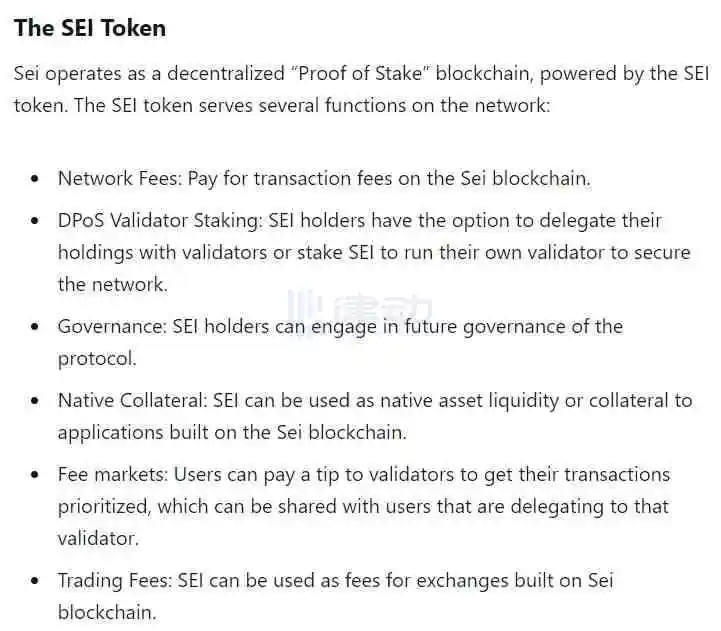
Sei Token Economics
This small difference essentially inherits the legacy issues of the "fat protocol theory" and places Sei on the same battlefield as other alternative layers.
- Positive feedback loop still exists and applies; due to Sei's support from many well-known investors in the industry, but the injected funds have not yet attracted developers to enter the platform to promote the development of the network.
- Value accumulation is an unresolved pain point, which Sei inherits; by providing a shared data layer and security level, blockchain will not effectively charge any meaningful fees from natural gas.
- The issues of liquidity fragmentation and composability are not entirely related, as application chains position themselves as independent ecosystems; without the need to interact with other chains in the Cosmos ecosystem.
Osmosis may be the next
Osmosis may be the next one. As the team slowly builds an ecosystem around an AMM-based application chain, which includes DeFi primitives (such as the Mars protocol that provides currency markets) and the Levana protocol that provides permanent future exchanges. The protocol also charges recipient fees from its spot trading volume, effectively bringing value appreciation to token holders for the first time.
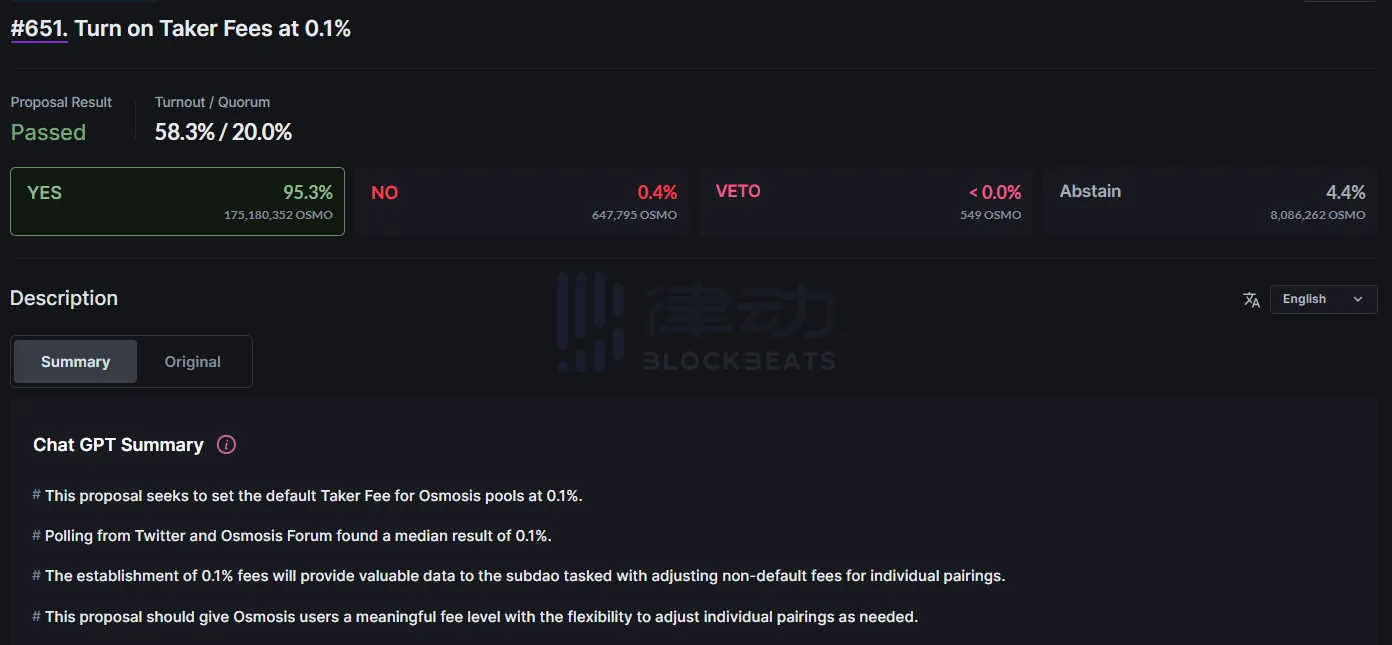
As an independent application chain and liquidity center on Cosmos, Osmosis has not printed impressive numbers, with an average daily spot trading volume of 6 million transactions. Part of the reason is the low DeFi activity on Cosmos; since earlier this year, the price of $OSMO tokens has been on a downward trend, dropping from a high of $1.10 to the current $0.30.
In the Osmosis case, the "fat protocol thesis" gradually intersects with the "application chain thesis"; however, more verification is needed to initiate the entire price increase, as shown below.
- Still lacking positive feedback loop; Osmosis community is strong and aligned strategically with the entire Cosmos ecosystem, attracting teams to deploy applications on the application chain itself; but investors seem to have not yet injected funds into the ecosystem.
- Value accumulation is also not affected by cost competition; Osmosis implements a 10 basis point protocol recipient fee and profit as a function of spot trading volume; while also accumulating value by providing security and a shared data layer.
-It should be noted that the fees for the protocol recipients may erode the unit economics of traders and arbitrageurs; in the long run, this may affect the spot trading volume, unless Osmosis manages to establish a sustainable moat around the protocol liquidity.
- The problem of fragmented liquidity and composability is slowly being solved; because native assets on the chain can be used for other DeFi primitives on the chain.
When $INJ rose earlier this year, I thought the rise was temporary because the market was re-evaluating tokens and applying the trading multiples of perpetual futures exchanges to the protocol layer's trading multiples. Once the price adjustment is complete, the token price will stop rising.
It turns out that this is one of the biggest opportunities I missed this year. When I reflect on the basic logic behind this move, combined with the "Fat Protocol" and "Application Chain", it actually created the most "annoying" surge, because it solved the traditional problems of both parties, while injecting speculative value and institutional investors' capital into the system to start this flywheel.
I believe that more application chains will take this path in the coming months; because most of them want product diversification and retention of value within the system, rather than competing with each other at the application level. "Fat Application Chain Theory" can create more miracles in the public market.
Welcome to join the official BlockBeats community:
Telegram Subscription Group: https://t.me/theblockbeats
Telegram Discussion Group: https://t.me/BlockBeats_App
Official Twitter Account: https://twitter.com/BlockBeatsAsia

 Related Articles