Injective stands out: in-depth comparison of three public chains: Oasis, Injective and Near

The original author: Axel Bitblaze (@Axel_bitblaze69)
Compiled by: Joyce, BlockBeats
Editor's note:
Cryptocurrency researcher Axel Bitblaze analyzed the Injective, Oasis, and Near public chains from the perspectives of technology, use cases, performance, consensus mechanisms, market position, and token economics. Based on the high transaction volume/market value ratio of Injective, he believes that the market is more interested in Injective in the short term, and trading on it is also more active. The following is compiled by BlockBeats:
Focus on privacy L1 solution Oasis Protocol
Technology: Focused on privacy protection features; combined with secure computing technologies (such as trusted execution environments) and blockchain frameworks;
Consensus mechanism: Adopt proof of stake (PoS) to achieve consensus.
Use case: Mainly aimed at applications that require privacy; especially suitable for the healthcare or financial industry that needs to protect sensitive data;
Performance: with high scalability and low gas fees; advantages of PoS mechanism and optimized network structure.
Market positioning: As a privacy-centric platform, it may attract a niche market; it is particularly attractive to industries that handle sensitive data.

DeFi and Derivatives L1 Solution Injective
Technology: Aiming to create a fully decentralized platform for derivatives and non-DeFi; allowing the creation of permissionless and decentralized markets;
Consensus mechanism: Using the PoS model helps to achieve faster transaction speeds and lower fees.
Use case: Focused on trading and finance, supporting a range of financial products including futures and perpetual futures;
Performance: high transaction throughput and low latency, addressing some common pain points in DeFi and trading.
Market positioning: Strong appeal to DeFi community and traders looking for decentralized, secure and efficient trading platforms.

Near protocol
Technology: Using sharding technology to achieve scalability, allowing networks to process more transactions as they grow;
Consensus mechanism: Nightshade, a variant of PoS, is adopted to achieve high throughput and low transaction costs.
Use case: Aiming to be a developer-friendly platform, supporting various dApps including NFT, gaming, and DeFi;
Performance: A unique sharding method (sharding-as-you-go) has been adopted, providing a potential solution to the blockchain impossible triangle problem.
Market positioning: Focusing on usability and scalability, aiming to target a wider range of segmented markets from developers to end users in the blockchain ecosystem.

Comparison Analysis
1) Focus Area
- $ROSE stands out for its privacy features.
- $INJ is targeting the DeFi and trading markets.
- $NEAR positions itself as a universal and scalable blockchain for various dApps.
2) Technical Advantages
- $ROSE privacy protection method is a key differentiating factor, especially relevant in industries that focus on data sensitivity.
- $INJ provides professional tools for the financial sector, especially in derivatives and trading.
- $NEAR sharding technology provides a solid foundation for scalability, which is widely attractive to many dApp developers.
3) Use Cases and Ecosystem
- $ROSE may be seen as a niche adoption in industries that require data privacy.
- $INJ can attract financial institutions and DeFi enthusiasts.

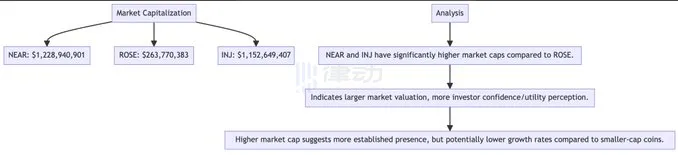
- $NEAR :
- $ROSE :
- $INJ :
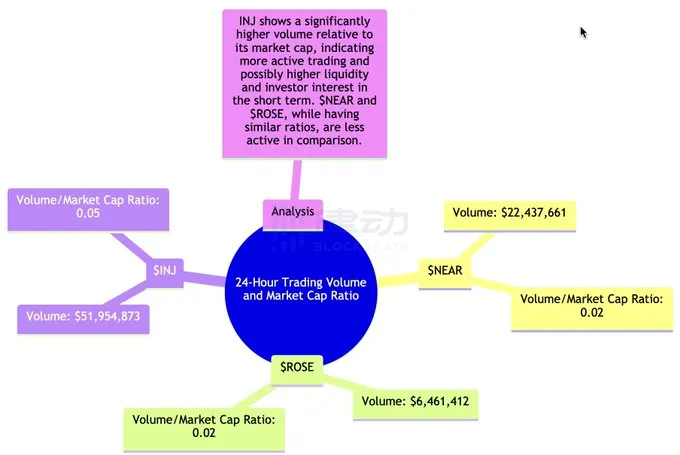

- $INJ: Most of the token supply has reached its maximum supply limit and can be freely traded on the market.
Welcome to join the official BlockBeats community:
Telegram Subscription Group: https://t.me/theblockbeats
Telegram Discussion Group: https://t.me/BlockBeats_App
Official Twitter Account: https://twitter.com/BlockBeatsAsia

 Related Articles