Will Qredo fall before the arrival of spring as the crypto infrastructure faces a wave of layoffs?

Table of Contents:
· After completing its Series A financing, Qredo was valued at $460 million.
· October Layoffs in the Cryptocurrency Infrastructure Industry
BlockBeats reported on November 2 that Qredo, a provider of encrypted custody infrastructure, has once again laid off 50% of its staff, and its financial situation can maintain for about six months. Earlier in early September, BlockBeats reported that Qredo had laid off about 50 people, including senior executives such as Qredo's Chief Product Officer Gabriele Farei and Chief Information Security Officer Asen Taskov.
Qredo currently has about 50 employees, down from over 200 at the beginning of the year.
According to The Block, two sources said that the layoffs have saved the company about 35% of its annual expenses. Qredo is actively seeking new financing and exploring strategic acquisition opportunities to maintain its survival. In addition, 10T Holdings, the main investor in Qredo's Series A financing, is offering assistance.
Qredo has completed its Series A financing, with a valuation reaching $460 million
Qredo was founded in 2018. Its core products include its Layer 2 protocol Qredo Network and a custody technology called Distributed Multi-Party Computation. According to Qredo's website, "Qredo has no third-party custodians. All funds and transactions are recorded on the Qredo Network's chain and protected by our unique dMPC technology."
In May of this year, BlockBeats reported that Qredo had optimized its self-custody wallet platform. The new platform, New Qredo, uses multi-party computation (MPC) intelligent key sharding technology to improve control over team permissions and approval processes.
Since the FTX incident, there has been a gap in the market for an open-source, on-chain, and cost-effective custody system. Josh Goodbody, the Chief Operating Officer of Qredo, stated in an interview that "just last year, we turned to self-custody and ensured the movement of nearly $30 billion in crypto assets."
As of now, Qredo has raised approximately $94 million in venture capital funding. In February of last year, it completed an $80 million Series A funding round with participation from Coinbase, valuing the company at $460 million. In May 2021, Qredo announced a $11 million seed round investment, and in July of the same year, it raised $35 million through the sale of QRDO tokens.
After Series A financing, Qredo announced that it planned to use the funds to drive growth through acquisitions, product development, and geographic expansion. However, Qredo has now chosen to scale back its business and focus on core businesses such as Web 3 wallets and custody solutions.
Despite having products and receiving large amounts of financing, Qredo has chosen to make significant layoffs during a time when the overall sentiment in the cryptocurrency market is positive. The main reason for this is due to a decline in business revenue. A Qredo spokesperson stated in an interview that "from the second half of 2022 to the first quarter of 2023, Qredo's average monthly transaction activity was $2.5 billion, and this activity as well as overall market activity has declined throughout the year."
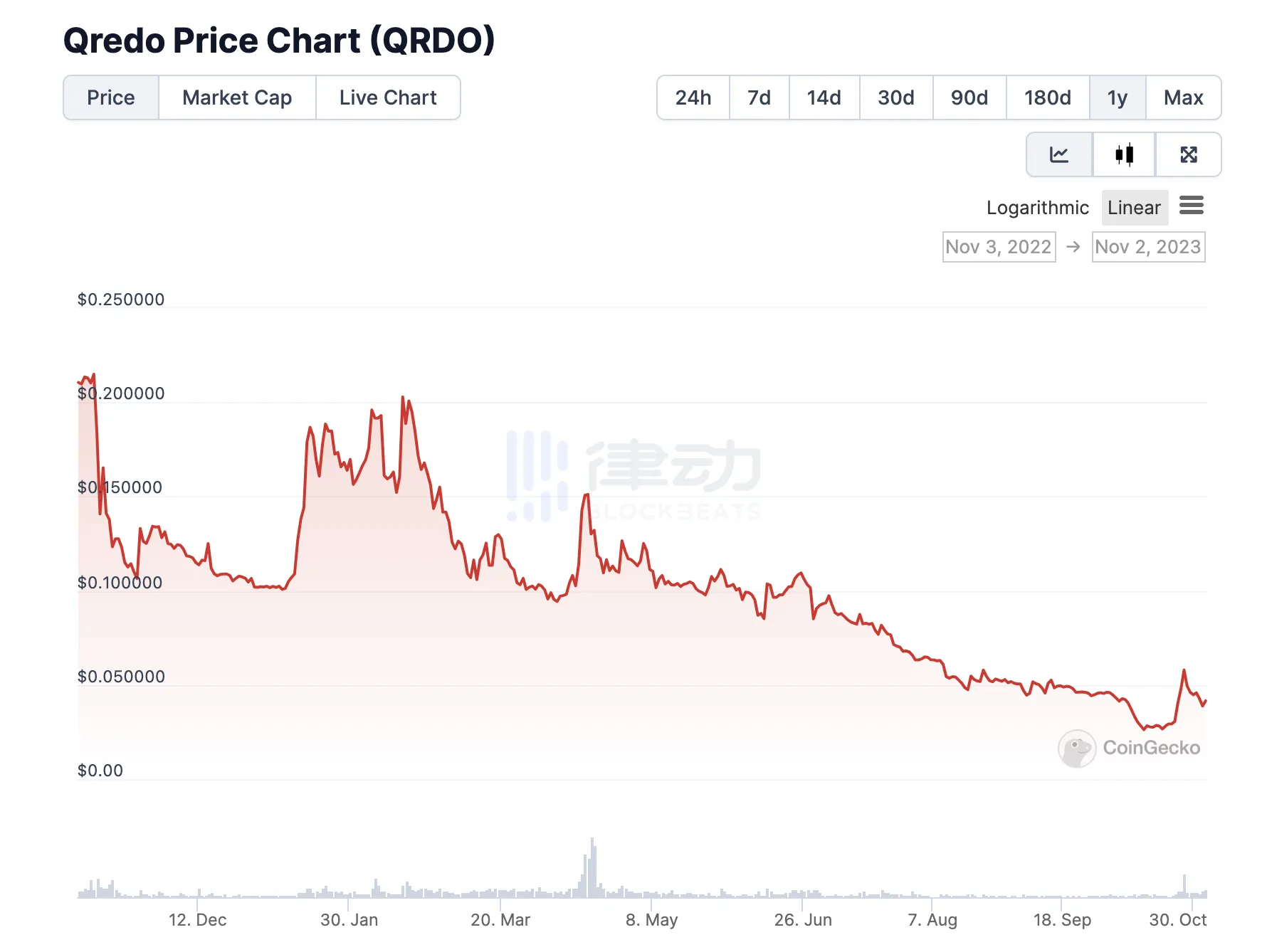
According to CoinGecko's data, the QRDO token has experienced a significant decline, dropping from a peak price of $9.81 in November 2021 to approximately $0.0415 currently, a decrease of nearly 100%.
October Layoffs in the Cryptography Infrastructure Industry
During this uncertain bear market cycle, not only Qredo has chosen to lay off employees. In October alone, four infrastructure projects have resorted to layoffs to preserve the spark and survive this winter.
October 3rd, blockchain analysis company Chainalysis CEO Michael Gronager notified employees via email that about 150 people will be laid off, slightly higher than 15% of its total staff of 900. This move is aimed at increasing the company's withdrawal from the commercial market and focusing on more stable government contract business. As Chainalysis further shifts towards the public sector (which already provides 70% of its revenue), it is focusing on future government needs and expanding the investigative capabilities of its core products.
On October 6th, Ledger, a manufacturer of cryptocurrency hardware wallets, announced a 12% reduction in workforce. In a letter to employees, CEO Pascal Gauthier stated, "We must continue to make decisions for the long-term development of the company. The macroeconomic headwinds have limited our ability to generate revenue, and in response to the current market conditions and business reality, we must reduce our workforce by 12%." Earlier this year in March, Ledger announced that it had raised most of its funding, totaling 100 million euros (109 million US dollars), in its first round of financing, with a valuation of 1.3 billion euros.
On October 10th, Matt Cutler, CEO of Ethereum infrastructure service provider Blocknative, announced that the company recently underwent restructuring, resulting in a workforce reduction of over 33%, affecting more than a dozen employees. Blocknative currently has 24 employees. Previously, Blocknative had suspended its MEV-boost service due to economic issues.
Related reading: "Blocknative stops relay service and announces 30% layoffs, is MEV-Boost facing its toughest moment?"
On October 13th, blockchain security audit company CertiK announced a "strategic workforce adjustment" and laid off 15% of its employees. Ronghui Gu, co-founder and CEO of CertiK, said, "Our main goal is to restructure our team to better align with our long-term strategic vision. CertiK remains committed to our mission and believes these changes are necessary steps to achieve our goals."
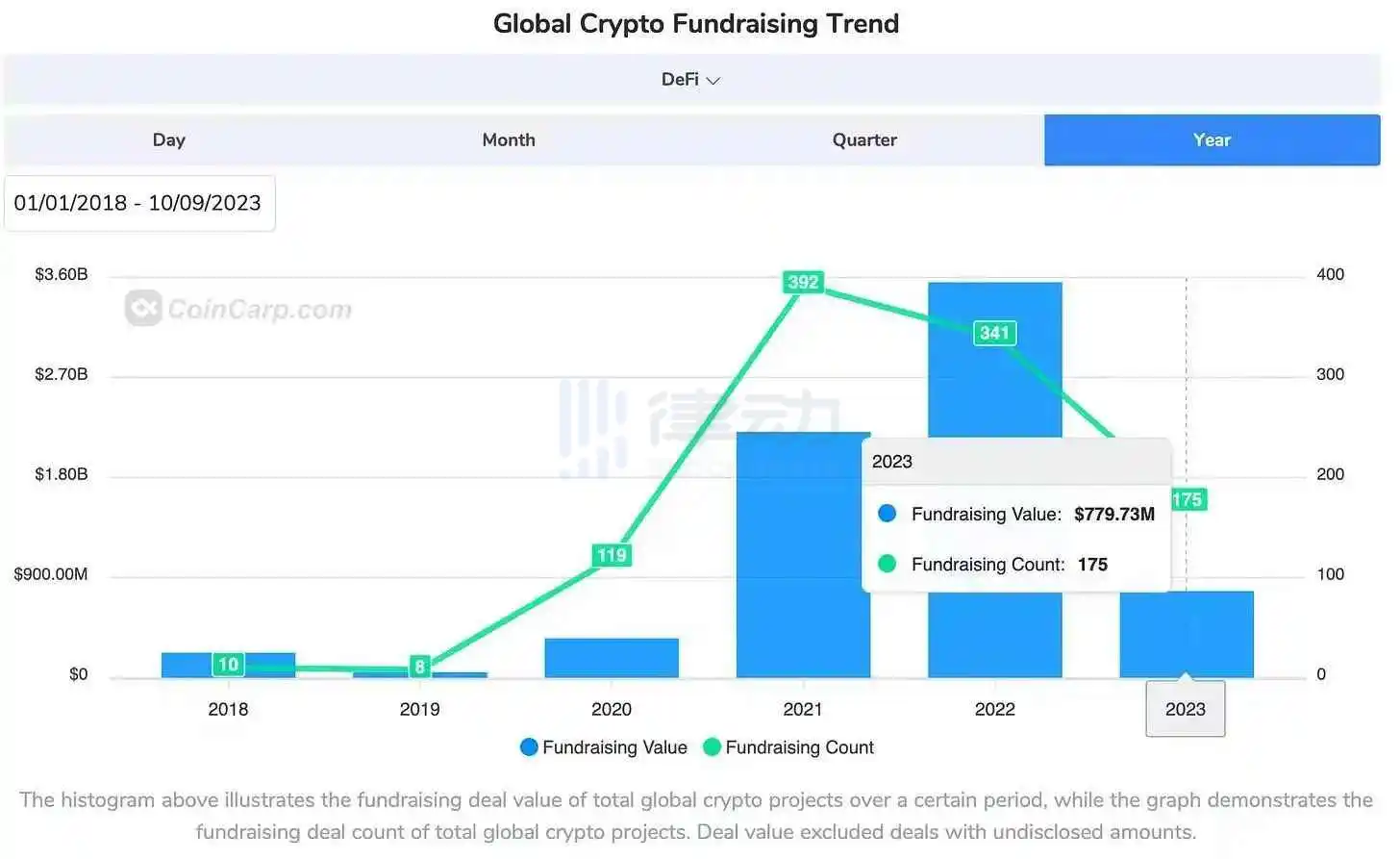
One cruel fact is that layoffs are the first choice for a company facing operational difficulties. Despite the current market sentiment rebounding, in terms of funding, the average amount of each round of financing in the DeFi field has decreased by more than 55% in 2023. According to CoinCarp.com data, a total of 175 rounds of DeFi financing were conducted in 2023, raising a total of $779 million, with an average of $4.4 million per round. Compared with last year's 341 rounds of fundraising totaling $3.56 billion, with an average of $10 million per round, this is a significant decrease.
Qredo is actively seeking new financing and exploring strategic acquisition opportunities to maintain its survival. The winter has come to the northern hemisphere, but Qredo's winter continues.
Welcome to join the official BlockBeats community:
Telegram Subscription Group: https://t.me/theblockbeats
Telegram Discussion Group: https://t.me/BlockBeats_App
Official Twitter Account: https://twitter.com/BlockBeatsAsia

 Related Articles