Astar Network launches zkEVM test network to promote progress in cross-chain interoperability

Original Title: "Astar 2.0: The Super Nova Era of Web3 is Coming"
Original Source: Feng & Carol, DFG
Introduction
As one of the first parallel chains to go live in the Polkadot ecosystem, Astar Network aims to create a cross-chain smart contract environment that supports enterprises and dApp builders. Astar has been steadfastly working towards this goal and has achieved remarkable results. With excellent technological innovation and strong market operation capabilities, Astar has become a top parallel chain in the Polkadot ecosystem and the most popular L1 infrastructure in Asia, particularly in Japan. As of now, Astar Network's total TVL (Total Value Locked) is approximately $191 million (according to official website data), with about $152 million locked in dApp Staking. There are over 20,000 stakers, and nearly 140 well-known Web2.0 companies have partnered with Astar.
It is worth noting that a series of recent new actions have once again made Astar Network the focus of market attention: the upcoming Astar Supernova zkEVM, the recent accelerated expansion of the Japanese ecosystem, and the full launch of Astar 2.0... All of these ambitious moves give us reason to believe that this project will unleash greater potential in promoting cross-chain interoperability and adoption of Web3.
Astar zkEVM: Supernova is Coming
Astar's most eye-catching new development is its deployment of zkEVM. As we all know, Ethereum is still the most popular platform for developers to build on, and has demonstrated strong network effects. Rollups and other layer-2 scaling solutions based on Ethereum have also become the hottest track, attracting a large number of users and traffic. Deploying L2 solutions is a key strategic move for Astar to bridge Polkadot and Ethereum and achieve its goal of a universal smart contract platform.
Despite the widespread adoption of Optimistic Rollup, zk-Rollup has always been seen as the holy grail of L2 scaling solutions. When combined with zero-knowledge proof (ZKP) technology, zk-Rollup can verify proofs without exposing sensitive data, thus maintaining trustlessness and enhancing security. Many teams are making efforts to promote the implementation of zk-Rollup, and Polygon Labs is one of the top project teams that has performed well.
In September, Astar officially announced its partnership with Polygon Labs to create Astar zkEVM, a new second-layer solution that utilizes zero-knowledge (ZK) technology to extend the Web3 experience on Ethereum. The solution was developed using the second-layer protocol of the Polygon Chain Development Kit (CDK). The zKatana testnet for Astar zkEVM was officially released on October 23, marking an important step for Astar in providing the most comprehensive technology stack and helping builders and enterprises securely access Web3. Currently, the Astar team is collaborating with Gelato, Safe, Web3Auth, LayerZero, SubQuery, Subsquid, and other native crypto projects and service providers to test the zKatana testnet and trial experience.
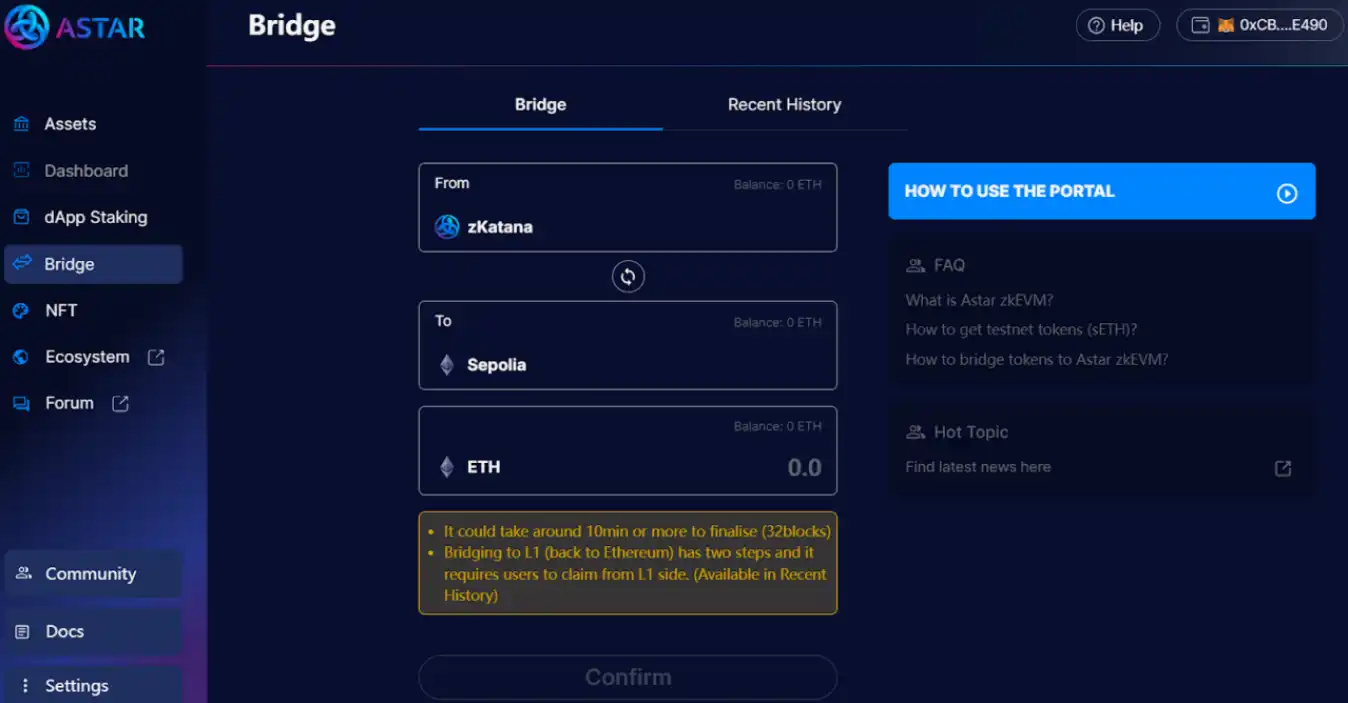
Astar zkEVM testnet user interface / Source: Official website
Astar zkEVM is a multifunctional solution for global enterprises, with its main features including:
Scalability: With zero-knowledge technology, Astar zkEVM can ensure smooth operation even under high transaction volume.
EVM Equivalent: Astar zkEVM is equivalent to EVM, which means it has greater scalability when working with existing Ethereum tools and clients (by preserving EVM opcode compatibility).
Safety: The security mechanism of Astar zkEVM is derived from Ethereum, ensuring the robustness and safety of the framework.
Interoperability: Astar zkEVM seamlessly interacts with Ethereum, promoting diversified integration and cross-platform compatibility.
Cost efficiency: Compared to Ethereum, users will benefit from significantly lower transaction costs, making Astar zkEVM an economically advantageous choice.
Launching L2 on Ethereum would greatly benefit the expansion of the Astar ecosystem.
Firstly, to provide builders with more options: with Astar Substrate (L1) and Astar zkEVM (L2), developers will have more places and tools to create/build.
Secondly, Astar can collaborate more closely with top projects on Ethereum, and the Astar ecosystem will benefit from the growth of transactions, active users, and liquidity. All of these are key factors for the success of the network, which will help attract more Japanese enterprises and real-world use cases to the Astar ecosystem. In addition to Polygon Labs, Astar zkEVM has already received ZkRollup technology support from Gelato, leveraging the provided zkRaaS infrastructure services. With the close relationship between Gelato and Gnosis, Safe ecosystem can be deployed on Astar zkEVM in the future.
In addition, Astar zkEVM will also bring new empowerment to the ASTR token, such as Gas fees as the original transaction and account abstraction, the introduction of a sorter burning mechanism, and the incentive token burning to the network aggregator, etc.
Astar and Polygon's zkEVM development is also a major milestone event in the successful collaboration between the Ethereum and Polkadot ecosystems.
Astar founder Sota Watanabe and Polygon founder Sandeep Nailwal are both well-known and outstanding entrepreneurs in the Web3 industry, and have achieved success in their respective projects. According to a survey by the Japan Blockchain Association, 44% of Japanese developers choose Astar to develop DApps, while 25% choose Polygon. The strong cooperation with Polygon Labs will enable both parties to occupy about 70% of the market share, and further enhance Astar's competitiveness in the Asian market with the help of Polygon's huge ecosystem, community, and developer ecosystem. Astar can also contribute to the Polkadot Rollup SDK or L2 technology on Polkadot. In Web2 application development, it is not important which cloud service is deployed on. Therefore, Astar hopes to maximize user value through cooperation and achieve large-scale adoption of Web3 applications rather than focusing on underlying protocol competition.
Astar in Japan's thriving Web3 ecosystem
Currently, the Japanese government is strongly supportive of the Web3 and cryptocurrency industry. In the WebX conference held in July this year, Prime Minister Kishida reaffirmed his determination to promote the development of Web3 and stated that efforts will be made to create an environment suitable for businesses and individuals to enter the Web3 industry, laying the foundation for further development and prosperity of the Web3 industry in Japan.
Astar is one of the leading blockchain companies in Japan, benefiting greatly from Japan's friendly encryption policies. It has gained a high reputation in Japan and has been widely adopted by government departments in many counties and cities, such as Fukuoka, Sendai, and Shibuya. A large number of industry giants have also established deep business cooperation with Astar, such as NTT Docomo, Sony Communications, and Toyota. Japan's largest mobile communication operator, NTT Docomo, stated in its latest financial report that it will invest up to 4.1 billion US dollars to jointly develop Web3 technology with Astar and other companies.
With the upgrade of technology and products of Astar2.0, more and more local enterprises and institutions are choosing Astar as their first cooperation choice to enter the Web3 industry. In mid-September, technology and entertainment giant Sony invested $3.5 million to establish a joint venture subsidiary Startale Labs with Astar, planning to jointly develop Sony Chain. The chain is expected to surpass the Layer2 network Base previously released by the well-known exchange Coinbase.
In addition, in early October, Kumamoto Prefecture in Japan was collaborating with Resona Bank, Cosmize, Startale Labs Japan, and Blue Lab to use Astar's Web3 technology to teach and promote the traditional production of Kumashochu, which has a history of 500 years. This collaboration plan will run on the Astar Network, with COSMIZE (a virtual social platform on the Astar Network) providing technical support for the creation and issuance of metaverse space and NFTs, while Startale Labs Japan is responsible for providing comprehensive technical support in the blockchain and NFT fields.
As of now, Astar Japan Lab (Astar's expansion plan in Japan) has incorporated nearly 140 institutions and has always been at the forefront of creating enterprise use cases, especially in the advantageous Japanese gaming and anime industry. Astar has established deep cooperation with traditional game studios and mainstream IPs in Japan, successfully introducing them to the Web3 world. In the future, Astar will further consolidate its leading position in Japan and gradually push Astar, zkEVM technology, and Web3 applications into the Asia-Pacific and global markets through deep cooperation with Polygon Labs.
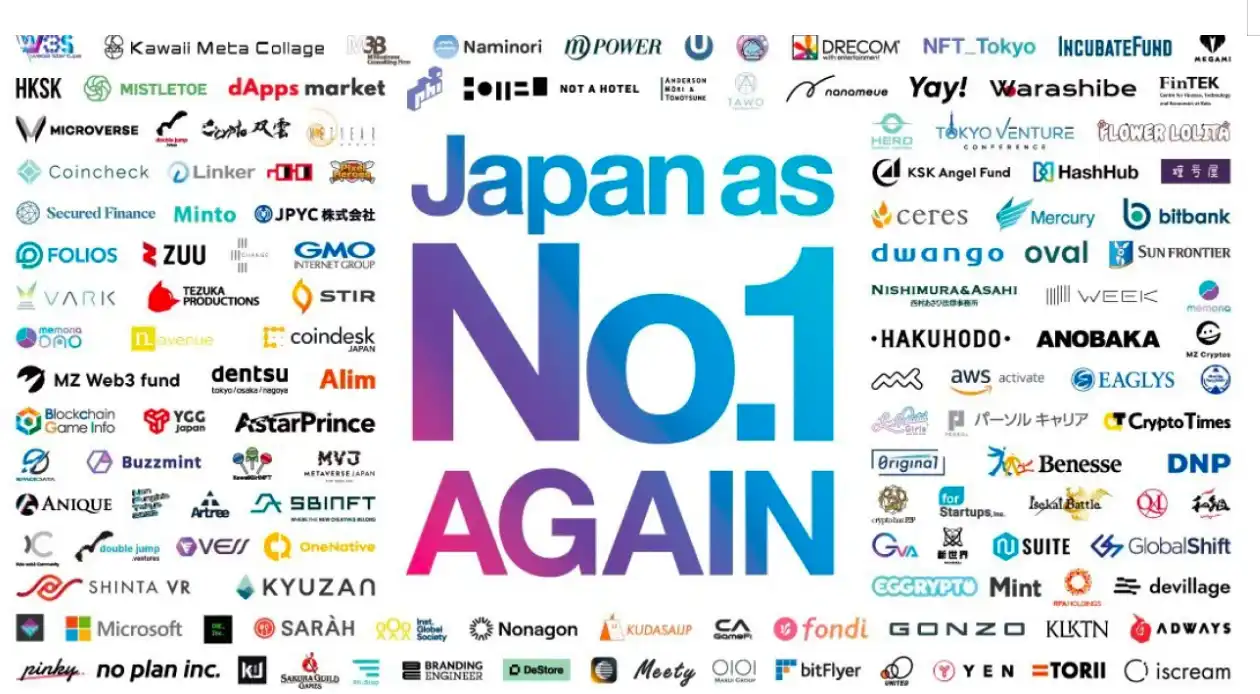
Astar in Japan's thriving cooperative ecosystem / Source: Astar Twitter
Astar 2.0 era is coming
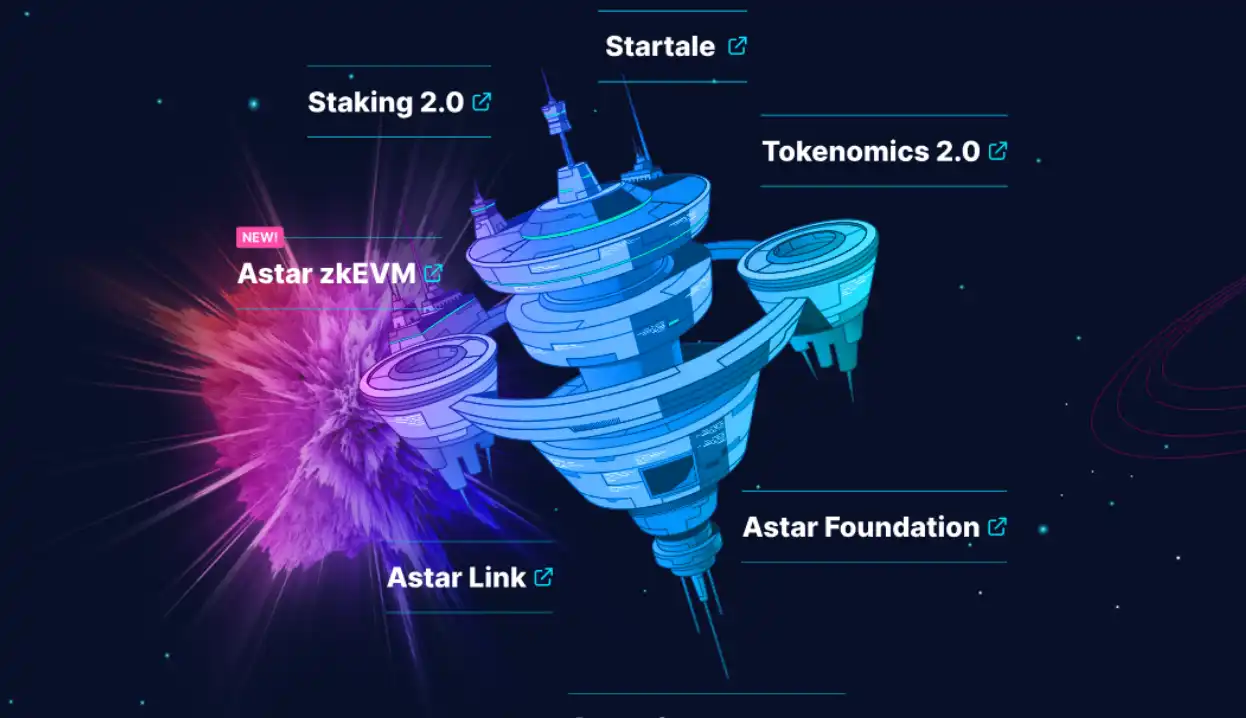
Currently, Astar has completed the development milestone of 1.0 Tech Stack and provided a seamless way for many enterprises and other organizations to create their own blockchain and dapps. Starting from the second quarter of this year, Astar announced that it will transition from 1.0 to 2.0. The overall goal of Astar 2.0 is to build a multi-chain dApp center that supports EVM, WASM, and multiple L1s, maximizing the potential of Web3 applications. Astar 2.0 includes a series of long-term plans that will play important roles in Astar's future development. In addition to the aforementioned Astar zkEVM, Startale Lab and Astar Link are also important components of Astar 2.0.
This article is from a submission and does not represent the views of BlockBeats.
Welcome to join the official BlockBeats community:
Telegram Subscription Group: https://t.me/theblockbeats
Telegram Discussion Group: https://t.me/BlockBeats_App
Official Twitter Account: https://twitter.com/BlockBeatsAsia