Revitalized DeFi sector, an article summarizing Degen's on-chain profit strategies.

Editor's note:
Sommelier Finance is a protocol built on the Cosmos blockchain that aims to expand the capabilities of decentralized finance based on Ethereum. The project currently offers two main services - liquidity mining and algorithmic trading strategies. For users, simply choose one of them and lock funds in the staking pool to earn profits. Cryptocurrency DeFi KOL Emperor Osmo (@Flowslikeosmo) wrote an article introducing several new staking pools recently launched by Sommelier.
The dYdX V4 mainnet is about to go live and provide native DYDX staking and profit distribution. DeFi researcher Thor Hartvigsen (@ThorHartvigsen) built a calculator to estimate DYDX staking yield and APY.
IPOR Labs aims to help mature DeFi money markets by building interest rate derivative financial instruments to standardize interest rates across the industry. IPOR stands for Inter Protocol Over-block Rate, a middle market rate determined by block-to-block sources. Cryptocurrency KOL DeFi Made Here (@DeFi_Made_Here) wrote an article researching how IPOR Labs achieves different risk yields.
BlockBeats compiled the above three tweets about DeFi protocol yields for readers to study, as follows:
Original translation: Kaori, BlockBeats
解析 Sommelier Finance 的三大新质押池
Translation:
Analysis of Sommelier Finance's Three New Staking Pools
Original author: Emperor Osmo, "Original link"
The fastest growing yield aggregator in the market is the Cosmos application chain. Sommelier Finance has maintained significant growth momentum with a TVL exceeding $40 million.
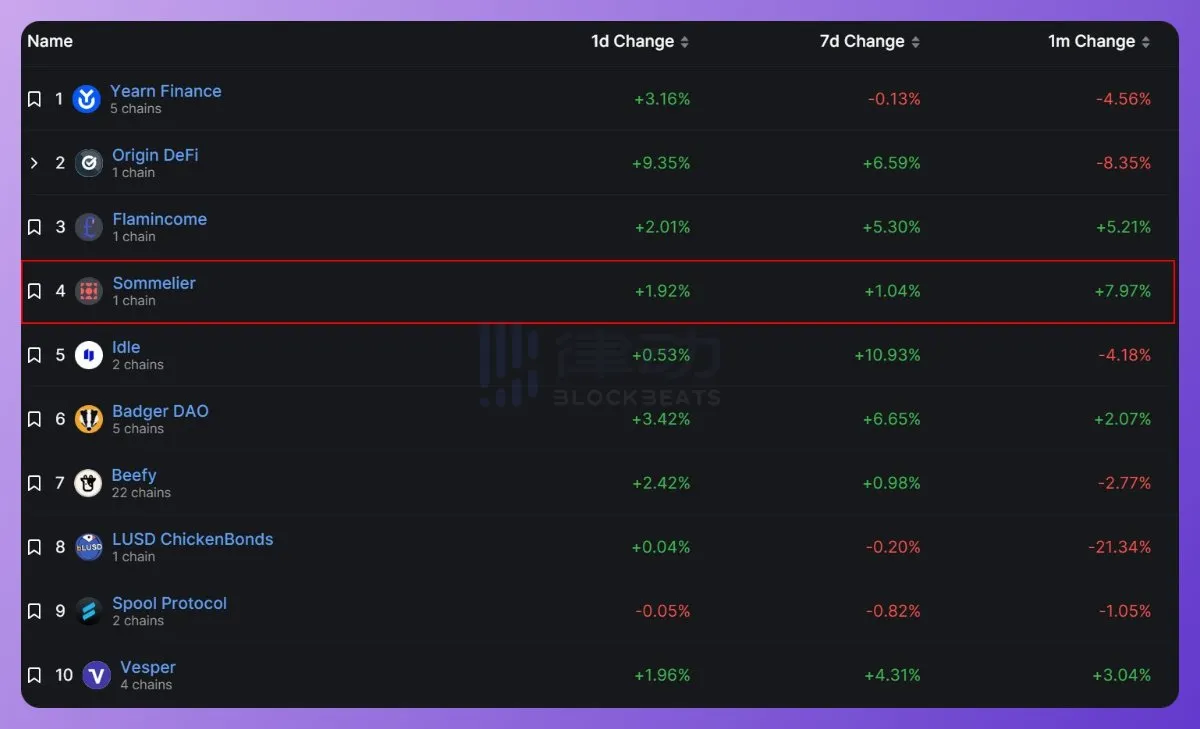
Previously, I discussed the significant growth prospects of Sommelier this year. In the past month, they have launched new staking pools with significantly increased yields, which has fueled this growth. Now, let's take a closer look at these strategies.
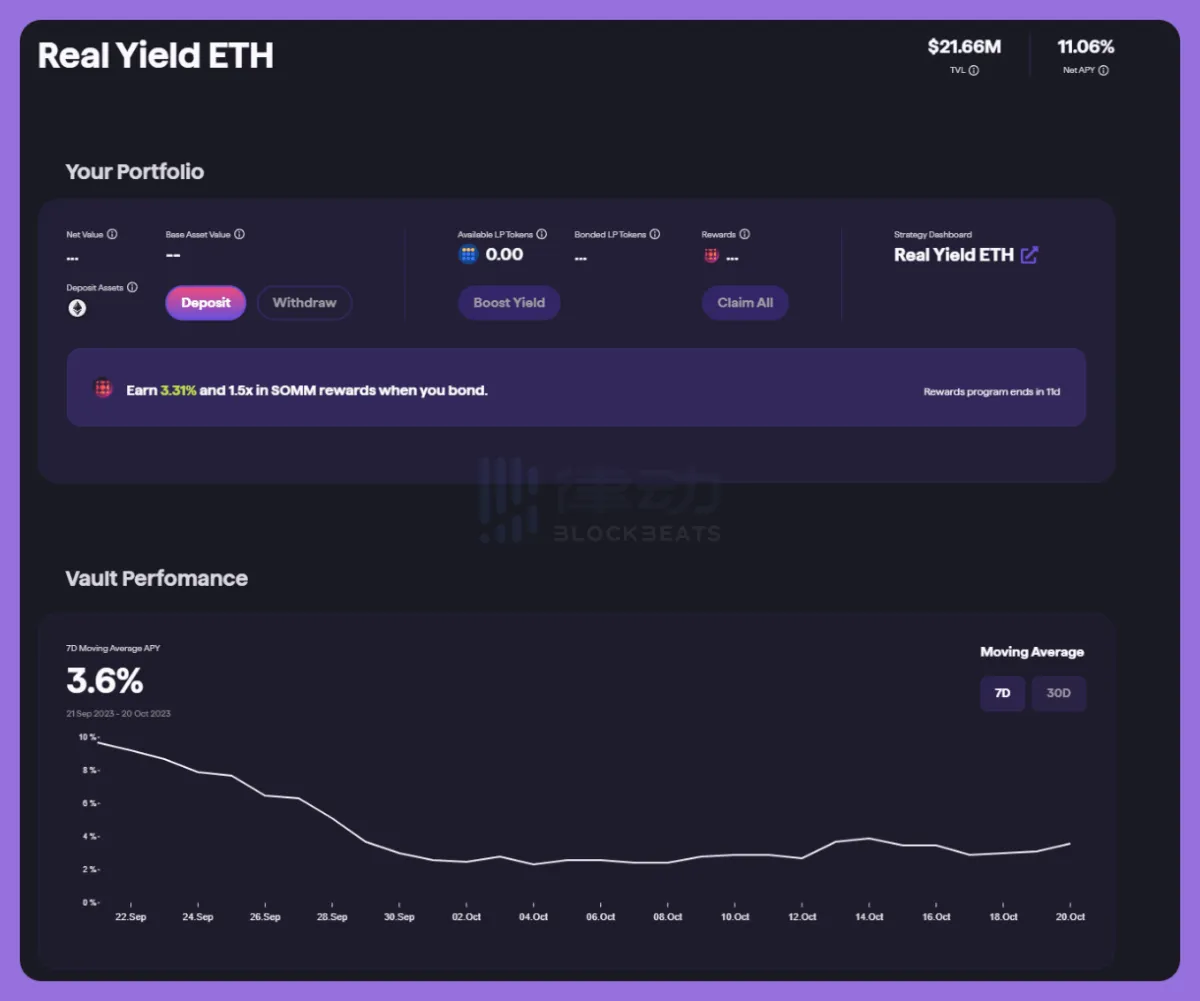
1、Real Yield ETH(APY 11.06%)
This collateral pool was created by Seven Seas and Define Logic Labs to maximize ETH earnings through the following methods:
- Leveraged Staking on Aave- Compound and Morpho, in addition to providing liquidity for ETH staking tokens on Uniswap V3.
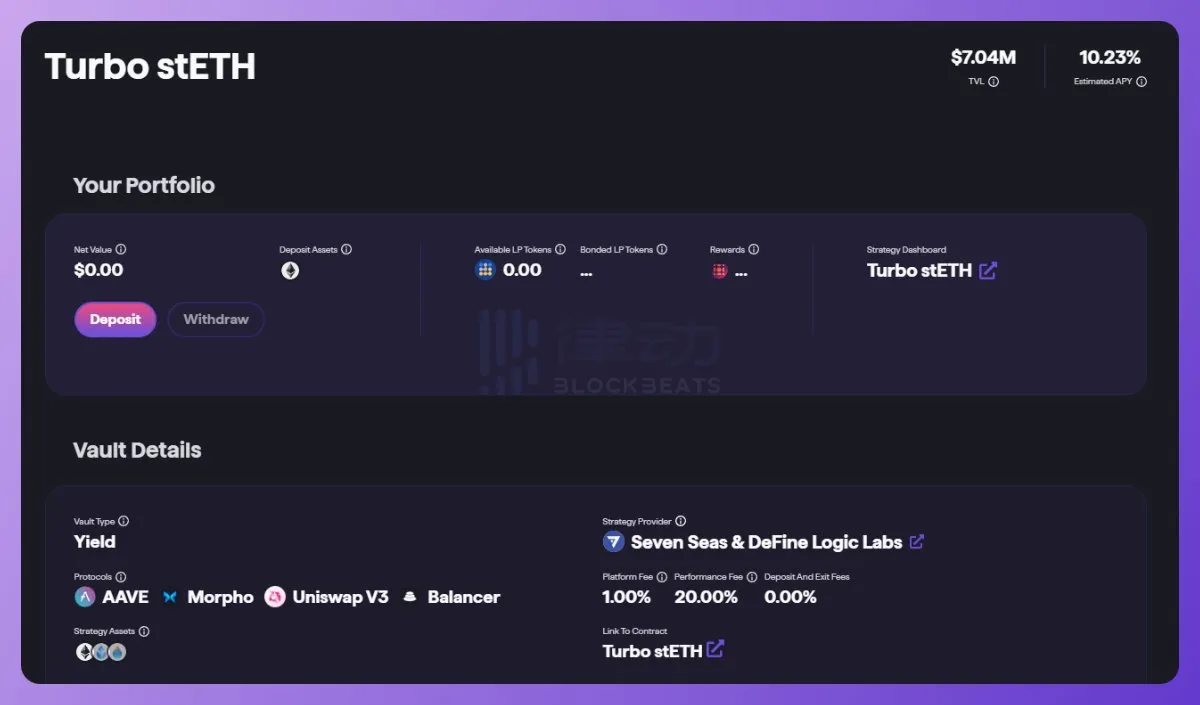
2、Turbo stETH (10.23% APY)
StETH is a highly liquid cryptocurrency asset that allows for staking pools:
- Use various dynamic strategies, such as leveraged collateral.- Utilizing CL clauses on DEX
- Create arbitrage opportunities between LST-ETH pairs to optimize users' ETH returns.
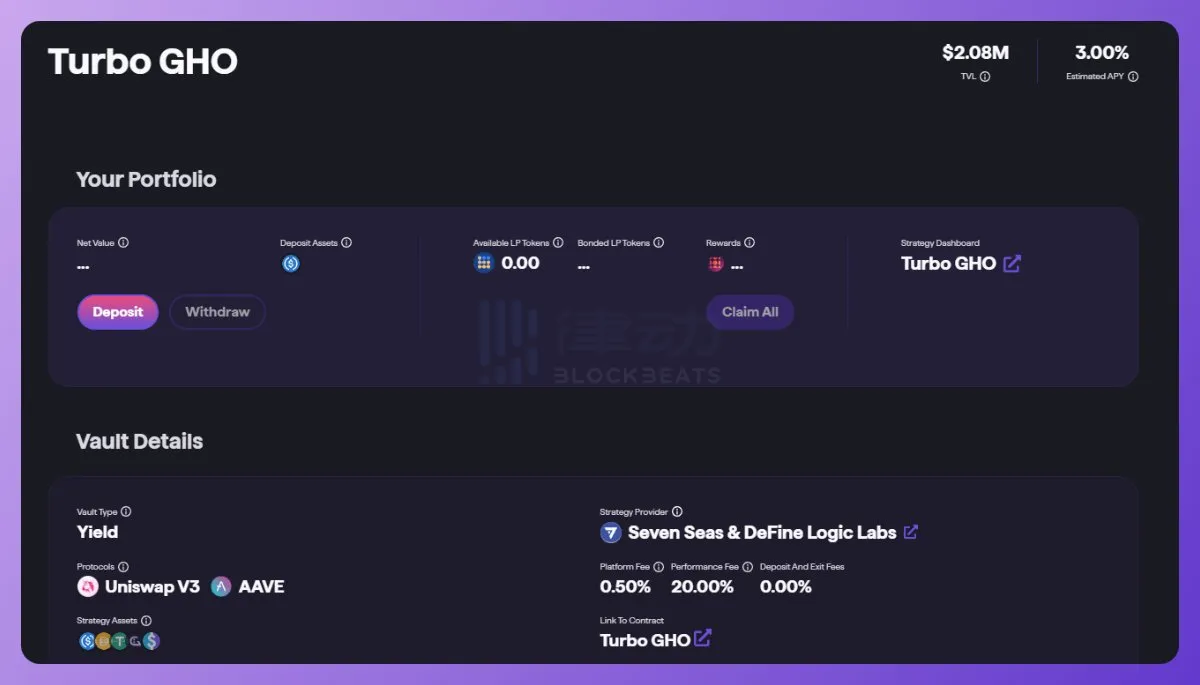
3、Turbo GHO (APY 3.00%)
The collateral pool utilizes Aave's over-collateralized stablecoin GHO. The goal of this insurance pool is:
- LP on Uniswap V3 paired with GHO
- Paired with USDC, DAI, USDT or LUSD
This allows users to obtain considerable profits through stable currency pairs.
The growth of Sommelier Finance has been transformed into more staking pools, which has brought more fees to stakers. The fees generated by SOMM stakers have continued to increase so far.

This is the result of achieving a good product-market fit. Users are eager to gain profits through alpha assets like ETH, and Sommelier provides them with secure strategies to achieve this goal. For all stakeholders, this is just the beginning of a profitable journey.
DYDX Delta Neutral Collateralized Arbitrage (20-30%+ APY)
Original author: THOR HARTVIGSEN; "Original link"
I built a calculator to estimate the DYDX staking yield and APY (if you hedge this risk by shorting DYDX on Vertex).
1、DYDX 质押年利率是多少? Translation:
1. What is the annual interest rate for DYDX collateral?
Firstly, we must estimate how much of the total circulating supply of DYDX will be staked. Here are some other perps for comparison:
SNX - 58% Staking
The annual allocated cost is 79 million US dollars (assuming no growth, therefore assuming the scale is not large), which results in a 26.4% annual pledge rate - quite crazy!


The token value must drop by 80% before the profitability of this strategy is lower than simple liquidity mining.
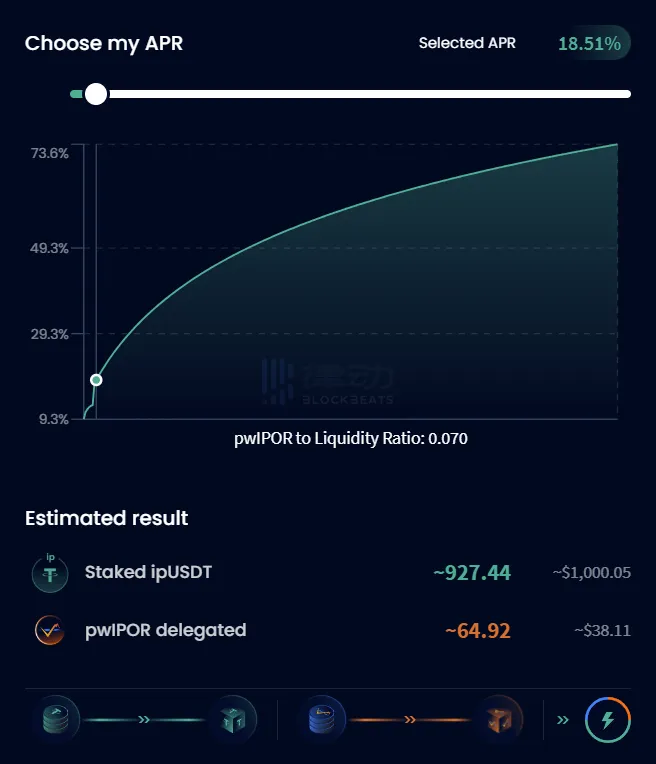
Trader Nicolas (@TradingAlpinist) discovered his fondness for 700 IPOR pledges and entrusted 1000 DAI. This generated a return of about 30% with a risk ratio of 44%. Greater risk = greater return.
Nicolas has been involved in interest rate derivatives trading for 27 years. He shared several more complex strategies, such as the quasi-Delta neutral position of ETH, with an expected return of 40%. The idea is to sell futures on leverage and farm stock pools on IPOR to increase pwIPOR.
One way to easily obtain high DN returns on IPOR is to lend USDC on Aave, with an annualized return rate of 8.7% (reaching 13%+ at the time of writing), and then borrow ETH at an annualized return rate of 3.3%. Next, deposit the ETH into the Ipor pool, and you will receive a DN annualized return rate of 12.2% at a loan-to-value ratio (LTV) of 70% (these returns may vary over time).
By only using 3.5% of the ipor exposure, you can increase your staking rewards and generate an annualized yield of 19.1%, with a loan-to-value ratio of 70% for DN.
(USDC is 8.7% + Ipor on ETH is 13.7% - Aave is 3.3%)
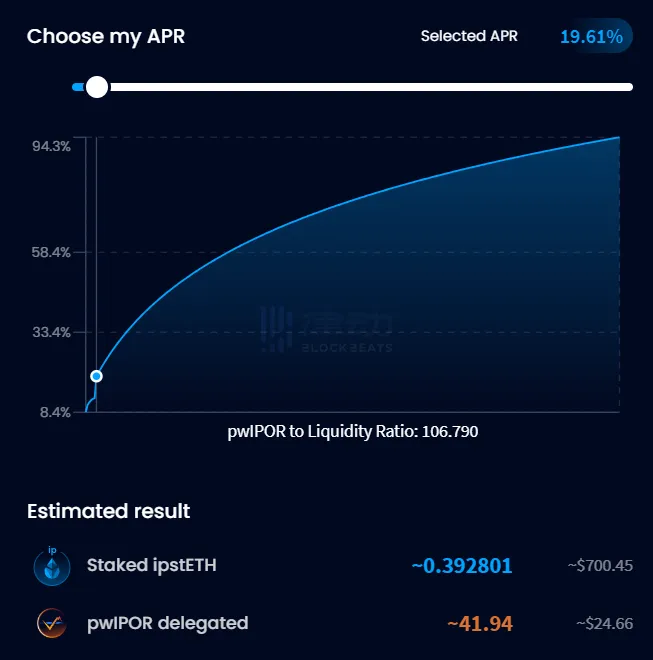
For more experienced users, Ipor is a great hedging tool. Sometimes, the difference between fixed and actual interest rates is only 10 basis points. It is also a good tool for speculating on interest rates.
Welcome to join the official BlockBeats community:
Telegram Subscription Group: https://t.me/theblockbeats
Telegram Discussion Group: https://t.me/BlockBeats_App
Official Twitter Account: https://twitter.com/BlockBeatsAsia

 Related Articles