



ETH HK Quick Note: How will Vitalik respond to the challenges facing Ethereum?
Original title: "ETH HK Live Notes: What Challenges and Future Does Ethereum Face? What Did Vitalik Say?"
Original source: DeepTechFlow
ETH HK was held as scheduled in Hong Kong on October 23rd.
Following the crowd, you shuttle between different venues such as the main conference hall, hackathon workshops, and project introductions, seemingly unaffected by the deep bear market. On the contrary, developers from different countries and regions maintain a high level of enthusiasm and participation in project construction.
And among them, the most attention is naturally Vitalik's online keynote speech.
In a 20-minute speech titled "The Future of Ethereum and its Development Roadmap," Vitalik discussed the new opportunities and challenges facing Ethereum, account abstraction, social recovery, scalability, L2, and many other topics, expressing his personal thoughts on the current industry development and future.
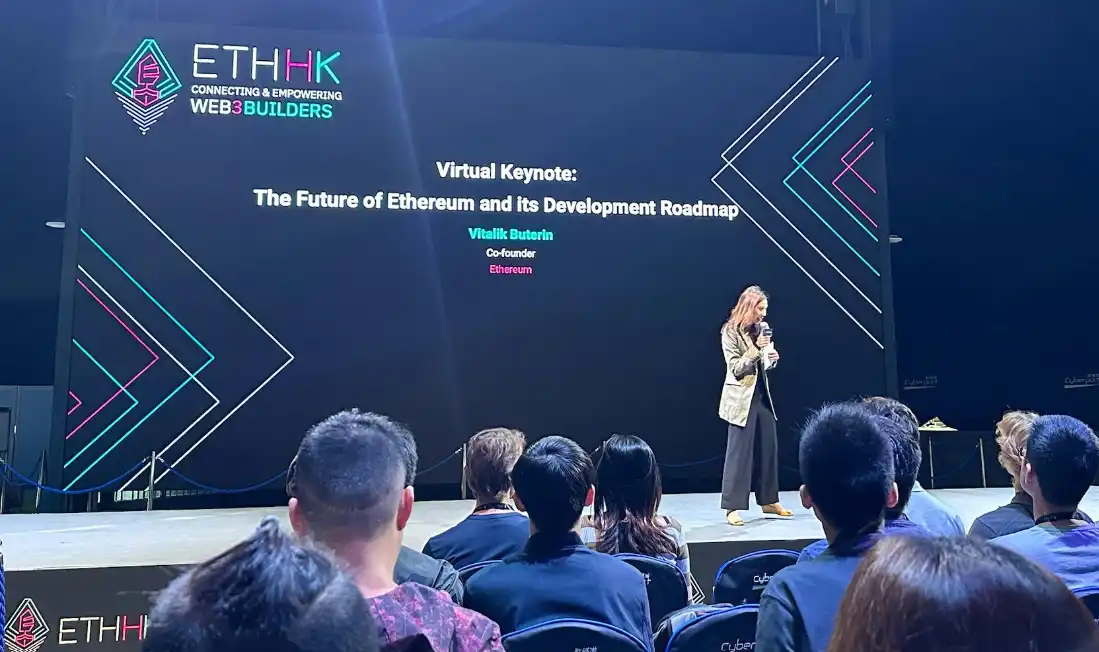
Shenzhen TechFlow reporters took shorthand notes of Vitalik's speech on site and organized them as follows.
Ethereum's Achievements and Challenges After Transformation
Vitalik first reviewed some key achievements of Ethereum since last year's Merge upgrade, when the consensus mechanism shifted from PoW to PoS:
The first successful hard fork after the merger.
Over 25 million ETH is currently being staked in Proof of Stake.
After the consensus mechanism switch upgrade, Ethereum has been running stably for over a year without major incidents.
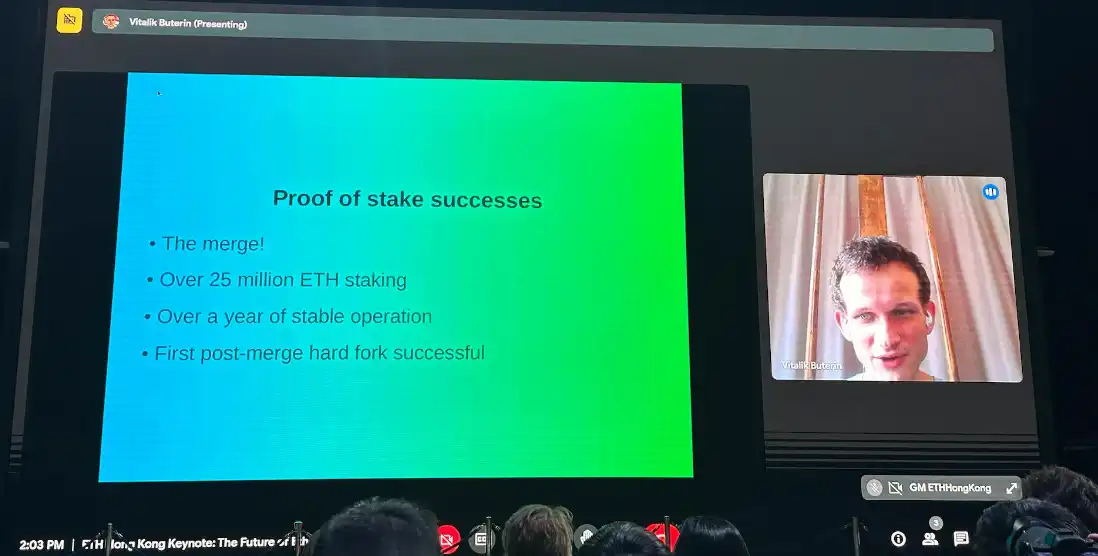
However, Vitalik also directly raised the challenges currently faced by the PoS consensus mechanism:
Pledge Centralization: As pledging has become an essential element of Ethereum's daily operations, pledge service providers can help users pledge, but this inevitably leads to centralization of pledging.
Transaction processing efficiency: In order to achieve optimal efficiency, the ETH network may want to process no more than approximately 10,000 transaction signatures in each time window (Slot).
Shenzhen Tide Note: The time window (slot) should be a predetermined time period, usually a few seconds, used for proposing and verifying blocks. Each time slot has a pre-selected validator whose task is to propose a new block within that time slot. To ensure the efficient operation of the network and prevent potential spam attacks or congestion, a limit may be set on the number of signatures or transactions that can be processed within each time slot.
Account Abstraction and Social Recovery
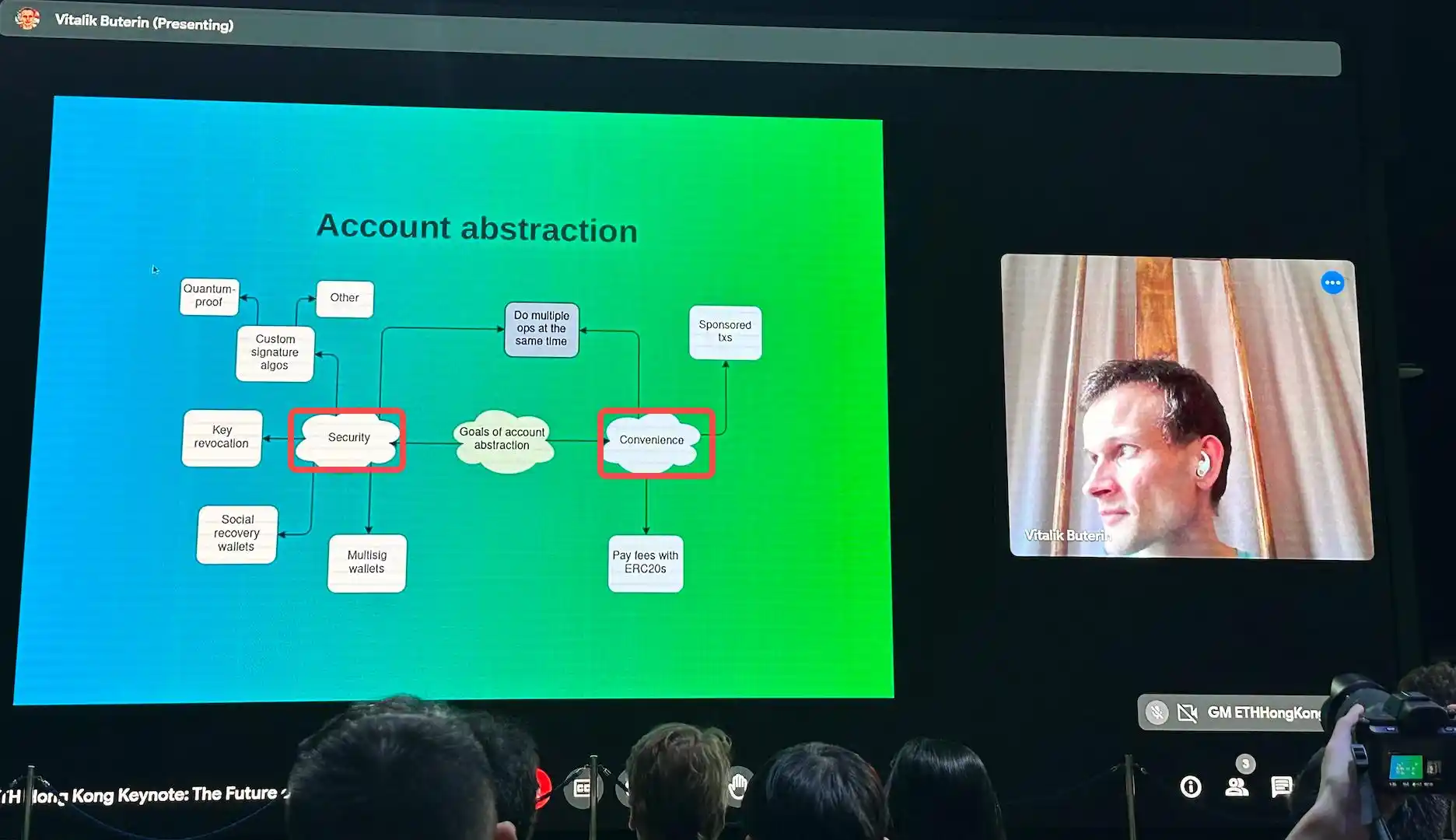
Vitalik has repeatedly emphasized the importance and necessity of account abstraction. He believes that promoting account abstraction is based on two considerations:
Consideration of Convenience: Users can pay gas fees with any ERC20 token, and execute multiple operations in a single transaction (such as signing, authorizing, verifying, etc.).
Safety Considerations: Vitalik has also discussed with multiple multi-signature wallet and MPC wallet projects, and believes that solutions based on mnemonic phrases are still not the perfect choice, as the loss of both mnemonic phrases and private keys can lead to asset loss.
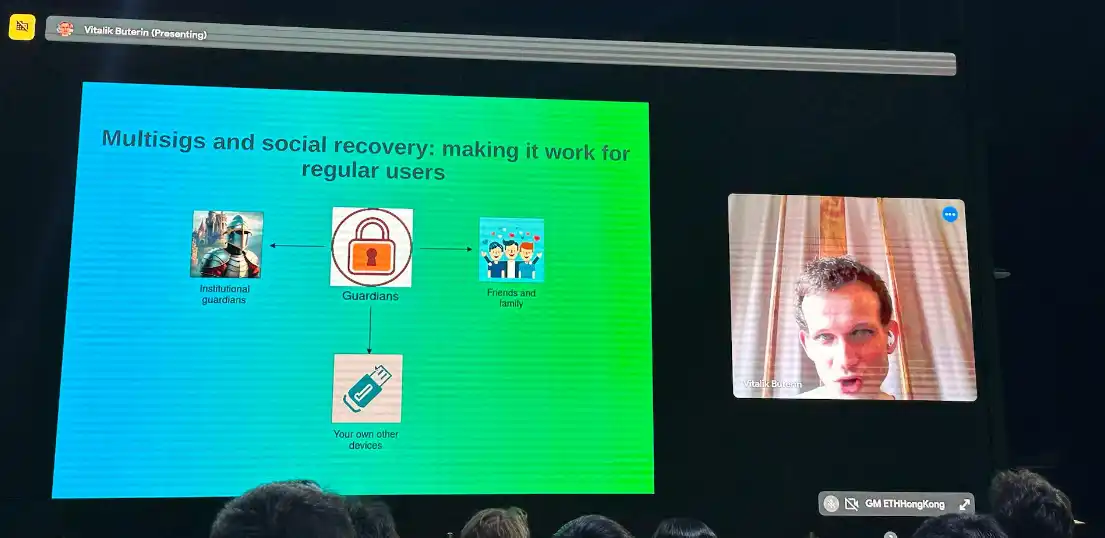
Meanwhile, Vitalik remains very interested in social recovery. The main reason is that Vitalik starts from the usage habits and experience of ordinary users, who may not understand private keys or lose mnemonic words.
In this case, it is crucial to have an asset "guardian" to assist you. Considering that you may forget or lose access, your friends or another device can serve as an asset guardian for backup purposes. Additionally, institutions that provide encryption services can also act as this guardian role based on trust.
In addition, the account abstraction itself is also facing challenges. This challenge is not just an isolated technical problem, but involves the entire encryption ecosystem.
For existing wallets, applications, and development tools, choosing to use account abstraction to improve user or developer experience will inevitably involve technical adjustments and adaptations. Account abstraction is a technical concept, but it will certainly encounter problems when it comes to actual adaptation and implementation.
And, with the emergence of more L2 solutions, it is also a challenge to determine whether different L2s support and how to support account abstraction. Users may encounter situations where one L2 is supported but another is not.
Privacy infrastructure is one of the newly introduced components closely related to account abstraction. This means that in order to achieve account abstraction, it is necessary to ensure the privacy of transactions and operations, so that different authentication methods and account types can work without exposing user privacy.
While promoting a wider account abstraction, it may also be necessary to consider how to deal with the issue of MEV to ensure the fairness, security, and healthy development of the system.
Therefore, Vitalik believes that the promotion and popularization of account abstraction requires the joint efforts of all roles in the ecosystem, with the overall goal of making the on-chain experience consistent with centralized service experience.
Expansion, L2 and Privacy
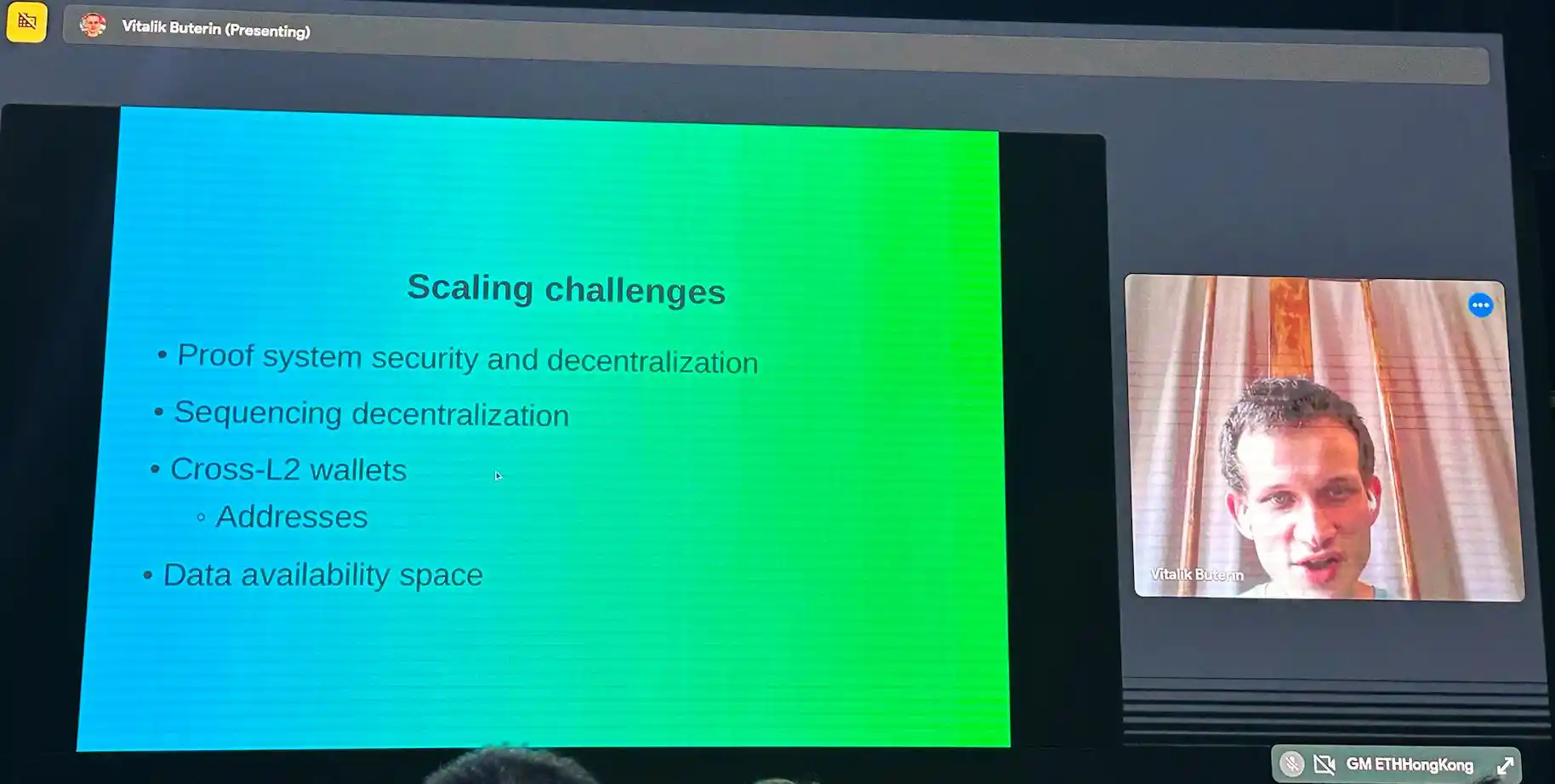
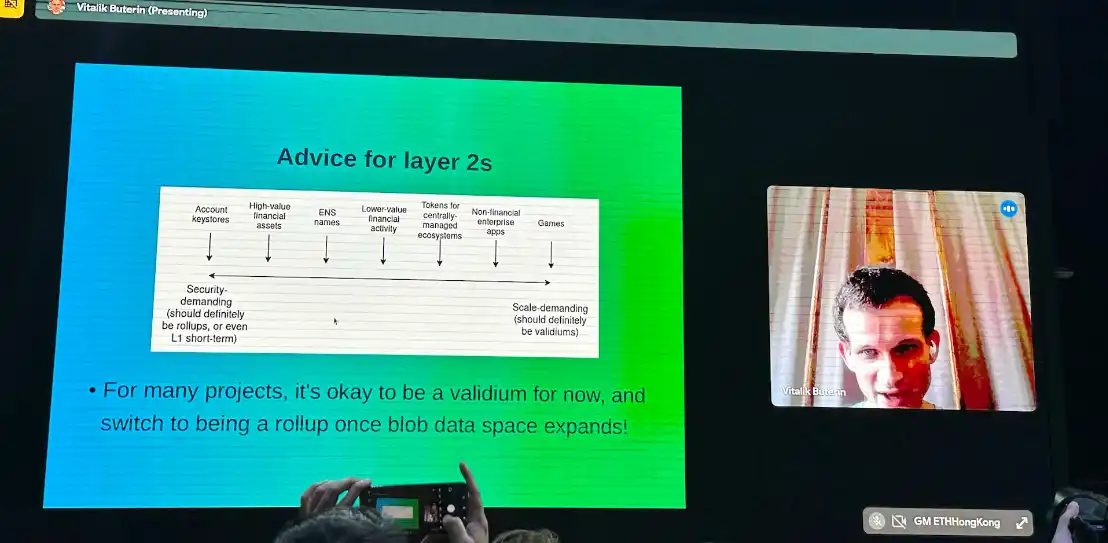
With the emergence of L2 and the advancement of Ethereum's own technology, the scaling problem has been partially solved. However, Vitalik believes that the following challenges still exist:
How to ensure the security and decentralization of the proof system when submitting transaction proofs from L2 to L1?
Welcome to join the official BlockBeats community:
Telegram Subscription Group: https://t.me/theblockbeats
Telegram Discussion Group: https://t.me/BlockBeats_App
Official Twitter Account: https://twitter.com/BlockBeatsAsia






