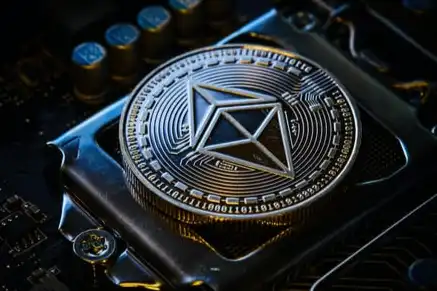
Comparison of PoS and PoW from the perspective of monetary mechanism.
Original author: @trtwarrior
Original editor: BlockBeats
RockyIndex CEO @trtwarrior expressed his analysis of the economic model of PoS mode from the perspective of currency mechanism on social media platforms, and believes that PoS has no future. BlockBeats has summarized the tweet content as follows:
In 2012, Proof of Stake (PoS) was first proposed. With the switch from PoW to PoS mode in ETH in 2022, PoS has reached a peak in development. The basic logic of the PoS mechanism is that users who hold tokens stake their holdings to become validators of the blockchain. The validators then verify transactions on the network and send proofs to the blockchain. If correct, the validators will receive rewards from the blockchain. Currently, the actual operation is much simpler. For example, in the case of ETH, most users directly deposit ETH into third-party protocols such as Lido to complete staking, and subsequently receive staking rewards, which is almost equivalent to holding stocks to receive dividends.
This looks like a perfect solution: lower energy consumption, less issuance, happy holders, and security similar to PoW. Security is not within the scope of this article, but there have been many papers discussing it. Interested friends can check it out for themselves. In fact, the security of PoS is far inferior to PoW. This article only discusses the economic model of the PoS mode from the perspective of the currency mechanism. ETH will be used as an example in many places, but the background of the discussion is all PoS products.
In the PoS world, holders and outsiders are not equal
There has never been a successful currency in history that operates through a PoS-like linear issuance mechanism. Shells cannot appreciate through hoarding, they can only be mined from distant shores. Precious metals such as gold and silver are the same, requiring heavy mining, refining, and processing to obtain new gold. The interest rate on gold has historically been very low, so low that even Warren Buffett is unwilling to hold it because it has almost no interest. As digital gold, Bitcoin needs to be obtained through competitive mining, with no other shortcuts. Before modern times, mainstream currencies were entirely dependent on third-party mechanisms for acquisition.
After entering the modern era, most countries have issued sovereign currencies, but the backing of sovereign currencies is the credit endorsement of each country's currency authorities. Sovereign currencies can be increased in quantity by holding government bonds, but it should be noted that this is backed by the government and the use of force to require residents to use its legal currency. If everyone can freely choose which currency to use, then 99% of sovereign currencies may disappear. Blockchain currency does not have the support of violent agencies, and sovereign currencies are not a good reference, not to mention that blockchain currency itself despises sovereign currencies.
In the PoS world, the legal currency is generally its project token, which assumes the basic currency function in its ecosystem, such as payment. Unlike gold and BTC, in the PoS system, current holders of the currency constantly receive staking rewards, and new coins are almost effortlessly obtained; while outsiders entering the market have to pay real money or work hard, putting them in an extremely disadvantaged position. These two situations are completely unfair.
Bitcoin provides a fair playing field
Some people may argue with me here, isn't Bitcoin the same? My answer is: it really isn't.
Using gold as an example, assuming there are only two people in the system: Zhang San, a low-income household with zero assets, and Li Si, the richest person who owns 100% of the existing assets. In the case of gold, the addition of new assets is fair to both of them. To obtain a new gold coin, the effort required by Zhang San is exactly the same as that of Li Si. Therefore, gold provides a fair arena for competition.
Of course, Li Si can choose to sell his existing gold, but over time, his gold will become less and less, ultimately achieving the circulation of assets and the adjustment of social classes. This is true for gold, and it is also true for Bitcoin. In order to obtain every additional coin of gold and Bitcoin, everyone is on the same starting line.
Essentially, the value storage function and income function of currency cannot coexist. Buffett tells us to buy stocks to achieve capital preservation and appreciation. However, stocks are not currency and do not serve as a value store, but rather exist as a function of value discovery. Trying to mix these two functions together will only create a Frankenstein's monster and a Ponzi scheme, rather than a long-lasting and viable entity.
If we look at the monetary attributes, the interest rates of Bitcoin and gold are equally low because the market is flooded with lenders and there are few borrowers. Except for a few short sellers and specific scenarios, few people borrow gold and Bitcoin. Speaking of stocks, friends may immediately think of the Harvey Test on securities. ETH has always been at risk of being regulated as a security. From a substance-over-form perspective, PoS tokens are essentially stocks, and the risk of regulation will persist in the long term and be omnipresent.
Lower energy consumption is a logical paradox
Regarding lower energy consumption, it is a logical paradox. The most successful currency in human history - gold - requires an enormous amount of energy to mine and extract, but this is also what makes gold uniquely valuable: almost all races and religions consider gold a high-value product. The core factor behind this is that energy itself is the best measure of scarcity and a universally accepted value measurement scale. If 90% of energy consumption is eliminated, the long-term value proposition of the product is equally diminished.
By analogy, holding US dollars is a bet on the human intelligence behind it, which involves a large amount of scientific research investment and capital expenditure. Similarly, holding Chinese yuan is also due to the employees of Foxconn's production line working day and night to assemble and produce iPhones in exchange for foreign exchange. Holding these currencies is because of the energy behind them. Can you find a mainstream sovereign currency with low energy density behind it?
A prophecy: For decentralized PoS tokens, the highest priority goal is price stability. Decentralization, censorship resistance, and low fees are no longer the core demands of PoS projects and have become distant priorities. Decentralization is a thankless task that not only fails to improve efficiency, but may also anger investors behind the scenes. Therefore, project teams not only do not care about decentralization, but may even deliberately downplay its importance. Lowering transaction fees and costs is also becoming less important, as enough tokens must be burned to ensure that the entire project's economic model does not collapse.
Once there is an involvement of interests, the previously impossible triangle of "decentralization, security, and scalability" becomes less important. More importantly, perhaps the relatively obscure triangle is: investor interests, coin price stability, and control. Stability is paramount for the value of project tokens. Because the people with voting rights are themselves large holders of coins, a stable coin price can already generate a high enough level of returns, and the original coins must continue to be held to ensure control of the project is not lost. Observing the main institutions of ETH, there is a clear tendency towards holding coins and seeking returns.
However, the core issue here is how to maintain this mechanism. By not giving money to miners, a lot of costs are saved. But the constantly increasing system requires continuous investment of wisdom and resources. The burning of tokens is based on someone constantly investing and innovating, and these investments play a role in stabilizing the token price. However, the premise of someone willing to invest wisdom and resources is the stability of the token price itself. After all, everyone is not foolish and unwilling to invest their limited energy in a declining ecosystem.
Therefore, these two are mutually dependent. New investments bring new hotspots, which attract a large number of users and transactions, and bring prosperity to the ecosystem; conversely, it spirals downward.
Early developers and investors in the blockchain industry, whether it's BTC or ETH, have seen a significant increase in their wealth. However, there is still a slight difference in mentality between the holders of these two cryptocurrencies. Holding BTC can be quite painful, as one must either be a believer like Michael Saylor or constantly endure the agony of "I should have sold at 60,000!" since selling one BTC means having one less. Holding ETH is much more comfortable, as dividends are constantly received and there is daily holding income, so one can simply enjoy the dividends. In terms of incentive mechanisms, which one do you think will be more motivated to continue contributing?
PoS has no future
Another feature of PoS projects is pre-mining, such as ETH, which currently has about 60% of its tokens pre-mined. Part of the pre-mined tokens are given to investors, part to the team, and another part to the foundation. One of the foundation's tasks is to constantly sell tokens to the market, which requires a steady stream of funds to come in and take over. Once there is a shortage of such funds, the downward death spiral is inevitable.
Once we give up decentralization, we are back on the road of centralization. Although we all have wallet private keys on ETH, how much essential difference is there between our NFTs and paid avatars on Tencent QQ? QQ is a completely centralized blockchain protocol, can we understand it this way? Looking at the king of PoS, ETH, more than 60% of the validation nodes are built on cloud servers, and the vast majority of them are on Amazon. We are worried that Ma Huateng will tamper with our data and take away our QQ avatars, but we cannot trust Bezos to ensure the security of our blockchain assets.
A word of opinion: PoS has no future. The representative work of PoS, ETH, currently has no other smart contract public chain that can reach its height. ETH's strength lies not in its own merits, but rather in the weakness of its competitors and challengers. Once a new public chain emerges in the current decentralized field, ETH's former fortress may face the possibility of collapse.
MakerDAO has left Solana, which could set a precedent for leaving the ETH network. Considering MakerDAO's important position in the Ethereum ecosystem, the demonstration effect of its departure is significant. This directly led to Vitalik's anger, who sold his MKR holdings and openly criticized MakerDAO for going astray in Discord.
Are you on the wrong path? I don't know, but what I do know is that ETH is hurting. PoS encourages cliquishness, but new resources are needed to maintain the system's normal operation. Now that someone wants to withdraw, it will be even harder to maintain this foundation. If I were Vitalik Buterin, I would probably be so angry that I would curse, but his good character only allows him to express his frustration to a certain extent.
Most project declines are not completed in one day, but rather a slow and long-term process. This provides opportunities for many people and also makes many underlying issues less acute, entering a state of boiling frogs in warm water. However, people will gradually wake up, realize the problem, and take action.
Welcome to join the official BlockBeats community:
Telegram Subscription Group: https://t.me/theblockbeats
Telegram Discussion Group: https://t.me/BlockBeats_App
Official Twitter Account: https://twitter.com/BlockBeatsAsia

 Related Articles