OpenCover: What makes the DeFi insurance aggregator led by Jump Ventures special?

Author: Joyce, BlockBeats
Editor: Jaleel, BlockBeats
To be precise, decentralized insurance (cover) in the DeFi field is an insurance alternative solution.
Unlike traditional insurance products, the funds for DeFi insurance policies come from liquidity pools. Users inject funds into different insurance projects through DAO, and insurance buyers purchase insurance from the fund pool and receive claims from the pool. The liquidity providers are attracted by the security of the insurance and receive investment returns. Currently, insurance is divided into three categories, including protocol insurance, stablecoin decoupling insurance, and yield token insurance. Some providers also offer custody insurance to prevent fund losses caused by the use of custody (CeFi) products.
Currently, in exploring the DeFi field, users generally use "information asymmetry" to avoid potential risks and choose a more reliable and profitable protocol to seek short-term profits, rather than "buying insurance" to reduce long-term unknown losses.
Regarding profitability, the liquidity of insurance protocols is generally low and cannot compete with others. Additionally, for project parties who want to enter the market, the economic model and protocol design that rely heavily on complex actuarial pricing pose a high entry barrier, with low liquidity and limited profit potential.
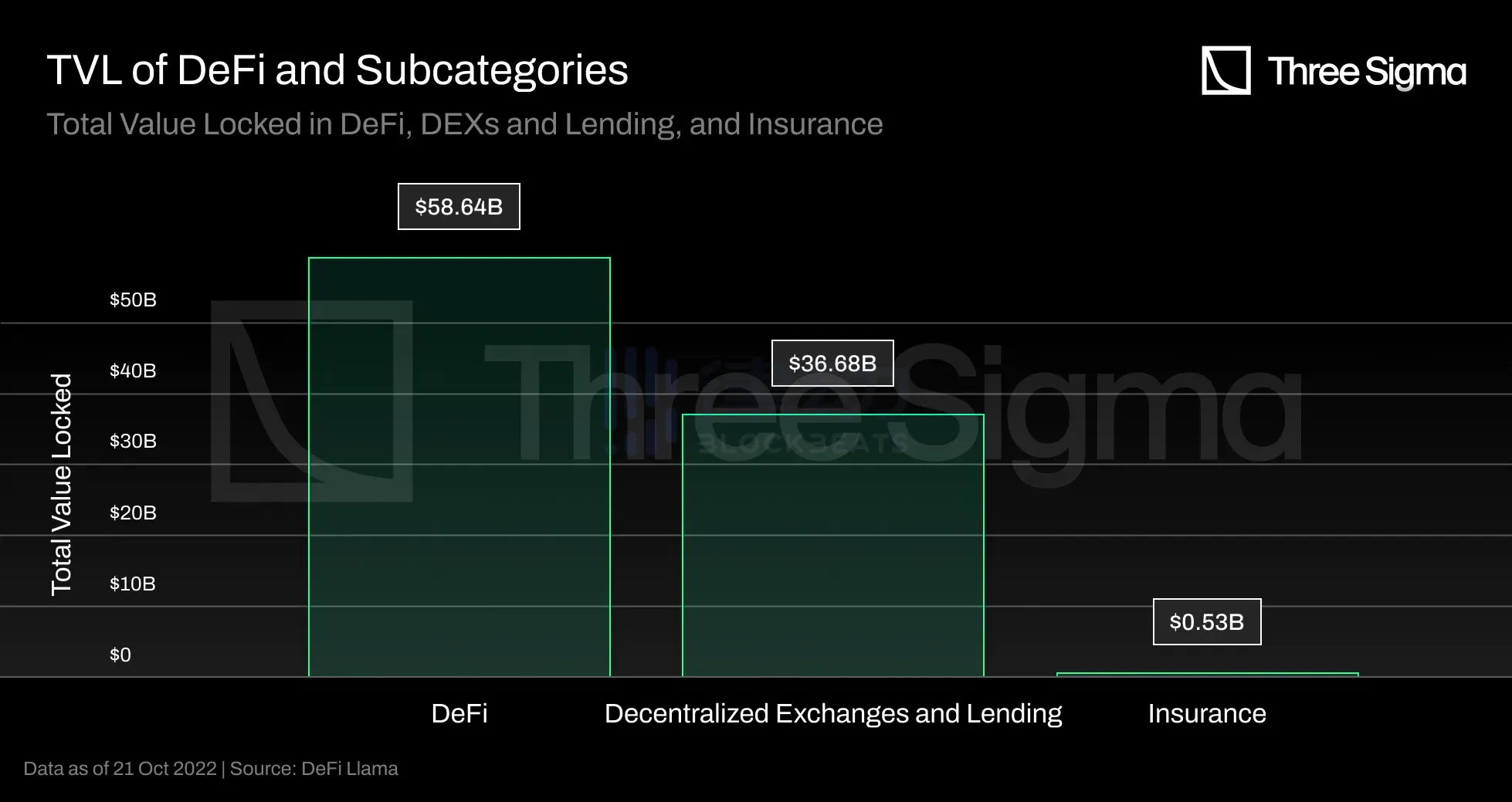
According to data from Three Sigma, the TVL of DeFi insurance accounts for less than 1% of the total TVL.
Source: Three Sigma
However, with frequent hacker attacks and protocol vulnerabilities, people have to face the risks in transactions. In the long run, there is development space for DeFi insurance alternative solutions that can widely cover popular protocols. Last year, after hackers stole $11 million from Yearn Finance, Nexus Mutual paid out over $2.7 million in claims to Yearn Finance protocol underwriters.
Related reading: "In-depth analysis of DeFi insurance: indispensable in open finance".
Last week, Coinbase Ventures' Base ecosystem fund announced its first round of investments in six cryptocurrency projects, among which the insurance service protocol OpenCover from an obscure track caught the attention of the community. According to BlockBeats, OpenCover is a decentralized insurance distributor that collaborates with DeFi insurance protocol Nexus Mutual and provides insurance aggregation services for Layer 2 protocols.
It is worth mentioning that in the previous seed round financing of $4 million announced by OpenCover, the lead investors were NFX and Jump Crypto, and Coinbase also invested $200,000 in the project to support its launch on Base. BlockBeats has sorted out why this niche product has attracted attention and what advantages OpenCover has compared to other insurance protocols.
OpenCover: DeFi Insurance Aggregator
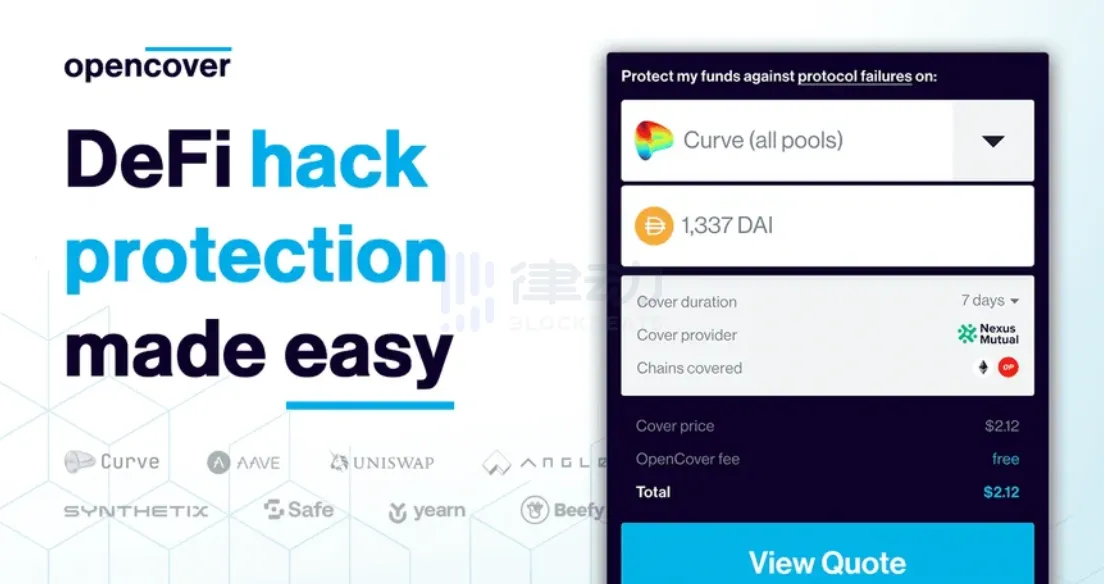
OpenCover is a decentralized insurance distributor (or aggregator) that simplifies the purchase, renewal, and claims process of DeFi insurance as a lightweight front-end protocol. It aims to protect DeFi users from on-chain risks and also provides insurance options for users during transactions.
Compared to other DeFi insurance products, OpenCover has both an easy-to-use interface and reliable underwriting capital. In addition, OpenCover recently launched on Base and Optimism, which also brings new development space for the DeFi insurance track. Previously, most underwriting funds were on Layer 1.
汇聚 DeFi 保险龙头的资金池
translates to
Pooling the funds of DeFi insurance leaders
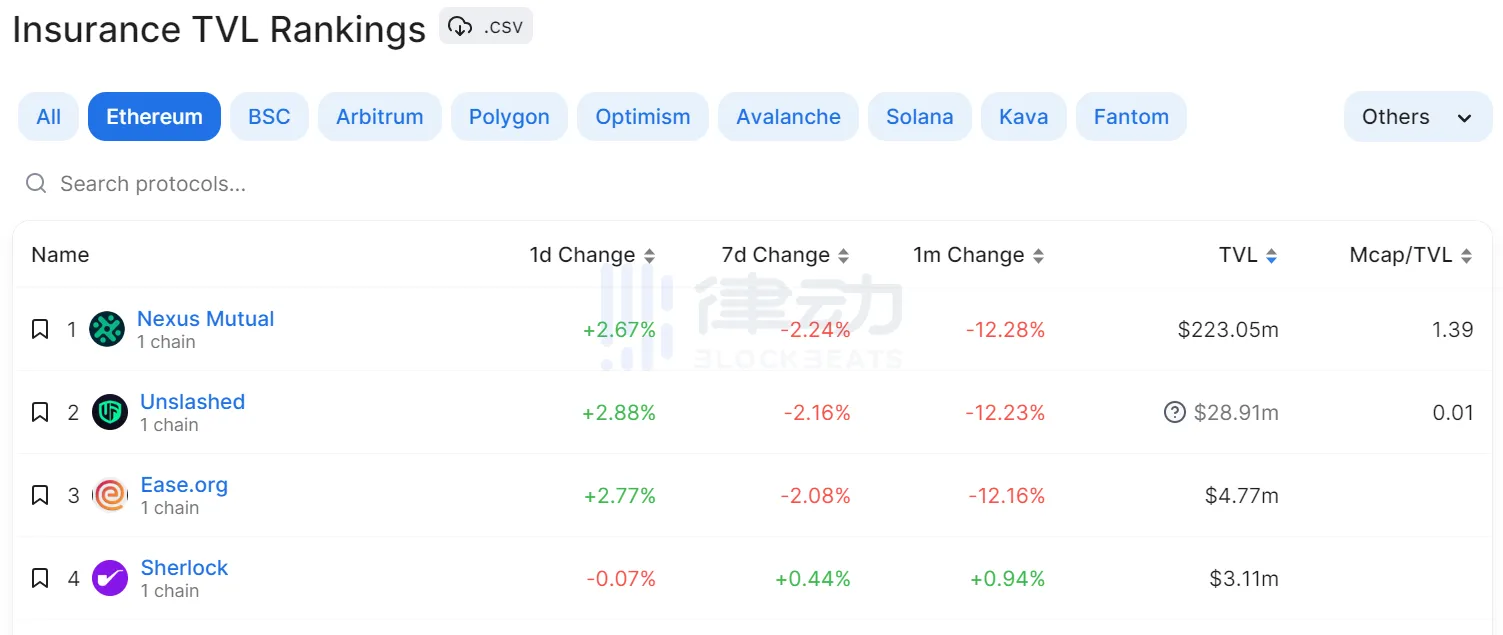
In the DeFi insurance track, Nexus Mutual is undoubtedly the leader. According to the latest data from DefiLlama, Nexus Mutual's TVL currently exceeds $200 million, while the combined TVL of the following three protocols is less than $40 million.
Source: DefiLlama
Nexus Mutual is a DeFi insurance provider launched in 2019, offering over 100 products to mitigate risks associated with protocols, yield tokens, and custody. As of now, Nexus Mutual's coverage is approximately 4 billion, and its liquidity pool holds 236 million in funds, with payouts exceeding 17 million.
Nexus Mutual has over 100 types of policies. When users purchase a policy, 50% of the fee is injected into the capital pool, and the other 50% is distributed to the stakers as dividends. If a claim event occurs, the stakers' tokens will be burned proportionally. If the amount exceeds the staked amount, all tokens will be burned, and the protocol will compensate for the policy as a whole.
Nexus Mutual is the current underwriter provider for OpenCover. For users, the most direct experience of purchasing insurance through OpenCover compared to using Nexus Mutual is that the insurance process is more streamlined.
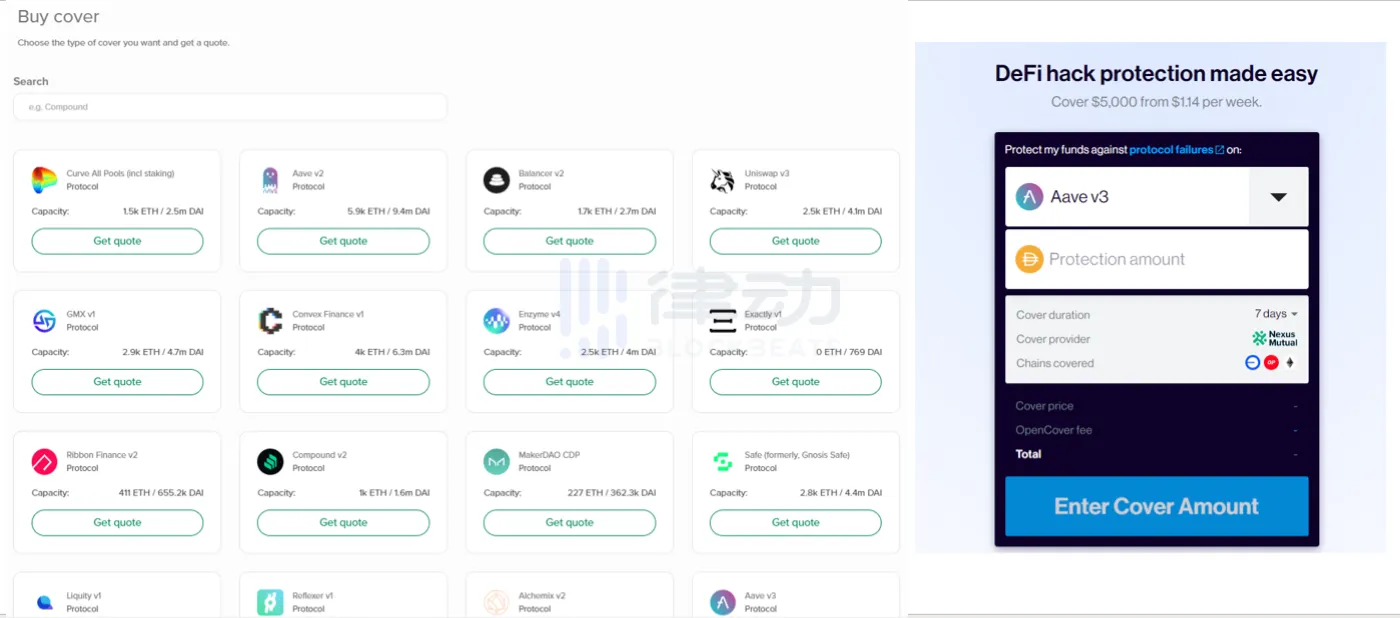
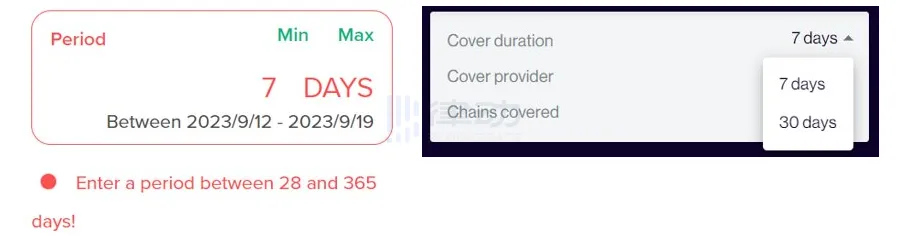
Nexus Mutual and OpenCover's insurance application interface
In addition, Nexus Mutual can only choose insurance periods of 28 days to 1 year, but OpenCover can choose 7 days or 30 days. Considering that the user group of DeFi insurance is currently not large, and most people are in a wait-and-see attitude, such settings are indeed more easily accepted.
L2 Insurance Aggregator
Two weeks ago, OpenCover announced the launch of Base and Optimsim, which is an Ethereum Layer 2 insurance aggregator (insurance alternative).
OpenCover believes that the reason for the low adoption rate of on-chain insurance schemes is due to "most underwriting funds being on Layer1, while most on-chain transactions are moving to Layer2" and "many blockchain users have been unaware that they can choose on-chain insurance schemes".
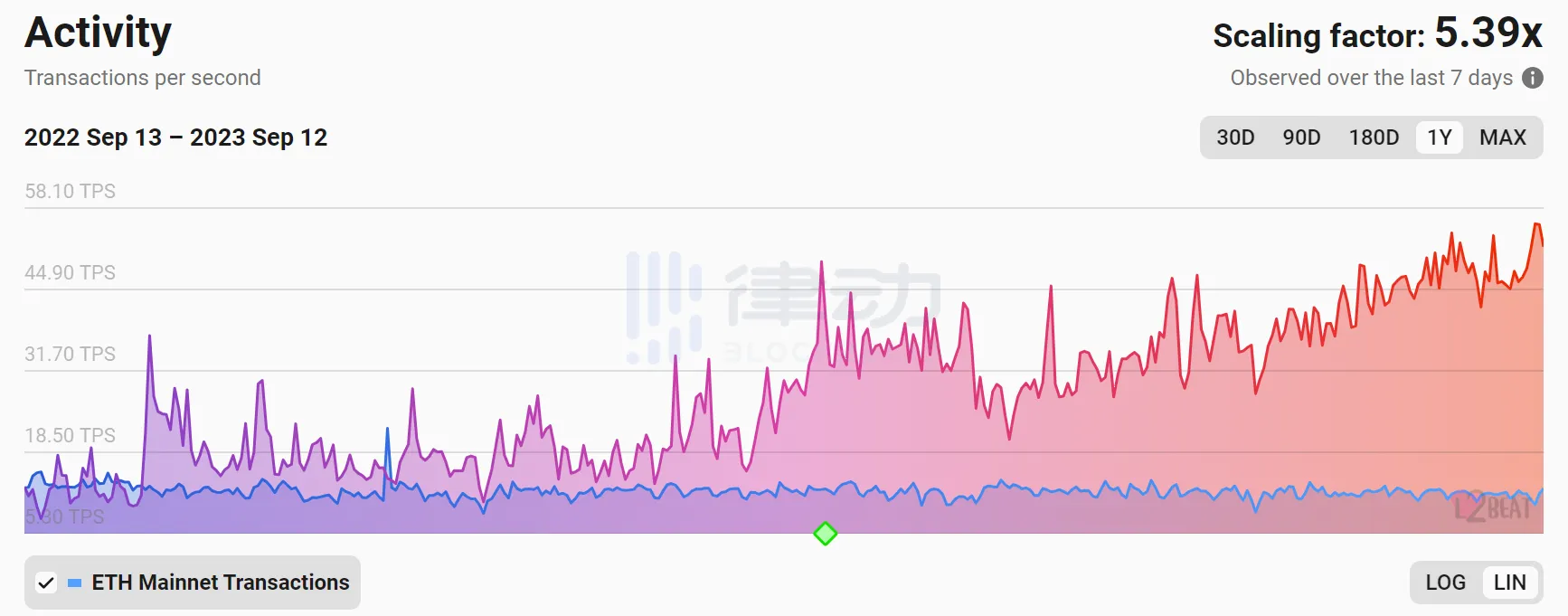
Source: l2beat
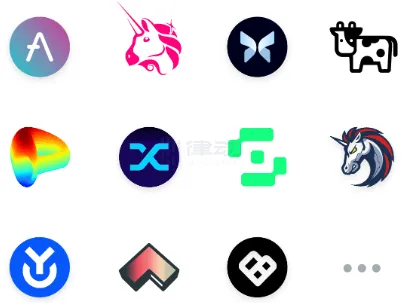
OpenCover currently supports 12 protocols, including Curve, Aave, and Safe, and plans to expand to over 40 protocols by the end of the year.
Previously, Nexus Mutual only supported insurance for protocols on Ethereum, while the insurance alternative that can cover protocols on Layer2 chains such as Optimism, the one with the highest TVL is Cozy V2, which has only 1.09 million liquidity and can be insured.
OpenCover Insurance Application and Claims Interaction
Insured
On the homepage of OpenCover, you can access the insurance purchasing interface by clicking on the link.
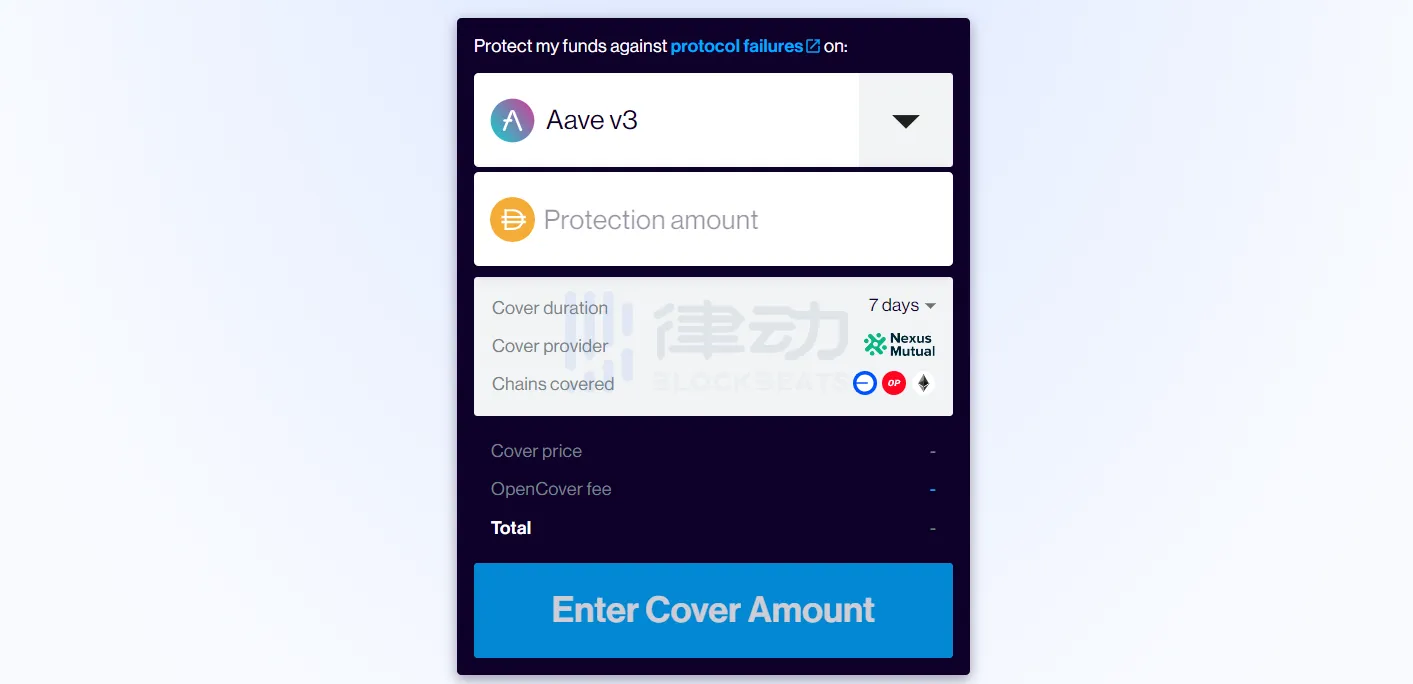
Select the agreement to be insured, fill in the amount of insurance and the duration of insurance.
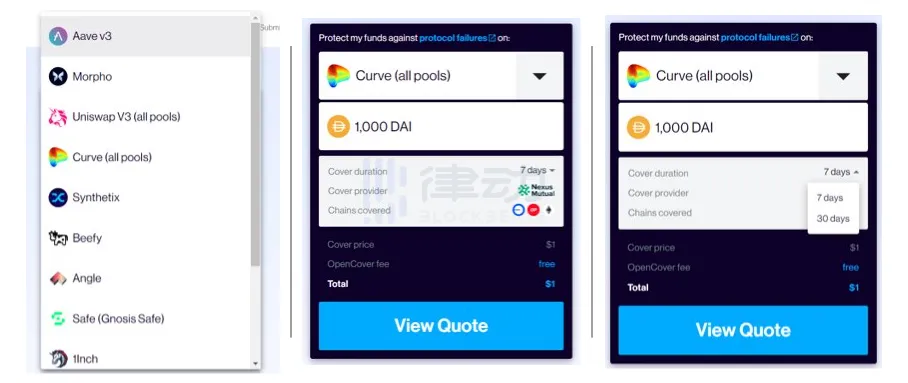
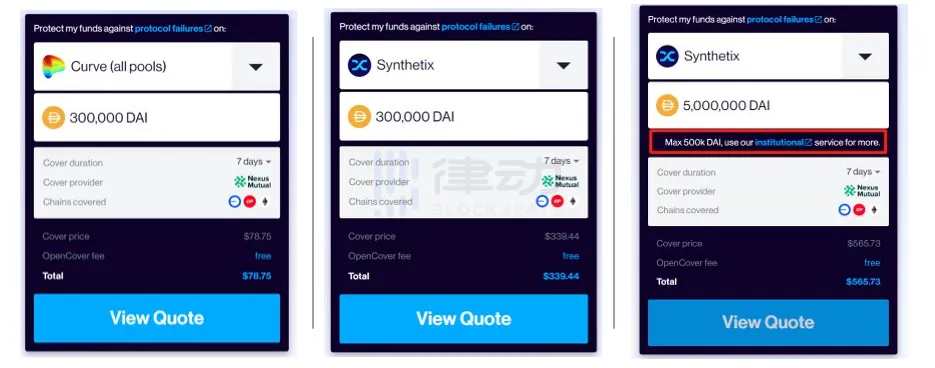
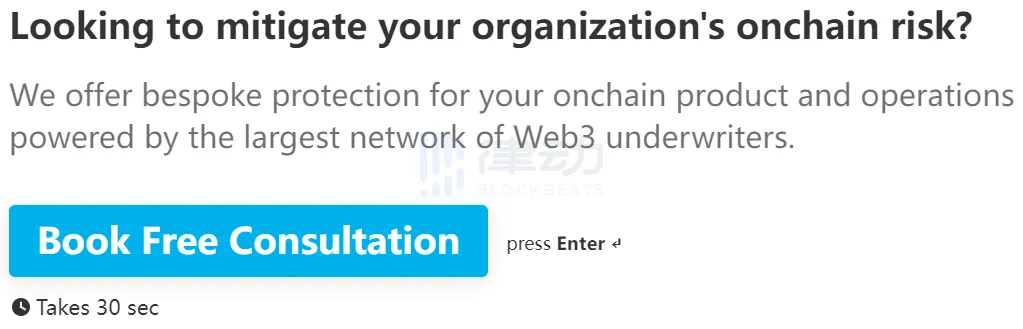
3. After filling in the insurance information, different quotes will be displayed based on the risk of the agreement, the amount of insurance, and the duration. The minimum premium is $1, and the maximum personal insurance amount is 500k DAI. When the limit is exceeded, a prompt will pop up and direct you to the institutional insurance consultation page.
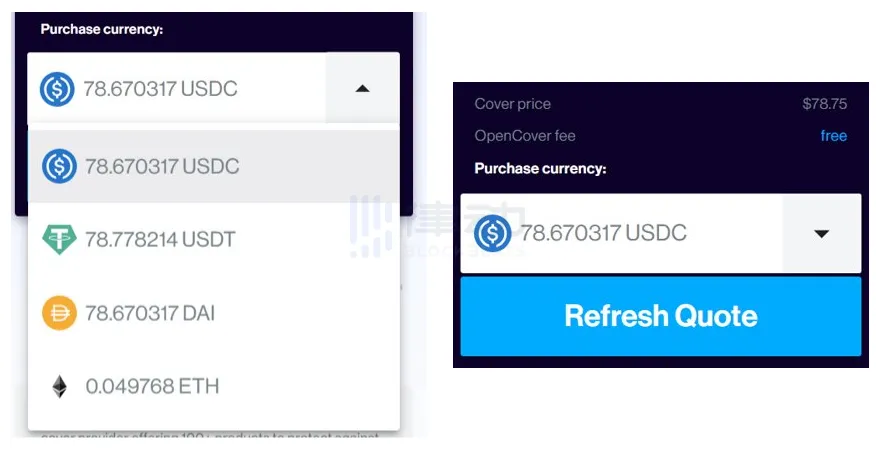
4. Click View Quote to bring up the payment interface. You can see the supported currencies. Connect your wallet to complete the insurance purchase.
Claim
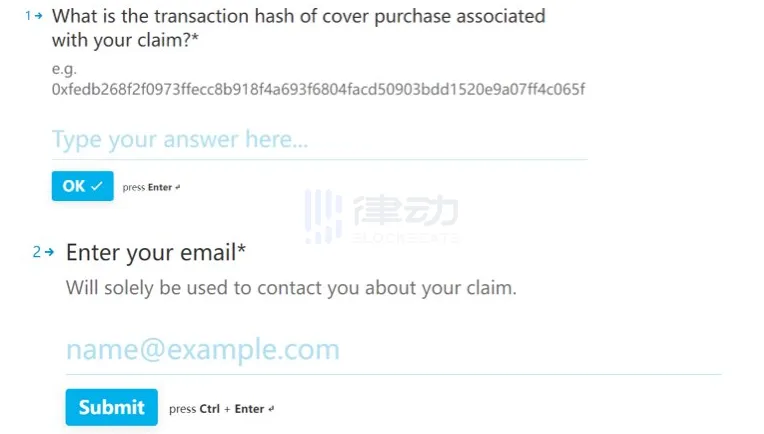
Click "Submit claim" on the insurance application page to enter the claims page.
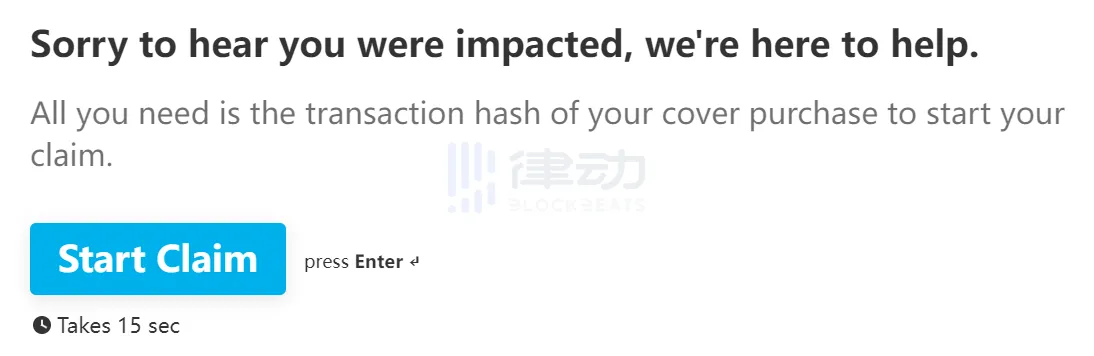
Enter the transaction hash and contact email of the purchased insurance, and OpenCover will have a staff member contact the claimant within 1 business day.
The Future of DeFi Insurance Aggregator?
Although the positioning of OpenCover is a DeFi insurance alternative aggregator, the community has found that currently the only available insurance option is Nexus Mutual. In the case of the latter's monopoly, it is difficult for other insurance options to be competitive enough to be chosen by users.
So far, it seems that the positioning of OpenCover's insurance aggregator is only "Nexus Mutual that is more convenient to use, allows for short-term insurance testing, and can insure Layer2 protocols".
On the official website, OpenCover describes itself as "providing Layer2 insurance aggregator and institutional services, and is also a leader in DeFi insurance data analysis." The navigation bar on OpenCover's homepage prominently features a knowledge library and industry data related to DeFi insurance.

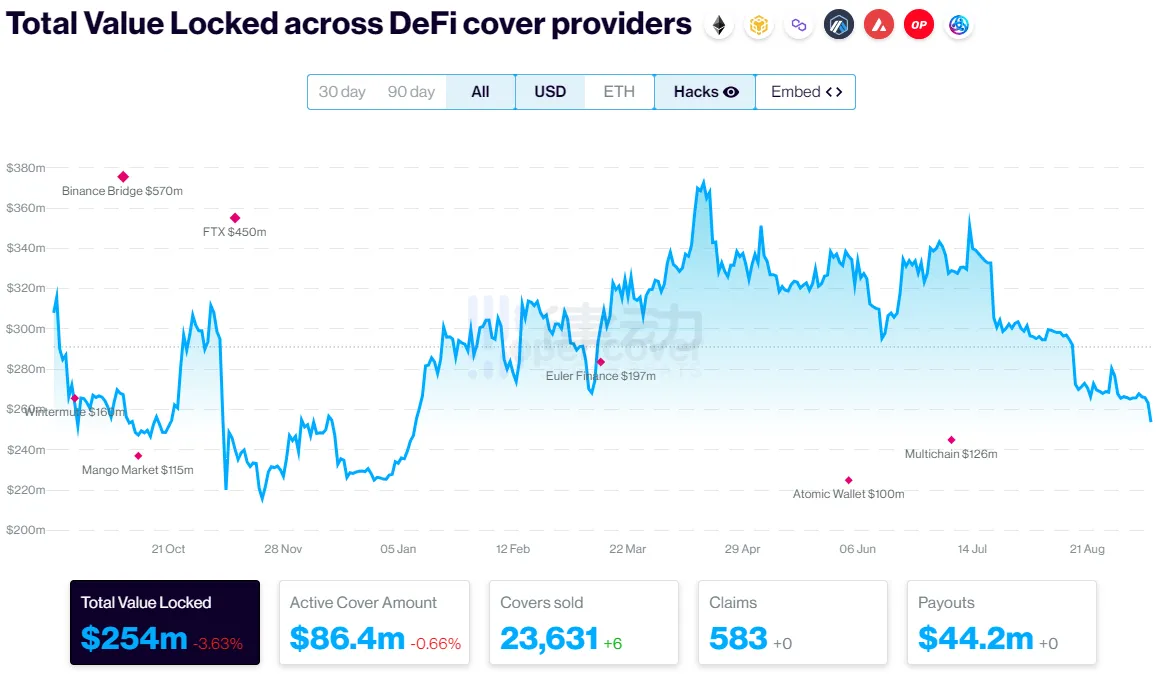
OpenCover's statistical report released on March 20th stated that DeFi insurance claims paid out $34.4 million in 2022, exceeding 90% of historical expenditures, but only 0.5% of the DeFi market value was insured, which is $230 million. It is worth noting that the $33.4 million in claims paid out includes UST decoupling (paying out $22.5 million) and FTX's collapse (paying out $4.7 million).
From a historical perspective, DeFi insurance providers have focused on protocol, custody, and stablecoin decoupling risks. The recent launch of new products such as validator slashing, auditing, and credit default protection indicates that the products are developing in sync with the entire ecosystem. As an observer closest to the DeFi insurance field, OpenCover is confident about the future of this track.
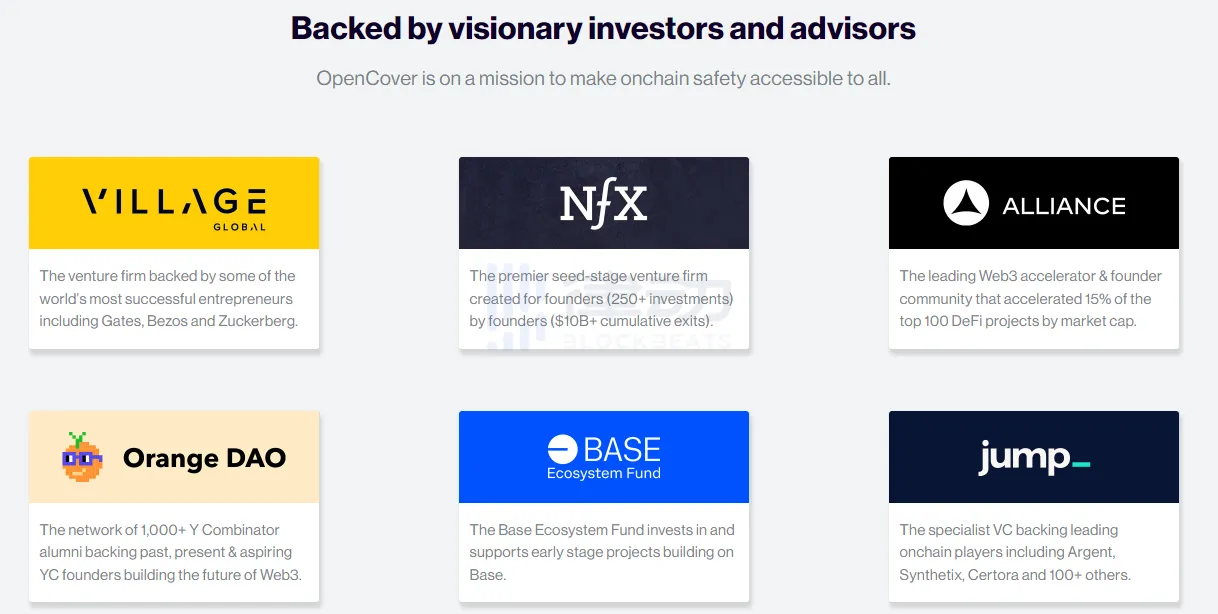
On September 7th, OpenCover announced the completion of a $4 million seed round of financing led by NFX and Jump Crypto. Coinbase also invested $200,000 in the project to support its launch on Base.
OpenCover CEO Jeremiah Smith said that insurance alternatives will also be launched on another Ethereum Layer 2 blockchain, Optimism. OpenCover is working with Aave, Uniswap, Curve, Safe, Morpho, Synthetix, Beefy, Angle, 1inch, and Yearn, and "DeFi insurance alternatives are an important part of the evolving decentralized financial ecosystem."
Welcome to join the official BlockBeats community:
Telegram Subscription Group: https://t.me/theblockbeats
Telegram Discussion Group: https://t.me/BlockBeats_App
Official Twitter Account: https://twitter.com/BlockBeatsAsia

 Related Articles