Next target of SEC enforcement action: Cryptocurrency wallets?
Original author: Partner of law firm Troutman Pepper
Translation: Mary Liu, BitpushNews
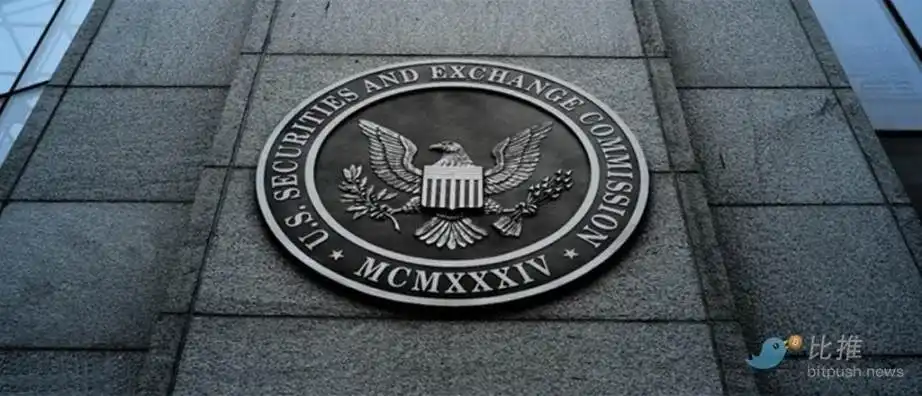
Cryptocurrencies have become "non-compliant", especially their "business models", at least according to Gary Gensler, Chairman of the US Securities and Exchange Commission (SEC).
Due to the widespread existence of this view among the regulatory agencies responsible for securities in the United States, it is not surprising that law enforcement actions involving cryptocurrencies have reached historic highs.
Within a few short years, we have witnessed the so-called unregulated "Wild West" become the target of the SEC. In addition to the SEC, the Commodity Futures Trading Commission (CFTC) and the Department of Justice (DOJ) also frequently step in to "fill the gap".
Undoubtedly, these regulatory agencies have not hidden any secrets, at least in their interest in law enforcement work.
They have taken measures, including tracking down top participants they believe may have misled investors or illegally promoted cryptocurrencies. These law enforcement actions have attracted mainstream media attention, with some of them being resolved through multi-million dollar settlements.
However, the most surprising aspect of these law enforcement actions is how they are carried out. People may expect a new wave of legislation aimed at regulating cryptocurrencies and other digital assets, but they are wrong. The law enforcement actions tell people that they are still stuck in the past, as the laws on which these actions are based have a history of up to 90 years in some cases.
With regulatory agencies relying on strained interpretations of existing laws to increase enforcement efforts, two questions have arisen: 1. What is the SEC's next target? 2. In the outdated securities law and cryptocurrency industry, which one will be eliminated first?
Next goal? Cryptocurrency wallet
After closely monitoring the actions of regulatory agencies, we anticipate that cryptocurrency wallets and certain digital asset exchanges will become the next target.
Based on previous federal law enforcement actions and signals from these agencies in notifications, we expect digital asset enforcement to take place in two ways: The 1934 Securities Exchange Act ("Exchange Act") may be interpreted to cover regulation of encrypted wallets, and as brokers and traditional financial institutions subject to anti-money laundering and know-your-customer (AML/KYC) constraints, mixers and other tools will face compliance challenges in the digital asset field.
We predict that the next regulatory area of the SEC will involve the regulation of cryptocurrency wallets that act as brokers.
This concept was first proposed by the SEC in its Wells notice to Coinbase, which was issued before the cryptocurrency exchange was sued. In the notice and in other allegations and language repeatedly raised in the lawsuit, the SEC accuses Coinbase Wallet (a product that provides users with self-custody services for digital assets) of operating as an unregistered broker, in violation of the Securities Exchange Act.
When responding to Wells' notification, Coinbase argued that its wallet product is just software and does not perform any traditional functions commonly used in brokerage activities. In particular, the "Securities Exchange Act" defines a "broker" as "any platform engaged in securities trading business for others."
Coinbase's reasoning is that wallets can only be used to interface with secondary market transactions, and from Coinbase's perspective, these secondary market transactions do not involve investment contracts, so they are not securities. Coinbase further argues that a 1% fee was charged for each use of the "wallet swap" feature (now discontinued), but this does not change the SEC's analysis.
SEC does not believe it. The agency has sued Coinbase and Binance, accusing the wallet services of operating as unregistered broker-dealers.
TradFi Trading
We predict that the second area of SEC's expanded enforcement scope is to strengthen regulation of traditional financial institutions engaged in digital asset trading. With increasing attention on new encryption tools and services, we anticipate that designing, implementing, and maintaining compliance systems to comply with AML/KYC laws will pose significant challenges for these institutions, making them a target for regulatory agencies soon.
Especially in the field of digital assets, the implementation of AML/KYC laws will require these institutions to rely heavily on information that they cannot control. For example, in the internal policies of proposed token transactions, over 10% of the value can be traced back to the proceeds of stolen assets.
In fact, compliance plans that can carry out such markings will require third-party cooperation, which is far beyond the capabilities of most companies inside and outside the cryptocurrency industry.
First of all, whether it is a government entity or a private investigation agency, it must understand the act of theft and must track and identify the involved wallets/tokens. Then a repository must be created to maintain this information. To some extent, multiple such repositories are needed to track the currency flow related to many theft and hacking activities, and this diffusion will only increase the cost of solving the problem. Finally, once a company wants to screen illegal and problematic transactions, it must screen the data for each transaction and mark the problematic transactions.
Except for the final step, every step in the process requires financial institutions to rely on the work of others to generate inputs that contribute to the compliance plan. This decentralization results in high compliance costs, both in terms of time and money.
执法范围快速扩大
translates to
Enforcement scope rapidly expanding
The scope of encryption law enforcement is rapidly expanding, which has prompted some participants to start thinking about the next step.
The CEO of Coinbase, Brian Armstrong, stated during London Fintech Week that due to a lack of "regulatory clarity," "any direction can be considered, including leaving the United States or any necessary action." It is not difficult to imagine that most participants in the cryptocurrency market agree with Armstrong's statement, "We just want a clear rulebook."
However, the various federal agencies responsible for regulation have not developed a clear set of rules to regulate the cryptocurrency field, relying instead on legal provisions from decades ago that could not have anticipated the technology on which digital assets depend.
In some ways, it raises a question: do participants in the encryption market really set their business model as "non-compliant", or is the emergence of non-compliance simply a by-product of regulatory confusion?
While we wait for regulatory compliance handbooks, investors and exchanges should work with legal compliance teams to ensure their trades comply with federal securities laws and banking regulations and their ever-evolving interpretations in the cryptocurrency industry. Each transaction brings unique regulatory hurdles, which are the result of federal agencies applying decades-old regulations to a rapidly evolving industry.
Source Link
Welcome to join the official BlockBeats community:
Telegram Subscription Group: https://t.me/theblockbeats
Telegram Discussion Group: https://t.me/BlockBeats_App
Official Twitter Account: https://twitter.com/BlockBeatsAsia