Bluefin v2, a decentralized feeless trading platform.
Source: Bluefin

Key Points
· Time Schedule: The Bluefin v2 test version will be released in September, followed by several new features within the next 6 months, including instant transaction confirmation, sub-second finality, fully decentralized spot market, full-margin trading, and wallet-free transactions.
· Performance: ~30 millisecond optimistic transaction confirmation, ~550 millisecond finality, peak TPS of 5400+.
· Walletization Removal: The project team is committed to simulating the Web2 trading experience while retaining the decentralized advantages of on-chain transaction protocols.
· Execution Cost: The current spread of Bluefin v1 is less than 0.001%. With the implementation of v2, trading delays will be reduced and gas fees will be lowered to below $0.005, allowing users to achieve faster and lower-cost transactions.
Bluefin v1
Bluefin is committed to building a decentralized order book trading platform for professional and novice traders. Bluefin v1 supports perpetual contract trading and is currently supported by Layer 2 Arbitrum, which shares the security of Ethereum. To date, v1 has processed over $1 billion in trading volume. The project team hopes to launch new features such as spot trading through the decentralized new version, while overcoming the performance limitations and high gas fees of existing Layer 2, bringing users a feature-rich and trading experience comparable to CEX. After the new version is launched, the project team will continue to operate and maintain Bluefin v1.
Bluefin v2
The new version of Bluefin is ready to launch and will be officially launched soon. This year, the project team has rewritten the codebase and built it using new underlying technologies. Bluefin v2 is built on the Sui network, which supports horizontally scalable performance and provides users with a wallet-free trading experience similar to CEX. Through Bluefin v2, the project team has introduced:
· Sub-second real-time transmission of Optimistic transaction confirmation and wallet-free transactions;
· By using Sui's on-chain order book, spot trading is achieved, further enhancing decentralization, transparency, and security.
· New margin engine with full position margin function;
· The peak throughput of the first layer of the basic mainnet is 5400 TPS. In a series of benchmark tests, the peak throughput ranged from 10,871 TPS to 297,000 TPS.
Performance
The team's goal is to ensure that users experience sub-second trading, on-chain finality, and real-time feedback on the user interface. The two key performance features of Bluefin v2 are Optimistic transaction confirmation and on-chain finality.
Due to Sui not requiring complete sorting of all transactions (only relative sorting of causally related transactions), it supports parallel execution and is not constrained by the availability of other applications and users, resulting in a high success rate of valid transactions submitted to the chain. Based on this, Bluefin has redesigned the off-chain order book layer, which can begin sending transactions to users with Optimistic confirmation in ~30 milliseconds. All of this happens before execution on the chain, and the project team can ensure final consistency with on-chain smart contracts.
The established goal of Sui is to achieve final confirmation within ~480 milliseconds. During benchmark testing of real transactions in a production environment, the project team observed an average end-to-end transaction confirmation time of ~510 milliseconds (including network latency between the Bluefin order book and the Sui full node). Consistency between final optimistic transaction confirmation and on-chain transaction execution is achieved within this time frame. Taking into account matching and client network round-trip, the graphical user interface can achieve transaction result updates within 1 second.

Sui currently achieves a peak throughput of over 5400 TPS on the mainnet, with benchmark testing peak throughput ranging from 10,871 TPS to 297,000 TPS. The final confirmation time for 100 globally distributed validation nodes is approximately 480 milliseconds. [1]
Non-custodial, wallet-free
Bluefin hopes to enable users to easily trade without a wallet by implementing on-chain interactions to users' invisibility. The project team believes that while adhering to non-custodial principles, completely abstracting private key management and wallet requirements is a key milestone in decentralized finance. Bluefin will achieve this goal through the largest use case in Web3 today - transactions.

First Stage - Social Login and Keyless Management
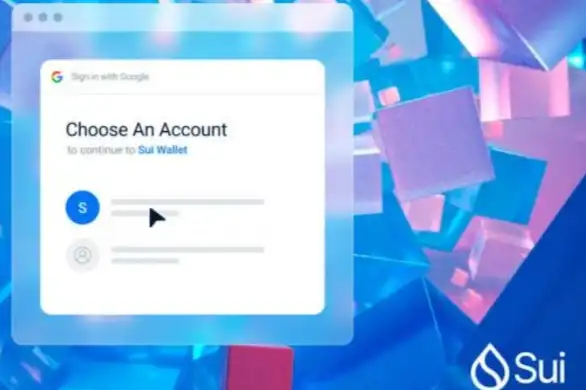
Bluefin is integrating with zkLogin, a new native authentication primitive project on Sui. It allows users to connect their accounts using familiar login methods such as Google or Facebook, while ensuring the privacy of sensitive user data through zero-knowledge proofs.
Second Stage - One-click Deposit, Direct Deposit, Direct Transfer from CEX
Bluefin's goal is to enable users to trade within minutes of accessing the trading platform, providing a user experience comparable to centralized exchanges. This means that in addition to eliminating the need for a wallet, the project team will also simplify the deposit process for assets as much as possible. For existing DeFi users, Bluefin will provide a simple cross-chain solution that supports one-click deposits from any chain. For Web3 novices or centralized exchange users such as Binance, Bluefin will support direct fiat deposits and direct deposits from CEX.
Third Stage - Decentralization of Wallets
Ultimately, Bluefin hopes to completely eliminate the need for users to have Web3 wallets. By adding asset-centric transaction formats, including trustee transactions and programmable transaction blocks, users can bypass wallet installations and gain a faster, more user-friendly, and secure transaction experience without compromising the integrity of the technology.
Release Plan
The team will release v2 features in stages over the next 6 months, with an early version of the protocol set to be released later this month. The early version will not include all of the aforementioned features, but will make Bluefin one of the first platforms to support derivatives trading on Sui.
In addition to the above key features, the project team will also ensure the reliability of Bluefin v2 through a series of phased deployments, including developer testnets, public testnets, bug bounty programs, and finally mainnet testing. Bluefin will also launch numerous markets with partners on v2, introduce fee tiers, and support mobile trading applications.
Security and Audit
Bluefin's security comes from its non-custodial design and transparent on-chain margin engine. In addition, by ensuring a sufficient number of decentralized validators on the network and providing users with the option to trade without a centralized order book, the project team has also made a commitment to users without centralized risk.
Bluefin believes that transparency and security are crucial, so before releasing Bluefin v2, we have collaborated with the following teams:
· Full protocol audit from Trail of Bits;
· Monitor threats in real-time through Guardrail;
· Immunifi Vulnerability Rewards Program - Inviting developers and security communities worldwide to rigorously test and verify Bluefin's on-chain protocol.
In addition, Sui Network's excellent security and decentralized governance can also protect the platform. Validators are regularly elected by users who lock and delegate SUI tokens, ensuring that no central entity controls the network. This delegated proof-of-stake mechanism, combined with the Byzantine fault-tolerant protocol, ensures that the network remains secure and operational even in the event of malicious or offline validators.
Contact Information
In the coming weeks, Bluefin will release more information and documents. If you are a professional trader or institution and are interested in integrating with Bluefin v2, please fill out this form.
Participate and stay informed of the latest developments:
Welcome to join the official BlockBeats community:
Telegram Subscription Group: https://t.me/theblockbeats
Telegram Discussion Group: https://t.me/BlockBeats_App
Official Twitter Account: https://twitter.com/BlockBeatsAsia

 Related Articles