Restaking Leader: EigenLayer's Business Logic and Valuation Analysis.

Original Title: "Quick View of Restaking Leader: EigenLayer's Business Logic and Valuation Estimation"
Original Source: Mint Ventures
Introduction
With the completion of the Ethereum Shanghai upgrade, many LSD projects have seen rapid growth in business, and the number of users and net worth of LSD assets has also increased significantly. On the other hand, as the year-end Cancun upgrade approaches and OP stack opens, today is also the Rollup New Year, and various services around the Rollup module, such as DA layer, shared sorter, and RaaS service, are also booming. Based on the concept of Restaking of LSD assets, EigenLayer aims to provide services for many Rollups and middlewares, and its attention has continued to rise this year. Not only did it complete a large financing of 50 million US dollars with a valuation of 500 million US dollars in March, but its token OTC price is rumored to have reached an astonishing 2 billion US dollars recently, comparable to the valuation level of public chain-level projects.
The author will sort out the business logic of EigenLayer in this article, and estimate the valuation of EigenLayer's project, trying to answer the following questions:
Restaking service is, who is the customer group, and what problem is it trying to solve?
What are the obstacles to promoting the Restaking mode?
Is EigenLayer's valuation of 500 million or even 2 billion US dollars expensive?
The following article represents the author's current perspective at the time of publication, with a focus on business evaluation rather than technical details of the project. This article may contain factual errors and biases, and is intended for discussion purposes only. The author welcomes corrections from other industry professionals.
EigenLayer's Business Logic
Before we formally begin to sort out the business of EigenLayer, let's first introduce several high-frequency vocabulary that will appear in the following text:
Middleware refers to the services between the underlying blockchain and Dapps. In the Web3 field, typical middleware includes oracles, cross-chain bridges, indexers, DID, and DA layers.
:LSD: Liquid Staking Derivatives, such as Lido's stETH, refer to the practice of staking cryptocurrency assets while still being able to use them for other purposes.
AVS: Actively Validated Services, is a distributed node system that provides security and decentralization guarantees for projects. The most typical example is the PoS system of public chains.
DA: Data availability is an abbreviation for data availability. Data availability mainly refers to other projects (such as Rollups) being able to back up their transaction data on top of the DA layer, ensuring that all historical transaction records can be accessed and restored from the DA layer when needed.
Business Scope
EigenLayer provides a token-based rental market with cryptoeconomic security.
The so-called cryptoeconomic security refers to various Web3 projects that require the main service providers (validators) of the network to participate in the project by pledging tokens in order to ensure that the project has the properties of permissionless and decentralization while running smoothly. If the validators fail to fulfill their obligations, the tokens they pledged will be confiscated.
EigenLayer, as a platform, on the one hand, raises funds from holders of LSD assets, and on the other hand, uses the raised LSD assets as collateral to provide convenient and low-cost AVS services to middleware or sidechains/Rollups with AVS demand. EigenLayer provides demand matching services between LSD providers and AVS demanders, and specialized pledge service providers are responsible for specific security pledge services.
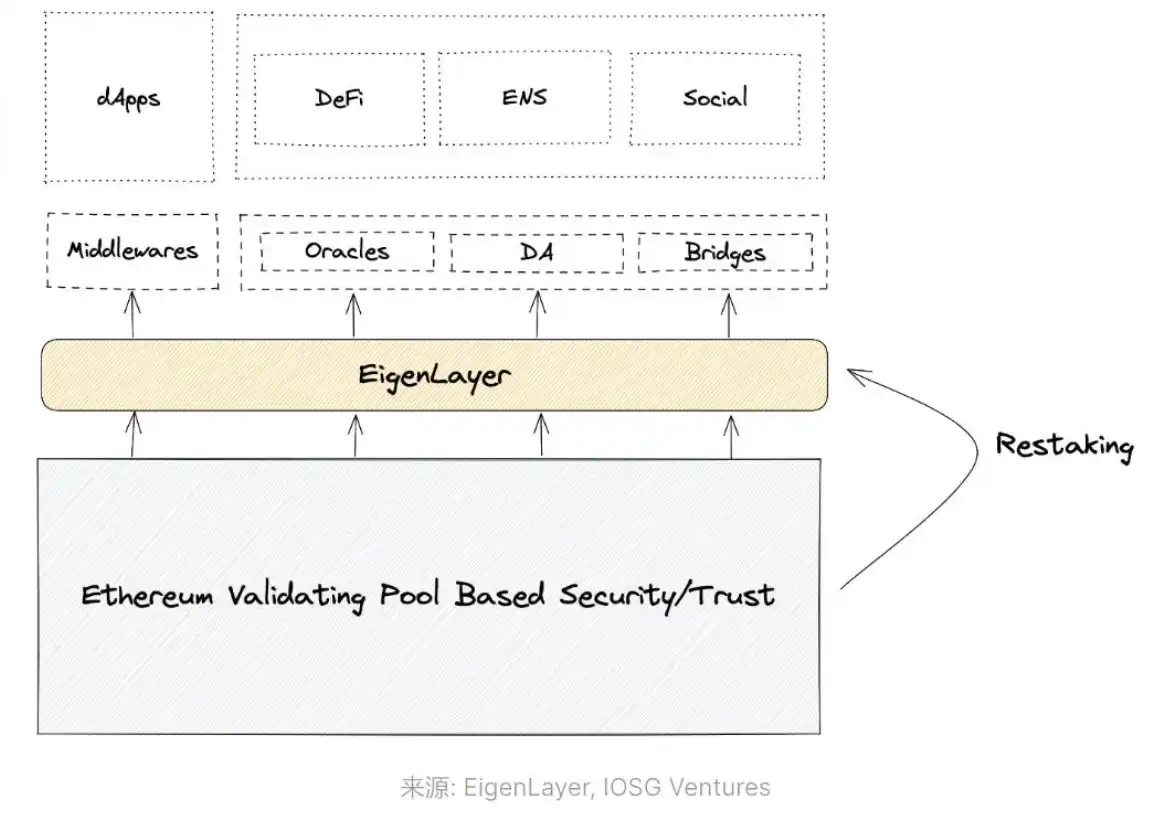
In addition, the parent company behind EigenLayer has also created a DA layer, which provides data availability services for Rollups or application chains that require DA layer services. This product is called "EigenDA" and will work in synergy with EigenLayer.
EigenLayer's pain point is:
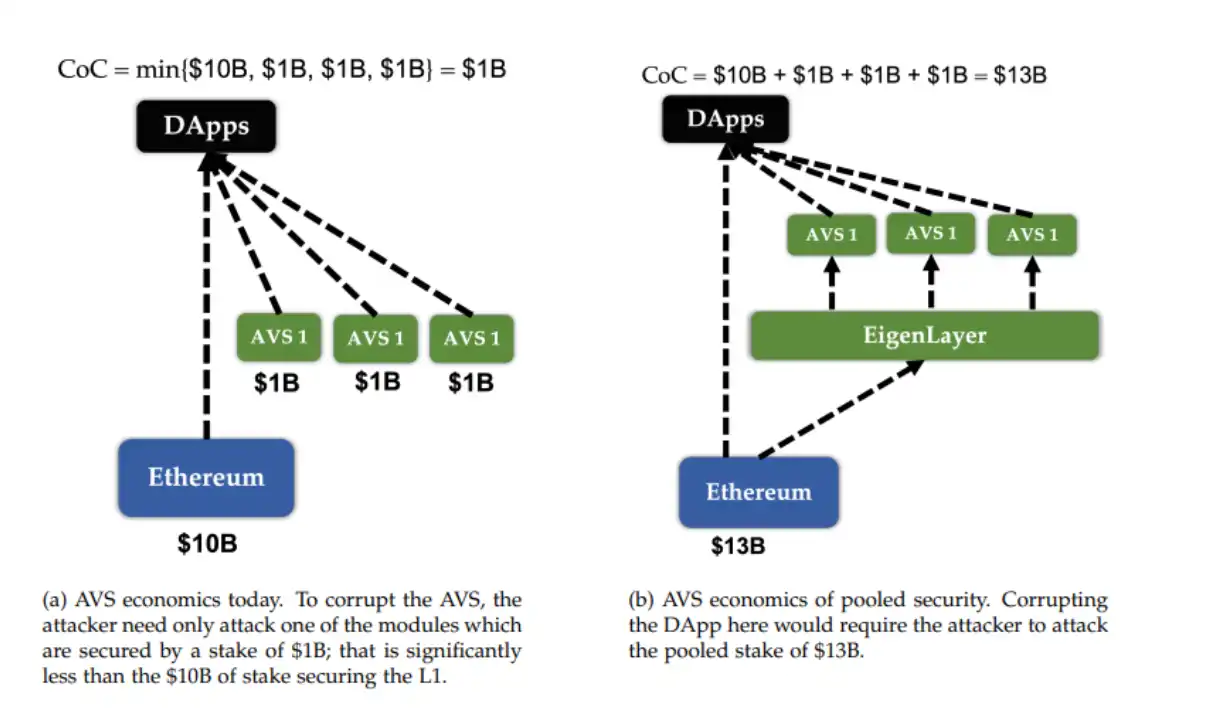
1. For various project parties: reduce the high cost of independently building their own trust network, and directly purchase staking assets and node operators on the EigenLayer platform through payment, without the need for self-construction.
Source: EigenLayer Whitepaper
2. Regarding Ethereum: Expand the use cases of Ethereum LSD, making ETH a more secure collateral for various projects and increasing demand for ETH.
3. For LSD users: further improve the capital efficiency and returns of LSD assets.
Business Users
EigenLayer's users involve three parties, and their corresponding needs are:
1. LSD Asset Provider: The main demand of this type of user is to obtain additional income from Ethereum LSD assets beyond the basic PoS rewards, while being willing to provide their LSD assets as collateral to node operators and facing possible forfeiture risks.
2. Node operator: Obtain LSD assets through EigenLayer and provide node services to project parties that require AVS services, extracting profits from node rewards and fees provided by project parties.
3. AVS demander: refers to those project parties who need AVS to provide security for themselves, but also hope to reduce costs (such as a Rollup or cross-chain bridge that uses LSD assets as node operators' collateral), they can purchase such services through EigenLayer without building their own AVS.
Source: EigenLayer Whitepaper
EigenDA's demand mainly comes from various Rollups or application chains.
EigenLayer Business Details
Users can double pledge tokens on the Ethereum network, including stETH, rETH, and cbETH tokens, to the EigenLayer market. The pledge service provider is responsible for matching the user's tokens with the corresponding security network demand, providing AVS services to these project parties. The underlying asset of AVS is the tokens pledged by users on EigenLayer, and the project party needs to distribute a certain amount of "security fee" to users.
Product Progress
Currently, EigenLayer has only launched the restake function for LSD, and has not yet developed node operation staking and AVS services based on LSD assets. In the two deposit activities that have been opened for LSD assets, deposits quickly reached the limit (depositors are mainly seeking EigenLayer's potential airdrop rewards). Users can also directly deposit 32 integer units of ETH to participate in Restake. With limited deposits, EigenLayer has accumulated about 150,000 staking ETH.
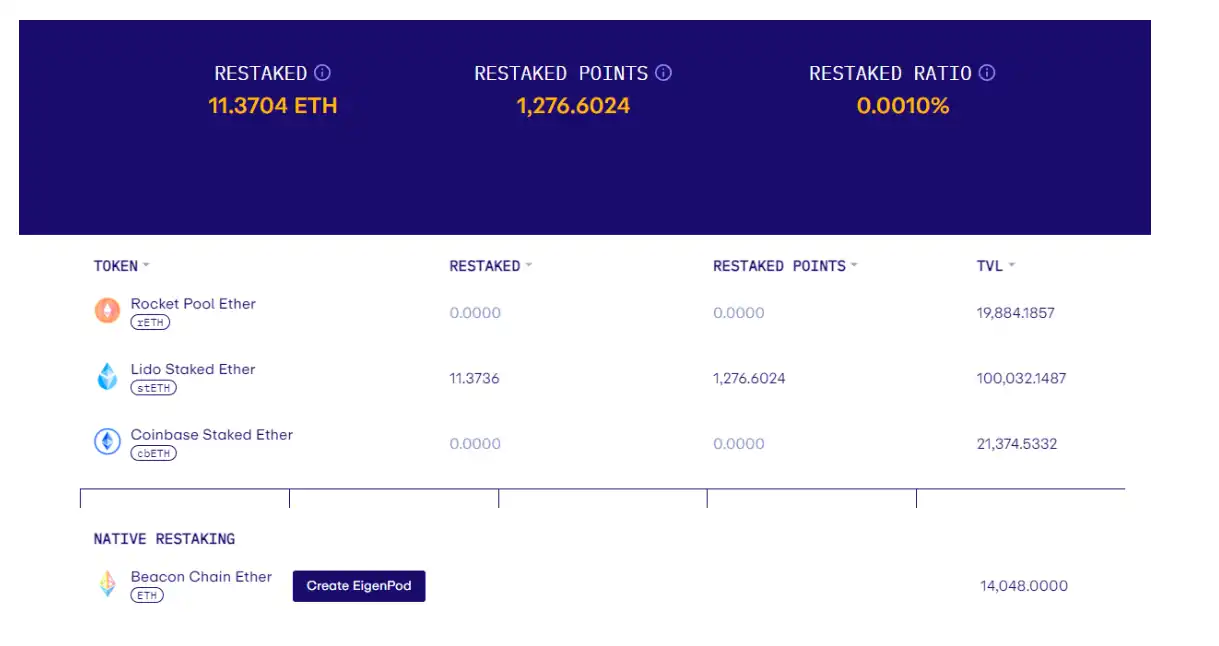
Image source: https://app.eigenlayer.xyz/
According to the official roadmap released by EigenLayer, the main task for Q3 is the development of the Operator Testnet (node operator testnet), while the development of the AVS Service Testnet will officially begin in Q4.
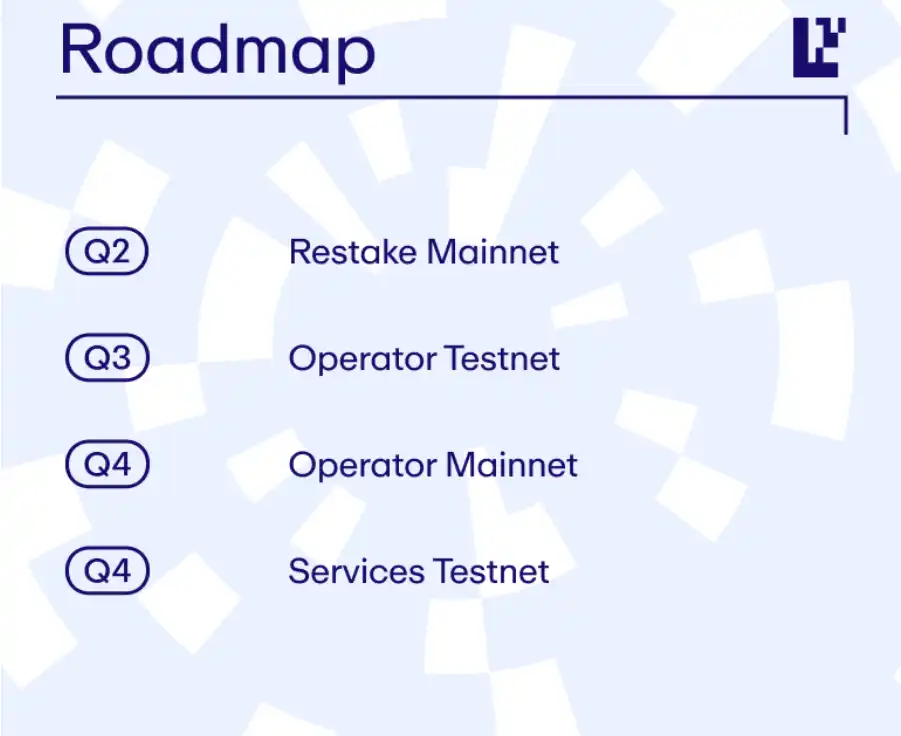
https://docs.EigenLayer.xyz/overview/readme/protocol-features/roadmap
EigenDA's first explicit user is the rollup project Mantle, which is based on the OP virtual machine fork. Currently, Mantle is using the test version of EigenDA as its DA.
Token Economic Model
EigenLayer's team and financing background
Core Team

Founder&CEO:Sreeram Kannan
Assistant Professor of Computer Engineering at the University of Washington, and founder and controlling shareholder of Layr Labs, the parent company behind EigenLayer. He has published more than 20 papers on blockchain. He completed his undergraduate studies in telecommunications at the Indian Institute of Science, and earned a master's degree in mathematics and a PhD in information theory and wireless communications at the University of Illinois at Urbana-Champaign. He later served as a postdoctoral researcher at the University of California, Berkeley, and currently teaches at the University of Washington, where he is the head of the UW-Blockchain-Lab.
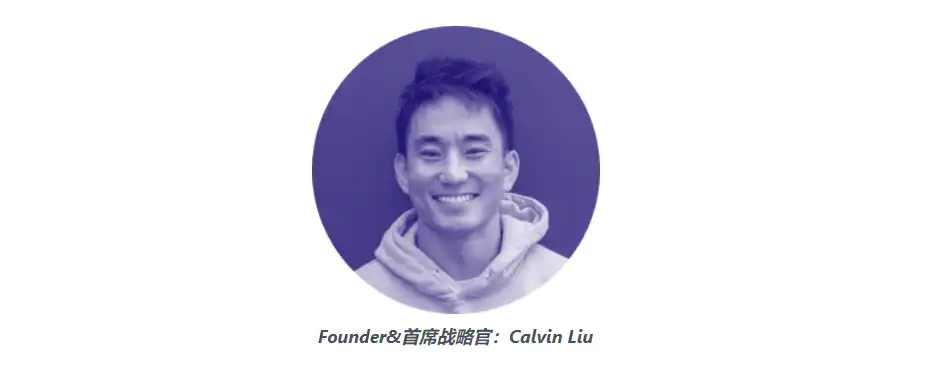
Founder & Chief Strategy Officer: Calvin Liu
Major in Philosophy and Economics at Cornell University in the United States. After graduation, worked for many years in data analysis, enterprise consulting, and strategic work. Worked as the Head of Strategy at Compound for nearly 4 years before joining EigenLayer in 2022.

COO:Chris Dury
New York University Stern School of Business Master of Business Administration. Has extensive experience in cloud service product project management. Prior to joining EigenLayer, he served as Senior Vice President of Product at Domino Data Lab (machine learning platform) and held positions as General Manager and Director at Amazon AWS, leading multiple cloud service projects for game developers. Joined EigenLayer in early 2022.
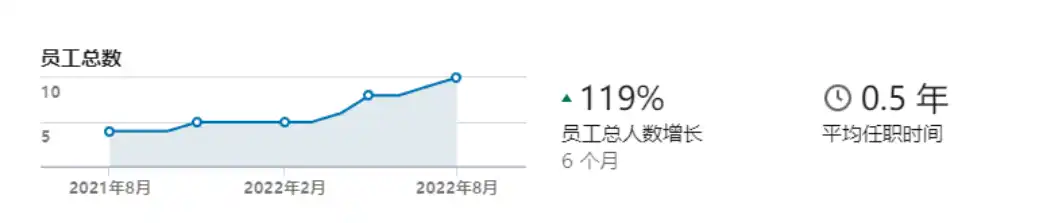
Data source: https://www.linkedin.com/company/eigenl/
EigenLayer's team is rapidly growing, with over 30 employees, most of whom are based in Seattle, USA.
Layr Labs is the parent company behind EigenLayer, founded by Sreeram Kannan in 2021. In addition to EigenLayer, Layr Labs also has two other projects, EigenDA and Babylon, which provide security services for the crypto economy. These projects primarily serve the Cosmos ecosystem.
Funding Information
EigenLayer has undergone two public financing rounds, including a seed round of $14.5 million (valuation unknown) in 2022 and a Series A round of $50 million (valuation of $500 million) completed in March 2023.
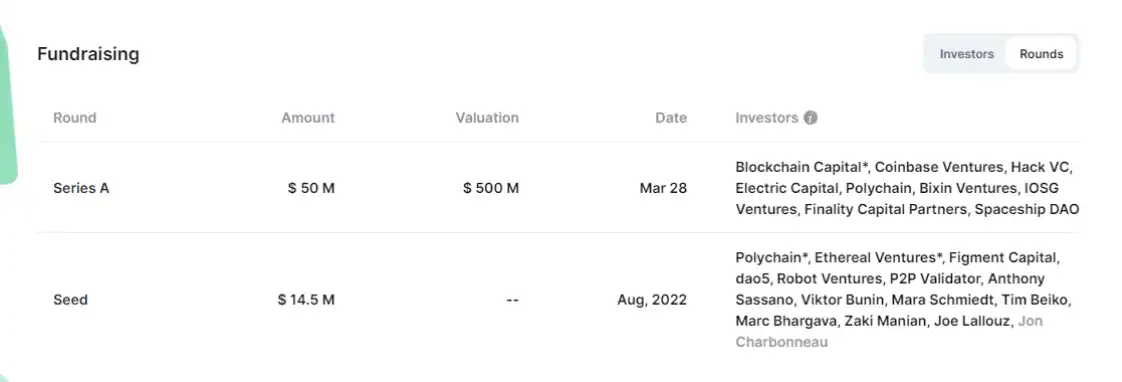
Some well-known investment institutions include:
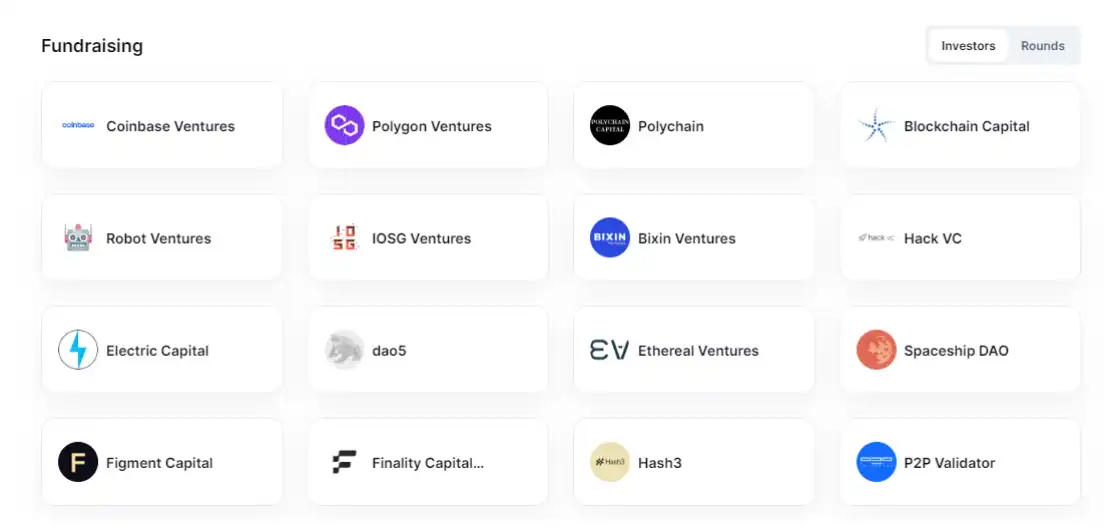
Data source: rootdata.com
During the same period of 23 years, its parent company Layr Labs also completed nearly $64.48 million in equity financing, as detailed in its filing with the SEC: https://www.sec.gov/Archives/edgar/data/1936115/000156761923004289/xslFormDX01/primary_doc.xml
Restaking Business Market Size, Narrative Promotion, and Challenges
Market Size Forecast
EigenLayer has proposed the novel concept of restaking, providing "cryptoeconomic security as a Service" to a client base that includes middleware (oracles, bridges, and Da layers) as well as sidechains, application chains, and Rollups. The aim is to address the pain point of reducing the decentralized network security costs for these projects (compared to building their own trust networks).
In theory, any project that requires token staking as a means of admission, utilizes game theory to maintain network consensus, and preserves decentralization, is a potential user of it. The specific size of this market is difficult to accurately estimate, but optimistically, it could reach a market size of billions of dollars within the next 3 years.
Due to the current ETH staking amount of 42 billion US dollars and a total project market value of around 200 billion US dollars (as of August 30, 2023), the total amount of funds on the Ethereum blockchain is between 300-400 billion US dollars. Considering that EigenLayer's main customers in the future are still relatively small and new projects, compared to Ethereum's PoS staking scale of around 40 billion US dollars, EigenLayer's staking business scale for service projects should be in the range of 10-100 billion US dollars in the short term.
Pushing project business and expected growth narrative
Client:
The arrival of Cancun upgrade and the opening of OP Stack have accelerated the development of small and medium-sized Rollup and application chains, increasing the overall demand for low-cost AVS.
The modular trend of public chain, Rollup, and application chain development increases the demand for cheaper DA layers outside of Ethereum. The expansion of EigenDA increases the demand for EigenLayer, and there is synergy between businesses.
Supply side:
The increase in Ethereum's staking rate and the number of staking users has provided ample LSD assets and a large number of holders, who have a strong willingness to improve the capital efficiency and returns of LSD assets. In the future, EigenLayer also hopes to introduce LSD capital other than ETH.
Problem and Challenge
For AVS demanders, how much cost can be reduced by purchasing a combination service of mortgaged assets and professional verification nodes on the EigenLayer platform? It's hard to say. Using Ethereum's LSD assets as collateral does not mean inheriting the security of Ethereum's billions of dollars directly. In fact, the economic security of the project is determined by the total scale of leased Ethereum LSD assets and the quality of operation of verification nodes. This may be faster and easier than building AVS from scratch, but the cost savings ratio may not be too much.
The use of other assets as collateral for AVS by the project party will weaken the scenario of their own tokens. Although EigenLayer supports the project party's own token + EigenLayer mixed collateral mode, it still causes significant obstacles in the adoption of the service.
The project team uses EigenLayer to build AVS, and may be concerned about being dependent on EigenLayer in the long-term development, which may lead to being "strangled". After the project matures, the project team may switch to using its own token as a staking asset for network security.
The project party uses LSD as collateral for security deposits, which requires consideration of the credit and security risks of the LSD platform itself, adding an additional layer of risk.
Competitors
Restaking is a relatively new concept pioneered by EigenLayer, and there are currently few followers of this model. However, for EigenLayer, the main options for its potential customers are to either build their own secure network or outsource the security network to EigenLayer. Currently, EigenLayer needs more customer examples to prove the superiority and convenience of its solution.
Valuation Calculation
As a new type of business project, EigenLayer lacks clear benchmark projects and benchmark market values. Therefore, we estimate the project's valuation by predicting the project's annualized protocol revenue and PS.
Before making a formal estimate, we still need to assume several premises:
EigenLayer's business model mainly involves collecting security service fees as commissions from AVS service users. 90% of the service fees go to LSD depositors, 5% go to node operators, and EigenLayer's commission rate is 5% (this standard is consistent with Lido).
AVS service users pay an average of 10% security service fee for their leased LSD capital annually.
The reason for choosing 10% is because it is currently the mainstream for POS projects, providing annual rewards for PoS stakers in the range of 3-8%. Considering that many projects using EigenLayer are relatively new and will offer higher incentives in the early stages, the author has chosen 10% as the average security service fee rate.
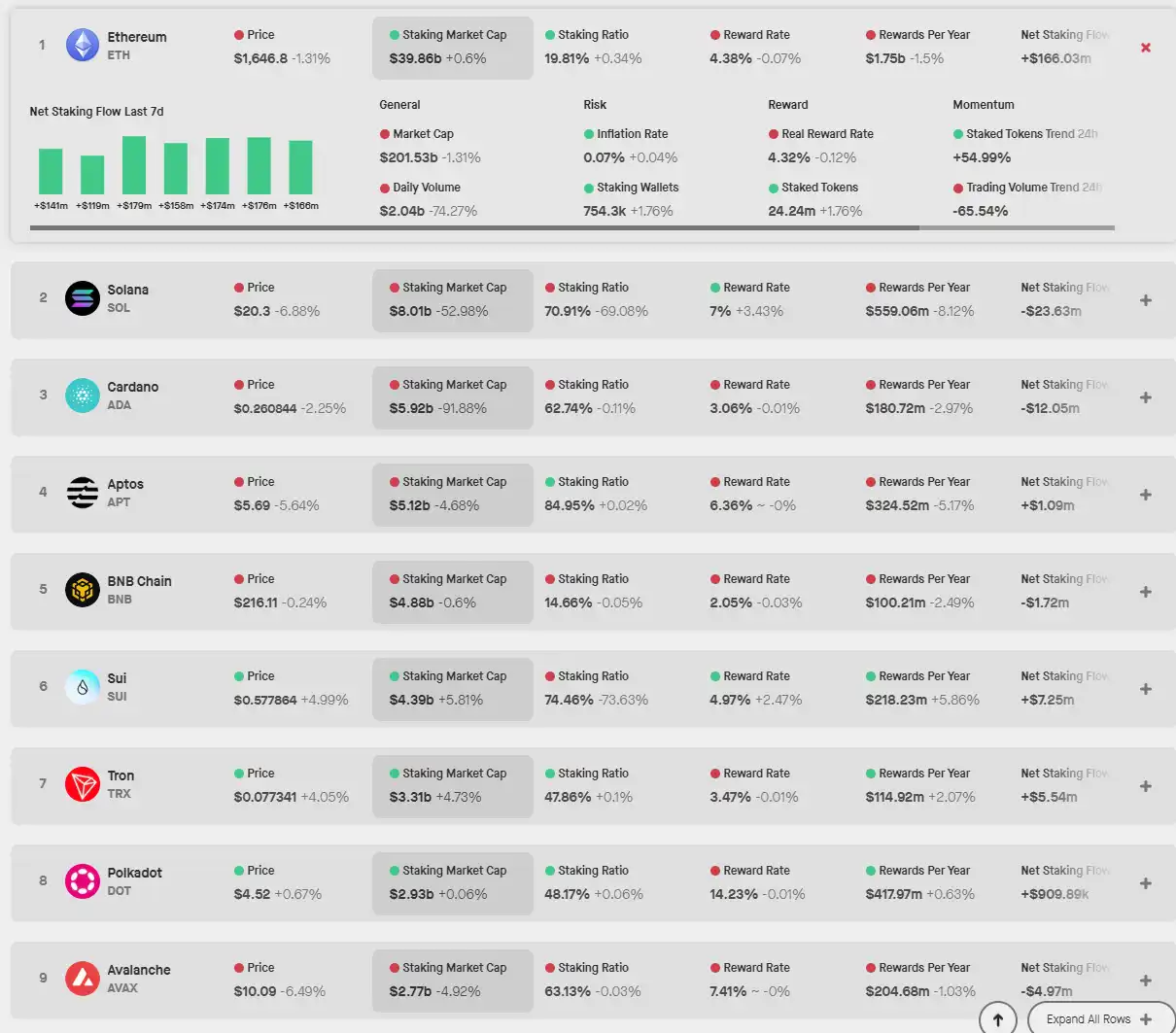
The PoS reward ratios of various L1s, data source: https://www.stakingrewards.com/
Based on the above assumptions, the author calculates the valuation range of the project based on the amount of LSD assets lent by EigenLayer and the corresponding PS. The colored area in the valuation represents the range of values that the author believes has a higher probability, with the green color indicating a more optimistic prediction.
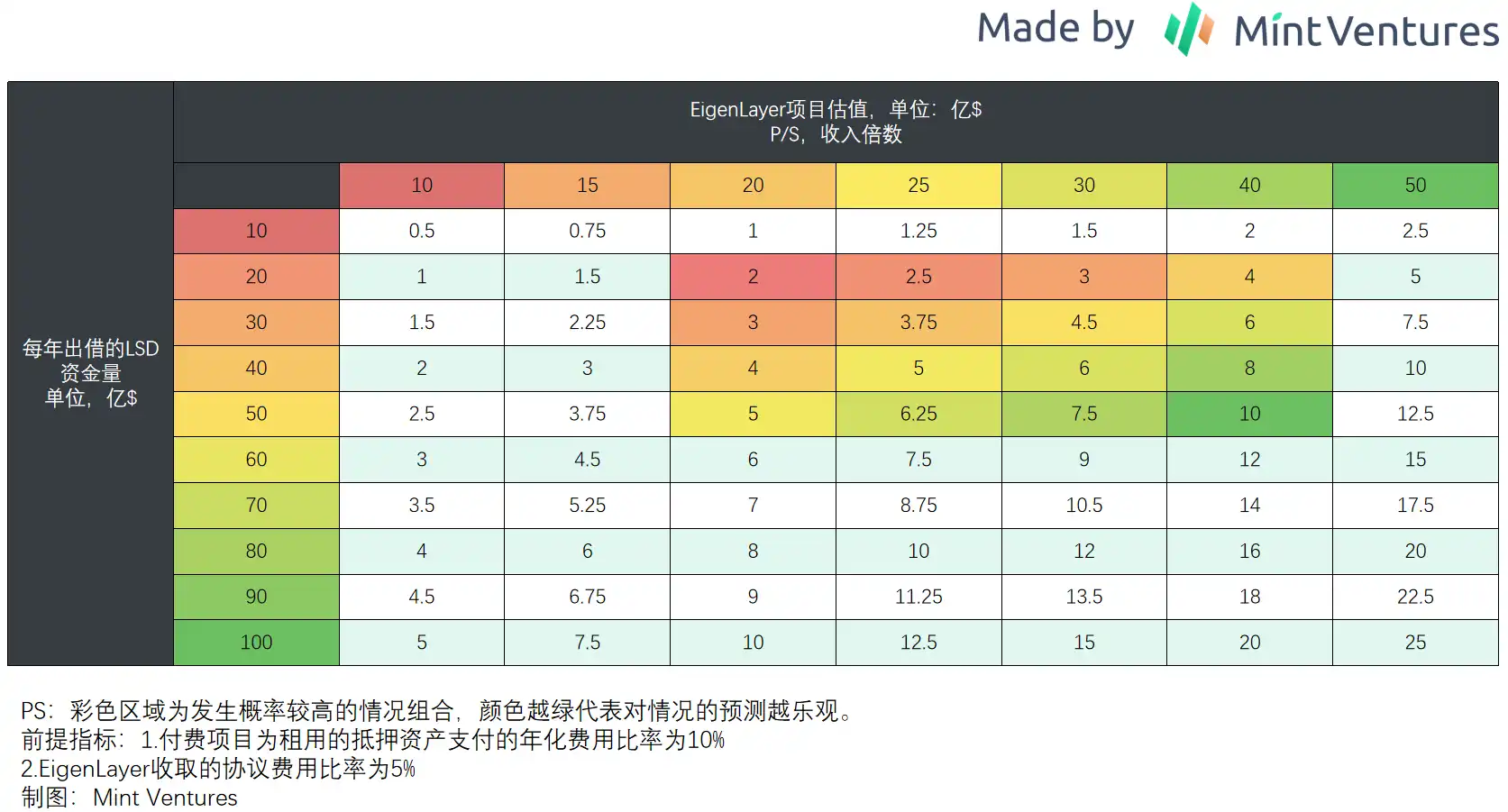
The reason why the author considers the range of "LSD asset annual lending volume of 20-50 billion" and "PS at 20-40 times" as the area with a higher probability of valuation is because:
Nowadays, the market value of PoS staking tokens for only the top ten public chains is around 73 billion US dollars. If Aptos and Sui are included, the total market value would be nearly 82 billion. However, most of the staking for these two projects comes from unreleased team and institutional tokens, so I have excluded these outliers during my cautious analysis. Assuming that EigenLayer's LSD share can account for about 2.5%-6.5% of the total PoS staking market (note that this is just a rough estimate), the corresponding market value would be 2-5 billion US dollars. As for whether a 2.5%-6.5% share is reasonable, it's up to the readers to decide.
PS value ranging from 20-40 times means that it is anchored to Lido's current 25 times PS (based on the market value of the entire circulation as of August 30, 2023), and newer narratives may enjoy higher premiums when they first appear.
According to the above calculation, the reasonable valuation range for EigenLayer may be between 200-1000 million US dollars. For primary investors who invested at a valuation of 500 million, considering various restrictions such as token unlocking, they may not have left themselves too much safety margin. If there are indeed investors who want to buy EigenLayer tokens OTC at a valuation of 2 billion US dollars, as rumored, they should be even more cautious.
Of course, it should be noted that the above valuation is a valuation deduction for the entire EigenLayer project. The specific market value of the token should be determined based on its specific ability to capture business, such as:
What percentage of the protocol's revenue belongs to token holders?
Other than buybacks and dividends, are there any relatively rigid use cases for tokens in the industry that increase demand for them?
EigenDA and EigenLayer will share the same token, providing more scenarios and demands for the token?
The empowerment of points 1 and 2, if insufficient, will further weaken the intrinsic value of the EigenLayer token. If there are unexpected surprises in point 3, it will add value to the token.
In addition, the market value of EigenLayer at the time of its debut also depends on the market's bull and bear environment.
Original article link
Welcome to join the official BlockBeats community:
Telegram Subscription Group: https://t.me/theblockbeats
Telegram Discussion Group: https://t.me/BlockBeats_App
Official Twitter Account: https://twitter.com/BlockBeatsAsia

 Related Articles