Data Determines Humanity: Exploring Decentralized Cloud Storage.
Original Title: "Data Determines Humanity: Exploration of Decentralized Cloud Storage"
Article Author: Hunter Lampson
Article Translation: Block unicorn
The article is authorized for reprint by the author, Hunter Lampson, who is an analyst at Goldman Sachs and is interested in capital deployment and digital assets. He appears in the creator community on weekends and can be found on Twitter.
Data determines humanity. The digital pursuit of technological innovation and human life by society has created an explosive demand for data storage and retrieval. From the agricultural revolution, healthcare discoveries, and political archives, to self-driving cars, protein folding, and neural networks, data is the primary enabler of new solutions that help us discover and achieve our goals. It is a fundamental tool that limits and forces our ability to act with indispensable inputs, allowing access and giving meaning to our digital and physical lives. Data determines humanity: we must be very concerned about how our data is stored, managed, and owned.
Global Data Market
Today, over 63% of the global population, or more than 5 billion people (according to Google data, there are 7.7 billion people), use the internet, and this number is expected to continue to grow at a rate of over 10% per year. However, the growth rate of the cloud storage market is even faster. From 2015 to 2025, the global data field (the amount of data created, captured, replicated, and consumed worldwide) is expected to grow at a compound annual growth rate of 58%. By 2025, the amount of data created, stored, and replicated will exceed 180ZB (1 ZB equals 1024TB, and 1TB equals 1024GB). If you stack enough 10TB hard drives to meet the world's data needs before 2025, this pile of hard drives can reach the moon.
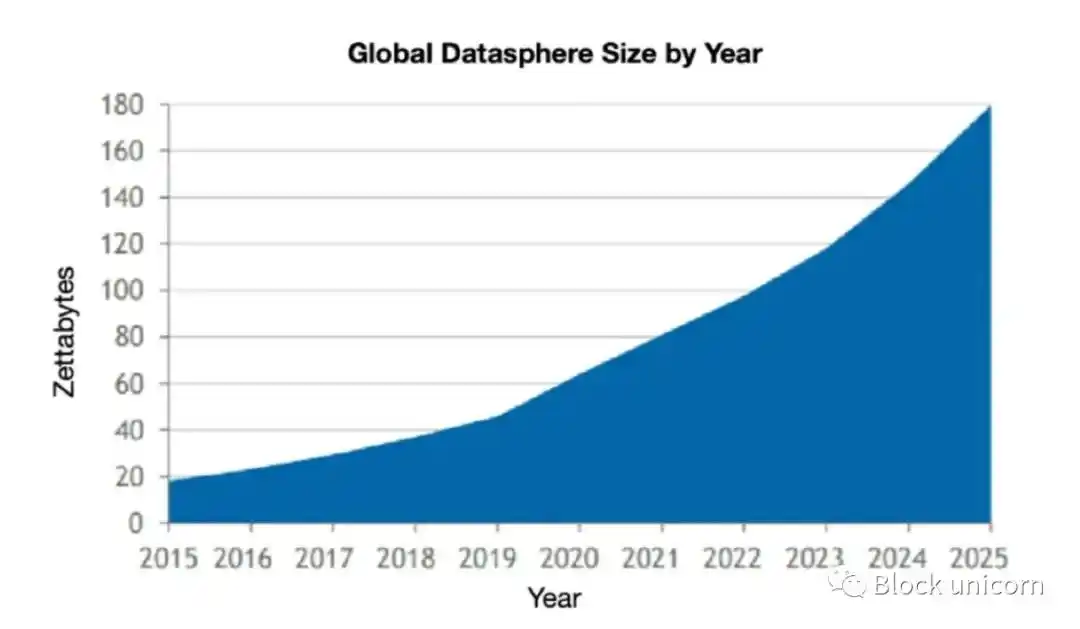
Figure 1. Global data sphere size by year. Source: Uygun and Döngül, 2021
From an economic perspective, the valuation of the cloud storage market in 2021 is approximately $76 billion, and it will reach $390 billion by 2028 (with a compound annual growth rate of 26.2%). Despite such explosive economic growth, the market share of cloud storage providers continues to consolidate. As of the 22nd quarter, the three major cloud providers - Amazon Web Services (AWS), Microsoft Azure, and Google Cloud Platform (which I affectionately refer to as the cloud service giants) - accounted for 65% of the cloud computing market share. The power held by centralized cloud storage providers combines their network effects, reputation, technical infrastructure, and balance sheets, making it impossible for new competitors to compete with them.
Types of Storage Solutions
1. Local
2. Centralized Cloud Storage (CCS)
3. Decentralized Cloud Storage (DCS)
Local storage and CCS providers - the three giants (Amazon, Azure, Google) as well as Alibaba Cloud, Box, iCloud, etc. - all have the characteristic of centralized storage. This means that information is stored and maintained in a single location (or a few locations), managed in a single database, and operated by a single entity. Both on-premises deployment and CCS solutions have a single point of failure risk.
The popularization of CCS solutions requires a historical review of the economy of on-site data storage. Initially, users stored data on their own hardware. This meant that data storage and maintenance were both hoped to be stored in the same physical entity location (such as the company's existing data server), which I call the first stage.
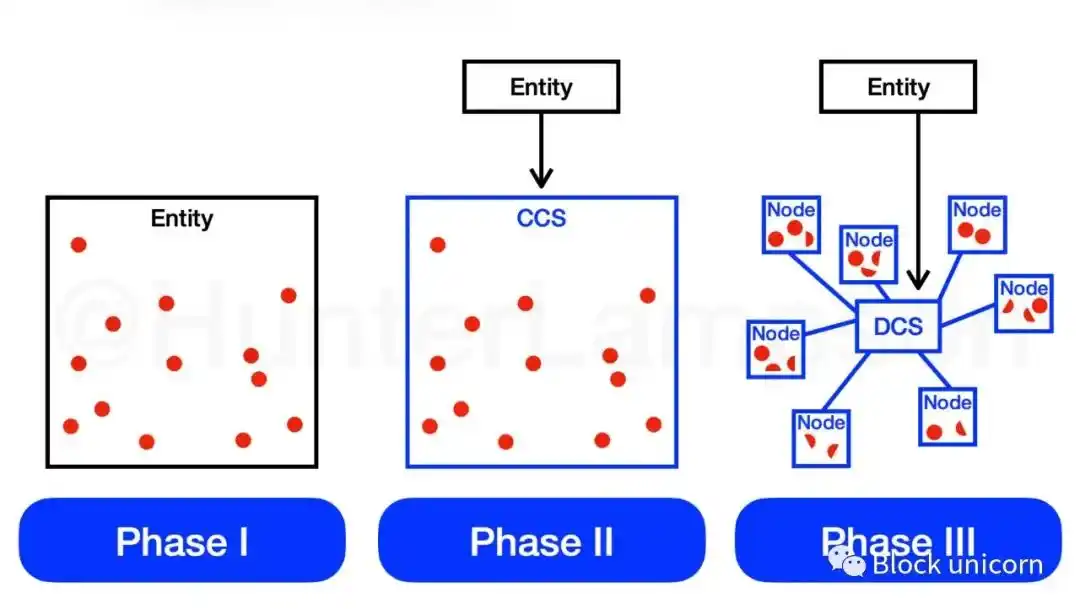
Figure 2. The three stages of data storage. Source: Hunter Lampson
With the network effect of cloud storage achieving cheaper (and usually safer) storage capabilities, consumers and companies are transitioning to centralized clouds (phase two). CCS solutions have developed cloud computing, APIs, and other SaaS products, and customers have grown accordingly. Although centralized solutions are the simplest, cheapest, and most effective choice on the market, their fundamental limitations remain the same: one container is responsible for 100% of the entity's data. CCS solutions are an improvement on indoor solutions, but the once-economical best solution has become expensive and daunting. Today, DCS providers offer the cheapest and safest storage solutions on the market.
CCS solution's main weaknesses
1. Lack of data ownership
When users upload data to CCS providers, they no longer own their data. Apple's controversial decision to scan iCloud user photos (later revoked) is a good example. When data is stored on a given hardware product (iPhone, Mac, etc.), Apple has strict privacy policies. However, it is important to note that once a user uploads a byte of data to iCloud, Apple will consider that data to be in their domain - no longer in the user's domain. This precedent means that data stored locally belongs to the user, while data stored in the cloud belongs to the storage provider.
2. Easy to have data leakage and interruption
Among CCS suppliers, a large amount of data leakage does not require too much time. Amazon, Azure, and Google have all suffered from this problem due to their single point of failure structure.These centralized structures of the providers allow them to build large walled gardens and provide a higher level of security compared to internal solutions. However, as the databases become larger and more centralized, attackers become more interested in them. Data breaches are also common in CCS solutions, as can be seen in examples such as Amazon, Azure, and Google.
3. Tendency towards review system
CCS providers not only lose data uncontrollably, but also intentionally delete data. Just a few weeks ago, the popular YouTube channel Bankless was terminated without any warning, notification, or reason. Google owns and stores YouTube content on its cloud service, and thankfully, the channel was restored. However, the existence of data deletion by Google and other CCS providers is harmful to society.
4. High cost
Perhaps the most critical drawback of CCS solutions is that they are too expensive. Despite the fact that the cost of storing data has decreased by an average of 30.5% per year over the past 50 years, the price of CCS has remained unchanged for the past 7 years. This is due to the network effects accumulated by CCS providers. As a result of these network effects, the three giants have begun to dominate the cloud computing field. As their combined market share continues to grow, the three giants, like an oligopoly, have the ability to manipulate prices and exclude new entrants.
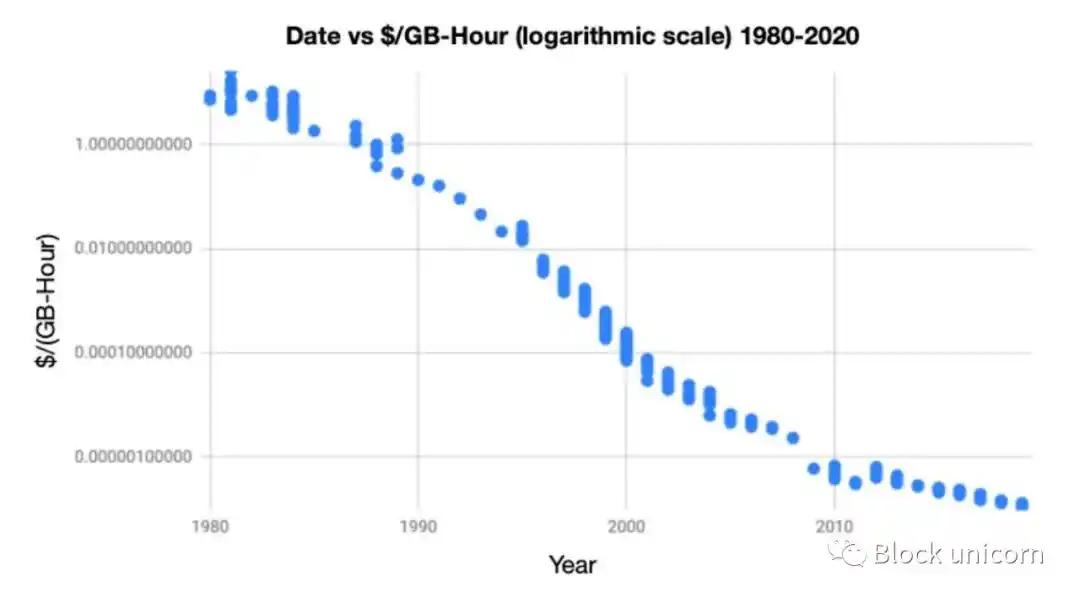
Figure 3. Data storage costs over a period of time, source: Arweave Whitepaper
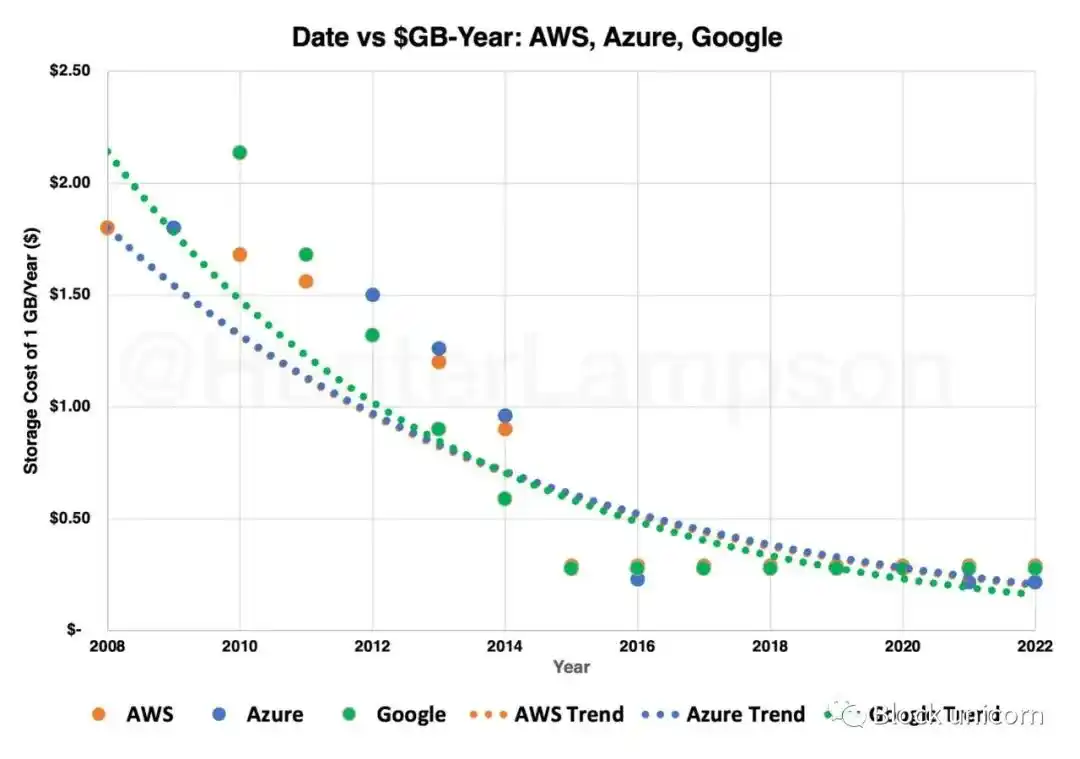
Figure 4. Data storage costs on AWS, Azure, and Google in recent times. Source: AWS, Azure, Google, Hunter Lampson.
The main reason for the gap between storage prices and storage costs is the dominant market position currently held by CCS providers, while DCS solutions have taken a different approach.
DCS Solution
On top of the weaknesses of CCS, decentralized storage (DCS) has been proven to be a paradigm shift (third stage) in the field of data storage. DCS solutions match the supply and demand of storage space, enabling geographically distributed nodes to utilize idle hard disk space. This creates a more efficient market, reduces costs, eliminates the risk of single point of failure present in local and CCS solutions, and returns data ownership to the user.
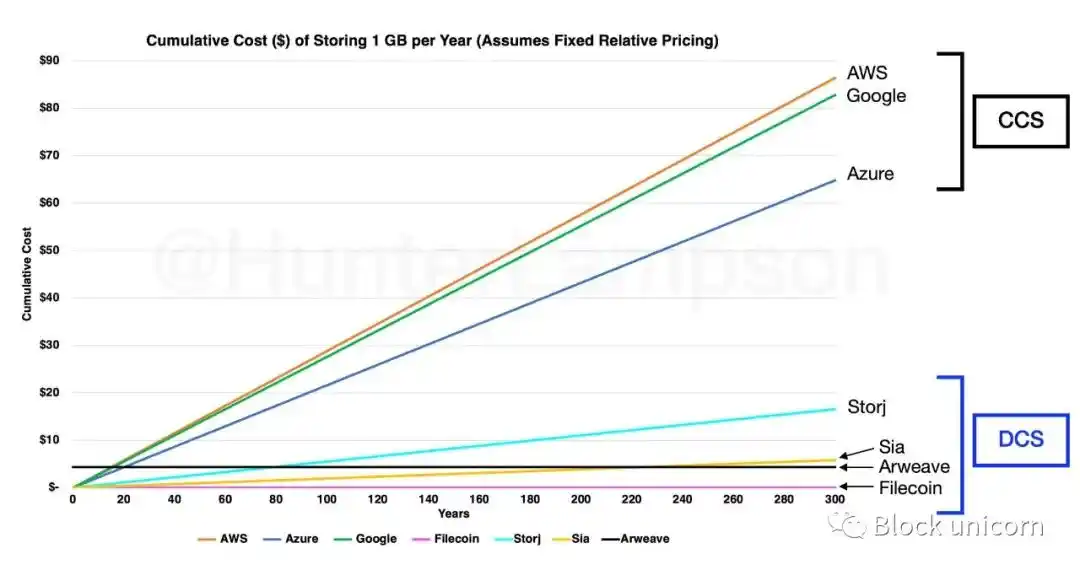
Figure 5. Cumulative cost of storing 1 GB per year by platform. Source: AWS, Azure, Google, Storj, SiaStats, Arweave Fees, File.app, Hunter Lampson.
Although the geographical distribution of data centers and storage nodes is not the only factor determining network centralization, it is a useful litmus test. The distribution of nodes across space is also an important factor in determining the level of data replication, retrieval, and protection. Generally speaking, the more nodes in the network, the faster the retrieval speed and the stronger the protection against natural disasters (when do we put storage nodes on the moon?!) Therefore, understanding decentralization of nodes is a prerequisite for effective cloud storage.
Compared to CCS solutions, the revolutionary aspect of DCS solutions lies in their degree of decentralization. The number of active nodes running on Sia, Storj, Filecoin, and Arweave is more than 114 times greater than the total number of data centers managed by AWS, Azure, and Google Cloud.
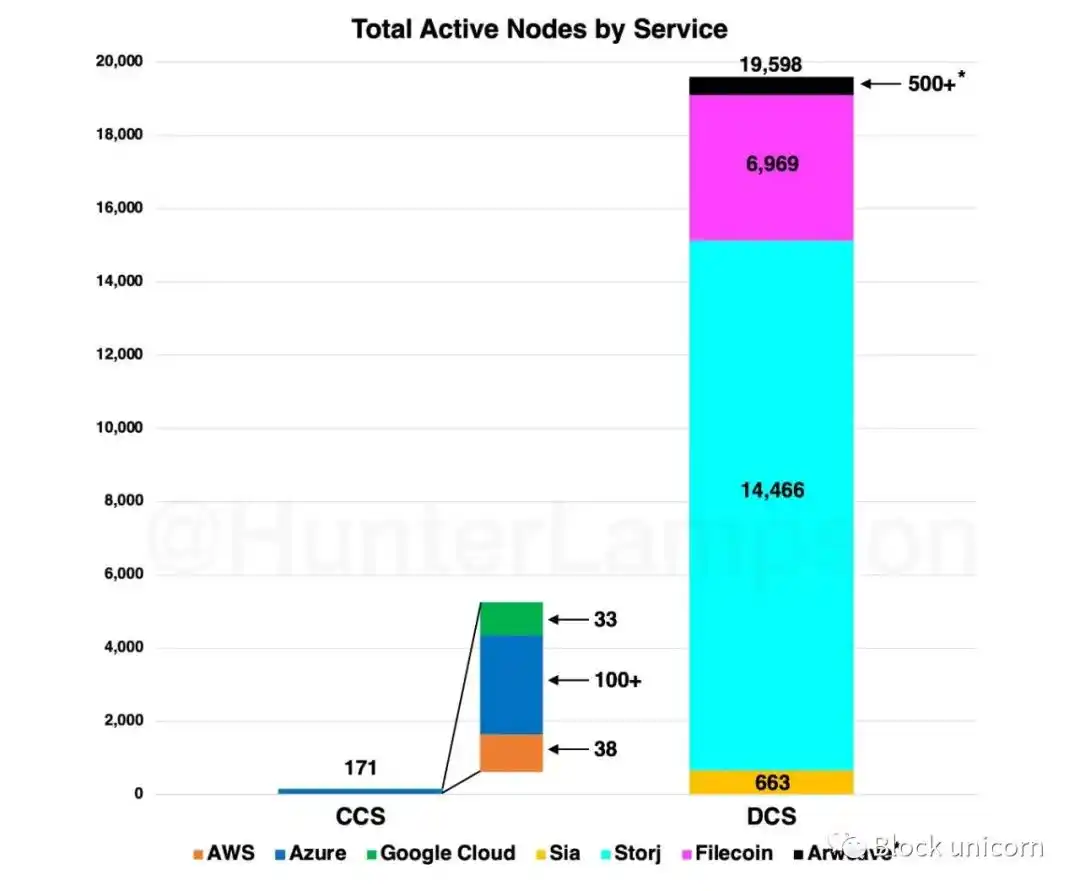
Figure 6. Total number of activity nodes divided by service. Data source: Filscan, Viewblock, Storj, SiaStats, Peterson 2015, Baxtel, Google, Sam Williams, Hunter Lampson.
The number of nodes on Arweave is difficult to quantify because Viewblock's statistics consider each storage pool as a single storage node. In an offline conversation, Arweave's founder Sam Williams told me that the 59 current storage pools (according to Viewblock) can be supported by hundreds or even thousands of nodes. Therefore, Viewblock underestimates the actual number of nodes by about 10-100 times. For this reason, I use "500+" as the number of nodes for conservative estimates. It is also important to note that active node counts are an imperfect measure of decentralization, and the absolute number of nodes cannot tell us who is running nodes (and how many nodes each entity operates).
Quoting Spencer Applebaum and Tushar Jain, an important difference between DCS services is the distinction between contract-based storage solutions and permanent storage solutions. Simply put, all DCS services currently on the market are based on a contract model, with the exception of Arweave.
Contract-based storage model vs Permanent storage model
Filecoin, Sia, and Storj use a contract-based pricing model, which is the same as the model currently used by CCS. Contract-based pricing means that users continuously pay for storing data, similar to a subscription model (paying every month/year). Although there are slight differences, Filecoin, Sia, and Storj directly compete with existing CCS providers.
On the other hand, Arweave provides a permanent storage model, which means that users only need to pay a fee and in return, their data will be stored permanently. Compared to other DCS and CCS providers, Arweave often appears lazy and inaccurate. The fundamental feature that sets Arweave apart from its competitors is data persistence.
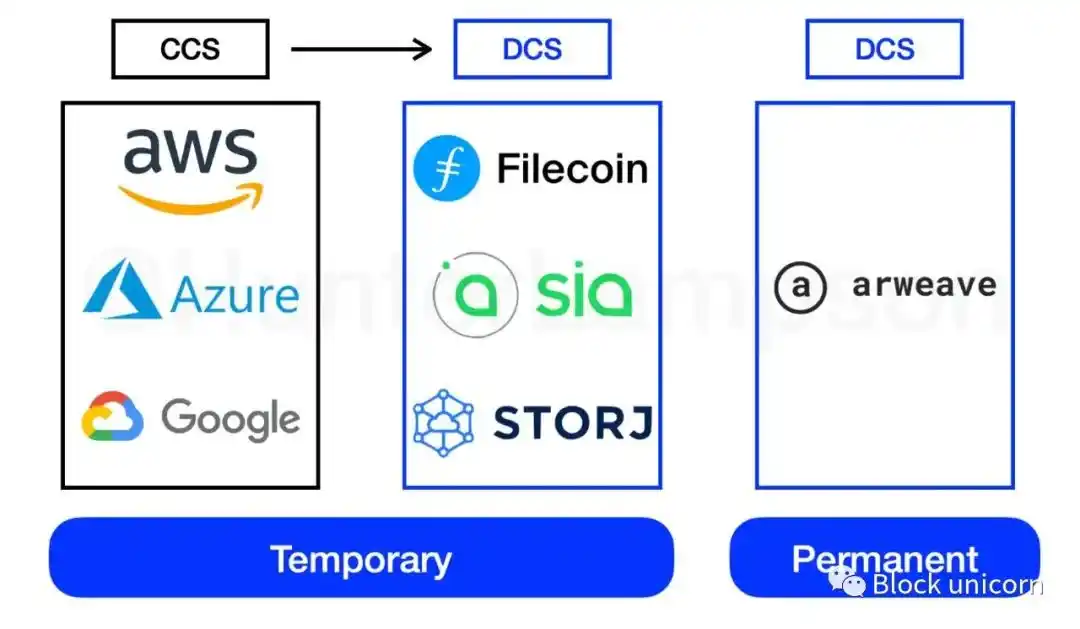
Conceptual diagram of CCS and DCS solutions, Figure 7. Source: Hunter Lampson
Studying Filecoin, Sia, and Storj carefully can help us better understand their differences from CCS providers and Arweave.
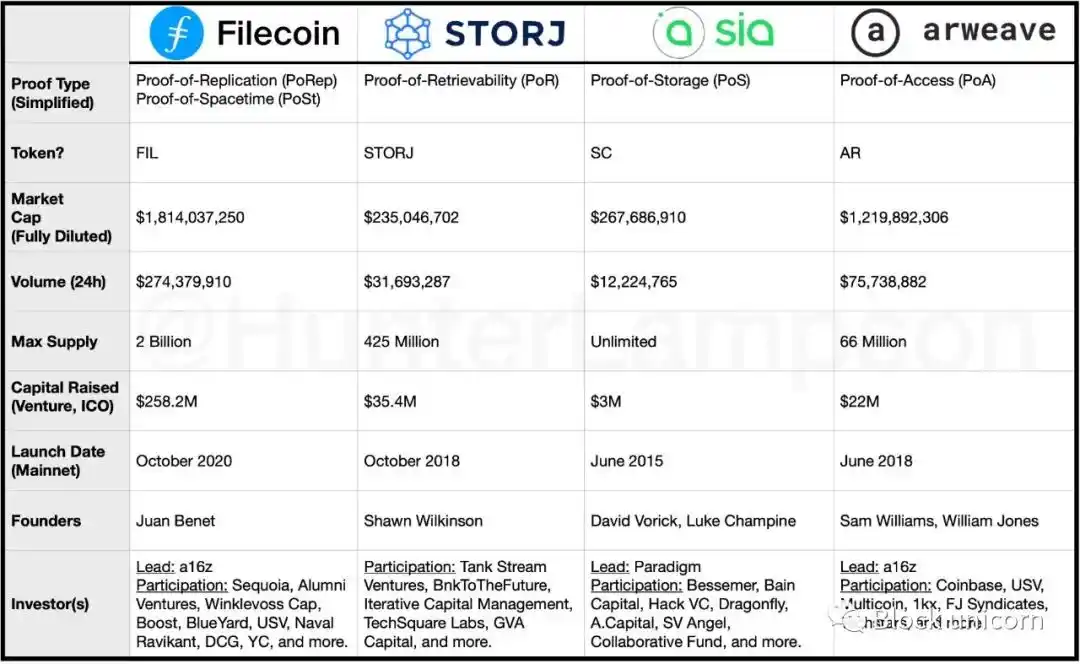
Figure 8. The main features of DCS solutions. Source: Filecoin, Storj, Sia, Arweave, CoinMarketCap, Crunchbase.
Filecoin
Filecoin launched its mainnet in October 2020 and is currently the most widely adopted and well-funded DCS project in the market. As of July 12, 2022, Filecoin's fully diluted market value is approximately $1.19 billion, with a historical high of $12.3 billion. Juan Benet is the founder and CEO of Protocol Labs, the company that developed Filecoin and its underlying technology, the InterPlanetary File System (IPFS). To date, Filecoin has raised $258.2 million in funding, with most of it coming from its initial coin offering (ICO) at the end of 2017.
To understand Filecoin, we must first understand IPFS, which is a peer-to-peer (P2P) distributed system used for storing and retrieving data. IPFS was built to address the shortcomings of the HTTP-based internet, and it uses content addressing to categorize data. This means that information is requested and delivered based on its content rather than its location. This is achieved by issuing a content identifier (CID) for each data block, which is generated by hashing the content of each file, making it immutable. To locate the requested information (represented by a unique CID), IPFS uses a distributed hash table (DHT), which contains the network location of nodes that store content related to the CID. When a user requests information from an IPFS node, the node checks its hash table to see if it can locate (and then retrieve) the requested file. If the node does not contain the requested information, it can download the content from a peer node and deliver it to the user. In this model, information is replicated across multiple nodes, eliminating the risk of a single point of failure and improving retrieval speed, as data is retrieved from multiple peer points simultaneously.
IPFS is a communication network used for storing and transmitting data, while Filecoin is an economic system built on top of it. IPFS itself cannot incentivize users to store other people's data, but Filecoin can. This is achieved through two unique proof mechanisms: Proof of Replication (PoRep) and Proof of Spacetime (PoSt). PoRep runs only once to verify that storage miners have the content they claim to have. For each on-chain PoRep, there are 10 SNARKs (Succinct Non-Interactive Argument of Knowledge) that prove the completion of the contract. On the other hand, PoSt runs continuously to prove that storage miners have dedicated storage space to the same data over a period of time. The on-chain interaction required to verify this process is data-intensive, so Filecoin uses zk-SNARKs (Zero-Knowledge Succinct Non-Interactive Argument of Knowledge) to generate these proofs and compress their data by 10 times.
Sia
Among the four discussed DCS protocols, Sia was the first to be released and was launched in June 2015. In 2013, David Vorick and Luke Champine founded Sia at HackMIT. The company has a strong user base and reached a fully diluted market value of $190 million, with a historical high of $2.97 billion.
Sia was launched by nebula Labs in 2014. Similar to Filecoin, Sia divides uploaded data into composite parts (in this case, fragments) and disperses them to distributed hosts around the world. Unlike Filecoin, Sia achieves this through different storage proof (PoS) mechanisms. This proof requires hosts to share a small randomly selected portion of data over time. The proof is verified and stored on the Sia blockchain, and hosts receive Siacoin rewards.
Storj
Like Filecoin and Sia, Storj has gained significant traction since its launch in October 2018. The difference between Storj and Filecoin and Sia is that it does not rely on blockchain consensus to store data. Instead, Storj relies entirely on erasure coding and satellite nodes to store data, increasing data redundancy and reducing bandwidth usage. Storj's exclusive use of erasure coding means that data durability (the probability that data will still be available in the event of a failure) and expansion factor (the additional cost required for reliable data storage) are not linearly related. Therefore, on Storj, higher durability does not require a proportional increase in bandwidth. Given node churn (the rate at which nodes go offline or leave the network), erasure coding may be valuable in the long run as it requires less disk space and bandwidth for storage and repair, despite increasing CPU runtime.
Storj's network architecture and pricing mechanism differ from Filecoin and Sia. On Storj, pricing is determined by the satellite nodes that negotiate prices and bandwidth utilization between the intermediate storage users (including applications) and storage nodes. Therefore, Storj's pricing model is not entirely dependent on free market activity, but is subject to centralization because satellite operators represent potential centralized intermediaries between nodes and end users.
Storj has also integrated locally with Amazon S3, which means that existing Amazon S3 users can migrate to Storj and use basic features without changing their codebase, which may reduce friction associated with leaving the Amazon S3 ecosystem.
Arweave
Unlike Filecoin, Sia, and Storj, Arweave provides permanent data storage. Arweave was founded in June 2018 by CEO Sam Williams and William Jones. As of July 12, 2022, Arweave's fully diluted market value has reached $890 million, with a historical high market value of $4.18 billion.
Arweave seeks to provide permanent data storage in a decentralized manner through a one-time payment, which is achieved through the Arweave donation mechanism. Considering that the cost of data storage has decreased at a rate of 30.5% per year over the past 50 years, Arweave believes that the purchasing power of storage at 1 GB/1 USD today is higher than the future cost of storage at 1 GB/1 USD. This delta makes the Arweave donation pool possible, where the "principal" is the upfront fee paid by users and the "interest" is the increase in purchasing power over time due to the rise in token prices. Arweave's conservative assumption is that storage prices will decrease by 0.5% per year, which allows the donation pool to survive in the long term.
The current cost of Arweave, about $3.85/GB, reflects the terminal value of data storage. In the short term, Sia and Filecoin (even the Big3 giants) are cheaper. But in the long run, Arweave becomes the wiser choice. Even in the short term, users will pay a premium for something that others cannot provide: data persistence. For some, the cost of permanent storage is relatively inelastic because certain files (such as NFTs) require permanent storage.
Arweave is supported by block weaving, which is a data structure similar to blockchain, where each block is linked to the previous block and a recall block. The recall block is any block that has been previously mined, except for the most recently mined block. Therefore, the structure of Arweave is not just a chain linking consecutive blocks together - it weaves the current block with previously mined blocks and another random block (Recall block).
In order to mine new blocks and receive mining rewards, miners must prove that they can access the recall blocks. Arweave's Proof of Access (PoA) mechanism ensures that for each newly mined block, the data of the recall blocks is also included. This means that in order to store new data, miners must also store existing data. PoA also encourages miners to equally replicate all data between nodes. When selecting recall blocks with lower replication levels, miners who can use that block will compete for the same reward in fewer mining pools. Under other equal conditions, over time, miners who store blocks with lower replication levels will receive greater rewards.
The permanent web built on top of block weaving is similar to today's World Wide Web, but permanent. Arweave's Blockweave is the foundational layer that powers the Permaweb, which is the layer that users interact with. Since Arweave is built on top of HTTP, traditional browsers can access all data stored on the network, enabling seamless interoperability.
Attraction
Although DCS solutions may be theoretically superior to CCS solutions, they should be evaluated based on their practical usefulness. We can measure the attractiveness of each project by examining the following:
1. Storage data.2. Node Distribution.
3. Interested search
4. The Power of Ecosystems
5. Revenue from the demand side
1. Stored Data
The requirement is directly measured by checking the amount of data storage over time, which is considered the main KPI of DCS providers. From this indicator alone, Filecoin has the advantage; as of the writing of this article, Filecoin has stored over 90% of the DCS data circle, compared to only 82.8% 90 days ago.
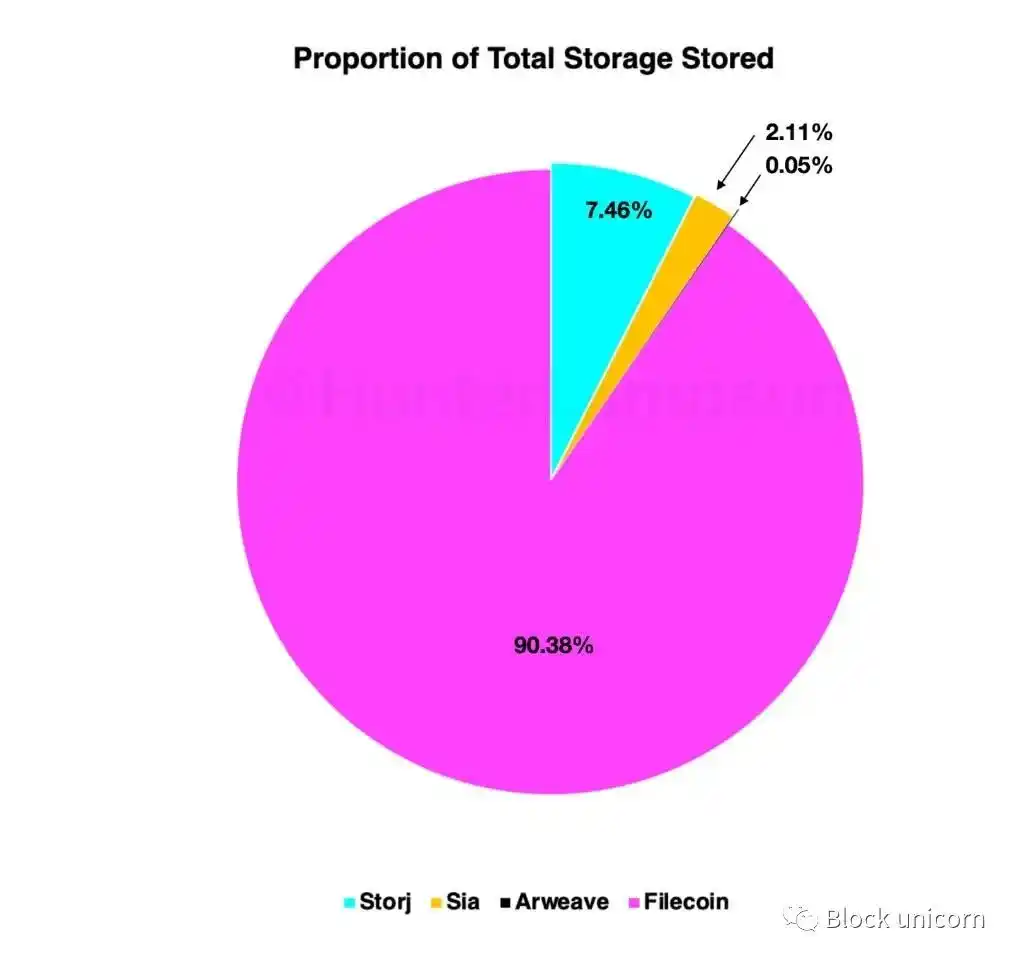
Figure 9. Proportion of stored data in the DCS data market. Source: Storj Stats, SiaStats, Viewblock, File.app, Hunter Lampson.
Filecoin not only stores the most data, but also has the fastest growth rate. In the past 90 days, the data stored on the Filecoin platform has grown by 112%.
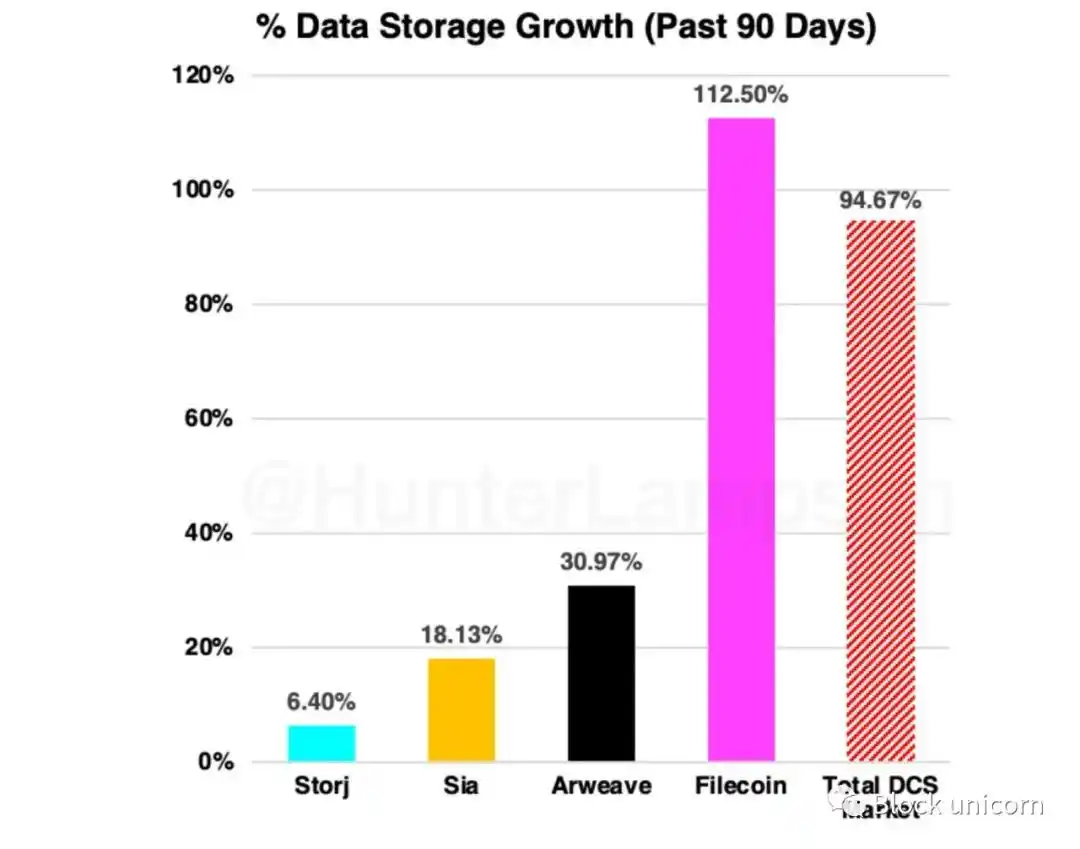
Figure 10. Data storage growth (past 90 days). Source: Storj Stats, SiaStats, Viewblock, File.app, Hunter Lampson.
According to these are all storage protocols, the amount of stored data is an important indicator, although it has serious limitations. The amount of data storage does not tell us about the protocol benefits or the data itself (how valuable it is, what its function is, how long it will be stored, etc.). There is a continuous debate between DCS and CCS suppliers on how to describe the characteristics of stored data, as not all data is equally valued (and treated). Some data is more important than other data. Users may divide their storage providers based on this indicator, so the amount of stored data can only depict part of the situation.
The background of how the lack of data storage capacity will contribute to the revenue of the protocol's demand side is also a concern when considering Filecoin, which is the only DCS service that provides storage for free. For this reason, users may use Filecoin to store data because of its current pricing (which will be discussed in detail later...). Although it is difficult for me to find public resources in this regard (for obvious reasons), interestingly, countless builders and researchers in this field - all of whom I respect very much - have told me that Filecoin tends to cooperate with large institutions to provide free storage in order to manipulate their storage volume metrics. In theory, Filecoin can store an infinite amount of data compared to any other DCS protocol, but still generates zero demand-side revenue.
2. Node Distribution
Although data storage capacity is a direct measure of storage demand, we can also look at indirect measures. Node distribution is important for understanding because it highlights the geographic composition of demand-side and supply-side participants. We can evaluate this by observing 1) the geographic distribution of storage nodes and 2) the geographic distribution of search interests.
The more dispersed the distribution of storage nodes is, the better, and higher dispersion (usually) forms greater decentralization, and shortens the retrieval time from nodes to end users. Higher dispersion also reduces the risk of irretrievable data loss (usually due to environmental factors such as natural disasters). Ideally, nodes should not be arbitrarily dispersed in space, but should be related to storage demand in space (possibly equivalent to technical saturation multiplied by population density). Given that storage demand is most concentrated in the United States, China, and Europe, we expect them to have the most concentrated storage nodes. Therefore, it makes sense for the node distribution in CCS and DCS solutions to be concentrated in the United States, Europe, and China. The distribution of DCS nodes is similar to that of CCS storage centers, which is a positive signal for the maturity of the DCS solution in important markets.
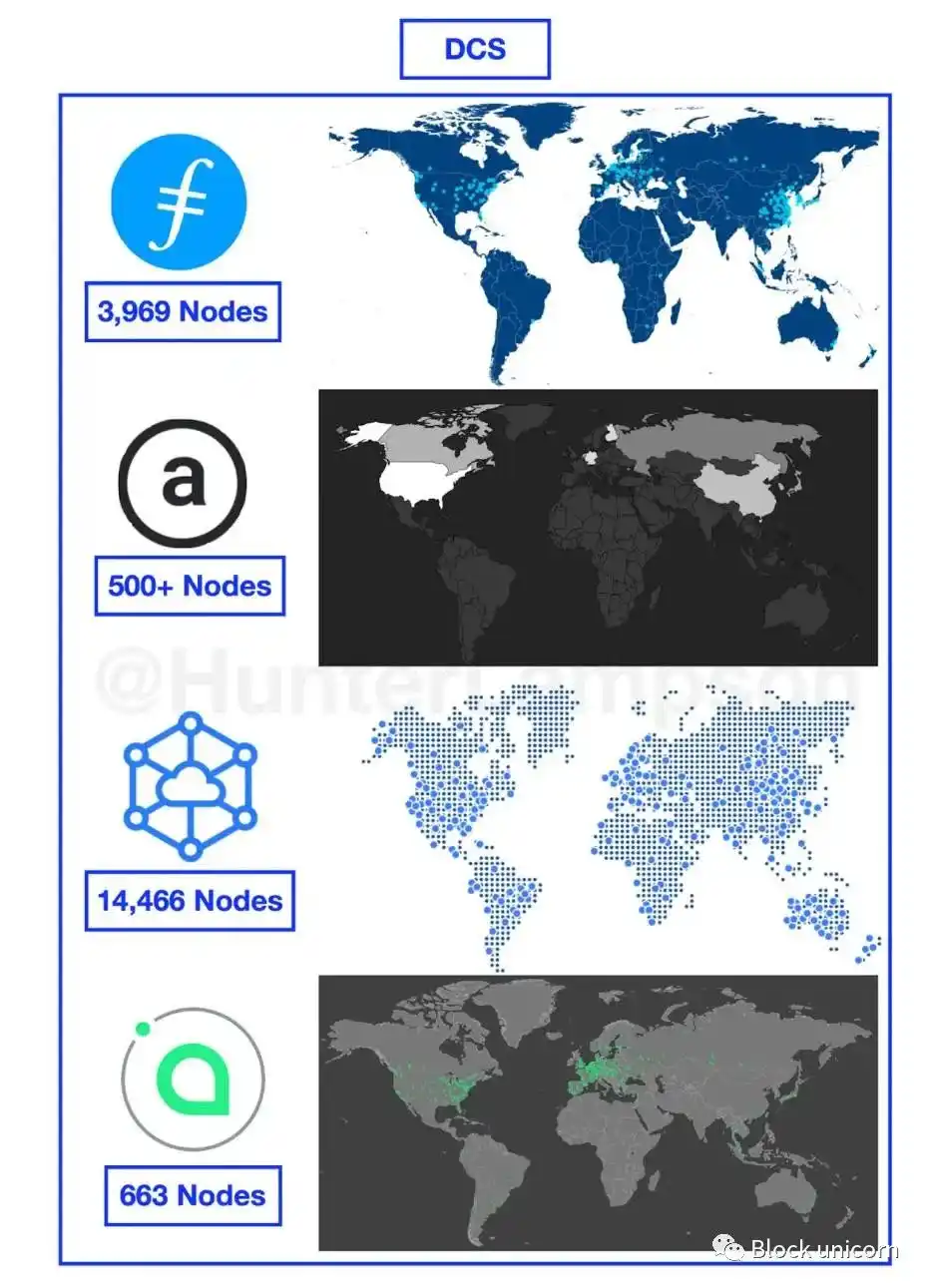
Figure 11. Geographic distribution of DCS nodes. Data source: Filscan, Viewblock, Storj, SiaStats, Sam Williams.
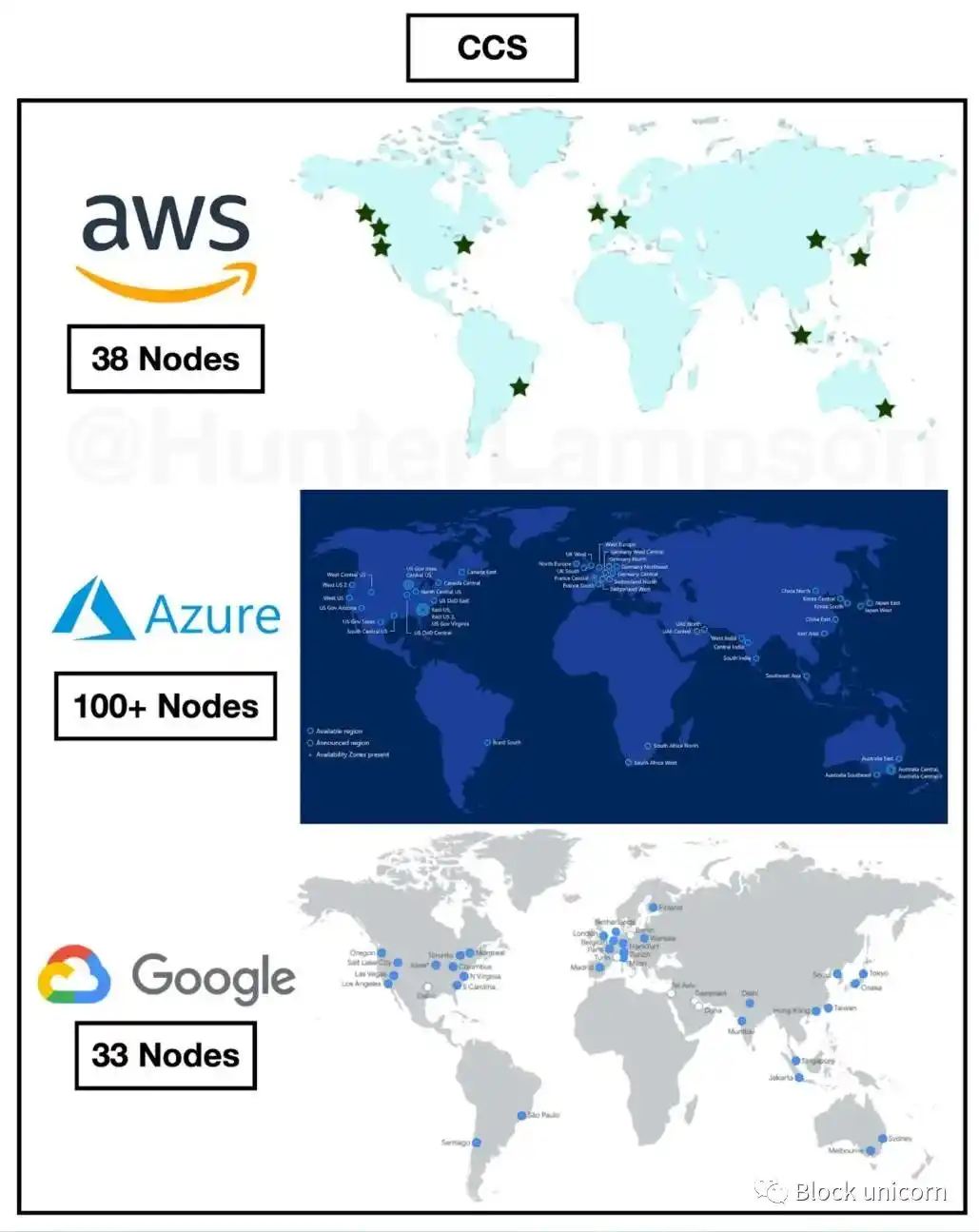
Figure 12. Geographic distribution of CCS nodes (data centers). Source: Peterson 2015, Baxtel, Google.
3. Interested Search
If we consider the distribution of nodes as the distribution in DCS supply, then we can (at least partially) consider the distribution of search interests as the distribution in DCS demand. (This assumption is based on the fact that for each search of a DCS solution, the searcher is more likely to be a user of storage space rather than a supplier.)
According to this metric, Filecoin clearly has the highest search interest dominance globally, relative to Storj, Sia, and Arweave. Therefore, people may consider Filecoin to have the highest relative demand.
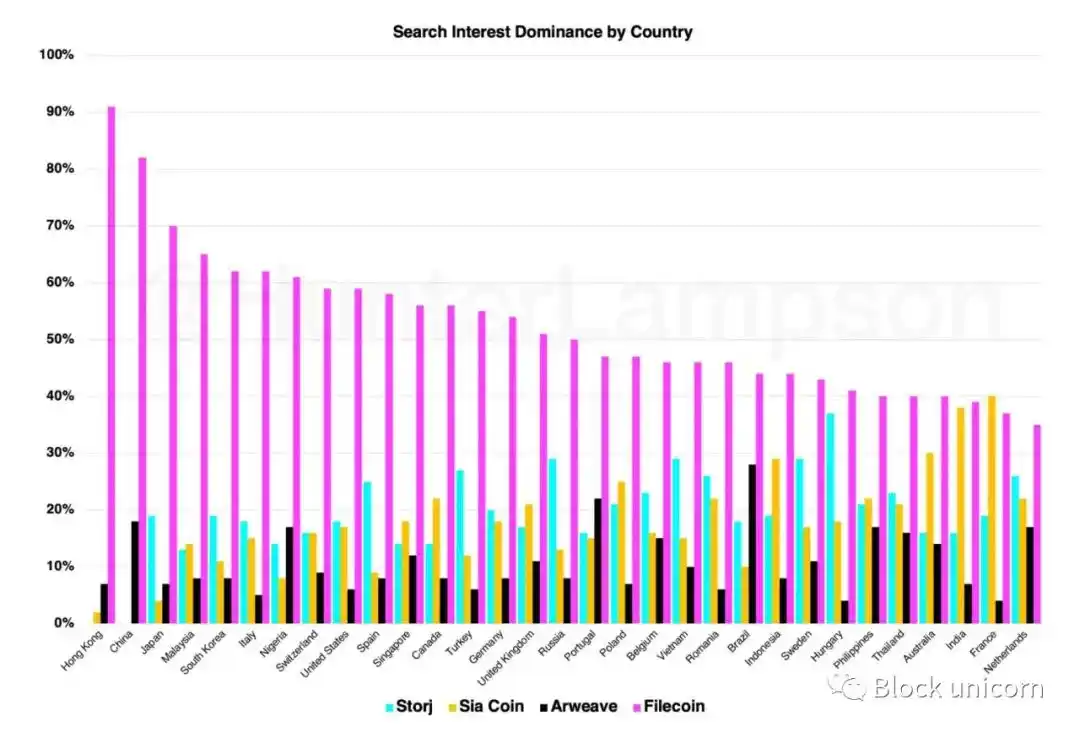
Figure 13. Relative search interest by country/region. Source: Google Trends. Note: I use the term "Sia" instead of "Siacoin".
These assumptions are all based on current supply and demand indicators, but looking back, similar conclusions can be drawn. Since mid-2021, Filecoin has consistently been the most searched DCS solution. It is worth noting that Arweave in August 2021 and Storj in November and December 2021 have almost surpassed Filecoin's search interest.
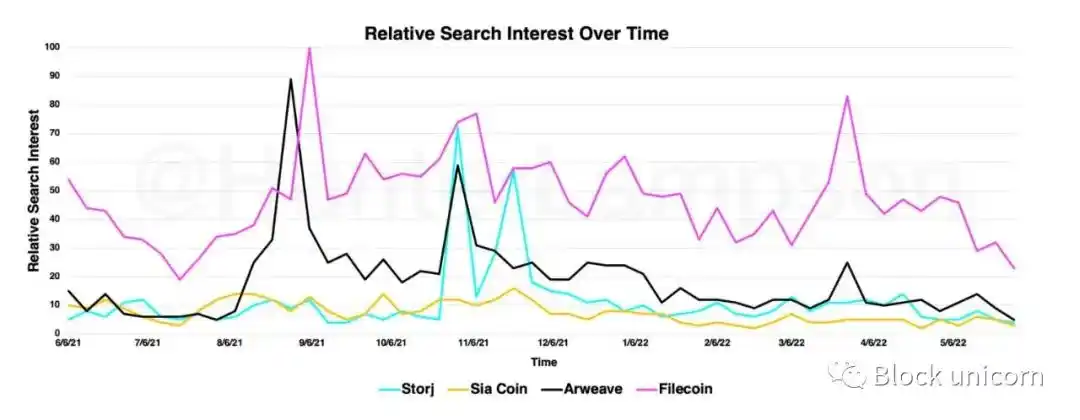
Figure 14. Relative search interest over a period of time. Source: Google Trends
Although interest search can be a useful indicator, it has serious limitations. This indicator shows us how individual users use Google to obtain information about each project, but search interest does not tell us the actual protocol requirements.
It can be easily concluded that Filecoin has raised the most funds to date, and they may have the most money to spend on marketing. Therefore, perhaps the marketing budget can explain the changes in search interest in each project separately. Perhaps search interest dominance is more predictive of funding than protocol requirements - who can say for sure? In addition, Filecoin has an easily understandable domain with many keywords, such as Web3, storage, and non-functional testing. When it comes to storage, data bias may also be a factor. Users searching for "Web3 Storage" may come across Filecoin's services, which is entirely based on search engine optimization and the domains they own.
Another limitation of interest-based search is that it may be highly unrelated to storage requirements. For example, if a user intends to move hundreds of terabytes of data to a DCS provider, their search activity (a single search) will not reflect their actual storage needs. It may also be influenced by external variables, such as the degree to which individual tokens are marketed by centralized exchanges like Coinbase.
4. Ecosystem
Because DCS solutions exist at the infrastructure layer, their ecosystems typically represent user demand as their users (consumers, companies, developers) can choose which ecosystem to use or build. The power of an ecosystem comes from 1) projects built on top of protocols and 2) existing projects that work with it. Considering the maturity of their partnerships and the speed of adding new projects, Filecoin has the strongest ecosystem. In the past 18 months, Filecoin's ecosystem has grown from 40 projects to over 300. Filecoin has an impressive list of partners, including: Chainlink, Polygon and Polygon Studios, The Graph, Near, ConsenSys, Brave, ENS, Flow, Hedera, ChainSafe, Ceramic, Livepeer, Audius, decrypt, MoNA, and Skiff.
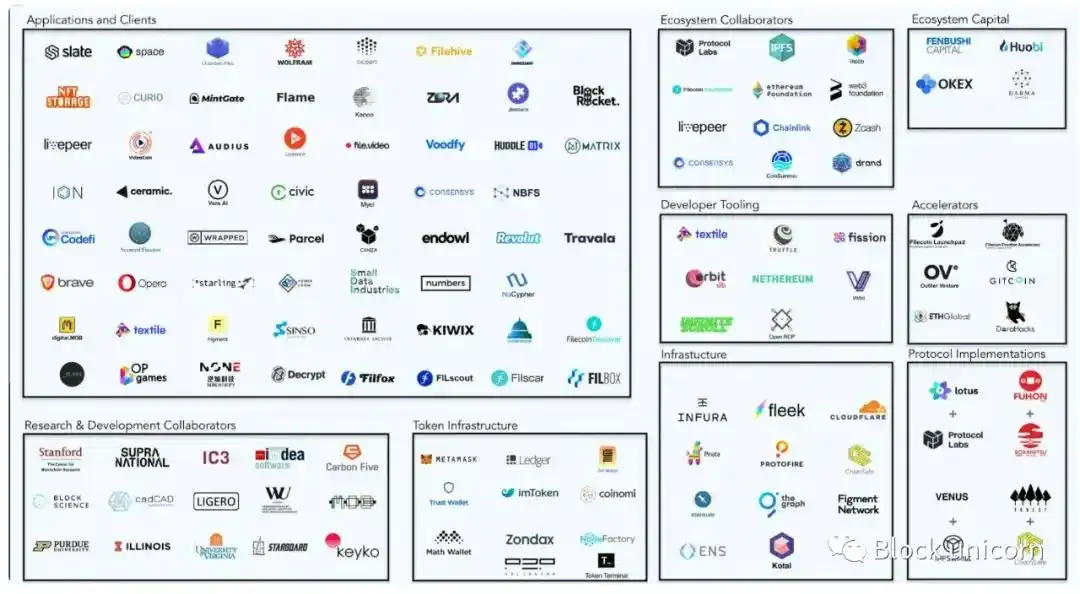
Figure 15. Filecoin ecosystem. Source: Messari
In order to help develop their ecosystem, the Filecoin Foundation has invested a significant amount of funds into their ecosystem and grant projects. Protocol Labs is the team behind Filecoin and has made 46 direct investments so far, deploying over $480 million to ecosystem projects including decrypt, Syndicate, ConsenSys, and Spruce.
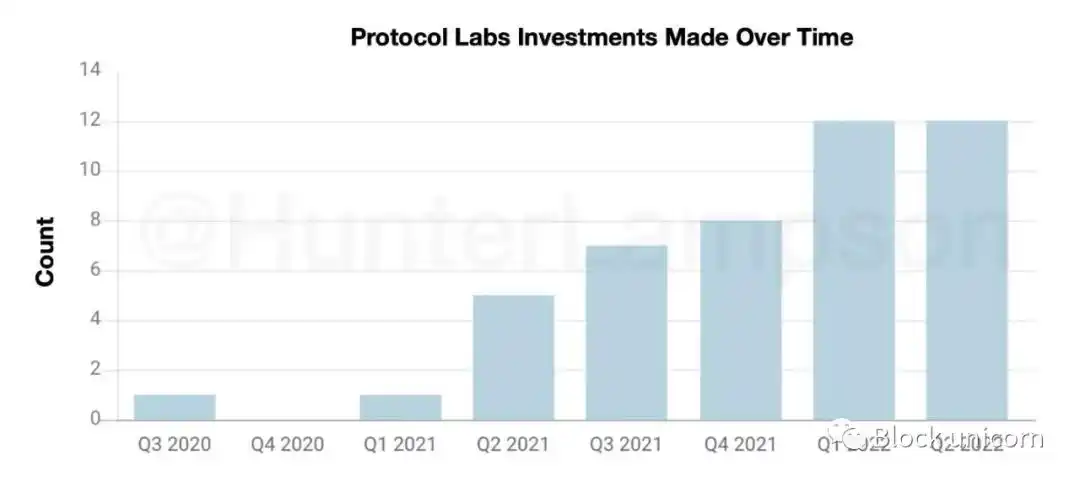
Figure 16. Protocol Labs' investment over time. Source: Crunchbase
Arweave's ecosystem is second only to Filecoin, with nearly 60 partners compared to Filecoin's nearly 300. While many partners can benefit from both platforms at the same time - for example, Mirror and Skiff can provide services for both Filecoin and Arweave users at the same time - other projects, such as Solana, are unlikely to use both platforms at the same time. This means that many of the most critical web3 infrastructure projects - protocols, dApps, NFT platforms - will find a storage protocol that fits their product and market, and will ideologically align with either Filecoin or Arweave, depending on the specific use case. The strength of each ecosystem will play a crucial role in the long-term survival of each platform, so the ability to win the hearts and minds of new and old builders is the most important.
It is worth noting that, compared to Filecoin, Arweave's ecosystem has established more new projects on the platform - because they rely on technology to survive - rather than projects that selectively use existing technology. This also explains why Filecoin collaborates with more mature projects, not because Filecoin's partnerships develop faster or more successfully, but because Filecoin's partners (such as Cloudflare and Opera) have been around longer. In contrast, Arweave's partners are generally early companies that started on the network. Some of Arweave's notable partners include Solana, Polkadot, The Graph, Mirror, Bundlr, Glass, KYVE, Decent Land, and ArDrive.
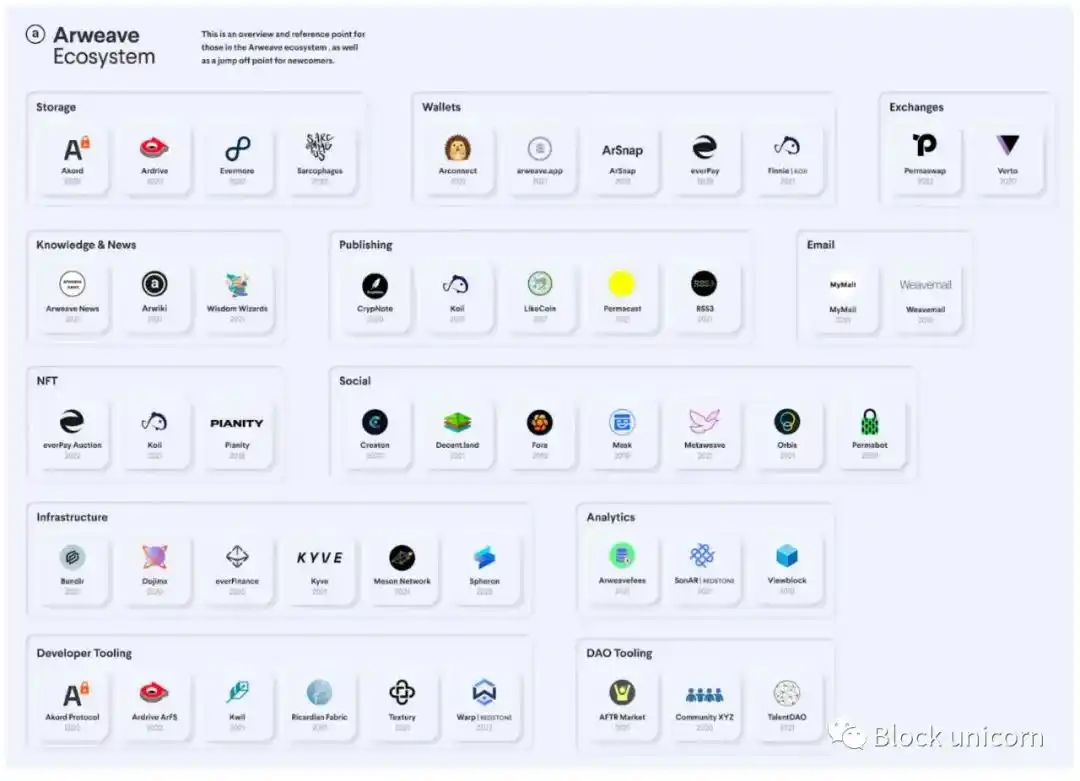
Figure 17. Arweave ecosystem. Source: @axo_pas (on Twitter)
Since 2020, Arweave has invested nearly $55 million in 15 ecosystem projects, including Mask, Fluence, and Pianity. Through their Open Web Foundry program, Arweave helps developers create permanent web applications and invests through their community-operated ecosystem fund, ARCA DAO.
Sia and Storj have smaller ecosystems, with approximately 30 and 13 projects respectively. Despite their smaller ecosystem sizes, both Sia and Storj have excellent partnerships. Some of Storj's partners include CoinMarketCap, Crypto.com, Kraken, Filebase, Render, Akash, and Quant, while some of Sia's partners include Microsoft Azure, Fastly, Couchbase, and Pokt. Importantly, Storj's strategy is focused on capturing existing Amazon S3 users, including large existing companies. Therefore, many of Storj's partners may refuse to go public. Storj's partners may not see any benefits from being listed as such companies. In contrast, new web3 native projects built on Arweave may indeed benefit from being listed as partners to demonstrate their immersion in the ecosystem. Different promotional motivations make the ecosystem comparison challenging as we lack a complete dataset.
Today, Sia is mainly used by Filebase (the first dApp compatible with Amazon S3) and Arzen (a decentralized storage application for consumers).
5. Revenue from the demand side
The amount of data storage may be the most direct measure of user attraction, but the value of user attraction measured by demand-side revenue - or the ability of the project to monetize user attraction. As Sami and Mihai (both MessariCrypto analysts) explained in their article on Filecoin revenue models, demand-side revenue is a useful indicator for infrastructure projects because it measures the fees people pay to use the network (in this case: fees paid for storing data). It is important to note that demand-side revenue does not include block rewards paid to miners.
Although demand-side revenue data for Arweave, Sia, and Storj can be found on Web3 Index, it is difficult to find demand-side revenue data for Filecoin (if anyone can find this data, I would be happy to see it). Therefore, we cannot include Filecoin in the demand-side revenue comparison.
Regarding Filecoin's revenue, what we know is that despite the growth of data stored on its platform, their revenue remains flat. This may be due to two reasons: firstly, the HyperDrive update has increased the storage onboarding rate by 10-25 times, resulting in lower demand for data block space (as we will see later, this has damaged the token value of Filecoin). Secondly, storing more data without generating higher revenue suggests that Filecoin is actually providing free storage for data. Therefore, miners receive an unsustainable block reward of approximately 20.56 FIL per block, which will decrease over time. In the near future, Filecoin will need to increase storage prices to incentivize miners to participate in the network.
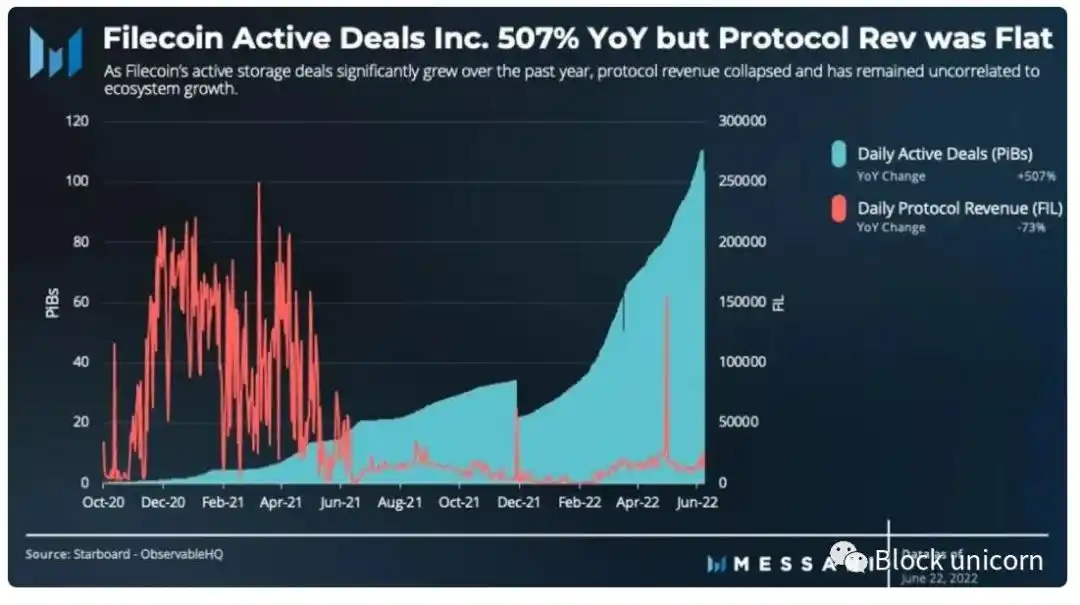
Figure 18. Filecoin's protocol revenue is still unrelated to ecosystem growth. Source: Messari
However, for Storj, Sia, and Arweave, we can see the generation of demand-side revenue in the past 90 days.
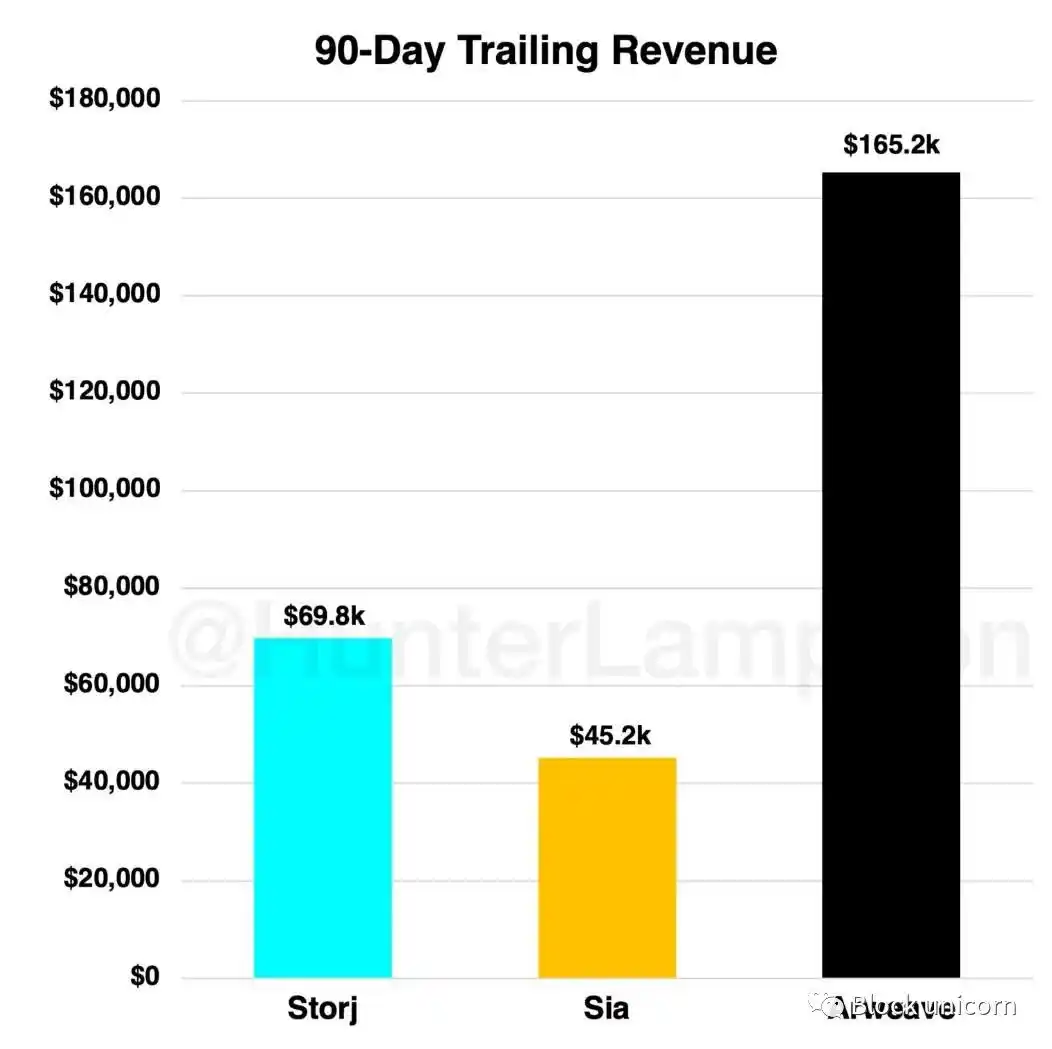
Figure 19. Revenue from demand for Storj, Sia, and Arweave (past 90 days). Data source: Web3 Index
Because Filecoin, Sia, and Storj are contract-based (temporary) solutions where users pay for the ongoing storage of data, we can assume that a non-zero portion of their demand-side revenue is recurring. In contrast, we can assume that 100% of Arweave's demand-side revenue is non-recurring because users only need to pay once to store data permanently. This means that the only way Arweave generates demand-side revenue is through storing net new data. This is a huge challenge for Arweave and highlights the shortcomings of comparing Arweave to DCS.
What may prove to be a moat - or competitive disadvantage - between DCS platforms is the difference in demand-side revenue efficiency (roughly equivalent to price). I define demand-side "revenue efficiency" as the revenue generated by the demand side for storing one byte of data. In the past 90 days, Storj and Sia generated demand-side revenues of $96.50 and $89.90 per TB uploaded, respectively, while Arweave generated revenues of approximately $10,200 per TB uploaded. This pricing model is another fundamental difference between Arweave and its DCS competitors: Arweave charges a premium for its uniquely functional service. This also means that Arweave can store 113 times less data than DCS but still generate the same demand-side revenue as its competitors. This suggests that Arweave should not store the same amount of data as other solutions, as its service and pricing mechanisms are incomparable.
Token Valuation
Method
Storj, Sia, Arweave and Filecoin are understood as a combination of 1) utility tokens (gift cards) and 2) exchange media (currency). The valuation of utility tokens is based on their expected future utility; the value of currency depends on supply and demand. Holders of utility tokens can use them to exchange for services - in this case, cloud storage. The ability to exchange utility tokens for specific services makes them structurally similar to traditional gift cards or vouchers. However, unlike gift cards and vouchers, utility tokens are programmatically offered and autonomous, while gift cards and currency are provided by businesses or governments and (almost always) issued in different currencies (usually fiat). Programmatic supply ensures a specified supply schedule, which allows us to accurately calculate token supply. (Recent CPI data of 9.1% demonstrates the powerful force of programmatic currency supply.) We combine this with traditional monetary theory to derive the intrinsic value of each token.
It should be noted that what I am interested in is using traditional currency theory and discounted cash flow analysis to estimate the changes in token prices over time. I do not intend to evaluate the value of the protocol itself (i.e. the total revenue generated [although revenue is important...]), nor do I intend to evaluate the profits of storage miners or storage providers. I also recognize the extraordinary cultural value generated by these protocols, especially when they inevitably become public goods. That is to say, the token price of each protocol may not take these into account, so I will not consider them either.
First, an important distinction: traditional publicly traded securities (such as $AAPL: Apple) and tokens (issued by protocols) represent different things. While protocols generate asset flows, they do not generate cash flows like Apple does. Therefore, tokens should not be confused with publicly traded stocks. Tokens represent rights to use/trade; publicly traded stocks represent ownership. (Tokens can represent not only rights to utility/transactions - they can also include governance rights.) Over time, token price valuations need to incorporate different mechanisms: monetary theory and discounted cash flow analysis.
Token Valuation Model
The main framework I use to evaluate token prices is the model proposed by Chris Burniske in his groundbreaking work: Cryptoasset Valuations. Chris believes that instead of modeling traditional DCF, it is better to maintain the same structure and use exchange equations instead of cash flows, so that we can derive the current utility value of each token. Then, we apply a discount rate to the future utility value to derive the intrinsic value today.
Replace with exchange equation: MV = PQ to help us integrate the currency nature of tokens. As Chris (and countless others) admit, this model has its limitations (all predictive models do), but it may be the best model we have. Given the lack of fully efficient markets and the inherent large margin of error in predicting the future, this model is best used to illustrate the various levers that generate token value.
Chris wrote: "The valuation of encrypted assets is mainly composed of solving M, where M = PQ / V. M is the currency base scale required to support the encrypted economy with a scale of PQ and a speed of V."
Block unicorn Note: M = asset base size, V = velocity of assets, P = price of provided token resources, Q = quantity of token resources being supplied.
Token Valuation Model: Input
In order to estimate M, V, P, and Q, I will use the following method:
Mathematical Deduction Input
1. Maximum supply2. Circulating supply.
3. Annual compound growth of circulation
4. Storage cost (1$ / GB / year) or (1$ / GB)
5. Storage Cost Annual Growth Rate (CAGR)
6. Size of the data storage market
7. Compound Annual Growth Rate (CAGR) of data
This is derived from the annual average decline in storage costs ($/GB/year) over the past decade by the three giants, as shown in the following figure (Figure 20):
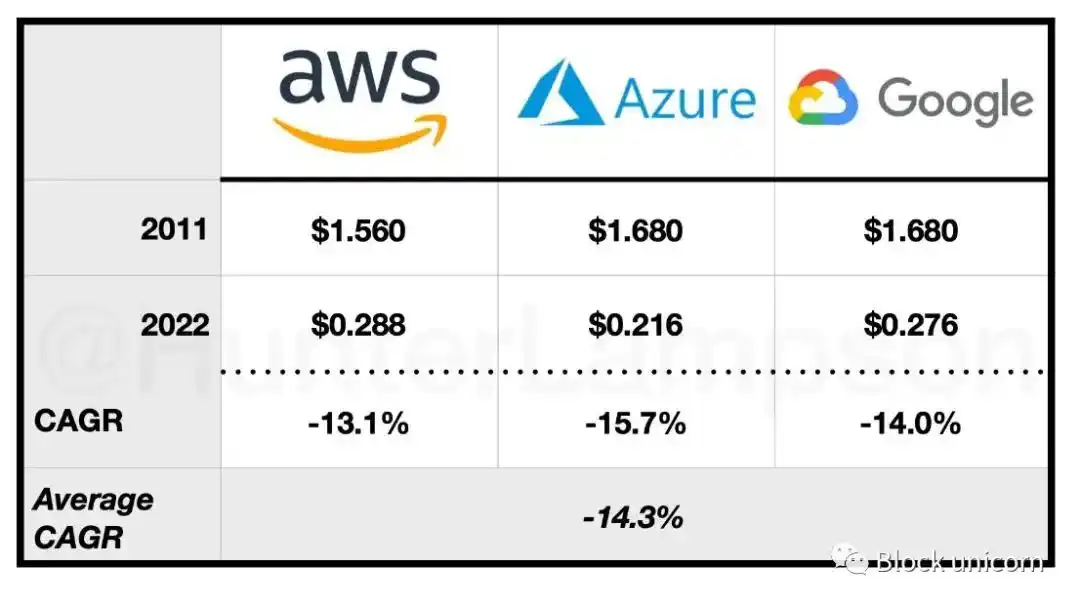
Figure 20. AWS, Azure, and Google's data storage costs and CAGR. Source: AWS, Azure, Google, Hunter Lampson.
Subjective Assumption
1. Percentage of token holders (percentage of public supply not in circulation)
I assume that in 2021, 50% of the tokens are held. This assumption is based on the fact that historically, about half of Coinbase users strictly consider Bitcoin as an investment, while the other half see it as a means of transaction.
2. Annual percentage change in held tokens
I assume that starting from 2022, the proportion of token holders will decrease at a rate of 1% per year. As the market tends towards equilibrium, the potential for value appreciation decreases, so the number of tokens in circulation will increase (as the token holding rate decreases). This is difficult to estimate - similarly, it is best understood as a lever that helps to value the token.
3. Speed
Assuming that the growth rate of each token is 20%, and considering that the historical speed of Bitcoin has always been around 14%, using 20% here is a conservative approach.
4. TAM (Global Market Share of Data Acquisition)
I assume that the maximum percentage TAM obtained by ZKS is 1% of Arweave, Sia, and Storj. Therefore, I assume that Arweave captures 1% of the global data market's 10% (Arweave captures a total of 0.1% of the global data market, while Sia and Storj capture 0.9% each). Given its traction and maturity, I assume that Filecoin captures 25% of the available TAM (90% of 25% = 18% of the global data market).
6. Turning Point
I assume that 2024 is the year when every network reaches its turning point, and this year achieves the maximum percentage of TAM acquisition, which is almost impossible to predict - another illustrative lever.
7. Saturated/Year
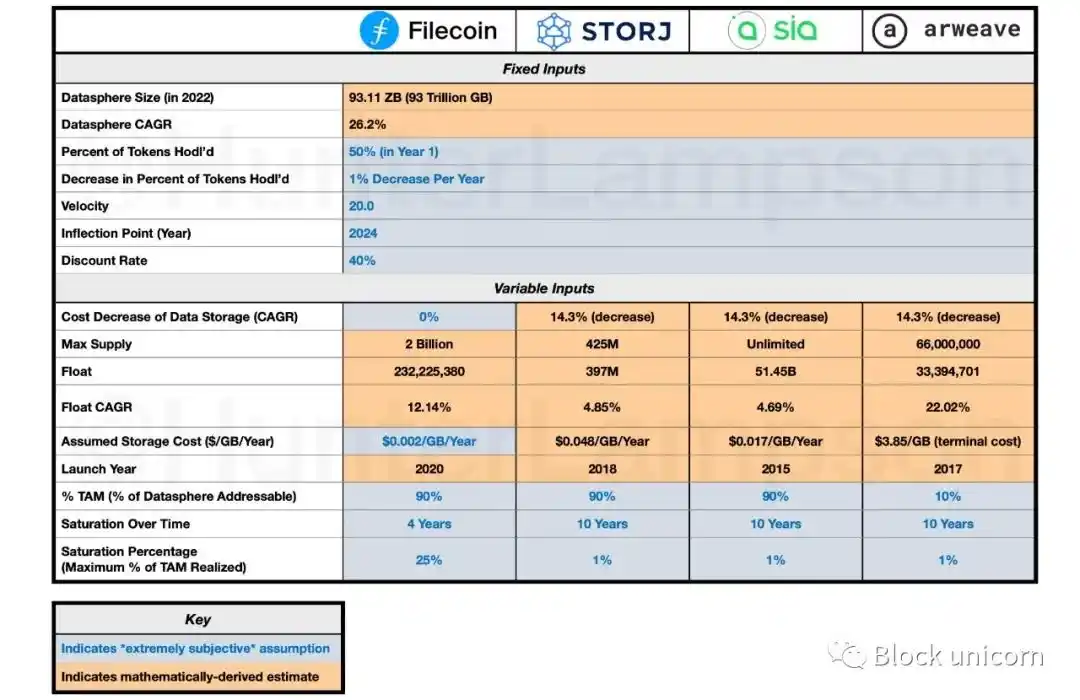
About the different investments in Filecoin:
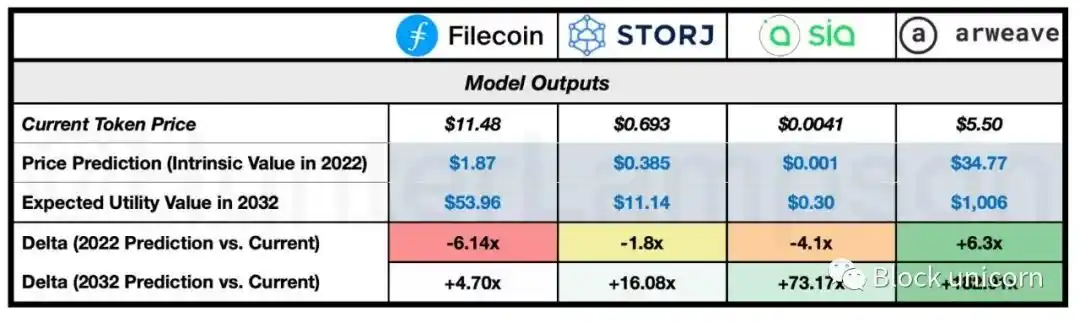
Under the same conditions, the model performs as follows under leverage:
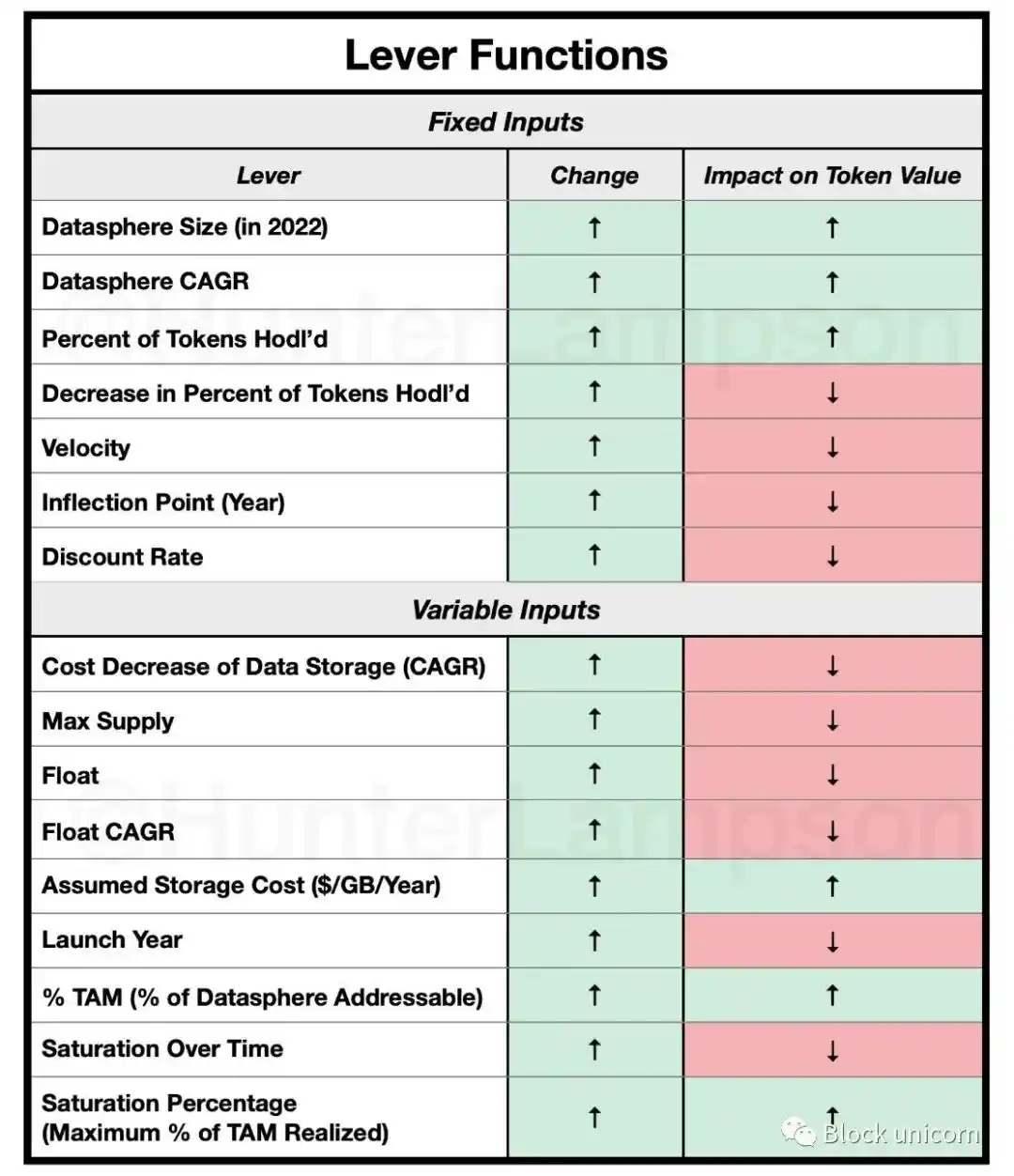
Figure 23. Illustration of various levers that generate token value. Source: Hunter Lampson
Even if we assume that users are willing to pay these additional fees, theoretically, they must be convinced to use the product in practice. Because Arweave's product is fundamentally different from its competitors, the conversion cost may be too high, and the service may be too unique to win new users. Despite Arweave's potential advantages, high costs and reliance on a completely new market may be insurmountable barriers. As mentioned earlier, the only way Arweave generates demand-side revenue is by storing new data. On the surface, Arweave does not seem to have demand-side revenue for every bit of data - something that all CCS and DCS competitors can benefit from. Instead, I believe that Arweave benefits from involuntary repeated demand-side revenue. Arweave does not charge users permanently, but rather obtains "permanent recurring demand-side revenue" in advance, which may be one of Arweave's most valuable donation mechanisms.
Currently, due to its low price, the economy of Filecoin is the most unreliable. Given a fixed token supply, the lower the cost of public utilities, the smaller the currency base that supports it must be. This view defines low pricing as a negative attribute of token value rather than a positive one. It is also possible that Filecoin's low pricing lays the foundation for its widespread adoption. Low pricing may also be the key differentiator for Filecoin, which could be a necessary moat.
However, I am concerned that pricing power will play an important role in determining the future of Filecoin. As Tushar and Spencer have pointed out, Filecoin (as well as Sia and Storj) is directly competing with the three tech giants in the temporary storage market. Engaging in a price war with these giants could be disastrous. If Filecoin can maintain low prices without unsustainable subsidies, its maturity, ecosystem strength, and overall industry influence will make it the strongest challenger to the three giants. If it ultimately evolves into a price war - which may be inevitable - things could get very bad.
According to this model, Sia's token economics make its value 4.5 times higher than Storj's, based on the difference between current pricing and price predictions for 2032. Typically, Sia and Storj are considered Filecoin's younger siblings. Given that Sia and/or Storj's ecosystems are not as robust, it is difficult to imagine them overtaking Filecoin's dominant position in this field in the near future. Nevertheless, Sia and Storj's token economics are more attractive than Filecoin's. Pricing power is essential for token valuation and the long-term survival of each project.
Limitations and Thoughts on Future Research
1. Cloud storage ≠ cloud computing. As Christine Deakers pointed out, many cloud storage users also use cloud computing for their stored data. DCS solutions must address this issue. Filecoin has already begun building its virtual machine - other DCS solutions may follow suit.
2. DCS solutions require more integration. As Mark Gritter pointed out, most IoT applications not only require distributed storage, but also decentralized databases. If DCS solutions do not have native integration with traditional time-series databases, this may be a major obstacle to adoption.
3. DCS solutions should allow for location selectivity. An example mentioned by Mark Gritter is autonomous vehicles. The sensor data streams collected by autonomous vehicles must be stored in a decentralized manner to achieve the lowest possible latency. If data uploaders (vehicles and car companies) cannot choose nearby locations to store data, the DCS solution may not be able to effectively address this use case.
最后
translates to
Final
in English.
(1) Although cloud computing is different from cloud storage, we can make a reasonable assumption: first, companies that provide cloud computing services (such as the three giants) tend to provide this service on the data they store. In other words, customers usually use computing and storage services on the same platform.
Secondly: We can assume that as cloud computing companies capture more market share, they will benefit at an increasingly faster rate from better unit economics. The larger a company's scale, the more effective it is in negotiating hardware pricing, which reduces costs for customers, attracts more users, and further enhances its bargaining power. Therefore, when I mention that the three giants occupy 65% of the cloud computing market share, we can assume that they occupy a similar amount of market share in cloud storage.
(2) In this article, I use the terms "security" and "safety" to describe highly replicated data on distributed node sets, which leads to higher data redundancy, more consistent normal operation time, and reduces the possibility of audit and single point of failure risks.
Original article link
Welcome to join the official BlockBeats community:
Telegram Subscription Group: https://t.me/theblockbeats
Telegram Discussion Group: https://t.me/BlockBeats_App
Official Twitter Account: https://twitter.com/BlockBeatsAsia

 Related Articles