Where do the opportunities lie for ZK Stack and Starknet Stack, with OP Stack being so prominent?

Original author: Haotian
OP Stack is so eye-catching, does that mean ZK Stack and Starknet Stack have no chance?
Recently, OP Stack has been particularly eye-catching, with more than ten projects such as opBNB, Zora, Base, Wordcoin, and DeBank announcing their joining of the OP Stack camp. Some bloggers estimate that only Base can bring an additional $4.5M in revenue to the OP Treasury. Is it just because Optimism is very orthodox in layer2 and can get things done? The truth behind this may not be so simple. Here are my thoughts:
One key factor for the widespread adoption of an open-source stack is the openness of the license. Among the four major stack services provided by the industry, Optimism uses the MIT License, while zkSync, Arbitrum, and Starknet all use the Apache License 2.0. Both licenses are of high openness, but MIT is more concise and free, allowing for more freedom. In contrast, Apache has some limitations in terms of compatibility, trademark use, patent licensing, and liability limitations, which may seem beneficial for product commercialization but in reality become shackles and restrictions.
Optimism has a high degree of compatibility with the Ethereum EVM. Just by looking at its Github with 11994 commits and 2.3k forks (developer activity), it's clear how much code updates and integration work has gone into it. This data even surpasses Arbitrum and is far ahead of zkSync and Starknet. Imagine a Stack that has a higher degree of integration with Ethereum and the greatest degree of open source freedom. Which project wouldn't love that? In a sense, choosing OP Stack is choosing the legitimacy of L2.

Many people say that OP Stack has become a tool for project parties to "one-click send links", which is a sarcastic remark. It is estimated that some projects did not consider the necessity of using layer2 when enjoying the "ready-to-use" approach. If it is really a profit-making method for opportunists, such layer2 can only be a narrative that squeezes market liquidity, which obviously contradicts the SuperChain vision that Optimism ultimately wants to achieve. In fact, the reason why project parties are particularly concerned about commercial "freedom" is mainly to make profits.
Personally, I think projects like Base, which are backed by the Coinbase halo, can rely on user expectations and active developers to gain a foothold in the C-end market. Other layer1 projects do this mainly to increase B-end service business income in bear markets, such as Rollup as a service (RaaS). Based on this mature L2 solution, some developers can provide potential commercial services. Because OP Stack is relatively universal, different chains need to do professional customized development for layer2, and it makes sense to package and sell such customized development capabilities to customers without development capabilities, right? This is indeed a bear market "survival" strategy. Otherwise, why would an NFT market or an asset social platform do Layer2?
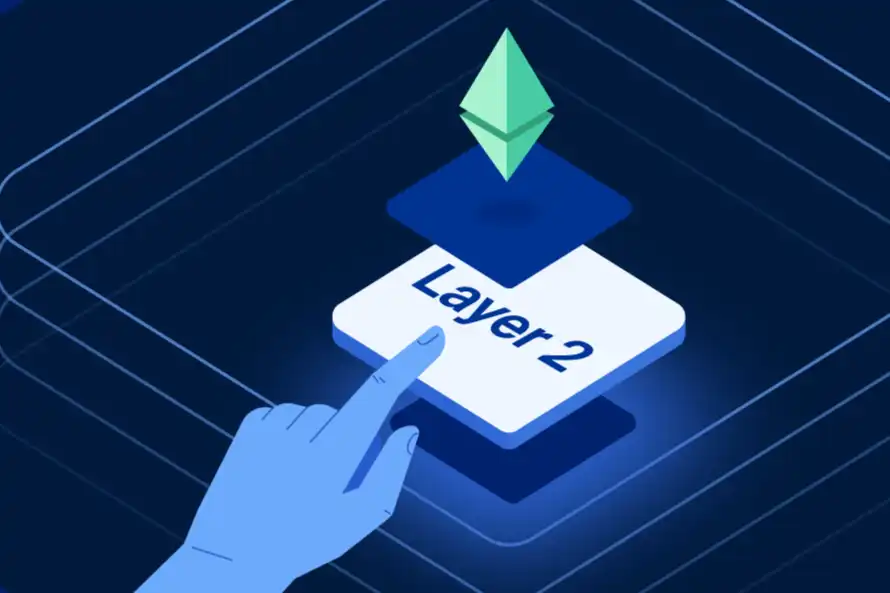
So why not use Orbit of Arbitrum as layer3? Although the exclusive chain of layer3 is good, the current market demand is not high, as evidenced by the hundreds of exclusive appchains in Cosmos. Moreover, there are still technical difficulties in cross-chain communication and interaction of layer3. Before the application chains in the gaming and social markets take off, DApps with financial attributes are particularly concerned about the composability and communication between applications. With the current level of technological maturity, developing an independent exclusive chain would feel like building a skyscraper in the suburbs. Currently, the market demand for Layer2 is obviously greater than that for layer3, whether in terms of narrative or narrative.
Why not use zkSync's ZK Stack for ZK layer2? Indeed, layer2 can also be built based on ZK Stack. Developers certainly want to work with ZK, as it has a stronger narrative, but unfortunately it is difficult to work with. The core zk circuit algorithm of Stack is a tough nut to crack, and developers who want to go the zk route will need some time to digest the advanced programming language gap and zk circuits. It is too difficult to independently customize and develop a ZK circuit system, and of course, sharing zkSync's components is also an option, but does this big brother support it now? We can see the clues from the ZK code updates abandoned by opBNB.
The above is exactly why OP Stack is able to come out on top in the four major Stack strategies. Personally, I think this is good news for Optimism, as project teams can choose to customize and develop Sequencer, or they can share a Sequencer with Optimism, which requires OP Treasury to pay taxes. This blogger estimated the income of Base, and with the current market heat and a 10% split, OP can earn $4.5M in revenue. In the future, as the BASE ecosystem continues to grow, this conservative number could reach $20M.
Finally, we look forward to more project parties being able to develop based on OP Stack, and it would be even better if they could also take care of the business of Arbitrum Orbit layer3, zkSync, and Starknet. However, before laying out layer2 or layer3, one must be clear about their own intentions. If it is just for the sake of storytelling, there is no need to follow the L2 trend. As for ZK Stack, don't envy OP Stack, the most important thing is to decentralize your own core ZK components, which will be widely used by developers in the future.
Since OP Stack is so eye-catching, does that mean ZK Stack and Starknet Stack have no chance? Obviously not. OP Stack only seized the first-mover advantage. It is estimated that from the first proposal of the OP Stack framework in October 2022 to the completion of Bedrock in June 2023, and then to BNBChain's announcement in July that it will develop Layer2 based on OP Stack, the Optimism team had numerous negotiations and coordinated many technical difficulties, which are unknown to the public. In contrast, Starknet Stack, ZK Stack, and others were officially launched only about two months ago.
Therefore, the four major Stack strategies are far from determining the winner:
1) The Sequencer component is being modularized and shared among competitors in the encryption industry. Currently, various companies are promoting the decentralization process of Sequencer, but they are all still in the Soon stage, making it difficult to determine who has the leading advantage. If I had to choose one, I believe it would be Starknet for a simple reason: Starknet has already implemented third-party license admission in the Prover verification process and has been verified by the main network Rollup contract. In terms of the decentralization process of core technology components, Starknet will place a higher emphasis and have more technical expertise.
2) The competition for affinity among multi-chain developers will undoubtedly be won by Optimism, with its more open and inclusive MIT license, as well as the active developer community that has already formed, which enables it to attract a large number of developer resources. Although the term "one-click chain deployment" may sound a bit sarcastic, the commercial map of Rollup AS A Service (RaaS) is still effective in this simple and crude way. Secondly, I think the potential will be on Starknet, because there is always a strong geek community atmosphere on Starknet, and in fact, there are always some eye-opening projects emerging.
3) Multi-chain ecological application competition. In the past, the Cosmos ecosystem was driven by Terra, which led to a wave of prosperity. Although the result was very tragic and the backlash also caused great damage to the Cosmos ecosystem, it is enough to see the significance of a super application to the open and collaborative ecosystem. From this perspective, the outstanding performance of the OP Stack camp on the Base chain undoubtedly deserves recognition. However, the cooperation between Base and Optimism does not have the premise of sharing Sequencer and cross-chain combination liquidity sharing, so it can only be regarded as an isolated event and does not have the same significance as Terra to Cosmos. Does this mean that ZK Stack is useless? These days, zkSync and Starknet are competing in TPS, and the transaction volume of zkSync has also exceeded 100 million. In any case, zkSync's advantages in user volume, transaction volume, and TVL are also a trump card, not to mention that no one will doubt its stable transaction volume carrying capacity just based on the sharing of zkPorter and Prover components. The premature Fomo market of zkSync played a key role in honing its solid underlying technology. As for Arbitrum's Orbit, it is currently relatively mysterious because everyone is paving the way for layer2, but Orbit has taken a big step to layer3, which is quite impressive. However, it cannot be ruled out that it is secretly laying out large-scale game and social applications. Once a big move is released someday, the comprehensive strength accumulated by Arbitrum will naturally be attractive to the exclusive application chain market. In summary, the Stack Narrative Summer sung by the four Rollup kings is just in time. Let the bullets fly for a while.
Original Link
Welcome to join the official BlockBeats community:
Telegram Subscription Group: https://t.me/theblockbeats
Telegram Discussion Group: https://t.me/BlockBeats_App
Official Twitter Account: https://twitter.com/BlockBeatsAsia

 Related Articles